


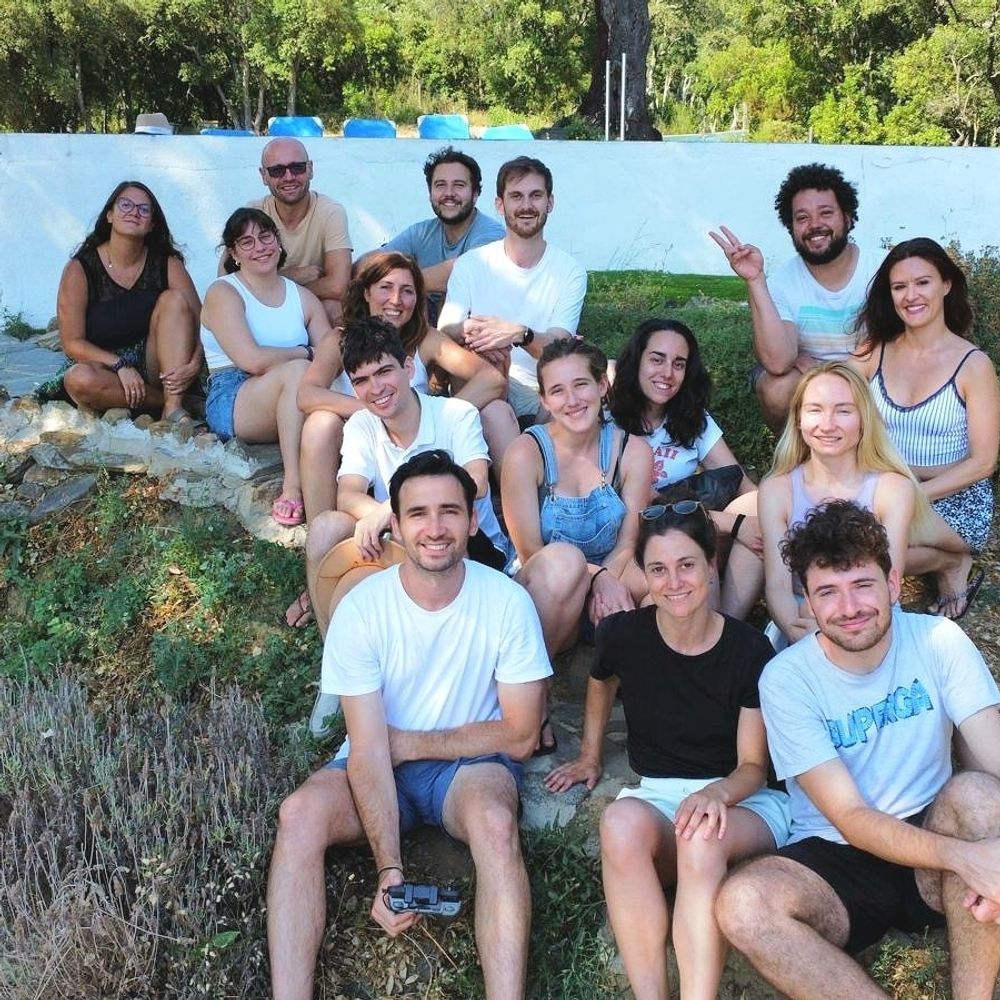
🧬 New review on nanopore basecalling models is out! ✨
Congrats to @soniacruciani.bsky.social (former Novoa Lab PhD, now postdoc at the Deplancke Lab, EPFL) and @evamarianovoa.bsky.social👏
📖 www.nature.com/articles/s41...
Congrats to @soniacruciani.bsky.social (former Novoa Lab PhD, now postdoc at the Deplancke Lab, EPFL) and @evamarianovoa.bsky.social👏
📖 www.nature.com/articles/s41...
Client Challenge
www.nature.com
October 14, 2025 at 12:28 PM
🧬 New review on nanopore basecalling models is out! ✨
Congrats to @soniacruciani.bsky.social (former Novoa Lab PhD, now postdoc at the Deplancke Lab, EPFL) and @evamarianovoa.bsky.social👏
📖 www.nature.com/articles/s41...
Congrats to @soniacruciani.bsky.social (former Novoa Lab PhD, now postdoc at the Deplancke Lab, EPFL) and @evamarianovoa.bsky.social👏
📖 www.nature.com/articles/s41...

TLDR: >40x coverage needed, rerio basecalling needed. Miniasm works better than Flye for genomic epi, flye works better for amr genotyping.
February 21, 2024 at 8:09 PM
TLDR: >40x coverage needed, rerio basecalling needed. Miniasm works better than Flye for genomic epi, flye works better for amr genotyping.
I understood the new bac models to be polishing assemblies, not basecalling?
February 7, 2025 at 2:26 PM
I understood the new bac models to be polishing assemblies, not basecalling?

Basecalling for DNA Storage https://www.biorxiv.org/content/10.1101/2025.07.27.667078v1
July 31, 2025 at 8:47 PM
Basecalling for DNA Storage https://www.biorxiv.org/content/10.1101/2025.07.27.667078v1

Running basecalling on latest Haloarchaea r10 data, preparing for the methylation study.
I'm suddenly reminded of the time HAC basecalling first became available, and I had to run it on a decade on Xeon processor. dGPUs for bio wasn't considered essential at the time! That ran for two weeks. 🧬💻🦠🧫
I'm suddenly reminded of the time HAC basecalling first became available, and I had to run it on a decade on Xeon processor. dGPUs for bio wasn't considered essential at the time! That ran for two weeks. 🧬💻🦠🧫

December 8, 2024 at 2:58 AM
Running basecalling on latest Haloarchaea r10 data, preparing for the methylation study.
I'm suddenly reminded of the time HAC basecalling first became available, and I had to run it on a decade on Xeon processor. dGPUs for bio wasn't considered essential at the time! That ran for two weeks. 🧬💻🦠🧫
I'm suddenly reminded of the time HAC basecalling first became available, and I had to run it on a decade on Xeon processor. dGPUs for bio wasn't considered essential at the time! That ran for two weeks. 🧬💻🦠🧫

That is great - do you use them for Nanopore sequencing? Do they generally have the GPU power for basecalling? What I need is very GPU intensive.
March 26, 2025 at 8:08 AM
That is great - do you use them for Nanopore sequencing? Do they generally have the GPU power for basecalling? What I need is very GPU intensive.

Oh yes, I agree. I'm not saying it's fully fixable by dorado in its current clothes, just that there's lots more signal in the recorded signal than is captured by the current basecalling algorithms.
Given that, recalling can substantially improve accuracy for previous sequencing runs.
Given that, recalling can substantially improve accuracy for previous sequencing runs.
June 5, 2025 at 10:52 AM
Oh yes, I agree. I'm not saying it's fully fixable by dorado in its current clothes, just that there's lots more signal in the recorded signal than is captured by the current basecalling algorithms.
Given that, recalling can substantially improve accuracy for previous sequencing runs.
Given that, recalling can substantially improve accuracy for previous sequencing runs.

Oxford Nanopore's basecalling software uses Artificial Intelligence to convert the raw electrical signals produced as DNA or RNA molecules pass through a nanopore into the sequence of bases—A, C, G, and T—that represent the genetic information.
December 17, 2024 at 12:09 PM
Oxford Nanopore's basecalling software uses Artificial Intelligence to convert the raw electrical signals produced as DNA or RNA molecules pass through a nanopore into the sequence of bases—A, C, G, and T—that represent the genetic information.

New version of Dorado is out:
github.com/nanoporetech...
And for the first time in a year, this includes new DNA basecalling models!
I'll try out these new models (v5.2.0) and compare them to the previous ones (v5.0.0) in a blog post in the near future.
github.com/nanoporetech...
And for the first time in a year, this includes new DNA basecalling models!
I'll try out these new models (v5.2.0) and compare them to the previous ones (v5.0.0) in a blog post in the near future.

Release v1.0.0 · nanoporetech/dorado
[1.0.0] (21 May 2025)
We are pleased to announce the release of Dorado v1.0, delivering new models and capabilities for Oxford Nanopore data analysis. This release introduces:
New v5.2 basecalling...
github.com
May 22, 2025 at 12:07 AM
New version of Dorado is out:
github.com/nanoporetech...
And for the first time in a year, this includes new DNA basecalling models!
I'll try out these new models (v5.2.0) and compare them to the previous ones (v5.0.0) in a blog post in the near future.
github.com/nanoporetech...
And for the first time in a year, this includes new DNA basecalling models!
I'll try out these new models (v5.2.0) and compare them to the previous ones (v5.0.0) in a blog post in the near future.
d46286e - Upgraded to Koi v0.5.3 for optimised basecalling on CC 8.6, 8.7 & 8.9
6de083d977a0f33398fb1f82e9e0df621ea5360b - Added VCF output to the Dorado polish
d859977 - Improve messaging when an unrecognised model complex is specified
06f6239 - Support for legacy count models in Dorado polish
6de083d977a0f33398fb1f82e9e0df621ea5360b - Added VCF output to the Dorado polish
d859977 - Improve messaging when an unrecognised model complex is specified
06f6239 - Support for legacy count models in Dorado polish
January 22, 2025 at 10:43 AM
d46286e - Upgraded to Koi v0.5.3 for optimised basecalling on CC 8.6, 8.7 & 8.9
6de083d977a0f33398fb1f82e9e0df621ea5360b - Added VCF output to the Dorado polish
d859977 - Improve messaging when an unrecognised model complex is specified
06f6239 - Support for legacy count models in Dorado polish
6de083d977a0f33398fb1f82e9e0df621ea5360b - Added VCF output to the Dorado polish
d859977 - Improve messaging when an unrecognised model complex is specified
06f6239 - Support for legacy count models in Dorado polish
Hmm. 79C GPU temperature during r10 methylation & basecalling. Background lab temperature is about 90~93F (32~34C) so the makeshift ventilation & cooling solution for the workstation is surprisingly well.
One more sequencing run until I have a full gamut of the target #Archaea species. Woot!
One more sequencing run until I have a full gamut of the target #Archaea species. Woot!

July 30, 2025 at 9:47 PM
Hmm. 79C GPU temperature during r10 methylation & basecalling. Background lab temperature is about 90~93F (32~34C) so the makeshift ventilation & cooling solution for the workstation is surprisingly well.
One more sequencing run until I have a full gamut of the target #Archaea species. Woot!
One more sequencing run until I have a full gamut of the target #Archaea species. Woot!

Wow, this is super interesting: techcrunch.com/2025/01/06/n...
$3000 for a petaflop of compute in a consumer-grade box.
Their main aim is AI but think of all the ONT basecalling you could do with this - lots of opportunity for adaptive sampling at scale!
$3000 for a petaflop of compute in a consumer-grade box.
Their main aim is AI but think of all the ONT basecalling you could do with this - lots of opportunity for adaptive sampling at scale!

Nvidia's Project Digits is a 'personal AI supercomputer' | TechCrunch
At the 2025 Consumer Electronics Show in Las Vegas, Nvidia unveiled Project Digits, a device it's calling a 'personal AI supercomputer.'
techcrunch.com
January 7, 2025 at 11:52 AM
Wow, this is super interesting: techcrunch.com/2025/01/06/n...
$3000 for a petaflop of compute in a consumer-grade box.
Their main aim is AI but think of all the ONT basecalling you could do with this - lots of opportunity for adaptive sampling at scale!
$3000 for a petaflop of compute in a consumer-grade box.
Their main aim is AI but think of all the ONT basecalling you could do with this - lots of opportunity for adaptive sampling at scale!
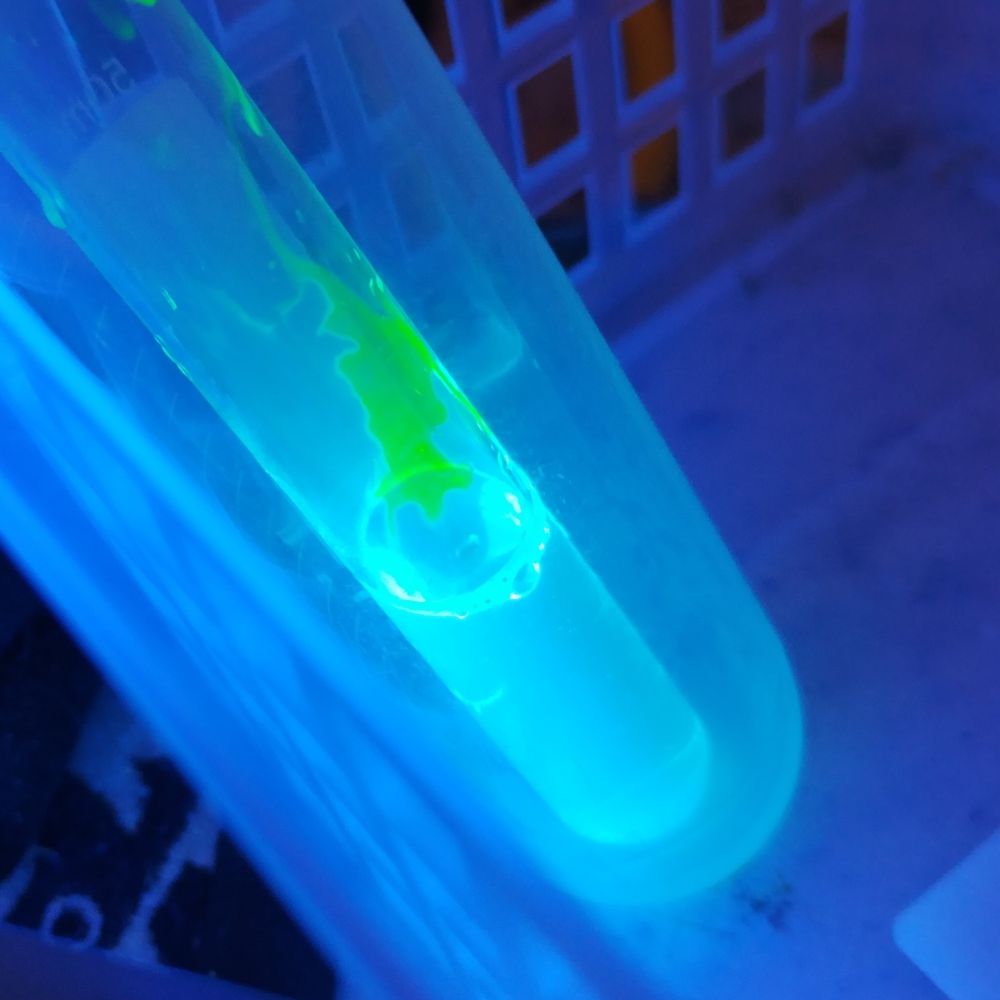
That's still basecalling, just with frequency space analysis.
March 22, 2025 at 10:38 AM
That's still basecalling, just with frequency space analysis.
Its still based on and presenting the same data in the preprint (see doi.org/10.5524/102694). But in the text they are now clearer on the limitations and accuracy (and in theory the basecalling should continue to improve over time).
GigaDB Dataset - DOI 10.5524/102694 - Supporting data for "Efficiently Constructing Complete Genomes with CycloneSEQ to Fill Gaps in Bacte ...
doi.org
April 29, 2025 at 7:16 AM
Its still based on and presenting the same data in the preprint (see doi.org/10.5524/102694). But in the text they are now clearer on the limitations and accuracy (and in theory the basecalling should continue to improve over time).

Breaking Barriers in Genomics: Slorado Unlocks Open-Source DNA Basecalling on AMD GPUs
Introduction: Revolutionizing DNA Analysis The field of genomics is experiencing a transformative shift, where speed, accessibility, and transparency are becoming as crucial as accuracy. At the forefront of this…
Introduction: Revolutionizing DNA Analysis The field of genomics is experiencing a transformative shift, where speed, accessibility, and transparency are becoming as crucial as accuracy. At the forefront of this…

Breaking Barriers in Genomics: Slorado Unlocks Open-Source DNA Basecalling on AMD GPUs
Introduction: Revolutionizing DNA Analysis The field of genomics is experiencing a transformative shift, where speed, accessibility, and transparency are becoming as crucial as accuracy. At the forefront of this revolution is Slorado, a groundbreaking open-source tool developed through collaboration between UNSW Sydney, Pawsey Supercomputing Research Centre, and AMD Research and Advanced Development (RAD). Slorado enables real-time nanopore DNA decoding on AMD GPUs, offering researchers a powerful, scalable, and fully open-source alternative to traditional basecalling solutions.
undercodenews.com
November 24, 2025 at 9:58 PM
Breaking Barriers in Genomics: Slorado Unlocks Open-Source DNA Basecalling on AMD GPUs
Introduction: Revolutionizing DNA Analysis The field of genomics is experiencing a transformative shift, where speed, accessibility, and transparency are becoming as crucial as accuracy. At the forefront of this…
Introduction: Revolutionizing DNA Analysis The field of genomics is experiencing a transformative shift, where speed, accessibility, and transparency are becoming as crucial as accuracy. At the forefront of this…

Evaluation of Dorado v5.2.0 de novo basecalling models for the detection of tRNA modifications using RNA004 chemistry https://www.biorxiv.org/content/10.64898/2025.12.09.693013v1
December 10, 2025 at 7:19 AM
Evaluation of Dorado v5.2.0 de novo basecalling models for the detection of tRNA modifications using RNA004 chemistry https://www.biorxiv.org/content/10.64898/2025.12.09.693013v1
In #NextGenSequencing news, Oxford @nanoporetech.com has released a new version of their basecalling software with new functionalities. An explainer ow what the basecalling software is and what this new release brings for ONT users.
github.com/nanoporetech...
github.com/nanoporetech...

Release v0.9.0 · nanoporetech/dorado
[0.9.0] (16 Dec 2024)
This major release of Dorado introduces several new features and enhancements. The polish command, currently experimental, is optimised for refining draft assemblies of human ...
github.com
December 17, 2024 at 12:09 PM
In #NextGenSequencing news, Oxford @nanoporetech.com has released a new version of their basecalling software with new functionalities. An explainer ow what the basecalling software is and what this new release brings for ONT users.
github.com/nanoporetech...
github.com/nanoporetech...
Where did you find this number?
As a direct answer to your question, no.
I expect this accuracy will be reached at some point in the future for people who are interested in re-basecalling their reads with the latest nanopore model. Nanopore accuracy is mostly a software problem.
As a direct answer to your question, no.
I expect this accuracy will be reached at some point in the future for people who are interested in re-basecalling their reads with the latest nanopore model. Nanopore accuracy is mostly a software problem.
December 15, 2024 at 6:13 PM
Where did you find this number?
As a direct answer to your question, no.
I expect this accuracy will be reached at some point in the future for people who are interested in re-basecalling their reads with the latest nanopore model. Nanopore accuracy is mostly a software problem.
As a direct answer to your question, no.
I expect this accuracy will be reached at some point in the future for people who are interested in re-basecalling their reads with the latest nanopore model. Nanopore accuracy is mostly a software problem.

Help your fellow researchers decide what nvidia GPU to buy for their @nanoporetech.com basecalling needs.
github.com/Kirk3gaard/2...
github.com/Kirk3gaard/2...

April 9, 2025 at 7:22 AM
Help your fellow researchers decide what nvidia GPU to buy for their @nanoporetech.com basecalling needs.
github.com/Kirk3gaard/2...
github.com/Kirk3gaard/2...
Dorado's own documentation page doesn't really have a good example but cli reference does shed a bit of light.
I'm almost sure it can take a specific correction model for the post assembly polishing step, which would be model used for basecalling process
dorado-docs.readthedocs.io/en/latest/as...
I'm almost sure it can take a specific correction model for the post assembly polishing step, which would be model used for basecalling process
dorado-docs.readthedocs.io/en/latest/as...
Dorado Polish - Dorado Documentation
dorado-docs.readthedocs.io
February 7, 2025 at 3:56 PM
Dorado's own documentation page doesn't really have a good example but cli reference does shed a bit of light.
I'm almost sure it can take a specific correction model for the post assembly polishing step, which would be model used for basecalling process
dorado-docs.readthedocs.io/en/latest/as...
I'm almost sure it can take a specific correction model for the post assembly polishing step, which would be model used for basecalling process
dorado-docs.readthedocs.io/en/latest/as...
By continuously updating and refining the neural network models with new training data, Oxford Nanopore ensures that the basecalling algorithms can keep improving, pushing the boundaries of accuracy and performance in nanopore sequencing.
December 17, 2024 at 12:09 PM
By continuously updating and refining the neural network models with new training data, Oxford Nanopore ensures that the basecalling algorithms can keep improving, pushing the boundaries of accuracy and performance in nanopore sequencing.

introduces a novel method to profile signals coming from sequencing devices in parallel with determining their nucleotide sequences, a process known as basecalling, via a multi-objective deep neural network for simultaneous basecalling and multi-class [2/6 of https://arxiv.org/abs/2504.07065v1]
April 10, 2025 at 6:15 AM
introduces a novel method to profile signals coming from sequencing devices in parallel with determining their nucleotide sequences, a process known as basecalling, via a multi-objective deep neural network for simultaneous basecalling and multi-class [2/6 of https://arxiv.org/abs/2504.07065v1]
Difference in output, it is an issue on their github issues, it’s minor but a bit of a worry that we control for by limiting basecalling to the same node type
November 18, 2024 at 8:07 PM
Difference in output, it is an issue on their github issues, it’s minor but a bit of a worry that we control for by limiting basecalling to the same node type

Overall, using R10.4.1, super-high accuracy basecalling and autocycler, we can reliably infer marker geens (MLST/ARGs etc) and feel that performance was good enough to drop Illumina sequencing for the NEKSUS study (more to follow in due course!)
September 18, 2025 at 11:38 AM
Overall, using R10.4.1, super-high accuracy basecalling and autocycler, we can reliably infer marker geens (MLST/ARGs etc) and feel that performance was good enough to drop Illumina sequencing for the NEKSUS study (more to follow in due course!)

A Comparison of Nanopore Data Types, Basecalling, and Assembly Algorithms: Whole Plant Genome Assembly and Methylation Analysis from a Single MinION Flow cell https://www.biorxiv.org/content/10.1101/2024.11.13.623402v1

A Comparison of Nanopore Data Types, Basecalling, and Assembly Algorithms: Whole Plant Genome Assembly and Methylation Analysis from a Single MinION Flow cell https://www.biorxiv.org/content/10.1101/2024.11.13.623402v1
Background: Oxford Nanopore Technologies' MinION sequencer is a compact, USB-powered device that has
www.biorxiv.org
November 15, 2024 at 3:33 AM
A Comparison of Nanopore Data Types, Basecalling, and Assembly Algorithms: Whole Plant Genome Assembly and Methylation Analysis from a Single MinION Flow cell https://www.biorxiv.org/content/10.1101/2024.11.13.623402v1