



Nkosi Muse, PhD
@weatherkos.bsky.social
Meteorologist | Advocate | Athlete
Environmental Fellow, Harvard
@weatherkos on all platforms 💬
Environmental Fellow, Harvard
@weatherkos on all platforms 💬
*sigh*

The Alaska Native village of Kipnuk was due to receive a $20M grant from the EPA that they were going to use for flood protection.
It was labelled “wasteful DEI spending” and canceled.
The recent storm destroyed homes & flooded Kipnuk: www.nytimes.com/2025/10/14/c...
It was labelled “wasteful DEI spending” and canceled.
The recent storm destroyed homes & flooded Kipnuk: www.nytimes.com/2025/10/14/c...

Before Alaska Flooding, E.P.A. Canceled $20 Million Flood Protection Grant
www.nytimes.com
October 16, 2025 at 12:15 AM
*sigh*
At the point in my academic career now where I just pull from a stash of figures to explain my thoughts
October 10, 2025 at 5:13 PM
At the point in my academic career now where I just pull from a stash of figures to explain my thoughts
Reposted by Nkosi Muse, PhD

If we convert the specific humidity thresholds to dewpoint, here's a map showing the extent of summertime "mugginess", where the average dewpoint is 65°F+ (northern blue contour line). The southern blue contour line shows the region where the average summertime dewpoint is a soupy 72°F+.


October 8, 2025 at 2:58 PM
If we convert the specific humidity thresholds to dewpoint, here's a map showing the extent of summertime "mugginess", where the average dewpoint is 65°F+ (northern blue contour line). The southern blue contour line shows the region where the average summertime dewpoint is a soupy 72°F+.
Reposted by Nkosi Muse, PhD
I'm thrilled to share this paper that was just published today in Climatic Change on the effect of "seasonally muggy" conditions that exacerbate chronic heat and thermal discomfort in places like south Florida.
doi.org/10.1007/s105...
Lead author: @weatherkos.bsky.social
doi.org/10.1007/s105...
Lead author: @weatherkos.bsky.social

Nighttime land surface temperature and thermal discomfort in a seasonally muggy climate - Climatic Change
Globally, increasing air moisture can limit not only the human body’s ability to cool down, but also that of the Earth’s surface. This interaction, however, remains understudied—especially across subtropical-to-tropical regions that experience high levels of humidity. Here, we examine how air moisture influences nighttime land surface temperatures (LSTs), as well as what this interaction means for thermal comfort overnight. During summer months across seasonally muggy Southern Florida, during which time air moisture reaches the highest values of any place in the United States, we examine: 1) how air moisture, measured as specific humidity, varies with urbanicity and geography; 2) whether air moisture limits LST cooling at night; and 3) the implications of increased air moisture and nighttime LSTs for thermal comfort overnight. Based on data from 30 weather stations, we find that nighttime LST remains higher and closer to daytime highs in areas with increased specific humidity, highlighting a decreased surface cooling phenomenon in more humid areas. Both urban and coastal areas exhibit higher nighttime LSTs that are strongly related to thermal discomfort—also resulting in more time spent at or above critical thresholds for thermal discomfort overnight. This analysis therefore underscores the importance of heat mitigation and adaptation strategies that reduce LSTs and anthropogenic heat inputs in seasonally muggy climates in order to increase thermal comfort, especially near coastlines at lower latitudes.
doi.org
October 8, 2025 at 2:49 PM
I'm thrilled to share this paper that was just published today in Climatic Change on the effect of "seasonally muggy" conditions that exacerbate chronic heat and thermal discomfort in places like south Florida.
doi.org/10.1007/s105...
Lead author: @weatherkos.bsky.social
doi.org/10.1007/s105...
Lead author: @weatherkos.bsky.social
@ninalakhani.bsky.social hi Nina, audience member from of your nyc climate panels here—had a question for you but had to run out! Any way I can get in touch? Thank you
October 6, 2025 at 1:38 PM
@ninalakhani.bsky.social hi Nina, audience member from of your nyc climate panels here—had a question for you but had to run out! Any way I can get in touch? Thank you
Reposted by Nkosi Muse, PhD
"Records confirm what runners, bar and restaurant owners and just about anybody who spends time outside in South Florida can sense. Miami nights are hotter than ever."
www.miamiherald.com/news/local/e...
@weatherkos.bsky.social
@miamirosenstiel.bsky.social
www.miamiherald.com/news/local/e...
@weatherkos.bsky.social
@miamirosenstiel.bsky.social

Records confirm what you’re already feeling: Miami nights are hotter than ever
Our daily low temperatures, usually recorded just before sunrise, also are higher than ever.
www.miamiherald.com
September 5, 2025 at 11:22 AM
"Records confirm what runners, bar and restaurant owners and just about anybody who spends time outside in South Florida can sense. Miami nights are hotter than ever."
www.miamiherald.com/news/local/e...
@weatherkos.bsky.social
@miamirosenstiel.bsky.social
www.miamiherald.com/news/local/e...
@weatherkos.bsky.social
@miamirosenstiel.bsky.social
Completely forgot to BlueSky it, but I’m at #AGU24 and would love to meet folks! If you’re hanging around til late week, I have a poster on Friday 🤓

December 10, 2024 at 4:44 PM
Completely forgot to BlueSky it, but I’m at #AGU24 and would love to meet folks! If you’re hanging around til late week, I have a poster on Friday 🤓
I think I have a very limited understanding of how networking on blue sky works, outside of simple follows lol—apparently there are lists or communities you can join? And if so, how do I do it?!?
Signed — an ignorant millennial
Signed — an ignorant millennial
December 2, 2024 at 4:15 PM
I think I have a very limited understanding of how networking on blue sky works, outside of simple follows lol—apparently there are lists or communities you can join? And if so, how do I do it?!?
Signed — an ignorant millennial
Signed — an ignorant millennial
Reposted by Nkosi Muse, PhD

We don't see anything on the horizon right now, but did you know sometimes the Atlantic hurricane season doesn't "end" immediately after November 30?
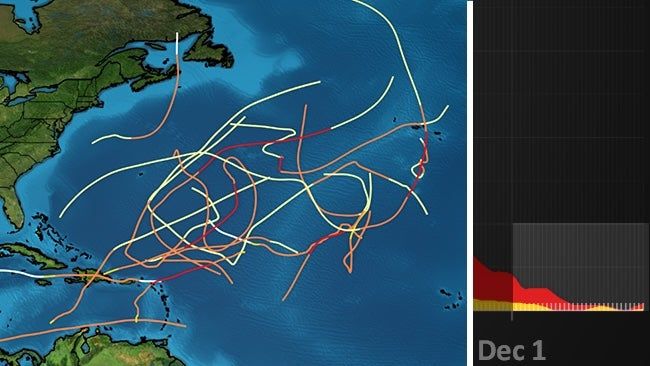
When Hurricane Season's End Doesn't Mean It's Over | Weather.com
They're usually not a big concern, but, yes, they can happen in winter. Here's where and why. - Articles from The Weather Channel | weather.com
weather.com
November 29, 2024 at 5:30 PM
We don't see anything on the horizon right now, but did you know sometimes the Atlantic hurricane season doesn't "end" immediately after November 30?
This is anecdotal, so the data may actually not support it—but if there is a time this year where I felt most unbearably hot, it was in May believe it or not, in line with this below finding!
The Miami NWS heat advisory criteria of a 105°F+ heat index for 2+ hours was met on 21 days, spanning May 18 through September 28. Amazingly, the day that spent the most time over 105° all year was May 18 (9 hours). [3/3]

November 26, 2024 at 7:51 PM
This is anecdotal, so the data may actually not support it—but if there is a time this year where I felt most unbearably hot, it was in May believe it or not, in line with this below finding!
Reposted by Nkosi Muse, PhD

So how have groups like #MDPI and #Frontiers accomplished this incredible growth?
"Dear prof. ___, we read your manuscript and were thoroughly aroused. We invite a preeminent like you to submit to our special issue on TOPICYOUDONTSTUDY."
These issues are not so special...
🧵 4/n
"Dear prof. ___, we read your manuscript and were thoroughly aroused. We invite a preeminent like you to submit to our special issue on TOPICYOUDONTSTUDY."
These issues are not so special...
🧵 4/n

November 19, 2024 at 12:27 PM
So how have groups like #MDPI and #Frontiers accomplished this incredible growth?
"Dear prof. ___, we read your manuscript and were thoroughly aroused. We invite a preeminent like you to submit to our special issue on TOPICYOUDONTSTUDY."
These issues are not so special...
🧵 4/n
"Dear prof. ___, we read your manuscript and were thoroughly aroused. We invite a preeminent like you to submit to our special issue on TOPICYOUDONTSTUDY."
These issues are not so special...
🧵 4/n
Looks like videos aren’t a thing on here just yet—but still fascinated with last week’s gulf low, which seems to be the southeast’s version of a nor’easter at this point. Incredible rainfall

November 20, 2023 at 9:12 PM
Looks like videos aren’t a thing on here just yet—but still fascinated with last week’s gulf low, which seems to be the southeast’s version of a nor’easter at this point. Incredible rainfall
Reposted by Nkosi Muse, PhD

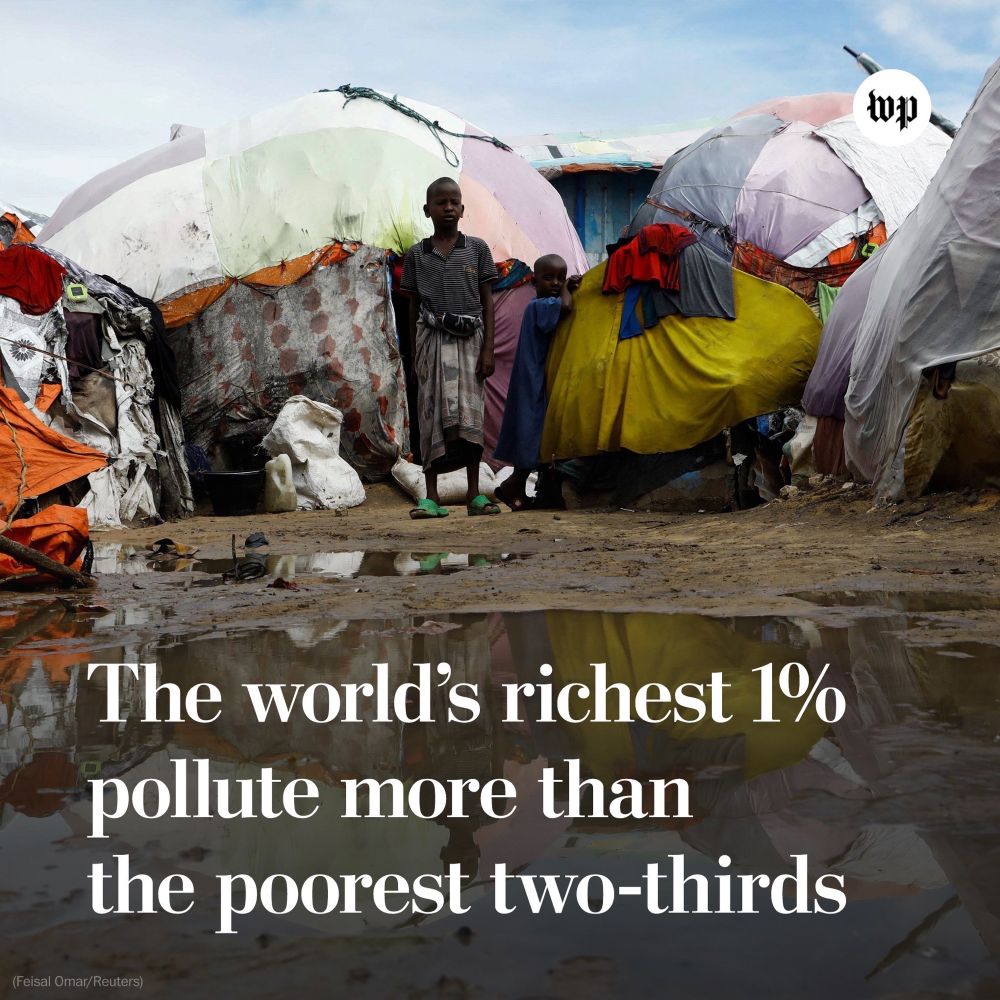
The world’s richest 1 percent generated as much carbon emissions as the poorest two-thirds in 2019, according to a new Oxfam report that examines the uber-wealthy’s lavish lifestyles and investments in heavily polluting industries.
wapo.st/49Ke8W3
wapo.st/49Ke8W3
November 20, 2023 at 6:32 PM
The world’s richest 1 percent generated as much carbon emissions as the poorest two-thirds in 2019, according to a new Oxfam report that examines the uber-wealthy’s lavish lifestyles and investments in heavily polluting industries.
wapo.st/49Ke8W3
wapo.st/49Ke8W3