




Tatsuya Amano
@tatsuya-amano.bsky.social
Conservation scientist @uq-cbcs.bsky.social committed to overcoming biases and barriers in conservation and science. See
http://translatesciences.com
http://kaizenconservation.com
he/him
http://translatesciences.com
http://kaizenconservation.com
he/him
Pinned

Language barriers in conservation: consequences and solutions
Language barriers can severely hinder the advance of conservation science and its contribution to addressing the biodiversity crisis. We build a frame…
www.sciencedirect.com
Here is our OA review of the overlooked yet significant consequences of #languagebarriers in #conservation. An outcome based on 5 years of work at our translatE project, supported by over 130 collaborators around the world.
@cp-trendsecolevo.bsky.social
www.sciencedirect.com/science/arti...
1/4
@cp-trendsecolevo.bsky.social
www.sciencedirect.com/science/arti...
1/4
As 2025 draws to a close, I want to extend a big thank you to all our project/lab collaborators, supporters, members & colleagues for another productive year. Wishing you a wonderful end to the year and remember tidying up your workspace before year end can help you start the new year even brighter!

December 19, 2025 at 3:17 AM
As 2025 draws to a close, I want to extend a big thank you to all our project/lab collaborators, supporters, members & colleagues for another productive year. Wishing you a wonderful end to the year and remember tidying up your workspace before year end can help you start the new year even brighter!
I’m excited to have recently joined the UQ Cultural Inclusion Council. Look forward to collaborating with other committed academics to develop and implement initiatives that promote inclusion for culturally and linguistically diverse staff and students at UQ.
staff.uq.edu.au/information-...
staff.uq.edu.au/information-...
UQ Cultural Inclusion Council
staff.uq.edu.au
December 11, 2025 at 6:24 AM
I’m excited to have recently joined the UQ Cultural Inclusion Council. Look forward to collaborating with other committed academics to develop and implement initiatives that promote inclusion for culturally and linguistically diverse staff and students at UQ.
staff.uq.edu.au/information-...
staff.uq.edu.au/information-...
Very pleased to see that @natecoevo.nature.com’s editorial introducing the journal’s AI policies builds on our evidence about language barriers faced by non-native English speakers.
www.nature.com/articles/s41...
#languagebarriers
www.nature.com/articles/s41...
#languagebarriers
Spotlight on our AI policies - Nature Ecology & Evolution
Lo, the late surging tide of artifice most generative in the realm of science doth unveil a trove of promise, yet not without peril. Thus, we do set forth our decrees and counsel, that authors and rev...
www.nature.com
December 11, 2025 at 6:18 AM
Very pleased to see that @natecoevo.nature.com’s editorial introducing the journal’s AI policies builds on our evidence about language barriers faced by non-native English speakers.
www.nature.com/articles/s41...
#languagebarriers
www.nature.com/articles/s41...
#languagebarriers
In this new paper led by Marina Corella Tor, we analyzed international migratory bird agreements and found
• Fewer agreements at lower latitudes;
• Only 28% of species have full range coverage; 14% have none. doi.org/10.1002/fee....
PDF kaizenconservation.com/wp-content/u...
@esajournals.bsky.social
• Fewer agreements at lower latitudes;
• Only 28% of species have full range coverage; 14% have none. doi.org/10.1002/fee....
PDF kaizenconservation.com/wp-content/u...
@esajournals.bsky.social
Spatial and taxonomic coverage of international migratory bird agreements
You have to enable JavaScript in your browser's settings in order to use the eReader.
doi.org
December 4, 2025 at 8:05 AM
In this new paper led by Marina Corella Tor, we analyzed international migratory bird agreements and found
• Fewer agreements at lower latitudes;
• Only 28% of species have full range coverage; 14% have none. doi.org/10.1002/fee....
PDF kaizenconservation.com/wp-content/u...
@esajournals.bsky.social
• Fewer agreements at lower latitudes;
• Only 28% of species have full range coverage; 14% have none. doi.org/10.1002/fee....
PDF kaizenconservation.com/wp-content/u...
@esajournals.bsky.social
In this paper led by Violeta Berdejo-Espinola, we trained machine learning models to identify Spanish-language papers on the effectiveness of conservation actions. The best model missed no relevant articles while excluding > 70% of irrelevant papers.
doi.org/10.1186/s137...
#languagebarriers
doi.org/10.1186/s137...
#languagebarriers

Spanish-language text classification for environmental evidence synthesis using multilingual pre-trained models - Environmental Evidence
Artificial intelligence (AI) is increasingly being explored as a tool to optimize and accelerate various stages of evidence synthesis. A persistent challenge in environmental evidence syntheses is tha...
doi.org
December 3, 2025 at 2:33 AM
In this paper led by Violeta Berdejo-Espinola, we trained machine learning models to identify Spanish-language papers on the effectiveness of conservation actions. The best model missed no relevant articles while excluding > 70% of irrelevant papers.
doi.org/10.1186/s137...
#languagebarriers
doi.org/10.1186/s137...
#languagebarriers
I am more than happy to chat with anyonoe/present anywhere about what we did to reduce #languagebarriers at #ICCB2025, so if interested please let me know.
Huge thanks to everyone who attended our AGM! Successful quorum achieved and motions passed, wonderful presentations from our Board and Chapter representatives, and a fantastic talk from @tatsuya-amano.bsky.social on language accessibility at #ICCB2025 !

December 3, 2025 at 12:47 AM
I am more than happy to chat with anyonoe/present anywhere about what we did to reduce #languagebarriers at #ICCB2025, so if interested please let me know.
Reposted by Tatsuya Amano

I'm preparing for my talk at #BES2025 and want to know what people think the main goal of applied ecological and conservation research is. If everything goes to plan, I’ll be using the poll results in the talk itself, so the more responses the better! @britishecologicalsociety.org
What do you think the primary goal of applied ecological/conservation research is?
1️⃣ <a href="https://poll.blue/p/PuXpIV/1" class="hover:underline text-blue-600 dark:text-sky-400 no-card-link" target="_blank" rel="noopener" data-link="bsky">Diagnose threats and impacts
2️⃣ <a href="https://poll.blue/p/PuXpIV/2" class="hover:underline text-blue-600 dark:text-sky-400 no-card-link" target="_blank" rel="noopener" data-link="bsky">Understand ecological processes
3️⃣ <a href="https://poll.blue/p/PuXpIV/3" class="hover:underline text-blue-600 dark:text-sky-400 no-card-link" target="_blank" rel="noopener" data-link="bsky">Inform management or policy
4️⃣ <a href="https://poll.blue/p/PuXpIV/4" class="hover:underline text-blue-600 dark:text-sky-400 no-card-link" target="_blank" rel="noopener" data-link="bsky">Something else (comment below)
📊 Show results
1️⃣ <a href="https://poll.blue/p/PuXpIV/1" class="hover:underline text-blue-600 dark:text-sky-400 no-card-link" target="_blank" rel="noopener" data-link="bsky">Diagnose threats and impacts
2️⃣ <a href="https://poll.blue/p/PuXpIV/2" class="hover:underline text-blue-600 dark:text-sky-400 no-card-link" target="_blank" rel="noopener" data-link="bsky">Understand ecological processes
3️⃣ <a href="https://poll.blue/p/PuXpIV/3" class="hover:underline text-blue-600 dark:text-sky-400 no-card-link" target="_blank" rel="noopener" data-link="bsky">Inform management or policy
4️⃣ <a href="https://poll.blue/p/PuXpIV/4" class="hover:underline text-blue-600 dark:text-sky-400 no-card-link" target="_blank" rel="noopener" data-link="bsky">Something else (comment below)
📊 Show results
November 26, 2025 at 1:36 PM
I'm preparing for my talk at #BES2025 and want to know what people think the main goal of applied ecological and conservation research is. If everything goes to plan, I’ll be using the poll results in the talk itself, so the more responses the better! @britishecologicalsociety.org
Reposted by Tatsuya Amano

Stay on the line after our AGM for a talk from @tatsuya-amano.bsky.social, Associate Professor at UQ and the chair of ICCB 2025's Language Accessibility Subcommittee. We were blown away by the live translation in all rooms at #ICCB2025 and can't wait to hear how it all came about!


November 25, 2025 at 8:16 AM
Stay on the line after our AGM for a talk from @tatsuya-amano.bsky.social, Associate Professor at UQ and the chair of ICCB 2025's Language Accessibility Subcommittee. We were blown away by the live translation in all rooms at #ICCB2025 and can't wait to hear how it all came about!
How English-centric metrics distort global scientific productivity - a nice coverage of our recent paper (doi.org/10.1371/jour...) in @plosbiology.org
www.the-scientist.com/how-english-...
#languagebarriers
www.the-scientist.com/how-english-...
#languagebarriers

How English-Centric Metrics Distort Global Scientific Productivity
New research shows how language and income shape who gets credited for scientific output—and why women and non-native English speakers face persistent gaps.
www.the-scientist.com
November 21, 2025 at 6:05 AM
How English-centric metrics distort global scientific productivity - a nice coverage of our recent paper (doi.org/10.1371/jour...) in @plosbiology.org
www.the-scientist.com/how-english-...
#languagebarriers
www.the-scientist.com/how-english-...
#languagebarriers
Reposted by Tatsuya Amano

📢 Register for the 5th Helsinki Initiative webinar (8 December) on Multilingualism in Scholarly Communication with presentations by @tatsuya-amano.bsky.social, @karenstroobants.bsky.social and Andre Brasil!
More information and registration: www.helsinki-initiative.org/en/events/5t...
More information and registration: www.helsinki-initiative.org/en/events/5t...

November 3, 2025 at 1:09 PM
📢 Register for the 5th Helsinki Initiative webinar (8 December) on Multilingualism in Scholarly Communication with presentations by @tatsuya-amano.bsky.social, @karenstroobants.bsky.social and Andre Brasil!
More information and registration: www.helsinki-initiative.org/en/events/5t...
More information and registration: www.helsinki-initiative.org/en/events/5t...
Reposted by Tatsuya Amano
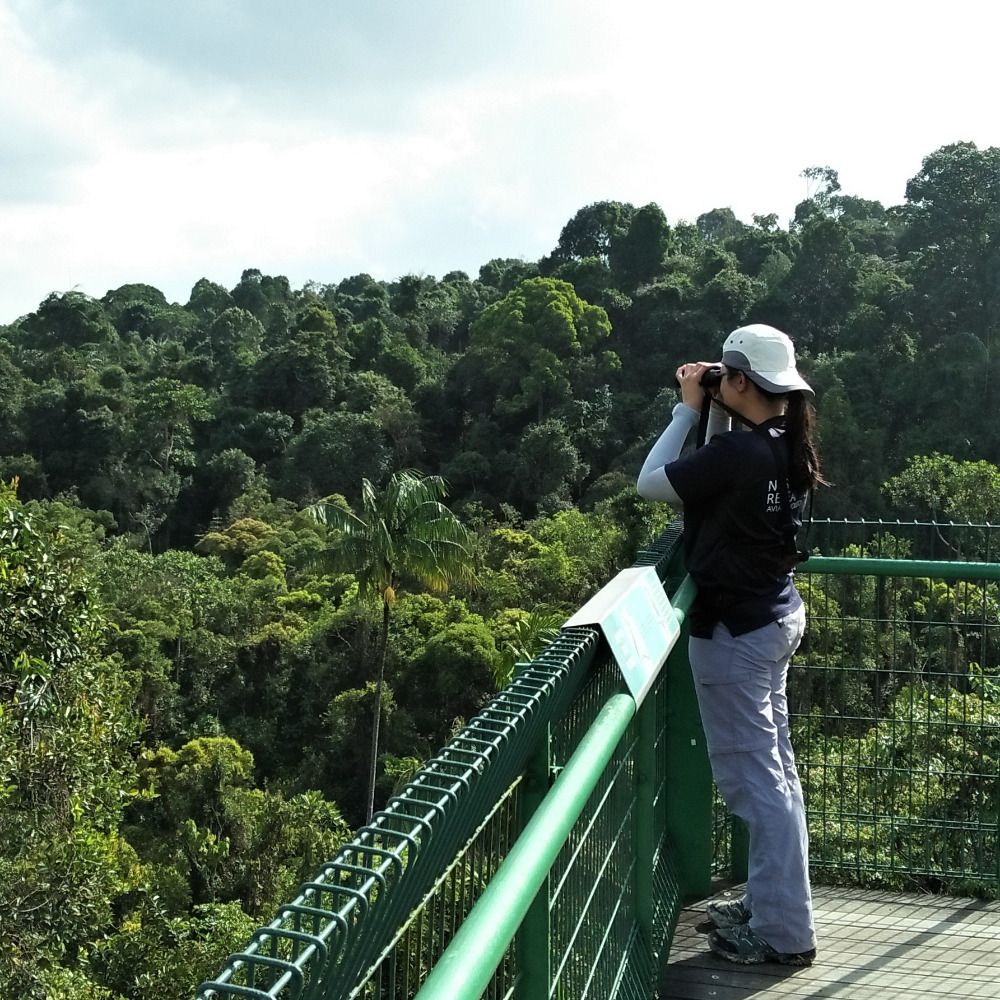
Why are Procellariiform seabirds most diverse in the Southern Hemisphere?
Our study found that wind patterns and time since evolutionary origin best explain the extratropical peak in breeding species richness of these remarkable seabirds. 🐦💨
onlinelibrary.wiley.com/doi/10.1111/...
Our study found that wind patterns and time since evolutionary origin best explain the extratropical peak in breeding species richness of these remarkable seabirds. 🐦💨
onlinelibrary.wiley.com/doi/10.1111/...

October 30, 2025 at 11:17 PM
Why are Procellariiform seabirds most diverse in the Southern Hemisphere?
Our study found that wind patterns and time since evolutionary origin best explain the extratropical peak in breeding species richness of these remarkable seabirds. 🐦💨
onlinelibrary.wiley.com/doi/10.1111/...
Our study found that wind patterns and time since evolutionary origin best explain the extratropical peak in breeding species richness of these remarkable seabirds. 🐦💨
onlinelibrary.wiley.com/doi/10.1111/...
Reposted by Tatsuya Amano
Extremelly happy that our project BirdRice was approved for funding! We will keep studying the relationships between #waterbirds and #ricefields while trying to solve human-wildlife conflicts.
#ornithology #tracking #connectivity #agriculture #conservation
@cienciasulisboa.bsky.social
#ornithology #tracking #connectivity #agriculture #conservation
@cienciasulisboa.bsky.social

October 21, 2025 at 11:03 AM
Extremelly happy that our project BirdRice was approved for funding! We will keep studying the relationships between #waterbirds and #ricefields while trying to solve human-wildlife conflicts.
#ornithology #tracking #connectivity #agriculture #conservation
@cienciasulisboa.bsky.social
#ornithology #tracking #connectivity #agriculture #conservation
@cienciasulisboa.bsky.social
Reposted by Tatsuya Amano

In a recently published Conservation Letters perspective paper, Carissa Klein and colleagues from UQ explore Australia’s long-standing claims of global leadership in marine conservation.
Read the paper here: doi.org/10.1111/conl...
Read the paper here: doi.org/10.1111/conl...

Marine Conservation Leadership: Does Australia Walk the Talk?
The conservation of Australia's extraordinary marine biodiversity has been prominently championed over the past three decades by successive Federal and State Governments, who have consistently portra...
doi.org
October 14, 2025 at 10:21 PM
In a recently published Conservation Letters perspective paper, Carissa Klein and colleagues from UQ explore Australia’s long-standing claims of global leadership in marine conservation.
Read the paper here: doi.org/10.1111/conl...
Read the paper here: doi.org/10.1111/conl...
Reposted by Tatsuya Amano
Diversity in research. How can we take into account the extra burden of publishing in English for those who are not native speakers? With AI can we now translate and look at publications from any language? @tatsuya-amano.bsky.social

Who gets to do science? A demand for English is hurting marginalised researchers
Everyone, no matter their background, should have an equal chance to work in science – but there are huge systemic barriers.
theconversation.com
October 11, 2025 at 8:27 PM
Diversity in research. How can we take into account the extra burden of publishing in English for those who are not native speakers? With AI can we now translate and look at publications from any language? @tatsuya-amano.bsky.social
For those interested to see the productivity gap for men, here are the figures using the same # years in research as female counterparts. Based on English papers:
-50% for English non-native
-58% for English non-native from low-income countries
compared to English native from a high-income country.
-50% for English non-native
-58% for English non-native from low-income countries
compared to English native from a high-income country.


September 24, 2025 at 12:21 PM
For those interested to see the productivity gap for men, here are the figures using the same # years in research as female counterparts. Based on English papers:
-50% for English non-native
-58% for English non-native from low-income countries
compared to English native from a high-income country.
-50% for English non-native
-58% for English non-native from low-income countries
compared to English native from a high-income country.
Reposted by Tatsuya Amano
Women, non-native English speakers & those form low-income countries are disadvantaged in science but by how much? We found that women with non-English first languages from low-income countries publish up to 70% fewer in English than their counterparts. 1/5
doi.org/10.1371/jour...
#languagebarriers
doi.org/10.1371/jour...
#languagebarriers

September 19, 2025 at 2:46 AM
Women, non-native English speakers & those form low-income countries are disadvantaged in science but by how much? We found that women with non-English first languages from low-income countries publish up to 70% fewer in English than their counterparts. 1/5
doi.org/10.1371/jour...
#languagebarriers
doi.org/10.1371/jour...
#languagebarriers
Reposted by Tatsuya Amano

How do your #linguistic, #economic & #gender backgrounds impact your #scientific productivity? @tatsuya-amano.bsky.social & co reveal that being a woman, a non-native English speaker, and from a low-income country is associated with a 70% reduction in productivity @plosbiology.org 🧪 plos.io/4n3RLRQ

September 19, 2025 at 8:20 AM
How do your #linguistic, #economic & #gender backgrounds impact your #scientific productivity? @tatsuya-amano.bsky.social & co reveal that being a woman, a non-native English speaker, and from a low-income country is associated with a 70% reduction in productivity @plosbiology.org 🧪 plos.io/4n3RLRQ
Read our Conversation piece on our new paper (doi.org/10.1371/jour...) here:
theconversation.com/who-gets-to-...
#languagebarriers
@aunz.theconversation.com
theconversation.com/who-gets-to-...
#languagebarriers
@aunz.theconversation.com

Who gets to do science? A demand for English is hurting marginalised researchers
Everyone, no matter their background, should have an equal chance to work in science – but there are huge systemic barriers.
theconversation.com
September 19, 2025 at 3:20 AM
Read our Conversation piece on our new paper (doi.org/10.1371/jour...) here:
theconversation.com/who-gets-to-...
#languagebarriers
@aunz.theconversation.com
theconversation.com/who-gets-to-...
#languagebarriers
@aunz.theconversation.com
女性、英語非ネイティブ、そして低所得国の出身者は、科学の世界で不利な立場にありますが、その格差はどれほどでしょうか?本研究では、英語を第一言語としない低所得国出身の女性は、英語での論文発表数が最大70%少ないことが分かりました。1/5
doi.org/10.1371/jour...
#languagebarriers
doi.org/10.1371/jour...
#languagebarriers

September 19, 2025 at 3:15 AM
女性、英語非ネイティブ、そして低所得国の出身者は、科学の世界で不利な立場にありますが、その格差はどれほどでしょうか?本研究では、英語を第一言語としない低所得国出身の女性は、英語での論文発表数が最大70%少ないことが分かりました。1/5
doi.org/10.1371/jour...
#languagebarriers
doi.org/10.1371/jour...
#languagebarriers
Women, non-native English speakers & those form low-income countries are disadvantaged in science but by how much? We found that women with non-English first languages from low-income countries publish up to 70% fewer in English than their counterparts. 1/5
doi.org/10.1371/jour...
#languagebarriers
doi.org/10.1371/jour...
#languagebarriers
September 19, 2025 at 2:46 AM
Women, non-native English speakers & those form low-income countries are disadvantaged in science but by how much? We found that women with non-English first languages from low-income countries publish up to 70% fewer in English than their counterparts. 1/5
doi.org/10.1371/jour...
#languagebarriers
doi.org/10.1371/jour...
#languagebarriers
Reposted by Tatsuya Amano

Did you know that all of our journals offer authors the chance to improve their manuscript's clarity for free? ✍️
This #PeerReviewWeek check out our post which explains why we made the decision to offer the Writefull service to all 👇
https://f.mtr.cool/rooofhshdm
This #PeerReviewWeek check out our post which explains why we made the decision to offer the Writefull service to all 👇
https://f.mtr.cool/rooofhshdm

September 17, 2025 at 10:02 AM
Did you know that all of our journals offer authors the chance to improve their manuscript's clarity for free? ✍️
This #PeerReviewWeek check out our post which explains why we made the decision to offer the Writefull service to all 👇
https://f.mtr.cool/rooofhshdm
This #PeerReviewWeek check out our post which explains why we made the decision to offer the Writefull service to all 👇
https://f.mtr.cool/rooofhshdm
Reposted by Tatsuya Amano
Much pest and disease data is in grey literature or on ephemeral web sites. Collected by government departments and agencies but they don’t publish. In the global south trade magazines and newspapers may contain earlier reports than official sources. There is a place for AI web crawlers.
August 15, 2025 at 6:59 AM
Much pest and disease data is in grey literature or on ephemeral web sites. Collected by government departments and agencies but they don’t publish. In the global south trade magazines and newspapers may contain earlier reports than official sources. There is a place for AI web crawlers.
Great to see rOpenSci’s commitment to multilingual publishing to democratize access to quality resources and increase the possibilities of contributing to software and open science projects:
www.r-bloggers.com/2025/06/mult...
ropensci.org/multilingual...
#languagebarriers
www.r-bloggers.com/2025/06/mult...
ropensci.org/multilingual...
#languagebarriers

Multilingual Publishing: Frequently Asked Questions | R-bloggers
Read it in: Español.Read it in: Français. As we’ve said before, we believe that publishing multilingual resources can lower the barrier to access to knowledge, help democratize access to quality resou...
www.r-bloggers.com
August 15, 2025 at 5:50 AM
Great to see rOpenSci’s commitment to multilingual publishing to democratize access to quality resources and increase the possibilities of contributing to software and open science projects:
www.r-bloggers.com/2025/06/mult...
ropensci.org/multilingual...
#languagebarriers
www.r-bloggers.com/2025/06/mult...
ropensci.org/multilingual...
#languagebarriers
Scientists may take pride in publishing in prestigious English journals, but it is equally important to consider how these findings can be shared more broadly with their peers and the general population, especially those who do not speak or read English. #languagebarriers
dx.doi.org/10.1038/s415...
dx.doi.org/10.1038/s415...
Improving English proficiency for scientific communication by non-fluent speakers - Nature Reviews Cardiology
English has long been the dominant language in scientific communication. Although having a universal language for scientific communication is beneficial, this standard imposes a considerable barrier f...
dx.doi.org
August 15, 2025 at 5:41 AM
Scientists may take pride in publishing in prestigious English journals, but it is equally important to consider how these findings can be shared more broadly with their peers and the general population, especially those who do not speak or read English. #languagebarriers
dx.doi.org/10.1038/s415...
dx.doi.org/10.1038/s415...
Academic and grey literature searches in 11 European languages identified over 2,000 records of floral resource traits, complementing existing databases. #languagebarriers
doi.org/10.1002/2688...
doi.org/10.1002/2688...

Reviewing published and grey literature in local European languages to supplement existing databases on floral resource traits
We collected data on plant phenology, density of flowers and production of floral resources in European countries, using published and grey literature written in 11 local languages. The collection co...
doi.org
August 15, 2025 at 5:22 AM
Academic and grey literature searches in 11 European languages identified over 2,000 records of floral resource traits, complementing existing databases. #languagebarriers
doi.org/10.1002/2688...
doi.org/10.1002/2688...