




Victor A. Albert
@plantgenomes.bsky.social
Professor, University at Buffalo | plant genomes, polyploidy, organismal radiations, phylo/population genomics, carnivorous plants, holocentric chromosomes, evolution of biosynthetic gene clusters; https://scholar.google.com/citations?user=dLniyH0AAAAJ&
Pinned


Sea sandwort (Honckenya peploides) genome update - first Nanopore flow cell looking pretty good. Dormant shoots were collected from under beach sand in Denmark. A salt tolerant species that was the first plant to appear on the volcanic island Surtsey (Iceland), which erupted out of the sea in 1963.
Reposted by Victor A. Albert
Polyploidy Conference: www.insb.cnrs.fr/fr/evolution...
Registration deadline is fast approaching! (May 19th)
Registration deadline is fast approaching! (May 19th)

Evolutionary and ecological genomics of polyploidy in plants: temporal dynamics across scales of biological organization from molecules to ecosystems
Roscoff (Bretagne), France, September 15-19, 2025Deadline for application: May 5, 2025
www.insb.cnrs.fr
May 7, 2025 at 11:39 AM
Polyploidy Conference: www.insb.cnrs.fr/fr/evolution...
Registration deadline is fast approaching! (May 19th)
Registration deadline is fast approaching! (May 19th)
Reposted by Victor A. Albert

Looking forward to the Jacques Monod Conference on polyploidy this September in Roscoff, France! Registration is open until May 19! #polyploidy
cjm.sb-roscoff.fr/en/conferenc...
cjm.sb-roscoff.fr/en/conferenc...
Evolutionary and ecological genomics of polyploidy in plants: temporal dynamics across scales of biological organization from molecules to ecosystems | CNRS - Conférences Jacques Monod (CJM)
cjm.sb-roscoff.fr
May 11, 2025 at 11:07 PM
Looking forward to the Jacques Monod Conference on polyploidy this September in Roscoff, France! Registration is open until May 19! #polyploidy
cjm.sb-roscoff.fr/en/conferenc...
cjm.sb-roscoff.fr/en/conferenc...
See Derek Taylor’s and my eLetter in #Science critiquing the #proteomic evidence ostensibly supporting the Penghu 1 mandible as a #Denisovan - at the end of www.science.org/doi/10.1126/...

May 10, 2025 at 1:46 AM
See Derek Taylor’s and my eLetter in #Science critiquing the #proteomic evidence ostensibly supporting the Penghu 1 mandible as a #Denisovan - at the end of www.science.org/doi/10.1126/...
Our paper on a chromosome-level genome of the carnivorous #butterwort plant #Pinguicula gigantea and other species is now published on bioRxiv ! Exciting to get this project close to done 😀 See the preprint here: www.biorxiv.org/content/10.1...

April 7, 2025 at 12:16 AM
Our paper on a chromosome-level genome of the carnivorous #butterwort plant #Pinguicula gigantea and other species is now published on bioRxiv ! Exciting to get this project close to done 😀 See the preprint here: www.biorxiv.org/content/10.1...
Reposted by Victor A. Albert
Cool new work! Some lineages experiencing ancient whole-genome duplications seem to hold on to their duplicate genes for a really long time & keep accumulating homoeologous exchange events! Runs counter to early models where gene loss is expected to be rapid post-WGD academic.oup.com/gbe/advance-...

A class of allopolyploidy showing high duplicate retention and continued homoeologous exchanges
Abstract. We describe four ancient polyploidy events where the descendant taxa retain many more duplicated gene copies than has been seen in other paleopol
academic.oup.com
March 22, 2025 at 2:24 AM
Cool new work! Some lineages experiencing ancient whole-genome duplications seem to hold on to their duplicate genes for a really long time & keep accumulating homoeologous exchange events! Runs counter to early models where gene loss is expected to be rapid post-WGD academic.oup.com/gbe/advance-...
Reposted by Victor A. Albert

The plant, formally known as Ovicula biradiata, is especially notable for being the simultaneous discovery of a new species and genus. It was found with help from the community science app iNaturalist. By @jamesdoubek.bsky.social
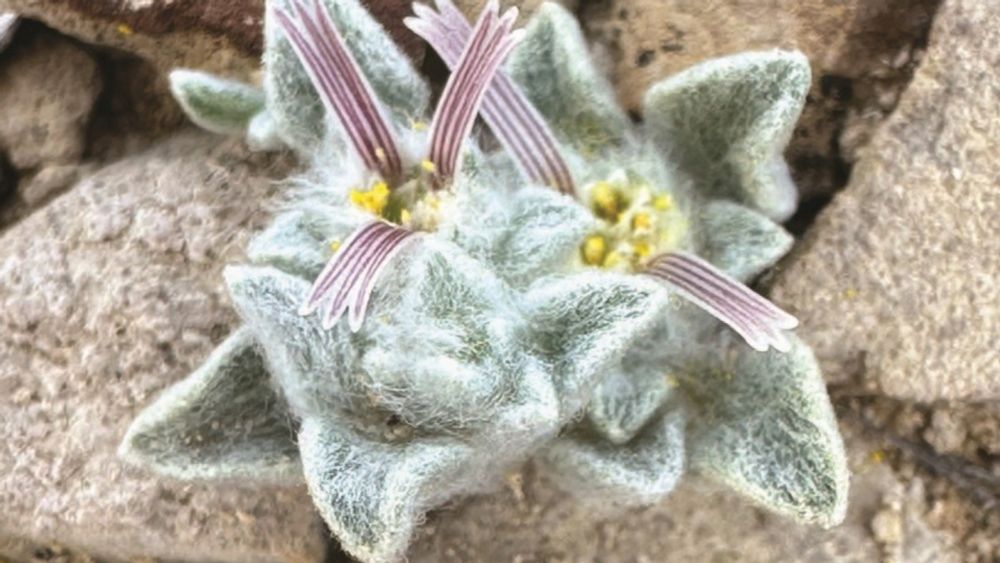
Meet the 'wooly devil,' a new plant species discovered in Big Bend National Park
The plant, formally known as Ovicula biradiata, is especially notable for being the simultaneous discovery of a new species and genus. It was found with help from the community science app iNaturalist...
www.npr.org
February 26, 2025 at 10:07 PM
The plant, formally known as Ovicula biradiata, is especially notable for being the simultaneous discovery of a new species and genus. It was found with help from the community science app iNaturalist. By @jamesdoubek.bsky.social
Reposted by Victor A. Albert

Triploidy is prominent in the duckweed Lemna minor complex https://www.biorxiv.org/content/10.1101/2025.02.18.638736v1
February 23, 2025 at 11:06 AM
Triploidy is prominent in the duckweed Lemna minor complex https://www.biorxiv.org/content/10.1101/2025.02.18.638736v1
Reposted by Victor A. Albert

Looking at new criticism and response of an argument for selection in ancient DNA data, I reflected on the huge extent that immunity now matters in our understanding of human evolution.
johnhawks.net/weblog/anoth...
johnhawks.net/weblog/anoth...

Another look at selection and the Black Death
An exchange of comments probes the story of the EPAS2 gene, balancing selection, and resistance to Yersinia pestis.
johnhawks.net
February 21, 2025 at 8:46 PM
Looking at new criticism and response of an argument for selection in ancient DNA data, I reflected on the huge extent that immunity now matters in our understanding of human evolution.
johnhawks.net/weblog/anoth...
johnhawks.net/weblog/anoth...
Reposted by Victor A. Albert
Tracing human ancestors back a million years www.newscientist.com/video/246925...

Chris Stringer is tracing human ancestors back a million years
Chris Stringer is tracing human ancestors back a million years, but pinpointing when exactly Homo sapiens emerged is even more complex
www.newscientist.com
February 19, 2025 at 7:54 PM
Tracing human ancestors back a million years www.newscientist.com/video/246925...
Sea sandwort (Honckenya peploides) genome update - first Nanopore flow cell looking pretty good. Dormant shoots were collected from under beach sand in Denmark. A salt tolerant species that was the first plant to appear on the volcanic island Surtsey (Iceland), which erupted out of the sea in 1963.
February 20, 2025 at 4:15 PM
Sea sandwort (Honckenya peploides) genome update - first Nanopore flow cell looking pretty good. Dormant shoots were collected from under beach sand in Denmark. A salt tolerant species that was the first plant to appear on the volcanic island Surtsey (Iceland), which erupted out of the sea in 1963.
Reposted by Victor A. Albert

Giant ground sloths? Armadillos?
Who - or what - cut these ancient sandstone tunnels in Brazil?
Read the full story: www.nature.com/articles/d41...
Who - or what - cut these ancient sandstone tunnels in Brazil?
Read the full story: www.nature.com/articles/d41...


February 12, 2025 at 11:14 AM
Giant ground sloths? Armadillos?
Who - or what - cut these ancient sandstone tunnels in Brazil?
Read the full story: www.nature.com/articles/d41...
Who - or what - cut these ancient sandstone tunnels in Brazil?
Read the full story: www.nature.com/articles/d41...
Reposted by Victor A. Albert
Rapid evolution of prehistoric dogs from wolves by natural and sexual selection emerges from an agent-based model | Proceedings of the Royal Society B: Biological Sciences royalsocietypublishing.org/doi/10.1098/...

Rapid evolution of prehistoric dogs from wolves by natural and sexual selection emerges from an agent-based model | Proceedings of the Royal Society B: Biological Sciences
Wolves are among the earliest animals to be domesticated. However, the mechanism by
which ancient wolves were domesticated into modern dogs is unknown. Most of the prevailing
domestication hypotheses ...
royalsocietypublishing.org
February 12, 2025 at 11:38 AM
Rapid evolution of prehistoric dogs from wolves by natural and sexual selection emerges from an agent-based model | Proceedings of the Royal Society B: Biological Sciences royalsocietypublishing.org/doi/10.1098/...
Reposted by Victor A. Albert
Here, a celebration of Apocynaceae (dogbanes, milkweeds, swallow-worts etc.) fruits and flowers tucked into a phylogenetic study. Remarkable diversity.
www.frontiersin.org/journals/eco...
www.frontiersin.org/journals/eco...


February 12, 2025 at 10:31 PM
Here, a celebration of Apocynaceae (dogbanes, milkweeds, swallow-worts etc.) fruits and flowers tucked into a phylogenetic study. Remarkable diversity.
www.frontiersin.org/journals/eco...
www.frontiersin.org/journals/eco...
Reposted by Victor A. Albert
The discovery that Africa is the birthplace of human evolution: Marking 100 years since Australopithecus africanus transformed our understanding.
www.nature.com/articles/d44...
www.nature.com/articles/d44...

The discovery that Africa is the birthplace of human evolution
Marking 100 years since Australopithecus Africanus transformed our understanding.
www.nature.com
February 9, 2025 at 10:56 PM
The discovery that Africa is the birthplace of human evolution: Marking 100 years since Australopithecus africanus transformed our understanding.
www.nature.com/articles/d44...
www.nature.com/articles/d44...
Reposted by Victor A. Albert

New paper led by @glom.bsky.social!
"Unprecedented female female bias in the aye-aye, a highly unusual lemur from Madagascar"
1/
journals.plos.org/plosbiology/...
"Unprecedented female female bias in the aye-aye, a highly unusual lemur from Madagascar"
1/
journals.plos.org/plosbiology/...

February 10, 2025 at 2:50 PM
New paper led by @glom.bsky.social!
"Unprecedented female female bias in the aye-aye, a highly unusual lemur from Madagascar"
1/
journals.plos.org/plosbiology/...
"Unprecedented female female bias in the aye-aye, a highly unusual lemur from Madagascar"
1/
journals.plos.org/plosbiology/...
Reposted by Victor A. Albert

Aye-ayes are clearly unusual, but @glom.bsky.social @3rdreviewer.bsky.social &co show that they also have an unusual pattern of #MutationBias; older females transmit more mutations than males. This is a first for mammals, raising questions about other #lemurs 🧪 @plosbiology.org plos.io/40SR4kj

February 10, 2025 at 11:10 AM
Aye-ayes are clearly unusual, but @glom.bsky.social @3rdreviewer.bsky.social &co show that they also have an unusual pattern of #MutationBias; older females transmit more mutations than males. This is a first for mammals, raising questions about other #lemurs 🧪 @plosbiology.org plos.io/40SR4kj
Reposted by Victor A. Albert
The Archaeology of Cannibalism: a Review of the Taphonomic Traits Associated with Survival and Ritualistic Cannibalism link.springer.com/article/10.1...

The Archaeology of Cannibalism: a Review of the Taphonomic Traits Associated with Survival and Ritualistic Cannibalism - Journal of Archaeological Method and Theory
Taphonomic studies of osteoarchaeological human assemblages have mainly focused on establishing recognisable markers that allow us to discriminate between humanly induced modifications from natural ca...
link.springer.com
February 9, 2025 at 11:34 AM
The Archaeology of Cannibalism: a Review of the Taphonomic Traits Associated with Survival and Ritualistic Cannibalism link.springer.com/article/10.1...
Reposted by Victor A. Albert

🎉🆕📰🎉: Phylogenomic analysis of target enrichment and transcriptome data uncovers rapid radiation and extensive hybridization in the slipper orchid genus Cypripedium
doi.org
February 9, 2025 at 9:12 AM
🎉🆕📰🎉: Phylogenomic analysis of target enrichment and transcriptome data uncovers rapid radiation and extensive hybridization in the slipper orchid genus Cypripedium
Reposted by Victor A. Albert

Sharing our combo of evolutionary genomics with plant natural products chemistry to resolve complex monoterpene indole alkaloid biosynthesis 🌿🍀🧪🧪🧬🧬
www.biorxiv.org/content/10.1...
www.biorxiv.org/content/10.1...

Ancient gene clusters initiate monoterpene indole alkaloid biosynthesis and C-3 stereochemistry inversion
The inversion of C3 stereochemistry in monoterpenoid indole alkaloids (MIAs), derived from the central precursor strictosidine (3S), is essential for synthesizing numerous 3R MIAs and oxindoles, including the antihypertensive drug reserpine found in Rauvolfia serpentina (Indian snakeroot) and Rauvolfia tetraphylla (devil pepper) of the plant family Apocynaceae. MIA biosynthesis begins with the reduction of strictosidine aglycone by various reductases, preserving the initial 3S stereochemistry. In this study, we identify and biochemically characterize a conserved oxidase-reductase pair from the Apocynaceae, Rubiaceae, and Gelsemiaceae families of the order Gentianales: the heteroyohimbine/yohimbine/corynanthe C3-oxidase (HYC3O) and C3-reductase (HYC3R). These enzymes collaboratively invert the 3S stereochemistry to 3R across a range of substrates, resolving the long-standing question about the origin of 3R MIAs and oxindole derivatives, and facilitation of reserpine biosynthesis. Notably, HYC3O and HYC3R are located within gene clusters in both the R. tetraphylla and Catharanthus roseus (Madagascar periwinkle) genomes, which are partially homologous to an elusive geissoschizine synthase (GS) gene cluster we also identified in these species. In R. tetraphylla, these clusters occur closely in tandem on a single chromosome, likely stemming from a single segmental duplication event, while in C. roseus, a closely related member of rauvolfioid Apocynaceae, they were later separated by a chromosomal translocation. The ancestral genomic context for both clusters can be traced all the way back to common ancestry with grapevine. Given the presence of syntenic GS homologs in Mitragyna speciosa (Rubiaceae), the GS cluster, at least in part, likely evolved at the base of the Gentianales, which split from other core eudicots up to 135 million years ago. We also show that the strictosidine biosynthetic gene cluster, required to initiate the MIA pathway, likely evolved concurrently. The reserpine biosynthetic cluster likely arose much later in the rauvolfioid lineage of Apocynaceae. Collectively, our work uncovers the genomic and biochemical basis for key events in MIA evolution and diversification, providing insights beyond the well-characterized vinblastine and ajmaline biosynthetic pathways. ### Competing Interest Statement The authors have declared no competing interest.
www.biorxiv.org
January 11, 2025 at 8:38 AM
Sharing our combo of evolutionary genomics with plant natural products chemistry to resolve complex monoterpene indole alkaloid biosynthesis 🌿🍀🧪🧪🧬🧬
www.biorxiv.org/content/10.1...
www.biorxiv.org/content/10.1...
Reposted by Victor A. Albert
One hominin fossil with a remarkable history comes from a small town near Stuttgart, Germany, called Steinheim an der Murr. Found in 1933, the scientist who studied the skull secreted it away under his bed for years to keep powerful Nazi competitors from studying it.
johnhawks.net/weblog/a-loo...
johnhawks.net/weblog/a-loo...
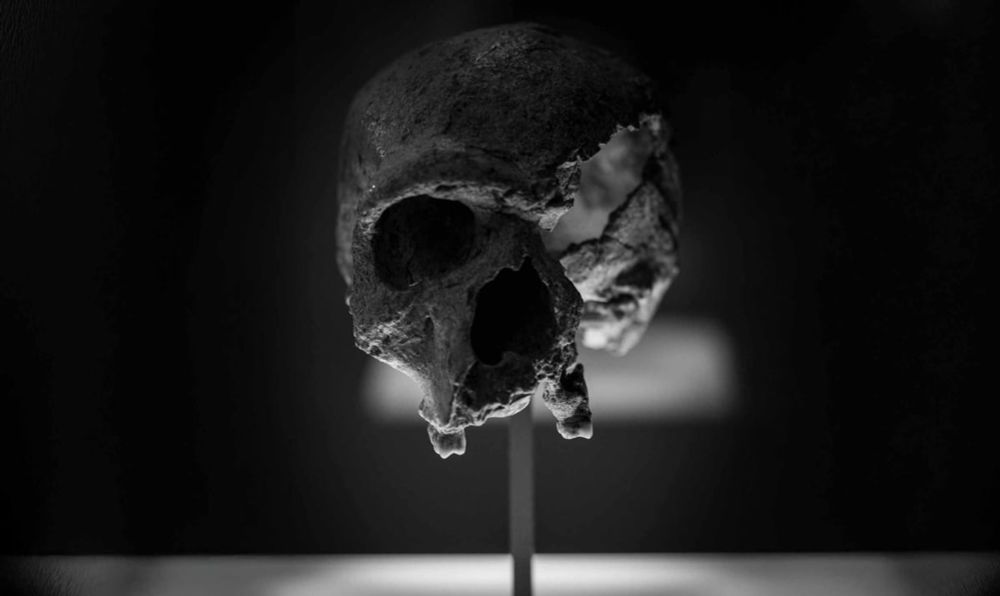
A look at the fossil skull from Steinheim
The skull provides some of the best evidence for the ancestral population of Neandertals, and had a tumultuous history in the decades after its discovery.
johnhawks.net
January 6, 2025 at 6:52 PM
One hominin fossil with a remarkable history comes from a small town near Stuttgart, Germany, called Steinheim an der Murr. Found in 1933, the scientist who studied the skull secreted it away under his bed for years to keep powerful Nazi competitors from studying it.
johnhawks.net/weblog/a-loo...
johnhawks.net/weblog/a-loo...
Reposted by Victor A. Albert
Homo juluensis: we talk to anthropologist Christopher Bae and paleontologist Chris Stringer to learn more about the finding…https://www.bbc.com/reel/video/p0kftjyg/homo-juluensis-possible-new-ancient-human-identified

Homo juluensis: Possible 'new ancient human' identified
Researchers may have identified a new human species that lived around 300,000 years ago in Asia.
www.bbc.com
January 7, 2025 at 1:25 PM
Homo juluensis: we talk to anthropologist Christopher Bae and paleontologist Chris Stringer to learn more about the finding…https://www.bbc.com/reel/video/p0kftjyg/homo-juluensis-possible-new-ancient-human-identified
Reposted by Victor A. Albert
New Article: "Pan-phylum genomes of hornworts reveal conserved autosomes but dynamic accessory and sex chromosomes" rdcu.be/d5ris
11 new hornwort genomes: structure & evolution of sex & accessory chromosomes in bryophytes; new light on early evolution of land plants. #PlantScience
11 new hornwort genomes: structure & evolution of sex & accessory chromosomes in bryophytes; new light on early evolution of land plants. #PlantScience

January 6, 2025 at 2:18 PM
New Article: "Pan-phylum genomes of hornworts reveal conserved autosomes but dynamic accessory and sex chromosomes" rdcu.be/d5ris
11 new hornwort genomes: structure & evolution of sex & accessory chromosomes in bryophytes; new light on early evolution of land plants. #PlantScience
11 new hornwort genomes: structure & evolution of sex & accessory chromosomes in bryophytes; new light on early evolution of land plants. #PlantScience
Reposted by Victor A. Albert
Happy to share our Tansley insight published in @newphyt.bsky.social
nph.onlinelibrary.wiley.com/doi/epdf/10....
#plantscience #chromosome #centromere #meiosis
nph.onlinelibrary.wiley.com/doi/epdf/10....
#plantscience #chromosome #centromere #meiosis
Centromere diversity and its evolutionary impacts on plant karyotypes and plant reproduction
You have to enable JavaScript in your browser's settings in order to use the eReader.
nph.onlinelibrary.wiley.com
January 7, 2025 at 8:22 AM
Happy to share our Tansley insight published in @newphyt.bsky.social
nph.onlinelibrary.wiley.com/doi/epdf/10....
#plantscience #chromosome #centromere #meiosis
nph.onlinelibrary.wiley.com/doi/epdf/10....
#plantscience #chromosome #centromere #meiosis