




Mark Neeman
@mrneeman.bsky.social
Physical therapist by day, girl dad, long suffering Husker 🎈🏈 and Cowboys fan 🔵 🏈
Reposted by Mark Neeman

M33 Triangulum Galaxy, 2021-08-06 - From Ryan Kinnett (rkinnett.bsky.social) - https://flic.kr/p/2mgieU9

December 6, 2025 at 8:00 PM
M33 Triangulum Galaxy, 2021-08-06 - From Ryan Kinnett (rkinnett.bsky.social) - https://flic.kr/p/2mgieU9
Reposted by Mark Neeman
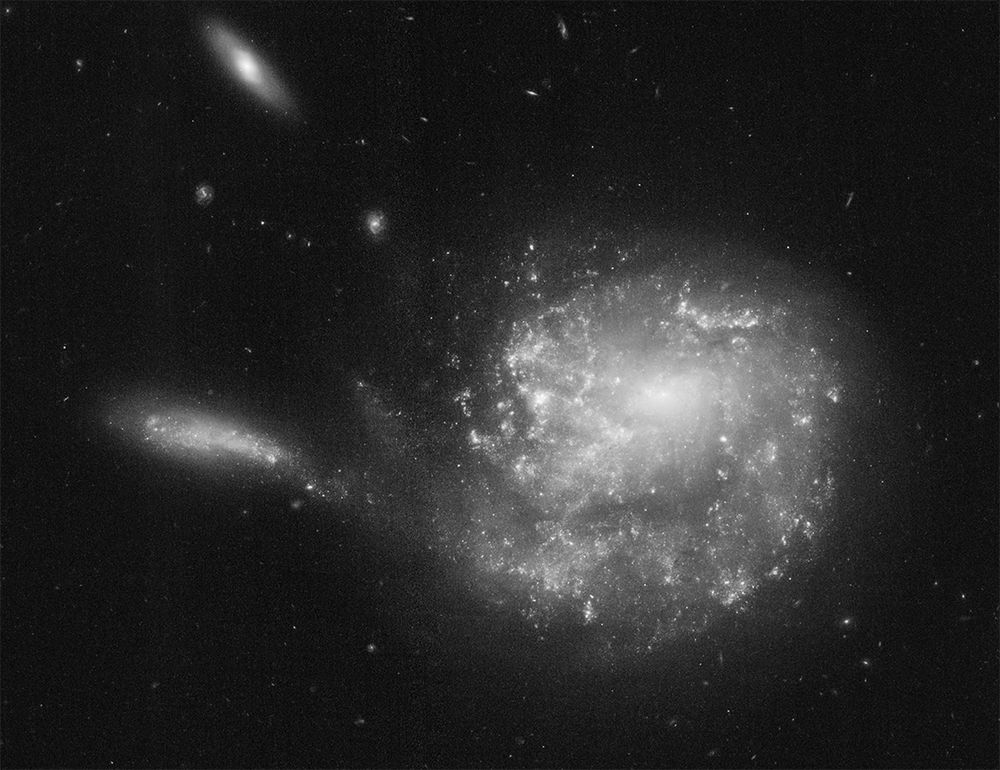
Hubble image of Arp 24, also known as NGC 3445.
NGC 3445 has one fan-like spiral arm that is dotted with star-forming regions. It is connected to its companion galaxy, seen nearly edge-on to the left, by a weak bridge.
Credit: NASA, ESA, STScI, J. Dalcanton, Judy Schmidt
Source
NGC 3445 has one fan-like spiral arm that is dotted with star-forming regions. It is connected to its companion galaxy, seen nearly edge-on to the left, by a weak bridge.
Credit: NASA, ESA, STScI, J. Dalcanton, Judy Schmidt
Source
December 6, 2025 at 12:31 PM
Hubble image of Arp 24, also known as NGC 3445.
NGC 3445 has one fan-like spiral arm that is dotted with star-forming regions. It is connected to its companion galaxy, seen nearly edge-on to the left, by a weak bridge.
Credit: NASA, ESA, STScI, J. Dalcanton, Judy Schmidt
Source
NGC 3445 has one fan-like spiral arm that is dotted with star-forming regions. It is connected to its companion galaxy, seen nearly edge-on to the left, by a weak bridge.
Credit: NASA, ESA, STScI, J. Dalcanton, Judy Schmidt
Source
Reposted by Mark Neeman
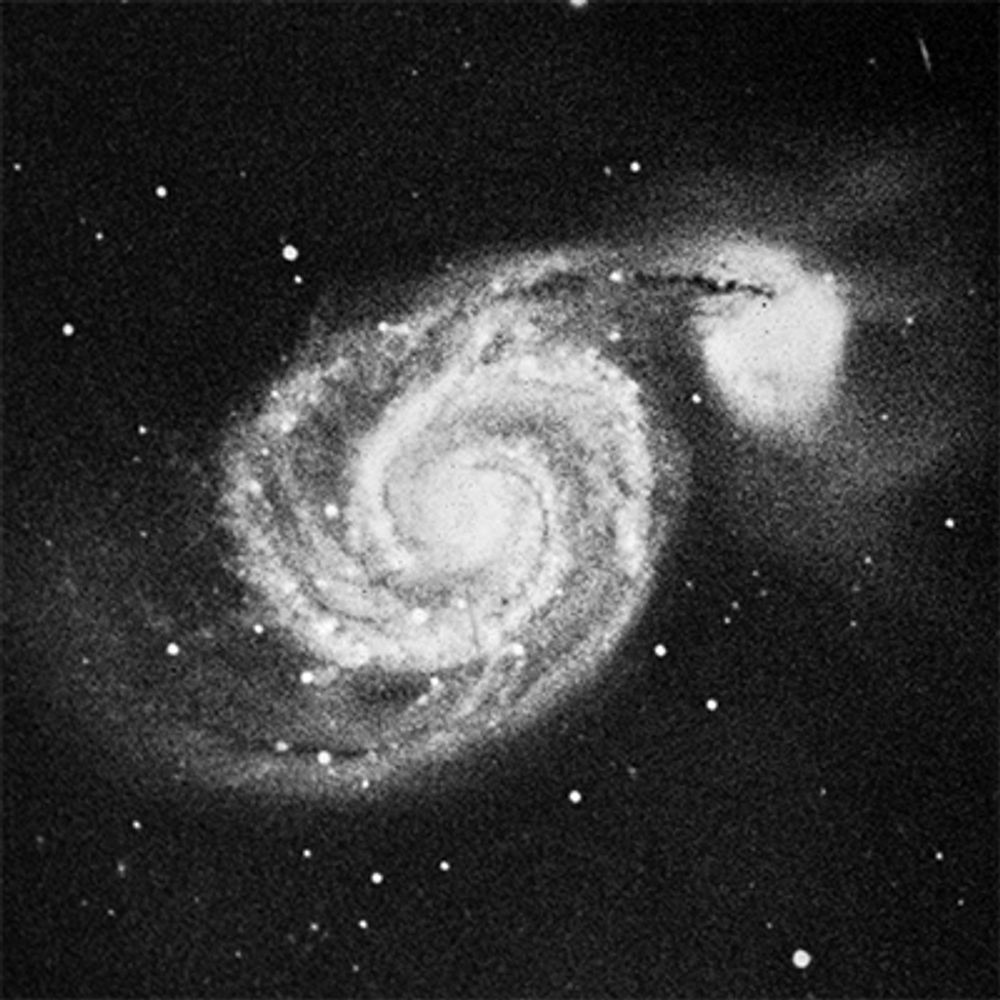
Image of Arp 94, also known as NGC 3226 and NGC 3227, from Halton Arp's Atlas of Peculiar Galaxies (1966).
In the original catalog it was in the category: Spiral galaxies - Elliptical companions. Spiral NGC 3227 interacts with elliptical NGC 3226.
Source
In the original catalog it was in the category: Spiral galaxies - Elliptical companions. Spiral NGC 3227 interacts with elliptical NGC 3226.
Source

December 6, 2025 at 12:31 AM
Image of Arp 94, also known as NGC 3226 and NGC 3227, from Halton Arp's Atlas of Peculiar Galaxies (1966).
In the original catalog it was in the category: Spiral galaxies - Elliptical companions. Spiral NGC 3227 interacts with elliptical NGC 3226.
Source
In the original catalog it was in the category: Spiral galaxies - Elliptical companions. Spiral NGC 3227 interacts with elliptical NGC 3226.
Source
Reposted by Mark Neeman

🧵
The #JWST has recently given us one of the most beautiful images of late years: the stellar system Apep, a trio of massive stars surrounded by four perfect dust spirals that look almost drawn by hand.
➡️ science.nasa.gov/missions/web...
🔭 🧪 #science #stellarastro #astro
1/9
The #JWST has recently given us one of the most beautiful images of late years: the stellar system Apep, a trio of massive stars surrounded by four perfect dust spirals that look almost drawn by hand.
➡️ science.nasa.gov/missions/web...
🔭 🧪 #science #stellarastro #astro
1/9
December 5, 2025 at 12:25 AM
🧵
The #JWST has recently given us one of the most beautiful images of late years: the stellar system Apep, a trio of massive stars surrounded by four perfect dust spirals that look almost drawn by hand.
➡️ science.nasa.gov/missions/web...
🔭 🧪 #science #stellarastro #astro
1/9
The #JWST has recently given us one of the most beautiful images of late years: the stellar system Apep, a trio of massive stars surrounded by four perfect dust spirals that look almost drawn by hand.
➡️ science.nasa.gov/missions/web...
🔭 🧪 #science #stellarastro #astro
1/9
Reposted by Mark Neeman

Hubble Spots a Storm of New Stars

Hubble Spots a Storm of New Stars - NASA Science
This Hubble image features a stormy and highly active spiral galaxy named NGC 1792, located over 50 million light-years from Earth.
science.nasa.gov
December 5, 2025 at 4:32 PM
Hubble Spots a Storm of New Stars
Reposted by Mark Neeman
Here is a stunning image of Interstellar Comet 3I/ATLAS, taken on Dec. 2 by astrophotographers Gerald Rhemann and Michael Jäger, showing the comet's long wispy plasma tail in full glory and a dusty anti-tail.
www.facebook.com/groups/22700...
#Astronomy
1/n
www.facebook.com/groups/22700...
#Astronomy
1/n

December 5, 2025 at 1:21 PM
Here is a stunning image of Interstellar Comet 3I/ATLAS, taken on Dec. 2 by astrophotographers Gerald Rhemann and Michael Jäger, showing the comet's long wispy plasma tail in full glory and a dusty anti-tail.
www.facebook.com/groups/22700...
#Astronomy
1/n
www.facebook.com/groups/22700...
#Astronomy
1/n
Reposted by Mark Neeman

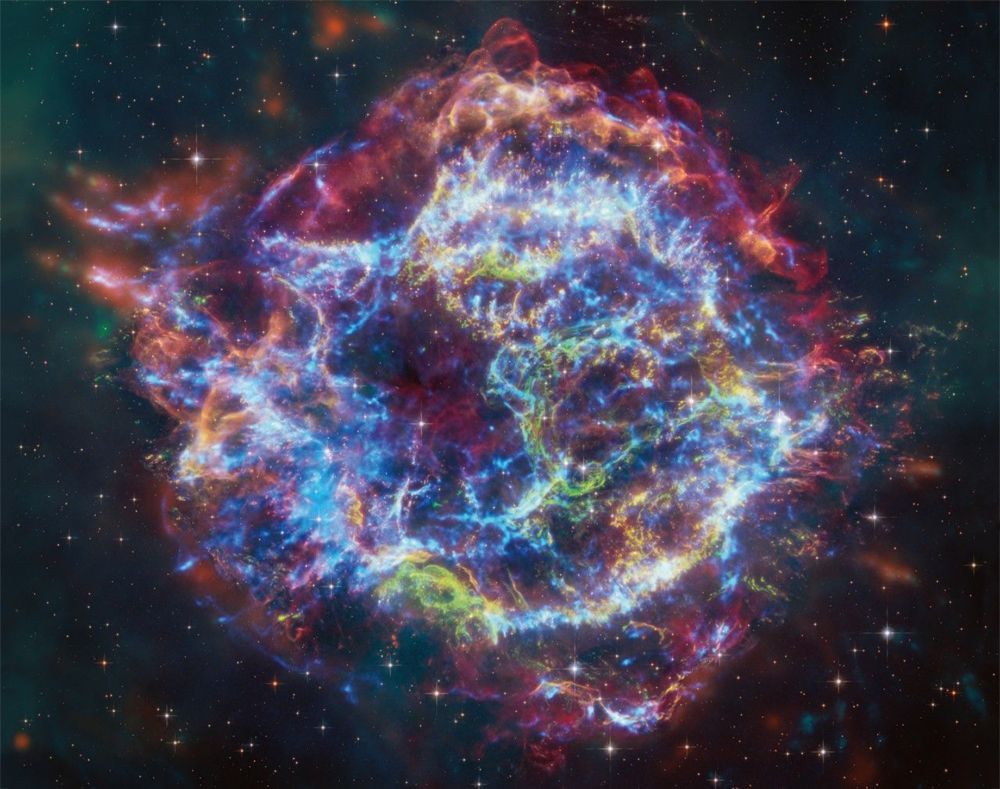
NASA-JAXA XRISM Finds Elemental Bounty in Supernova Remnant science.nasa.gov/missions/xri...
For the first time, scientists have made a clear X-ray detection of chlorine and potassium in the wreckage of a star using data from the Japan-led XRISM (X-ray Imaging and Spectroscopy Mission) spacecraft.
For the first time, scientists have made a clear X-ray detection of chlorine and potassium in the wreckage of a star using data from the Japan-led XRISM (X-ray Imaging and Spectroscopy Mission) spacecraft.
December 5, 2025 at 5:16 PM
NASA-JAXA XRISM Finds Elemental Bounty in Supernova Remnant science.nasa.gov/missions/xri...
For the first time, scientists have made a clear X-ray detection of chlorine and potassium in the wreckage of a star using data from the Japan-led XRISM (X-ray Imaging and Spectroscopy Mission) spacecraft.
For the first time, scientists have made a clear X-ray detection of chlorine and potassium in the wreckage of a star using data from the Japan-led XRISM (X-ray Imaging and Spectroscopy Mission) spacecraft.
Reposted by Mark Neeman
The Bipolar Jets of KX Andromedae apod.nasa.gov/apod/ap25120...
Blasting outward from variable star KX Andromedae, these stunning bipolar jets are 19 light-years long.
Blasting outward from variable star KX Andromedae, these stunning bipolar jets are 19 light-years long.

December 5, 2025 at 5:10 PM
The Bipolar Jets of KX Andromedae apod.nasa.gov/apod/ap25120...
Blasting outward from variable star KX Andromedae, these stunning bipolar jets are 19 light-years long.
Blasting outward from variable star KX Andromedae, these stunning bipolar jets are 19 light-years long.
Reposted by Mark Neeman
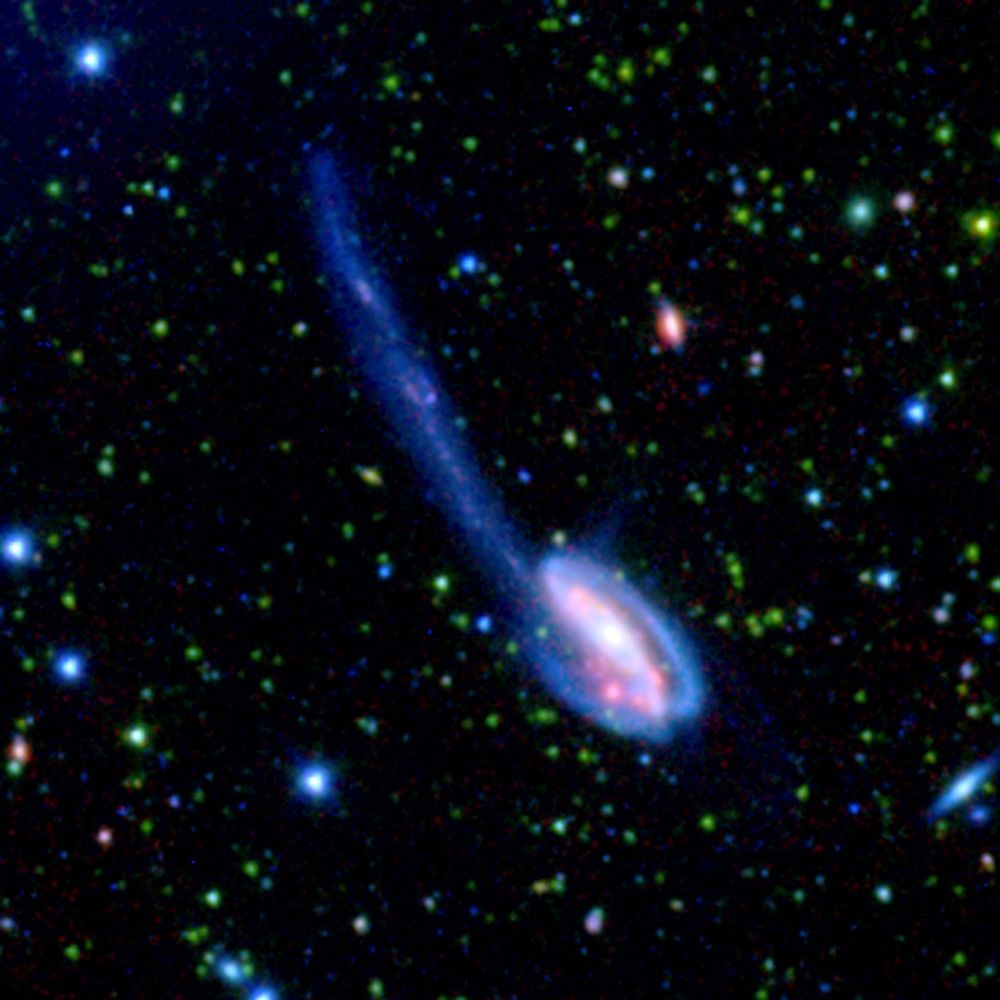
Spitzer image of Arp 188, also known as the Tadpole Galaxy.
It is a result of a recent galactic interaction. A small intruder galaxy created a 280,000 light-year-long tail of stars and gas.
Credit: NASA/JPL-Caltech/C. Lonsdale (IPAC/Caltech), SWIRE Team
Source
It is a result of a recent galactic interaction. A small intruder galaxy created a 280,000 light-year-long tail of stars and gas.
Credit: NASA/JPL-Caltech/C. Lonsdale (IPAC/Caltech), SWIRE Team
Source
December 2, 2025 at 12:31 AM
Spitzer image of Arp 188, also known as the Tadpole Galaxy.
It is a result of a recent galactic interaction. A small intruder galaxy created a 280,000 light-year-long tail of stars and gas.
Credit: NASA/JPL-Caltech/C. Lonsdale (IPAC/Caltech), SWIRE Team
Source
It is a result of a recent galactic interaction. A small intruder galaxy created a 280,000 light-year-long tail of stars and gas.
Credit: NASA/JPL-Caltech/C. Lonsdale (IPAC/Caltech), SWIRE Team
Source
Reposted by Mark Neeman

Amazing: NGC 5335 in exquisite detail.
This flocculent spiral galaxy features patchy star-forming regions and no clear spiral arms, giving it a soft, irregular appearance.
(Credit: NASA, ESA, STScI)
This flocculent spiral galaxy features patchy star-forming regions and no clear spiral arms, giving it a soft, irregular appearance.
(Credit: NASA, ESA, STScI)

November 25, 2025 at 6:19 PM
Amazing: NGC 5335 in exquisite detail.
This flocculent spiral galaxy features patchy star-forming regions and no clear spiral arms, giving it a soft, irregular appearance.
(Credit: NASA, ESA, STScI)
This flocculent spiral galaxy features patchy star-forming regions and no clear spiral arms, giving it a soft, irregular appearance.
(Credit: NASA, ESA, STScI)
Reposted by Mark Neeman
IC-1805 -The Soul Nebula. HOO process
40 mins from 10th November 2025.
ZS61, ASI 585MC, L-eXtreme filter.
#astronomy #astrophotography
40 mins from 10th November 2025.
ZS61, ASI 585MC, L-eXtreme filter.
#astronomy #astrophotography

November 11, 2025 at 1:17 PM
IC-1805 -The Soul Nebula. HOO process
40 mins from 10th November 2025.
ZS61, ASI 585MC, L-eXtreme filter.
#astronomy #astrophotography
40 mins from 10th November 2025.
ZS61, ASI 585MC, L-eXtreme filter.
#astronomy #astrophotography
Reposted by Mark Neeman


Reposted by Mark Neeman
Comet C/2025 A6 (Lemmon) over Mt Shasta, California, beautifully captured by photographer Kenneth LeRose last night.
☄️
Kenneth LeRose's website - www.krlphoto.com/shop-art
More on the comet at fosstodon.org/@AkaSci/1153...
#Astronomy
☄️
Kenneth LeRose's website - www.krlphoto.com/shop-art
More on the comet at fosstodon.org/@AkaSci/1153...
#Astronomy

October 17, 2025 at 11:22 PM
Comet C/2025 A6 (Lemmon) over Mt Shasta, California, beautifully captured by photographer Kenneth LeRose last night.
☄️
Kenneth LeRose's website - www.krlphoto.com/shop-art
More on the comet at fosstodon.org/@AkaSci/1153...
#Astronomy
☄️
Kenneth LeRose's website - www.krlphoto.com/shop-art
More on the comet at fosstodon.org/@AkaSci/1153...
#Astronomy
Reposted by Mark Neeman
A clumpy galaxy, possibly merging, observed with the Hubble Space Telescope in the AEGIS survey.
It is at redshift 0.95 (lookback time 7.74 billion years) with coordinates (214.25472, 52.49353).
117 volunteers classified this galaxy in Galaxy Zoo: Hubble.
It is at redshift 0.95 (lookback time 7.74 billion years) with coordinates (214.25472, 52.49353).
117 volunteers classified this galaxy in Galaxy Zoo: Hubble.

September 16, 2025 at 1:22 AM
A clumpy galaxy, possibly merging, observed with the Hubble Space Telescope in the AEGIS survey.
It is at redshift 0.95 (lookback time 7.74 billion years) with coordinates (214.25472, 52.49353).
117 volunteers classified this galaxy in Galaxy Zoo: Hubble.
It is at redshift 0.95 (lookback time 7.74 billion years) with coordinates (214.25472, 52.49353).
117 volunteers classified this galaxy in Galaxy Zoo: Hubble.
Reposted by Mark Neeman
A spectacular sight!
NGC 3256 is a peculiar galaxy formed from the collision of two separate galaxies in the constellation of Vela located about 122 million light-years away and belongs to the Hydra–Centaurus Supercluster complex.
(Credit: ESA/Hubble, NASA)
NGC 3256 is a peculiar galaxy formed from the collision of two separate galaxies in the constellation of Vela located about 122 million light-years away and belongs to the Hydra–Centaurus Supercluster complex.
(Credit: ESA/Hubble, NASA)

September 5, 2025 at 4:22 PM
A spectacular sight!
NGC 3256 is a peculiar galaxy formed from the collision of two separate galaxies in the constellation of Vela located about 122 million light-years away and belongs to the Hydra–Centaurus Supercluster complex.
(Credit: ESA/Hubble, NASA)
NGC 3256 is a peculiar galaxy formed from the collision of two separate galaxies in the constellation of Vela located about 122 million light-years away and belongs to the Hydra–Centaurus Supercluster complex.
(Credit: ESA/Hubble, NASA)
Reposted by Mark Neeman

The Spider Nebula | NASA

August 29, 2025 at 10:26 AM
The Spider Nebula | NASA
Reposted by Mark Neeman

Sun ejecting Plasma, as captured by the Parker Solar Probe.
-Credits: NASA
-Credits: NASA
July 24, 2025 at 8:28 PM
Sun ejecting Plasma, as captured by the Parker Solar Probe.
-Credits: NASA
-Credits: NASA
Reposted by Mark Neeman
Hubble Sees a Young Star Take Center Stage - From Goddard Space Flight Center - https://flic.kr/p/rssNC7

June 30, 2025 at 7:00 PM
Hubble Sees a Young Star Take Center Stage - From Goddard Space Flight Center - https://flic.kr/p/rssNC7
Reposted by Mark Neeman
The NASA/ESA Hubble Space Telescope highlights the nearby galaxy NGC 4449. The galaxy is about 12.5 million light-years away in the constellation Canes Venatici (The Hunting Dogs) & is know as a starburst galaxy due to many new stars being created.
More info: esahubble.org/images/potw2...
More info: esahubble.org/images/potw2...

June 25, 2025 at 11:43 PM
The NASA/ESA Hubble Space Telescope highlights the nearby galaxy NGC 4449. The galaxy is about 12.5 million light-years away in the constellation Canes Venatici (The Hunting Dogs) & is know as a starburst galaxy due to many new stars being created.
More info: esahubble.org/images/potw2...
More info: esahubble.org/images/potw2...
Reposted by Mark Neeman
Stunning: NGC 685, a barred spiral galaxy 64 million light-years away, ablaze with young blue stars and glowing pink H II gas clouds—signs of ongoing star birth
(Credit: ESA/Hubble & NASA, J. Lee, F. Belfiore)
(Credit: ESA/Hubble & NASA, J. Lee, F. Belfiore)

June 7, 2025 at 5:34 PM
Stunning: NGC 685, a barred spiral galaxy 64 million light-years away, ablaze with young blue stars and glowing pink H II gas clouds—signs of ongoing star birth
(Credit: ESA/Hubble & NASA, J. Lee, F. Belfiore)
(Credit: ESA/Hubble & NASA, J. Lee, F. Belfiore)
Reposted by Mark Neeman

concerned about the state of the world because of two powerful men fighting? doomscrolling again?
stop. breathe. enjoy the universe for a brief moment
stop. breathe. enjoy the universe for a brief moment


June 5, 2025 at 9:38 PM
concerned about the state of the world because of two powerful men fighting? doomscrolling again?
stop. breathe. enjoy the universe for a brief moment
stop. breathe. enjoy the universe for a brief moment
Reposted by Mark Neeman
Spectacular: The glittering specks in this image, resembling a distant flock of flying birds, are the stars that make up the dwarf galaxy ESO 540-31.
(Credit: ESA/Hubble & NASA - Acknowledgement: Luca Limatola)
(Credit: ESA/Hubble & NASA - Acknowledgement: Luca Limatola)

May 31, 2025 at 5:19 PM
Spectacular: The glittering specks in this image, resembling a distant flock of flying birds, are the stars that make up the dwarf galaxy ESO 540-31.
(Credit: ESA/Hubble & NASA - Acknowledgement: Luca Limatola)
(Credit: ESA/Hubble & NASA - Acknowledgement: Luca Limatola)
Reposted by Mark Neeman

🔭 This weeks NASA/ESA Hubble Space Telescope image of the week features the stately and inclined spiral galaxy NGC 3511.
From Hubble’s vantage point in orbit around Earth, NGC 3511 is tilted by about 70 degrees!
From Hubble’s vantage point in orbit around Earth, NGC 3511 is tilted by about 70 degrees!

May 19, 2025 at 8:43 AM
🔭 This weeks NASA/ESA Hubble Space Telescope image of the week features the stately and inclined spiral galaxy NGC 3511.
From Hubble’s vantage point in orbit around Earth, NGC 3511 is tilted by about 70 degrees!
From Hubble’s vantage point in orbit around Earth, NGC 3511 is tilted by about 70 degrees!
Reposted by Mark Neeman
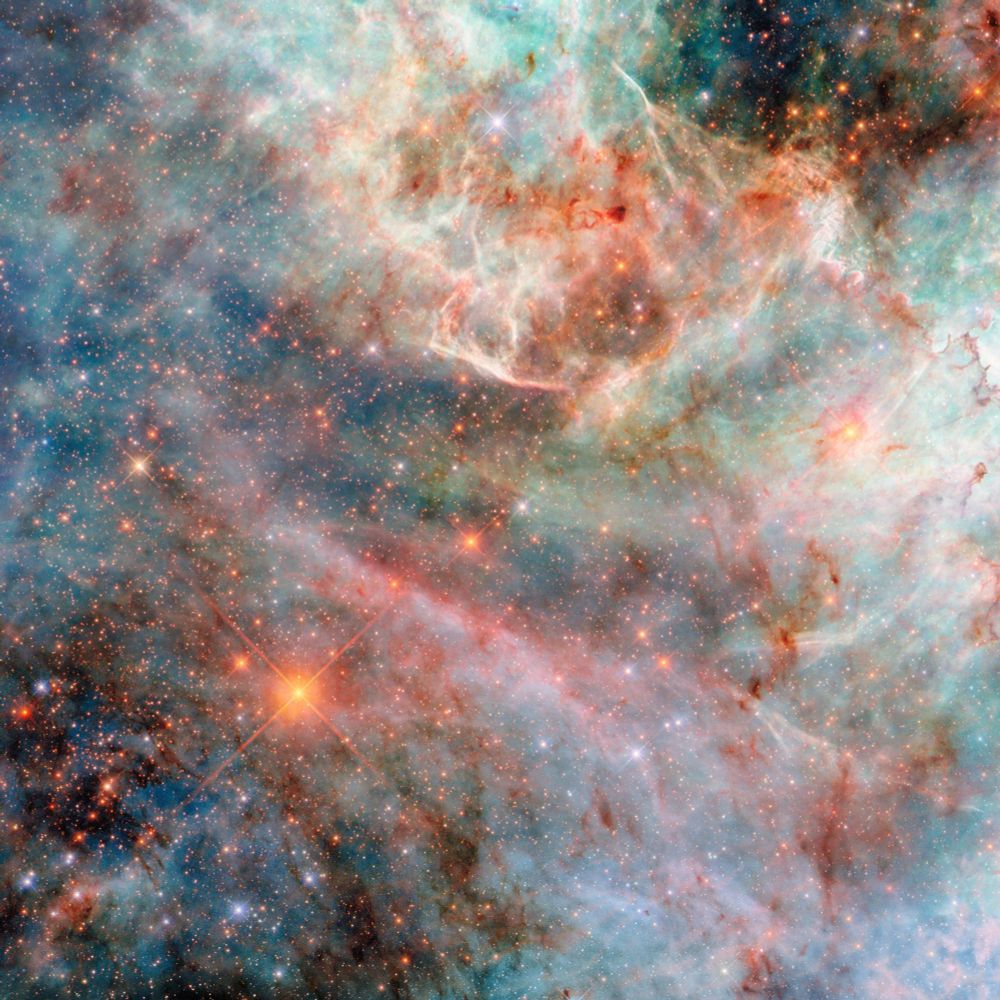
LOOK AT TODAY’S BEAUTIFUL NEW HUBBLE IMAGE OF THE LARGE MAGELLANIC CLOUD!!! 🌌
May 16, 2025 at 5:23 PM
LOOK AT TODAY’S BEAUTIFUL NEW HUBBLE IMAGE OF THE LARGE MAGELLANIC CLOUD!!! 🌌