


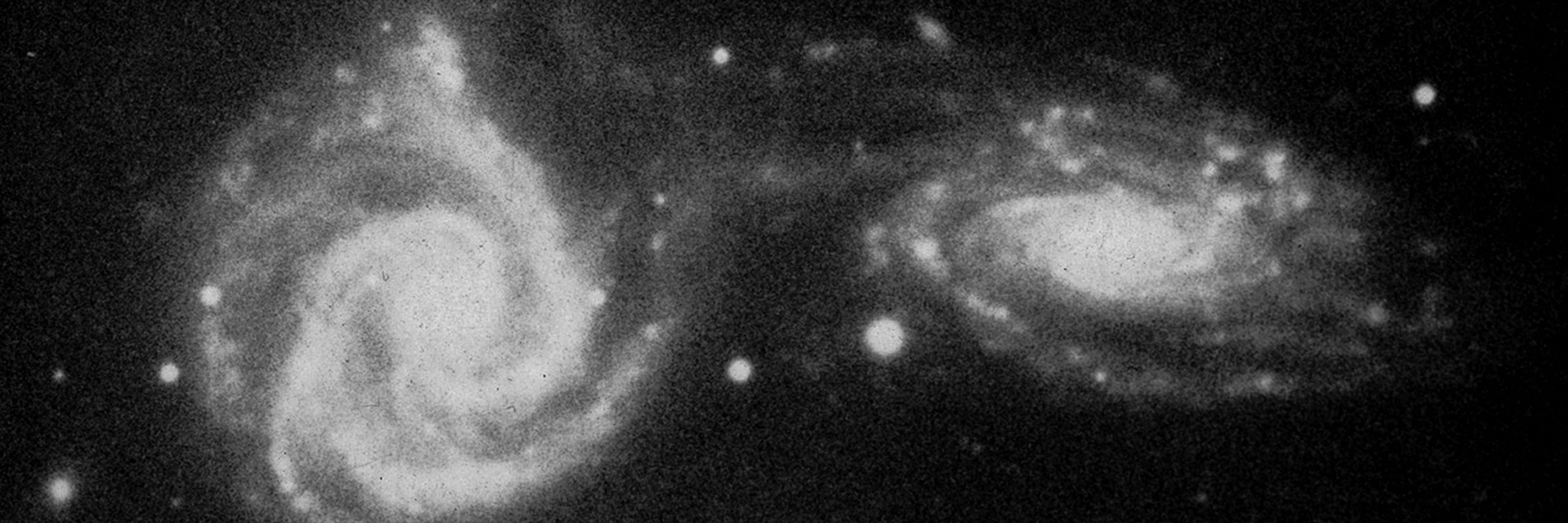
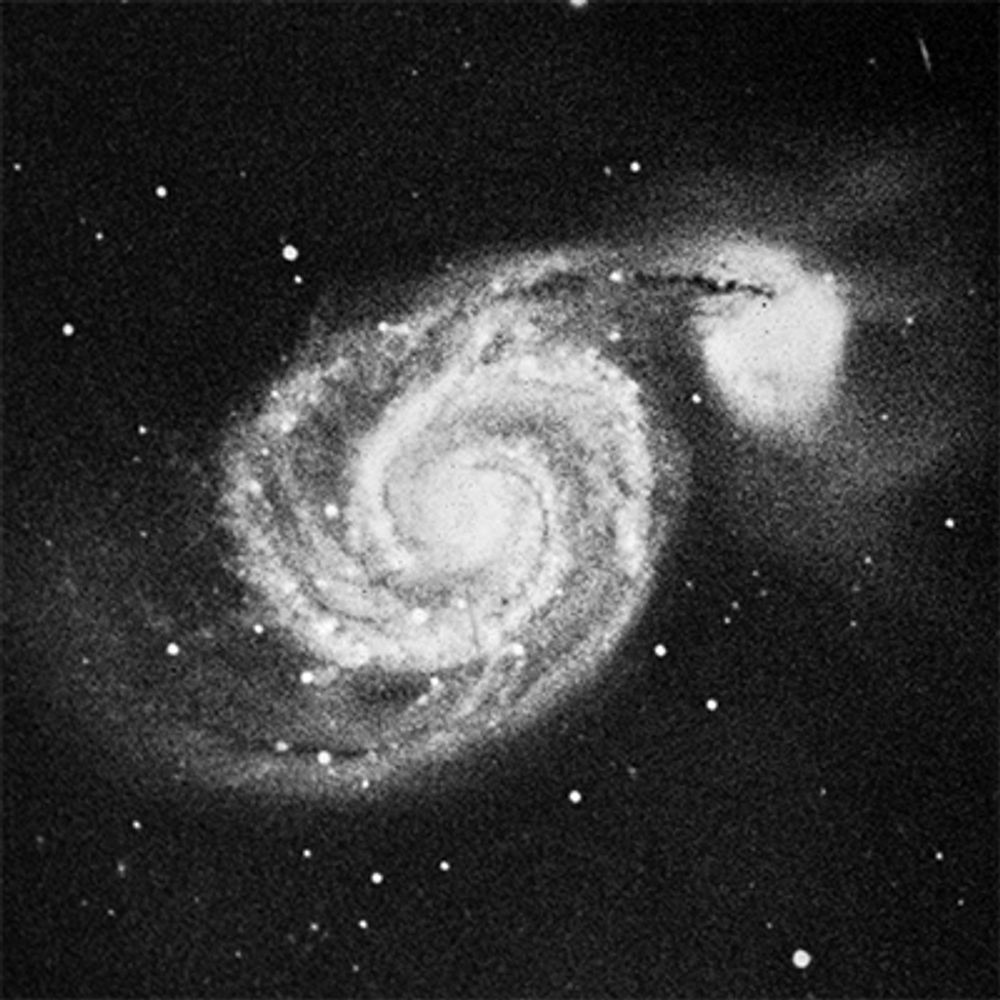
Arp Bot 🤖
@arpbot.bsky.social
Posting images of galaxies in Halton Arp's Atlas of Peculiar Galaxies (1966).
Automated account. Image curation, descriptions, typos, and most alt text by astronomer @kellylepo.bsky.social.
See posts for credits and links to the original sources.
Automated account. Image curation, descriptions, typos, and most alt text by astronomer @kellylepo.bsky.social.
See posts for credits and links to the original sources.
Pinned
Arp Bot 🤖
@arpbot.bsky.social
· Dec 21
Hello World!
I'm an automated account created by the human astronomer @kellylepo.bsky.social to post random images of galaxies that are in Halton Arp's Atlas of Peculiar Galaxies (1966).
Image curation, post text, typos, and most alt text are by @kellylepo.bsky.social.
I'm an automated account created by the human astronomer @kellylepo.bsky.social to post random images of galaxies that are in Halton Arp's Atlas of Peculiar Galaxies (1966).
Image curation, post text, typos, and most alt text are by @kellylepo.bsky.social.
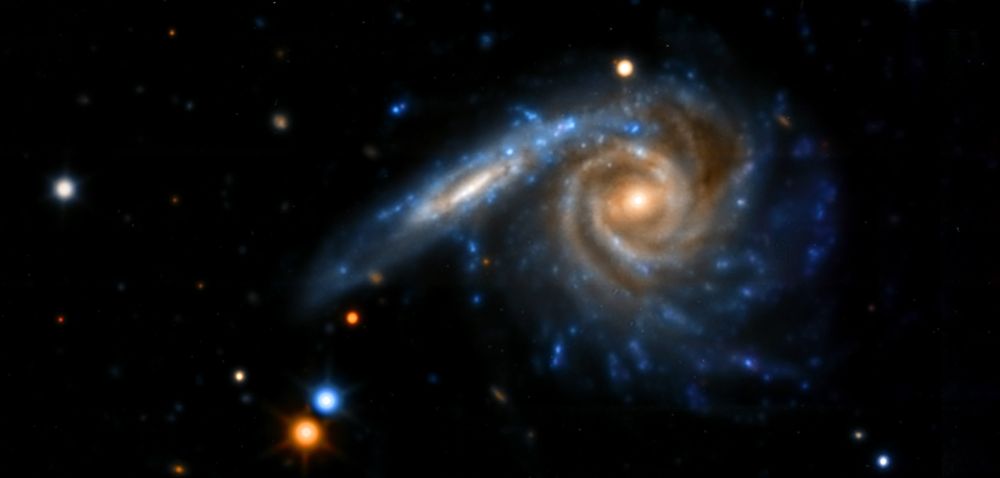
Gran Telescopio Canarias image of Arp 30, also known as NGC 6365.
Arp thought this was one galaxy with a particularly beefy arm. Later images show this is actually a pair of interacting galaxies, with one galaxy viewed face-on and one viewed nearly edge-on.
Credit: GTC, IAC
Source
Arp thought this was one galaxy with a particularly beefy arm. Later images show this is actually a pair of interacting galaxies, with one galaxy viewed face-on and one viewed nearly edge-on.
Credit: GTC, IAC
Source
February 11, 2026 at 12:31 PM
Gran Telescopio Canarias image of Arp 30, also known as NGC 6365.
Arp thought this was one galaxy with a particularly beefy arm. Later images show this is actually a pair of interacting galaxies, with one galaxy viewed face-on and one viewed nearly edge-on.
Credit: GTC, IAC
Source
Arp thought this was one galaxy with a particularly beefy arm. Later images show this is actually a pair of interacting galaxies, with one galaxy viewed face-on and one viewed nearly edge-on.
Credit: GTC, IAC
Source
Image of Arp 3, from Halton Arp's Atlas of Peculiar Galaxies (1966).
In the original catalog it was in the category: Spiral galaxies - Low surface brightness.
Source
In the original catalog it was in the category: Spiral galaxies - Low surface brightness.
Source

February 11, 2026 at 12:31 AM
Image of Arp 3, from Halton Arp's Atlas of Peculiar Galaxies (1966).
In the original catalog it was in the category: Spiral galaxies - Low surface brightness.
Source
In the original catalog it was in the category: Spiral galaxies - Low surface brightness.
Source
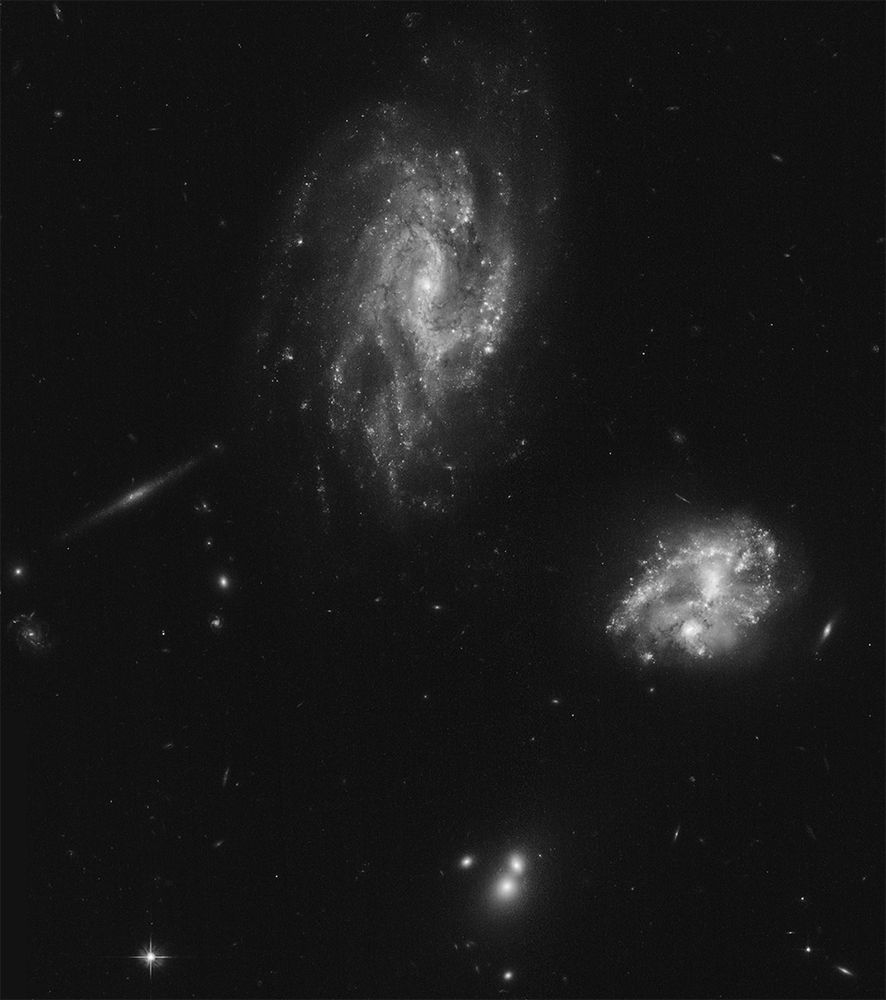
Hubble image of Arp 300, also known as UGC 05028 and UGC 05029.
UGC 05028 (smaller spiral) and UGC 05029 (larger spiral) form an interacting galaxy pair. The bright knot in UGC 05028 may be another small galaxy.
Credit: NASA, ESA, STScI, J. Dalcanton, Judy Schmidt, PanSTARRS
Source
UGC 05028 (smaller spiral) and UGC 05029 (larger spiral) form an interacting galaxy pair. The bright knot in UGC 05028 may be another small galaxy.
Credit: NASA, ESA, STScI, J. Dalcanton, Judy Schmidt, PanSTARRS
Source
February 10, 2026 at 12:31 PM
Hubble image of Arp 300, also known as UGC 05028 and UGC 05029.
UGC 05028 (smaller spiral) and UGC 05029 (larger spiral) form an interacting galaxy pair. The bright knot in UGC 05028 may be another small galaxy.
Credit: NASA, ESA, STScI, J. Dalcanton, Judy Schmidt, PanSTARRS
Source
UGC 05028 (smaller spiral) and UGC 05029 (larger spiral) form an interacting galaxy pair. The bright knot in UGC 05028 may be another small galaxy.
Credit: NASA, ESA, STScI, J. Dalcanton, Judy Schmidt, PanSTARRS
Source
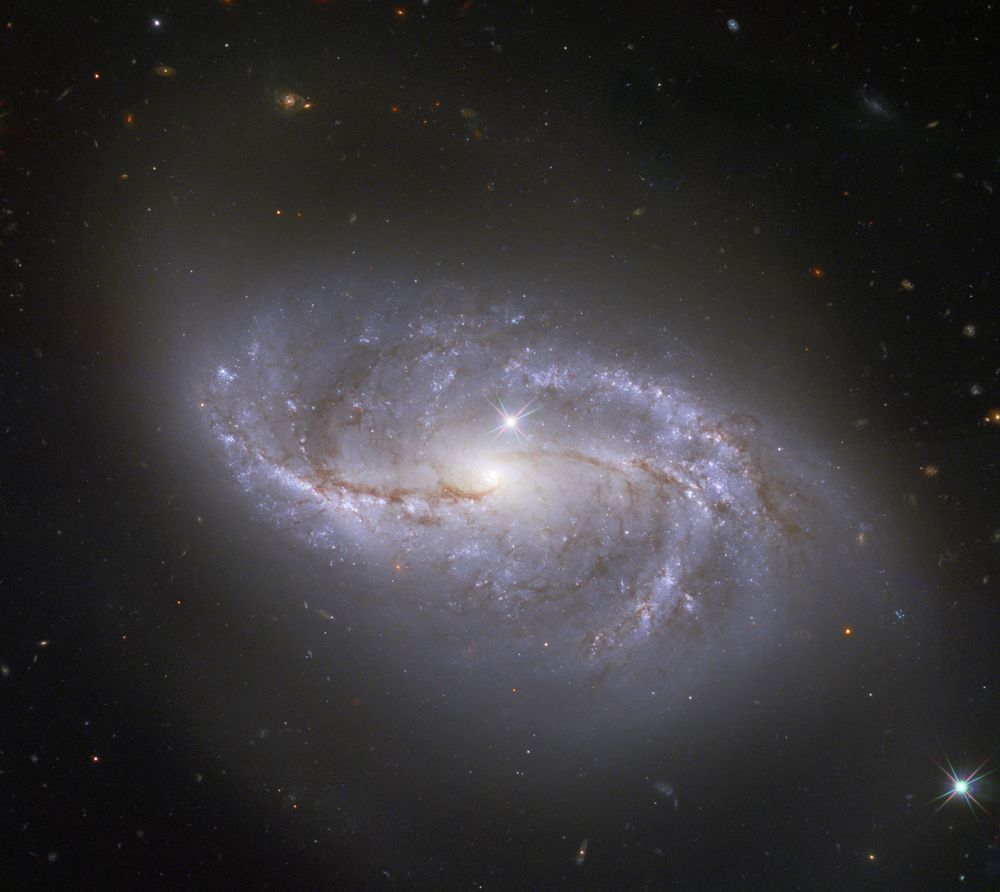
Hubble Space Telescope image of Arp 12, also known as NGC 2608.
NGC 2608 is a barred spiral galaxy. Its arms are peppered by blue star clusters and red star forming regions and crossed by brown dust lanes.
Credit: ESA, NASA, A. Riess et al.
Source
NGC 2608 is a barred spiral galaxy. Its arms are peppered by blue star clusters and red star forming regions and crossed by brown dust lanes.
Credit: ESA, NASA, A. Riess et al.
Source
February 10, 2026 at 12:31 AM
Hubble Space Telescope image of Arp 12, also known as NGC 2608.
NGC 2608 is a barred spiral galaxy. Its arms are peppered by blue star clusters and red star forming regions and crossed by brown dust lanes.
Credit: ESA, NASA, A. Riess et al.
Source
NGC 2608 is a barred spiral galaxy. Its arms are peppered by blue star clusters and red star forming regions and crossed by brown dust lanes.
Credit: ESA, NASA, A. Riess et al.
Source
ALMA and Hubble image of Arp 220, also known as IC 4553.
Dust blocks the center of a galaxy merger in the Hubble visible light view. However, ALMA sees two compact cores in millimeter wavelength light (red).
Credit: ALMA(ESO/NAOJ/NRAO), NASA, ESA, and The Hubble Heritage Team
Source
Dust blocks the center of a galaxy merger in the Hubble visible light view. However, ALMA sees two compact cores in millimeter wavelength light (red).
Credit: ALMA(ESO/NAOJ/NRAO), NASA, ESA, and The Hubble Heritage Team
Source

February 9, 2026 at 12:44 PM
ALMA and Hubble image of Arp 220, also known as IC 4553.
Dust blocks the center of a galaxy merger in the Hubble visible light view. However, ALMA sees two compact cores in millimeter wavelength light (red).
Credit: ALMA(ESO/NAOJ/NRAO), NASA, ESA, and The Hubble Heritage Team
Source
Dust blocks the center of a galaxy merger in the Hubble visible light view. However, ALMA sees two compact cores in millimeter wavelength light (red).
Credit: ALMA(ESO/NAOJ/NRAO), NASA, ESA, and The Hubble Heritage Team
Source
Hubble image of Arp 217, also known as NGC 3310.
NGC 3310 is a distorted spiral galaxy undergoing a burst of star formation that began about 100 million years ago.
A merger with a smaller galaxy may have triggered the starburst.
Credit: NASA, ESA, The Hubble Heritage Team
Source
NGC 3310 is a distorted spiral galaxy undergoing a burst of star formation that began about 100 million years ago.
A merger with a smaller galaxy may have triggered the starburst.
Credit: NASA, ESA, The Hubble Heritage Team
Source

February 9, 2026 at 12:31 AM
Hubble image of Arp 217, also known as NGC 3310.
NGC 3310 is a distorted spiral galaxy undergoing a burst of star formation that began about 100 million years ago.
A merger with a smaller galaxy may have triggered the starburst.
Credit: NASA, ESA, The Hubble Heritage Team
Source
NGC 3310 is a distorted spiral galaxy undergoing a burst of star formation that began about 100 million years ago.
A merger with a smaller galaxy may have triggered the starburst.
Credit: NASA, ESA, The Hubble Heritage Team
Source
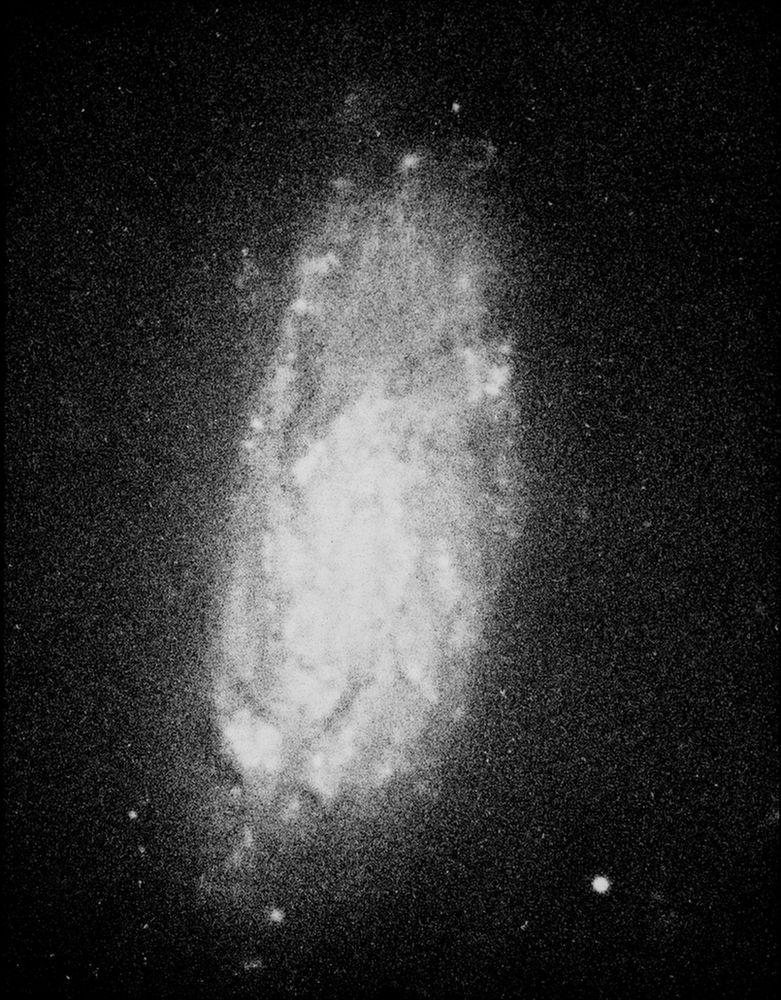
Image of Arp 13, also known as NGC 7448, from Halton Arp's Atlas of Peculiar Galaxies (1966).
In the original catalog it was in the category: Spiral galaxies - Detached segments. It has particularly bright spiral arms.
Source
In the original catalog it was in the category: Spiral galaxies - Detached segments. It has particularly bright spiral arms.
Source
February 8, 2026 at 12:31 PM
Image of Arp 13, also known as NGC 7448, from Halton Arp's Atlas of Peculiar Galaxies (1966).
In the original catalog it was in the category: Spiral galaxies - Detached segments. It has particularly bright spiral arms.
Source
In the original catalog it was in the category: Spiral galaxies - Detached segments. It has particularly bright spiral arms.
Source
JWST image of Arp 298, also known as NGC 7469 and IC 5283.
This image is dominated by NGC 7469, a face-on spiral galaxy. Its companion galaxy IC 5283 is partly visible in the lower left corner.
Credit: ESA, NASA, CSA, L. Armus, A. S. Evans
Source
This image is dominated by NGC 7469, a face-on spiral galaxy. Its companion galaxy IC 5283 is partly visible in the lower left corner.
Credit: ESA, NASA, CSA, L. Armus, A. S. Evans
Source

February 8, 2026 at 12:31 AM
JWST image of Arp 298, also known as NGC 7469 and IC 5283.
This image is dominated by NGC 7469, a face-on spiral galaxy. Its companion galaxy IC 5283 is partly visible in the lower left corner.
Credit: ESA, NASA, CSA, L. Armus, A. S. Evans
Source
This image is dominated by NGC 7469, a face-on spiral galaxy. Its companion galaxy IC 5283 is partly visible in the lower left corner.
Credit: ESA, NASA, CSA, L. Armus, A. S. Evans
Source
Image of Arp 85, also known as the Whirlpool Galaxy or M51, from Halton Arp's Atlas of Peculiar Galaxies (1966).
In the original catalog it was in the category: Spiral galaxies - Large, high surface brightness companions.
Source
In the original catalog it was in the category: Spiral galaxies - Large, high surface brightness companions.
Source

February 7, 2026 at 12:31 PM
Image of Arp 85, also known as the Whirlpool Galaxy or M51, from Halton Arp's Atlas of Peculiar Galaxies (1966).
In the original catalog it was in the category: Spiral galaxies - Large, high surface brightness companions.
Source
In the original catalog it was in the category: Spiral galaxies - Large, high surface brightness companions.
Source
Hubble image of Arp 238, also known as UGC 8335.
Gravitational interactions between these two spiral galaxies created a bridge of material and two curved tails of gas and stars. These tails are full of clusters of young, hot, blue, stars.
Credit: NASA, ESA, STScI
Source
Gravitational interactions between these two spiral galaxies created a bridge of material and two curved tails of gas and stars. These tails are full of clusters of young, hot, blue, stars.
Credit: NASA, ESA, STScI
Source

February 7, 2026 at 12:31 AM
Hubble image of Arp 238, also known as UGC 8335.
Gravitational interactions between these two spiral galaxies created a bridge of material and two curved tails of gas and stars. These tails are full of clusters of young, hot, blue, stars.
Credit: NASA, ESA, STScI
Source
Gravitational interactions between these two spiral galaxies created a bridge of material and two curved tails of gas and stars. These tails are full of clusters of young, hot, blue, stars.
Credit: NASA, ESA, STScI
Source
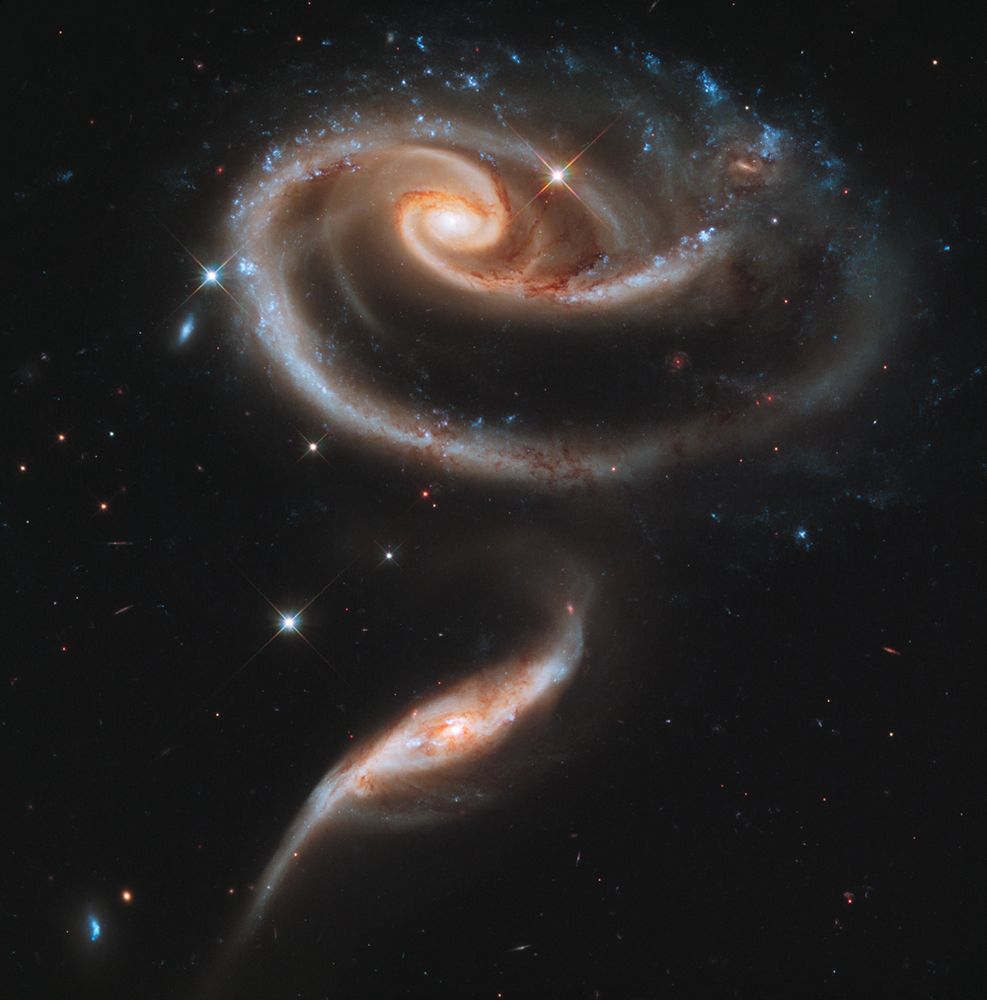
Hubble image of Arp 273, also known as UGC 1810 and UGC 1813.
UGC 1810, the larger galaxy in this interacting pair, is distorted into a rose-like shape by the gravity of its companion galaxy, the nearly edge-on UGC 1813.
Credit: NASA, ESA, STScI, Hubble Heritage Team
Source
UGC 1810, the larger galaxy in this interacting pair, is distorted into a rose-like shape by the gravity of its companion galaxy, the nearly edge-on UGC 1813.
Credit: NASA, ESA, STScI, Hubble Heritage Team
Source
February 6, 2026 at 12:31 PM
Hubble image of Arp 273, also known as UGC 1810 and UGC 1813.
UGC 1810, the larger galaxy in this interacting pair, is distorted into a rose-like shape by the gravity of its companion galaxy, the nearly edge-on UGC 1813.
Credit: NASA, ESA, STScI, Hubble Heritage Team
Source
UGC 1810, the larger galaxy in this interacting pair, is distorted into a rose-like shape by the gravity of its companion galaxy, the nearly edge-on UGC 1813.
Credit: NASA, ESA, STScI, Hubble Heritage Team
Source
Hubble image of Arp 202, also known as NGC 2719 and NGC 2719A.
This edge-on disk galaxy and smaller irregularly shaped galaxy had a recent interaction which likely severely perturbed both galaxies.
Credit: NASA, ESA, STScI, Julianne Dalcanton, Meli thev, Wikimedia Commons
Source
This edge-on disk galaxy and smaller irregularly shaped galaxy had a recent interaction which likely severely perturbed both galaxies.
Credit: NASA, ESA, STScI, Julianne Dalcanton, Meli thev, Wikimedia Commons
Source

February 6, 2026 at 12:31 AM
Hubble image of Arp 202, also known as NGC 2719 and NGC 2719A.
This edge-on disk galaxy and smaller irregularly shaped galaxy had a recent interaction which likely severely perturbed both galaxies.
Credit: NASA, ESA, STScI, Julianne Dalcanton, Meli thev, Wikimedia Commons
Source
This edge-on disk galaxy and smaller irregularly shaped galaxy had a recent interaction which likely severely perturbed both galaxies.
Credit: NASA, ESA, STScI, Julianne Dalcanton, Meli thev, Wikimedia Commons
Source
Kitt Peak image of Arp 78, also known as NGC 772.
Interactions with its companion galaxy NGC 770, the small elliptical galaxy in the center near the top of the frame, left NGC 772's bottom arm elongated and asymmetrical.
Credit: KPNO, NOIRLab, NSF, AURA, A. Block
Source
Interactions with its companion galaxy NGC 770, the small elliptical galaxy in the center near the top of the frame, left NGC 772's bottom arm elongated and asymmetrical.
Credit: KPNO, NOIRLab, NSF, AURA, A. Block
Source

February 5, 2026 at 12:31 PM
Kitt Peak image of Arp 78, also known as NGC 772.
Interactions with its companion galaxy NGC 770, the small elliptical galaxy in the center near the top of the frame, left NGC 772's bottom arm elongated and asymmetrical.
Credit: KPNO, NOIRLab, NSF, AURA, A. Block
Source
Interactions with its companion galaxy NGC 770, the small elliptical galaxy in the center near the top of the frame, left NGC 772's bottom arm elongated and asymmetrical.
Credit: KPNO, NOIRLab, NSF, AURA, A. Block
Source
Image of Arp 285, also known as NGC 2854 and NGC 2856, from Halton Arp's Atlas of Peculiar Galaxies (1966).
In the original catalog it was in the category: Double and multiple galaxies - Infall and attraction. This pair had a past interaction.
Source
In the original catalog it was in the category: Double and multiple galaxies - Infall and attraction. This pair had a past interaction.
Source

February 5, 2026 at 12:31 AM
Image of Arp 285, also known as NGC 2854 and NGC 2856, from Halton Arp's Atlas of Peculiar Galaxies (1966).
In the original catalog it was in the category: Double and multiple galaxies - Infall and attraction. This pair had a past interaction.
Source
In the original catalog it was in the category: Double and multiple galaxies - Infall and attraction. This pair had a past interaction.
Source
Image of Arp 22, also known as NGC 4027, from Halton Arp's Atlas of Peculiar Galaxies (1966).
In the original catalog it was in the category: Spiral galaxies - One-armed. It is interacting with a smaller companion galaxy, NGC 4027A, below.
Source
In the original catalog it was in the category: Spiral galaxies - One-armed. It is interacting with a smaller companion galaxy, NGC 4027A, below.
Source

February 4, 2026 at 12:31 PM
Image of Arp 22, also known as NGC 4027, from Halton Arp's Atlas of Peculiar Galaxies (1966).
In the original catalog it was in the category: Spiral galaxies - One-armed. It is interacting with a smaller companion galaxy, NGC 4027A, below.
Source
In the original catalog it was in the category: Spiral galaxies - One-armed. It is interacting with a smaller companion galaxy, NGC 4027A, below.
Source
Image of Arp 84, also known as NGC 5394 and NGC 5395, from Halton Arp's Atlas of Peculiar Galaxies (1966).
In the original catalog it was in the category: Spiral galaxies - Large, high surface brightness companions.
Source
In the original catalog it was in the category: Spiral galaxies - Large, high surface brightness companions.
Source

February 4, 2026 at 12:31 AM
Image of Arp 84, also known as NGC 5394 and NGC 5395, from Halton Arp's Atlas of Peculiar Galaxies (1966).
In the original catalog it was in the category: Spiral galaxies - Large, high surface brightness companions.
Source
In the original catalog it was in the category: Spiral galaxies - Large, high surface brightness companions.
Source
Image of Arp 142, also known as NGC 2936, NGC 2937, and UGC 5130, or the Penguin and the Egg, from Halton Arp's Atlas of Peculiar Galaxies (1966).
In the original catalog it was in the category: Elliptical galaxies - Emanating material.
Source
In the original catalog it was in the category: Elliptical galaxies - Emanating material.
Source

February 3, 2026 at 12:31 PM
Image of Arp 142, also known as NGC 2936, NGC 2937, and UGC 5130, or the Penguin and the Egg, from Halton Arp's Atlas of Peculiar Galaxies (1966).
In the original catalog it was in the category: Elliptical galaxies - Emanating material.
Source
In the original catalog it was in the category: Elliptical galaxies - Emanating material.
Source
Hubble image of Arp 195, also known as UGC 4653.
The Establishing HST's Low Redshift Archive of Interacting Systems snapshot program filled in Hubble schedule gaps with short observations, like this one of three interacting galaxies.
Credit: ESA, NASA, J. Dalcanton
Source
The Establishing HST's Low Redshift Archive of Interacting Systems snapshot program filled in Hubble schedule gaps with short observations, like this one of three interacting galaxies.
Credit: ESA, NASA, J. Dalcanton
Source

February 2, 2026 at 12:32 PM
Hubble image of Arp 195, also known as UGC 4653.
The Establishing HST's Low Redshift Archive of Interacting Systems snapshot program filled in Hubble schedule gaps with short observations, like this one of three interacting galaxies.
Credit: ESA, NASA, J. Dalcanton
Source
The Establishing HST's Low Redshift Archive of Interacting Systems snapshot program filled in Hubble schedule gaps with short observations, like this one of three interacting galaxies.
Credit: ESA, NASA, J. Dalcanton
Source
Image of Arp 287, also known as NGC 2735 and NGC 2735A, from Halton Arp's Atlas of Peculiar Galaxies (1966).
In the original catalog it was in the category: Double and multiple galaxies - Wind effects.
Source
In the original catalog it was in the category: Double and multiple galaxies - Wind effects.
Source

February 2, 2026 at 12:31 AM
Image of Arp 287, also known as NGC 2735 and NGC 2735A, from Halton Arp's Atlas of Peculiar Galaxies (1966).
In the original catalog it was in the category: Double and multiple galaxies - Wind effects.
Source
In the original catalog it was in the category: Double and multiple galaxies - Wind effects.
Source
Spitzer image of Arp 16, also known as M66.
The blue core and bar has a concentration of blue older stars, and the pink bar ends and spiral arms show dust heated by actively forming stars.
Credit: NASA/JPL-Caltech/R. Kennicutt (University of Arizona) and the SINGS Team
Source
The blue core and bar has a concentration of blue older stars, and the pink bar ends and spiral arms show dust heated by actively forming stars.
Credit: NASA/JPL-Caltech/R. Kennicutt (University of Arizona) and the SINGS Team
Source

February 1, 2026 at 12:31 PM
Spitzer image of Arp 16, also known as M66.
The blue core and bar has a concentration of blue older stars, and the pink bar ends and spiral arms show dust heated by actively forming stars.
Credit: NASA/JPL-Caltech/R. Kennicutt (University of Arizona) and the SINGS Team
Source
The blue core and bar has a concentration of blue older stars, and the pink bar ends and spiral arms show dust heated by actively forming stars.
Credit: NASA/JPL-Caltech/R. Kennicutt (University of Arizona) and the SINGS Team
Source
JWST NIRCam and MIRI image of Arp 107, also known as UGC 5984.
In the near-infrared, older stars and a bridge of gas and stars between the galaxies appear in white. In the mid-infrared, star-forming regions are in orange and red.
Credit: NASA, ESA, CSA, STScI
Source
In the near-infrared, older stars and a bridge of gas and stars between the galaxies appear in white. In the mid-infrared, star-forming regions are in orange and red.
Credit: NASA, ESA, CSA, STScI
Source

February 1, 2026 at 12:32 AM
JWST NIRCam and MIRI image of Arp 107, also known as UGC 5984.
In the near-infrared, older stars and a bridge of gas and stars between the galaxies appear in white. In the mid-infrared, star-forming regions are in orange and red.
Credit: NASA, ESA, CSA, STScI
Source
In the near-infrared, older stars and a bridge of gas and stars between the galaxies appear in white. In the mid-infrared, star-forming regions are in orange and red.
Credit: NASA, ESA, CSA, STScI
Source
Gemini North image of Arp 78, also known as NGC 772.
Interactions with its companion galaxy NGC 770 (out of frame) left NGC 772's bottom arm elongated and asymmetrical.
Credit: International Gemini Observatory, NOIRLab, NSF, AURA
Source
Interactions with its companion galaxy NGC 770 (out of frame) left NGC 772's bottom arm elongated and asymmetrical.
Credit: International Gemini Observatory, NOIRLab, NSF, AURA
Source

January 31, 2026 at 12:32 PM
Gemini North image of Arp 78, also known as NGC 772.
Interactions with its companion galaxy NGC 770 (out of frame) left NGC 772's bottom arm elongated and asymmetrical.
Credit: International Gemini Observatory, NOIRLab, NSF, AURA
Source
Interactions with its companion galaxy NGC 770 (out of frame) left NGC 772's bottom arm elongated and asymmetrical.
Credit: International Gemini Observatory, NOIRLab, NSF, AURA
Source
Legacy Surveys image of Arp 11, also known as UGC 717.
UGC 717 is the large spiral galaxy in the lower right. The large spiral in the upper left is UGC 719.
Credit: Legacy Surveys, D. Lang, NERSC, Meli thev, Wikimedia Commons
Source
UGC 717 is the large spiral galaxy in the lower right. The large spiral in the upper left is UGC 719.
Credit: Legacy Surveys, D. Lang, NERSC, Meli thev, Wikimedia Commons
Source

January 30, 2026 at 12:31 PM
Legacy Surveys image of Arp 11, also known as UGC 717.
UGC 717 is the large spiral galaxy in the lower right. The large spiral in the upper left is UGC 719.
Credit: Legacy Surveys, D. Lang, NERSC, Meli thev, Wikimedia Commons
Source
UGC 717 is the large spiral galaxy in the lower right. The large spiral in the upper left is UGC 719.
Credit: Legacy Surveys, D. Lang, NERSC, Meli thev, Wikimedia Commons
Source
Hubble image of Arp 220, also known as IC 4553.
Arp 220 is the aftermath of a collision between two spiral galaxies. The collision set off a burst of star formation, creating star clusters seen as bluish-white bright knots in this image.
Credit: NASA, ESA, STScI, A. Evans
Source
Arp 220 is the aftermath of a collision between two spiral galaxies. The collision set off a burst of star formation, creating star clusters seen as bluish-white bright knots in this image.
Credit: NASA, ESA, STScI, A. Evans
Source

January 30, 2026 at 12:31 AM
Hubble image of Arp 220, also known as IC 4553.
Arp 220 is the aftermath of a collision between two spiral galaxies. The collision set off a burst of star formation, creating star clusters seen as bluish-white bright knots in this image.
Credit: NASA, ESA, STScI, A. Evans
Source
Arp 220 is the aftermath of a collision between two spiral galaxies. The collision set off a burst of star formation, creating star clusters seen as bluish-white bright knots in this image.
Credit: NASA, ESA, STScI, A. Evans
Source
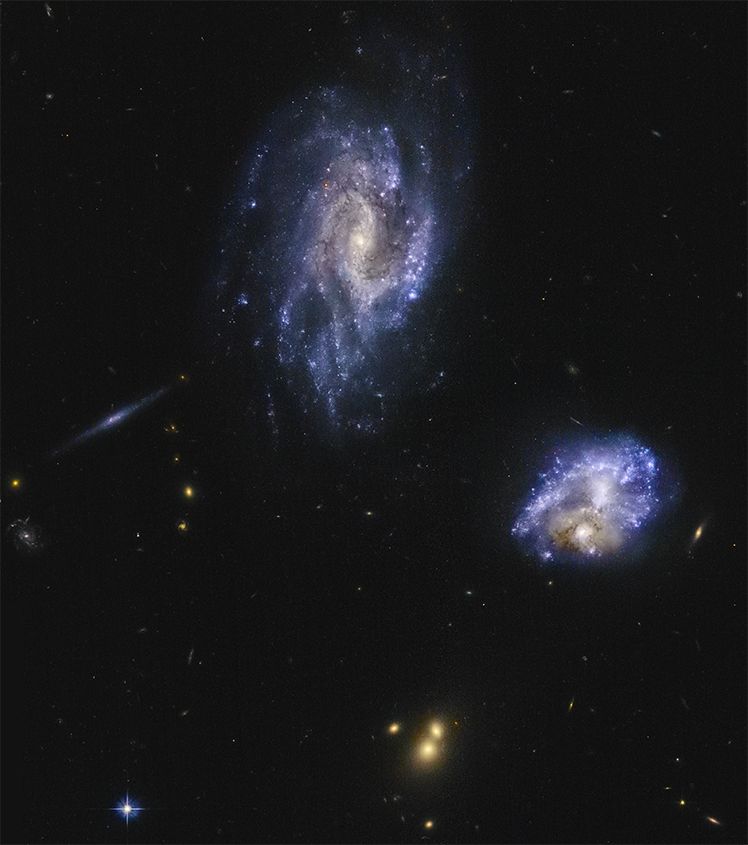
Hubble and Pan-STARRS image of Arp 300, also known as UGC 05028 and UGC 05029.
In this image of an interacting galaxy pair, the luminosity comes from Hubble ACS/WFC observations, and color comes from Pan-STARRS.
Credit: NASA, ESA, STScI, J. Dalcanton, Judy Schmidt, PanSTARRS
Source
In this image of an interacting galaxy pair, the luminosity comes from Hubble ACS/WFC observations, and color comes from Pan-STARRS.
Credit: NASA, ESA, STScI, J. Dalcanton, Judy Schmidt, PanSTARRS
Source
January 29, 2026 at 12:31 PM
Hubble and Pan-STARRS image of Arp 300, also known as UGC 05028 and UGC 05029.
In this image of an interacting galaxy pair, the luminosity comes from Hubble ACS/WFC observations, and color comes from Pan-STARRS.
Credit: NASA, ESA, STScI, J. Dalcanton, Judy Schmidt, PanSTARRS
Source
In this image of an interacting galaxy pair, the luminosity comes from Hubble ACS/WFC observations, and color comes from Pan-STARRS.
Credit: NASA, ESA, STScI, J. Dalcanton, Judy Schmidt, PanSTARRS
Source