



Nereide
@drnereide.bsky.social
Physicist interested in Astrophysics and Particle Physics| Research in Math and Science Edu| Math and Science Writer| Teacher and Teacher Trainer| WomenInSTEM
My science blog: https://www.tutto-scienze.org/
More about me: https://x.com/settings/bio
My science blog: https://www.tutto-scienze.org/
More about me: https://x.com/settings/bio
Pinned
It is thought that Jupiter's moon Europa contains a vast underground ocean, bigger than all Earth's oceans combined. For yrs, we've dreamed it might teem with life thanks to chemical energy from hot rocks. But a fresh study has weakened that idea.🔭
➡️ eeps.wustl.edu/news/jupiter...
🧪 #planetsci 1/6
➡️ eeps.wustl.edu/news/jupiter...
🧪 #planetsci 1/6
Reposted by Nereide
It is thought that Jupiter's moon Europa contains a vast underground ocean, bigger than all Earth's oceans combined. For yrs, we've dreamed it might teem with life thanks to chemical energy from hot rocks. But a fresh study has weakened that idea.🔭
➡️ eeps.wustl.edu/news/jupiter...
🧪 #planetsci 1/6
➡️ eeps.wustl.edu/news/jupiter...
🧪 #planetsci 1/6
January 9, 2026 at 3:04 PM
It is thought that Jupiter's moon Europa contains a vast underground ocean, bigger than all Earth's oceans combined. For yrs, we've dreamed it might teem with life thanks to chemical energy from hot rocks. But a fresh study has weakened that idea.🔭
➡️ eeps.wustl.edu/news/jupiter...
🧪 #planetsci 1/6
➡️ eeps.wustl.edu/news/jupiter...
🧪 #planetsci 1/6
It is thought that Jupiter's moon Europa contains a vast underground ocean, bigger than all Earth's oceans combined. For yrs, we've dreamed it might teem with life thanks to chemical energy from hot rocks. But a fresh study has weakened that idea.🔭
➡️ eeps.wustl.edu/news/jupiter...
🧪 #planetsci 1/6
➡️ eeps.wustl.edu/news/jupiter...
🧪 #planetsci 1/6
January 9, 2026 at 3:04 PM
It is thought that Jupiter's moon Europa contains a vast underground ocean, bigger than all Earth's oceans combined. For yrs, we've dreamed it might teem with life thanks to chemical energy from hot rocks. But a fresh study has weakened that idea.🔭
➡️ eeps.wustl.edu/news/jupiter...
🧪 #planetsci 1/6
➡️ eeps.wustl.edu/news/jupiter...
🧪 #planetsci 1/6
Reposted by Nereide

Reposted by Nereide
What a captivating thread!
Pretending to be outraged over a 1277 ban from the Bishop of Paris on the Principle of Reciprocity is refined nerd humor — while reminding us how defending the supremacy of faith over Aristotelian #philosophy once clashed with reason and academic freedom.
#histsci 1/2
Pretending to be outraged over a 1277 ban from the Bishop of Paris on the Principle of Reciprocity is refined nerd humor — while reminding us how defending the supremacy of faith over Aristotelian #philosophy once clashed with reason and academic freedom.
#histsci 1/2
I try to avoid talking about religion and politics here, but this time they've gone too far - I gotta say something.
The Bishop of Paris banned a list of 219 propositions, and number 68 goes too far: I must object.
(1/n)
The Bishop of Paris banned a list of 219 propositions, and number 68 goes too far: I must object.
(1/n)
January 7, 2026 at 2:01 PM
What a captivating thread!
Pretending to be outraged over a 1277 ban from the Bishop of Paris on the Principle of Reciprocity is refined nerd humor — while reminding us how defending the supremacy of faith over Aristotelian #philosophy once clashed with reason and academic freedom.
#histsci 1/2
Pretending to be outraged over a 1277 ban from the Bishop of Paris on the Principle of Reciprocity is refined nerd humor — while reminding us how defending the supremacy of faith over Aristotelian #philosophy once clashed with reason and academic freedom.
#histsci 1/2
What a captivating thread!
Pretending to be outraged over a 1277 ban from the Bishop of Paris on the Principle of Reciprocity is refined nerd humor — while reminding us how defending the supremacy of faith over Aristotelian #philosophy once clashed with reason and academic freedom.
#histsci 1/2
Pretending to be outraged over a 1277 ban from the Bishop of Paris on the Principle of Reciprocity is refined nerd humor — while reminding us how defending the supremacy of faith over Aristotelian #philosophy once clashed with reason and academic freedom.
#histsci 1/2
I try to avoid talking about religion and politics here, but this time they've gone too far - I gotta say something.
The Bishop of Paris banned a list of 219 propositions, and number 68 goes too far: I must object.
(1/n)
The Bishop of Paris banned a list of 219 propositions, and number 68 goes too far: I must object.
(1/n)
January 7, 2026 at 2:01 PM
What a captivating thread!
Pretending to be outraged over a 1277 ban from the Bishop of Paris on the Principle of Reciprocity is refined nerd humor — while reminding us how defending the supremacy of faith over Aristotelian #philosophy once clashed with reason and academic freedom.
#histsci 1/2
Pretending to be outraged over a 1277 ban from the Bishop of Paris on the Principle of Reciprocity is refined nerd humor — while reminding us how defending the supremacy of faith over Aristotelian #philosophy once clashed with reason and academic freedom.
#histsci 1/2
Reposted by Nereide
🧵
This bright image features the central region of the Omega Centauri globular cluster, where a research team, using more than 500 images from Hubble, found evidence of a rare intermediate-mass black hole (IMBH) candidate.
Why do researchers think so?
➡️ science.nasa.gov/missions/hub...
🔭 🧪 1/7
This bright image features the central region of the Omega Centauri globular cluster, where a research team, using more than 500 images from Hubble, found evidence of a rare intermediate-mass black hole (IMBH) candidate.
Why do researchers think so?
➡️ science.nasa.gov/missions/hub...
🔭 🧪 1/7

January 5, 2026 at 11:38 PM
🧵
This bright image features the central region of the Omega Centauri globular cluster, where a research team, using more than 500 images from Hubble, found evidence of a rare intermediate-mass black hole (IMBH) candidate.
Why do researchers think so?
➡️ science.nasa.gov/missions/hub...
🔭 🧪 1/7
This bright image features the central region of the Omega Centauri globular cluster, where a research team, using more than 500 images from Hubble, found evidence of a rare intermediate-mass black hole (IMBH) candidate.
Why do researchers think so?
➡️ science.nasa.gov/missions/hub...
🔭 🧪 1/7
🧵
This bright image features the central region of the Omega Centauri globular cluster, where a research team, using more than 500 images from Hubble, found evidence of a rare intermediate-mass black hole (IMBH) candidate.
Why do researchers think so?
➡️ science.nasa.gov/missions/hub...
🔭 🧪 1/7
This bright image features the central region of the Omega Centauri globular cluster, where a research team, using more than 500 images from Hubble, found evidence of a rare intermediate-mass black hole (IMBH) candidate.
Why do researchers think so?
➡️ science.nasa.gov/missions/hub...
🔭 🧪 1/7
January 5, 2026 at 11:38 PM
🧵
This bright image features the central region of the Omega Centauri globular cluster, where a research team, using more than 500 images from Hubble, found evidence of a rare intermediate-mass black hole (IMBH) candidate.
Why do researchers think so?
➡️ science.nasa.gov/missions/hub...
🔭 🧪 1/7
This bright image features the central region of the Omega Centauri globular cluster, where a research team, using more than 500 images from Hubble, found evidence of a rare intermediate-mass black hole (IMBH) candidate.
Why do researchers think so?
➡️ science.nasa.gov/missions/hub...
🔭 🧪 1/7
Reposted by Nereide
🧵
In a 2025 study, Guanming Liang and Robert Caldwell of Dartmouth College propose a new theory for the origin of dark matter (DM).
➡️ home.dartmouth.edu/news/2025/05...
Graphic by Midjourney/Richard Clark
🔭 🧪 #cosmology #science
1/11
In a 2025 study, Guanming Liang and Robert Caldwell of Dartmouth College propose a new theory for the origin of dark matter (DM).
➡️ home.dartmouth.edu/news/2025/05...
Graphic by Midjourney/Richard Clark
🔭 🧪 #cosmology #science
1/11

January 5, 2026 at 12:01 AM
🧵
In a 2025 study, Guanming Liang and Robert Caldwell of Dartmouth College propose a new theory for the origin of dark matter (DM).
➡️ home.dartmouth.edu/news/2025/05...
Graphic by Midjourney/Richard Clark
🔭 🧪 #cosmology #science
1/11
In a 2025 study, Guanming Liang and Robert Caldwell of Dartmouth College propose a new theory for the origin of dark matter (DM).
➡️ home.dartmouth.edu/news/2025/05...
Graphic by Midjourney/Richard Clark
🔭 🧪 #cosmology #science
1/11
🧵
In a 2025 study, Guanming Liang and Robert Caldwell of Dartmouth College propose a new theory for the origin of dark matter (DM).
➡️ home.dartmouth.edu/news/2025/05...
Graphic by Midjourney/Richard Clark
🔭 🧪 #cosmology #science
1/11
In a 2025 study, Guanming Liang and Robert Caldwell of Dartmouth College propose a new theory for the origin of dark matter (DM).
➡️ home.dartmouth.edu/news/2025/05...
Graphic by Midjourney/Richard Clark
🔭 🧪 #cosmology #science
1/11
January 5, 2026 at 12:01 AM
🧵
In a 2025 study, Guanming Liang and Robert Caldwell of Dartmouth College propose a new theory for the origin of dark matter (DM).
➡️ home.dartmouth.edu/news/2025/05...
Graphic by Midjourney/Richard Clark
🔭 🧪 #cosmology #science
1/11
In a 2025 study, Guanming Liang and Robert Caldwell of Dartmouth College propose a new theory for the origin of dark matter (DM).
➡️ home.dartmouth.edu/news/2025/05...
Graphic by Midjourney/Richard Clark
🔭 🧪 #cosmology #science
1/11
Reposted by Nereide
🧵
Two intriguing Saturn's moons: icy Rhea in front of the orb of potent Titan.
A splendid true-color view, taken by Cassini spacecraft on June 16, 2011.
➡️ photojournal.jpl.nasa.gov/catalog/PIA1...
Image Credit: NASA/JPL-Caltech/Space Science Institute
🔭 🧪 #planetsci #science #space
Two intriguing Saturn's moons: icy Rhea in front of the orb of potent Titan.
A splendid true-color view, taken by Cassini spacecraft on June 16, 2011.
➡️ photojournal.jpl.nasa.gov/catalog/PIA1...
Image Credit: NASA/JPL-Caltech/Space Science Institute
🔭 🧪 #planetsci #science #space

June 1, 2025 at 10:26 PM
🧵
Two intriguing Saturn's moons: icy Rhea in front of the orb of potent Titan.
A splendid true-color view, taken by Cassini spacecraft on June 16, 2011.
➡️ photojournal.jpl.nasa.gov/catalog/PIA1...
Image Credit: NASA/JPL-Caltech/Space Science Institute
🔭 🧪 #planetsci #science #space
Two intriguing Saturn's moons: icy Rhea in front of the orb of potent Titan.
A splendid true-color view, taken by Cassini spacecraft on June 16, 2011.
➡️ photojournal.jpl.nasa.gov/catalog/PIA1...
Image Credit: NASA/JPL-Caltech/Space Science Institute
🔭 🧪 #planetsci #science #space
Reposted by Nereide
1/2 🧪 🔭 #planetsci
In the summer of 1989, Voyager 2 became the first spacecraft to observe Neptune, its final planetary target.
This spectacular pic shows Neptune and its largest moon, Triton, about 3 days after the flyby.
Source➡️ science.nasa.gov/image-detail...
Triton is smaller crescent and⤵️
In the summer of 1989, Voyager 2 became the first spacecraft to observe Neptune, its final planetary target.
This spectacular pic shows Neptune and its largest moon, Triton, about 3 days after the flyby.
Source➡️ science.nasa.gov/image-detail...
Triton is smaller crescent and⤵️

December 12, 2024 at 11:29 AM
1/2 🧪 🔭 #planetsci
In the summer of 1989, Voyager 2 became the first spacecraft to observe Neptune, its final planetary target.
This spectacular pic shows Neptune and its largest moon, Triton, about 3 days after the flyby.
Source➡️ science.nasa.gov/image-detail...
Triton is smaller crescent and⤵️
In the summer of 1989, Voyager 2 became the first spacecraft to observe Neptune, its final planetary target.
This spectacular pic shows Neptune and its largest moon, Triton, about 3 days after the flyby.
Source➡️ science.nasa.gov/image-detail...
Triton is smaller crescent and⤵️
Reposted by Nereide
🧵
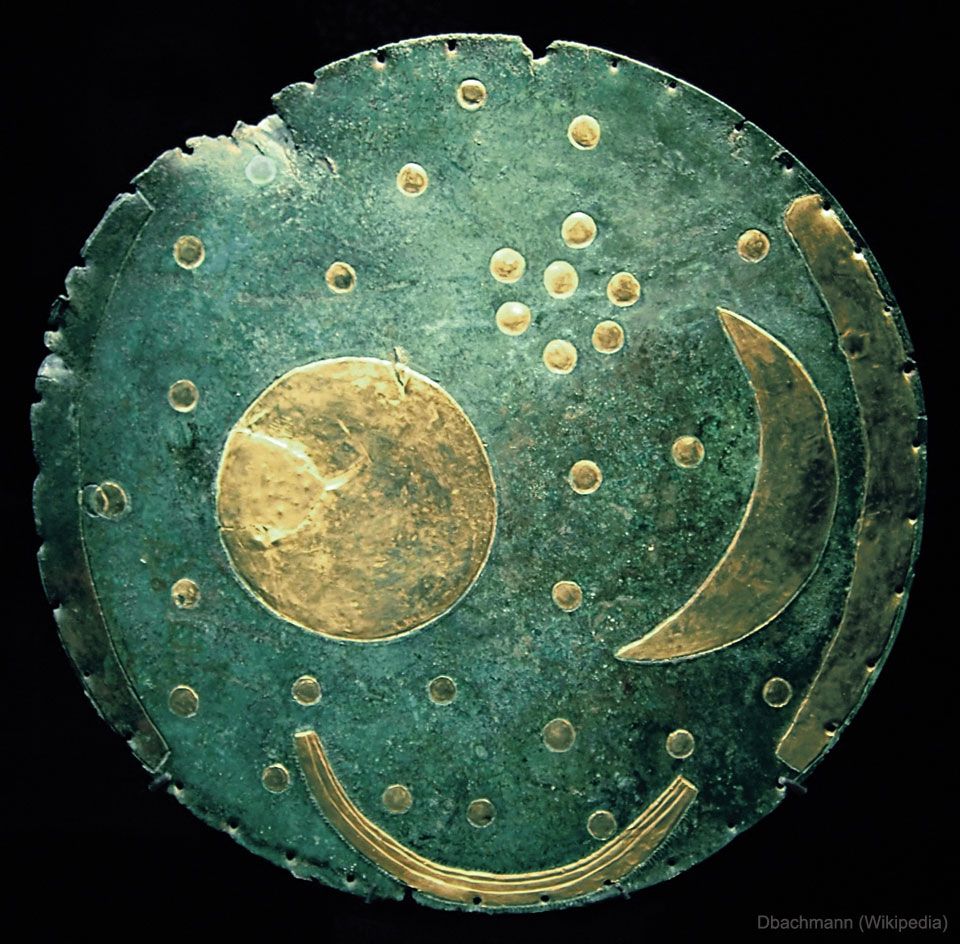
Here is the Nebra sky disk, considered by some the oldest known illustration of the night sky.
The artifact was discovered near Nebra alongside several Bronze Age weapons and is linked to the Unetice culture, which thrived in parts of Europe...
➡️ apod.nasa.gov/apod/ap18031...
🔭 🧪 #histsci
1/4
Here is the Nebra sky disk, considered by some the oldest known illustration of the night sky.
The artifact was discovered near Nebra alongside several Bronze Age weapons and is linked to the Unetice culture, which thrived in parts of Europe...
➡️ apod.nasa.gov/apod/ap18031...
🔭 🧪 #histsci
1/4
November 11, 2025 at 8:44 PM
🧵
Here is the Nebra sky disk, considered by some the oldest known illustration of the night sky.
The artifact was discovered near Nebra alongside several Bronze Age weapons and is linked to the Unetice culture, which thrived in parts of Europe...
➡️ apod.nasa.gov/apod/ap18031...
🔭 🧪 #histsci
1/4
Here is the Nebra sky disk, considered by some the oldest known illustration of the night sky.
The artifact was discovered near Nebra alongside several Bronze Age weapons and is linked to the Unetice culture, which thrived in parts of Europe...
➡️ apod.nasa.gov/apod/ap18031...
🔭 🧪 #histsci
1/4
Reposted by Nereide

If a king is going to drag us into war, he should be on the frontline fighting.
January 3, 2026 at 11:17 PM
If a king is going to drag us into war, he should be on the frontline fighting.
Reposted by Nereide
🧵
This pic from Mike Selby and Mark Hanson is as pretty as a painting, but it's absolutely real.
It shows a blue reflection nebula known as NGC 2626, which lies some 3200 light-years from Earth along the Vela Molecular Ridge.
➡️ apod.nasa.gov/apod/ap23020...
🔭 🧪 #science
1/3
This pic from Mike Selby and Mark Hanson is as pretty as a painting, but it's absolutely real.
It shows a blue reflection nebula known as NGC 2626, which lies some 3200 light-years from Earth along the Vela Molecular Ridge.
➡️ apod.nasa.gov/apod/ap23020...
🔭 🧪 #science
1/3

January 3, 2026 at 12:14 AM
🧵
This pic from Mike Selby and Mark Hanson is as pretty as a painting, but it's absolutely real.
It shows a blue reflection nebula known as NGC 2626, which lies some 3200 light-years from Earth along the Vela Molecular Ridge.
➡️ apod.nasa.gov/apod/ap23020...
🔭 🧪 #science
1/3
This pic from Mike Selby and Mark Hanson is as pretty as a painting, but it's absolutely real.
It shows a blue reflection nebula known as NGC 2626, which lies some 3200 light-years from Earth along the Vela Molecular Ridge.
➡️ apod.nasa.gov/apod/ap23020...
🔭 🧪 #science
1/3
🧵
This pic from Mike Selby and Mark Hanson is as pretty as a painting, but it's absolutely real.
It shows a blue reflection nebula known as NGC 2626, which lies some 3200 light-years from Earth along the Vela Molecular Ridge.
➡️ apod.nasa.gov/apod/ap23020...
🔭 🧪 #science
1/3
This pic from Mike Selby and Mark Hanson is as pretty as a painting, but it's absolutely real.
It shows a blue reflection nebula known as NGC 2626, which lies some 3200 light-years from Earth along the Vela Molecular Ridge.
➡️ apod.nasa.gov/apod/ap23020...
🔭 🧪 #science
1/3
January 3, 2026 at 12:14 AM
🧵
This pic from Mike Selby and Mark Hanson is as pretty as a painting, but it's absolutely real.
It shows a blue reflection nebula known as NGC 2626, which lies some 3200 light-years from Earth along the Vela Molecular Ridge.
➡️ apod.nasa.gov/apod/ap23020...
🔭 🧪 #science
1/3
This pic from Mike Selby and Mark Hanson is as pretty as a painting, but it's absolutely real.
It shows a blue reflection nebula known as NGC 2626, which lies some 3200 light-years from Earth along the Vela Molecular Ridge.
➡️ apod.nasa.gov/apod/ap23020...
🔭 🧪 #science
1/3
Reposted by Nereide
Fireworks over, then this beauty: Jupiter's bands, the fading Great Red Spot, and little Europa as a distant dot.
Stunning detail—this is a wonderful start to 2026.
🔭 🧪 #science #planetsci #HappyNewYear
Stunning detail—this is a wonderful start to 2026.
🔭 🧪 #science #planetsci #HappyNewYear

Last night I set up my telescope so we could all watch the planets while waiting for the new year to arrive.
After the fireworks had subsided, I attached my camera and captured my first astrophoto of the year featuring Jupiter and its moon Europa. #astrophotography
Happy New Year everyone!
After the fireworks had subsided, I attached my camera and captured my first astrophoto of the year featuring Jupiter and its moon Europa. #astrophotography
Happy New Year everyone!

January 2, 2026 at 12:00 PM
Fireworks over, then this beauty: Jupiter's bands, the fading Great Red Spot, and little Europa as a distant dot.
Stunning detail—this is a wonderful start to 2026.
🔭 🧪 #science #planetsci #HappyNewYear
Stunning detail—this is a wonderful start to 2026.
🔭 🧪 #science #planetsci #HappyNewYear
Fireworks over, then this beauty: Jupiter's bands, the fading Great Red Spot, and little Europa as a distant dot.
Stunning detail—this is a wonderful start to 2026.
🔭 🧪 #science #planetsci #HappyNewYear
Stunning detail—this is a wonderful start to 2026.
🔭 🧪 #science #planetsci #HappyNewYear
Last night I set up my telescope so we could all watch the planets while waiting for the new year to arrive.
After the fireworks had subsided, I attached my camera and captured my first astrophoto of the year featuring Jupiter and its moon Europa. #astrophotography
Happy New Year everyone!
After the fireworks had subsided, I attached my camera and captured my first astrophoto of the year featuring Jupiter and its moon Europa. #astrophotography
Happy New Year everyone!
January 2, 2026 at 12:00 PM
Fireworks over, then this beauty: Jupiter's bands, the fading Great Red Spot, and little Europa as a distant dot.
Stunning detail—this is a wonderful start to 2026.
🔭 🧪 #science #planetsci #HappyNewYear
Stunning detail—this is a wonderful start to 2026.
🔭 🧪 #science #planetsci #HappyNewYear
Reposted by Nereide
“The cosmos is within us. We are made of star-stuff. We are a way for the universe to know itself.”
~Carl Sagan~
Every #NewYear reminds us that we are part of the cosmic cycle of birth and transformation.
#HappyNewYear everybody
🔭 🧪 #universe 1/2
~Carl Sagan~
Every #NewYear reminds us that we are part of the cosmic cycle of birth and transformation.
#HappyNewYear everybody
🔭 🧪 #universe 1/2

December 31, 2025 at 4:43 PM
“The cosmos is within us. We are made of star-stuff. We are a way for the universe to know itself.”
~Carl Sagan~
Every #NewYear reminds us that we are part of the cosmic cycle of birth and transformation.
#HappyNewYear everybody
🔭 🧪 #universe 1/2
~Carl Sagan~
Every #NewYear reminds us that we are part of the cosmic cycle of birth and transformation.
#HappyNewYear everybody
🔭 🧪 #universe 1/2
Reposted by Nereide

Happy New Year!
Last year was so bad that I decided that what people need from me most is not more warnings, but a bit of happiness.
Like this design for a stained glass window by @gregegansf.bsky.social, based on a 4-dimensional lattice (see alt text).
You could build it with a few parts!
Last year was so bad that I decided that what people need from me most is not more warnings, but a bit of happiness.
Like this design for a stained glass window by @gregegansf.bsky.social, based on a 4-dimensional lattice (see alt text).
You could build it with a few parts!

January 1, 2026 at 11:57 AM
Happy New Year!
Last year was so bad that I decided that what people need from me most is not more warnings, but a bit of happiness.
Like this design for a stained glass window by @gregegansf.bsky.social, based on a 4-dimensional lattice (see alt text).
You could build it with a few parts!
Last year was so bad that I decided that what people need from me most is not more warnings, but a bit of happiness.
Like this design for a stained glass window by @gregegansf.bsky.social, based on a 4-dimensional lattice (see alt text).
You could build it with a few parts!
“The cosmos is within us. We are made of star-stuff. We are a way for the universe to know itself.”
~Carl Sagan~
Every #NewYear reminds us that we are part of the cosmic cycle of birth and transformation.
#HappyNewYear everybody
🔭 🧪 #universe 1/2
~Carl Sagan~
Every #NewYear reminds us that we are part of the cosmic cycle of birth and transformation.
#HappyNewYear everybody
🔭 🧪 #universe 1/2
December 31, 2025 at 4:43 PM
“The cosmos is within us. We are made of star-stuff. We are a way for the universe to know itself.”
~Carl Sagan~
Every #NewYear reminds us that we are part of the cosmic cycle of birth and transformation.
#HappyNewYear everybody
🔭 🧪 #universe 1/2
~Carl Sagan~
Every #NewYear reminds us that we are part of the cosmic cycle of birth and transformation.
#HappyNewYear everybody
🔭 🧪 #universe 1/2
Reposted by Nereide
🧵
This JWST's view of the Red Spider Nebula (NGC 6537) is spectacular!
It's about a planetary nebula i.e. the remnants of a Sun-like star shedding its outer layers, ionizing the ejected gas.
Webb's NIRCam reveals hot dust & stunning details amid stars.
➡️ esawebb.org/images/potm2...
🔭 🧪 1/6
This JWST's view of the Red Spider Nebula (NGC 6537) is spectacular!
It's about a planetary nebula i.e. the remnants of a Sun-like star shedding its outer layers, ionizing the ejected gas.
Webb's NIRCam reveals hot dust & stunning details amid stars.
➡️ esawebb.org/images/potm2...
🔭 🧪 1/6

December 30, 2025 at 6:17 PM
🧵
This JWST's view of the Red Spider Nebula (NGC 6537) is spectacular!
It's about a planetary nebula i.e. the remnants of a Sun-like star shedding its outer layers, ionizing the ejected gas.
Webb's NIRCam reveals hot dust & stunning details amid stars.
➡️ esawebb.org/images/potm2...
🔭 🧪 1/6
This JWST's view of the Red Spider Nebula (NGC 6537) is spectacular!
It's about a planetary nebula i.e. the remnants of a Sun-like star shedding its outer layers, ionizing the ejected gas.
Webb's NIRCam reveals hot dust & stunning details amid stars.
➡️ esawebb.org/images/potm2...
🔭 🧪 1/6
Reposted by Nereide
🧵
The Boomerang Nebula, with a temperature of 1 degree Kelvin, is the coldest natural place known in the Universe, colder than the cosmic microwave background (about 2.73 Kelvin), which is the faint afterglow of the Big Bang.
➡️ public.nrao.edu/news/alma-re...
🔭 🧪 #cosmology #science
The Boomerang Nebula, with a temperature of 1 degree Kelvin, is the coldest natural place known in the Universe, colder than the cosmic microwave background (about 2.73 Kelvin), which is the faint afterglow of the Big Bang.
➡️ public.nrao.edu/news/alma-re...
🔭 🧪 #cosmology #science

June 17, 2025 at 2:11 PM
🧵
The Boomerang Nebula, with a temperature of 1 degree Kelvin, is the coldest natural place known in the Universe, colder than the cosmic microwave background (about 2.73 Kelvin), which is the faint afterglow of the Big Bang.
➡️ public.nrao.edu/news/alma-re...
🔭 🧪 #cosmology #science
The Boomerang Nebula, with a temperature of 1 degree Kelvin, is the coldest natural place known in the Universe, colder than the cosmic microwave background (about 2.73 Kelvin), which is the faint afterglow of the Big Bang.
➡️ public.nrao.edu/news/alma-re...
🔭 🧪 #cosmology #science
Reposted by Nereide
#OTD in 1906, the pioneering physicist Maria Goeppert-Mayer was born.
She entered history as the nuclear shell model theorist &
as the 2nd woman to win the Nobel Prize in Physics, after Marie Curie.
M. G. Mayer and J. H. D. Jensen shared one half of the Nobel Prize
⚛️ 🧪 #WomenInStem #HistSci
1/2
She entered history as the nuclear shell model theorist &
as the 2nd woman to win the Nobel Prize in Physics, after Marie Curie.
M. G. Mayer and J. H. D. Jensen shared one half of the Nobel Prize
⚛️ 🧪 #WomenInStem #HistSci
1/2

June 28, 2025 at 12:33 PM
#OTD in 1906, the pioneering physicist Maria Goeppert-Mayer was born.
She entered history as the nuclear shell model theorist &
as the 2nd woman to win the Nobel Prize in Physics, after Marie Curie.
M. G. Mayer and J. H. D. Jensen shared one half of the Nobel Prize
⚛️ 🧪 #WomenInStem #HistSci
1/2
She entered history as the nuclear shell model theorist &
as the 2nd woman to win the Nobel Prize in Physics, after Marie Curie.
M. G. Mayer and J. H. D. Jensen shared one half of the Nobel Prize
⚛️ 🧪 #WomenInStem #HistSci
1/2
🧵
This JWST's view of the Red Spider Nebula (NGC 6537) is spectacular!
It's about a planetary nebula i.e. the remnants of a Sun-like star shedding its outer layers, ionizing the ejected gas.
Webb's NIRCam reveals hot dust & stunning details amid stars.
➡️ esawebb.org/images/potm2...
🔭 🧪 1/6
This JWST's view of the Red Spider Nebula (NGC 6537) is spectacular!
It's about a planetary nebula i.e. the remnants of a Sun-like star shedding its outer layers, ionizing the ejected gas.
Webb's NIRCam reveals hot dust & stunning details amid stars.
➡️ esawebb.org/images/potm2...
🔭 🧪 1/6
December 30, 2025 at 6:17 PM
🧵
This JWST's view of the Red Spider Nebula (NGC 6537) is spectacular!
It's about a planetary nebula i.e. the remnants of a Sun-like star shedding its outer layers, ionizing the ejected gas.
Webb's NIRCam reveals hot dust & stunning details amid stars.
➡️ esawebb.org/images/potm2...
🔭 🧪 1/6
This JWST's view of the Red Spider Nebula (NGC 6537) is spectacular!
It's about a planetary nebula i.e. the remnants of a Sun-like star shedding its outer layers, ionizing the ejected gas.
Webb's NIRCam reveals hot dust & stunning details amid stars.
➡️ esawebb.org/images/potm2...
🔭 🧪 1/6