


Astronomy 🔭
@astronomy.bsky.social
Facts, Information, and Images related to Space and Astronomy.
Copyright with respective people and organizations shared for educational purposes.
Copyright with respective people and organizations shared for educational purposes.
The Iris Nebula (NGC 7023), 1,300 light-years away in Cepheus, spans 6 light-years. Its blue hue comes from reflected starlight, while faint red glows are dust converting UV light. Infrared also detects complex carbon molecules (PAHs).
Credit: Justus Falk
Credit: Justus Falk

January 16, 2026 at 6:15 PM
The Iris Nebula (NGC 7023), 1,300 light-years away in Cepheus, spans 6 light-years. Its blue hue comes from reflected starlight, while faint red glows are dust converting UV light. Infrared also detects complex carbon molecules (PAHs).
Credit: Justus Falk
Credit: Justus Falk
The Moon's crater Plato & Alps: Unlike Earth's mountains formed by plate tectonics, the lunar Alps were created by the colossal impact that formed the Mare Imbrium basin.
Credit: Luigi Morrone
Credit: Luigi Morrone

January 15, 2026 at 6:15 PM
The Moon's crater Plato & Alps: Unlike Earth's mountains formed by plate tectonics, the lunar Alps were created by the colossal impact that formed the Mare Imbrium basin.
Credit: Luigi Morrone
Credit: Luigi Morrone
M51, the Whirlpool Galaxy, is a classic spiral 30 million light-years distant. Its distinct spiral structure is primarily due to gravitational interaction with a smaller companion galaxy, making it a picturesque target for binoculars.
Credit: Michael Sleeman
Credit: Michael Sleeman

January 14, 2026 at 6:15 PM
M51, the Whirlpool Galaxy, is a classic spiral 30 million light-years distant. Its distinct spiral structure is primarily due to gravitational interaction with a smaller companion galaxy, making it a picturesque target for binoculars.
Credit: Michael Sleeman
Credit: Michael Sleeman
Reposted by Astronomy 🔭
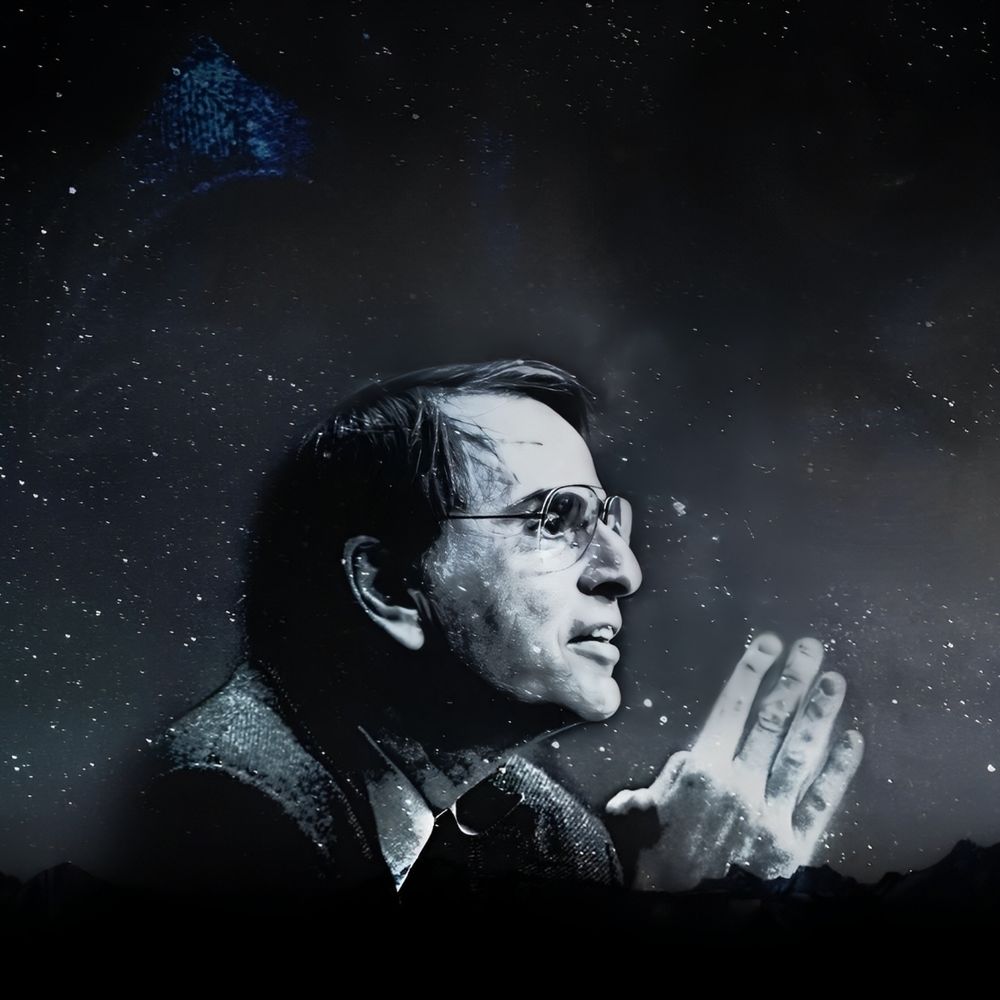
"Think of the rivers of blood spilled by all those generals and emperors so that, in glory and triumph, they could become the momentary masters of a fraction of a dot."
– Carl Sagan
– Carl Sagan

January 5, 2026 at 7:25 PM
"Think of the rivers of blood spilled by all those generals and emperors so that, in glory and triumph, they could become the momentary masters of a fraction of a dot."
– Carl Sagan
– Carl Sagan
NASA's NanoSail-D2, launched 2011, was the first solar sail in low Earth orbit. Its 10-sq-meter sail used the continuous pressure of sunlight for thrust, demonstrating a concept Kepler envisioned centuries ago. It was periodically visible to the unaided eye.
Credit: Ralf Vandebergh
Credit: Ralf Vandebergh

January 2, 2026 at 6:15 PM
NASA's NanoSail-D2, launched 2011, was the first solar sail in low Earth orbit. Its 10-sq-meter sail used the continuous pressure of sunlight for thrust, demonstrating a concept Kepler envisioned centuries ago. It was periodically visible to the unaided eye.
Credit: Ralf Vandebergh
Credit: Ralf Vandebergh
An auroral corona, seen over Iceland, occurs when energetic light curtains stream directly overhead during strong geomagnetic storms. Solar Cycle 25's peak in 2025-2026 brings more such spectacular displays.
Credit: Roi Levi
Credit: Roi Levi

January 1, 2026 at 6:15 PM
An auroral corona, seen over Iceland, occurs when energetic light curtains stream directly overhead during strong geomagnetic storms. Solar Cycle 25's peak in 2025-2026 brings more such spectacular displays.
Credit: Roi Levi
Credit: Roi Levi
HH-222, the Waterfall Nebula, isn't flowing gas but a 10-light-year-long bow shock. This colossal wave, caused by a jet from the V380 Orionis system, moves through space, appearing like a terrestrial waterfall 1,500 light-years away in Orion.
Credit: Mike Selby
Credit: Mike Selby

December 31, 2025 at 6:15 PM
HH-222, the Waterfall Nebula, isn't flowing gas but a 10-light-year-long bow shock. This colossal wave, caused by a jet from the V380 Orionis system, moves through space, appearing like a terrestrial waterfall 1,500 light-years away in Orion.
Credit: Mike Selby
Credit: Mike Selby
This isn't a comet tail! It's a time-lapse of Starlink satellites reflecting sunlight over Inner Mongolia. Long camera exposures blur these over 9000 low Earth orbit satellites into streaks, creating an "artificial comet" effect.
Credit: Wang Chao
Credit: Wang Chao

December 30, 2025 at 6:15 PM
This isn't a comet tail! It's a time-lapse of Starlink satellites reflecting sunlight over Inner Mongolia. Long camera exposures blur these over 9000 low Earth orbit satellites into streaks, creating an "artificial comet" effect.
Credit: Wang Chao
Credit: Wang Chao
The Crab Nebula, a 1054 AD supernova remnant, hosts a central pulsar. This neutron star, as massive as the Sun yet the size of a town, spins 30 times per second.
Credit: Alan Chen
Credit: Alan Chen

December 29, 2025 at 6:15 PM
The Crab Nebula, a 1054 AD supernova remnant, hosts a central pulsar. This neutron star, as massive as the Sun yet the size of a town, spins 30 times per second.
Credit: Alan Chen
Credit: Alan Chen
Hubble images NGC 1898, a globular cluster in the Large Magellanic Cloud. This stellar ball, 160,000 light-years away, shows signs its stars formed in stages. This formation may have been triggered by ancient encounters with the Small Magellanic Cloud and the Milky Way.
Credit: NASA/ APOD
Credit: NASA/ APOD

December 28, 2025 at 6:15 PM
Hubble images NGC 1898, a globular cluster in the Large Magellanic Cloud. This stellar ball, 160,000 light-years away, shows signs its stars formed in stages. This formation may have been triggered by ancient encounters with the Small Magellanic Cloud and the Milky Way.
Credit: NASA/ APOD
Credit: NASA/ APOD
Apollo 17's Lunar Module Challenger ascent stage in lunar orbit. Designed for vacuum, it returned astronauts to orbit, then was intentionally crashed nearby. Its descent stage remains at the Apollo 17 landing site.
Credit: NASA/ APOD
Credit: NASA/ APOD

December 27, 2025 at 5:57 AM
Apollo 17's Lunar Module Challenger ascent stage in lunar orbit. Designed for vacuum, it returned astronauts to orbit, then was intentionally crashed nearby. Its descent stage remains at the Apollo 17 landing site.
Credit: NASA/ APOD
Credit: NASA/ APOD
Reposted by Astronomy 🔭
On this day, a child was born who left an indelible mark on human history, transforming our understanding of the world. Famous for his long hair, he unraveled the mysteries of the heavens and brought light to the world.
Happy Birthday, Sir Isaac Newton.
(Born Dec 25, 1642, Julian Calendar)
Happy Birthday, Sir Isaac Newton.
(Born Dec 25, 1642, Julian Calendar)
December 25, 2025 at 6:04 PM
On this day, a child was born who left an indelible mark on human history, transforming our understanding of the world. Famous for his long hair, he unraveled the mysteries of the heavens and brought light to the world.
Happy Birthday, Sir Isaac Newton.
(Born Dec 25, 1642, Julian Calendar)
Happy Birthday, Sir Isaac Newton.
(Born Dec 25, 1642, Julian Calendar)
NGC 2264, 2,700 light-years away in Monoceros, is a star-forming region known as the Christmas Tree Cluster, Fox Fur, and Unicorn Nebula. Spanning 80 light-years, it features vibrant emission and reflection nebulae shaped by energetic newborn stars.
Credit: Michael Kalika
Credit: Michael Kalika

December 25, 2025 at 3:25 PM
NGC 2264, 2,700 light-years away in Monoceros, is a star-forming region known as the Christmas Tree Cluster, Fox Fur, and Unicorn Nebula. Spanning 80 light-years, it features vibrant emission and reflection nebulae shaped by energetic newborn stars.
Credit: Michael Kalika
Credit: Michael Kalika
Pristine samples from asteroid Bennu, collected by NASA's OSIRIS-REx mission, contain six types of sugar essential to life, including ribose and glucose.

December 3, 2025 at 3:27 AM
Pristine samples from asteroid Bennu, collected by NASA's OSIRIS-REx mission, contain six types of sugar essential to life, including ribose and glucose.
JWST captured a stunning mid-infrared view of Wolf-Rayet Apep, showing four spiraling dust shells around a chaotic triple-star system. Two massive stars forge carbon dust in colliding winds while a third star carves holes through each layer.
Credit: NASA/ ESA/ CSA/ STScI
Credit: NASA/ ESA/ CSA/ STScI

November 22, 2025 at 5:48 PM
JWST captured a stunning mid-infrared view of Wolf-Rayet Apep, showing four spiraling dust shells around a chaotic triple-star system. Two massive stars forge carbon dust in colliding winds while a third star carves holes through each layer.
Credit: NASA/ ESA/ CSA/ STScI
Credit: NASA/ ESA/ CSA/ STScI
Astronomers are grappling with a wild idea: Harvard’s Avi Loeb suggests that 3I/ATLAS might have “thrusters” strong jets pointing toward the Sun (its unusual “anti-tail”) possibly hinting at a technological, not just cometary, object.
Credit: David Jewitt / Jane Luu
Credit: David Jewitt / Jane Luu

November 15, 2025 at 3:51 PM
Astronomers are grappling with a wild idea: Harvard’s Avi Loeb suggests that 3I/ATLAS might have “thrusters” strong jets pointing toward the Sun (its unusual “anti-tail”) possibly hinting at a technological, not just cometary, object.
Credit: David Jewitt / Jane Luu
Credit: David Jewitt / Jane Luu
The Sun just erupted with the strongest solar flare of 2025, an X5.1-class blast that triggered radio blackouts over Africa and Europe and sent shockwaves through Earth’s atmosphere.
Image Credit: NOAA Space Weather Prediction Centre
Image Credit: NOAA Space Weather Prediction Centre

November 12, 2025 at 2:57 PM
The Sun just erupted with the strongest solar flare of 2025, an X5.1-class blast that triggered radio blackouts over Africa and Europe and sent shockwaves through Earth’s atmosphere.
Image Credit: NOAA Space Weather Prediction Centre
Image Credit: NOAA Space Weather Prediction Centre
Astronomers have found the first gap-clearing planet, WISPIT 2b nestled inside the rings of its star’s debris disk, it could be the missing link in planetary formation.
Credit: ESO/Laird Close, University of Arizona, R. F. van Capelleveen et al
Credit: ESO/Laird Close, University of Arizona, R. F. van Capelleveen et al
November 11, 2025 at 4:44 PM
Astronomers have found the first gap-clearing planet, WISPIT 2b nestled inside the rings of its star’s debris disk, it could be the missing link in planetary formation.
Credit: ESO/Laird Close, University of Arizona, R. F. van Capelleveen et al
Credit: ESO/Laird Close, University of Arizona, R. F. van Capelleveen et al
Scientists suggest a “caterpillar-like” wormhole connecting two entangled black holes a bumpy tunnel in spacetime where quantum chaos shapes the geometry. A bold step toward uniting quantum physics and gravity.
Credit: Pixabay/CC0 Public Domain
Credit: Pixabay/CC0 Public Domain

November 6, 2025 at 5:29 PM
Scientists suggest a “caterpillar-like” wormhole connecting two entangled black holes a bumpy tunnel in spacetime where quantum chaos shapes the geometry. A bold step toward uniting quantum physics and gravity.
Credit: Pixabay/CC0 Public Domain
Credit: Pixabay/CC0 Public Domain
The James Webb Space Telescope spotted a gargantuan ravenous black hole in the ancient universe—nicknamed BiRD (Big Red Dot) that existed just 4 billion years after the Big Bang.
Image credit: F. Loiacono, NASA, ESA, CSA
Image credit: F. Loiacono, NASA, ESA, CSA

November 5, 2025 at 4:18 PM
The James Webb Space Telescope spotted a gargantuan ravenous black hole in the ancient universe—nicknamed BiRD (Big Red Dot) that existed just 4 billion years after the Big Bang.
Image credit: F. Loiacono, NASA, ESA, CSA
Image credit: F. Loiacono, NASA, ESA, CSA
3I/ATLAS, a rare interstellar comet spotted in 2025, shows vaporised nickel far from the Sun metal usually won’t evaporate there. It hints at the comet formed in a distant, cold star system, possibly older than our Sun.
Image: NASA/ESA/AP
Image: NASA/ESA/AP

November 2, 2025 at 4:39 PM
3I/ATLAS, a rare interstellar comet spotted in 2025, shows vaporised nickel far from the Sun metal usually won’t evaporate there. It hints at the comet formed in a distant, cold star system, possibly older than our Sun.
Image: NASA/ESA/AP
Image: NASA/ESA/AP
Scientists have just taken a big leap toward solving one of physics' greatest mysteries: why our universe is filled with matter instead of equal parts matter and antimatter. A groundbreaking joint study of “ghost particles” suggests these shape-shifters may tip the balance.
Credit: Adis Resic
Credit: Adis Resic

October 30, 2025 at 4:34 PM
Scientists have just taken a big leap toward solving one of physics' greatest mysteries: why our universe is filled with matter instead of equal parts matter and antimatter. A groundbreaking joint study of “ghost particles” suggests these shape-shifters may tip the balance.
Credit: Adis Resic
Credit: Adis Resic
The mysterious carbon star CW Leonis glows within a web of shells and arcs — a cosmic masterpiece of carbon dust and light. Its fiery layers may hold clues to how the carbon in us once drifted through dying stars like this one.
Image Credit: ESA, NASA, Hubble, T. Ueta (U. Denver), H. Kim (KASI)
Image Credit: ESA, NASA, Hubble, T. Ueta (U. Denver), H. Kim (KASI)

October 29, 2025 at 5:10 PM
The mysterious carbon star CW Leonis glows within a web of shells and arcs — a cosmic masterpiece of carbon dust and light. Its fiery layers may hold clues to how the carbon in us once drifted through dying stars like this one.
Image Credit: ESA, NASA, Hubble, T. Ueta (U. Denver), H. Kim (KASI)
Image Credit: ESA, NASA, Hubble, T. Ueta (U. Denver), H. Kim (KASI)
Scientists have found the first evidence of a 4.5 billion year-old proto-Earth buried deep within our planet remnants of an ancient world that existed before Earth. A hidden piece of our planet’s origin story might finally be uncovered.
Credit: (Artist's Illustration) Stocktrek Images/Getty Images
Credit: (Artist's Illustration) Stocktrek Images/Getty Images

October 28, 2025 at 4:13 PM
Scientists have found the first evidence of a 4.5 billion year-old proto-Earth buried deep within our planet remnants of an ancient world that existed before Earth. A hidden piece of our planet’s origin story might finally be uncovered.
Credit: (Artist's Illustration) Stocktrek Images/Getty Images
Credit: (Artist's Illustration) Stocktrek Images/Getty Images
A galactic duet in Cepheus
The Fireworks Galaxy (NGC 6946) dazzles with 10 supernovae in just a century, while nearby open cluster NGC 6939 shines only 5,600 light-years away. A cosmic blend of beauty and distance.
Image Credit & Copyright: Alberto Pisabarro
The Fireworks Galaxy (NGC 6946) dazzles with 10 supernovae in just a century, while nearby open cluster NGC 6939 shines only 5,600 light-years away. A cosmic blend of beauty and distance.
Image Credit & Copyright: Alberto Pisabarro

October 26, 2025 at 5:15 PM
A galactic duet in Cepheus
The Fireworks Galaxy (NGC 6946) dazzles with 10 supernovae in just a century, while nearby open cluster NGC 6939 shines only 5,600 light-years away. A cosmic blend of beauty and distance.
Image Credit & Copyright: Alberto Pisabarro
The Fireworks Galaxy (NGC 6946) dazzles with 10 supernovae in just a century, while nearby open cluster NGC 6939 shines only 5,600 light-years away. A cosmic blend of beauty and distance.
Image Credit & Copyright: Alberto Pisabarro