



@jugkariche.bsky.social
Reposted

Relocated seismicity associated with the December 2024 Yerington, Nevada earthquake helps scientists explore whether the culprit was not just one, but two faults. Find out more in #SRL. ⚒️
pubs.geoscienceworld.org/ssa/srl/arti...
pubs.geoscienceworld.org/ssa/srl/arti...

December 16, 2025 at 9:02 PM
Relocated seismicity associated with the December 2024 Yerington, Nevada earthquake helps scientists explore whether the culprit was not just one, but two faults. Find out more in #SRL. ⚒️
pubs.geoscienceworld.org/ssa/srl/arti...
pubs.geoscienceworld.org/ssa/srl/arti...
Reposted
🌟OPEN ACCESS🌟The Role of “Equation Error” in Empirical Regressions for Seismic Magnitude Conversions #BSSA ⚒️
What’s the best way to convert between traditional magnitude and moment magnitude?
pubs.geoscienceworld.org/ssa/bssa/art...
What’s the best way to convert between traditional magnitude and moment magnitude?
pubs.geoscienceworld.org/ssa/bssa/art...

December 17, 2025 at 3:04 PM
🌟OPEN ACCESS🌟The Role of “Equation Error” in Empirical Regressions for Seismic Magnitude Conversions #BSSA ⚒️
What’s the best way to convert between traditional magnitude and moment magnitude?
pubs.geoscienceworld.org/ssa/bssa/art...
What’s the best way to convert between traditional magnitude and moment magnitude?
pubs.geoscienceworld.org/ssa/bssa/art...
Reposted
New simulations of earthquake cycles on geometrically rough faults show an interplay between slow sip, creep and foreshocks leading to rupture of the entire fault. #BSSA⚒️
pubs.geoscienceworld.org/ssa/bssa/art...
pubs.geoscienceworld.org/ssa/bssa/art...

November 19, 2025 at 8:03 PM
New simulations of earthquake cycles on geometrically rough faults show an interplay between slow sip, creep and foreshocks leading to rupture of the entire fault. #BSSA⚒️
pubs.geoscienceworld.org/ssa/bssa/art...
pubs.geoscienceworld.org/ssa/bssa/art...
Reposted

🤑OPEN ACCESS🤑 In a new paper, lead by Sylvert Paul, we precisely relocate the 2021 M 7.2 Nippes, Haiti, earthquake sequence using broadband and low-cost, citizen-hosted, seismometers.
Strain is partitioned on strike-slip, reverse, and obliquely-slipping faults.
authors.elsevier.com/sd/article/S...
Strain is partitioned on strike-slip, reverse, and obliquely-slipping faults.
authors.elsevier.com/sd/article/S...


November 14, 2025 at 7:33 AM
🤑OPEN ACCESS🤑 In a new paper, lead by Sylvert Paul, we precisely relocate the 2021 M 7.2 Nippes, Haiti, earthquake sequence using broadband and low-cost, citizen-hosted, seismometers.
Strain is partitioned on strike-slip, reverse, and obliquely-slipping faults.
authors.elsevier.com/sd/article/S...
Strain is partitioned on strike-slip, reverse, and obliquely-slipping faults.
authors.elsevier.com/sd/article/S...
Reposted

Earthquake Roundup for Sept 16 - Nov 13, 2025. We have 744 located earthquakes and the largest was a Mw 3.8. We are still watching the Battle Mountain area and seeing some newer clusters of activity in Central Nevada learn more in this Roundup Video: tinyurl.com/5c7w5jbr

November 14, 2025 at 9:55 PM
Earthquake Roundup for Sept 16 - Nov 13, 2025. We have 744 located earthquakes and the largest was a Mw 3.8. We are still watching the Battle Mountain area and seeing some newer clusters of activity in Central Nevada learn more in this Roundup Video: tinyurl.com/5c7w5jbr
Reposted
In a new #SRL paper, scientists explore how much the width of the seismogenic zone varies with depth for the the San Andreas, the Dead Sea, the North Anatolian, and the East Anatolian faults. ⚒️
pubs.geoscienceworld.org/ssa/srl/arti...
pubs.geoscienceworld.org/ssa/srl/arti...

November 7, 2025 at 10:02 PM
In a new #SRL paper, scientists explore how much the width of the seismogenic zone varies with depth for the the San Andreas, the Dead Sea, the North Anatolian, and the East Anatolian faults. ⚒️
pubs.geoscienceworld.org/ssa/srl/arti...
pubs.geoscienceworld.org/ssa/srl/arti...
Reposted

⚒️ 🧪
A M6.8 earthquake struck offshore Japan today - another large earthquake from the subduction zone that produced two recent great earthquakes. The earthquake was preceded by a "cascade up": foreshocks progressively increasing in maximum magnitude.
What do we know? What might happen next?
A M6.8 earthquake struck offshore Japan today - another large earthquake from the subduction zone that produced two recent great earthquakes. The earthquake was preceded by a "cascade up": foreshocks progressively increasing in maximum magnitude.
What do we know? What might happen next?

M6.8 earthquake offshore Japan preceded by upward cascade of foreshocks
What do we know about seismic hazard in the Japan-Kuril subduction zone?
earthquakeinsights.substack.com
November 9, 2025 at 6:41 PM
⚒️ 🧪
A M6.8 earthquake struck offshore Japan today - another large earthquake from the subduction zone that produced two recent great earthquakes. The earthquake was preceded by a "cascade up": foreshocks progressively increasing in maximum magnitude.
What do we know? What might happen next?
A M6.8 earthquake struck offshore Japan today - another large earthquake from the subduction zone that produced two recent great earthquakes. The earthquake was preceded by a "cascade up": foreshocks progressively increasing in maximum magnitude.
What do we know? What might happen next?
Reposted

This visualization of Japan’s M6.8 yesterday is phenomenal. Offshore S-net detected it and issued earthquake alert before any land station detection. Numbered circles show JMA intensity (not same as MMI). Offshore is where we need to be in Cascadia as well.

The underwater seismometer network is so great, as evidenced from yesterday's EQ off-Tohoku.
Reposting unofficial visualization by x.com/kotoho76/sta...
Reposting unofficial visualization by x.com/kotoho76/sta...
November 10, 2025 at 4:10 PM
This visualization of Japan’s M6.8 yesterday is phenomenal. Offshore S-net detected it and issued earthquake alert before any land station detection. Numbered circles show JMA intensity (not same as MMI). Offshore is where we need to be in Cascadia as well.
Reposted
🌟OPEN ACCESS🌟The 1884 Andalusian Earthquake, Spain: Re‐evaluation of Seismic Intensities and Source Determination #SRL ⚒️
What was the geometry of the fault that ruptured in the 1884 Andalusian earthquake?
pubs.geoscienceworld.org/ssa/srl/arti...
What was the geometry of the fault that ruptured in the 1884 Andalusian earthquake?
pubs.geoscienceworld.org/ssa/srl/arti...

October 21, 2025 at 3:04 PM
🌟OPEN ACCESS🌟The 1884 Andalusian Earthquake, Spain: Re‐evaluation of Seismic Intensities and Source Determination #SRL ⚒️
What was the geometry of the fault that ruptured in the 1884 Andalusian earthquake?
pubs.geoscienceworld.org/ssa/srl/arti...
What was the geometry of the fault that ruptured in the 1884 Andalusian earthquake?
pubs.geoscienceworld.org/ssa/srl/arti...
Reposted
"Who benefits when a country aims to be a world leader in AI without addressing basic social problems? What value exists in developing the most powerful AI models when such innovations further exacerbate existing social ills?"
www.science.org/doi/10.1126/...
www.science.org/doi/10.1126/...

The paradox of AI accelerationism and the promise of public interest AI
Over the past 3 years, the idea that artificial intelligence (AI) development should be accelerated without restraint to drive radical societal change—a phenomenon known as AI accelerationism—has gain...
www.science.org
October 3, 2025 at 5:58 AM
"Who benefits when a country aims to be a world leader in AI without addressing basic social problems? What value exists in developing the most powerful AI models when such innovations further exacerbate existing social ills?"
www.science.org/doi/10.1126/...
www.science.org/doi/10.1126/...
Reposted
🌟OPEN ACCESS🌟 In a new #BSSA paper, scientists leverage a dense seismic network, deployed in a complex region with abundant microseismicity, with machine-learning methods. The result illuminates structures and fault geometries. ⚒️
pubs.geoscienceworld.org/ssa/bssa/art...
pubs.geoscienceworld.org/ssa/bssa/art...

October 4, 2025 at 8:02 PM
🌟OPEN ACCESS🌟 In a new #BSSA paper, scientists leverage a dense seismic network, deployed in a complex region with abundant microseismicity, with machine-learning methods. The result illuminates structures and fault geometries. ⚒️
pubs.geoscienceworld.org/ssa/bssa/art...
pubs.geoscienceworld.org/ssa/bssa/art...
Reposted
In a new #BSSA paper, scientists study the largest instrumentally recorded quake, the 1952 magnitude 6.3 suburban Pyongyang earthquake. ⚒️
pubs.geoscienceworld.org/ssa/bssa/art...
pubs.geoscienceworld.org/ssa/bssa/art...

October 5, 2025 at 2:00 AM
In a new #BSSA paper, scientists study the largest instrumentally recorded quake, the 1952 magnitude 6.3 suburban Pyongyang earthquake. ⚒️
pubs.geoscienceworld.org/ssa/bssa/art...
pubs.geoscienceworld.org/ssa/bssa/art...
Reposted

Dealing with earthquake hazard and risk is a complex and nuanced problem, with no easy answers. For the most part, the scientific experts think the changes announced today are a positive step forward

Quake-prone buildings redefined – Expert Reaction
Quake-prone buildings redefined - Expert Reaction - Science Media Centre
Government changes to the earthquake-prone building system will remove nearly 3000 buildings from the classification. Following the Seismic Risk Management Review, Building and Construction Minister Chris...
www.sciencemediacentre.co.nz
September 29, 2025 at 3:04 AM
Dealing with earthquake hazard and risk is a complex and nuanced problem, with no easy answers. For the most part, the scientific experts think the changes announced today are a positive step forward
Reposted
A detailed analysis of seismic and satellite data that recorded the September 2023 High Atlas, Morocco earthquake provides a detailed picture of the geologic structures in the region. For more, please visit this #BSSA paper. ⚒️
pubs.geoscienceworld.org/ssa/bssa/art...
pubs.geoscienceworld.org/ssa/bssa/art...

September 28, 2025 at 4:00 AM
A detailed analysis of seismic and satellite data that recorded the September 2023 High Atlas, Morocco earthquake provides a detailed picture of the geologic structures in the region. For more, please visit this #BSSA paper. ⚒️
pubs.geoscienceworld.org/ssa/bssa/art...
pubs.geoscienceworld.org/ssa/bssa/art...
Reposted

SeisBench v.10 is out and it's time for some new models:
- SkyNet allows picking regional phases and can even distinguish Pn, Pg, Sn, Sg (beware of the Terminator though)
- SeisDAE brings easily retrainable seismic waveform denoising
Check out all changes here:
github.com/seisbench/se...
- SkyNet allows picking regional phases and can even distinguish Pn, Pg, Sn, Sg (beware of the Terminator though)
- SeisDAE brings easily retrainable seismic waveform denoising
Check out all changes here:
github.com/seisbench/se...

Release SeisBench v0.10 - SkyNet, SeisDAE and a more powerful model API · seisbench/seisbench
Major updates
The SkyNet model is now available in SeisBench. SkyNet is specifically designed to pick phase arrivals at regional distances (up to 20 degree) and also comes with a set of weights to...
github.com
August 11, 2025 at 10:19 AM
SeisBench v.10 is out and it's time for some new models:
- SkyNet allows picking regional phases and can even distinguish Pn, Pg, Sn, Sg (beware of the Terminator though)
- SeisDAE brings easily retrainable seismic waveform denoising
Check out all changes here:
github.com/seisbench/se...
- SkyNet allows picking regional phases and can even distinguish Pn, Pg, Sn, Sg (beware of the Terminator though)
- SeisDAE brings easily retrainable seismic waveform denoising
Check out all changes here:
github.com/seisbench/se...
📢 Paper Alert!
Excited to share my new paper in Pure and Applied Geophysics: “Role of Fluid on Earthquake Occurrence”.
We show how fluids -b-value drops help shape foreshocks & aftershocks in Ridgecrest (2019) & Central Apennines (1997, 2009, 2016).
👉 link.springer.com/article/10.1...
Excited to share my new paper in Pure and Applied Geophysics: “Role of Fluid on Earthquake Occurrence”.
We show how fluids -b-value drops help shape foreshocks & aftershocks in Ridgecrest (2019) & Central Apennines (1997, 2009, 2016).
👉 link.springer.com/article/10.1...

Role of Fluid on Earthquake Occurrence: Example of the 2019 Ridgecrest and the 1997, 2009 and 2016 Central Apennines Sequences - Pure and Applied Geophysics
This paper focuses on the study of the temporal evolution of seismicity and the role of fluids during major earthquake sequences that occurred in the Central Apennines and Southern Walker Lane belt-Ea...
link.springer.com
September 19, 2025 at 2:58 PM
📢 Paper Alert!
Excited to share my new paper in Pure and Applied Geophysics: “Role of Fluid on Earthquake Occurrence”.
We show how fluids -b-value drops help shape foreshocks & aftershocks in Ridgecrest (2019) & Central Apennines (1997, 2009, 2016).
👉 link.springer.com/article/10.1...
Excited to share my new paper in Pure and Applied Geophysics: “Role of Fluid on Earthquake Occurrence”.
We show how fluids -b-value drops help shape foreshocks & aftershocks in Ridgecrest (2019) & Central Apennines (1997, 2009, 2016).
👉 link.springer.com/article/10.1...
Reposted

Weekly Earthquake Stats: 07 Sep 2025 - 13 Sep 2025. There were 404 events this week ranging from M -0.21 to 3.69. Check out our weekly playback map and visit www.scsn.org for detailed information. #earthquakes #seismology #SCSN #weeklystats @CaltechSeismo
September 14, 2025 at 9:00 PM
Weekly Earthquake Stats: 07 Sep 2025 - 13 Sep 2025. There were 404 events this week ranging from M -0.21 to 3.69. Check out our weekly playback map and visit www.scsn.org for detailed information. #earthquakes #seismology #SCSN #weeklystats @CaltechSeismo
Reposted

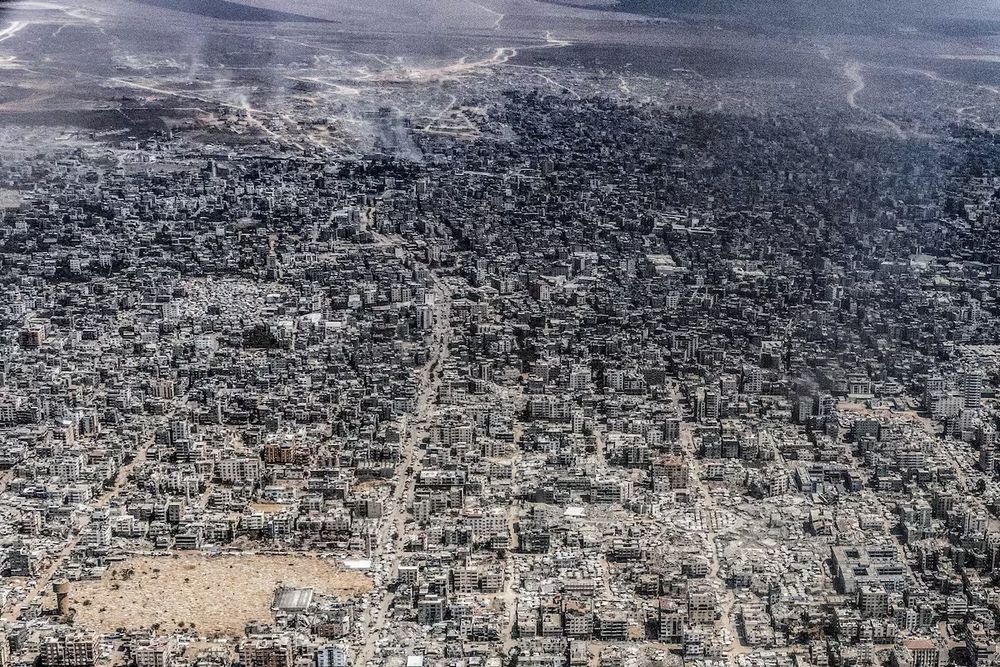
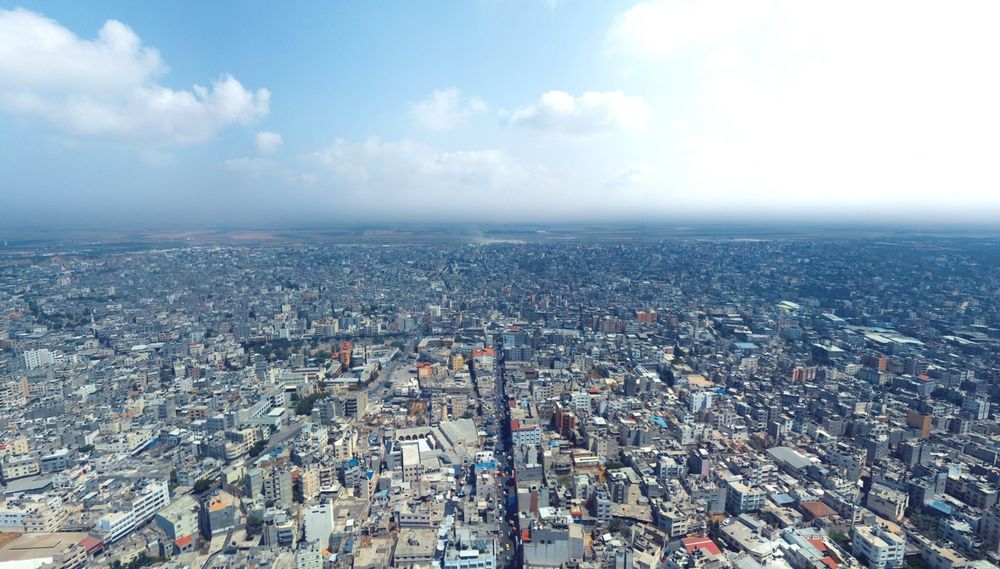
For another comparison, there's also an aerial view from a similar perspective, though at lower altitude since it's from a drone photographer, here on Facebook from 2019: www.facebook.com/photo/?fbid=...
The drone photo is closer to 31.5057, 34.4619 whereas the plane photo is closer to the coast.
The drone photo is closer to 31.5057, 34.4619 whereas the plane photo is closer to the coast.
August 1, 2025 at 7:35 PM
For another comparison, there's also an aerial view from a similar perspective, though at lower altitude since it's from a drone photographer, here on Facebook from 2019: www.facebook.com/photo/?fbid=...
The drone photo is closer to 31.5057, 34.4619 whereas the plane photo is closer to the coast.
The drone photo is closer to 31.5057, 34.4619 whereas the plane photo is closer to the coast.
Reposted

Auto slipmap with regional records (SLIPNEAR method, Géoazur/OCA) M 7.3 - ALASKA - 2025-07-16 20:37:39 (UTC)
Plane striking N343 (NNW-SSE) shown.
Rupture direction to the South-East constrained by nearby stations (quite opposite to the USGS result).
Thanks to seismic records through IRIS
Plane striking N343 (NNW-SSE) shown.
Rupture direction to the South-East constrained by nearby stations (quite opposite to the USGS result).
Thanks to seismic records through IRIS

July 17, 2025 at 9:36 AM
Auto slipmap with regional records (SLIPNEAR method, Géoazur/OCA) M 7.3 - ALASKA - 2025-07-16 20:37:39 (UTC)
Plane striking N343 (NNW-SSE) shown.
Rupture direction to the South-East constrained by nearby stations (quite opposite to the USGS result).
Thanks to seismic records through IRIS
Plane striking N343 (NNW-SSE) shown.
Rupture direction to the South-East constrained by nearby stations (quite opposite to the USGS result).
Thanks to seismic records through IRIS
🌍📢 New Publication Alert | Geology – July 2025 🧭📡
In response to Viltres et al. (2025), our analysis provides no evidence supporting the presence of aseismic creep along the Mila-Guelma Fault in Tell Atlas region (Algeria).
🔗 DOI: doi.org/10.1130/G533...
In response to Viltres et al. (2025), our analysis provides no evidence supporting the presence of aseismic creep along the Mila-Guelma Fault in Tell Atlas region (Algeria).
🔗 DOI: doi.org/10.1130/G533...
Aseismic creep and strain partitioning accommodating the Nubia-Eurasia oblique convergence in northern Africa from InSAR analysis: COMMENT | Geology | GeoScienceWorld
doi.org
June 30, 2025 at 10:13 PM
🌍📢 New Publication Alert | Geology – July 2025 🧭📡
In response to Viltres et al. (2025), our analysis provides no evidence supporting the presence of aseismic creep along the Mila-Guelma Fault in Tell Atlas region (Algeria).
🔗 DOI: doi.org/10.1130/G533...
In response to Viltres et al. (2025), our analysis provides no evidence supporting the presence of aseismic creep along the Mila-Guelma Fault in Tell Atlas region (Algeria).
🔗 DOI: doi.org/10.1130/G533...
🔔📢 Publication Announcement: Full paper Now Available
I am pleased to share that our article, published in Tectonophysics, is now available in open access.
You can access the full text at the following link: 👉
www.sciencedirect.com/science/arti...
I am pleased to share that our article, published in Tectonophysics, is now available in open access.
You can access the full text at the following link: 👉
www.sciencedirect.com/science/arti...

The 2023 Mw 7.8 Kahramanmaraş earthquake rupture increases potential failure along the northern Dead Sea Fault
The 6 February 2023 earthquake sequence along the East Anatolian Fault (EAF, Mw 7.8) and Çardak fault (CF, Mw 7.6) in southern Turkiye reveals the imp…
www.sciencedirect.com
June 2, 2025 at 12:45 PM
🔔📢 Publication Announcement: Full paper Now Available
I am pleased to share that our article, published in Tectonophysics, is now available in open access.
You can access the full text at the following link: 👉
www.sciencedirect.com/science/arti...
I am pleased to share that our article, published in Tectonophysics, is now available in open access.
You can access the full text at the following link: 👉
www.sciencedirect.com/science/arti...