



Jake Barber
@jakenbarber.bsky.social
Evolutionary Biologist
Postdoc with Alejandro Couce @ UPM, Spain
Using Experimental Evolution to look at mutational biases in bacteria!
Formerly of Mike McDonald @ http://mcdonald-lab.com
Research Gate Profile: https://t.co/xhw63knBCj
Postdoc with Alejandro Couce @ UPM, Spain
Using Experimental Evolution to look at mutational biases in bacteria!
Formerly of Mike McDonald @ http://mcdonald-lab.com
Research Gate Profile: https://t.co/xhw63knBCj
Pinned
Jake Barber
@jakenbarber.bsky.social
· Jun 20
www.biorxiv.org
New pre-print is finally out! This is the first project from my postdoc with Alejandro Couce, looking at how mutation-bias influences adaptation across large population sizes, and how this may have real world consequences. Really happy with how this turned out :)
www.biorxiv.org/content/10.1...
www.biorxiv.org/content/10.1...
Reposted by Jake Barber

Reposted by Jake Barber

Hyphal growth determines spatial organization and coexistence in a pathogenic polymicrobial community in a spatially structured environment
#ISMEJournal by @mlaenoc.bsky.social et al
academic.oup.com/ismej/advanc...
#ISMEJournal by @mlaenoc.bsky.social et al
academic.oup.com/ismej/advanc...

Hyphal growth determines spatial organization and coexistence in a pathogenic polymicrobial community in a spatially structured environment
Abstract. The bodies of macroorganisms host microbes living in multi-species communities. Sequencing approaches have revealed that different organs host di
academic.oup.com
December 18, 2025 at 4:41 PM
Hyphal growth determines spatial organization and coexistence in a pathogenic polymicrobial community in a spatially structured environment
#ISMEJournal by @mlaenoc.bsky.social et al
academic.oup.com/ismej/advanc...
#ISMEJournal by @mlaenoc.bsky.social et al
academic.oup.com/ismej/advanc...
Reposted by Jake Barber

How do bacteria deal with double costs? And how costly are unusual levels of mistranslation anyway? In short - antibiotics are more of an issue than less/more mistranslation, but the latter changes how populations deal with antibiotics. For the long story, check out our new paper!

So happy that this work simultaneously measuring the costs of antibiotic exposure and mistranslation is finally out in MBE! Work from @deepaagashe.bsky.social (who was ultra patient!) and my labs. Do see the research highlight here, with Nishant's lovely graphic. academic.oup.com/mbe/article/...
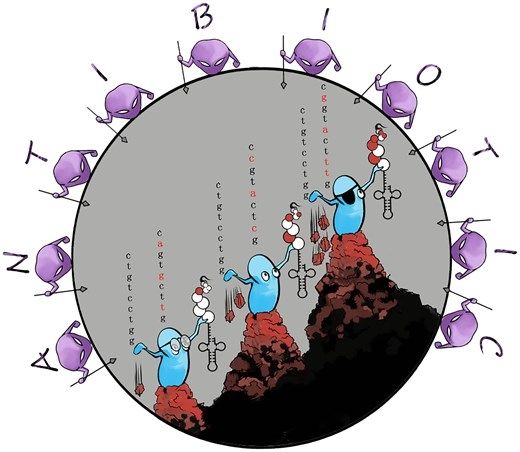
How Life's “Mistakes” Impact Adaptation
Even in a colony of genetically identical bacteria, no two individuals are exactly alike. This phenomenon, known as phenotypic “noise,” is a long-standing
academic.oup.com
December 19, 2025 at 12:19 PM
How do bacteria deal with double costs? And how costly are unusual levels of mistranslation anyway? In short - antibiotics are more of an issue than less/more mistranslation, but the latter changes how populations deal with antibiotics. For the long story, check out our new paper!
Reposted by Jake Barber

Nature Reviews Genetics Focus issue: Eco-evolutionary genomics of microorganisms www.nature.com/collections/... 🧬🖥️🧪🦠 🧵 1/

December 16, 2025 at 5:00 PM
Nature Reviews Genetics Focus issue: Eco-evolutionary genomics of microorganisms www.nature.com/collections/... 🧬🖥️🧪🦠 🧵 1/
Reposted by Jake Barber

🗞️ New preprint from the lab, led by our postdoc Ana Garoña (not on here) in collab with @andreagiometto.bsky.social: “Experimental evolution of cellular miniaturization reveals a mechanism for cell size evolution”, aka: “honey, we shrank the yeasts!” 🎥
www.biorxiv.org/content/10.6...
www.biorxiv.org/content/10.6...

December 9, 2025 at 5:08 PM
🗞️ New preprint from the lab, led by our postdoc Ana Garoña (not on here) in collab with @andreagiometto.bsky.social: “Experimental evolution of cellular miniaturization reveals a mechanism for cell size evolution”, aka: “honey, we shrank the yeasts!” 🎥
www.biorxiv.org/content/10.6...
www.biorxiv.org/content/10.6...
Reposted by Jake Barber

Impact of fluctuating environments on the fitness and robustness of evolving laboratory and industrial Saccharomyces cerevisiae strains https://www.biorxiv.org/content/10.64898/2025.12.05.692621v1
December 6, 2025 at 11:31 PM
Impact of fluctuating environments on the fitness and robustness of evolving laboratory and industrial Saccharomyces cerevisiae strains https://www.biorxiv.org/content/10.64898/2025.12.05.692621v1
Reposted by Jake Barber
Strong genotype-by-genotype and genotype-by-environment interactions induced by antibiotic resistance mutations https://www.biorxiv.org/content/10.64898/2025.12.03.692229v1
December 4, 2025 at 10:32 AM
Strong genotype-by-genotype and genotype-by-environment interactions induced by antibiotic resistance mutations https://www.biorxiv.org/content/10.64898/2025.12.03.692229v1
Reposted by Jake Barber
Competition between Pseudomonas species constrains ecological diversification in polymicrobial biofilms
NPJ Biofilms and Microbiomes from Henriette Lyng Røder and @vscooper.micropopbio.org
www.nature.com/articles/s41...
NPJ Biofilms and Microbiomes from Henriette Lyng Røder and @vscooper.micropopbio.org
www.nature.com/articles/s41...
Competition between Pseudomonas species constrains ecological diversification in polymicrobial biofilms - npj Biofilms and Microbiomes
npj Biofilms and Microbiomes - Competition between Pseudomonas species constrains ecological diversification in polymicrobial biofilms
www.nature.com
November 26, 2025 at 7:07 AM
Competition between Pseudomonas species constrains ecological diversification in polymicrobial biofilms
NPJ Biofilms and Microbiomes from Henriette Lyng Røder and @vscooper.micropopbio.org
www.nature.com/articles/s41...
NPJ Biofilms and Microbiomes from Henriette Lyng Røder and @vscooper.micropopbio.org
www.nature.com/articles/s41...
Reposted by Jake Barber

Our new collaborative work led by @taliamycota.bsky.social
Jiajun Cui & Emma Caullireau between my lab @ucllifesciences.bsky.social @cloeucl.bsky.social & the Karasov Lab (tkarasovlab.org) @uofubiology.bsky.social
and collaborators: @plantricia.bsky.social et al.
tinyurl.com/5yx2wmz5
(1/n)
Jiajun Cui & Emma Caullireau between my lab @ucllifesciences.bsky.social @cloeucl.bsky.social & the Karasov Lab (tkarasovlab.org) @uofubiology.bsky.social
and collaborators: @plantricia.bsky.social et al.
tinyurl.com/5yx2wmz5
(1/n)

November 18, 2025 at 8:41 AM
Our new collaborative work led by @taliamycota.bsky.social
Jiajun Cui & Emma Caullireau between my lab @ucllifesciences.bsky.social @cloeucl.bsky.social & the Karasov Lab (tkarasovlab.org) @uofubiology.bsky.social
and collaborators: @plantricia.bsky.social et al.
tinyurl.com/5yx2wmz5
(1/n)
Jiajun Cui & Emma Caullireau between my lab @ucllifesciences.bsky.social @cloeucl.bsky.social & the Karasov Lab (tkarasovlab.org) @uofubiology.bsky.social
and collaborators: @plantricia.bsky.social et al.
tinyurl.com/5yx2wmz5
(1/n)
Reposted by Jake Barber

Another new preprint from former PhD student Daniel Wong (now @ ENS) has been a long time in the making, and builds on our recent efforts to model eco-evolutionary feedbacks in rapidly evolving microbial populations that compete for different resources (1/n)
November 17, 2025 at 2:14 PM
Another new preprint from former PhD student Daniel Wong (now @ ENS) has been a long time in the making, and builds on our recent efforts to model eco-evolutionary feedbacks in rapidly evolving microbial populations that compete for different resources (1/n)
Reposted by Jake Barber
Happy to share our new review on oligonucleotide chemical evolution on early Earth. We discuss how iterative sequence selection and diversification could have shaped RNA pools, facilitating sequence exploration and the emergence of ribozymes.
www.jstage.jst.go.jp/article/biop...
www.jstage.jst.go.jp/article/biop...

Selection–diversification interplay in oligonucleotide chemical evolution
The emergence of catalytic RNAs (ribozymes) may have set the stage for an “RNA world” preceding protein evolution. The probability of ribozyme emergen …
www.jstage.jst.go.jp
November 7, 2025 at 2:27 PM
Happy to share our new review on oligonucleotide chemical evolution on early Earth. We discuss how iterative sequence selection and diversification could have shaped RNA pools, facilitating sequence exploration and the emergence of ribozymes.
www.jstage.jst.go.jp/article/biop...
www.jstage.jst.go.jp/article/biop...
Reposted by Jake Barber

New online! Microbial genomics for antimicrobial resistance ecology and action
Microbial genomics for antimicrobial resistance ecology and action
Nature Reviews Genetics, Published online: 03 November 2025; doi:10.1038/s41576-025-00909-zMicrobial genomics can improve our understanding of antimicrobial resistance dynamics across ecosystems. In this Comment, Kathryn Holt emphasizes the interconnectedness of human, animal and environmental health and calls for greater integration of microbial genomic data through robust analytical frameworks to unravel the complexity of antimicrobial resistance dynamics.
www.nature.com
November 3, 2025 at 1:07 PM
New online! Microbial genomics for antimicrobial resistance ecology and action
Reposted by Jake Barber

Out now at @plosbiology.org we evaluate the potential for antibiotic efflux and cell wall biogenesis as targets for reversing drug resistance and preventing its de novo evolution in Escherichia coli. Link below:
journals.plos.org/plosbiology/...
journals.plos.org/plosbiology/...

Impeding pathways of intrinsic resistance in Escherichia coli confers antibiotic sensitization and resistance proofing
Intrinsic resistance pathways in E. coli can be exploited to enhance antibiotic sensitivity and limit resistance evolution. This study shows that genetic inhibition of efflux pumps and cell envelope b...
journals.plos.org
October 25, 2025 at 1:47 AM
Out now at @plosbiology.org we evaluate the potential for antibiotic efflux and cell wall biogenesis as targets for reversing drug resistance and preventing its de novo evolution in Escherichia coli. Link below:
journals.plos.org/plosbiology/...
journals.plos.org/plosbiology/...
Reposted by Jake Barber
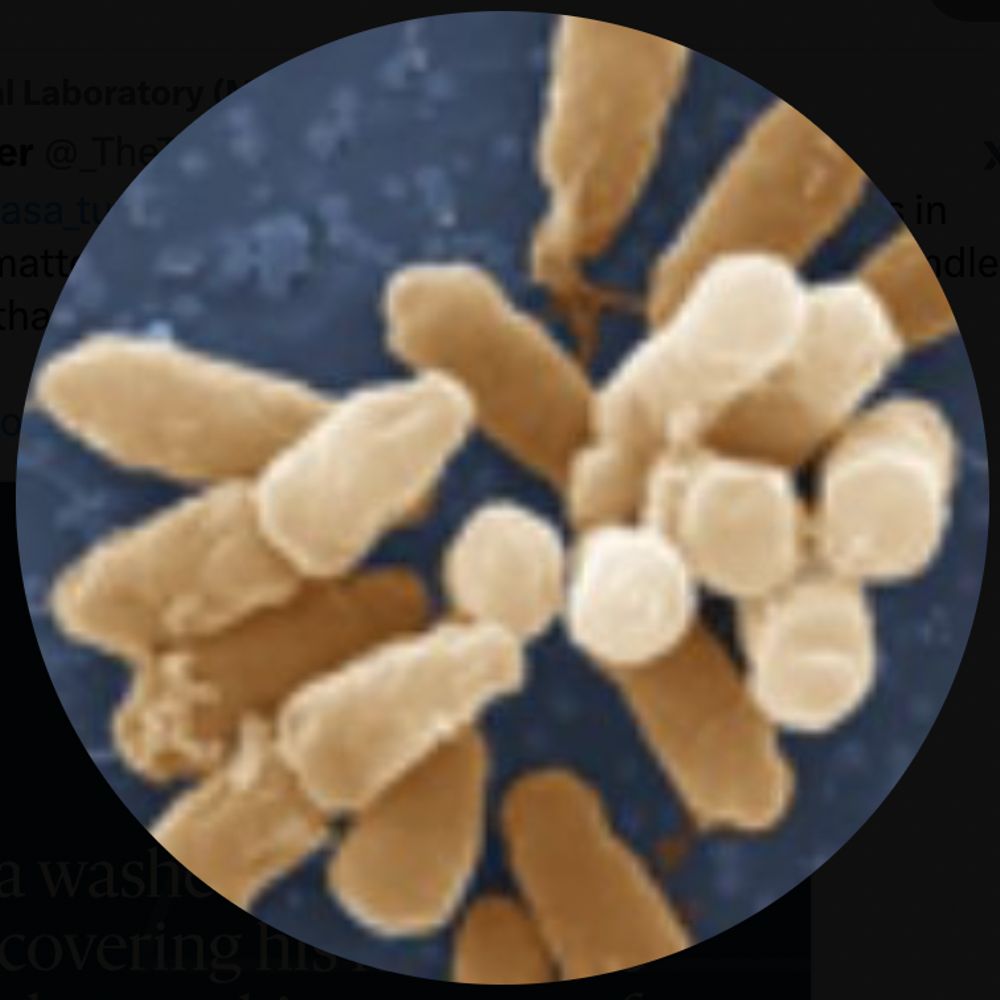
New in JB: Black and Wakeman review the challenges of treating polymicrobial infections in various body sites, a topic near and dear to my heart.
journals.asm.org/doi/10.1128/...
@asm.org #JBacteriology
journals.asm.org/doi/10.1128/...
@asm.org #JBacteriology

October 23, 2025 at 12:20 PM
New in JB: Black and Wakeman review the challenges of treating polymicrobial infections in various body sites, a topic near and dear to my heart.
journals.asm.org/doi/10.1128/...
@asm.org #JBacteriology
journals.asm.org/doi/10.1128/...
@asm.org #JBacteriology
Reposted by Jake Barber
Evolution of One Species Increases Resistance to Invasion in a Simple Synthetic Community
Microbial Ecology
link.springer.com/article/10.1...
Microbial Ecology
link.springer.com/article/10.1...

Evolution of One Species Increases Resistance to Invasion in a Simple Synthetic Community - Microbial Ecology
The species that make up a microbial community determine its potential function. A major goal of microbial ecology is to make assemblages of microbes — synthetic communities — with targeted applicatio...
link.springer.com
October 21, 2025 at 6:11 AM
Evolution of One Species Increases Resistance to Invasion in a Simple Synthetic Community
Microbial Ecology
link.springer.com/article/10.1...
Microbial Ecology
link.springer.com/article/10.1...
Reposted by Jake Barber

A fun little side project I've been working on with @stepadenisov.bsky.social , Mato Lagator, and Andreas Wagner: "Strong promoters are mutationally robust". Briefly...
www.biorxiv.org/content/10.1...
www.biorxiv.org/content/10.1...

Strong promoters are mutationally robust
Mutational robustness is the persistence of a phenotype upon mutation. It facilitates molecular evolution and has been characterized in a variety of biological systems, but studies of prokaryotic prom...
www.biorxiv.org
October 21, 2025 at 8:02 AM
A fun little side project I've been working on with @stepadenisov.bsky.social , Mato Lagator, and Andreas Wagner: "Strong promoters are mutationally robust". Briefly...
www.biorxiv.org/content/10.1...
www.biorxiv.org/content/10.1...
Reposted by Jake Barber

Massive undertaking with @teppo-h.bsky.social and others out. We studied 4 years (!!!) of synthetic 23 microbial species community evolution with/without antibiotic. Resistance mutations occurring over years led to stepwise restructuring and ultimately recovery of undisturbed community composition.

Evolution induced state shifts in a long-term microbial community experiment www.biorxiv.org/content/10.1...

Evolution induced state shifts in a long-term microbial community experiment
Biological communities are complex, dynamic systems that underpin ecosystem functionality, yet their long-term dynamics and predictability remain poorly understood. Understanding how Darwinian evoluti...
www.biorxiv.org
October 11, 2025 at 5:00 AM
Massive undertaking with @teppo-h.bsky.social and others out. We studied 4 years (!!!) of synthetic 23 microbial species community evolution with/without antibiotic. Resistance mutations occurring over years led to stepwise restructuring and ultimately recovery of undisturbed community composition.
Reposted by Jake Barber


Reposted by Jake Barber
Metabolic interplay drives population cycles in a cross-feeding microbial community
@natcomms.nature.com from @oventurelli2.bsky.social
www.nature.com/articles/s41...
@natcomms.nature.com from @oventurelli2.bsky.social
www.nature.com/articles/s41...
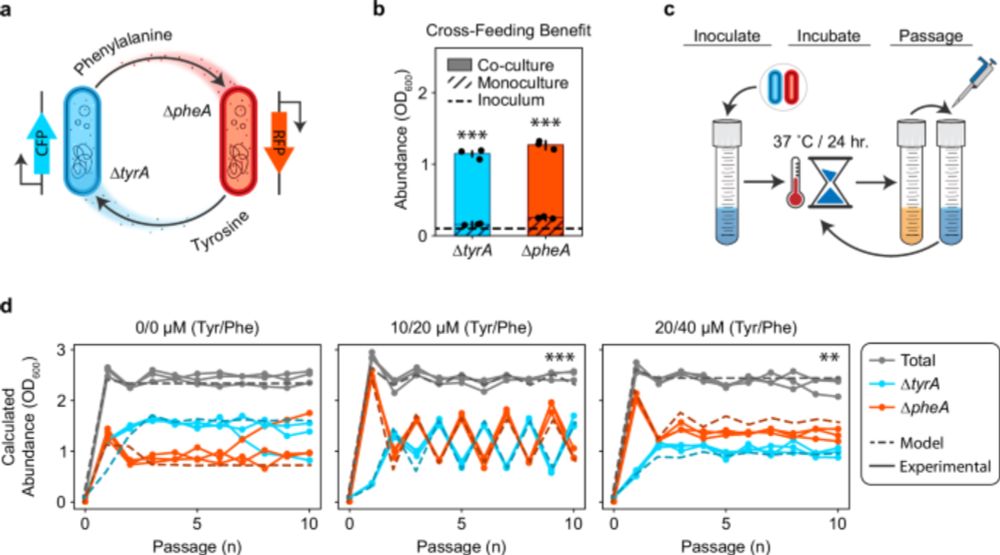
Metabolic interplay drives population cycles in a cross-feeding microbial community - Nature Communications
Here the authors leverage a crossfeeding, engineered microbial community to demonstrate that strain abundance cycles are robust across environmental conditions. They pair this with a nonlinear dynamic model to elucidate population cycles.
www.nature.com
October 7, 2025 at 7:09 PM
Metabolic interplay drives population cycles in a cross-feeding microbial community
@natcomms.nature.com from @oventurelli2.bsky.social
www.nature.com/articles/s41...
@natcomms.nature.com from @oventurelli2.bsky.social
www.nature.com/articles/s41...
Reposted by Jake Barber

Pseudomonas aeruginosa lasR is a keystone gene in polymicrobial cultures https://www.biorxiv.org/content/10.1101/2025.10.06.680631v1
October 7, 2025 at 5:16 AM
Pseudomonas aeruginosa lasR is a keystone gene in polymicrobial cultures https://www.biorxiv.org/content/10.1101/2025.10.06.680631v1
Reposted by Jake Barber

#PaperCBGP 🆕📰‼️
Can we predict which bacteria will turn into #superbugs? 🦠
A study led by Dr. Alejandro Couce and published in PLoS Genetics (@plos.org) shows that a single DNA change can open “bridges” to modern resistances.
🔗 Read more here: https://shorturl.at/TRRwD
Can we predict which bacteria will turn into #superbugs? 🦠
A study led by Dr. Alejandro Couce and published in PLoS Genetics (@plos.org) shows that a single DNA change can open “bridges” to modern resistances.
🔗 Read more here: https://shorturl.at/TRRwD

October 5, 2025 at 11:01 AM
#PaperCBGP 🆕📰‼️
Can we predict which bacteria will turn into #superbugs? 🦠
A study led by Dr. Alejandro Couce and published in PLoS Genetics (@plos.org) shows that a single DNA change can open “bridges” to modern resistances.
🔗 Read more here: https://shorturl.at/TRRwD
Can we predict which bacteria will turn into #superbugs? 🦠
A study led by Dr. Alejandro Couce and published in PLoS Genetics (@plos.org) shows that a single DNA change can open “bridges” to modern resistances.
🔗 Read more here: https://shorturl.at/TRRwD
Reposted by Jake Barber
#PaperCBGP 🆕📰‼️
🧬 Led by Alejandro Couce, researchers of the CBGP used experimental evolution to predict how the superbug enzyme KPC-2 could outsmart antibiotics
⚔️The study, published at @natecoevo.nature.com, lets us block it and protect our antibiotics
📎 shorturl.at/F7oOa
🧬 Led by Alejandro Couce, researchers of the CBGP used experimental evolution to predict how the superbug enzyme KPC-2 could outsmart antibiotics
⚔️The study, published at @natecoevo.nature.com, lets us block it and protect our antibiotics
📎 shorturl.at/F7oOa

October 2, 2025 at 8:38 AM
#PaperCBGP 🆕📰‼️
🧬 Led by Alejandro Couce, researchers of the CBGP used experimental evolution to predict how the superbug enzyme KPC-2 could outsmart antibiotics
⚔️The study, published at @natecoevo.nature.com, lets us block it and protect our antibiotics
📎 shorturl.at/F7oOa
🧬 Led by Alejandro Couce, researchers of the CBGP used experimental evolution to predict how the superbug enzyme KPC-2 could outsmart antibiotics
⚔️The study, published at @natecoevo.nature.com, lets us block it and protect our antibiotics
📎 shorturl.at/F7oOa
Reposted by Jake Barber
So this came online over the weekend: My dive into the "definition" of coevolution is online ahead of publication in @journal-evo.bsky.social!
Don’t ask "when is it coevolution?" — ask "how?"
doi.org/10.1093/evol...
Don’t ask "when is it coevolution?" — ask "how?"
doi.org/10.1093/evol...

Don’t ask “when is it coevolution?” — ask “how?”
Abstract. Coevolution has come to be widely understood as specific, simultaneous, reciprocal adaptation by pairs of interacting species. This strict-sense
doi.org
September 30, 2025 at 3:30 PM
So this came online over the weekend: My dive into the "definition" of coevolution is online ahead of publication in @journal-evo.bsky.social!
Don’t ask "when is it coevolution?" — ask "how?"
doi.org/10.1093/evol...
Don’t ask "when is it coevolution?" — ask "how?"
doi.org/10.1093/evol...
Reposted by Jake Barber
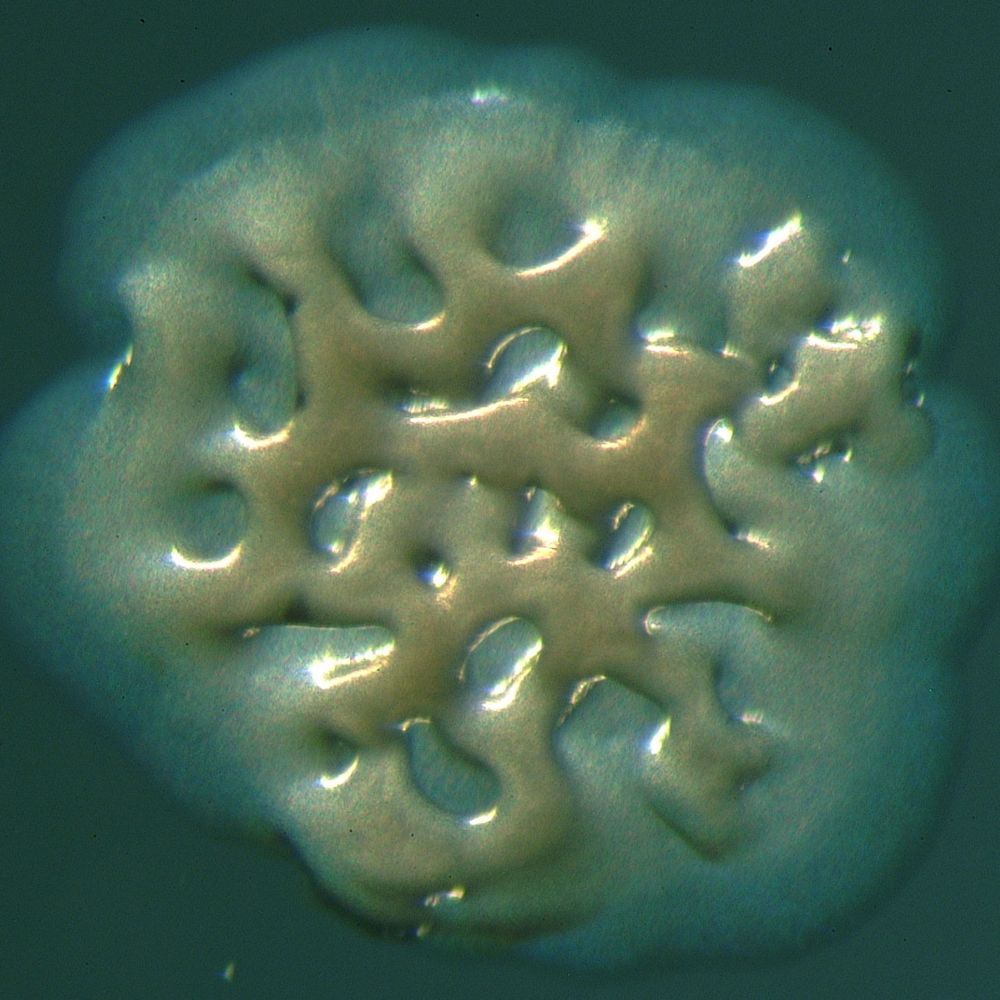
Now peer-reviewed, improved and published in @microbiologysociety.org Microbiology - thanks to editor and reviewers!
www.microbiologyresearch.org/content/jour...
www.microbiologyresearch.org/content/jour...
September 26, 2025 at 8:26 AM
Now peer-reviewed, improved and published in @microbiologysociety.org Microbiology - thanks to editor and reviewers!
www.microbiologyresearch.org/content/jour...
www.microbiologyresearch.org/content/jour...
Reposted by Jake Barber

Delighted to see our paper studying the evolution of plasmids over the last 100 years, now out! Years of work by Adrian Cazares, also Nick Thomson @sangerinstitute.bsky.social - this version much improved over the preprint. Final version should be open access, apols.
Thread 1/n
Thread 1/n

September 25, 2025 at 9:29 PM
Delighted to see our paper studying the evolution of plasmids over the last 100 years, now out! Years of work by Adrian Cazares, also Nick Thomson @sangerinstitute.bsky.social - this version much improved over the preprint. Final version should be open access, apols.
Thread 1/n
Thread 1/n