




Debbie Goldsmith 🏳️⚧️♾️🇺🇦
@dgoldsmith.mastodon.social.ap.brid.gy
Started in #physics, landed in #computers. Flipping bits since 1971. Software Engineer at a large tech company. I write #fanfiction in my nonexistent free […]
🌉 bridged from https://mastodon.social/@dgoldsmith on the fediverse by https://fed.brid.gy/
🌉 bridged from https://mastodon.social/@dgoldsmith on the fediverse by https://fed.brid.gy/
Reposted by Debbie Goldsmith 🏳️⚧️♾️🇺🇦

Yeah. I can't really think of any reason *not* to expect this.

I'm not an 'there won't be elections' doomer. I'm a long-term doomer. I think the pendulum will swing back and Dems will regain power and then face an even more hostile press than before and won't have the votes to restructure the courts and we'll be in this awful cycle for the rest of my life.
December 5, 2025 at 4:43 PM
Yeah. I can't really think of any reason *not* to expect this.
Reposted by Debbie Goldsmith 🏳️⚧️♾️🇺🇦

One (of so so many) things that made me angry today was Retsef Levi suggesting people "ask their friends" as a way to gauge HepB prevalence in the community*, when a reason it's currently low is *all the effort we've put into vaccination over several decades*. I miss actual experts on ACIP.
The effects of the ACIP poisoned recommendations may not be seen clearly at scale for years.
But every child that unnecessarily develops HepB-associated chronic liver disease and cancer is the fault of those on that committee, the HHS Secretary, and those that capitulated to put him in power.
But every child that unnecessarily develops HepB-associated chronic liver disease and cancer is the fault of those on that committee, the HHS Secretary, and those that capitulated to put him in power.

December 5, 2025 at 4:37 PM
One (of so so many) things that made me angry today was Retsef Levi suggesting people "ask their friends" as a way to gauge HepB prevalence in the community*, when a reason it's currently low is *all the effort we've put into vaccination over several decades*. I miss actual experts on ACIP.
Reposted by Debbie Goldsmith 🏳️⚧️♾️🇺🇦
Summary of what happened at Temu ACIP this morning:
As expected, they overturned the 30+ year recommendation for the birth dose of HepB vaccine, which has reduced the incidence of pediatric HepB by 99%.
They provided no credible evidence to support this decision.
As expected, they overturned the 30+ year recommendation for the birth dose of HepB vaccine, which has reduced the incidence of pediatric HepB by 99%.
They provided no credible evidence to support this decision.
December 5, 2025 at 4:09 PM
Summary of what happened at Temu ACIP this morning:
As expected, they overturned the 30+ year recommendation for the birth dose of HepB vaccine, which has reduced the incidence of pediatric HepB by 99%.
They provided no credible evidence to support this decision.
As expected, they overturned the 30+ year recommendation for the birth dose of HepB vaccine, which has reduced the incidence of pediatric HepB by 99%.
They provided no credible evidence to support this decision.
Reposted by Debbie Goldsmith 🏳️⚧️♾️🇺🇦


Reposted by Debbie Goldsmith 🏳️⚧️♾️🇺🇦

Reposted by Debbie Goldsmith 🏳️⚧️♾️🇺🇦

When #republicans say “smaller government” this is what they mean. #fascism #authoritarianism #uspol

December 4, 2025 at 11:46 PM
When #republicans say “smaller government” this is what they mean. #fascism #authoritarianism #uspol
Reposted by Debbie Goldsmith 🏳️⚧️♾️🇺🇦
Reposted by Debbie Goldsmith 🏳️⚧️♾️🇺🇦

Ever wonder why the New York Times abandoned balance and impartiality to lead an old-fashioned newspaper crusade against trans equal rights?
In one of our most read stories for the year, @evanurquhart.bsky.social took readers behind the scenes at NYT.
www.assignedmedia.org/breaking-new...
In one of our most read stories for the year, @evanurquhart.bsky.social took readers behind the scenes at NYT.
www.assignedmedia.org/breaking-new...

Bias at NYT: Trans Former Employee Speaks Out — Assigned
Billie Sweeney is a trans journalist who was an editor for the New York Times until last year. Here, she recalls her losing battle for the soul of the paper of record.
www.assignedmedia.org
December 5, 2025 at 3:07 PM
Ever wonder why the New York Times abandoned balance and impartiality to lead an old-fashioned newspaper crusade against trans equal rights?
In one of our most read stories for the year, @evanurquhart.bsky.social took readers behind the scenes at NYT.
www.assignedmedia.org/breaking-new...
In one of our most read stories for the year, @evanurquhart.bsky.social took readers behind the scenes at NYT.
www.assignedmedia.org/breaking-new...
Reposted by Debbie Goldsmith 🏳️⚧️♾️🇺🇦

It is not at all lost on me that the New York Times is such an outlier in mainstream US media on this issue that I am struggling not to have them totally dominate this list.
December 5, 2025 at 2:46 PM
It is not at all lost on me that the New York Times is such an outlier in mainstream US media on this issue that I am struggling not to have them totally dominate this list.
Reposted by Debbie Goldsmith 🏳️⚧️♾️🇺🇦
If you've been harboring a grudge against a non-NYT journalist who wrote something bad this year, this is your time to ensure they get the shaming they deserve.
I am also interested in hearing your nominations for the worst journalism on trans issues this year - with the caveat that I already have enough examples from the New York Times and am trying to balance out the list with other outlets bad work.
December 5, 2025 at 2:45 PM
If you've been harboring a grudge against a non-NYT journalist who wrote something bad this year, this is your time to ensure they get the shaming they deserve.
Reposted by Debbie Goldsmith 🏳️⚧️♾️🇺🇦

Almost an _exact_ reversal in almost _exactly_ one year since the election.

December 5, 2025 at 2:39 PM
Almost an _exact_ reversal in almost _exactly_ one year since the election.
Reposted by Debbie Goldsmith 🏳️⚧️♾️🇺🇦

"More steps doesn't always mean more security"
Good talk on #Passkeys by @rmondello
https://www.youtube.com/watch?v=otObbUSxcqs
Good talk on #Passkeys by @rmondello
https://www.youtube.com/watch?v=otObbUSxcqs
December 4, 2025 at 12:22 PM
"More steps doesn't always mean more security"
Good talk on #Passkeys by @rmondello
https://www.youtube.com/watch?v=otObbUSxcqs
Good talk on #Passkeys by @rmondello
https://www.youtube.com/watch?v=otObbUSxcqs
Reposted by Debbie Goldsmith 🏳️⚧️♾️🇺🇦
5 Dec 2025 @rikiwilchins.bsky.social -- Department of Justice instructs its inspectors to stop evaluating prisons and jails for standards designed to protect transgender, intersex and gender-nonconforming inmates from sexual violence -- a key part of 2003's Prison Rape Elimination Act (PREA).

DOJ orders prison inspectors to stop considering LGBTQ safety standards
A memo obtained by NPR shows the Justice Department is telling inspectors to stop evaluating prisons using standards designed to protect trans and other LGBTQ community members from sexual violence.
www.npr.org
December 5, 2025 at 2:35 PM
5 Dec 2025 @rikiwilchins.bsky.social -- Department of Justice instructs its inspectors to stop evaluating prisons and jails for standards designed to protect transgender, intersex and gender-nonconforming inmates from sexual violence -- a key part of 2003's Prison Rape Elimination Act (PREA).
Reposted by Debbie Goldsmith 🏳️⚧️♾️🇺🇦


December 5, 2025 at 2:23 PM
Reposted by Debbie Goldsmith 🏳️⚧️♾️🇺🇦
I never said that during the first Trump admin, and it's far from a certainty now since nobody in D leadership is even supportive of impeachment today.
However, the president is a lame duck, spectacularly unpopular, constantly doing new impeachable things, Rs are starting to distance themselves...
However, the president is a lame duck, spectacularly unpopular, constantly doing new impeachable things, Rs are starting to distance themselves...
December 5, 2025 at 2:07 PM
I never said that during the first Trump admin, and it's far from a certainty now since nobody in D leadership is even supportive of impeachment today.
However, the president is a lame duck, spectacularly unpopular, constantly doing new impeachable things, Rs are starting to distance themselves...
However, the president is a lame duck, spectacularly unpopular, constantly doing new impeachable things, Rs are starting to distance themselves...
Reposted by Debbie Goldsmith 🏳️⚧️♾️🇺🇦
ICYMI -- The new US/Trump security strategy essentially calls for support for far-right (pro-Russia) groups, defanging NATO, re-integration of Russia, and loosening/breaking up EU presumably. Like the Trump Ukraine "peace" plan it was presumably mostly written by Russia. Unbelievable.

The New US National Security Strategy
Trump Says Openly That the US Wants to Dominate Europe and Make it MAGA
phillipspobrien.substack.com
December 5, 2025 at 1:36 PM
ICYMI -- The new US/Trump security strategy essentially calls for support for far-right (pro-Russia) groups, defanging NATO, re-integration of Russia, and loosening/breaking up EU presumably. Like the Trump Ukraine "peace" plan it was presumably mostly written by Russia. Unbelievable.
Reposted by Debbie Goldsmith 🏳️⚧️♾️🇺🇦
I am also interested in hearing your nominations for the worst journalism on trans issues this year - with the caveat that I already have enough examples from the New York Times and am trying to balance out the list with other outlets bad work.
December 5, 2025 at 12:05 PM
I am also interested in hearing your nominations for the worst journalism on trans issues this year - with the caveat that I already have enough examples from the New York Times and am trying to balance out the list with other outlets bad work.
Reposted by Debbie Goldsmith 🏳️⚧️♾️🇺🇦
I'm putting together something for Assigned on the best and worst in trans journalism this year, and I'd love help finding the ones I've forgotten (or things that I missed).
Who did great work on a trans story this year? Share your favorite piece from your favorite journalist (non-Assigned).
Who did great work on a trans story this year? Share your favorite piece from your favorite journalist (non-Assigned).
December 5, 2025 at 12:03 PM
I'm putting together something for Assigned on the best and worst in trans journalism this year, and I'd love help finding the ones I've forgotten (or things that I missed).
Who did great work on a trans story this year? Share your favorite piece from your favorite journalist (non-Assigned).
Who did great work on a trans story this year? Share your favorite piece from your favorite journalist (non-Assigned).
Reposted by Debbie Goldsmith 🏳️⚧️♾️🇺🇦

I mean ending prison rape protections, come the fuck on!!
They are openly declaring that they believe trans women should be brutally raped in prison!
Where is the outrage?
They are openly declaring that they believe trans women should be brutally raped in prison!
Where is the outrage?
December 5, 2025 at 11:54 AM
I mean ending prison rape protections, come the fuck on!!
They are openly declaring that they believe trans women should be brutally raped in prison!
Where is the outrage?
They are openly declaring that they believe trans women should be brutally raped in prison!
Where is the outrage?
Reposted by Debbie Goldsmith 🏳️⚧️♾️🇺🇦
Fuck you of you think trans rights should be sacrificed "for the good of democracy".
The anti democracy machine is the anti-trans machine. Get that through your skulls.
The anti democracy machine is the anti-trans machine. Get that through your skulls.
December 5, 2025 at 11:48 AM
Fuck you of you think trans rights should be sacrificed "for the good of democracy".
The anti democracy machine is the anti-trans machine. Get that through your skulls.
The anti democracy machine is the anti-trans machine. Get that through your skulls.
Reposted by Debbie Goldsmith 🏳️⚧️♾️🇺🇦
Like this is their singular focus. It's not a distraction, it is what they see as their responsibility to do because they were elected. My people are seeing every right we have ground to dust before our eyes.
The Trump admin is a machine at identifying some dignity we won 20 years ago and poof gone
The Trump admin is a machine at identifying some dignity we won 20 years ago and poof gone
December 5, 2025 at 11:47 AM
Like this is their singular focus. It's not a distraction, it is what they see as their responsibility to do because they were elected. My people are seeing every right we have ground to dust before our eyes.
The Trump admin is a machine at identifying some dignity we won 20 years ago and poof gone
The Trump admin is a machine at identifying some dignity we won 20 years ago and poof gone
Reposted by Debbie Goldsmith 🏳️⚧️♾️🇺🇦
It's hard to explain to normies how much effort Trump is putting into anti-trans policies.
This is like the 12th thing just this week. And there were 12 things the week before, and 12 things the week before that. There will be 12 things next week.
This is almost everything the government is doing.
This is like the 12th thing just this week. And there were 12 things the week before, and 12 things the week before that. There will be 12 things next week.
This is almost everything the government is doing.

BREAKING: Trump administration plans to end prison rape protections for trans & intersex people, memo says. A DOJ memo says certain standards under the Prison Rape Elimination Act (PREA) do not align with Trump’s Jan. 20 anti-trans executive order, @byadamrhodes.bsky.social reports.

Trump administration plans to end prison rape protections for trans and intersex people
A Department of Justice memo says certain standards under the Prison Rape Elimination Act do not align with Trump’s executive order
prismreports.org
December 5, 2025 at 11:44 AM
It's hard to explain to normies how much effort Trump is putting into anti-trans policies.
This is like the 12th thing just this week. And there were 12 things the week before, and 12 things the week before that. There will be 12 things next week.
This is almost everything the government is doing.
This is like the 12th thing just this week. And there were 12 things the week before, and 12 things the week before that. There will be 12 things next week.
This is almost everything the government is doing.
Reposted by Debbie Goldsmith 🏳️⚧️♾️🇺🇦
5 Dec 2025 @rikiwilchins.bsky.social -- Former Obama natl security assoc. Lucas Schleusener says group called STARRS & Trump advisor Laura Loomer combing thru fed employees' posts for anything showing they're LGBTQ+ & harassing them or getting them fired in a "Lavender Scare" purge like the 1950s.

National security expert says second Lavender Scare is here as gov't purges LGBTQ+ workers - LGBTQ Nation
Is Laura Loomer the new Joseph McCarthy?
www.lgbtqnation.com
December 5, 2025 at 11:14 AM
5 Dec 2025 @rikiwilchins.bsky.social -- Former Obama natl security assoc. Lucas Schleusener says group called STARRS & Trump advisor Laura Loomer combing thru fed employees' posts for anything showing they're LGBTQ+ & harassing them or getting them fired in a "Lavender Scare" purge like the 1950s.
Reposted by Debbie Goldsmith 🏳️⚧️♾️🇺🇦

What struck me most on Europe wasn’t the focus on value, freedom of speech etc - again, very similar to Vance’s Munich speech - but how activist it is. This is about directly trying to influence what is going on in Europe:

December 5, 2025 at 10:17 AM
What struck me most on Europe wasn’t the focus on value, freedom of speech etc - again, very similar to Vance’s Munich speech - but how activist it is. This is about directly trying to influence what is going on in Europe:
Reposted by Debbie Goldsmith 🏳️⚧️♾️🇺🇦
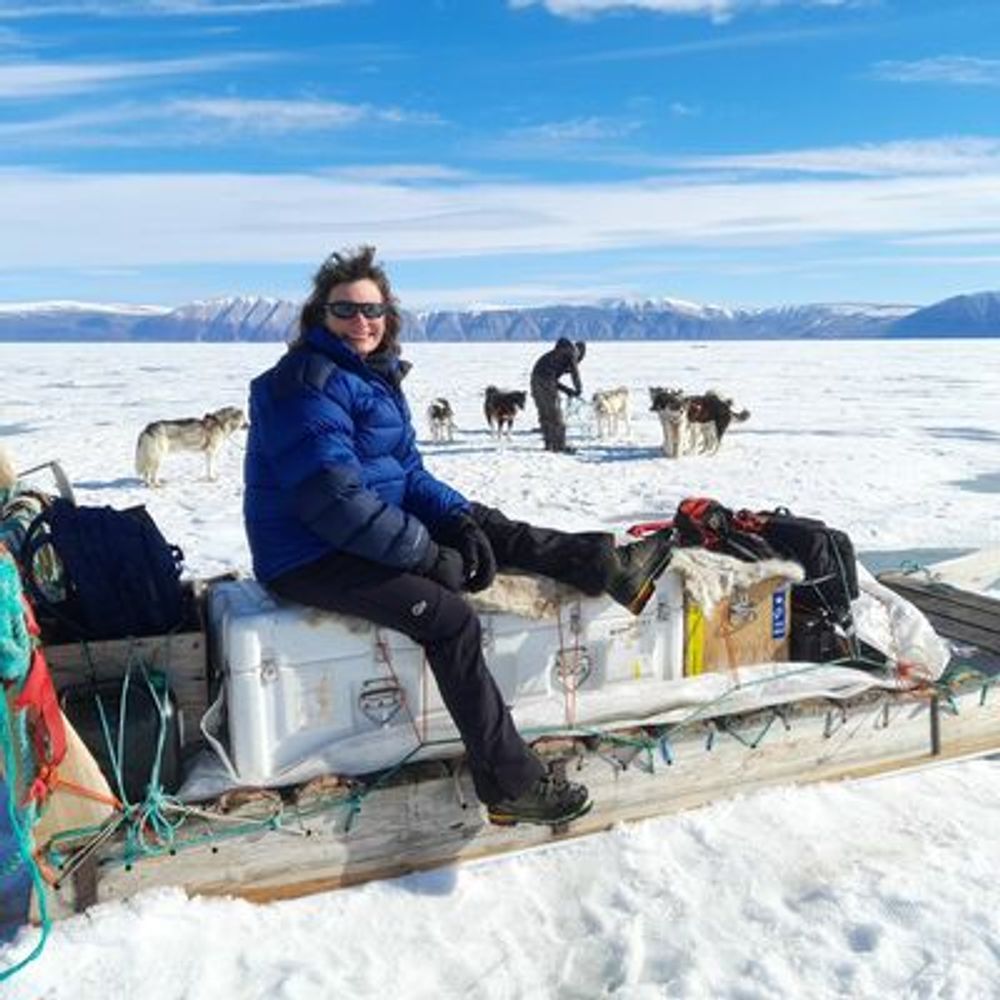
If #Greenland has grasped that who operates your critical infrastructure is important, why not Europe?
Excellent +interesting post by @cryopolitics.com as ever.
#digitalsovereignty
https://www.cryopolitics.com/2025/12/04/as-greenland-rejects-starlink-china-and-russia-tighten-military-ties/
Excellent +interesting post by @cryopolitics.com as ever.
#digitalsovereignty
https://www.cryopolitics.com/2025/12/04/as-greenland-rejects-starlink-china-and-russia-tighten-military-ties/
For many remote Arctic communities, Starlink is the obvious choice for satellite internet. But Greenland, wary of the US, is turning to European alternatives. Meanwhile, China and Russia’s military-industrial complexes are linking arms.
In 2009, just when Facebook and Twitter were exploding in popularity and people were beginning to adopt smart phones, high-speed internet finally arrived in Greenland. Under the ice-choked Labrador Sea, a submarine cable slinked from Newfoundland, Canada to Nuuk. Greenlanders rapidly began purchasing internet subscriptions, and as email replaced snail mail, the number of postage stamps dropped by nearly 40%.
Ever since then, the Government of Greenland has been trying to expand internet access, especially for the country’s more remote settlements, which rely on distant satellites and ground stations. The precarious nature of their internet was exposed earlier this spring when a gigantic power outage in Spain and Portugal interrupted service in Qaanaaq, Greenland’s northernmost town, and east Greenland.
At first glance, this Iberian-Arctic connection may seem bizarre (though in the longue durée, who could forget the centuries of Basque whaling and cod fishing in the Arctic?). Yet since 2023, a satellite operated by Spanish telecommunications company Hispasat with the aim of overcoming the digital divide in the Amazon has provided internet to a handful of remote Greenlandic settlements far from submarine cables and microwave internet relay stations.
The Amazonas Nexus satellite sits high above the Earth’s 61st western meridian, a line of longitude that runs all the way up from the humid Amazon Rainforest to icy Greenland. Its signals are relayed through the Maspalomas ground station on Gran Canaria, a Spanish island off the coast of West Africa built in the 1960s because it lay at nearly the exact same latitude as Cape Canaveral, Florida, where the Americans had built their space base. This enabled continuous tracking and communication with spacecraft like the Apollo lunar missions.
_A map of the Amazonas Nexus internet satellite coverage_ , _which runs from Greenland through the Amazon_. Source: Hispasat/YouTube.
Due to these Space Age and geographical flukes, Maspalomas – the station that was the first in the world to hear Neil Armstrong declare, “That’s one small step for man, one giant leap for mankind” – is the very facility that both narwhal hunters in Qaanaaq and caiman-hunting Indigenous Peoples in the Amazon rely on for internet. (Curiously, according to this article, barely anyone in Spain seems to know of the role their country played in relaying some of the most famous words ever uttered by a human being.)
While the sun-kissed Canary Islands did not lose power like the rest of Spain and Portugal during the May blackout, communications were still disrupted. As a local newspaper reported, “The outage left thousands of users in the Arctic without phone, internet, and text messages, highlighting the strategic importance of the Canary Islands’ space complex.”
_Who would have guessed that Qaanaaq’s internet comes from the Canary Islands?_ Photo: Felix König/Wikimedia Commons.
## Greenland shuns Starlink
More and more, internet underpins day-to-day life, even in places where people still hunt for their food. It is little surprise, then, that the Government of Greenland is striving to improve satellite internet for the eight percent of the country that turns to outer space to get online. Yet there are constraints to how far it will go to expand service.
This past October, Greenland decided to forego the obvious satellite internet provider for remote regions: Starlink, the company owned by Elon Musk. With close to 9,000 satellites, Starlink is the dominant purveyor of high-speed broadband internet from Low Earth Orbit, the zone of orbital space closest to Earth. Starlink is only a couple hundred kilometers above Earth, whereas Hispasat’s Amazonas Nexus sits 36,000 kilometers away in what is called geostationary orbit. While this distant vantage enables it to provide internet to practically an entire hemisphere, the signals take much longer to reach Earth.
Starlink, with its 9,000 satellites working together to provide planetary coverage, is cheap, reliable, and downright fast. The breadth of its network means that the service can cover places that fiber optic struggles to reach, from the Arctic to Antarctica, the high seas, and the battlefields of Ukraine, and at speeds that geostationary satellites like Amazonas Nexus will never equal.
The first Starlink satellites slotted into orbit on the backs of rockets belonging to their parent company, SpaceX, in 2019. Since then, many Arctic communities across Alaska, Canada, and the Nordic countries have subscribed to the service, with customers ranging from schools to individuals. The Government of Greenland, however, has banned Starlink since 2024, when approximately 10 users were discovered using the service. At the time, the prohibition was made to protect the licensed monopoly of the national telecommunications provider, Tusass.
Capitalists might bristle at the word “monopoly.” But Greenland is not a place that invites significant economic competition. Since Tusass was founded as Tele-Post in 1879, few natural competitors have arisen to provide mail, telephone, and internet to the country’s scattered communities. Starlink, though, represents a threat. From space, it can overcome the vastness of the Greenland Ice Sheet and the countless fjords striating the coastline to stream internet at the entire island at rates starting around US$70 a month. Tusass charges approximately double. Starlink’s affordability and reliability therefore could challenge its monopoly – that is, if the Government of Greenland were to allow competition.
## Starlink: Coming soon, or never?
Starlink’s website currently shows Greenland as “Coming Soon.” That status will likely remain indefinitely given that in early October, Tusass signed an agreement with Eutelsat OneWeb, a European company. Eutelsat is based in Paris, while OneWeb is based in London.
Starlink, in contrast, is based in the US. CEO Elon Musk has generally aligned himself with American national security interests. Following Russia’s full-scale invasion of Ukraine in 2022, Musk initially provided Starlink to Ukraine for free, though not over disputed territories like Crimea. When he threatened to pull the plug due to the high cost, the US Department of Defense stepped in and began paying Starlink $20 million a month to keep the service going.
SpaceX has also created a new initiative, Starshield, which directly supports US military ambitions. Starshield leverages Starlink’s technology and SpaceX’s launch capacities to support US military customers with secured communications and information. In addition, Starshield provides target tracking, optical and radio reconnaissance, and early missile warning.
All of this means that despite Musk’s volatility, Starlink is in deep with the US government – the very one whose current administration threatened to take over Greenland earlier this year. With internet being a critical infrastructure increasingly targeted by hybrid warfare, it is little wonder that the Government of Greenland refuses to partner with a company that it likely sees as colluding with the Trump administration.
Similarly, the Government of Ontario “ripped up” a CAD$100 million contract with Starlink after Trump slapped tariffs on Canadian goods in February 2025. Once again, people living in remote communities – in this case in northern Ontario – were made to bear the brunt of international spats.
Greenland is looking to Europe for infrastructure, whether that means Danish companies, which built its new airports (even though China was initially a contender, which the US blocked), or French and British companies promising to provide satellite internet. A Tusass press released quoted CEO Toke Binzer (who stepped down earlier this week to join state-owned seafood company Royal Greenland) as saying, “We have entered into a partnership with Eutelsat to best fulfill our promise of delivering better and faster internet to the population in satellite-covered areas. I am both relieved and pleased that, after long negotiations, we have finally landed such a strong agreement.”
## Greenland’s remote communities may lose out from Starlink ban
The hope is that Tusass’ collaboration with Eutelsat OneWeb will improve internet speeds and affordability for Greenland’s most remote communities: places like Qaanaaq, Upernavik, and Kulusuk, which are grouped under “Zone 3” of Tusass’ service plan. Zone 1, the areas in which internet has been supplied by submarine cable since 2009, only includes Nuuk and Qaqortoq. These two major coastal settlements lie relatively close to the island’s southern tip and the many links criss-crossing the Atlantic Ocean seafloor.
Zone 2, which is home to the next largest settlements, such as Sisimiut and Ilulissat, receives internet by long-wave microwave links (explained in this excellent post published in June 2024 on techeconomyblog).
Zone 3 is the area suffering the most from the digital divide. Approximately 15 years ago, for instance, a power outage in northwest Greenland left Qaanaaq without power for 14 days, and service could not easily be restored in winter. The town’s main concern was its inability to watch the Christmas mass on television. Today, with internet and telecommunications even more embedded in society, the outcry would no doubt be greater.
It remains to be seen, however, whether Eutelsat OneWeb will be up to the task of providing internet at supercharged speeds. Generally, its service is regarded as more expensive and slower that Starlink. Even once OneWeb becomes available, many in Greenland’s more remote communities may wonder why they can’t have Starlink like their counterparts across half the Arctic. (Starlink refuses to provide its service in Russia.)
Already, after the 2024 ban was instituted, one Greenlander publicly complained to the 375,000-member Starlink Facebook group:
Ultimately, it seems that Starlink has been blocked and stymied in Greenland for two separate reasons: first, to defend Tusass’ monopoly, and second, to protect Greenland’s national security and critical infrastructure. Prohibitions and cooperation with a Starlink competitor will deter most would-be customers of Elon Musk. But a black market for terminals will very likely still arise, much as it has in other places where Starlink is nominally banned or unavailable, like Myanmar and Ethiopia.
## **The Russian-Chinese military-industrial complex tightens**
While suspicion halts the spread of technology and infrastructure between the US and Greenland, China and Russia are tightening their relationship. Many Western observers question the level of trust between these two partners. But China has allegedly been providing intelligence, including satellite reconnaissance, to Russia to support its missile strikes on Ukraine. In contrast, in March, the US briefly halted the provisioning of military aid and intelligence to Ukraine, temporarily impeding its ability to carry out drone strikes.
Then, as the Financial Times reported last week, Wang Dinghua, the owner of a major Chinese drone parts supplier, recently purchased a five percent stake in Rustakt, one of Russia’s leading drone manufactureres. This move, the article argues, attests to “a deepening relationship between Moscow and Beijing’s military-industrial complexes.”
Rustakt produces the VT-40 “first-person-view drone,” which the Russian Armed Forces have widely employed during its war in Ukraine. Rustakt and other Russian companies import parts from China, such as brushless motors and electronics, for use in these small-scale weapons of war. Without these motors, according to _The Insider_ , “Russia’s entire drone industry would collapse.” But the trade goes on, enabling the production of hundreds of these inexpensive drones per day. Each one can carry ammunition for up to 30 kilometers.
Distinctly, unlike in the outset of the war when drones were controlled by electronic signals, VT-40s are controlled by a fiber optic cable to protect them from electronic jamming. This workaround, however, has invited new counter-tactics. In May 2025, Ukrainian drones attacked a fiber optic factory in Saransk, Russia. But the fiber keeps spooling, and the drones keep attacking.
_Screenshot from “Lamp of Knowledge”YouTube video._
Greenland may now have a new direct flight to the US from Nuuk to New York. But other connections with America are fraying as the Inuit-majority island looks to Europe for secure infrastructure, even if it comes at higher cost and slower speeds. Meanwhile, Russian drones made with parts sourced from Shenzhen are snarling Ukraine in spools of fiber optic cables, leaving a tangled web of violence in their wake. As one network comes undone in the Arctic, another strengthens in the east.
Tags: Drones Greenland Starlink Tusass Ukraine Ukraine war War in Ukraine
Categories: Military & Defense
www.cryopolitics.com
December 5, 2025 at 10:02 AM
If #Greenland has grasped that who operates your critical infrastructure is important, why not Europe?
Excellent +interesting post by @cryopolitics.com as ever.
#digitalsovereignty
https://www.cryopolitics.com/2025/12/04/as-greenland-rejects-starlink-china-and-russia-tighten-military-ties/
Excellent +interesting post by @cryopolitics.com as ever.
#digitalsovereignty
https://www.cryopolitics.com/2025/12/04/as-greenland-rejects-starlink-china-and-russia-tighten-military-ties/