



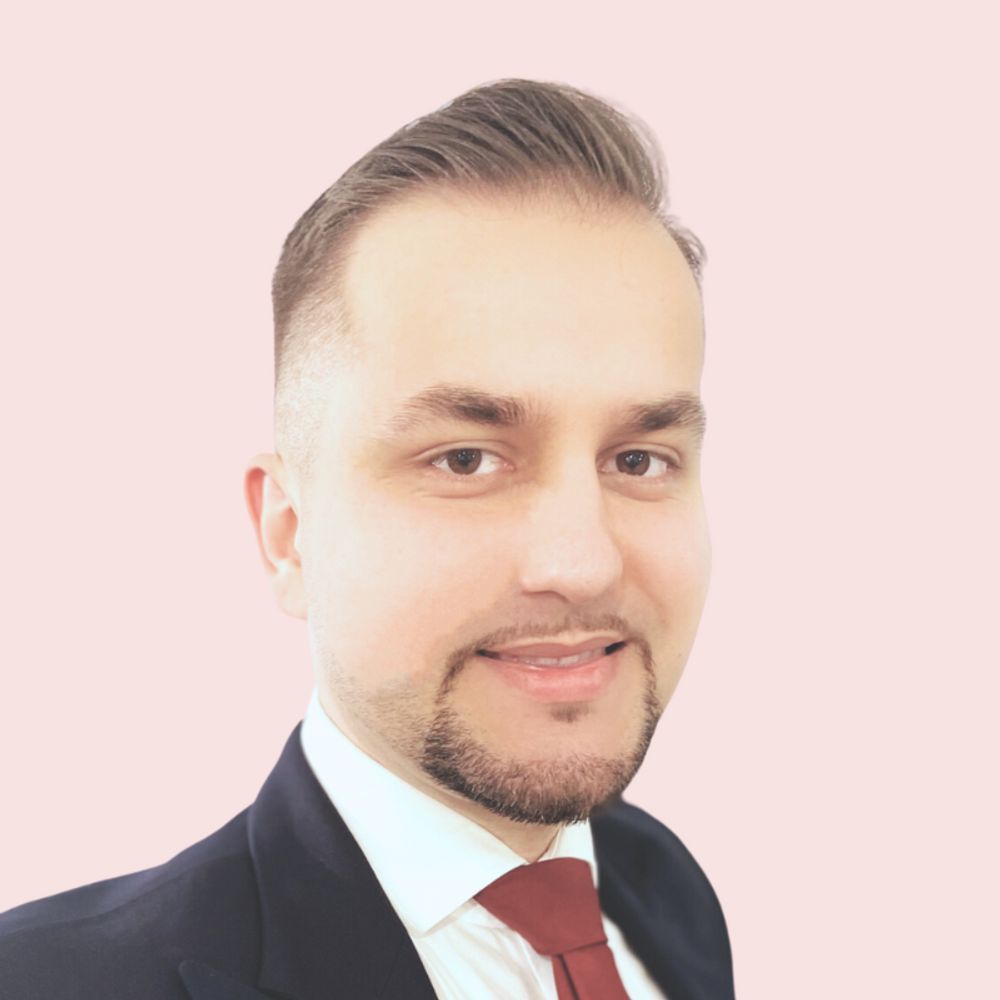
Damian Toczydlowski
@damiantoczydlowski.bsky.social
Epigeneticist, Scientist & Molecular Biologist studying epigenetic cellular memory, epigenetic inheritance & mechano-epigenomic code in gliomas.
#epigenomics #epigenetics #singlecell #chromatin
https://www.linkedin.com/in/damian-toczydlowski/
#epigenomics #epigenetics #singlecell #chromatin
https://www.linkedin.com/in/damian-toczydlowski/


A. No.
B. Yes – of course, they didn't need Franklin & Gosling to figure it out.
C. It depends on who you ask – context is everything.
D. It is complicated – it really depends on who you ask.
B. Yes – of course, they didn't need Franklin & Gosling to figure it out.
C. It depends on who you ask – context is everything.
D. It is complicated – it really depends on who you ask.
November 23, 2025 at 1:30 PM
A. No.
B. Yes – of course, they didn't need Franklin & Gosling to figure it out.
C. It depends on who you ask – context is everything.
D. It is complicated – it really depends on who you ask.
B. Yes – of course, they didn't need Franklin & Gosling to figure it out.
C. It depends on who you ask – context is everything.
D. It is complicated – it really depends on who you ask.
Everything was about to change...
➡️ Mendel, memories and meaning. Nat Genet 54, 907 (2022).
DOI: doi.org/10.1038/s415...
➡️ Mendel, memories and meaning. Nat Genet 54, 907 (2022).
DOI: doi.org/10.1038/s415...

September 20, 2025 at 10:21 AM
Everything was about to change...
➡️ Mendel, memories and meaning. Nat Genet 54, 907 (2022).
DOI: doi.org/10.1038/s415...
➡️ Mendel, memories and meaning. Nat Genet 54, 907 (2022).
DOI: doi.org/10.1038/s415...
Therefore, for nearly four decades, Mendel's discoveries have gathered dust in the archives of scientific literature.
The 19th century drew to a close, and the new century dawned...
The time had finally come for the world to rediscover what "the Father of Genetics" had known all along.
The 19th century drew to a close, and the new century dawned...
The time had finally come for the world to rediscover what "the Father of Genetics" had known all along.
September 20, 2025 at 10:20 AM
Therefore, for nearly four decades, Mendel's discoveries have gathered dust in the archives of scientific literature.
The 19th century drew to a close, and the new century dawned...
The time had finally come for the world to rediscover what "the Father of Genetics" had known all along.
The 19th century drew to a close, and the new century dawned...
The time had finally come for the world to rediscover what "the Father of Genetics" had known all along.
Or perhaps they were unwilling to recognise the implications of what this Augustinian brother uncovered among his carefully tended pea plants.
Indeed, his insights into how "traits" pass from generation to generation remained overlooked and forgotten.
Indeed, his insights into how "traits" pass from generation to generation remained overlooked and forgotten.
September 20, 2025 at 10:20 AM
Or perhaps they were unwilling to recognise the implications of what this Augustinian brother uncovered among his carefully tended pea plants.
Indeed, his insights into how "traits" pass from generation to generation remained overlooked and forgotten.
Indeed, his insights into how "traits" pass from generation to generation remained overlooked and forgotten.
After all, how could an ordinary monk from the provincial backwaters possibly draw such profound conclusions (from what appeared to be fancy "garden experiments")?
Maybe they were "unable" to see it...
Maybe they were "unable" to see it...
September 20, 2025 at 10:19 AM
After all, how could an ordinary monk from the provincial backwaters possibly draw such profound conclusions (from what appeared to be fancy "garden experiments")?
Maybe they were "unable" to see it...
Maybe they were "unable" to see it...
Deafening silence.
The scientific establishment, centred in the great universities of Cambridge, Vienna, Berlin and Paris, dismissed his work without serious consideration.
At best, there was a hint of polite condescension in their voice:
The scientific establishment, centred in the great universities of Cambridge, Vienna, Berlin and Paris, dismissed his work without serious consideration.
At best, there was a hint of polite condescension in their voice:
September 20, 2025 at 10:19 AM
Deafening silence.
The scientific establishment, centred in the great universities of Cambridge, Vienna, Berlin and Paris, dismissed his work without serious consideration.
At best, there was a hint of polite condescension in their voice:
The scientific establishment, centred in the great universities of Cambridge, Vienna, Berlin and Paris, dismissed his work without serious consideration.
At best, there was a hint of polite condescension in their voice:
And all of a sudden, here was a monk in a remote corner of the Austrian Empire making discoveries that would prove even more "revolutionary".
However, do you know how the scientific world reacted to his groundbreaking findings?
With silence.
However, do you know how the scientific world reacted to his groundbreaking findings?
With silence.
September 20, 2025 at 10:19 AM
And all of a sudden, here was a monk in a remote corner of the Austrian Empire making discoveries that would prove even more "revolutionary".
However, do you know how the scientific world reacted to his groundbreaking findings?
With silence.
However, do you know how the scientific world reacted to his groundbreaking findings?
With silence.
Through what appeared to be nothing more than simple gardening experiments at his monastery in Brno, this humble friar discovered the fundamental laws of inheritance.
Keep in mind, it was the 1860s...
When Darwin's theory of evolution was still sending shockwaves through Victorian society...
Keep in mind, it was the 1860s...
When Darwin's theory of evolution was still sending shockwaves through Victorian society...
September 20, 2025 at 10:18 AM
Through what appeared to be nothing more than simple gardening experiments at his monastery in Brno, this humble friar discovered the fundamental laws of inheritance.
Keep in mind, it was the 1860s...
When Darwin's theory of evolution was still sending shockwaves through Victorian society...
Keep in mind, it was the 1860s...
When Darwin's theory of evolution was still sending shockwaves through Victorian society...
It's not the type buried in a library among stacks of old books and manuscripts.
This was a Scientist in the dirt.
Scientist in the sun.
Scientist living every slow,
patient moment of nature's growth...
He did it out of love.
No doubt.
This was a Scientist in the dirt.
Scientist in the sun.
Scientist living every slow,
patient moment of nature's growth...
He did it out of love.
No doubt.
September 20, 2025 at 10:18 AM
It's not the type buried in a library among stacks of old books and manuscripts.
This was a Scientist in the dirt.
Scientist in the sun.
Scientist living every slow,
patient moment of nature's growth...
He did it out of love.
No doubt.
This was a Scientist in the dirt.
Scientist in the sun.
Scientist living every slow,
patient moment of nature's growth...
He did it out of love.
No doubt.
Mendel could sit there for hours,
just watching the flowers,
completely absorbed,
in their colours and patterns.
A fanatic?
Maybe.
But he was more than that.
A quiet, relentless curiosity.
The kind of passion only a true scientist feels.
just watching the flowers,
completely absorbed,
in their colours and patterns.
A fanatic?
Maybe.
But he was more than that.
A quiet, relentless curiosity.
The kind of passion only a true scientist feels.
September 20, 2025 at 10:18 AM
Mendel could sit there for hours,
just watching the flowers,
completely absorbed,
in their colours and patterns.
A fanatic?
Maybe.
But he was more than that.
A quiet, relentless curiosity.
The kind of passion only a true scientist feels.
just watching the flowers,
completely absorbed,
in their colours and patterns.
A fanatic?
Maybe.
But he was more than that.
A quiet, relentless curiosity.
The kind of passion only a true scientist feels.
Yes, it was him.
None other than Mendel.
That man who watered them.
That man who turned them toward the sun.
The same man who arranged their "marriages" shaped not only which plants would meet, but also the very destinies of their offspring.
None other than Mendel.
That man who watered them.
That man who turned them toward the sun.
The same man who arranged their "marriages" shaped not only which plants would meet, but also the very destinies of their offspring.
September 20, 2025 at 10:18 AM
Yes, it was him.
None other than Mendel.
That man who watered them.
That man who turned them toward the sun.
The same man who arranged their "marriages" shaped not only which plants would meet, but also the very destinies of their offspring.
None other than Mendel.
That man who watered them.
That man who turned them toward the sun.
The same man who arranged their "marriages" shaped not only which plants would meet, but also the very destinies of their offspring.
➡️ Palacios, S., Bruno, S., Weiss, R., Salibi, E., Goodchild-Michelman, I., Kane, A., Ilia, K., & Del Vecchio, D. (2025). Analog epigenetic memory revealed by targeted chromatin editing. Cell Genomics.
DOI: doi.org/10.1016/j.xg...
www.sciencedirect.com/science/arti...
DOI: doi.org/10.1016/j.xg...
www.sciencedirect.com/science/arti...

September 17, 2025 at 4:04 PM
➡️ Palacios, S., Bruno, S., Weiss, R., Salibi, E., Goodchild-Michelman, I., Kane, A., Ilia, K., & Del Vecchio, D. (2025). Analog epigenetic memory revealed by targeted chromatin editing. Cell Genomics.
DOI: doi.org/10.1016/j.xg...
www.sciencedirect.com/science/arti...
DOI: doi.org/10.1016/j.xg...
www.sciencedirect.com/science/arti...
Using their genomic reporter system, scientists discovered that gene expression can be "memorised" across a continuum of levels (beyond simple ON/OFF states).
Mesmerising memory, don't you think?
Mesmerising memory, don't you think?
Redirecting
doi.org
September 17, 2025 at 4:01 PM
Using their genomic reporter system, scientists discovered that gene expression can be "memorised" across a continuum of levels (beyond simple ON/OFF states).
Mesmerising memory, don't you think?
Mesmerising memory, don't you think?
It turns out that cells can store a kind of "𝐚𝐧𝐚𝐥𝐨𝐠 𝐦𝐞𝐦𝐨𝐫𝐲" of gene activity through lasting chemical marks on their DNA (with DNA methylation helping to maintain specific expression levels over time).
September 17, 2025 at 4:00 PM
It turns out that cells can store a kind of "𝐚𝐧𝐚𝐥𝐨𝐠 𝐦𝐞𝐦𝐨𝐫𝐲" of gene activity through lasting chemical marks on their DNA (with DNA methylation helping to maintain specific expression levels over time).
What do we know for sure about epigenetic memory?
• Environmental signals and cellular stresses leave lasting marks.
• These marks can persist through multiple cell divisions.
• They influence how genes respond in the future.
A new study in 𝘊𝘦𝘭𝘭 𝘎𝘦𝘯𝘰𝘮𝘪𝘤𝘴 gives us even more news.
• Environmental signals and cellular stresses leave lasting marks.
• These marks can persist through multiple cell divisions.
• They influence how genes respond in the future.
A new study in 𝘊𝘦𝘭𝘭 𝘎𝘦𝘯𝘰𝘮𝘪𝘤𝘴 gives us even more news.
September 17, 2025 at 3:59 PM
What do we know for sure about epigenetic memory?
• Environmental signals and cellular stresses leave lasting marks.
• These marks can persist through multiple cell divisions.
• They influence how genes respond in the future.
A new study in 𝘊𝘦𝘭𝘭 𝘎𝘦𝘯𝘰𝘮𝘪𝘤𝘴 gives us even more news.
• Environmental signals and cellular stresses leave lasting marks.
• These marks can persist through multiple cell divisions.
• They influence how genes respond in the future.
A new study in 𝘊𝘦𝘭𝘭 𝘎𝘦𝘯𝘰𝘮𝘪𝘤𝘴 gives us even more news.
Hence, it is clear that the most effective worker is the one with the sharpest memory.
Although our cells don't have a brain to process information, cellular memory resides in 𝐭𝐡𝐞 𝐞𝐩𝐢𝐠𝐞𝐧𝐨𝐦𝐞.
Indeed, that layer of chemical marks sitting on top of your DNA (like molecular post-it notes).
Although our cells don't have a brain to process information, cellular memory resides in 𝐭𝐡𝐞 𝐞𝐩𝐢𝐠𝐞𝐧𝐨𝐦𝐞.
Indeed, that layer of chemical marks sitting on top of your DNA (like molecular post-it notes).
September 17, 2025 at 3:59 PM
Hence, it is clear that the most effective worker is the one with the sharpest memory.
Although our cells don't have a brain to process information, cellular memory resides in 𝐭𝐡𝐞 𝐞𝐩𝐢𝐠𝐞𝐧𝐨𝐦𝐞.
Indeed, that layer of chemical marks sitting on top of your DNA (like molecular post-it notes).
Although our cells don't have a brain to process information, cellular memory resides in 𝐭𝐡𝐞 𝐞𝐩𝐢𝐠𝐞𝐧𝐨𝐦𝐞.
Indeed, that layer of chemical marks sitting on top of your DNA (like molecular post-it notes).
Make a mistake, and your host ends up in the hospital.
And if someone burns out or wants to switch careers?
Resignations go straight to the "𝘊𝘦𝘭𝘭 𝘋𝘦𝘢𝘵𝘩 & 𝘈𝘱𝘰𝘱𝘵𝘰𝘴𝘪𝘴 𝘋𝘦𝘱𝘢𝘳𝘵𝘮𝘦𝘯𝘵".
Well, I probably don't need to tell you where "the less motivated cells" end their careers.
And if someone burns out or wants to switch careers?
Resignations go straight to the "𝘊𝘦𝘭𝘭 𝘋𝘦𝘢𝘵𝘩 & 𝘈𝘱𝘰𝘱𝘵𝘰𝘴𝘪𝘴 𝘋𝘦𝘱𝘢𝘳𝘵𝘮𝘦𝘯𝘵".
Well, I probably don't need to tell you where "the less motivated cells" end their careers.
September 17, 2025 at 3:58 PM
Make a mistake, and your host ends up in the hospital.
And if someone burns out or wants to switch careers?
Resignations go straight to the "𝘊𝘦𝘭𝘭 𝘋𝘦𝘢𝘵𝘩 & 𝘈𝘱𝘰𝘱𝘵𝘰𝘴𝘪𝘴 𝘋𝘦𝘱𝘢𝘳𝘵𝘮𝘦𝘯𝘵".
Well, I probably don't need to tell you where "the less motivated cells" end their careers.
And if someone burns out or wants to switch careers?
Resignations go straight to the "𝘊𝘦𝘭𝘭 𝘋𝘦𝘢𝘵𝘩 & 𝘈𝘱𝘰𝘱𝘵𝘰𝘴𝘪𝘴 𝘋𝘦𝘱𝘢𝘳𝘵𝘮𝘦𝘯𝘵".
Well, I probably don't need to tell you where "the less motivated cells" end their careers.
Okay, try to remember all this:
- where everything is,
- who to call if you don't know something, and so on.
And the work never stops.
Seven days a week.
24 hours a day.
Yes - no coffee breaks.
Yes - no weekends off.
Do you like this kind of work?
- where everything is,
- who to call if you don't know something, and so on.
And the work never stops.
Seven days a week.
24 hours a day.
Yes - no coffee breaks.
Yes - no weekends off.
Do you like this kind of work?
September 17, 2025 at 3:58 PM
Okay, try to remember all this:
- where everything is,
- who to call if you don't know something, and so on.
And the work never stops.
Seven days a week.
24 hours a day.
Yes - no coffee breaks.
Yes - no weekends off.
Do you like this kind of work?
- where everything is,
- who to call if you don't know something, and so on.
And the work never stops.
Seven days a week.
24 hours a day.
Yes - no coffee breaks.
Yes - no weekends off.
Do you like this kind of work?
- fending off viruses or bacteria,
- some histone modifications there,
- shipping out RNA (like it's Amazon Prime),
- having to deal with a stuck ribosome (or two),
- folding other proteins properly (no one likes a wrinkly enzyme),
- keeping an eye on energy levels.
- [...].
- some histone modifications there,
- shipping out RNA (like it's Amazon Prime),
- having to deal with a stuck ribosome (or two),
- folding other proteins properly (no one likes a wrinkly enzyme),
- keeping an eye on energy levels.
- [...].
September 17, 2025 at 3:57 PM
- fending off viruses or bacteria,
- some histone modifications there,
- shipping out RNA (like it's Amazon Prime),
- having to deal with a stuck ribosome (or two),
- folding other proteins properly (no one likes a wrinkly enzyme),
- keeping an eye on energy levels.
- [...].
- some histone modifications there,
- shipping out RNA (like it's Amazon Prime),
- having to deal with a stuck ribosome (or two),
- folding other proteins properly (no one likes a wrinkly enzyme),
- keeping an eye on energy levels.
- [...].
Cells don't go shopping, of course!
However, in the midst of all the work they do, a good memory is something they can't go without.
Their daily to-do list is long:
- DNA repair,
- cleaning up waste products,
- checking for rogue proteins,
- a bit of transcription here,
[..]
However, in the midst of all the work they do, a good memory is something they can't go without.
Their daily to-do list is long:
- DNA repair,
- cleaning up waste products,
- checking for rogue proteins,
- a bit of transcription here,
[..]
September 17, 2025 at 3:56 PM
Cells don't go shopping, of course!
However, in the midst of all the work they do, a good memory is something they can't go without.
Their daily to-do list is long:
- DNA repair,
- cleaning up waste products,
- checking for rogue proteins,
- a bit of transcription here,
[..]
However, in the midst of all the work they do, a good memory is something they can't go without.
Their daily to-do list is long:
- DNA repair,
- cleaning up waste products,
- checking for rogue proteins,
- a bit of transcription here,
[..]