




Claudio Basile
@clbas.bsky.social
PhD student at the University of Parma, Neurophysiology lab
https://www.researchgate.net/profile/Claudio-Basile-2
https://www.researchgate.net/profile/Claudio-Basile-2
Pinned
Claudio Basile
@clbas.bsky.social
· Aug 8

Encoding of visual stimuli and behavioral goals in distinct anatomical areas of monkey ventrolateral prefrontal cortex
The lateral prefrontal cortex is involved in executive functions, but whether distinct anatomical subregions play different functional roles is not clear. This study shows that, in the monkey ventrola...
journals.plos.org
Finally, the full version of our paper on the distribution of functions within monkey VLPF is out! For anyone interested, I'll briefly explain the main results in this thread (1/5) @plosbiology.org #prefrontal #neuroscience #ephys #dataanalysis
Reposted by Claudio Basile

New Perspective from myself, Sarah Heilbronner and @myoo.bsky.social . “Rethinking the centrality of brain areas in understanding functional organization” in Nature Neuroscience. 🧵
rdcu.be/eVZ1A
rdcu.be/eVZ1A

Rethinking the centrality of brain areas in understanding functional organization
Nature Neuroscience - Parcellation of the cortex into functionally modular brain areas is foundational to neuroscience. Here, Hayden, Heilbronner and Yoo question the central status of brain areas...
rdcu.be
December 23, 2025 at 1:02 PM
New Perspective from myself, Sarah Heilbronner and @myoo.bsky.social . “Rethinking the centrality of brain areas in understanding functional organization” in Nature Neuroscience. 🧵
rdcu.be/eVZ1A
rdcu.be/eVZ1A
Reposted by Claudio Basile
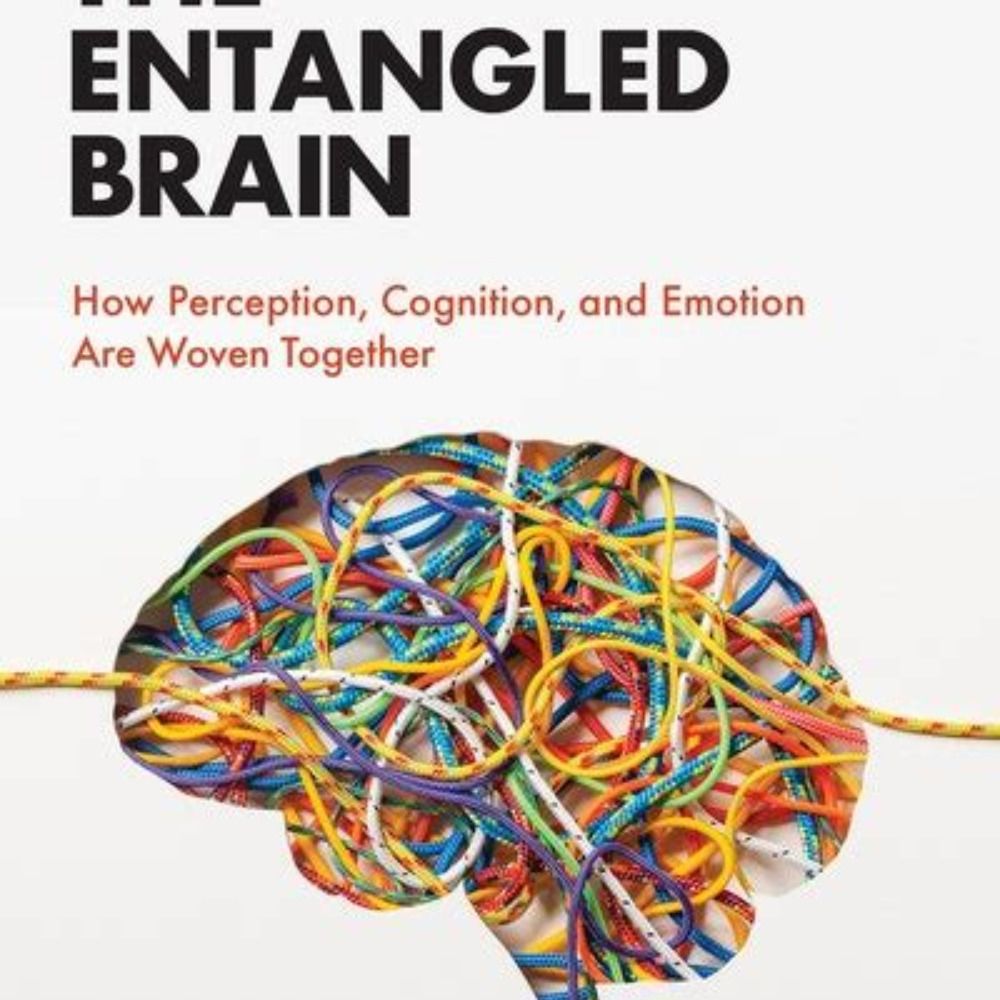
𝗔 𝗡𝗘𝗨𝗥𝗢𝗘𝗖𝗢𝗟𝗢𝗚𝗜𝗖𝗔𝗟 𝗣𝗘𝗥𝗦𝗣𝗘𝗖𝗧𝗜𝗩𝗘 𝗢𝗡 𝗧𝗛𝗘 𝗣𝗥𝗘𝗙𝗥𝗢𝗡𝗧𝗔𝗟 𝗖𝗢𝗥𝗧𝗘𝗫
By Mars and Passingham
"Understanding anthropoid foraging challenges may thus contribute to our understanding of human cognition"
Going to the top of the reading list!
doi.org/10.1016/j.ne...
#neuroskyence
By Mars and Passingham
"Understanding anthropoid foraging challenges may thus contribute to our understanding of human cognition"
Going to the top of the reading list!
doi.org/10.1016/j.ne...
#neuroskyence

October 11, 2025 at 4:31 PM
𝗔 𝗡𝗘𝗨𝗥𝗢𝗘𝗖𝗢𝗟𝗢𝗚𝗜𝗖𝗔𝗟 𝗣𝗘𝗥𝗦𝗣𝗘𝗖𝗧𝗜𝗩𝗘 𝗢𝗡 𝗧𝗛𝗘 𝗣𝗥𝗘𝗙𝗥𝗢𝗡𝗧𝗔𝗟 𝗖𝗢𝗥𝗧𝗘𝗫
By Mars and Passingham
"Understanding anthropoid foraging challenges may thus contribute to our understanding of human cognition"
Going to the top of the reading list!
doi.org/10.1016/j.ne...
#neuroskyence
By Mars and Passingham
"Understanding anthropoid foraging challenges may thus contribute to our understanding of human cognition"
Going to the top of the reading list!
doi.org/10.1016/j.ne...
#neuroskyence
Reposted by Claudio Basile
𝗪𝗮𝗻𝘁 𝘁𝗼 𝗹𝗲𝗮𝗿𝗻 𝗮𝗯𝗼𝘂𝘁 𝗵𝘂𝗺𝗮𝗻 𝗮𝗳𝗳𝗲𝗰𝘁𝗶𝘃𝗲 𝗻𝗲𝘂𝗿𝗼𝘀𝗰𝗶𝗲𝗻𝗰𝗲?
This is massive, a lot of great material.
Huge amount of work to put this together, many thanks to Jorge and Patrik for getting the second edition out.
This is massive, a lot of great material.
Huge amount of work to put this together, many thanks to Jorge and Patrik for getting the second edition out.

October 2, 2025 at 3:27 PM
𝗪𝗮𝗻𝘁 𝘁𝗼 𝗹𝗲𝗮𝗿𝗻 𝗮𝗯𝗼𝘂𝘁 𝗵𝘂𝗺𝗮𝗻 𝗮𝗳𝗳𝗲𝗰𝘁𝗶𝘃𝗲 𝗻𝗲𝘂𝗿𝗼𝘀𝗰𝗶𝗲𝗻𝗰𝗲?
This is massive, a lot of great material.
Huge amount of work to put this together, many thanks to Jorge and Patrik for getting the second edition out.
This is massive, a lot of great material.
Huge amount of work to put this together, many thanks to Jorge and Patrik for getting the second edition out.
Reposted by Claudio Basile

Exciting news! 🎉 Our Computational Neuroscience course has been awarded NIH BRAIN Initiative funding! Students will get hands-on experience w real BRAIN Initiative datasets, helping them build computational skills that are essential for the future of neuroscience.
www.linkedin.com/feed/update/...
www.linkedin.com/feed/update/...

September 25, 2025 at 9:01 PM
Exciting news! 🎉 Our Computational Neuroscience course has been awarded NIH BRAIN Initiative funding! Students will get hands-on experience w real BRAIN Initiative datasets, helping them build computational skills that are essential for the future of neuroscience.
www.linkedin.com/feed/update/...
www.linkedin.com/feed/update/...
Reposted by Claudio Basile

somehow I missed this!
Dopamine represents a domain-general teaching signal:
www.science.org/doi/full/10....
Dopamine represents a domain-general teaching signal:
www.science.org/doi/full/10....

Striatal dopamine signals errors in prediction across different informational domains
Dopamine reflects prediction errors not only about reward but also about valueless stimuli, challenging many current theories.
www.science.org
September 16, 2025 at 7:44 PM
somehow I missed this!
Dopamine represents a domain-general teaching signal:
www.science.org/doi/full/10....
Dopamine represents a domain-general teaching signal:
www.science.org/doi/full/10....
Reposted by Claudio Basile
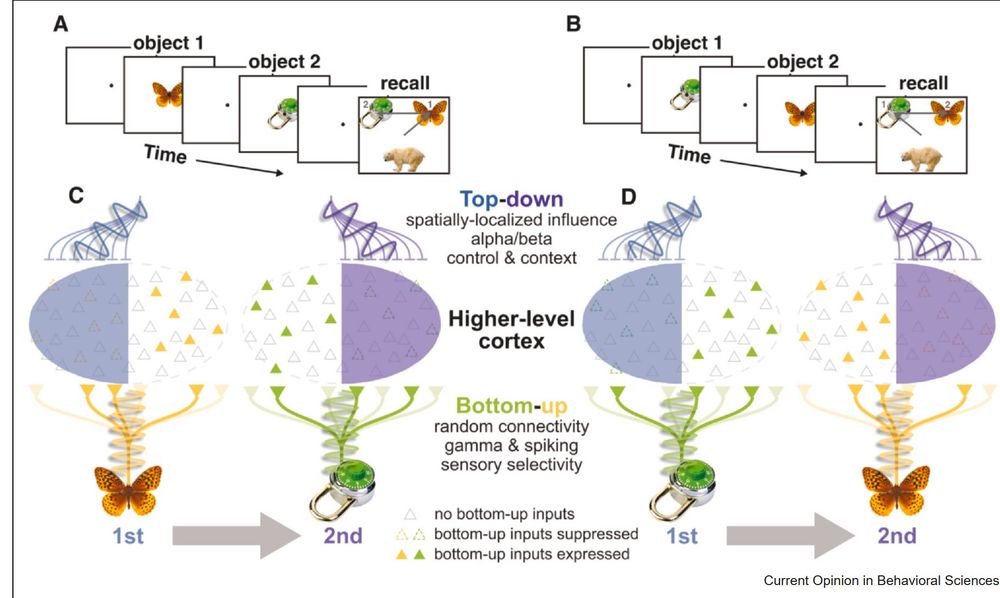
𝗖𝗼𝗴𝗻𝗶𝘁𝗶𝗼𝗻 𝗶𝘀 𝗲𝗺𝗲𝗿𝗴𝗲𝗻𝘁 𝗶𝗻 𝘁𝗵𝗲 𝗯𝗿𝗮𝗶𝗻
by Earl K Miller, Scott L Brincat, Jefferson E Roy
This promises to be a must read
One day we should create an online journal club to just read these kinds of papers!
#neuroskyence
doi.org/10.1016/j.co...
by Earl K Miller, Scott L Brincat, Jefferson E Roy
This promises to be a must read
One day we should create an online journal club to just read these kinds of papers!
#neuroskyence
doi.org/10.1016/j.co...
August 16, 2025 at 3:05 PM
𝗖𝗼𝗴𝗻𝗶𝘁𝗶𝗼𝗻 𝗶𝘀 𝗲𝗺𝗲𝗿𝗴𝗲𝗻𝘁 𝗶𝗻 𝘁𝗵𝗲 𝗯𝗿𝗮𝗶𝗻
by Earl K Miller, Scott L Brincat, Jefferson E Roy
This promises to be a must read
One day we should create an online journal club to just read these kinds of papers!
#neuroskyence
doi.org/10.1016/j.co...
by Earl K Miller, Scott L Brincat, Jefferson E Roy
This promises to be a must read
One day we should create an online journal club to just read these kinds of papers!
#neuroskyence
doi.org/10.1016/j.co...
Reposted by Claudio Basile

Lateral #PrefrontalCortex is involved in executive functions, but what roles do distinct anatomical subregions play? @clbas.bsky.social &co show that caudal VLPF specializes in visual input processing, while middle areas support context-based behavioral planning @plosbiology.org 🧪 plos.io/4ljEz9W

August 8, 2025 at 1:37 PM
Lateral #PrefrontalCortex is involved in executive functions, but what roles do distinct anatomical subregions play? @clbas.bsky.social &co show that caudal VLPF specializes in visual input processing, while middle areas support context-based behavioral planning @plosbiology.org 🧪 plos.io/4ljEz9W
Finally, the full version of our paper on the distribution of functions within monkey VLPF is out! For anyone interested, I'll briefly explain the main results in this thread (1/5) @plosbiology.org #prefrontal #neuroscience #ephys #dataanalysis
Encoding of visual stimuli and behavioral goals in distinct anatomical areas of monkey ventrolateral prefrontal cortex
The lateral prefrontal cortex is involved in executive functions, but whether distinct anatomical subregions play different functional roles is not clear. This study shows that, in the monkey ventrola...
journals.plos.org
August 8, 2025 at 12:15 PM
Finally, the full version of our paper on the distribution of functions within monkey VLPF is out! For anyone interested, I'll briefly explain the main results in this thread (1/5) @plosbiology.org #prefrontal #neuroscience #ephys #dataanalysis
Reposted by Claudio Basile
🚀 We are excited to share that bombcell is now available in Python! 🐍 Automatically sort your units into good/MUA/noise/non-somatic using quality metrics and interpretable & adjustable classification thresholds.
pip install and play around with our toy dataset:
🔗 github.com/Julie-Fabre/...
pip install and play around with our toy dataset:
🔗 github.com/Julie-Fabre/...
GitHub - Julie-Fabre/bombcell: Automated quality control, curation and neuron classification of spike-sorted electrophysiology data
Automated quality control, curation and neuron classification of spike-sorted electrophysiology data - Julie-Fabre/bombcell
github.com
June 13, 2025 at 6:55 PM
🚀 We are excited to share that bombcell is now available in Python! 🐍 Automatically sort your units into good/MUA/noise/non-somatic using quality metrics and interpretable & adjustable classification thresholds.
pip install and play around with our toy dataset:
🔗 github.com/Julie-Fabre/...
pip install and play around with our toy dataset:
🔗 github.com/Julie-Fabre/...
Reposted by Claudio Basile

In my hotpink and royalblue era ✨

February 25, 2025 at 5:14 PM
In my hotpink and royalblue era ✨
Reposted by Claudio Basile

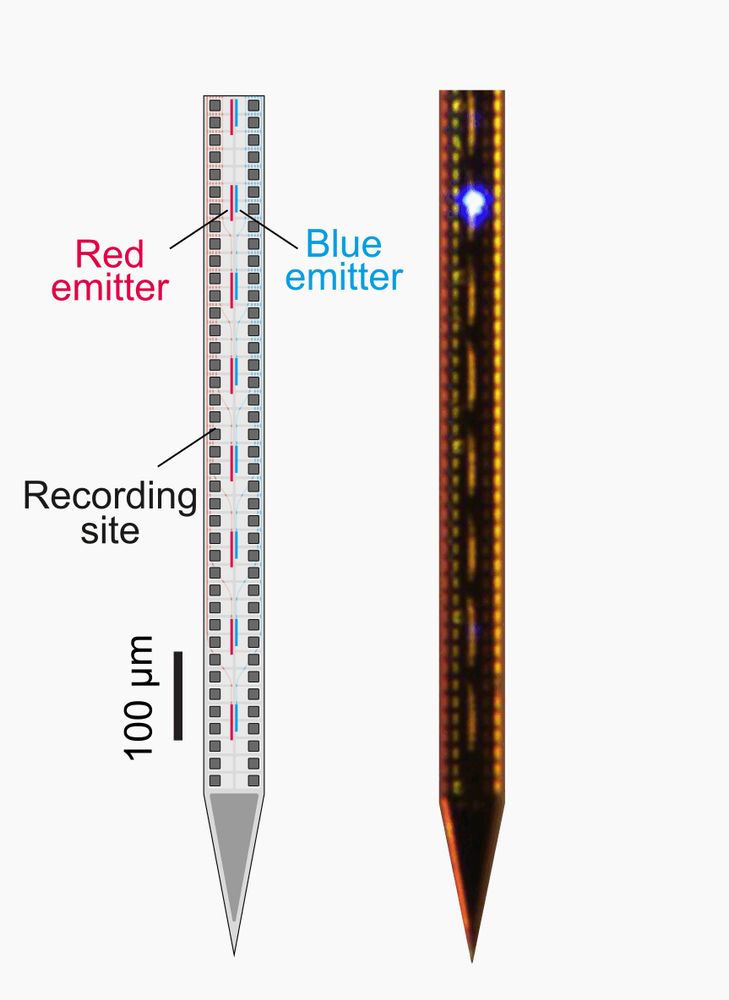
Neuropixels and Optogenetics are delighted to announce the birth of
Neuropixels Opto
Combining high-resolution electrophysiology and optogenetics
Today in bioRxiv
960 sites, 28 emitters, 2 colors
By Lakunina, @karolinazsocha.bsky.social, Ladd, et al
www.biorxiv.org/content/10.1...
(1/2)
Neuropixels Opto
Combining high-resolution electrophysiology and optogenetics
Today in bioRxiv
960 sites, 28 emitters, 2 colors
By Lakunina, @karolinazsocha.bsky.social, Ladd, et al
www.biorxiv.org/content/10.1...
(1/2)
February 7, 2025 at 9:16 AM
Neuropixels and Optogenetics are delighted to announce the birth of
Neuropixels Opto
Combining high-resolution electrophysiology and optogenetics
Today in bioRxiv
960 sites, 28 emitters, 2 colors
By Lakunina, @karolinazsocha.bsky.social, Ladd, et al
www.biorxiv.org/content/10.1...
(1/2)
Neuropixels Opto
Combining high-resolution electrophysiology and optogenetics
Today in bioRxiv
960 sites, 28 emitters, 2 colors
By Lakunina, @karolinazsocha.bsky.social, Ladd, et al
www.biorxiv.org/content/10.1...
(1/2)
Reposted by Claudio Basile

This figure should be posted in every laboratory that uses animal models in behavioral neuroscience, and I might get it tattooed on my forearm.

January 5, 2025 at 2:52 AM
This figure should be posted in every laboratory that uses animal models in behavioral neuroscience, and I might get it tattooed on my forearm.
Reposted by Claudio Basile

Playing around with PyTorch for neuroscience made easy : NeuroTorch: A Python library for neuroscience-oriented machine learning biorxiv.org/cgi/cont... #biorxiv_neursci #neuroscience #neuroAI

NeuroTorch: A Python library for neuroscience-oriented machine learning
Machine learning (ML) has become a powerful tool for data analysis, leading to significant advances in neuroscience research. While ML algorithms are proficient in general-purpose tasks, their highly technical nature often hinders their compatibility with the observed biological principles and constraints in the brain, thereby limiting their suitability for neuroscience applications. In this work, we introduce NeuroTorch, a comprehensive ML pipeline specifically designed to assist neuroscientists in leveraging ML techniques using biologically inspired neural network models. NeuroTorch enables the training of recurrent neural networks equipped with either spiking or firing-rate dynamics, incorporating additional biological constraints such as Dale's law and synaptic excitatory-inhibitory balance. The pipeline offers various learning methods, including backpropagation through time and eligibility trace forward propagation, aiming to allow neuroscientists to effectively employ ML approaches. To evaluate the performance of NeuroTorch, we conducted experiments on well-established public datasets for classification tasks, namely MNIST, Fashion-MNIST, and Heidelberg. Notably, NeuroTorch achieved accuracies that replicated the results obtained using the Norse and SpyTorch packages. Additionally, we tested NeuroTorch on real neuronal activity data obtained through volumetric calcium imaging in larval zebrafish. On training sets representing 9.3 minutes of activity under darkflash stimuli from 522 neurons, the mean proportion of variance explained for the spiking and firing-rate neural network models, subject to Dale's law, exceeded 0.97 and 0.96, respectively. Our analysis of networks trained on these datasets indicates that both Dale's law and spiking dynamics have a beneficial impact on the resilience of network models when subjected to connection ablations. NeuroTorch provides an accessible and well-performing tool for neuroscientists, granting them access to state-of-the-art ML models used in the field without requiring in-depth expertise in computer science.
### Competing Interest Statement
The authors have declared no competing interest.
biorxiv.org
December 30, 2024 at 3:18 PM
Playing around with PyTorch for neuroscience made easy : NeuroTorch: A Python library for neuroscience-oriented machine learning biorxiv.org/cgi/cont... #biorxiv_neursci #neuroscience #neuroAI
Reposted by Claudio Basile

OK If we are moving to Bluesky I am rescuing my favourite ever twitter thread (Jan 2019).
The renamed:
Bluesky-sized history of neuroscience (biased by my interests)
The renamed:
Bluesky-sized history of neuroscience (biased by my interests)
December 1, 2024 at 8:29 PM
OK If we are moving to Bluesky I am rescuing my favourite ever twitter thread (Jan 2019).
The renamed:
Bluesky-sized history of neuroscience (biased by my interests)
The renamed:
Bluesky-sized history of neuroscience (biased by my interests)
Reposted by Claudio Basile

"the mediodorsal thalamus independently represents cueing and rule uncertainty. This enables the relevant thalamic population to drive prefrontal reconfiguration ... appropriately attributing errors to an environmental change."
www.nature.com/articles/s41...
www.nature.com/articles/s41...

Prefrontal transthalamic uncertainty processing drives flexible switching - Nature
By examining neural responses from tree shrews performing hierarchical decision tasks with rule reversals, the authors identify a thalamocortical mechanism for regulating cognitive flexibility.
www.nature.com
November 16, 2024 at 12:31 AM
"the mediodorsal thalamus independently represents cueing and rule uncertainty. This enables the relevant thalamic population to drive prefrontal reconfiguration ... appropriately attributing errors to an environmental change."
www.nature.com/articles/s41...
www.nature.com/articles/s41...
Reposted by Claudio Basile

Seems like it's a good time to jump ship! I am working in @mackelab.bsky.social, on using deep learning (usually recurrent neural networks; RNNs) to study neural dynamics.
A cool example is recent work where we show how to generate long sequences of realistic neural data: arxiv.org/abs/2406.16749
A cool example is recent work where we show how to generate long sequences of realistic neural data: arxiv.org/abs/2406.16749

Inferring stochastic low-rank recurrent neural networks from neural data
A central aim in computational neuroscience is to relate the activity of large populations of neurons to an underlying dynamical system. Models of these neural dynamics should ideally be both interpre...
arxiv.org
November 14, 2024 at 2:45 PM
Seems like it's a good time to jump ship! I am working in @mackelab.bsky.social, on using deep learning (usually recurrent neural networks; RNNs) to study neural dynamics.
A cool example is recent work where we show how to generate long sequences of realistic neural data: arxiv.org/abs/2406.16749
A cool example is recent work where we show how to generate long sequences of realistic neural data: arxiv.org/abs/2406.16749
Reposted by Claudio Basile
Understanding cognitive processes across spatial scales of the brain: Trends in Cognitive Sciences www.cell.com/trends/cogni...
#neuroscience
#neuroscience

Understanding cognitive processes across spatial scales of the brain
Cognition arises from neural operations at multiple spatial scales, from individual
neurons to large-scale networks. Despite extensive research on coding principles and
emergent cognitive processes ac...
www.cell.com
November 7, 2024 at 9:59 PM
Understanding cognitive processes across spatial scales of the brain: Trends in Cognitive Sciences www.cell.com/trends/cogni...
#neuroscience
#neuroscience
Reposted by Claudio Basile

Felt a little extra today when preparing a spike sorting lecture and put together these illustrations, I could not find anything similar for single electrodes! 🧪🧠⚡
#neuroskyence #SciArt
#neuroskyence #SciArt

November 13, 2024 at 12:55 PM
Felt a little extra today when preparing a spike sorting lecture and put together these illustrations, I could not find anything similar for single electrodes! 🧪🧠⚡
#neuroskyence #SciArt
#neuroskyence #SciArt
Reposted by Claudio Basile
It's day 4 of Insula week! Let's talk about Von Economo neurons. They exist in the Insula of humans, not mice.
At one point they were thought to exist only in humans and great apes and thus suspected to have a very special function. Possibly consciousness! 🧵
pubmed.ncbi.nlm.nih.gov/20512377/
At one point they were thought to exist only in humans and great apes and thus suspected to have a very special function. Possibly consciousness! 🧵
pubmed.ncbi.nlm.nih.gov/20512377/

November 13, 2024 at 1:21 PM
It's day 4 of Insula week! Let's talk about Von Economo neurons. They exist in the Insula of humans, not mice.
At one point they were thought to exist only in humans and great apes and thus suspected to have a very special function. Possibly consciousness! 🧵
pubmed.ncbi.nlm.nih.gov/20512377/
At one point they were thought to exist only in humans and great apes and thus suspected to have a very special function. Possibly consciousness! 🧵
pubmed.ncbi.nlm.nih.gov/20512377/

Reposted by Claudio Basile

Six tips for going public with your lab’s software: https://www.nature.com/articles/d41586-024-03344-y
1) make time for maintenance
2) simplify installation
3) add a GUI or good CLI
4) good documentation
5) use github/git
6) automated testing
Any other tips people have? #softwareengineering
1) make time for maintenance
2) simplify installation
3) add a GUI or good CLI
4) good documentation
5) use github/git
6) automated testing
Any other tips people have? #softwareengineering
October 18, 2024 at 12:18 PM
Six tips for going public with your lab’s software: https://www.nature.com/articles/d41586-024-03344-y
1) make time for maintenance
2) simplify installation
3) add a GUI or good CLI
4) good documentation
5) use github/git
6) automated testing
Any other tips people have? #softwareengineering
1) make time for maintenance
2) simplify installation
3) add a GUI or good CLI
4) good documentation
5) use github/git
6) automated testing
Any other tips people have? #softwareengineering