




Reposted by C⌀i✮࿐࿔•.
This is my first night working on the Rosette Nebula. I hope to double or triple the exposure time over the next couple of nights, sky conditions permitting. #astronomy #astrophotography

January 19, 2025 at 1:56 PM
This is my first night working on the Rosette Nebula. I hope to double or triple the exposure time over the next couple of nights, sky conditions permitting. #astronomy #astrophotography
Reposted by C⌀i✮࿐࿔•.

Celestial angel Rho Ophiuchi Cloud complex from the Webb Telescope.

January 18, 2025 at 10:19 AM
Celestial angel Rho Ophiuchi Cloud complex from the Webb Telescope.
Reposted by C⌀i✮࿐࿔•.

This image, taken with the NASA/ESA Hubble Space Telescope, depicts GAL-CLUS-022058s, located in the southern hemisphere constellation of Fornax (The Furnace). GAL-CLUS-022058s is the largest and one of the most complete Einstein rings ever discovered in our Universe.
Credit: ESA/Hubble/NASA/S. Jha
Credit: ESA/Hubble/NASA/S. Jha

January 19, 2025 at 2:00 PM
This image, taken with the NASA/ESA Hubble Space Telescope, depicts GAL-CLUS-022058s, located in the southern hemisphere constellation of Fornax (The Furnace). GAL-CLUS-022058s is the largest and one of the most complete Einstein rings ever discovered in our Universe.
Credit: ESA/Hubble/NASA/S. Jha
Credit: ESA/Hubble/NASA/S. Jha
Reposted by C⌀i✮࿐࿔•.
Happy Saturday! Enjoy this image of the Tarantula Nebula with your loved ones! Give us a 💙 if you like STEM and astronomy content on your timeline! Lets go crazy.

January 18, 2025 at 3:44 PM
Happy Saturday! Enjoy this image of the Tarantula Nebula with your loved ones! Give us a 💙 if you like STEM and astronomy content on your timeline! Lets go crazy.
Reposted by C⌀i✮࿐࿔•.

Galaxy NGC 4380 swirls with an almost magical energy, resembling a portal to a distant universe straight from a science fiction story. Yet, in the grand scheme of things, the galaxy is actually quite ordinary
(Credit: ESA/Hubble & NASA, P. Erwin)
(Credit: ESA/Hubble & NASA, P. Erwin)

January 18, 2025 at 11:10 PM
Galaxy NGC 4380 swirls with an almost magical energy, resembling a portal to a distant universe straight from a science fiction story. Yet, in the grand scheme of things, the galaxy is actually quite ordinary
(Credit: ESA/Hubble & NASA, P. Erwin)
(Credit: ESA/Hubble & NASA, P. Erwin)
Reposted by C⌀i✮࿐࿔•.

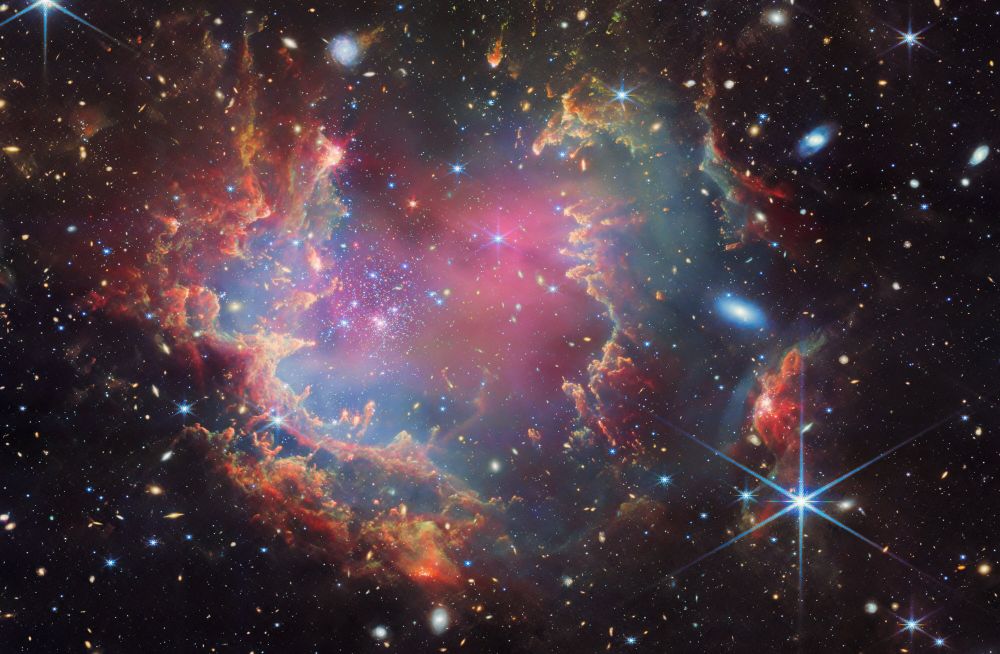
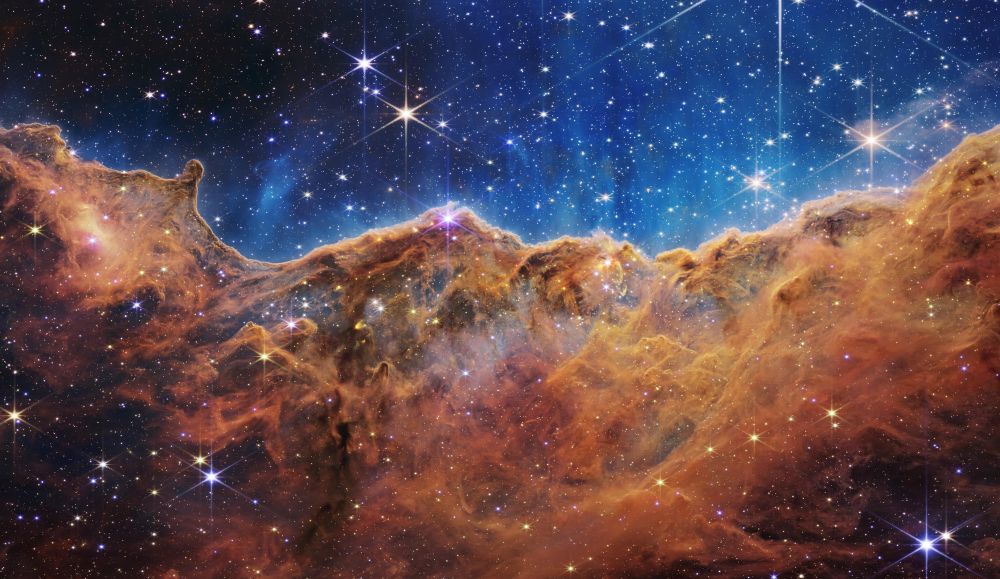
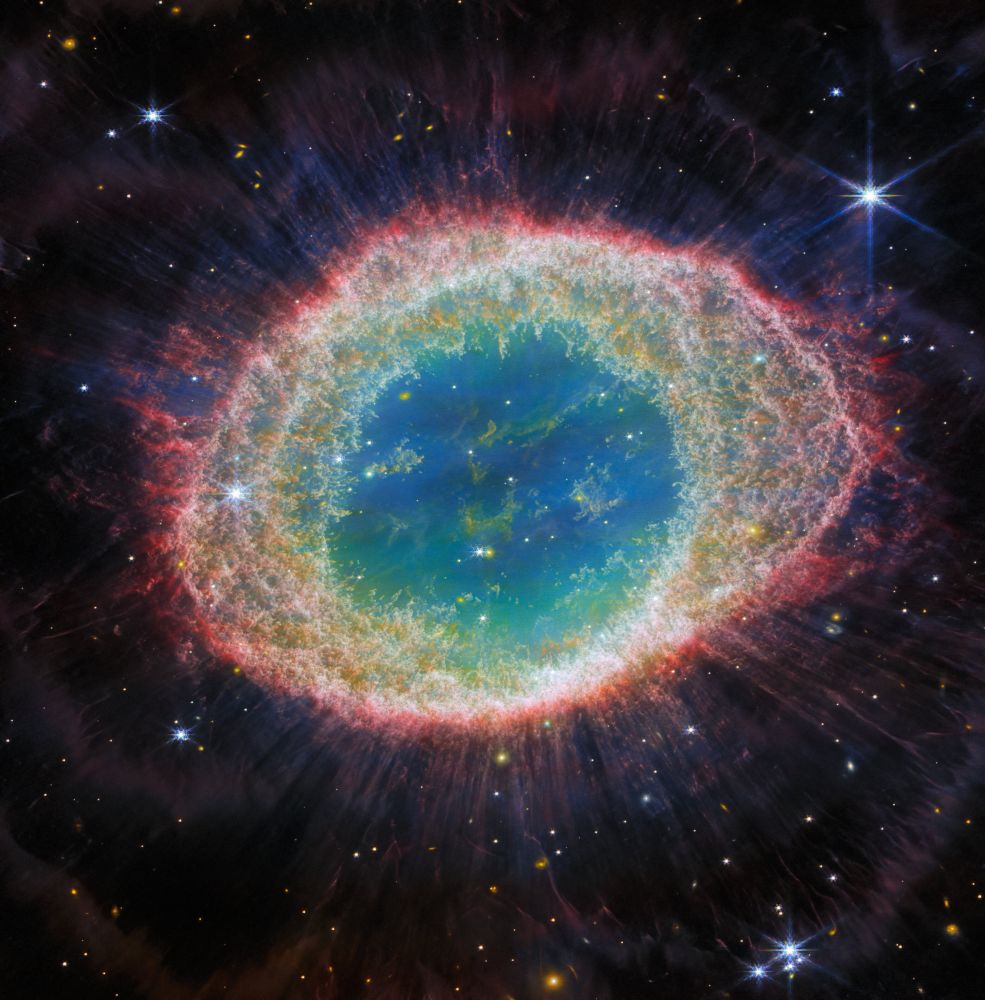
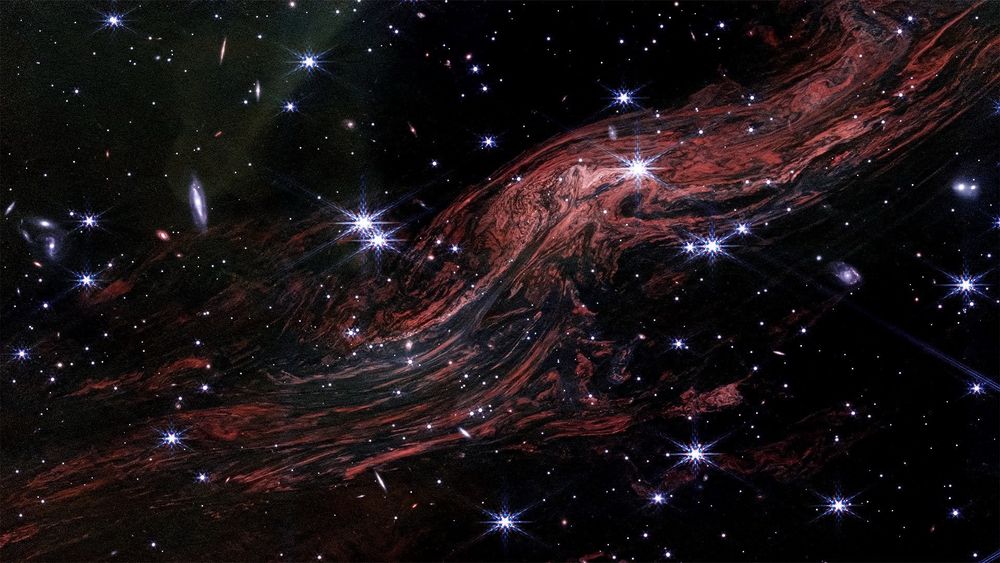
my current favorite jwst images 🌌
January 19, 2025 at 3:34 AM
my current favorite jwst images 🌌
Reposted by C⌀i✮࿐࿔•.
One of the most amazing James Webb Telescope images shows Star Formation in Dusty Ribbons of a star cluster NGC 346. Inspired to explore the cosmos with a telescope? Get your own telescope here 👉 amzn.to/49g9lvS #SpaceInspiration #AmazonAffiliate

January 19, 2025 at 12:17 AM
One of the most amazing James Webb Telescope images shows Star Formation in Dusty Ribbons of a star cluster NGC 346. Inspired to explore the cosmos with a telescope? Get your own telescope here 👉 amzn.to/49g9lvS #SpaceInspiration #AmazonAffiliate
Reposted by C⌀i✮࿐࿔•.
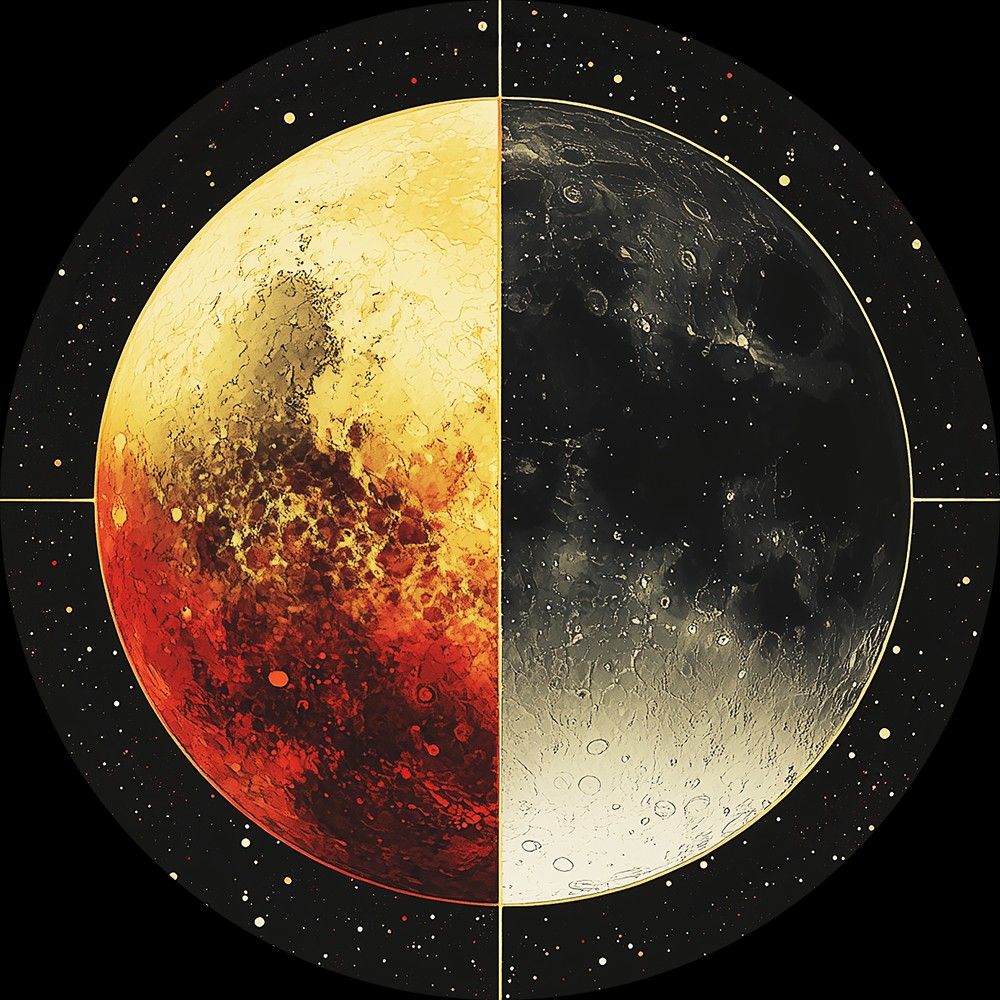
Presenting the Eighth Wonder of the World: The Rainbow Nebulae, a symbol of hope and inclusivity. A celestial masterpiece formed by interstellar gases and cosmic dust, spreading vibrant hues across the universe.
Author: @venusianchron.bsky.social
Author: @venusianchron.bsky.social

January 17, 2025 at 1:50 PM
Presenting the Eighth Wonder of the World: The Rainbow Nebulae, a symbol of hope and inclusivity. A celestial masterpiece formed by interstellar gases and cosmic dust, spreading vibrant hues across the universe.
Author: @venusianchron.bsky.social
Author: @venusianchron.bsky.social
Reposted by C⌀i✮࿐࿔•.
The Horsehead Nebula (also known as Barnard 33) is a small dark nebula in the constellation Orion. The nebula is located just to the south of Alnitak, the easternmost star of Orion’s Belt, and is part of the much larger Orion Molecular Cloud Complex.
Credit: NASA/ESA & Hubble
Credit: NASA/ESA & Hubble

January 17, 2025 at 4:07 AM
The Horsehead Nebula (also known as Barnard 33) is a small dark nebula in the constellation Orion. The nebula is located just to the south of Alnitak, the easternmost star of Orion’s Belt, and is part of the much larger Orion Molecular Cloud Complex.
Credit: NASA/ESA & Hubble
Credit: NASA/ESA & Hubble
Reposted by C⌀i✮࿐࿔•.

Leo P.
This is a star-forming dwarf galaxy, located about 5 million light years away from us (blue stars on the bottom-right side of the image).
🔭 🧪
This is a star-forming dwarf galaxy, located about 5 million light years away from us (blue stars on the bottom-right side of the image).
🔭 🧪

January 17, 2025 at 7:49 PM
Leo P.
This is a star-forming dwarf galaxy, located about 5 million light years away from us (blue stars on the bottom-right side of the image).
🔭 🧪
This is a star-forming dwarf galaxy, located about 5 million light years away from us (blue stars on the bottom-right side of the image).
🔭 🧪
Reposted by C⌀i✮࿐࿔•.
Amazing Jupiter in James Webb Infra red vs Hubble Ultraviolet wavelengths. Inspired to explore the cosmos? Start your journey with this amazing telescope 👉 amzn.to/4gBPsCi #SpaceExploration #AmazonAffiliate


January 17, 2025 at 7:31 PM
Amazing Jupiter in James Webb Infra red vs Hubble Ultraviolet wavelengths. Inspired to explore the cosmos? Start your journey with this amazing telescope 👉 amzn.to/4gBPsCi #SpaceExploration #AmazonAffiliate
Reposted by C⌀i✮࿐࿔•.


Reposted by C⌀i✮࿐࿔•.

January 15, 2025 at 10:33 PM
Reposted by C⌀i✮࿐࿔•.

Me with a tiny-ass telescope on the driveway vs Hubble telescope :D
🔭🧪 #astrophotography
🔭🧪 #astrophotography

January 15, 2025 at 3:46 PM
Me with a tiny-ass telescope on the driveway vs Hubble telescope :D
🔭🧪 #astrophotography
🔭🧪 #astrophotography
Reposted by C⌀i✮࿐࿔•.
Southern Ring Nebula captured by the James Webb Space Telescope #JamesWebb #SouthernRingNebula Inspired to explore the cosmos with a telescope? Get your own telescope here 👉 amzn.to/49g9lvS

January 15, 2025 at 5:30 PM
Southern Ring Nebula captured by the James Webb Space Telescope #JamesWebb #SouthernRingNebula Inspired to explore the cosmos with a telescope? Get your own telescope here 👉 amzn.to/49g9lvS
Reposted by C⌀i✮࿐࿔•.


Reposted by C⌀i✮࿐࿔•.
The Pillars of Creation, towering columns of gas and dust in the Eagle Nebula, captured in stunning detail by the James Webb Space Telescope. These pillars are stellar nurseries where new stars are born, located about 6,500 light-years away.
Credit: NASA, ESA, CSA, STScI.
Credit: NASA, ESA, CSA, STScI.

January 15, 2025 at 6:29 PM
The Pillars of Creation, towering columns of gas and dust in the Eagle Nebula, captured in stunning detail by the James Webb Space Telescope. These pillars are stellar nurseries where new stars are born, located about 6,500 light-years away.
Credit: NASA, ESA, CSA, STScI.
Credit: NASA, ESA, CSA, STScI.
Reposted by C⌀i✮࿐࿔•.
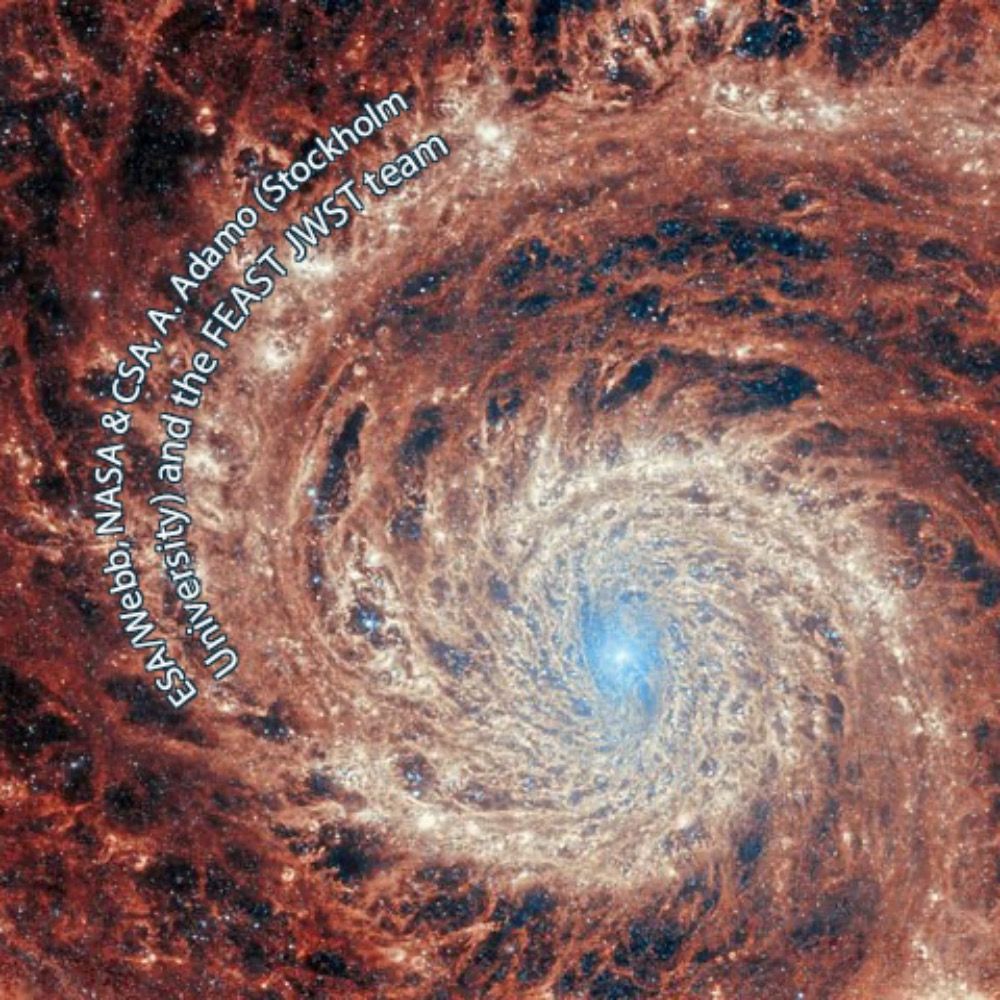
A spiral galaxy, observed with the Apache Point 2.5m Telescope in the SDSS survey.
It is at redshift 0.028 (lookback time 397.0 million years) with coordinates (240.66896, 37.35949).
45 volunteers classified this galaxy in Galaxy Zoo 2.
It is at redshift 0.028 (lookback time 397.0 million years) with coordinates (240.66896, 37.35949).
45 volunteers classified this galaxy in Galaxy Zoo 2.

January 16, 2025 at 6:11 AM
A spiral galaxy, observed with the Apache Point 2.5m Telescope in the SDSS survey.
It is at redshift 0.028 (lookback time 397.0 million years) with coordinates (240.66896, 37.35949).
45 volunteers classified this galaxy in Galaxy Zoo 2.
It is at redshift 0.028 (lookback time 397.0 million years) with coordinates (240.66896, 37.35949).
45 volunteers classified this galaxy in Galaxy Zoo 2.
Reposted by C⌀i✮࿐࿔•.
this is a galaxy cluster whose light took 10 BILLION years to reach us.
unreal.
unreal.

January 16, 2025 at 1:12 AM
this is a galaxy cluster whose light took 10 BILLION years to reach us.
unreal.
unreal.
Reposted by C⌀i✮࿐࿔•.
A cosmic ocean of glowing hydrogen gas, along with small amounts of other elements such as oxygen and sulphur.
Known as M17 (or the Swan or Omega Nebula), this star forming region resides 5,500 light-years from Earth.
Credit: NASA, ESA and J. Hester (ASU)
Known as M17 (or the Swan or Omega Nebula), this star forming region resides 5,500 light-years from Earth.
Credit: NASA, ESA and J. Hester (ASU)

January 16, 2025 at 3:05 AM
A cosmic ocean of glowing hydrogen gas, along with small amounts of other elements such as oxygen and sulphur.
Known as M17 (or the Swan or Omega Nebula), this star forming region resides 5,500 light-years from Earth.
Credit: NASA, ESA and J. Hester (ASU)
Known as M17 (or the Swan or Omega Nebula), this star forming region resides 5,500 light-years from Earth.
Credit: NASA, ESA and J. Hester (ASU)
Reposted by C⌀i✮࿐࿔•.

Reposted by C⌀i✮࿐࿔•.
genuinely this just became one of my favorite jwst images ever. it looks like a cosmic painting!!!
what a GREAT way to start 2025.
what a GREAT way to start 2025.

January 15, 2025 at 12:02 AM
genuinely this just became one of my favorite jwst images ever. it looks like a cosmic painting!!!
what a GREAT way to start 2025.
what a GREAT way to start 2025.
Reposted by C⌀i✮࿐࿔•.
my jaw genuinely dropped at how beautiful the new jwst image is.


January 14, 2025 at 7:59 PM
my jaw genuinely dropped at how beautiful the new jwst image is.
Reposted by C⌀i✮࿐࿔•.
“Earthrise” captures Earth emerging over the Moon’s horizon, taken by astronaut Bill Anders during Apollo 8 on December 24, 1968. One of the most iconic image ever taken.
Credit: NASA/Bill Anders. 
Credit: NASA/Bill Anders. 

January 14, 2025 at 6:47 PM
“Earthrise” captures Earth emerging over the Moon’s horizon, taken by astronaut Bill Anders during Apollo 8 on December 24, 1968. One of the most iconic image ever taken.
Credit: NASA/Bill Anders. 
Credit: NASA/Bill Anders. 
Reposted by C⌀i✮࿐࿔•.

he has no idea what is going on and i’m so proud of him for it

January 14, 2025 at 7:25 PM
he has no idea what is going on and i’m so proud of him for it