




Pascal B. Meyre
@bmeyrep.bsky.social
Postdoctoral Research Fellow @ CRLB-GMEL, Population Health Research Institute, McMaster University, Hamilton | Cardiologist🫀 | PhD @ Cardiovascular Research Institute Basel, University of Basel | Cardiovascular genetics🧬, CHIP, AI.
Excited to share our latest work on biomarker panels to predict adverse outcomes in Afib patients. @natureportfolio.nature.com @unibas.ch
www.nature.com/articles/s41...
www.nature.com/articles/s41...

Biomarker panels for improved risk prediction and enhanced biological insights in patients with atrial fibrillation - Nature Communications
In atrial fibrillation patients, circulating biomarkers reflecting inflammation, myocardial injury, and coagulation improve prediction of stroke, heart failure, and bleeding, outperforming clinical sc...
www.nature.com
August 6, 2025 at 10:44 AM
Excited to share our latest work on biomarker panels to predict adverse outcomes in Afib patients. @natureportfolio.nature.com @unibas.ch
www.nature.com/articles/s41...
www.nature.com/articles/s41...
Reposted by Pascal B. Meyre

A study in Nature Communications estimates income inequality in the Roman Empire and the Chinese Han Empire and finds that the Han Empire was, overall, more unequal and extractive than the Roman Empire, with the respective one-percenters earning 26% and 19% of total income. 🏺 🧪

A comparison of income inequality in the Roman and Chinese Han empires - Nature Communications
The authors estimate income inequality in the Roman Empire and the Chinese Han Empire. They find that the Han Empire was, overall, more unequal and extractive than the Roman Empire, with the respective one-percenters earning 26% and 19% of total income.
go.nature.com
April 25, 2025 at 1:36 AM
A study in Nature Communications estimates income inequality in the Roman Empire and the Chinese Han Empire and finds that the Han Empire was, overall, more unequal and extractive than the Roman Empire, with the respective one-percenters earning 26% and 19% of total income. 🏺 🧪
Reposted by Pascal B. Meyre

Two studies find new common and rare variants underlying atrial fibrillation, highlighting pathways and potential therapeutic targets.
@mgbresearch.bsky.social #Science
@mgbresearch.bsky.social #Science

Studies reveal new genetic roots of atrial fibrillation
Researchers double the number of genetic factors associated with this common arrhythmia, highlighting biological pathways that could be targeted by new medicines.
www.broadinstitute.org
March 6, 2025 at 5:13 PM
Two studies find new common and rare variants underlying atrial fibrillation, highlighting pathways and potential therapeutic targets.
@mgbresearch.bsky.social #Science
@mgbresearch.bsky.social #Science
Reposted by Pascal B. Meyre
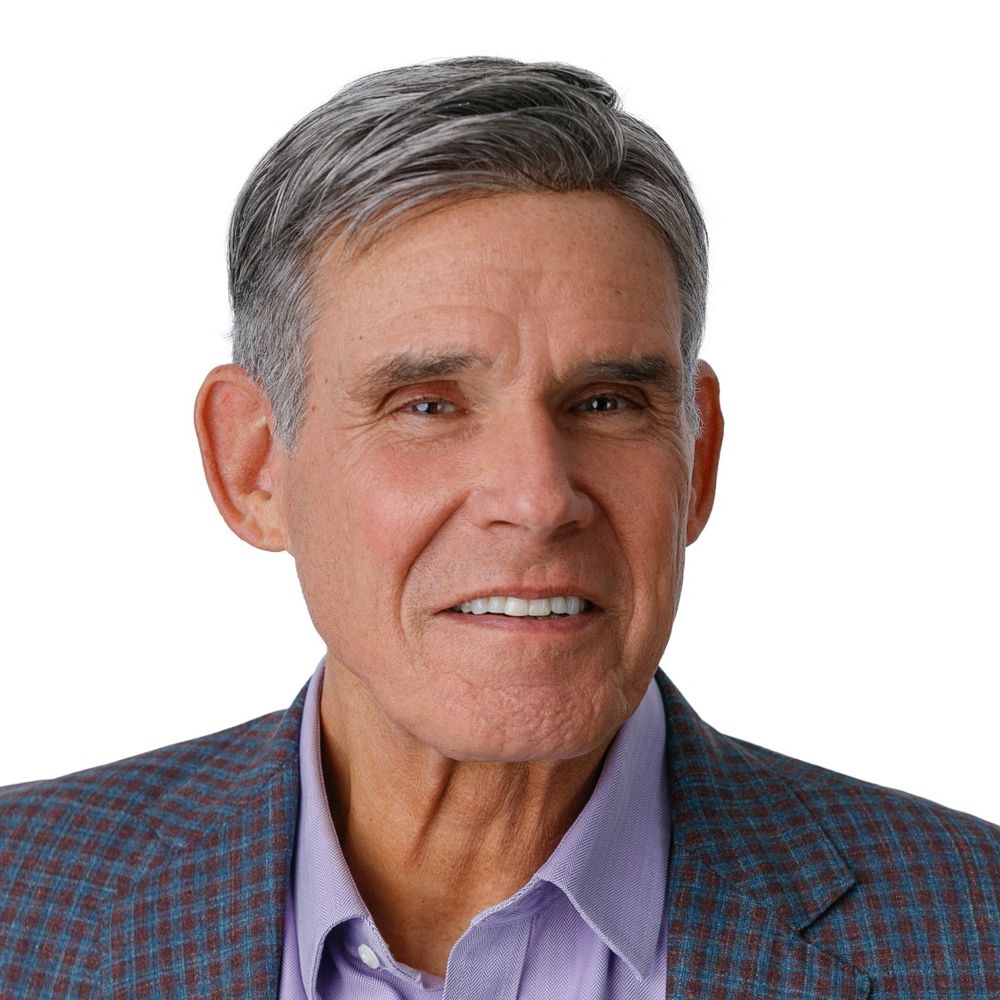
Atrial fibrillation is far more heritable than generally perceived. Two new reports identify many more linked genomic variants and a refined polygenic risk score
www.nature.com/articles/s41...
www.nature.com/articles/s41...
www.nature.com/articles/s41...
www.nature.com/articles/s41...

March 6, 2025 at 2:49 PM
Atrial fibrillation is far more heritable than generally perceived. Two new reports identify many more linked genomic variants and a refined polygenic risk score
www.nature.com/articles/s41...
www.nature.com/articles/s41...
www.nature.com/articles/s41...
www.nature.com/articles/s41...
Reposted by Pascal B. Meyre
Getting your real-time heart rhythm monitored for 10 days now requires an ECG technician to review and notify your doctor of a critical arrhythmia. A new study showed A.I. did better than technicians (98.6% vs 80.3%) for identifying these abnormalities
nature.com/articles/s41...
nature.com/articles/s41...

Artificial intelligence for direct-to-physician reporting of ambulatory electrocardiography - Nature Medicine
In a large-scale analysis of ambulatory electrocardiographic recordings, a deep learning algorithm had a substantially higher sensitivity for the detection of critical arrhythmias as compared to techn...
nature.com
February 10, 2025 at 2:50 PM
Getting your real-time heart rhythm monitored for 10 days now requires an ECG technician to review and notify your doctor of a critical arrhythmia. A new study showed A.I. did better than technicians (98.6% vs 80.3%) for identifying these abnormalities
nature.com/articles/s41...
nature.com/articles/s41...
Reposted by Pascal B. Meyre

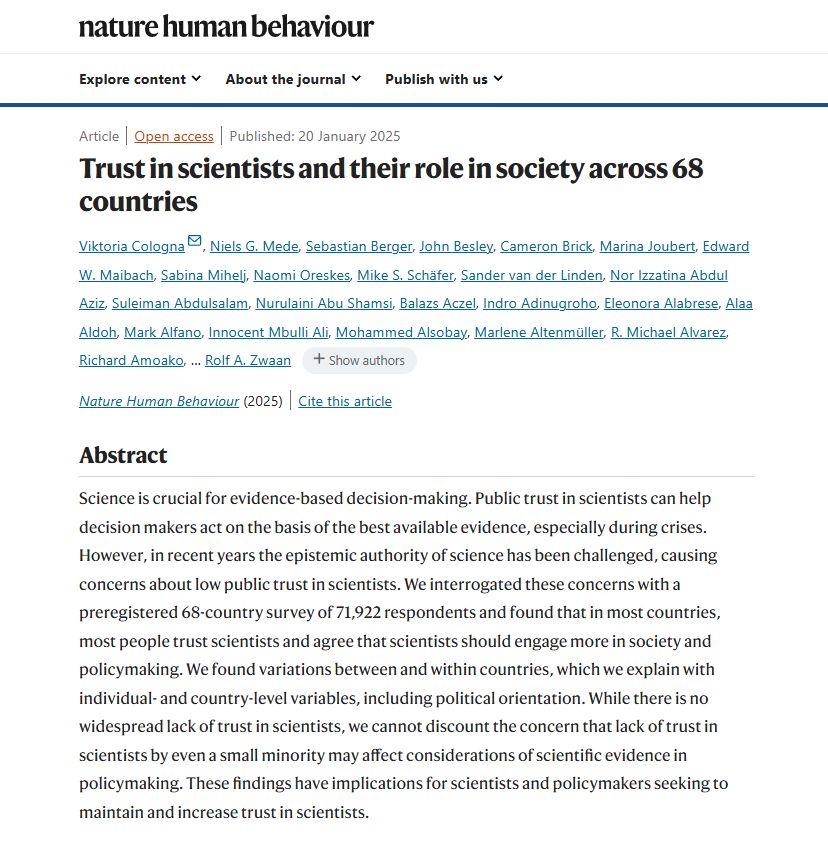
Out now in Nature Human Behaviour: Our 68-country #survey on public attitudes to #science 📣
It shows: People still #trust scientists and support an active role of scientists in society and policy-making. #OpenAccess available here: www.nature.com/articles/s41... @natureportfolio.bsky.social
(1/13)
It shows: People still #trust scientists and support an active role of scientists in society and policy-making. #OpenAccess available here: www.nature.com/articles/s41... @natureportfolio.bsky.social
(1/13)
January 20, 2025 at 10:27 AM
Out now in Nature Human Behaviour: Our 68-country #survey on public attitudes to #science 📣
It shows: People still #trust scientists and support an active role of scientists in society and policy-making. #OpenAccess available here: www.nature.com/articles/s41... @natureportfolio.bsky.social
(1/13)
It shows: People still #trust scientists and support an active role of scientists in society and policy-making. #OpenAccess available here: www.nature.com/articles/s41... @natureportfolio.bsky.social
(1/13)
Reposted by Pascal B. Meyre
A study in Nature Aging finds that structural economic inequality is linked to reduced brain volume and connectivity in middle-aged and older adults across the Americas, more so in Alzheimer’s disease than in frontotemporal dementia. https://go.nature.com/4fRE2t6 🔒

January 12, 2025 at 10:36 PM
A study in Nature Aging finds that structural economic inequality is linked to reduced brain volume and connectivity in middle-aged and older adults across the Americas, more so in Alzheimer’s disease than in frontotemporal dementia. https://go.nature.com/4fRE2t6 🔒
🚨🚨🚨 Excited to share our latest work. Combining biomarker panels with machine learning enhances risk prediction and provides deeper biological insights in atrial fibrillation patients. www.medrxiv.org/content/10.1... @medrxivpreprint.bsky.social @unibas.ch

Biomarker panels for improved risk prediction and enhanced biological insights in patients with atrial fibrillation
Atrial fibrillation (AF) is associated with an increased risk of adverse cardiovascular events, but the underlying biological mechanisms remain incompletely understood. Here we evaluated a panel of 12...
www.medrxiv.org
December 25, 2024 at 12:07 PM
🚨🚨🚨 Excited to share our latest work. Combining biomarker panels with machine learning enhances risk prediction and provides deeper biological insights in atrial fibrillation patients. www.medrxiv.org/content/10.1... @medrxivpreprint.bsky.social @unibas.ch
Bleeding an ischaemic events after first bleed in anticoagulated atrial fibrillation patients: risk and timing academic.oup.com/eurheartj/ar...

Bleeding and ischaemic events after first bleed in anticoagulated atrial fibrillation patients: risk and timing
AbstractAims. To determine the risk of subsequent adverse clinical outcomes in anticoagulated patients with atrial fibrillation (AF) who experienced a new
academic.oup.com
November 22, 2024 at 10:35 AM
Bleeding an ischaemic events after first bleed in anticoagulated atrial fibrillation patients: risk and timing academic.oup.com/eurheartj/ar...