



Andrzej Uhl
@andrzej-uhl.bsky.social
PhD student at Cambridge University | analytic criminology, corruption, punishment
Reposted by Andrzej Uhl

New paper with @andrzej-uhl.bsky.social detailing the findings of his experimental study of #Corruption within the framework of #SituationalActionTheory.
Full article: Revisiting Bad Apples and Bad Barrels: Person × Setting Interactions in Corruption www.tandfonline.com/doi/full/10....
Full article: Revisiting Bad Apples and Bad Barrels: Person × Setting Interactions in Corruption www.tandfonline.com/doi/full/10....

Revisiting Bad Apples and Bad Barrels: Person × Setting Interactions in Corruption
The divide between individual (bad apples) and structural (bad barrels) explanations runs deep through corruption research. This divide is bridged when individual corruption propensities and corrup...
www.tandfonline.com
September 8, 2025 at 12:22 PM
New paper with @andrzej-uhl.bsky.social detailing the findings of his experimental study of #Corruption within the framework of #SituationalActionTheory.
Full article: Revisiting Bad Apples and Bad Barrels: Person × Setting Interactions in Corruption www.tandfonline.com/doi/full/10....
Full article: Revisiting Bad Apples and Bad Barrels: Person × Setting Interactions in Corruption www.tandfonline.com/doi/full/10....
Reposted by Andrzej Uhl
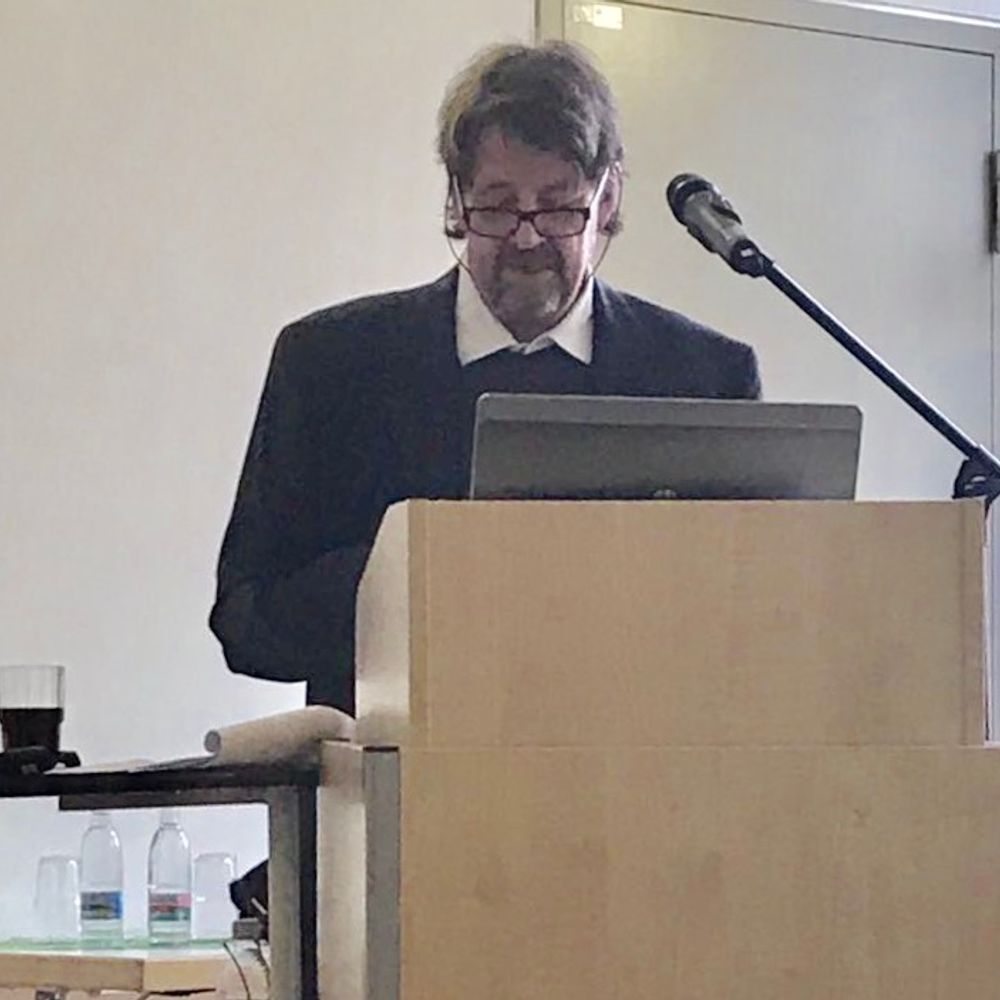
Time for a new wave of PADS+ data collection. Visiting the PADS+ office meeting Kyle and Beth, and our new research assistants (Katie, Rhianna, Giulia) who will be doing the most important job interviewing the participants. And of course it was time for a coffee!

August 29, 2025 at 12:18 PM
Time for a new wave of PADS+ data collection. Visiting the PADS+ office meeting Kyle and Beth, and our new research assistants (Katie, Rhianna, Giulia) who will be doing the most important job interviewing the participants. And of course it was time for a coffee!
Reposted by Andrzej Uhl

'Exploring the effect of motor #traffic on street #crime'. New preprint with @toby-davies.bsky.social jmpinasanchez.github.io/static/Traff...
When neighbourhoods are affected by 'heavy traffic' perceptions of vandalism, burglary and theft grow from 6% to 9%, and that is most likely an underestimate.
When neighbourhoods are affected by 'heavy traffic' perceptions of vandalism, burglary and theft grow from 6% to 9%, and that is most likely an underestimate.

August 15, 2025 at 5:35 PM
'Exploring the effect of motor #traffic on street #crime'. New preprint with @toby-davies.bsky.social jmpinasanchez.github.io/static/Traff...
When neighbourhoods are affected by 'heavy traffic' perceptions of vandalism, burglary and theft grow from 6% to 9%, and that is most likely an underestimate.
When neighbourhoods are affected by 'heavy traffic' perceptions of vandalism, burglary and theft grow from 6% to 9%, and that is most likely an underestimate.
Reposted by Andrzej Uhl

Politicians too often think that crime problems can be solved by passing a new law, because that’s what they know how to do.
Sometimes a new law is needed, but much more often the solution lies in better implementation of existing laws, or in doing things that have nothing to do with criminal law.
Sometimes a new law is needed, but much more often the solution lies in better implementation of existing laws, or in doing things that have nothing to do with criminal law.

Prohibitions are not spells.
Law is not magic.
When you prohibit a thing, all that means is the thing may be attended by different legal consequences than before.
The thing is not extinguished by a mere prohibition: it can continue but in a different way with different (and unforeseen) effects.
Law is not magic.
When you prohibit a thing, all that means is the thing may be attended by different legal consequences than before.
The thing is not extinguished by a mere prohibition: it can continue but in a different way with different (and unforeseen) effects.
August 5, 2025 at 9:45 AM
Politicians too often think that crime problems can be solved by passing a new law, because that’s what they know how to do.
Sometimes a new law is needed, but much more often the solution lies in better implementation of existing laws, or in doing things that have nothing to do with criminal law.
Sometimes a new law is needed, but much more often the solution lies in better implementation of existing laws, or in doing things that have nothing to do with criminal law.
Reposted by Andrzej Uhl
Well this is fascinating: only 1% of 300 members of the public felt a police officer should be dismissed for taking sick leave to go to a family event after being denied annual leave, and only 24% would dismiss an officer who liked a racist WhatsApp joke.
doi.org/10.1007/s112...
doi.org/10.1007/s112...

Is misconduct worse when a cop does it? Public perceptions of police misconduct - Journal of Experimental Criminology
Purpose To test how the public perceives the seriousness of types of police misconduct, what they think the appropriate punishments are, and whether they view police misconduct as worse than similar…
doi.org
July 9, 2025 at 2:00 PM
Well this is fascinating: only 1% of 300 members of the public felt a police officer should be dismissed for taking sick leave to go to a family event after being denied annual leave, and only 24% would dismiss an officer who liked a racist WhatsApp joke.
doi.org/10.1007/s112...
doi.org/10.1007/s112...
PhD advisors: read the classics in your field
The classics in my field:
The classics in my field:

July 10, 2025 at 7:18 PM
PhD advisors: read the classics in your field
The classics in my field:
The classics in my field:
Reposted by Andrzej Uhl

New at JQC: Dan Nagin, Christoph Engel, and I use a lab experiment to examine a key mechanism of informal socail control: when can offenders be deterred by bystanders with the capacity to punish? link.springer.com/article/10.1...

When Do Guardians Deter Offending? An Experimental Test of Informal Social Control Mechanisms - Journal of Quantitative Criminology
Purpose To inform community theories of informal social control, we test the circumstances under which private citizens can be effective in deterring would-be offenders and identifying characteristics...
link.springer.com
June 20, 2025 at 10:08 AM
New at JQC: Dan Nagin, Christoph Engel, and I use a lab experiment to examine a key mechanism of informal socail control: when can offenders be deterred by bystanders with the capacity to punish? link.springer.com/article/10.1...
Reposted by Andrzej Uhl

New pub alert 🍾
The most challenging yet rewarding paper I’ve worked on: 3y from idea to publication in BJC!
I explore how unstructured spare time shapes individual and temporal differences in crime, and propose a spare time model in criminology.
doi.org/10.1093/bjc/...
The most challenging yet rewarding paper I’ve worked on: 3y from idea to publication in BJC!
I explore how unstructured spare time shapes individual and temporal differences in crime, and propose a spare time model in criminology.
doi.org/10.1093/bjc/...

May 12, 2025 at 7:48 AM
New pub alert 🍾
The most challenging yet rewarding paper I’ve worked on: 3y from idea to publication in BJC!
I explore how unstructured spare time shapes individual and temporal differences in crime, and propose a spare time model in criminology.
doi.org/10.1093/bjc/...
The most challenging yet rewarding paper I’ve worked on: 3y from idea to publication in BJC!
I explore how unstructured spare time shapes individual and temporal differences in crime, and propose a spare time model in criminology.
doi.org/10.1093/bjc/...
Reposted by Andrzej Uhl

In our new paper, published in Deviant Behaviour, we combine experimental video scenarios and process tracing to open the black box of criminal decision-making.
New insights for Situational Action Theory.
By C. Herrmann, @andrzej-uhl.bsky.social, and K. Treiber
www.tandfonline.com/doi/full/10....
New insights for Situational Action Theory.
By C. Herrmann, @andrzej-uhl.bsky.social, and K. Treiber
www.tandfonline.com/doi/full/10....

Peeking into the Black Box of Offender Decision-Making: A Novel Approach to Testing Situational Action Theory’s Perception Choice Process
Situational action theory’s perception-choice process explains how individual traits and setting characteristics interact to produce criminal behavior. Specifically, it identifies the cognitive mec...
www.tandfonline.com
April 25, 2025 at 2:47 PM
In our new paper, published in Deviant Behaviour, we combine experimental video scenarios and process tracing to open the black box of criminal decision-making.
New insights for Situational Action Theory.
By C. Herrmann, @andrzej-uhl.bsky.social, and K. Treiber
www.tandfonline.com/doi/full/10....
New insights for Situational Action Theory.
By C. Herrmann, @andrzej-uhl.bsky.social, and K. Treiber
www.tandfonline.com/doi/full/10....
Reposted by Andrzej Uhl
Very fresh out of the oven! Our last paper with @nicotrajtenberg.bsky.social. Has loads of cool plots for everyone to enjoy (?)
www.sciencedirect.com/science/arti...
www.sciencedirect.com/science/arti...

An item response theory approach to punitive attitudes
Concerns about how punitive attitudes are measured are long-standing in the academic literature. However, empirical research in this area has often ov…
www.sciencedirect.com
April 24, 2025 at 11:14 AM
Very fresh out of the oven! Our last paper with @nicotrajtenberg.bsky.social. Has loads of cool plots for everyone to enjoy (?)
www.sciencedirect.com/science/arti...
www.sciencedirect.com/science/arti...
This seems v. relevant to crim methods debates: people often lack insight into their own decision-making processes. If you ask them (e.g. in an interview) why they did something, they confabulate, come up with post-hoc rationalizations, miss factors that must have influenced their choice
Link below
Link below

April 5, 2025 at 10:28 AM
This seems v. relevant to crim methods debates: people often lack insight into their own decision-making processes. If you ask them (e.g. in an interview) why they did something, they confabulate, come up with post-hoc rationalizations, miss factors that must have influenced their choice
Link below
Link below
Reposted by Andrzej Uhl
I am using this for the upcoming pitch for our Quantitative Pathway in Criminology. Want to change the world? Learn some data analysis.

Our @jpinasanchez.bsky.social provided pro bono data analysis to @libertyhq.bsky.social, helping the Black Equity Organisation reach a settlement against the Mayor of London’s Office for Policing and Crime over a discriminatory GPS tagging system.
Watch the case on ITV News 👇
tinyurl.com/yhf98ws6
Watch the case on ITV News 👇
tinyurl.com/yhf98ws6
April 3, 2025 at 6:05 PM
I am using this for the upcoming pitch for our Quantitative Pathway in Criminology. Want to change the world? Learn some data analysis.
Reposted by Andrzej Uhl
The second edition of The Effect is now available for preorder! This version has a whole new chapter on Partial Identification, a considerable update on staggered treatment and control variables in DID, and zillions of other little updates throughout. www.routledge.com/The-Effect-A...
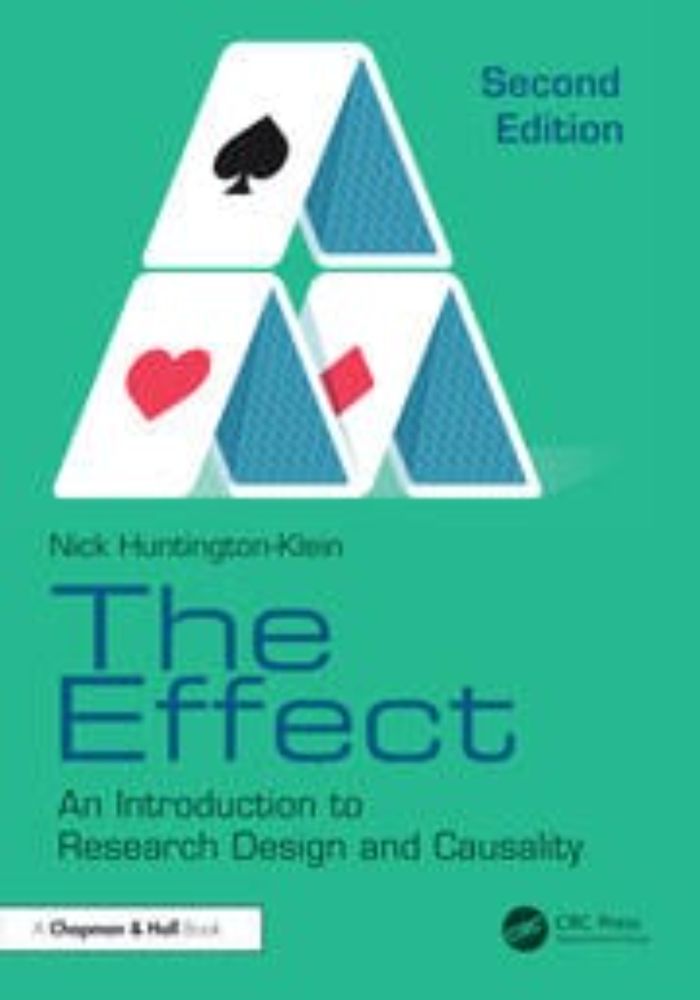
The Effect: An Introduction to Research Design and Causality
The Effect: An Introduction to Research Design and Causality, Second edition
is about research design, specifically concerning research that uses observational data to make a causal inference. It is s...
www.routledge.com
April 1, 2025 at 6:17 PM
The second edition of The Effect is now available for preorder! This version has a whole new chapter on Partial Identification, a considerable update on staggered treatment and control variables in DID, and zillions of other little updates throughout. www.routledge.com/The-Effect-A...
Reposted by Andrzej Uhl
Cumulative risk as a marker of social context
New open access paper by myself and Kyle Treiber in which we suggest and preliminary test an explanation of the phenomenon of cumulative risk in the study of crime
doi.org/10.1002/cbm....
New open access paper by myself and Kyle Treiber in which we suggest and preliminary test an explanation of the phenomenon of cumulative risk in the study of crime
doi.org/10.1002/cbm....

Cumulative Risk as a Marker of Social Context
Background
This paper takes on ‘Farrington's challenge’ ‘to bridge the gap between risk factor research and more complex explanatory theories’ by offering an explanation for the unexplained statisti.....
doi.org
March 29, 2025 at 8:18 AM
Cumulative risk as a marker of social context
New open access paper by myself and Kyle Treiber in which we suggest and preliminary test an explanation of the phenomenon of cumulative risk in the study of crime
doi.org/10.1002/cbm....
New open access paper by myself and Kyle Treiber in which we suggest and preliminary test an explanation of the phenomenon of cumulative risk in the study of crime
doi.org/10.1002/cbm....
Reposted by Andrzej Uhl
Just published SAT inspired paper by Saeed Kabiri in Journal of Criminal Justice:
Hunting in the digital jungle:
Exploring cyberstalking with higher order moderation in situational action theory.
Hunting in the digital jungle:
Exploring cyberstalking with higher order moderation in situational action theory.

March 25, 2025 at 3:29 PM
Just published SAT inspired paper by Saeed Kabiri in Journal of Criminal Justice:
Hunting in the digital jungle:
Exploring cyberstalking with higher order moderation in situational action theory.
Hunting in the digital jungle:
Exploring cyberstalking with higher order moderation in situational action theory.
Reposted by Andrzej Uhl

Reposted by Andrzej Uhl
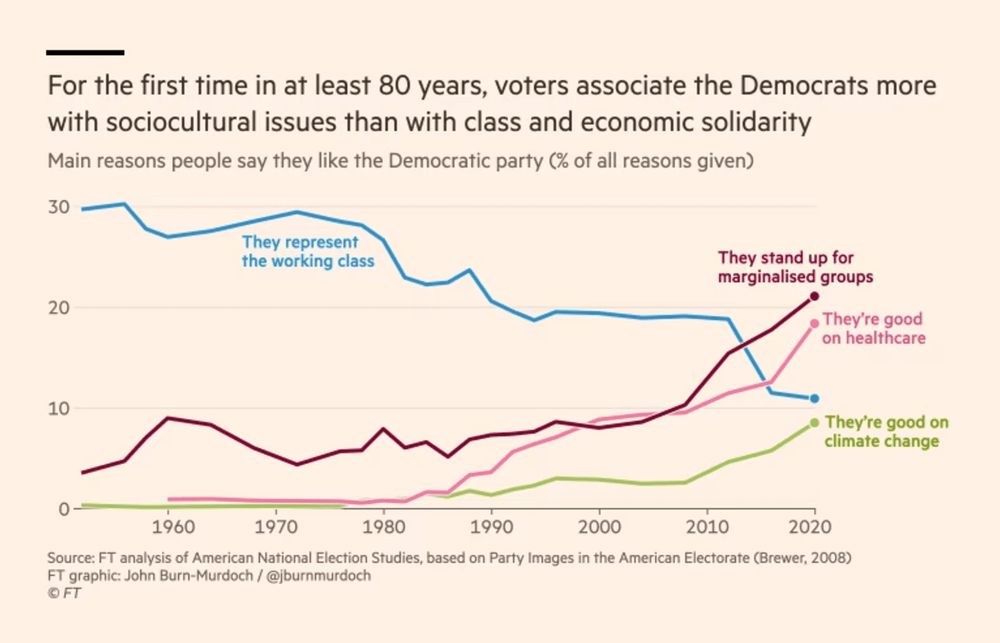
Nice thread on graphs!

Trying something new:
A 🧵 on a topic I find many students struggle with: "why do their 📊 look more professional than my 📊?"
It's *lots* of tiny decisions that aren't the defaults in many libraries, so let's break down 1 simple graph by @jburnmurdoch.bsky.social
🔗 www.ft.com/content/73a1...
A 🧵 on a topic I find many students struggle with: "why do their 📊 look more professional than my 📊?"
It's *lots* of tiny decisions that aren't the defaults in many libraries, so let's break down 1 simple graph by @jburnmurdoch.bsky.social
🔗 www.ft.com/content/73a1...
March 23, 2025 at 2:10 PM
Nice thread on graphs!
ggplot2 figures are great but imho a touch of Canva/PowerPoint can bring them to another level
(before-after)
(before-after)


March 22, 2025 at 6:25 PM
ggplot2 figures are great but imho a touch of Canva/PowerPoint can bring them to another level
(before-after)
(before-after)
Reposted by Andrzej Uhl
Please, I’m begging you: use ordinary language when choosing titles for your articles. Should readers really need to know what both “servitization” and “entrepreneurial bricolage” mean to know what your article is about?
(Yes, I know I’ve said all this before.)
(Yes, I know I’ve said all this before.)

March 18, 2025 at 2:58 PM
Please, I’m begging you: use ordinary language when choosing titles for your articles. Should readers really need to know what both “servitization” and “entrepreneurial bricolage” mean to know what your article is about?
(Yes, I know I’ve said all this before.)
(Yes, I know I’ve said all this before.)
🚨New paper🚨
Judges (🇵🇱) make suspended sentences longer compared to what they’d give the same offender if they hadn’t suspended his/her sentence. This might increase prison populations, even though judges’ intention was to keep offenders out of prison:
link.springer.com/article/10.1...
Judges (🇵🇱) make suspended sentences longer compared to what they’d give the same offender if they hadn’t suspended his/her sentence. This might increase prison populations, even though judges’ intention was to keep offenders out of prison:
link.springer.com/article/10.1...

The Damocles effect: judges may inflate the duration of suspended prison terms by over 50% - Journal of Experimental Criminology
Objective Legal scholars suspect that judges choose longer prison terms when they are going to suspend the sentence. This study examines this so-called sentence inflation in a controlled condition, ho...
link.springer.com
March 12, 2025 at 9:48 PM
🚨New paper🚨
Judges (🇵🇱) make suspended sentences longer compared to what they’d give the same offender if they hadn’t suspended his/her sentence. This might increase prison populations, even though judges’ intention was to keep offenders out of prison:
link.springer.com/article/10.1...
Judges (🇵🇱) make suspended sentences longer compared to what they’d give the same offender if they hadn’t suspended his/her sentence. This might increase prison populations, even though judges’ intention was to keep offenders out of prison:
link.springer.com/article/10.1...
Reposted by Andrzej Uhl

The Road to Hell and Criminological Theory: Intention-Behavior Gaps in Crime
dlvr.it
March 11, 2025 at 6:00 PM
Reposted by Andrzej Uhl

🚨Preprint🚨
Political psychologists might have got the personality-level predictors of punitiveness wrong by using circular research design and vague operationalizations
A manuscript with Malia Marks and Paweł Ostaszewski (accepted by Political Psychology)
osf.io/preprints/ps...
Political psychologists might have got the personality-level predictors of punitiveness wrong by using circular research design and vague operationalizations
A manuscript with Malia Marks and Paweł Ostaszewski (accepted by Political Psychology)
osf.io/preprints/ps...
OSF
osf.io
February 28, 2025 at 12:21 PM
🚨Preprint🚨
Political psychologists might have got the personality-level predictors of punitiveness wrong by using circular research design and vague operationalizations
A manuscript with Malia Marks and Paweł Ostaszewski (accepted by Political Psychology)
osf.io/preprints/ps...
Political psychologists might have got the personality-level predictors of punitiveness wrong by using circular research design and vague operationalizations
A manuscript with Malia Marks and Paweł Ostaszewski (accepted by Political Psychology)
osf.io/preprints/ps...
Reposted by Andrzej Uhl
New open access paper by Christoph Hermann:
A framework for testing theories of criminal decision-making using VR scenarios and process tracing and its application to situational action theory. Link:
t.co/PFyh3cRiVM
A framework for testing theories of criminal decision-making using VR scenarios and process tracing and its application to situational action theory. Link:
t.co/PFyh3cRiVM
https://doi.org/10.1080/1068316X.2025.2466073
t.co
February 26, 2025 at 5:59 PM
New open access paper by Christoph Hermann:
A framework for testing theories of criminal decision-making using VR scenarios and process tracing and its application to situational action theory. Link:
t.co/PFyh3cRiVM
A framework for testing theories of criminal decision-making using VR scenarios and process tracing and its application to situational action theory. Link:
t.co/PFyh3cRiVM
JQ has just published the new research on white-collar criminals after prison by Diana Sun & Michael Benson. Looks like some aspects of reentry (stigma, publicity) are tougher on middle-class offenders despite all the social support they otherwise enjoy
www.tandfonline.com/doi/full/10....
www.tandfonline.com/doi/full/10....

Resiliency in Reentry, Sensitivity in Strangers: An Examination of White-Collar Offenders and Their Reentry Process
Research shows that people who commit federal white-collar offenses come from a different social and demographic background than people who commit other federal offenses. White-collar offenders are...
www.tandfonline.com
February 24, 2025 at 11:16 AM
JQ has just published the new research on white-collar criminals after prison by Diana Sun & Michael Benson. Looks like some aspects of reentry (stigma, publicity) are tougher on middle-class offenders despite all the social support they otherwise enjoy
www.tandfonline.com/doi/full/10....
www.tandfonline.com/doi/full/10....