



Alexandre Boulch
@alexandreboulch.bsky.social
Senior researcher valeo.ai.
Member of INRIA-Valeo ASTRA team.
Website: boulch.eu
Member of INRIA-Valeo ASTRA team.
Website: boulch.eu
Reposted by Alexandre Boulch

For more details
📝 Paper: bmva-archive.org.uk/bmvc/2025/a...
💻 Code: github.com/valeoai/muddos
This is a joint work with my great co-authors @alexandreboulch.bsky.social, @gillespuy.bsky.social, @tuanhungvu.bsky.social, Renaud Marlet, @ncourty.bsky.social and myself.
📝 Paper: bmva-archive.org.uk/bmvc/2025/a...
💻 Code: github.com/valeoai/muddos
This is a joint work with my great co-authors @alexandreboulch.bsky.social, @gillespuy.bsky.social, @tuanhungvu.bsky.social, Renaud Marlet, @ncourty.bsky.social and myself.

GitHub - valeoai/muddos: Official repository of the BMVC 2025 paper "Improving Multimodal Distillation for 3D Semantic Segmentation under Domain Shift"
Official repository of the BMVC 2025 paper "Improving Multimodal Distillation for 3D Semantic Segmentation under Domain Shift" - valeoai/muddos
github.com
November 24, 2025 at 5:00 AM
For more details
📝 Paper: bmva-archive.org.uk/bmvc/2025/a...
💻 Code: github.com/valeoai/muddos
This is a joint work with my great co-authors @alexandreboulch.bsky.social, @gillespuy.bsky.social, @tuanhungvu.bsky.social, Renaud Marlet, @ncourty.bsky.social and myself.
📝 Paper: bmva-archive.org.uk/bmvc/2025/a...
💻 Code: github.com/valeoai/muddos
This is a joint work with my great co-authors @alexandreboulch.bsky.social, @gillespuy.bsky.social, @tuanhungvu.bsky.social, Renaud Marlet, @ncourty.bsky.social and myself.
Reposted by Alexandre Boulch

Need pixel-level features from your backbone (DINOv3, CLIP, RADIO, FRANCA...)?
🚀Introducing NAF: A universal, zero-shot feature upsampler.
It turns low-res ViT features into pixel-perfect maps.
-⚡ Model-agnostic
-🥇 SoTA results
-🚀 4× faster than SoTA
-📈 Scales up to 2K res
🚀Introducing NAF: A universal, zero-shot feature upsampler.
It turns low-res ViT features into pixel-perfect maps.
-⚡ Model-agnostic
-🥇 SoTA results
-🚀 4× faster than SoTA
-📈 Scales up to 2K res
November 25, 2025 at 10:44 AM
Need pixel-level features from your backbone (DINOv3, CLIP, RADIO, FRANCA...)?
🚀Introducing NAF: A universal, zero-shot feature upsampler.
It turns low-res ViT features into pixel-perfect maps.
-⚡ Model-agnostic
-🥇 SoTA results
-🚀 4× faster than SoTA
-📈 Scales up to 2K res
🚀Introducing NAF: A universal, zero-shot feature upsampler.
It turns low-res ViT features into pixel-perfect maps.
-⚡ Model-agnostic
-🥇 SoTA results
-🚀 4× faster than SoTA
-📈 Scales up to 2K res
Reposted by Alexandre Boulch
Pour les collègues francophones, vous saviez que le FID était tout cassé ? Moi non plus. Pourtant, si on s'y prend bien, on peut calculer le FID avec moins de 1000 images.
J'en parlerai au GRETSI fin août : hal.science/hal-05142942 👀
J'en parlerai au GRETSI fin août : hal.science/hal-05142942 👀
Évaluation des générateurs d'images à partir de peu d'exemples : calculer le FID avec 10 fois moins d'images, c'est possible
La distance Inception de Fréchet (Fréchet Inception Distance ou FID) est une métrique standard pour l'évaluation des modèles génératifs images. Construite sur la distance de Wasserstein, le FID mesure...
hal.science
July 9, 2025 at 2:12 PM
Pour les collègues francophones, vous saviez que le FID était tout cassé ? Moi non plus. Pourtant, si on s'y prend bien, on peut calculer le FID avec moins de 1000 images.
J'en parlerai au GRETSI fin août : hal.science/hal-05142942 👀
J'en parlerai au GRETSI fin août : hal.science/hal-05142942 👀
Reposted by Alexandre Boulch
How to make your DINOv2 excel at dense in-context scene understanding tasks.
Check out DIP an effective post-training strategy by @ssirko.bsky.social @spyrosgidaris.bsky.social
@vobeckya.bsky.social @abursuc.bsky.social and Nicolas Thome 👇
#iccv2025
Check out DIP an effective post-training strategy by @ssirko.bsky.social @spyrosgidaris.bsky.social
@vobeckya.bsky.social @abursuc.bsky.social and Nicolas Thome 👇
#iccv2025
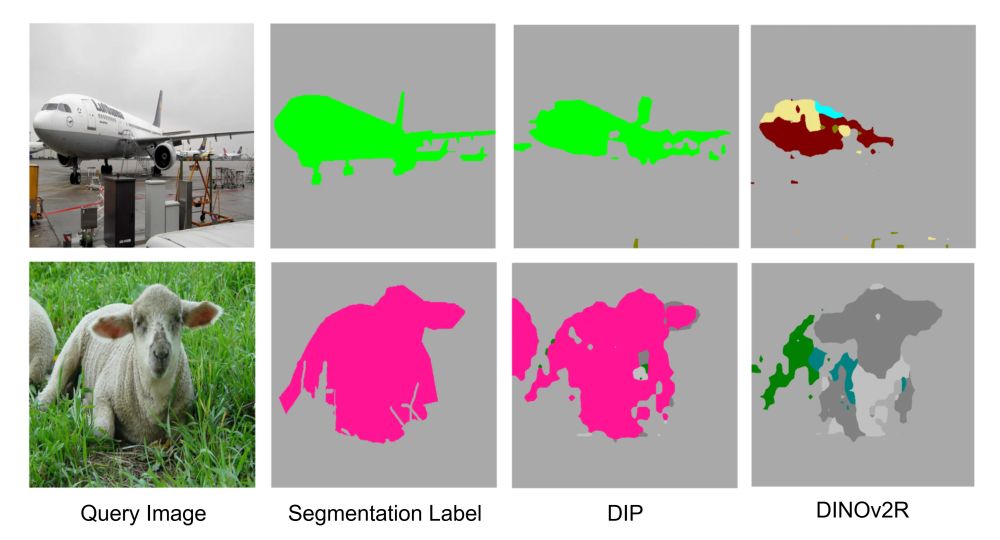
1/n 🚀New paper out - accepted at #ICCV2025!
Introducing DIP: unsupervised post-training that enhances dense features in pretrained ViTs for dense in-context scene understanding
Below: Low-shot in-context semantic segmentation examples. DIP features outperform DINOv2!
Introducing DIP: unsupervised post-training that enhances dense features in pretrained ViTs for dense in-context scene understanding
Below: Low-shot in-context semantic segmentation examples. DIP features outperform DINOv2!
June 25, 2025 at 7:35 PM
How to make your DINOv2 excel at dense in-context scene understanding tasks.
Check out DIP an effective post-training strategy by @ssirko.bsky.social @spyrosgidaris.bsky.social
@vobeckya.bsky.social @abursuc.bsky.social and Nicolas Thome 👇
#iccv2025
Check out DIP an effective post-training strategy by @ssirko.bsky.social @spyrosgidaris.bsky.social
@vobeckya.bsky.social @abursuc.bsky.social and Nicolas Thome 👇
#iccv2025
Reposted by Alexandre Boulch
We just released the code of #LiDPM, go ahead and play with it (and don't forget to star 🤭🤩)!
Training and inference code available, along with the model checkpoint.
Github repo: github.com/astra-vision...
#IV2025
Training and inference code available, along with the model checkpoint.
Github repo: github.com/astra-vision...
#IV2025
June 25, 2025 at 8:05 PM
We just released the code of #LiDPM, go ahead and play with it (and don't forget to star 🤭🤩)!
Training and inference code available, along with the model checkpoint.
Github repo: github.com/astra-vision...
#IV2025
Training and inference code available, along with the model checkpoint.
Github repo: github.com/astra-vision...
#IV2025
Reposted by Alexandre Boulch
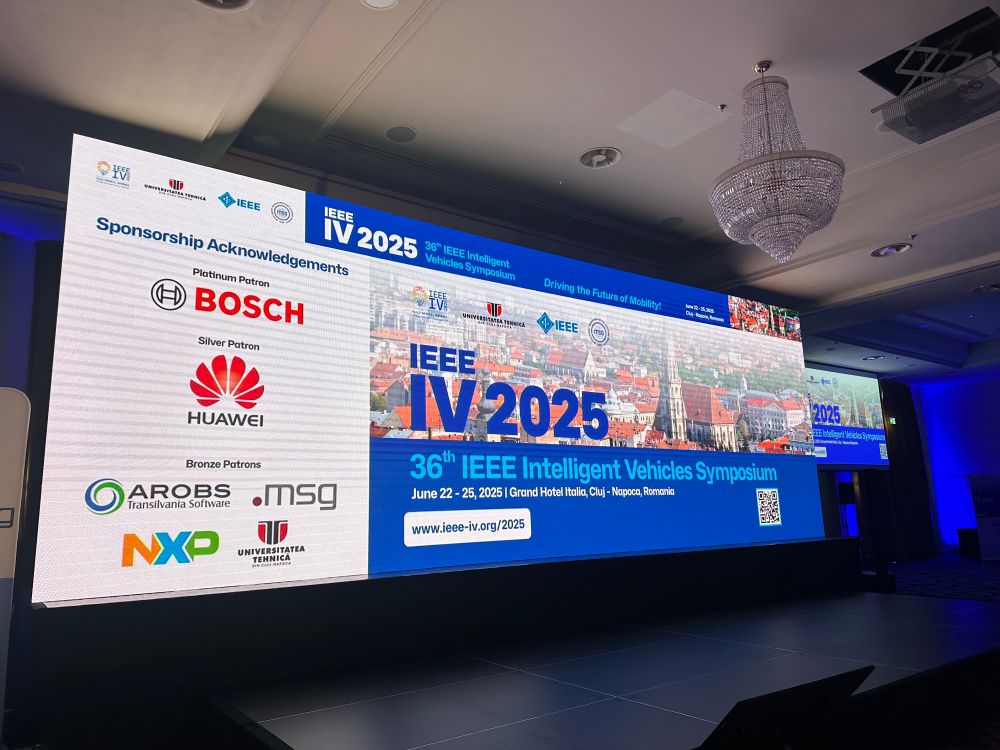
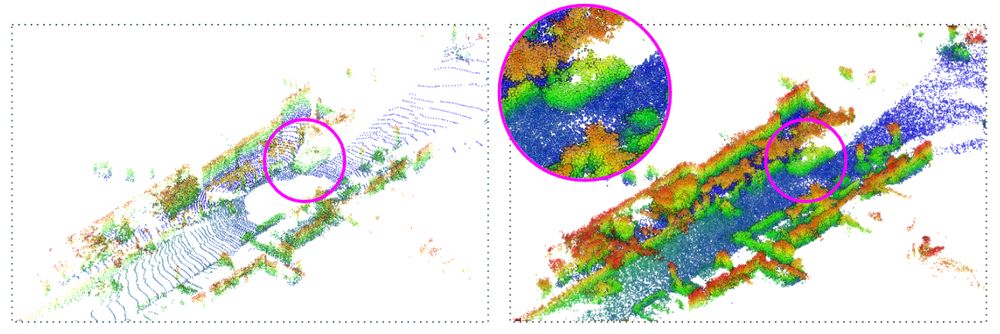
Presenting our project #LiDPM in the afternoon oral session at #IV2025!
Project page: astra-vision.github.io/LiDPM/
w/ @gillespuy.bsky.social, @alexandreboulch.bsky.social, Renaud Marlet, Raoul de Charette
Also, see our poster at 3pm in the Caravaggio room and AMA 😉
Project page: astra-vision.github.io/LiDPM/
w/ @gillespuy.bsky.social, @alexandreboulch.bsky.social, Renaud Marlet, Raoul de Charette
Also, see our poster at 3pm in the Caravaggio room and AMA 😉
June 23, 2025 at 10:12 AM
Presenting our project #LiDPM in the afternoon oral session at #IV2025!
Project page: astra-vision.github.io/LiDPM/
w/ @gillespuy.bsky.social, @alexandreboulch.bsky.social, Renaud Marlet, Raoul de Charette
Also, see our poster at 3pm in the Caravaggio room and AMA 😉
Project page: astra-vision.github.io/LiDPM/
w/ @gillespuy.bsky.social, @alexandreboulch.bsky.social, Renaud Marlet, Raoul de Charette
Also, see our poster at 3pm in the Caravaggio room and AMA 😉
Reposted by Alexandre Boulch
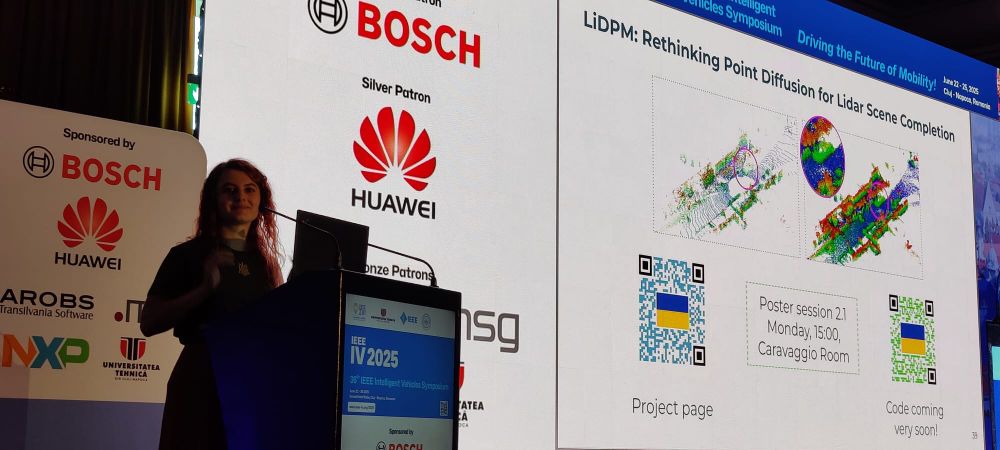
Okay that was stressful 🥲
June 23, 2025 at 11:18 AM
Okay that was stressful 🥲
Reposted by Alexandre Boulch
🚀Thrilled to introduce JAFAR—a lightweight, flexible, plug-and-play module that upsamples features from any Foundation Vision Encoder to any desired output resolution (1/n)
Paper : arxiv.org/abs/2506.11136
Project Page: jafar-upsampler.github.io
Github: github.com/PaulCouairon...
Paper : arxiv.org/abs/2506.11136
Project Page: jafar-upsampler.github.io
Github: github.com/PaulCouairon...
June 16, 2025 at 1:59 PM
🚀Thrilled to introduce JAFAR—a lightweight, flexible, plug-and-play module that upsamples features from any Foundation Vision Encoder to any desired output resolution (1/n)
Paper : arxiv.org/abs/2506.11136
Project Page: jafar-upsampler.github.io
Github: github.com/PaulCouairon...
Paper : arxiv.org/abs/2506.11136
Project Page: jafar-upsampler.github.io
Github: github.com/PaulCouairon...
Reposted by Alexandre Boulch
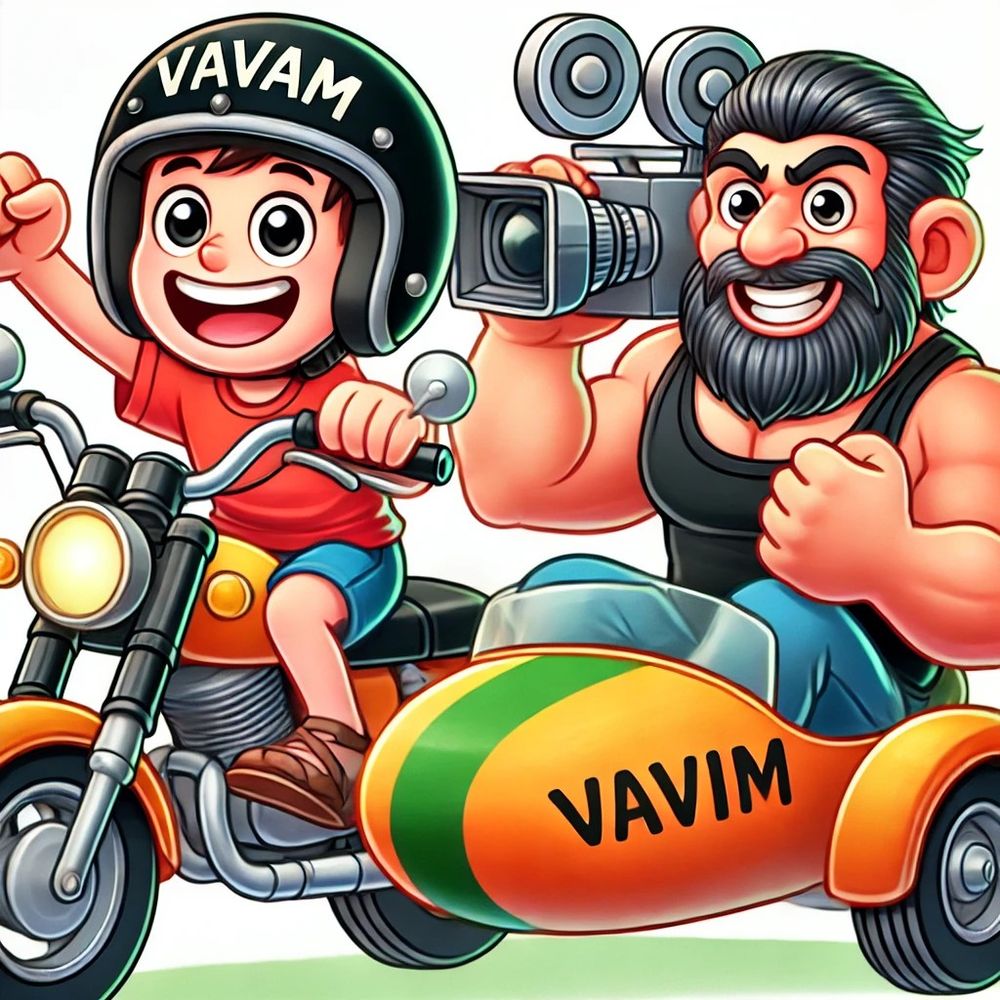
🚗 Ever wondered if an AI model could learn to drive just by watching YouTube? 🎥👀
We trained a 1.2B parameter model on 1,800+ hours of raw driving videos.
No labels. No maps. Just pure observation.
And it works! 🤯
🧵👇 [1/10]
We trained a 1.2B parameter model on 1,800+ hours of raw driving videos.
No labels. No maps. Just pure observation.
And it works! 🤯
🧵👇 [1/10]
February 24, 2025 at 12:53 PM
🚗 Ever wondered if an AI model could learn to drive just by watching YouTube? 🎥👀
We trained a 1.2B parameter model on 1,800+ hours of raw driving videos.
No labels. No maps. Just pure observation.
And it works! 🤯
🧵👇 [1/10]
We trained a 1.2B parameter model on 1,800+ hours of raw driving videos.
No labels. No maps. Just pure observation.
And it works! 🤯
🧵👇 [1/10]
Reposted by Alexandre Boulch

This amazing team ❤️
We've just had our annual gathering to get together and brainstorm on new exciting ideas and projects ahead -- stay tuned!
This is also an excellent occasion to fit all team members in a photo 📸
This is also an excellent occasion to fit all team members in a photo 📸

January 27, 2025 at 5:01 PM
This amazing team ❤️
Reposted by Alexandre Boulch
Check out our new work with @gastruc.bsky.social and @nicaogr.bsky.social and Clément Mallet! The one-stop shop for multimodal Earth Observation 🤩
🤔 What if embedding multimodal EO data was as easy as using a ResNet on images?
Introducing AnySat: one model for any resolution (0.2m–250m), scale (0.3–2600 hectares), and modalities (choose from 11 sensors & time series)!
Try it with just a few lines of code:
Introducing AnySat: one model for any resolution (0.2m–250m), scale (0.3–2600 hectares), and modalities (choose from 11 sensors & time series)!
Try it with just a few lines of code:

December 19, 2024 at 10:52 AM
Check out our new work with @gastruc.bsky.social and @nicaogr.bsky.social and Clément Mallet! The one-stop shop for multimodal Earth Observation 🤩
Reposted by Alexandre Boulch
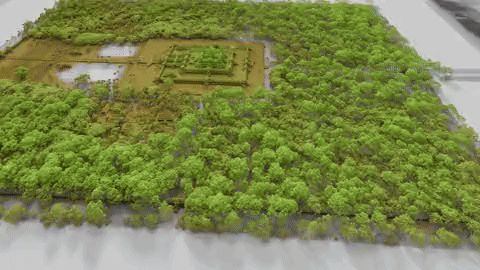
Airborne #LiDAR has revolutionized the study of ancient rainforest civilizations by seeing through dense canopies. Yet archaeologists still annotate their data manually. Introducing Archaeoscape at #NeurIPS2024 —the first deep learning-scale, open-access archaeological dataset🧵👇
December 9, 2024 at 9:55 AM
Airborne #LiDAR has revolutionized the study of ancient rainforest civilizations by seeing through dense canopies. Yet archaeologists still annotate their data manually. Introducing Archaeoscape at #NeurIPS2024 —the first deep learning-scale, open-access archaeological dataset🧵👇
Reposted by Alexandre Boulch

I could easily spend an afternoon looking at the results of this paper: motionmodes.github.io
or this paper: rollingdepth.github.io
or this paper: romosfm.github.io
vision is cool 😎
or this paper: rollingdepth.github.io
or this paper: romosfm.github.io
vision is cool 😎
Motion Modes: What Could Happen Next?
Motion Modes is the first training-free method to generate multiple plausible yet distinct motions for a given object, disentangled from the motion of other objects, camera and other scene changes, fr...
motionmodes.github.io
December 5, 2024 at 11:23 AM
I could easily spend an afternoon looking at the results of this paper: motionmodes.github.io
or this paper: rollingdepth.github.io
or this paper: romosfm.github.io
vision is cool 😎
or this paper: rollingdepth.github.io
or this paper: romosfm.github.io
vision is cool 😎
At INRIA Paris for @anhquancao.bsky.social for his PhD defense. Subject is Learning Semantics and Geometry for Scene Understanding.
anhquancao.github.io
anhquancao.github.io

December 5, 2024 at 1:26 PM
At INRIA Paris for @anhquancao.bsky.social for his PhD defense. Subject is Learning Semantics and Geometry for Scene Understanding.
anhquancao.github.io
anhquancao.github.io