



Alberto Marina
@albertomarina.bsky.social
Structural biologist working in microbial communication, enjoying the Valencia food and weather and suffering for his football team
Reposted by Alberto Marina

🦠 La #AMR es ya una amenaza global del presente. Frente a problemas de dicha magnitud es necesaria una intervención colaborativa. Pero, ¿qué acciones contribuyen? (1/3) 👇

December 10, 2025 at 7:52 PM
🦠 La #AMR es ya una amenaza global del presente. Frente a problemas de dicha magnitud es necesaria una intervención colaborativa. Pero, ¿qué acciones contribuyen? (1/3) 👇
Reposted by Alberto Marina
Animaros a solicitarlo, por ahora hay muy pocos candidatos!!!
¡Abierta la convocatoria de los Premios de Investigación para Futuros Investigadores 2025! Si eres estudiante de bachillerato, TFG o TFM, te apasiona la ciencia y has trabajado en resistencia a antibióticos, participa en los premios CSIC-AEAC 👇
www.conexion-amr.csic.es/premios-de-i...
www.conexion-amr.csic.es/premios-de-i...
Premios de Investigación para futuros investigadores 2025 | Conexión AMR
La Conexión Resistencia Antimicrobianos CSIC es una plataforma que reúne a las principales líneas de investigación en resistencia a antimicrobianos del Consejo Superior de Investigaciones Científicas. Su trabajo se centra en siente áreas temáticas: Salud humana, ganadería, alimentación, medio ambiente, sociedad, nanotecnología y biocomputación, modelización e inteligencia artificial. Actualmente contamos con 94 grupos de investigación (255 investigadores/as), que estudian desde los procesos de generación de resistencia a antibióticos, el desarrollo de nuevos antimicrobianos, hasta el impacto en la sociedad y nuevas estrategias para combatir la resistencia a los antibióticos y garantizar su eficacia en el futuro.
www.conexion-amr.csic.es
December 11, 2025 at 12:23 PM
Animaros a solicitarlo, por ahora hay muy pocos candidatos!!!
Reposted by Alberto Marina
Excited to share our latest work with @albertomarina.bsky.social and @avigdoreldar.bsky.social labs, where we decipher the mechanism by which SPβ-like phages sense the SOS response to control the lysis–lysogeny switch. www.biorxiv.org/content/10.1...

An unprecedented DNA recognition–mimicry switch governs induction in arbitrium phages
Temperate phages integrate multiple information sources to regulate lysis-lysogeny transitions. SPBeta-like phages use arbitrium signalling and DNA damage to control repressor activity during lytic in...
www.biorxiv.org
December 2, 2025 at 9:31 AM
Excited to share our latest work with @albertomarina.bsky.social and @avigdoreldar.bsky.social labs, where we decipher the mechanism by which SPβ-like phages sense the SOS response to control the lysis–lysogeny switch. www.biorxiv.org/content/10.1...
Reposted by Alberto Marina
Con un acto académico de nivel internacional en el que pudimos escuchar, de la mano de importantes investigadores, cómo se gestó el @ibv-csic.bsky.social, a Vicente Rubio, su primer director y fundador y a Susana Rodríguez, su actual directora y primera mujer directora del instituto


December 1, 2025 at 1:53 PM
Con un acto académico de nivel internacional en el que pudimos escuchar, de la mano de importantes investigadores, cómo se gestó el @ibv-csic.bsky.social, a Vicente Rubio, su primer director y fundador y a Susana Rodríguez, su actual directora y primera mujer directora del instituto
Reposted by Alberto Marina
Ana María Cuervo, la investigadora que busca que la limpieza celular no se deteriore cuando envejecemos, recibida ayer en el @ibv-csic.bsky.social, en la celebración de su 25 aniversario
@dicv.csic.es @csic.es
cadenaser.com/comunitat-va... vía @radiovalencia.bsky.social
@dicv.csic.es @csic.es
cadenaser.com/comunitat-va... vía @radiovalencia.bsky.social

Ana María Cuervo, la investigadora que busca que la limpieza celular no se deteriore cuando envejecemos
Una de las mejores expertas en este campo ofrece algunas claves para mejorar nuestra salud | Cadena SER
cadenaser.com
December 1, 2025 at 1:53 PM
Ana María Cuervo, la investigadora que busca que la limpieza celular no se deteriore cuando envejecemos, recibida ayer en el @ibv-csic.bsky.social, en la celebración de su 25 aniversario
@dicv.csic.es @csic.es
cadenaser.com/comunitat-va... vía @radiovalencia.bsky.social
@dicv.csic.es @csic.es
cadenaser.com/comunitat-va... vía @radiovalencia.bsky.social
Reposted by Alberto Marina

Capsule diversity limits #phage host range by affecting receptor-binding protein (RBP) interactions in capsulated #bacteria. @pilardomingoc.bsky.social &co show that generalist phages evolve host range via RBP mutation & recombination, but specialists remain stable @plosbiology.org 🧪 plos.io/48nvOqY

November 28, 2025 at 5:30 PM
Capsule diversity limits #phage host range by affecting receptor-binding protein (RBP) interactions in capsulated #bacteria. @pilardomingoc.bsky.social &co show that generalist phages evolve host range via RBP mutation & recombination, but specialists remain stable @plosbiology.org 🧪 plos.io/48nvOqY
Reposted by Alberto Marina
Laura Díaz Sáez explicó las actividades que está realizando el Grupo de Trabajo de Difusión (Daniel López, Juan Hermoso, Rafael Molina, Lara Díaz, Sara Hernando-Amado, Jade Rivera, Alberto Marina, Ana de la Torre y Scienseed). Y participaron miembros de otras Conexiones del @CSIC.


November 25, 2025 at 11:02 AM
Laura Díaz Sáez explicó las actividades que está realizando el Grupo de Trabajo de Difusión (Daniel López, Juan Hermoso, Rafael Molina, Lara Díaz, Sara Hernando-Amado, Jade Rivera, Alberto Marina, Ana de la Torre y Scienseed). Y participaron miembros de otras Conexiones del @CSIC.
Reposted by Alberto Marina
La otra mesa trató sobre "Adquisición y diseminación de resistencias a los antibióticos: del ecosistema natural al microbioma humano" (Junkal Gramendia, Jaime Villaverde, Pilar Truchado, Carol Ewbank, Francesc Coll, Sara Hernando-Amado, Carles Ubeda).


November 25, 2025 at 10:51 AM
La otra mesa trató sobre "Adquisición y diseminación de resistencias a los antibióticos: del ecosistema natural al microbioma humano" (Junkal Gramendia, Jaime Villaverde, Pilar Truchado, Carol Ewbank, Francesc Coll, Sara Hernando-Amado, Carles Ubeda).
Reposted by Alberto Marina

👏 Dos proyectos del #CNB seleccionados en la convocatoria de Investigación en Salud 2025 de la @caixaresearch.bsky.social
Ambos abordan un gran reto global: la resistencia a los antimicrobianos.
#HealthResearch #FundaciónlaCaixa
@sanmillan.bsky.social @jaescudero.bsky.social
f.mtr.cool/jejatlbssz
Ambos abordan un gran reto global: la resistencia a los antimicrobianos.
#HealthResearch #FundaciónlaCaixa
@sanmillan.bsky.social @jaescudero.bsky.social
f.mtr.cool/jejatlbssz

November 20, 2025 at 11:26 AM
👏 Dos proyectos del #CNB seleccionados en la convocatoria de Investigación en Salud 2025 de la @caixaresearch.bsky.social
Ambos abordan un gran reto global: la resistencia a los antimicrobianos.
#HealthResearch #FundaciónlaCaixa
@sanmillan.bsky.social @jaescudero.bsky.social
f.mtr.cool/jejatlbssz
Ambos abordan un gran reto global: la resistencia a los antimicrobianos.
#HealthResearch #FundaciónlaCaixa
@sanmillan.bsky.social @jaescudero.bsky.social
f.mtr.cool/jejatlbssz
Reposted by Alberto Marina
Hoy hemos celebrado la Asamblea Anual de la Conexión Resistencias a Antimicrobianos del @csic.es donde nos hemos reunido para hablar sobre este problema de salud y buscar soluciones. Una conexión liderada por @albertomarina.bsky.social y Ana de la Torre. Síguenos para estar informado!


November 24, 2025 at 6:48 PM
Hoy hemos celebrado la Asamblea Anual de la Conexión Resistencias a Antimicrobianos del @csic.es donde nos hemos reunido para hablar sobre este problema de salud y buscar soluciones. Una conexión liderada por @albertomarina.bsky.social y Ana de la Torre. Síguenos para estar informado!
Reposted by Alberto Marina
🦠 La resistencia a los antimicrobianos no solo afecta a bacterias, también a hongos y protozoos, que se propagan rápido y dificultan el tratamiento de infecciones graves. (1/3)

November 24, 2025 at 10:30 AM
🦠 La resistencia a los antimicrobianos no solo afecta a bacterias, también a hongos y protozoos, que se propagan rápido y dificultan el tratamiento de infecciones graves. (1/3)
Reposted by Alberto Marina

1/ Antibiotic resistance causes ➕ than 1 M deaths each year and understanding why this happens is key to stopping it.
With #HealthResearch support, @sanmillan.bsky.social is investigating how different plasmids (DNA fragments) coexist in bacteria and confer resistance.
https://tinyurl.com/3bysv6cr
With #HealthResearch support, @sanmillan.bsky.social is investigating how different plasmids (DNA fragments) coexist in bacteria and confer resistance.
https://tinyurl.com/3bysv6cr

November 20, 2025 at 11:03 AM
1/ Antibiotic resistance causes ➕ than 1 M deaths each year and understanding why this happens is key to stopping it.
With #HealthResearch support, @sanmillan.bsky.social is investigating how different plasmids (DNA fragments) coexist in bacteria and confer resistance.
https://tinyurl.com/3bysv6cr
With #HealthResearch support, @sanmillan.bsky.social is investigating how different plasmids (DNA fragments) coexist in bacteria and confer resistance.
https://tinyurl.com/3bysv6cr
Reposted by Alberto Marina
Esto sugiere que las bacteriocinas son herramientas clave para la virulencia y resistencia, y entenderlas podría ser fundamental para combatir infecciones resistentes a antibióticos. (3/3)
Lee el estudio completo: doi.org/10.1038/s414...
#CSIC #AntibioticResistance #OneHealth #AMR #SaludGlobal
Lee el estudio completo: doi.org/10.1038/s414...
#CSIC #AntibioticResistance #OneHealth #AMR #SaludGlobal
Bacterial warfare is associated with virulence and antimicrobial resistance - Nature Communications
Bacteria employ a range of competition systems that deliver toxins to inhibit competing strains. This study shows that these systems are particularly important for the ecology of virulent and…
doi.org
November 18, 2025 at 10:30 AM
Esto sugiere que las bacteriocinas son herramientas clave para la virulencia y resistencia, y entenderlas podría ser fundamental para combatir infecciones resistentes a antibióticos. (3/3)
Lee el estudio completo: doi.org/10.1038/s414...
#CSIC #AntibioticResistance #OneHealth #AMR #SaludGlobal
Lee el estudio completo: doi.org/10.1038/s414...
#CSIC #AntibioticResistance #OneHealth #AMR #SaludGlobal
Reposted by Alberto Marina
Abierta la convocatoria del Programa de Movilidad Conexión-AMR 2025–2026. El CSIC impulsa esta iniciativa para fomentar la colaboración e intercambio científico entre grupos de investigación en resistencia a los antimicrobianos:
www.conexion-amr.csic.es/premios-de-i...
www.conexion-amr.csic.es/premios-de-i...
Premios de Investigación para futuros investigadores 2025 | Conexión AMR
La Conexión Resistencia Antimicrobianos CSIC es una plataforma que reúne a las principales líneas de investigación en resistencia a antimicrobianos del Consejo Superior de Investigaciones Científicas. Su trabajo se centra en siente áreas temáticas: Salud humana, ganadería, alimentación, medio ambiente, sociedad, nanotecnología y biocomputación, modelización e inteligencia artificial. Actualmente contamos con 94 grupos de investigación (255 investigadores/as), que estudian desde los procesos de generación de resistencia a antibióticos, el desarrollo de nuevos antimicrobianos, hasta el impacto en la sociedad y nuevas estrategias para combatir la resistencia a los antibióticos y garantizar su eficacia en el futuro.
www.conexion-amr.csic.es
November 3, 2025 at 2:49 PM
Abierta la convocatoria del Programa de Movilidad Conexión-AMR 2025–2026. El CSIC impulsa esta iniciativa para fomentar la colaboración e intercambio científico entre grupos de investigación en resistencia a los antimicrobianos:
www.conexion-amr.csic.es/premios-de-i...
www.conexion-amr.csic.es/premios-de-i...
Reposted by Alberto Marina
La responsabilidad es de todos.
Usar antibióticos solo cuando lo indique un profesional y completar siempre el tratamiento ayuda a frenar la resistencia y protege la salud de todos.
(2/3)
Usar antibióticos solo cuando lo indique un profesional y completar siempre el tratamiento ayuda a frenar la resistencia y protege la salud de todos.
(2/3)
October 17, 2025 at 3:06 PM
La responsabilidad es de todos.
Usar antibióticos solo cuando lo indique un profesional y completar siempre el tratamiento ayuda a frenar la resistencia y protege la salud de todos.
(2/3)
Usar antibióticos solo cuando lo indique un profesional y completar siempre el tratamiento ayuda a frenar la resistencia y protege la salud de todos.
(2/3)
Reposted by Alberto Marina
October 22, 2025 at 11:08 AM
Reposted by Alberto Marina
Our latest work reveals that arbitrium phages cross-communicate across species! These tiny viruses “listen” to signals from others, coordinating lysis-lysogeny decisions across species.
Original idea from @albertomarina.bsky.social and, as usual, he was right.
www.biorxiv.org/content/10.1...
Original idea from @albertomarina.bsky.social and, as usual, he was right.
www.biorxiv.org/content/10.1...
Phages communicate across species to shape microbial ecosystems
Arbitrium is a communication system that helps bacteriophages decide between lysis and lysogeny via secreted peptides. In arbitrium, the AimP peptide binds its cognate AimR receptor to repress aimX ex...
www.biorxiv.org
October 14, 2025 at 1:36 PM
Our latest work reveals that arbitrium phages cross-communicate across species! These tiny viruses “listen” to signals from others, coordinating lysis-lysogeny decisions across species.
Original idea from @albertomarina.bsky.social and, as usual, he was right.
www.biorxiv.org/content/10.1...
Original idea from @albertomarina.bsky.social and, as usual, he was right.
www.biorxiv.org/content/10.1...
Reposted by Alberto Marina
La perspectiva One Health reconoce la interconexión entre la salud humana, animal y ambiental. Solo así podremos dar una respuesta eficaz, coordinada y sostenible al reto que plantea la AMR.
¿Te interesa?
¡Síguenos para mantenerte al día de todas las novedades! 🦠 (3/3)
¿Te interesa?
¡Síguenos para mantenerte al día de todas las novedades! 🦠 (3/3)
September 19, 2025 at 8:14 AM
La perspectiva One Health reconoce la interconexión entre la salud humana, animal y ambiental. Solo así podremos dar una respuesta eficaz, coordinada y sostenible al reto que plantea la AMR.
¿Te interesa?
¡Síguenos para mantenerte al día de todas las novedades! 🦠 (3/3)
¿Te interesa?
¡Síguenos para mantenerte al día de todas las novedades! 🦠 (3/3)
Reposted by Alberto Marina
🦠 La rápida aparición de bacterias multirresistentes y la falta de nuevos antibióticos han creado un escenario crítico. En la UE, ya causan 33.000 muertes al año, y para 2050 podrían ser 39 millones a nivel global 🌍
Desde el CSIC buscamos soluciones a este reto 👇 (2/3)
Desde el CSIC buscamos soluciones a este reto 👇 (2/3)
September 26, 2025 at 12:14 PM
🦠 La rápida aparición de bacterias multirresistentes y la falta de nuevos antibióticos han creado un escenario crítico. En la UE, ya causan 33.000 muertes al año, y para 2050 podrían ser 39 millones a nivel global 🌍
Desde el CSIC buscamos soluciones a este reto 👇 (2/3)
Desde el CSIC buscamos soluciones a este reto 👇 (2/3)
Reposted by Alberto Marina
La Conexión Resistencia a Antimicrobianos del @csic.es nace como una iniciativa para reunir experiencia científica, visión multidisciplinar y soluciones innovadoras frente a esta amenaza global (3/3)
#CSIC #AntibioticResistance #OneHealth #AMR #SaludGlobal
#CSIC #AntibioticResistance #OneHealth #AMR #SaludGlobal
September 26, 2025 at 12:15 PM
La Conexión Resistencia a Antimicrobianos del @csic.es nace como una iniciativa para reunir experiencia científica, visión multidisciplinar y soluciones innovadoras frente a esta amenaza global (3/3)
#CSIC #AntibioticResistance #OneHealth #AMR #SaludGlobal
#CSIC #AntibioticResistance #OneHealth #AMR #SaludGlobal
Reposted by Alberto Marina
💊 Los antimicrobianos revolucionaron la medicina: antes de su descubrimiento, infecciones como la neumonía, tuberculosis o una simple herida podían ser mortales. Gracias a ellos, la esperanza de vida superó los 80 años en el siglo XX. Pero su efectividad está en peligro 👇 (1/3)

September 26, 2025 at 12:13 PM
💊 Los antimicrobianos revolucionaron la medicina: antes de su descubrimiento, infecciones como la neumonía, tuberculosis o una simple herida podían ser mortales. Gracias a ellos, la esperanza de vida superó los 80 años en el siglo XX. Pero su efectividad está en peligro 👇 (1/3)
Reposted by Alberto Marina
Thrilled to share our two latest papers with the @tcostalab.bsky.social
lab! In the first, we uncover a new mechanism of satellite transfer: cf-PICIs hijack tails from diverse phages to spread across species.
@imperialcollegeldn.bsky.social
www.cell.com/cell/fulltex...
lab! In the first, we uncover a new mechanism of satellite transfer: cf-PICIs hijack tails from diverse phages to spread across species.
@imperialcollegeldn.bsky.social
www.cell.com/cell/fulltex...

Chimeric infective particles expand species boundaries in phage-inducible chromosomal island mobilization
Capsid-forming PICIs (cf-PICIs) produce their own capsids and exploit phage tails
from unrelated species to transfer their DNA across bacterial hosts. This tail piracy
enables broad dissemination and ...
www.cell.com
September 9, 2025 at 5:05 PM
Thrilled to share our two latest papers with the @tcostalab.bsky.social
lab! In the first, we uncover a new mechanism of satellite transfer: cf-PICIs hijack tails from diverse phages to spread across species.
@imperialcollegeldn.bsky.social
www.cell.com/cell/fulltex...
lab! In the first, we uncover a new mechanism of satellite transfer: cf-PICIs hijack tails from diverse phages to spread across species.
@imperialcollegeldn.bsky.social
www.cell.com/cell/fulltex...
Reposted by Alberto Marina
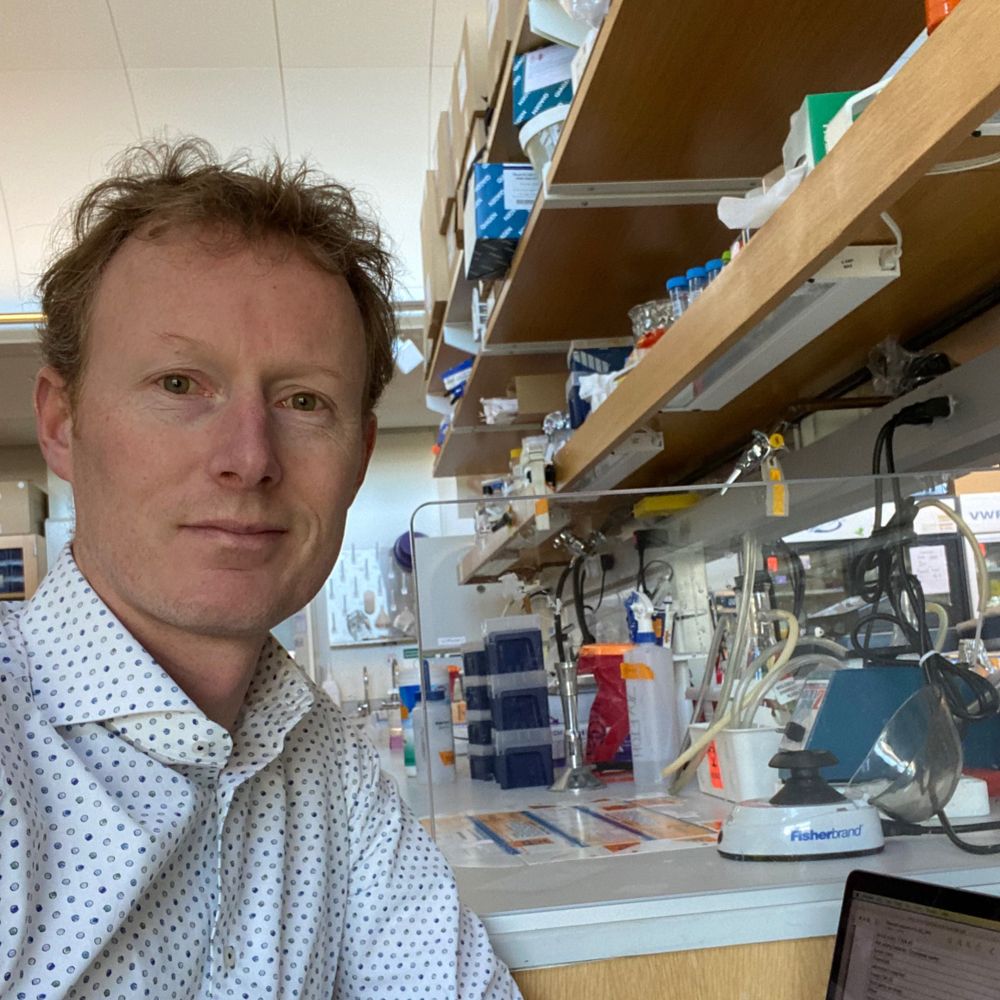
New tenure track assistant professor position in molecular microbiology in our department @dmf-unil.bsky.social @unil.bsky.social! We are casting a wide net for an experimental molecular microbiologist. Apply here: wwwfbm.unil.ch/releve/appli...
DMF: Tenure Track Assistant Professor towards Associate Professor in Molecular Microbiology - Site des postulations FBM
wwwfbm.unil.ch
June 10, 2025 at 1:53 PM
New tenure track assistant professor position in molecular microbiology in our department @dmf-unil.bsky.social @unil.bsky.social! We are casting a wide net for an experimental molecular microbiologist. Apply here: wwwfbm.unil.ch/releve/appli...
Reposted by Alberto Marina

The CEU Cardenal Herrera University hosted the "II Forum of Virologists in Valencia", organized by Sara Landeras Bueno (CEU UCH) and by I2SysBio researcher Ron Geller @rongellerlab.bsky.social.
More information: 🌐 medios.uchceu.es/actualidad-c...
More information: 🌐 medios.uchceu.es/actualidad-c...


June 11, 2025 at 9:32 AM
The CEU Cardenal Herrera University hosted the "II Forum of Virologists in Valencia", organized by Sara Landeras Bueno (CEU UCH) and by I2SysBio researcher Ron Geller @rongellerlab.bsky.social.
More information: 🌐 medios.uchceu.es/actualidad-c...
More information: 🌐 medios.uchceu.es/actualidad-c...
Reposted by Alberto Marina

🧪
Finally out after peer review, our work showing that "Mobile #Integrons carry Phage Defense Systems" is now published in Science 🎉
Short 🧵
www.science.org/doi/10.1126/...
Finally out after peer review, our work showing that "Mobile #Integrons carry Phage Defense Systems" is now published in Science 🎉
Short 🧵
www.science.org/doi/10.1126/...

Mobile integrons encode phage defense systems
Integrons are bacterial genetic elements that capture, stockpile, and modulate the expression of genes encoded in integron cassettes. Mobile integrons (MIs) are borne on plasmids, acting as a vehicle ...
www.science.org
May 8, 2025 at 8:27 PM
🧪
Finally out after peer review, our work showing that "Mobile #Integrons carry Phage Defense Systems" is now published in Science 🎉
Short 🧵
www.science.org/doi/10.1126/...
Finally out after peer review, our work showing that "Mobile #Integrons carry Phage Defense Systems" is now published in Science 🎉
Short 🧵
www.science.org/doi/10.1126/...