



Ana Fernández Galliano
@aferdez.bsky.social
Cornell Microbio PhD student studying peptidoglycan degradation dynamics in the Dörr lab | UWaterloo Biochem '23 alum
Reposted by Ana Fernández Galliano
WHO reports 1 in 6 bacterial infections worldwide are antibiotic-resistant, with resistance rising sharply since 2018. Gram-negative bacteria like E. coli and K. pneumoniae pose the biggest threat. Action on #AMR surveillance and responsible antibiotic use is needed.
www.who.int/news/item/13...
www.who.int/news/item/13...
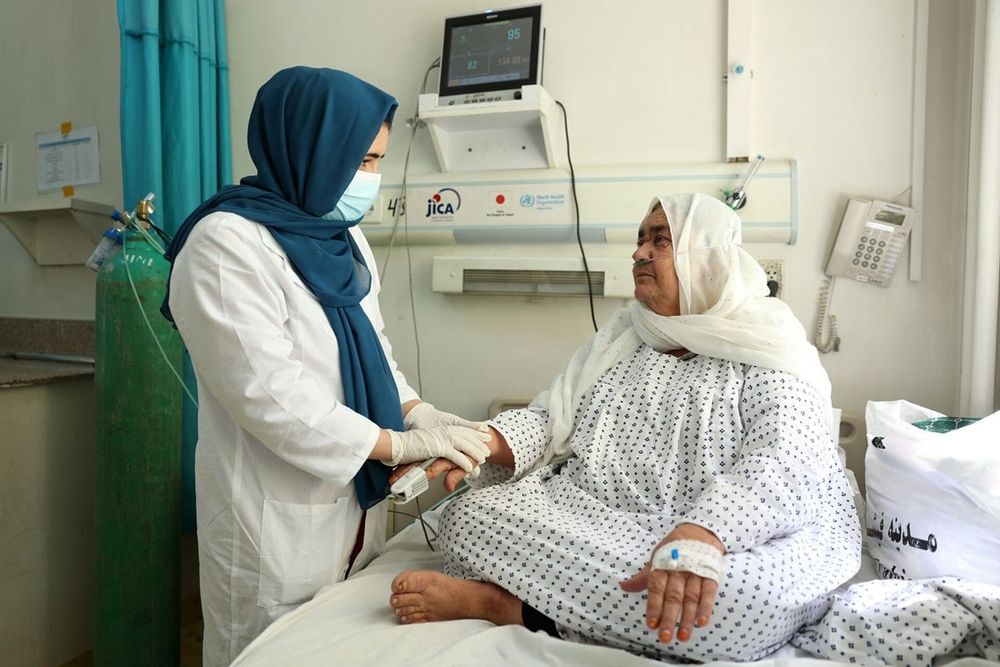
WHO warns of widespread resistance to common antibiotics worldwide
One in six laboratory-confirmed bacterial infections causing common infections in people worldwide in 2023 were resistant to antibiotic treatments, according to a new World Health Organization (WHO) r...
www.who.int
October 13, 2025 at 11:09 AM
WHO reports 1 in 6 bacterial infections worldwide are antibiotic-resistant, with resistance rising sharply since 2018. Gram-negative bacteria like E. coli and K. pneumoniae pose the biggest threat. Action on #AMR surveillance and responsible antibiotic use is needed.
www.who.int/news/item/13...
www.who.int/news/item/13...
Reposted by Ana Fernández Galliano
Bacterial cell envelope-targeting antibiotics www.nature.com/articles/s41... #jcampubs
October 13, 2025 at 2:12 PM
Bacterial cell envelope-targeting antibiotics www.nature.com/articles/s41... #jcampubs
Reposted by Ana Fernández Galliano
In a new opinion piece in @statnews.com ASM member Sarah Stanley, Ph.D., emphasizes that safe gain-of-function research is essential to identifying new treatments for diseases like tuberculosis—yet the NIH has imposed unfounded stops: www.statnews.com/2025/10/06/g...

The NIH ordered me to stop my ‘dangerous’ gain-of-function research. It isn’t dangerous at all
Safe gain-of-function research is necessary to identify new treatments for diseases like for tuberculosis — but the NIH has imposed unfounded stops.
www.statnews.com
October 8, 2025 at 3:21 PM
In a new opinion piece in @statnews.com ASM member Sarah Stanley, Ph.D., emphasizes that safe gain-of-function research is essential to identifying new treatments for diseases like tuberculosis—yet the NIH has imposed unfounded stops: www.statnews.com/2025/10/06/g...
Reposted by Ana Fernández Galliano
The Peters lab is looking for a new team member! The role transposons play in evolution, basic mechanisms regulating transposition, and applying transposons as tools for genome modification with a special focus on guide RNA-directed transposition. cornell.wd1.myworkdayjobs.com/CornellCaree...

Technician III - Department of Microbiology
Position Summary This position will be in the lab of Dr. Joseph E. Peters in the Department of Microbiology. Research in the Peters’ lab broadly involves deciphering mechanisms in genome stability and...
cornell.wd1.myworkdayjobs.com
October 3, 2025 at 1:01 PM
The Peters lab is looking for a new team member! The role transposons play in evolution, basic mechanisms regulating transposition, and applying transposons as tools for genome modification with a special focus on guide RNA-directed transposition. cornell.wd1.myworkdayjobs.com/CornellCaree...
Reposted by Ana Fernández Galliano
WE'RE HIRING: Cornell University’s Weill Institute for Cell & Molecular Biology and the Department of Molecular Biology & Genetics are seeking a tenure-track Assistant Professor whose research integrates cell and molecular biology with an evolutionary perspective.
apps.hr.cornell.edu/recruiting/f...
apps.hr.cornell.edu/recruiting/f...
Academic Career Opportunities
apps.hr.cornell.edu
September 22, 2025 at 3:55 PM
WE'RE HIRING: Cornell University’s Weill Institute for Cell & Molecular Biology and the Department of Molecular Biology & Genetics are seeking a tenure-track Assistant Professor whose research integrates cell and molecular biology with an evolutionary perspective.
apps.hr.cornell.edu/recruiting/f...
apps.hr.cornell.edu/recruiting/f...
Reposted by Ana Fernández Galliano
Research led by @weillinstitute.bsky.social Doerr Lab
postdoctoral fellow Megan Keller reveals how sugar-phosphate buildup disrupts cell wall synthesis, offering clues to fight drug resistance. news.cornell.edu/stories/2025...
postdoctoral fellow Megan Keller reveals how sugar-phosphate buildup disrupts cell wall synthesis, offering clues to fight drug resistance. news.cornell.edu/stories/2025...

Cornell biologists expose bacteria’s hidden Achilles’ heel | Cornell Chronicle
Helping to combat the rising threat of antibiotic resistance, Cornell biologists have identified a surprising mechanism that weakens bacteria from within—an insight that could guide the next generatio...
news.cornell.edu
September 5, 2025 at 4:46 PM
Research led by @weillinstitute.bsky.social Doerr Lab
postdoctoral fellow Megan Keller reveals how sugar-phosphate buildup disrupts cell wall synthesis, offering clues to fight drug resistance. news.cornell.edu/stories/2025...
postdoctoral fellow Megan Keller reveals how sugar-phosphate buildup disrupts cell wall synthesis, offering clues to fight drug resistance. news.cornell.edu/stories/2025...
Reposted by Ana Fernández Galliano
Metal ions are universally required for life, and many of the foundational principles of metal homeostasis have emerged from studies of microbial systems. In this review, I provide a introductory overview targeted to those new to the field.
#MicroSky #Metals
rdcu.be/eycU2
#MicroSky #Metals
rdcu.be/eycU2
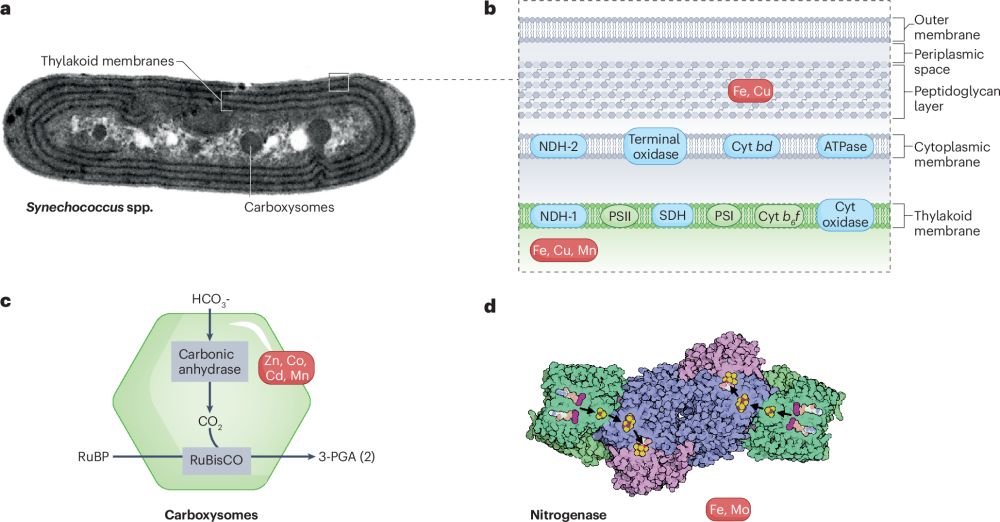
Microbial metal physiology: ions to ecosystems
Nature Reviews Microbiology - Metal ions are required for all cells, and their homeostasis relies on ancient mechanisms that facilitate their import, distribution and storage. In this Review,...
rdcu.be
July 28, 2025 at 5:08 PM
Metal ions are universally required for life, and many of the foundational principles of metal homeostasis have emerged from studies of microbial systems. In this review, I provide a introductory overview targeted to those new to the field.
#MicroSky #Metals
rdcu.be/eycU2
#MicroSky #Metals
rdcu.be/eycU2
Reposted by Ana Fernández Galliano
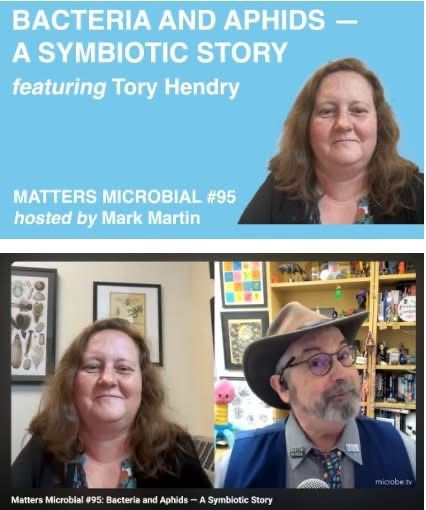
Time for Episode 95 of #MattersMicrobial! This time, Dr. Tory Hendry of Cornell University joins the #QualityQuorum to discuss aphids, symbiosis, and fluorescent bacteria. Please spread the #GoodMicrobialWord? microbe.tv
youtu.be/i9xoWApANNM?...
youtu.be/i9xoWApANNM?...
June 13, 2025 at 4:28 PM
Time for Episode 95 of #MattersMicrobial! This time, Dr. Tory Hendry of Cornell University joins the #QualityQuorum to discuss aphids, symbiosis, and fluorescent bacteria. Please spread the #GoodMicrobialWord? microbe.tv
youtu.be/i9xoWApANNM?...
youtu.be/i9xoWApANNM?...
Reposted by Ana Fernández Galliano
A call for the U.S. to continue investing in science: #ASMJournals Editors in Chief discuss the U.S. scientific research enterprise and provide evidence and arguments the ASM community can use to advocate for science. Read the editorial: journals.asm.org/doi/10.1128/...

A call for the United States to continue investing in science | mBio
The U.S. life science research mission is critical not only to human health and understanding the natural world but also to agriculture and food production, technological innovations, socioeconomic progress, and our national defense and leadership worldwide. A 2025 Research!America survey reveals that 92% of Americans want government to actively work to promote medical progress, in part by funding infectious and chronic disease research. Why? Because biomedical research saves lives, prevents suffering, and increases quality of life for not only Americans but for people throughout the world. While less well appreciated, science also drives enormous economic growth. Indeed, historically there has been widespread bipartisan support for biomedical funding by the federal government. Below we discuss the U.S. scientific research enterprise and provide evidence and arguments we hope the ASM community can use to advocate for science.
journals.asm.org
February 27, 2025 at 7:26 PM
A call for the U.S. to continue investing in science: #ASMJournals Editors in Chief discuss the U.S. scientific research enterprise and provide evidence and arguments the ASM community can use to advocate for science. Read the editorial: journals.asm.org/doi/10.1128/...
Reposted by Ana Fernández Galliano
Nice review by Gabriel Torrens and Felipe Cava (not on bsky yet) about mechanisms for peptidoglycan modification
#Microsky 🦠🧫
portlandpress.com/biochemsoctr...
#Microsky 🦠🧫
portlandpress.com/biochemsoctr...

Mechanisms conferring bacterial cell wall variability and adaptivity
The bacterial cell wall, a sophisticated and dynamic structure predominantly composed of peptidoglycan (PG), plays a pivotal role in bacterial survival and adaptation. Bacteria actively modify their c...
portlandpress.com
November 25, 2024 at 3:42 PM
Nice review by Gabriel Torrens and Felipe Cava (not on bsky yet) about mechanisms for peptidoglycan modification
#Microsky 🦠🧫
portlandpress.com/biochemsoctr...
#Microsky 🦠🧫
portlandpress.com/biochemsoctr...