



Yi-Jyun Luo
@yjluo.bsky.social
Evolutionary biologist at Academia Sinica, Taiwan. We study the evolutionary genomics of marine invertebrates and use sequencing approaches to explore their biodiversity. More at: https://sgel.biodiv.tw/
Pinned
Yi-Jyun Luo
@yjluo.bsky.social
· Nov 7

Pleased to share our latest paper led by @tomlewin.bsky.social, now out in @currentbiology.bsky.social! We present the first chromosome-level genome of a phoronid and show that shared chromosomal fusions unite phoronids and bryozoans as sister groups.
www.cell.com/current-biol...
www.cell.com/current-biol...
Reposted by Yi-Jyun Luo

Registration now open for @embo.org workshop on the evolution of biological interactions on April 24 - 27, 2026! Come join us in Taipei, Taiwan to see how interactions shaped the genomes of various organisms and meeting people from across the globe. Info: meetings.embo.org/event/26-bio...

January 7, 2026 at 1:15 AM
Registration now open for @embo.org workshop on the evolution of biological interactions on April 24 - 27, 2026! Come join us in Taipei, Taiwan to see how interactions shaped the genomes of various organisms and meeting people from across the globe. Info: meetings.embo.org/event/26-bio...
Happy New Year! あけましておめでとうございます!新年快樂!Feliz Año Nuevo! Manigong Bagong Taon!
The SymGenoEvo Lab wishes everyone a wonderful New Year!
The SymGenoEvo Lab wishes everyone a wonderful New Year!
December 31, 2025 at 5:42 PM
Happy New Year! あけましておめでとうございます!新年快樂!Feliz Año Nuevo! Manigong Bagong Taon!
The SymGenoEvo Lab wishes everyone a wonderful New Year!
The SymGenoEvo Lab wishes everyone a wonderful New Year!
Reposted by Yi-Jyun Luo

HAPPY HOLIDAYS TO ALL OF YOU!🎄✨

December 19, 2025 at 6:08 PM
HAPPY HOLIDAYS TO ALL OF YOU!🎄✨
Reposted by Yi-Jyun Luo

#ArtAdventCalendar Gel Electrophoresis in Green and Blue, watercolor, 2023 #sciart

December 12, 2025 at 6:56 PM
#ArtAdventCalendar Gel Electrophoresis in Green and Blue, watercolor, 2023 #sciart
Reposted by Yi-Jyun Luo

Can't believe my postdoc paper is finally out. Christmas came early this year, holy moly 🎄
Molecular basis for de novo thymus regeneration in a vertebrate, the axolotl | Science Immunology www.science.org/doi/10.1126/...
Molecular basis for de novo thymus regeneration in a vertebrate, the axolotl | Science Immunology www.science.org/doi/10.1126/...

Molecular basis for de novo thymus regeneration in a vertebrate, the axolotl
The molecular, cellular, and functional restoration of the axolotl thymus after de novo regeneration is described.
www.science.org
December 5, 2025 at 9:17 PM
Can't believe my postdoc paper is finally out. Christmas came early this year, holy moly 🎄
Molecular basis for de novo thymus regeneration in a vertebrate, the axolotl | Science Immunology www.science.org/doi/10.1126/...
Molecular basis for de novo thymus regeneration in a vertebrate, the axolotl | Science Immunology www.science.org/doi/10.1126/...
Reposted by Yi-Jyun Luo
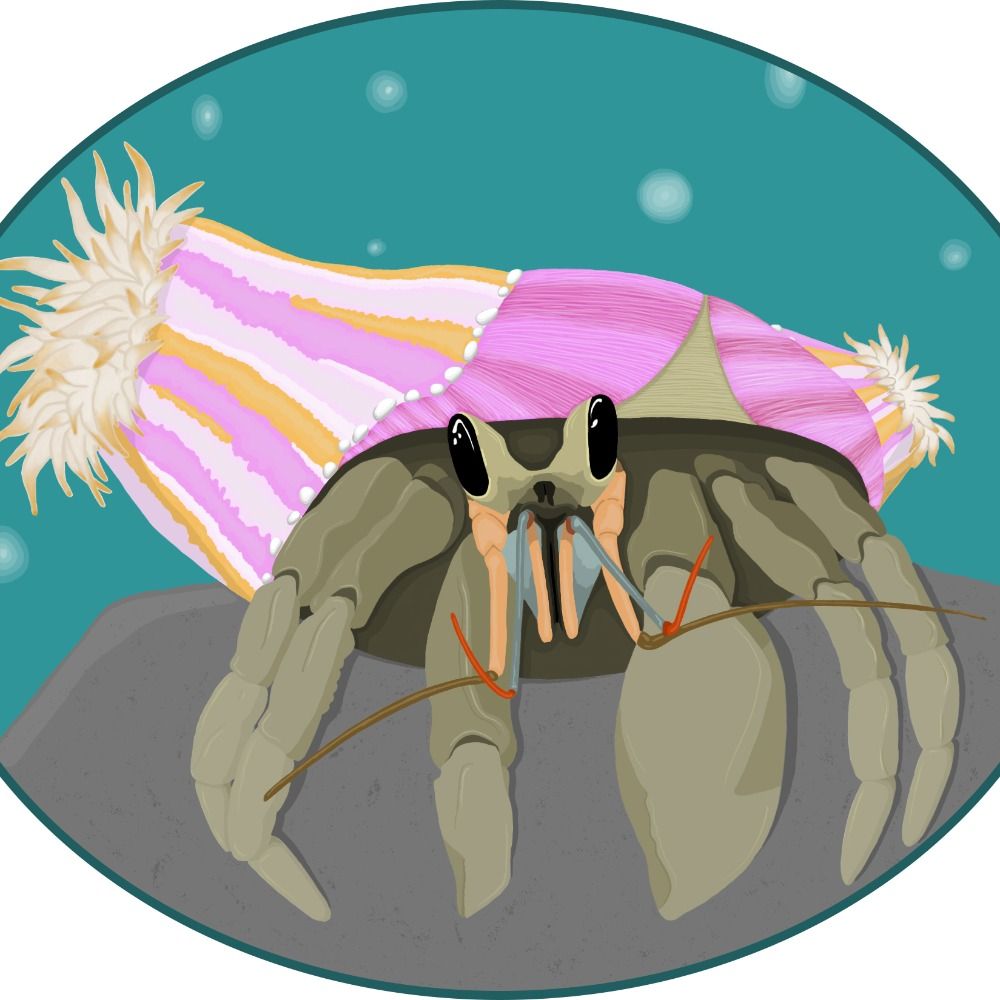
This is an INCREDIBLE advance in our understanding of coral diversification. 🪸🎉 Fantastic new work led by @claudiavaga.bsky.social
www.nature.com/articles/s41...
www.nature.com/articles/s41...

A global coral phylogeny reveals resilience and vulnerability through deep time - Nature
The most recent common ancestor of the stony coral Scleractinia dates to about 460 million years ago and was probably a solitary, heterotrophic and free-living organism.
www.nature.com
October 23, 2025 at 1:52 PM
This is an INCREDIBLE advance in our understanding of coral diversification. 🪸🎉 Fantastic new work led by @claudiavaga.bsky.social
www.nature.com/articles/s41...
www.nature.com/articles/s41...
Reposted by Yi-Jyun Luo

Very happy to announce that our article in multimodal single cell analyses in planaria is out in Nature Communications @natcomms.nature.com ! Thank you very much to everyone that made this work possible. I am very happy to see it out (: www.nature.com/articles/s41...
Multimodal single cell analyses reveal gene networks of planarian stem cell differentiation - Nature Communications
Single cell transcriptomics and chromatin accessibility uncover the gene networks underlying planarian cell type differentiation, revealing insights into the combinatorial logic of planarian cell fate...
www.nature.com
November 27, 2025 at 4:07 PM
Very happy to announce that our article in multimodal single cell analyses in planaria is out in Nature Communications @natcomms.nature.com ! Thank you very much to everyone that made this work possible. I am very happy to see it out (: www.nature.com/articles/s41...
Reposted by Yi-Jyun Luo

How do animals with lifelong growth modulate cell #proliferation? @eudaldpascual.bsky.social @ktgarschall.bsky.social @prhsteinmetz.bsky.social show that starvation induces G1/G0 #CellCycle arrest in Vasa2+/Piwi1+ #SeaAnemone cells; cycle re-entry is TOR-dependent @plosbiology.org 🧪 plos.io/48J2o6P

December 9, 2025 at 1:50 PM
How do animals with lifelong growth modulate cell #proliferation? @eudaldpascual.bsky.social @ktgarschall.bsky.social @prhsteinmetz.bsky.social show that starvation induces G1/G0 #CellCycle arrest in Vasa2+/Piwi1+ #SeaAnemone cells; cycle re-entry is TOR-dependent @plosbiology.org 🧪 plos.io/48J2o6P
Honor to join the EMBO Young Investigator Network as a Global Investigator! Very grateful to @embo.org for the support in promoting international exchanges. Excited to strengthen collaborations with colleagues across Europe and beyond.
www.embo.org/press-releas...
www.embo.org/press-releas...

December 9, 2025 at 1:50 PM
Honor to join the EMBO Young Investigator Network as a Global Investigator! Very grateful to @embo.org for the support in promoting international exchanges. Excited to strengthen collaborations with colleagues across Europe and beyond.
www.embo.org/press-releas...
www.embo.org/press-releas...
Reposted by Yi-Jyun Luo

Twelve scientists from Chile, India, Nigeria, Singapore and Taiwan have been selected as new EMBO Global Investigators – Congratulations to the new cohort! 🧪
Read the press release:
https://www.embo.org/press-releases/twelve-scientists-become-embo-global-investigators/
#funding #training
Read the press release:
https://www.embo.org/press-releases/twelve-scientists-become-embo-global-investigators/
#funding #training

December 9, 2025 at 1:11 PM
Twelve scientists from Chile, India, Nigeria, Singapore and Taiwan have been selected as new EMBO Global Investigators – Congratulations to the new cohort! 🧪
Read the press release:
https://www.embo.org/press-releases/twelve-scientists-become-embo-global-investigators/
#funding #training
Read the press release:
https://www.embo.org/press-releases/twelve-scientists-become-embo-global-investigators/
#funding #training
Reposted by Yi-Jyun Luo

Our December issue is now live: www.nature.com/natecolevol/...
Featuring research on 🧪
🦏 rhinocerotid dispersal in the mid-Cenozoic
🐟 biodiversity responses to freshwater stressors
🦋 evolution of butterfly eyespots
Cover shows a Korean seahorse, from Meyer et al. www.nature.com/articles/s41...
Featuring research on 🧪
🦏 rhinocerotid dispersal in the mid-Cenozoic
🐟 biodiversity responses to freshwater stressors
🦋 evolution of butterfly eyespots
Cover shows a Korean seahorse, from Meyer et al. www.nature.com/articles/s41...

December 9, 2025 at 11:01 AM
Our December issue is now live: www.nature.com/natecolevol/...
Featuring research on 🧪
🦏 rhinocerotid dispersal in the mid-Cenozoic
🐟 biodiversity responses to freshwater stressors
🦋 evolution of butterfly eyespots
Cover shows a Korean seahorse, from Meyer et al. www.nature.com/articles/s41...
Featuring research on 🧪
🦏 rhinocerotid dispersal in the mid-Cenozoic
🐟 biodiversity responses to freshwater stressors
🦋 evolution of butterfly eyespots
Cover shows a Korean seahorse, from Meyer et al. www.nature.com/articles/s41...
Reposted by Yi-Jyun Luo
Congratulations to the new cohort of 28 EMBO Young Investigators! They are joining an international network of more than 800 life scientists – Welcome!
Read the press release here:
https://www.embo.org/press-releases/twenty-eight-group-leaders-become-embo-young-investigators/
Read the press release here:
https://www.embo.org/press-releases/twenty-eight-group-leaders-become-embo-young-investigators/

December 2, 2025 at 1:06 PM
Congratulations to the new cohort of 28 EMBO Young Investigators! They are joining an international network of more than 800 life scientists – Welcome!
Read the press release here:
https://www.embo.org/press-releases/twenty-eight-group-leaders-become-embo-young-investigators/
Read the press release here:
https://www.embo.org/press-releases/twenty-eight-group-leaders-become-embo-young-investigators/
Reposted by Yi-Jyun Luo

I'm very excited that our paper on Project Psyche is now published! 🦋🧬
Over the last two years we've built an incredible community & already made huge progress. Read about this & how @projectpsyche.bsky.social will drive exciting and collaborative science here:
www.cell.com/trends/ecolo...
Over the last two years we've built an incredible community & already made huge progress. Read about this & how @projectpsyche.bsky.social will drive exciting and collaborative science here:
www.cell.com/trends/ecolo...

Project Psyche: reference genomes for all Lepidoptera in Europe
Project Psyche is a transnational initiative to generate and study chromosome-level
reference genomes of all ~11 000 species of Lepidoptera (butterflies and moths) found
in Europe. Here, we describe t...
www.cell.com
November 27, 2025 at 11:14 AM
I'm very excited that our paper on Project Psyche is now published! 🦋🧬
Over the last two years we've built an incredible community & already made huge progress. Read about this & how @projectpsyche.bsky.social will drive exciting and collaborative science here:
www.cell.com/trends/ecolo...
Over the last two years we've built an incredible community & already made huge progress. Read about this & how @projectpsyche.bsky.social will drive exciting and collaborative science here:
www.cell.com/trends/ecolo...
Reposted by Yi-Jyun Luo
Apply now for EMBO Workshop "Evolving together: From #genomics to biological interactions" in Taipei, Taiwan, 24–27 Apr 2026.
Abstract submission/Registration deadline: 20 Jan/28 Feb 2026
meetings.embo.org/event/26-bio...
#EMBOEvoGenBio #GeneSky #EvoSky #EcoSky #EMBOevents 🧪
Abstract submission/Registration deadline: 20 Jan/28 Feb 2026
meetings.embo.org/event/26-bio...
#EMBOEvoGenBio #GeneSky #EvoSky #EcoSky #EMBOevents 🧪
Evolving together: from genomics to biological interactions
Genomic and evolutionary research has transformed our understanding of how biological interactions shape life’s diversity. From symbiosis and host–pathogen relationships to competition, cooperation, …
meetings.embo.org
November 14, 2025 at 10:39 AM
Apply now for EMBO Workshop "Evolving together: From #genomics to biological interactions" in Taipei, Taiwan, 24–27 Apr 2026.
Abstract submission/Registration deadline: 20 Jan/28 Feb 2026
meetings.embo.org/event/26-bio...
#EMBOEvoGenBio #GeneSky #EvoSky #EcoSky #EMBOevents 🧪
Abstract submission/Registration deadline: 20 Jan/28 Feb 2026
meetings.embo.org/event/26-bio...
#EMBOEvoGenBio #GeneSky #EvoSky #EcoSky #EMBOevents 🧪
Reposted by Yi-Jyun Luo

Out today, our take on 6-methyladenine #6mA evolution in Eukaryotes @natgenet.nature.com. We asked a simple question, is really DNA 6mA common across the eukaryotes? The answer is "yes" if you're a unicellular eukaryote 🦠, not so if you're multicellular 🐝🌱🍄. www.nature.com/articles/s41... 1/9

Adenine DNA methylation associated with transcriptionally permissive chromatin is widespread across eukaryotes - Nature Genetics
Long-read sequencing in 18 unicellular eukaryotes reveals that 6mA is widespread across eukaryotes and is enriched at transcriptionally permissive regions, which are also marked by H3K4me3.
www.nature.com
November 18, 2025 at 12:00 PM
Out today, our take on 6-methyladenine #6mA evolution in Eukaryotes @natgenet.nature.com. We asked a simple question, is really DNA 6mA common across the eukaryotes? The answer is "yes" if you're a unicellular eukaryote 🦠, not so if you're multicellular 🐝🌱🍄. www.nature.com/articles/s41... 1/9
Reposted by Yi-Jyun Luo

Our paper on the role of neurons in Nematostella head regeneration is now out at @currentbiology.bsky.social Big thank you to all collaborators, it was a pleasure!
Ectopic head regeneration after nervous system ablation in a sea anemone: Current Biology www.cell.com/current-biol...
Ectopic head regeneration after nervous system ablation in a sea anemone: Current Biology www.cell.com/current-biol...

Ectopic head regeneration after nervous system ablation in a sea anemone
Via genetic ablation of neurons, Mazloumi Gavgani et al. show that the nervous system
is essential for defining axial polarity during whole-body regeneration in the sea
anemone Nematostella vectensis.
www.cell.com
November 18, 2025 at 10:00 AM
Our paper on the role of neurons in Nematostella head regeneration is now out at @currentbiology.bsky.social Big thank you to all collaborators, it was a pleasure!
Ectopic head regeneration after nervous system ablation in a sea anemone: Current Biology www.cell.com/current-biol...
Ectopic head regeneration after nervous system ablation in a sea anemone: Current Biology www.cell.com/current-biol...
Reposted by Yi-Jyun Luo
November 18, 2025 at 3:47 PM
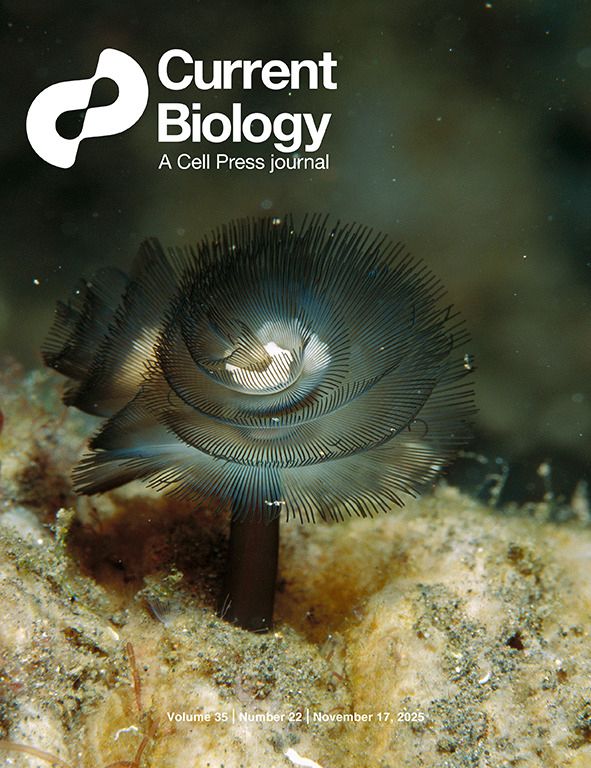
Glad to see our phoronid genome study featured on the cover of @currentbiology.bsky.social! It shows how genome structure can be used to test competing hypotheses of nested topology and how derived structural changes provide evidence for monophyly.
www.cell.com/current-biol...
www.cell.com/current-biol...

November 17, 2025 at 4:25 PM
Glad to see our phoronid genome study featured on the cover of @currentbiology.bsky.social! It shows how genome structure can be used to test competing hypotheses of nested topology and how derived structural changes provide evidence for monophyly.
www.cell.com/current-biol...
www.cell.com/current-biol...
Reposted by Yi-Jyun Luo
Happy to share Jialin's first publication. She did a great job exploring the transition to land in animals. Co-supervised by the great Jordi Paps and me and in collaboration with Davide Pisani and @phil-donoghue.bsky.social

Nature research paper: Convergent genome evolution shaped the emergence of terrestrial animals
go.nature.com/4i0i61w
go.nature.com/4i0i61w

Convergent genome evolution shaped the emergence of terrestrial animals - Nature
Comparisons of 154 genomes from 21 animal phyla and outgroups have been used to reconstruct ancestral adaptation to life on land across 11 distinct terrestrialization events, revealing strong evidence for convergent genomic evolution across the animal kingdom and recurring periods of terrestrial colonization.
go.nature.com
November 13, 2025 at 3:18 PM
Happy to share Jialin's first publication. She did a great job exploring the transition to land in animals. Co-supervised by the great Jordi Paps and me and in collaboration with Davide Pisani and @phil-donoghue.bsky.social
Reposted by Yi-Jyun Luo

A truly refreshing perspective on an age old debate. Big implications for animal evolution but also useful techniques to address many other remaining phylogenetic questions.
Congrats to you both on a wonderful piece of work!
Congrats to you both on a wonderful piece of work!
NEW pub in @science.org 🥳
Is it sponges (panels A & B) or comb jellies (C & D) that root the animal tree of life?
For over 15 years, #phylogenomic studies have been divided.
We provide new evidence suggesting that...
🔗: www.science.org/doi/10.1126/...
Is it sponges (panels A & B) or comb jellies (C & D) that root the animal tree of life?
For over 15 years, #phylogenomic studies have been divided.
We provide new evidence suggesting that...
🔗: www.science.org/doi/10.1126/...

November 13, 2025 at 8:49 PM
A truly refreshing perspective on an age old debate. Big implications for animal evolution but also useful techniques to address many other remaining phylogenetic questions.
Congrats to you both on a wonderful piece of work!
Congrats to you both on a wonderful piece of work!
Reposted by Yi-Jyun Luo

NEW pub in @science.org 🥳
Is it sponges (panels A & B) or comb jellies (C & D) that root the animal tree of life?
For over 15 years, #phylogenomic studies have been divided.
We provide new evidence suggesting that...
🔗: www.science.org/doi/10.1126/...
Is it sponges (panels A & B) or comb jellies (C & D) that root the animal tree of life?
For over 15 years, #phylogenomic studies have been divided.
We provide new evidence suggesting that...
🔗: www.science.org/doi/10.1126/...
November 13, 2025 at 8:34 PM
NEW pub in @science.org 🥳
Is it sponges (panels A & B) or comb jellies (C & D) that root the animal tree of life?
For over 15 years, #phylogenomic studies have been divided.
We provide new evidence suggesting that...
🔗: www.science.org/doi/10.1126/...
Is it sponges (panels A & B) or comb jellies (C & D) that root the animal tree of life?
For over 15 years, #phylogenomic studies have been divided.
We provide new evidence suggesting that...
🔗: www.science.org/doi/10.1126/...
Reposted by Yi-Jyun Luo

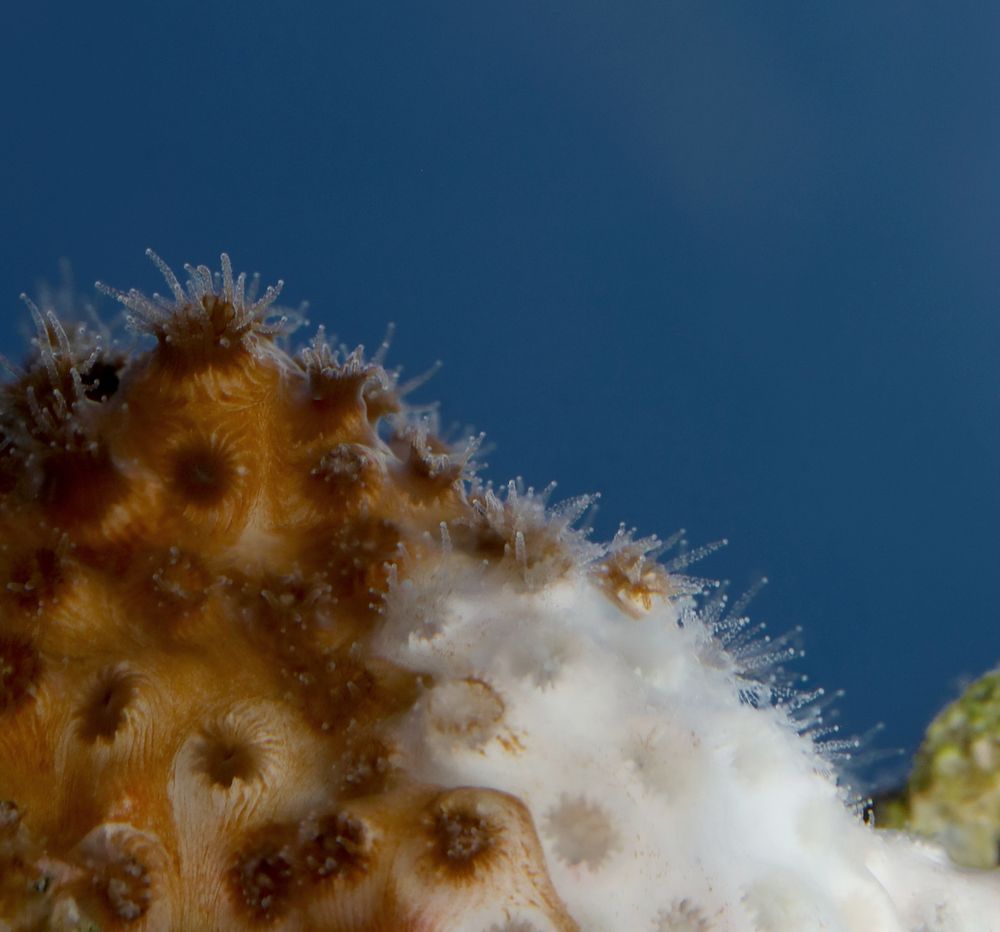
We are happy to share our latest work in @nature.com . We study the genomic and cellular basis of facultative symbiosis in Oculina patagonica - a Mediterranean coral remarkable for its ability to survive long periods without algal symbionts. Led by Shani Levy and @xgrau.bsky.social
rdcu.be/eLbaZ
rdcu.be/eLbaZ
October 15, 2025 at 7:58 PM
We are happy to share our latest work in @nature.com . We study the genomic and cellular basis of facultative symbiosis in Oculina patagonica - a Mediterranean coral remarkable for its ability to survive long periods without algal symbionts. Led by Shani Levy and @xgrau.bsky.social
rdcu.be/eLbaZ
rdcu.be/eLbaZ
Reposted by Yi-Jyun Luo
Tissue-specific transcriptomics, comparative genomics and genome editing identify a taxon-specific promoter of a Hox gene that controls eyespot size plasticity and probably contributed to wing eyespot diversity in satyrid butterflies 🧪 www.nature.com/articles/s41...

A novel Hox gene promoter fuels the evolution of adaptive phenotypic plasticity in wing eyespots of satyrid butterflies - Nature Ecology & Evolution
Many satyrid butterflies show seasonal variation in wing eyespot size in response to temperature. Tissue-specific transcriptomics, comparative genomics and genome editing identify a taxon-specific pro...
www.nature.com
November 11, 2025 at 1:40 PM
Tissue-specific transcriptomics, comparative genomics and genome editing identify a taxon-specific promoter of a Hox gene that controls eyespot size plasticity and probably contributed to wing eyespot diversity in satyrid butterflies 🧪 www.nature.com/articles/s41...
Reposted by Yi-Jyun Luo

My book 'The Tree of Life' is published in the USA and Canada today.
Available as book, on kindle and as audio.
I would be really grateful for reposts.
www.amazon.com/Tree-Life-So...
www.amazon.ca/Tree-Life-So...
Available as book, on kindle and as audio.
I would be really grateful for reposts.
www.amazon.com/Tree-Life-So...
www.amazon.ca/Tree-Life-So...

November 11, 2025 at 12:01 PM
My book 'The Tree of Life' is published in the USA and Canada today.
Available as book, on kindle and as audio.
I would be really grateful for reposts.
www.amazon.com/Tree-Life-So...
www.amazon.ca/Tree-Life-So...
Available as book, on kindle and as audio.
I would be really grateful for reposts.
www.amazon.com/Tree-Life-So...
www.amazon.ca/Tree-Life-So...
Reposted by Yi-Jyun Luo

🗨️ Just published in Nature Biotechnology: Our CellWhisperer AI enables chat-based analysis of single-cell sequencing data. You can talk to your cells & figure out the biology without writing any computer code. Paper here: www.nature.com/articles/s41.... Annotated walkthrough in a thread below (1/11)
November 11, 2025 at 12:52 PM
🗨️ Just published in Nature Biotechnology: Our CellWhisperer AI enables chat-based analysis of single-cell sequencing data. You can talk to your cells & figure out the biology without writing any computer code. Paper here: www.nature.com/articles/s41.... Annotated walkthrough in a thread below (1/11)