


Experimental Philosophy
@xphilosopher.bsky.social
An account for experimental philosophy - an interdisciplinary field at the intersection of philosophy and psychology https://en.m.wikipedia.org/wiki/Experimental_philosophy#:~:text=Experimental%20philosophy%20is%20an%20emerging,inform%20research%20on%20phi
Psychologist George Newman has a new book out about creativity, but it’s about almost exactly the opposite of what people usually mean by “creativity”
Usual topic: ideas that are zany or original
Newman’s topic: ideas that actually work
www.amazon.com/How-Great-Id...
Usual topic: ideas that are zany or original
Newman’s topic: ideas that actually work
www.amazon.com/How-Great-Id...

February 10, 2026 at 2:59 PM
Psychologist George Newman has a new book out about creativity, but it’s about almost exactly the opposite of what people usually mean by “creativity”
Usual topic: ideas that are zany or original
Newman’s topic: ideas that actually work
www.amazon.com/How-Great-Id...
Usual topic: ideas that are zany or original
Newman’s topic: ideas that actually work
www.amazon.com/How-Great-Id...
Reposted by Experimental Philosophy

Perjury is often explained (including to juries) as the legal name for the folk concept of lying, but it is narrower.
Lying has a dual character, research by @izaskoczen.bsky.social suggests, and perjury corresponds only with the concrete aspect:
buff.ly/xeYPHBm
HT @xphilosopher.bsky.social
Lying has a dual character, research by @izaskoczen.bsky.social suggests, and perjury corresponds only with the concrete aspect:
buff.ly/xeYPHBm
HT @xphilosopher.bsky.social

February 5, 2026 at 4:09 PM
Perjury is often explained (including to juries) as the legal name for the folk concept of lying, but it is narrower.
Lying has a dual character, research by @izaskoczen.bsky.social suggests, and perjury corresponds only with the concrete aspect:
buff.ly/xeYPHBm
HT @xphilosopher.bsky.social
Lying has a dual character, research by @izaskoczen.bsky.social suggests, and perjury corresponds only with the concrete aspect:
buff.ly/xeYPHBm
HT @xphilosopher.bsky.social
New experimental jurisprudence paper from Iza Skoczen on the legal concept PERJURY vs. the ordinary concept LYING
This paper introduces a surprising new view about the relationship between legal concepts and ordinary concepts
@izaskoczen.bsky.social
x.com/izaskoczen/s...
This paper introduces a surprising new view about the relationship between legal concepts and ordinary concepts
@izaskoczen.bsky.social
x.com/izaskoczen/s...

February 2, 2026 at 5:39 PM
New experimental jurisprudence paper from Iza Skoczen on the legal concept PERJURY vs. the ordinary concept LYING
This paper introduces a surprising new view about the relationship between legal concepts and ordinary concepts
@izaskoczen.bsky.social
x.com/izaskoczen/s...
This paper introduces a surprising new view about the relationship between legal concepts and ordinary concepts
@izaskoczen.bsky.social
x.com/izaskoczen/s...
Reposted by Experimental Philosophy

Does going to college make people more liberal? Probably yes, but it’s complicated… For decades, US adults with degrees have held more left-leaning views on social issues, but not on economic ones. And, until the 2010s, grads did not *identify* as more liberal than non-grads.
January 24, 2026 at 8:35 PM
Does going to college make people more liberal? Probably yes, but it’s complicated… For decades, US adults with degrees have held more left-leaning views on social issues, but not on economic ones. And, until the 2010s, grads did not *identify* as more liberal than non-grads.
Reposted by Experimental Philosophy

Flanagan & de Almeida on Cognitive Science and the Hart-Dworkin Debate
Brian Flanagan (National University of Ireland, Maynooth (NUI Maynooth) - Faculty of Law) & Guilherme F. C. F. de Almeida (Yale University) have posted What Cognitive Science says about the Hart-Dworkin Debate on SSRN. Here is…
Brian Flanagan (National University of Ireland, Maynooth (NUI Maynooth) - Faculty of Law) & Guilherme F. C. F. de Almeida (Yale University) have posted What Cognitive Science says about the Hart-Dworkin Debate on SSRN. Here is…

Flanagan & de Almeida on Cognitive Science and the Hart-Dworkin Debate
Brian Flanagan (National University of Ireland, Maynooth (NUI Maynooth) - Faculty of Law) & Guilherme F. C. F. de Almeida (Yale University) have posted What Cognitive Science says about the Hart-Dworkin Debate on SSRN. Here is the abstract: Hard cases generate disputes in which judges insist that fidelity to law sometimes requires departing from its letter. Ronald Dworkin argued that this phenomenon poses a distinctive challenge to legal positivism.
legaltheoryblog.com
January 14, 2026 at 12:30 PM
Flanagan & de Almeida on Cognitive Science and the Hart-Dworkin Debate
Brian Flanagan (National University of Ireland, Maynooth (NUI Maynooth) - Faculty of Law) & Guilherme F. C. F. de Almeida (Yale University) have posted What Cognitive Science says about the Hart-Dworkin Debate on SSRN. Here is…
Brian Flanagan (National University of Ireland, Maynooth (NUI Maynooth) - Faculty of Law) & Guilherme F. C. F. de Almeida (Yale University) have posted What Cognitive Science says about the Hart-Dworkin Debate on SSRN. Here is…
Reposted by Experimental Philosophy

I am talking about experimental philosophy of medicine on Thursday. ruhr-uni-bochum.zoom.us/j/67803558818

January 6, 2026 at 2:30 AM
I am talking about experimental philosophy of medicine on Thursday. ruhr-uni-bochum.zoom.us/j/67803558818
Reposted by Experimental Philosophy

New paper from the IMC lab! I am very excited about this one. For years, I have been arguing that one of the main claims of the so-called "simulation heuristic" is likely not true for episodic counterfactual thinking, namely that the harder it is to mentally simulate it, the less plausible (1/n)
January 7, 2026 at 11:11 PM
New paper from the IMC lab! I am very excited about this one. For years, I have been arguing that one of the main claims of the so-called "simulation heuristic" is likely not true for episodic counterfactual thinking, namely that the harder it is to mentally simulate it, the less plausible (1/n)
Meta-analysis: After correcting for publication bias, there is no effect of “social norm messaging” nudges on health behavior
We need theories that explain *why* these interventions don’t work
www.nature.com/articles/s41...
We need theories that explain *why* these interventions don’t work
www.nature.com/articles/s41...

A systematic review and meta-analysis of the effectiveness of social norms messaging approaches for improving health behaviours in developed countries - Nature Human Behaviour
Social norms approaches are widely applied in health promotion. This pre-registered systematic review and meta-analysis of RCTs using social norms messaging in developed countries aimed to evaluate th...
www.nature.com
January 7, 2026 at 3:56 PM
Meta-analysis: After correcting for publication bias, there is no effect of “social norm messaging” nudges on health behavior
We need theories that explain *why* these interventions don’t work
www.nature.com/articles/s41...
We need theories that explain *why* these interventions don’t work
www.nature.com/articles/s41...
Reposted by Experimental Philosophy

🧵New preprint: Adults often agree with their ingroup even when evidence says otherwise. Why?
To find out, we studied kids, who show the same tendency but *before* political identities take hold. With developmental data, we can see the basic psychological ingredients.
doi.org/10.31234/osf...
1/11
To find out, we studied kids, who show the same tendency but *before* political identities take hold. With developmental data, we can see the basic psychological ingredients.
doi.org/10.31234/osf...
1/11
OSF
doi.org
January 6, 2026 at 3:03 PM
🧵New preprint: Adults often agree with their ingroup even when evidence says otherwise. Why?
To find out, we studied kids, who show the same tendency but *before* political identities take hold. With developmental data, we can see the basic psychological ingredients.
doi.org/10.31234/osf...
1/11
To find out, we studied kids, who show the same tendency but *before* political identities take hold. With developmental data, we can see the basic psychological ingredients.
doi.org/10.31234/osf...
1/11
Reposted by Experimental Philosophy
A fascinating new paper by Amanda Royka and colleagues explores why monkeys fail false belief tasks.
A natural explanation would be that monkeys wrongly assume that other agents share their own knowledge.
Royka et al. find that this is NOT the case...
www.sciencedirect.com/science/arti...
A natural explanation would be that monkeys wrongly assume that other agents share their own knowledge.
Royka et al. find that this is NOT the case...
www.sciencedirect.com/science/arti...

Exploring the evolutionary roots of theory of mind: Primate errors on false belief tasks reveal representational limits
Human adults flexibly reason about others' unobservable mental states, a capacity known as Theory of Mind (ToM). Unfortunately, the roots of this capa…
www.sciencedirect.com
January 2, 2026 at 5:21 PM
A fascinating new paper by Amanda Royka and colleagues explores why monkeys fail false belief tasks.
A natural explanation would be that monkeys wrongly assume that other agents share their own knowledge.
Royka et al. find that this is NOT the case...
www.sciencedirect.com/science/arti...
A natural explanation would be that monkeys wrongly assume that other agents share their own knowledge.
Royka et al. find that this is NOT the case...
www.sciencedirect.com/science/arti...
Beautiful experimental philosophy paper on what people ordinarily mean when they say that a statement is “true”
Turns out it’s not always about corresponding correctly to the facts. Sometimes it’s more closely related to a moral ideal of “truthfulness”
philarchive.org/archive/ZYGTJN
Turns out it’s not always about corresponding correctly to the facts. Sometimes it’s more closely related to a moral ideal of “truthfulness”
philarchive.org/archive/ZYGTJN

January 1, 2026 at 6:31 PM
Beautiful experimental philosophy paper on what people ordinarily mean when they say that a statement is “true”
Turns out it’s not always about corresponding correctly to the facts. Sometimes it’s more closely related to a moral ideal of “truthfulness”
philarchive.org/archive/ZYGTJN
Turns out it’s not always about corresponding correctly to the facts. Sometimes it’s more closely related to a moral ideal of “truthfulness”
philarchive.org/archive/ZYGTJN
Reposted by Experimental Philosophy

@xphilosopher.bsky.social and I tried to study what beliefs do (or at least, what people think they do).
Across hundreds of participant generated beliefs and first/third party ratings, we found they express identity and/or represent facts, in the pattern described in this post.
1/
Across hundreds of participant generated beliefs and first/third party ratings, we found they express identity and/or represent facts, in the pattern described in this post.
1/
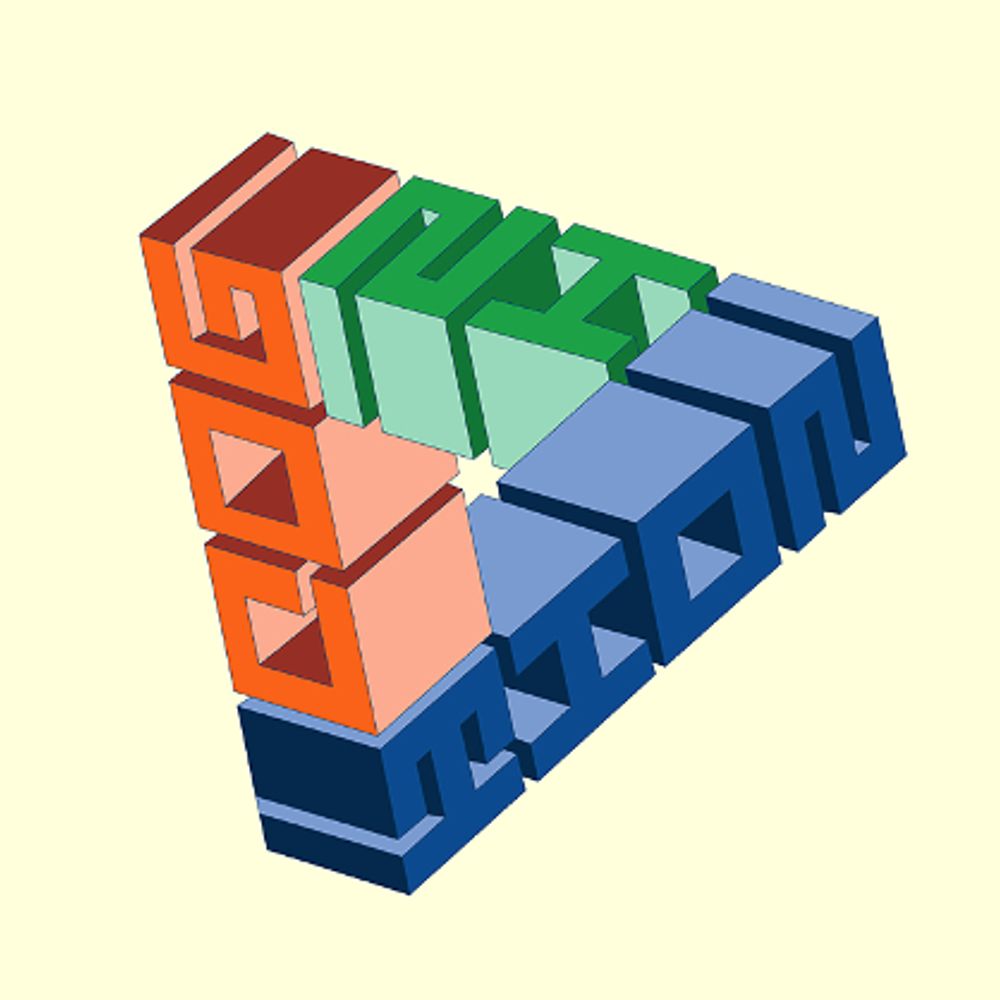
Maybe there are two distinct kinds of belief: they either represent facts (It's rainy) or express identity (My son is the best). We find instead that many beliefs simultaneously represent facts and express identity (but few beliefs do neither).

December 26, 2025 at 6:29 PM
@xphilosopher.bsky.social and I tried to study what beliefs do (or at least, what people think they do).
Across hundreds of participant generated beliefs and first/third party ratings, we found they express identity and/or represent facts, in the pattern described in this post.
1/
Across hundreds of participant generated beliefs and first/third party ratings, we found they express identity and/or represent facts, in the pattern described in this post.
1/
In this new paper, we look at some different dimensions on which beliefs vary:
- Is the belief deeply important to your identity?
- Would you change your mind if you got evidence against it?
- Is it best described in terms of credences (“pretty sure”), or is it more yes/no?
1/
- Is the belief deeply important to your identity?
- Would you change your mind if you got evidence against it?
- Is it best described in terms of credences (“pretty sure”), or is it more yes/no?
1/
Maybe there are two distinct kinds of belief: they either represent facts (It's rainy) or express identity (My son is the best). We find instead that many beliefs simultaneously represent facts and express identity (but few beliefs do neither).
December 22, 2025 at 6:28 PM
In this new paper, we look at some different dimensions on which beliefs vary:
- Is the belief deeply important to your identity?
- Would you change your mind if you got evidence against it?
- Is it best described in terms of credences (“pretty sure”), or is it more yes/no?
1/
- Is the belief deeply important to your identity?
- Would you change your mind if you got evidence against it?
- Is it best described in terms of credences (“pretty sure”), or is it more yes/no?
1/
“Children enter from the door on the left.”
This sentence is what’s called a GENERIC… but it isn’t saying anything general about the nature of children. What then makes it generic?
New theory from @kateritch.bsky.social and Ny Vasil
philpapers.org/archive/RITG...
This sentence is what’s called a GENERIC… but it isn’t saying anything general about the nature of children. What then makes it generic?
New theory from @kateritch.bsky.social and Ny Vasil
philpapers.org/archive/RITG...

December 14, 2025 at 2:47 PM
“Children enter from the door on the left.”
This sentence is what’s called a GENERIC… but it isn’t saying anything general about the nature of children. What then makes it generic?
New theory from @kateritch.bsky.social and Ny Vasil
philpapers.org/archive/RITG...
This sentence is what’s called a GENERIC… but it isn’t saying anything general about the nature of children. What then makes it generic?
New theory from @kateritch.bsky.social and Ny Vasil
philpapers.org/archive/RITG...
New experimental paper on intuitions about whether people have obligations *to themselves*
From philosopher Laura Soter (@laurasoter.bsky.social) in JPSP
psycnet.apa.org/record/2027-...
From philosopher Laura Soter (@laurasoter.bsky.social) in JPSP
psycnet.apa.org/record/2027-...

December 12, 2025 at 4:28 PM
New experimental paper on intuitions about whether people have obligations *to themselves*
From philosopher Laura Soter (@laurasoter.bsky.social) in JPSP
psycnet.apa.org/record/2027-...
From philosopher Laura Soter (@laurasoter.bsky.social) in JPSP
psycnet.apa.org/record/2027-...
Reposted by Experimental Philosophy

This is a fascinating new experimental jurisprudence paper from Chris Jaeger on what is "reasonable."
For laypeople's judgments of reasonableness, the probability of harm (P) has an important effect beyond its role in the B
yalelawjournal.org/article/the-...
For laypeople's judgments of reasonableness, the probability of harm (P) has an important effect beyond its role in the B
yalelawjournal.org/article/the-...
The Hand Formula’s Unequal Inputs | Yale Law Journal
Tort law’s famous Hand Formula does not align with how laypeople judge whether conduct is reasonable. Five original experiments demonstrate that the Hand...
yalelawjournal.org
December 5, 2025 at 1:38 PM
This is a fascinating new experimental jurisprudence paper from Chris Jaeger on what is "reasonable."
For laypeople's judgments of reasonableness, the probability of harm (P) has an important effect beyond its role in the B
yalelawjournal.org/article/the-...
For laypeople's judgments of reasonableness, the probability of harm (P) has an important effect beyond its role in the B
yalelawjournal.org/article/the-...
Reposted by Experimental Philosophy

The new journal *Experimental Philosophy* is now open for submissions! Very glad to serve as an AE and looking forward to seeing this take off. #philsky


December 8, 2025 at 6:17 PM
The new journal *Experimental Philosophy* is now open for submissions! Very glad to serve as an AE and looking forward to seeing this take off. #philsky
“Murder is wrong, but I don’t disapprove of it”
Expressivist theories of moral language seem to suggest that this sentence should make no sense — but a new paper in Cognition finds that people actually *do* find this sentence largely acceptable
www.sciencedirect.com/science/arti...
Expressivist theories of moral language seem to suggest that this sentence should make no sense — but a new paper in Cognition finds that people actually *do* find this sentence largely acceptable
www.sciencedirect.com/science/arti...

November 28, 2025 at 4:39 PM
“Murder is wrong, but I don’t disapprove of it”
Expressivist theories of moral language seem to suggest that this sentence should make no sense — but a new paper in Cognition finds that people actually *do* find this sentence largely acceptable
www.sciencedirect.com/science/arti...
Expressivist theories of moral language seem to suggest that this sentence should make no sense — but a new paper in Cognition finds that people actually *do* find this sentence largely acceptable
www.sciencedirect.com/science/arti...
Reposted by Experimental Philosophy
Get your papers ready!
The journal's homepage is now live: journals.ub.uni-koeln.de/index.php/xphi
We will soon also be found under xphi.eu.
Accepting submissions in about 2 weeks.
We will soon also be found under xphi.eu.
Accepting submissions in about 2 weeks.
Experimental Philosophy
journals.ub.uni-koeln.de
November 13, 2025 at 9:13 PM
Get your papers ready!
The new journal EXPERIMENTAL PHILOSOPHY will soon be accepting submissions!
The journal's homepage is now live: journals.ub.uni-koeln.de/index.php/xphi
We will soon also be found under xphi.eu.
Accepting submissions in about 2 weeks.
We will soon also be found under xphi.eu.
Accepting submissions in about 2 weeks.
Experimental Philosophy
journals.ub.uni-koeln.de
November 13, 2025 at 7:43 PM
The new journal EXPERIMENTAL PHILOSOPHY will soon be accepting submissions!
I appreciated the debate yesterday about how to interpret the results of the cognitive dissonance replication study
Scroll up to read the points made by researchers on both sides
Scroll up to read the points made by researchers on both sides

The whole idea about the paradigm we tested is that manipulation choice rules out the alternative explanations, so it can provide support for the theory, but we didn't find that. We only found effects that can be explained by alternative processes. (Also, I read the paper since I wrote it)
November 7, 2025 at 6:50 PM
I appreciated the debate yesterday about how to interpret the results of the cognitive dissonance replication study
Scroll up to read the points made by researchers on both sides
Scroll up to read the points made by researchers on both sides
Reposted by Experimental Philosophy

Maybe a good time to share my favorite critique of When Prophecy Fails (from 1965!)


November 6, 2025 at 2:16 PM
Maybe a good time to share my favorite critique of When Prophecy Fails (from 1965!)
There’s growing evidence that something was going seriously wrong in the classic early work on cognitive dissonance
Latest revelation: The story in When Prophecy Fails seems to have been fabricated in the most egregious way
But this is not the only one…
onlinelibrary.wiley.com/doi/abs/10.1...
Latest revelation: The story in When Prophecy Fails seems to have been fabricated in the most egregious way
But this is not the only one…
onlinelibrary.wiley.com/doi/abs/10.1...

Debunking “When Prophecy Fails”
In 1954, Dorothy Martin predicted an apocalyptic flood and promised her followers rescue by flying saucers. When neither arrived, she recanted, her group dissolved, and efforts to proselytize ceased....
onlinelibrary.wiley.com
November 6, 2025 at 2:06 PM
There’s growing evidence that something was going seriously wrong in the classic early work on cognitive dissonance
Latest revelation: The story in When Prophecy Fails seems to have been fabricated in the most egregious way
But this is not the only one…
onlinelibrary.wiley.com/doi/abs/10.1...
Latest revelation: The story in When Prophecy Fails seems to have been fabricated in the most egregious way
But this is not the only one…
onlinelibrary.wiley.com/doi/abs/10.1...
There’s a deep difference between sentences like:
(1) Jane caused the glass to break.
vs.
(2) Jane broke the glass.
A surge of experimental philosophy research has led to some surprising discoveries about sentences like (2)
[Thread]
(1) Jane caused the glass to break.
vs.
(2) Jane broke the glass.
A surge of experimental philosophy research has led to some surprising discoveries about sentences like (2)
[Thread]

October 27, 2025 at 1:49 PM
There’s a deep difference between sentences like:
(1) Jane caused the glass to break.
vs.
(2) Jane broke the glass.
A surge of experimental philosophy research has led to some surprising discoveries about sentences like (2)
[Thread]
(1) Jane caused the glass to break.
vs.
(2) Jane broke the glass.
A surge of experimental philosophy research has led to some surprising discoveries about sentences like (2)
[Thread]
Reposted by Experimental Philosophy

Ryan Doran is getting to the philosophical bottom of true beauty in this open access 🔓 advance article...
...by ranking the most beautiful philosophers' bottoms 🍎. (You'll never believe who made number 5 😱).* doi.org/10.1093/aest...
ㅤㅤ
ㅤ
ㅤ
ㅤ
ㅤ
ㅤ
*might be bollocks.
...by ranking the most beautiful philosophers' bottoms 🍎. (You'll never believe who made number 5 😱).* doi.org/10.1093/aest...
ㅤㅤ
ㅤ
ㅤ
ㅤ
ㅤ
ㅤ
*might be bollocks.
![[P]rettiness is often described as ‘shallow’, but beauty is described as ‘deep’. Depth seems to be primarily intended in its metaphorical sense in this context, as referring to importance or significance, but at times also has intimations of its literal meaning of referring to spatial depth. It is common to hear prettiness spoken of as a property of mere sensory surfaces and appearances, and as trivial, and of beauty as somehow reaching beyond appearances, and as being significant or even profound.
- Ryan P Doran, True Beauty](https://cdn.bsky.app/img/feed_thumbnail/plain/did:plc:chsp27b6x6v5fyeqzazfpspx/bafkreifu5r44lxke5qv3dyxofvxmf6xqkpflzlxgj4rhjqv3wz7mfvbj5e@jpeg)
October 26, 2025 at 8:54 PM
Ryan Doran is getting to the philosophical bottom of true beauty in this open access 🔓 advance article...
...by ranking the most beautiful philosophers' bottoms 🍎. (You'll never believe who made number 5 😱).* doi.org/10.1093/aest...
ㅤㅤ
ㅤ
ㅤ
ㅤ
ㅤ
ㅤ
*might be bollocks.
...by ranking the most beautiful philosophers' bottoms 🍎. (You'll never believe who made number 5 😱).* doi.org/10.1093/aest...
ㅤㅤ
ㅤ
ㅤ
ㅤ
ㅤ
ㅤ
*might be bollocks.