


Tom McLean
@tommclean.bsky.social
Structural Biochemist. Research Officer at WEHI. Future DECRA Fellow at Monash.
Too excited by the science to include the link to the paper! Here it is: journals.asm.org/doi/10.1128/...
December 16, 2025 at 4:30 AM
Too excited by the science to include the link to the paper! Here it is: journals.asm.org/doi/10.1128/...
Delighted to see the main work from my PhD finally published in @mbio.bsky.social! It all started with the observation that deleting the cutRS two-component system in S. venezuelae caused this amazing explorer phenotype in the presence of glucose. But what was going on?! (1/n)

December 16, 2025 at 2:40 AM
Delighted to see the main work from my PhD finally published in @mbio.bsky.social! It all started with the observation that deleting the cutRS two-component system in S. venezuelae caused this amazing explorer phenotype in the presence of glucose. But what was going on?! (1/n)
Reposted by Tom McLean
📄 Delighted to share that the preprint of my main PhD work is out now!
👏 A huge thank you to everyone involved, @tommclean.bsky.social, Govind Chandra, Ngat Tran (both not on BlueSky) and especially my PhD supervisor @tunglejic.bsky.social 👏
🧵 below!
www.biorxiv.org/content/10.6...
👏 A huge thank you to everyone involved, @tommclean.bsky.social, Govind Chandra, Ngat Tran (both not on BlueSky) and especially my PhD supervisor @tunglejic.bsky.social 👏
🧵 below!
www.biorxiv.org/content/10.6...

Stable inheritance of the Streptomyces linear plasmid SCP1 by dual ParABS partition systems
Low-copy-number plasmids often rely on dedicated maintenance mechanisms, such as partitioning systems, to ensure stable inheritance across generations. These partition systems actively segregate siste...
www.biorxiv.org
December 11, 2025 at 1:25 PM
📄 Delighted to share that the preprint of my main PhD work is out now!
👏 A huge thank you to everyone involved, @tommclean.bsky.social, Govind Chandra, Ngat Tran (both not on BlueSky) and especially my PhD supervisor @tunglejic.bsky.social 👏
🧵 below!
www.biorxiv.org/content/10.6...
👏 A huge thank you to everyone involved, @tommclean.bsky.social, Govind Chandra, Ngat Tran (both not on BlueSky) and especially my PhD supervisor @tunglejic.bsky.social 👏
🧵 below!
www.biorxiv.org/content/10.6...
Check out this work by the amazing @leahmcphillips.bsky.social from during her PhD!!
Stable inheritance of the Streptomyces linear plasmid SCP1 by dual ParABS partition systems https://www.biorxiv.org/content/10.64898/2025.12.10.693275v1
December 11, 2025 at 8:10 AM
Check out this work by the amazing @leahmcphillips.bsky.social from during her PhD!!
Reposted by Tom McLean

Our preprint is now published in PNAS! This came together thanks to a great collaboration with Antoine Hocher and a strong team effort from the Le Lab. Thank you to the reviewers and to everyone who helped improve it. I hope ParB aficionados will enjoy it.
www.pnas.org/doi/10.1073/...
www.pnas.org/doi/10.1073/...

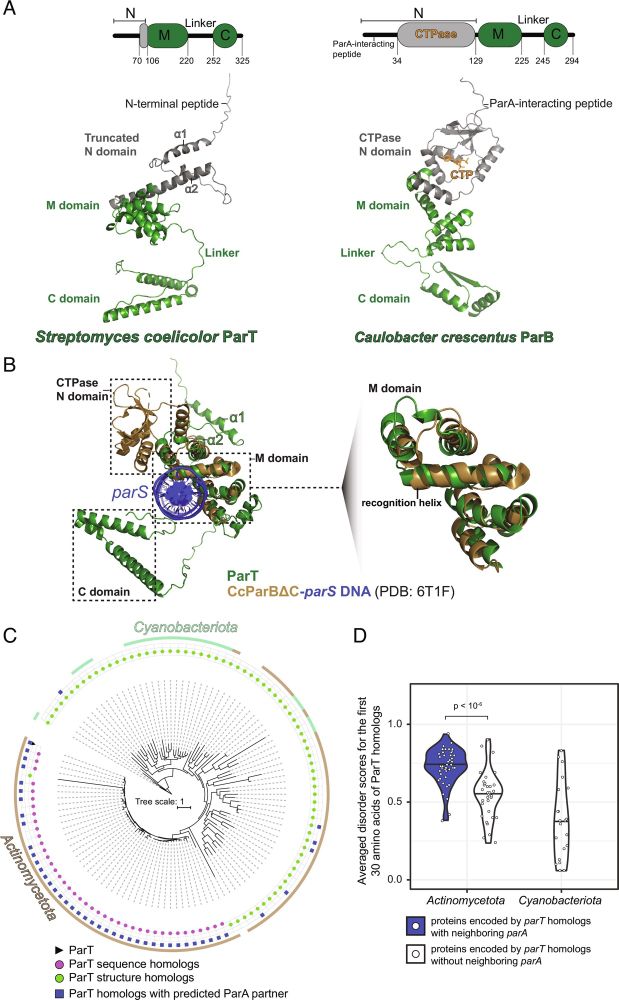
Versatile NTP recognition and domain fusions expand the functional repertoire of the ParB-CTPase fold beyond chromosome segregation | PNAS
Nucleotide triphosphate (NTP)-dependent molecular switches regulate essential cellular
processes by cycling between active and inactive states thro...
www.pnas.org
December 4, 2025 at 8:10 PM
Our preprint is now published in PNAS! This came together thanks to a great collaboration with Antoine Hocher and a strong team effort from the Le Lab. Thank you to the reviewers and to everyone who helped improve it. I hope ParB aficionados will enjoy it.
www.pnas.org/doi/10.1073/...
www.pnas.org/doi/10.1073/...
Reposted by Tom McLean
#straya
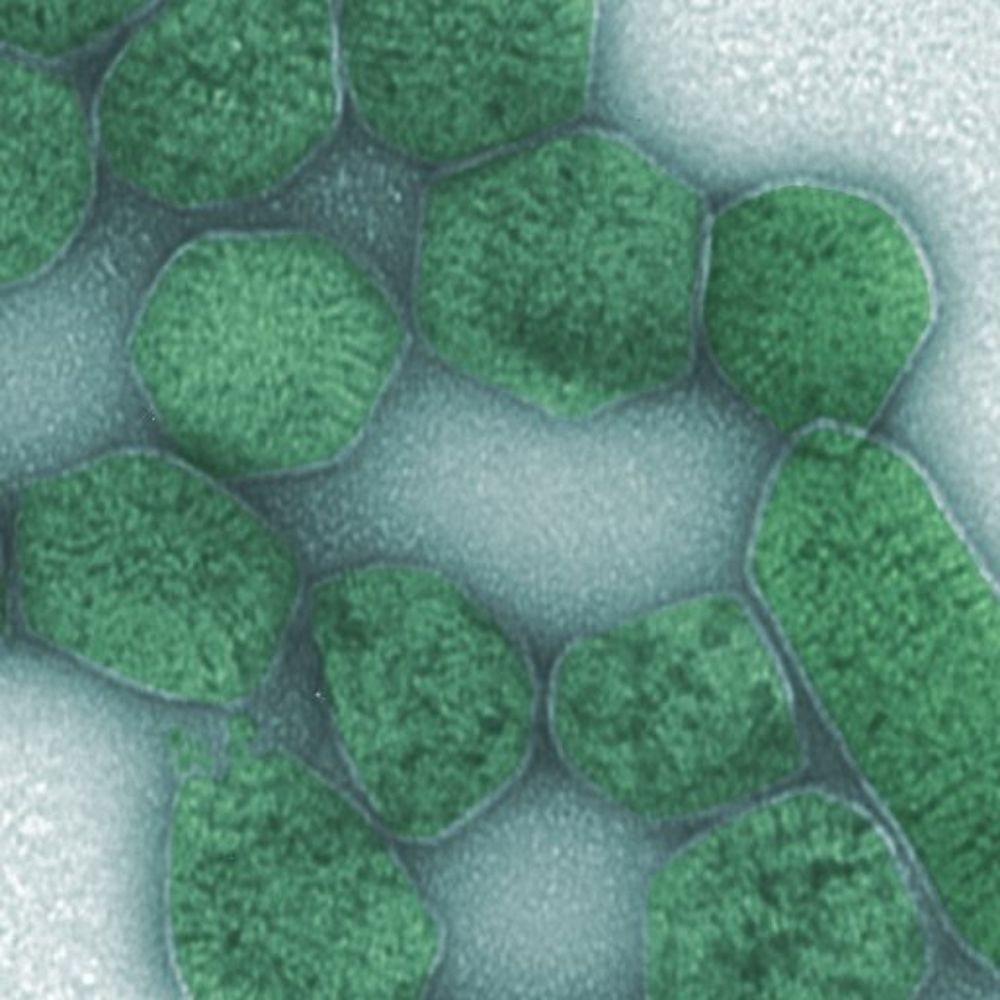
Bin Chicken: targeted metagenomic coassembly for the efficient recovery of novel genomes.
www.nature.com/articles/s41...
Bin Chicken: targeted metagenomic coassembly for the efficient recovery of novel genomes.
www.nature.com/articles/s41...
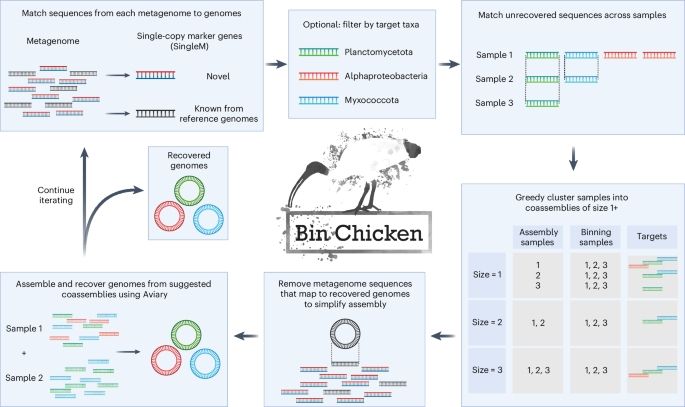
Bin Chicken: targeted metagenomic coassembly for the efficient recovery of novel genomes - Nature Methods
By developing a strategy of metagenomic coassembly and prioritizing divergent marker gene sequences, Bin Chicken efficiently recovers more than 77,000 microbial genomes with high novel diversity, ther...
www.nature.com
November 14, 2025 at 6:23 AM
#straya
Bin Chicken: targeted metagenomic coassembly for the efficient recovery of novel genomes.
www.nature.com/articles/s41...
Bin Chicken: targeted metagenomic coassembly for the efficient recovery of novel genomes.
www.nature.com/articles/s41...
Reposted by Tom McLean

When people celebrate the individual genius of folks in science, they should also
mourn the collective loss of genius of folks who were actively discouraged or disadvantaged from a career in science because of the same person(s)
mourn the collective loss of genius of folks who were actively discouraged or disadvantaged from a career in science because of the same person(s)
November 7, 2025 at 11:43 PM
When people celebrate the individual genius of folks in science, they should also
mourn the collective loss of genius of folks who were actively discouraged or disadvantaged from a career in science because of the same person(s)
mourn the collective loss of genius of folks who were actively discouraged or disadvantaged from a career in science because of the same person(s)
Reposted by Tom McLean
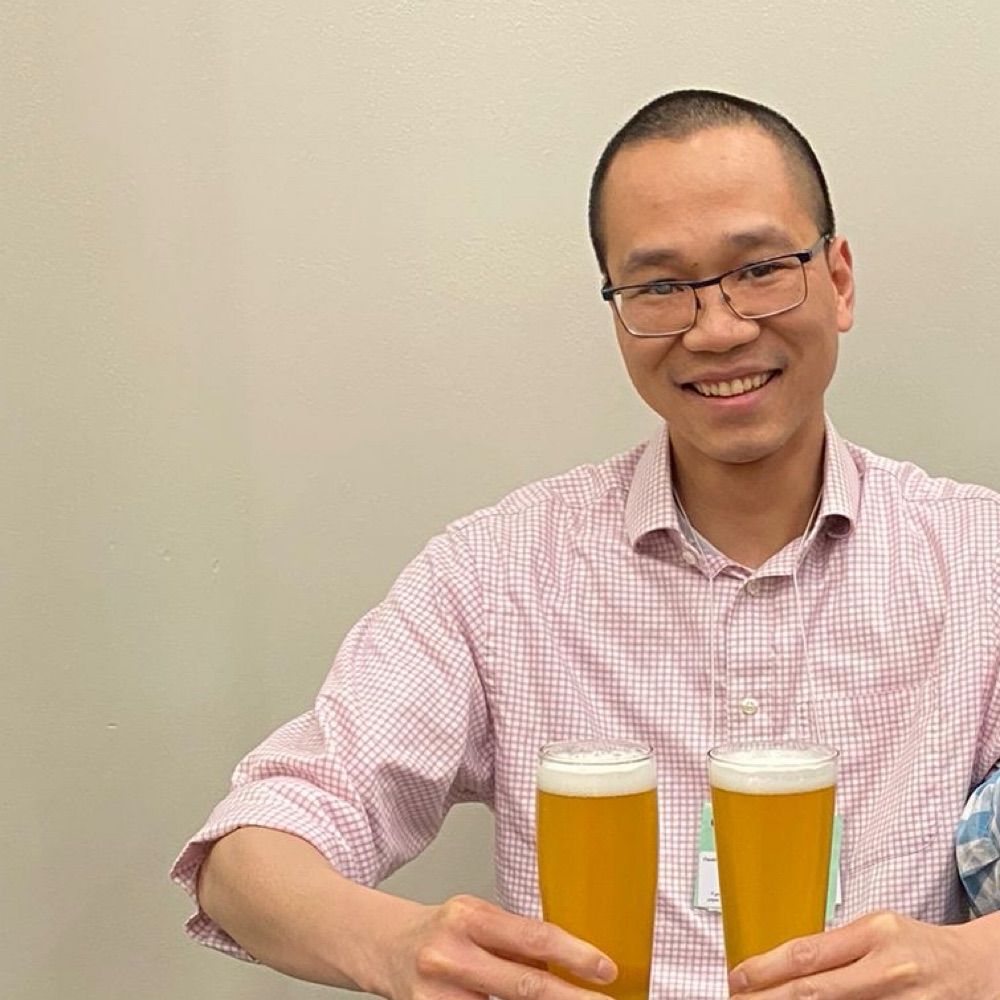
new preprint from our group & Antoine Hocher: www.biorxiv.org/content/10.1...
A fantastic collaboration with Antoine, with Jovana Kaljevic' initiated the collaboration and drives the project.
A fantastic collaboration with Antoine, with Jovana Kaljevic' initiated the collaboration and drives the project.

Versatile NTP recognition and domain fusions expand the functional repertoire of the ParB-CTPase fold beyond chromosome segregation
Nucleotide triphosphate (NTP)-dependent molecular switches regulate essential cellular processes by cycling between active and inactive states through nucleotide binding and hydrolysis. These mechanis...
www.biorxiv.org
October 11, 2025 at 11:36 AM
new preprint from our group & Antoine Hocher: www.biorxiv.org/content/10.1...
A fantastic collaboration with Antoine, with Jovana Kaljevic' initiated the collaboration and drives the project.
A fantastic collaboration with Antoine, with Jovana Kaljevic' initiated the collaboration and drives the project.
Reposted by Tom McLean

Versatile NTP recognition and domain fusions expand the functional repertoire of the ParB-CTPase fold beyond chromosome segregation https://www.biorxiv.org/content/10.1101/2025.10.10.680097v1
October 10, 2025 at 9:16 PM
Versatile NTP recognition and domain fusions expand the functional repertoire of the ParB-CTPase fold beyond chromosome segregation https://www.biorxiv.org/content/10.1101/2025.10.10.680097v1
Reposted by Tom McLean

Ever wondered why some antibiotics are made by Streptomyces on agar plates but not in liquid cultures? Read this work on redox control of antibiotic biosynthesis. Led by katienoble241.bsky.social and Rebecca Devine, and in collaboration with @barriewilks.bsky.social
journals.asm.org/doi/10.1128/...
journals.asm.org/doi/10.1128/...
journals.asm.org
August 7, 2025 at 4:30 PM
Ever wondered why some antibiotics are made by Streptomyces on agar plates but not in liquid cultures? Read this work on redox control of antibiotic biosynthesis. Led by katienoble241.bsky.social and Rebecca Devine, and in collaboration with @barriewilks.bsky.social
journals.asm.org/doi/10.1128/...
journals.asm.org/doi/10.1128/...
After 8 wonderful years in Norwich, 3 at UEA and 5 at the JIC it’s time to say goodbye. I will miss each and every amazing person I’ve had the pleasure of working with or meeting here. It truly is a fine city.

July 31, 2025 at 4:24 PM
After 8 wonderful years in Norwich, 3 at UEA and 5 at the JIC it’s time to say goodbye. I will miss each and every amazing person I’ve had the pleasure of working with or meeting here. It truly is a fine city.
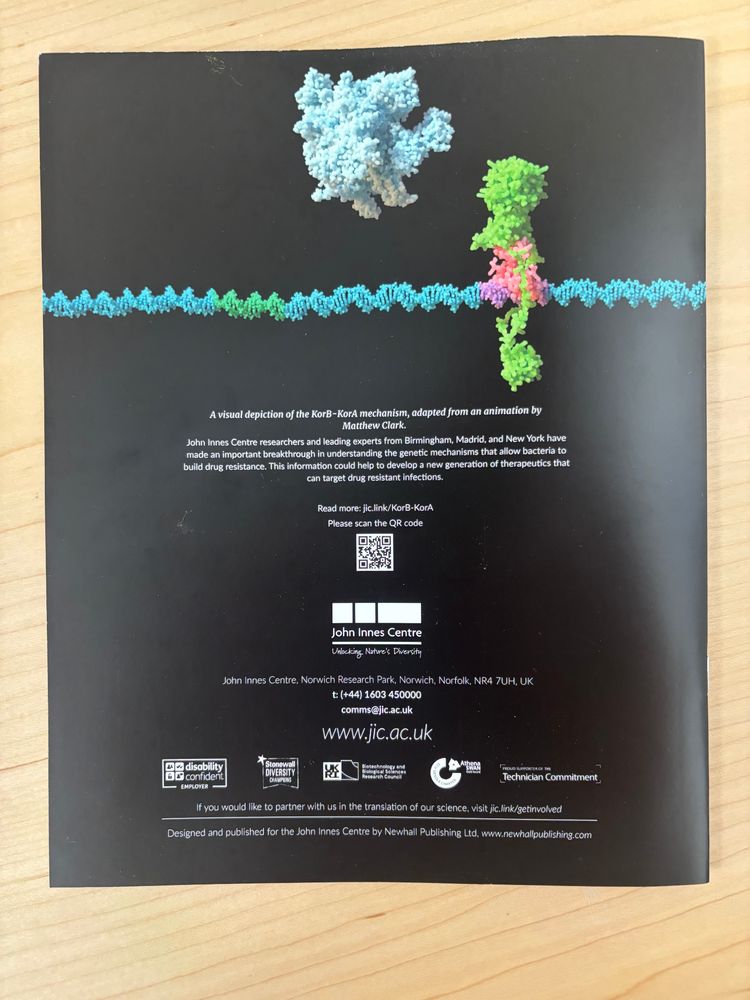
Nice to see our recent work on the fascinating KorAB system be featured on the back of @johninnescentre.bsky.social Advances!
Read the full paper here: www.nature.com/articles/s41...
Read the full paper here: www.nature.com/articles/s41...
July 29, 2025 at 12:56 PM
Nice to see our recent work on the fascinating KorAB system be featured on the back of @johninnescentre.bsky.social Advances!
Read the full paper here: www.nature.com/articles/s41...
Read the full paper here: www.nature.com/articles/s41...
Check out our lab's new work on a CTP-independent ParABS system. Some fantastic work from Kirill et al!
Finally published! Many thanks to the reviewers and editor whose comments & suggestions improved this work significantly more than the first preprint version!!!
www.pnas.org/doi/10.1073/...
www.pnas.org/doi/10.1073/...
Expanding the diversity of bacterial DNA partitioning: A CTP-independent ParABS system for plasmid partitioning in Streptomyces | PNAS
The ATP- and CTP-dependent ParA-ParB-parS segrosome is a macromolecular complex that
segregates chromosomes/plasmids in most bacterial species. CTP...
www.pnas.org
July 3, 2025 at 12:50 PM
Check out our lab's new work on a CTP-independent ParABS system. Some fantastic work from Kirill et al!
Have a read of this simply phenomenal work on the weird and wonderful GTAs from star Fellow (and office mate) Emma Banks et al
1/ Excited to share our latest work on gene transfer agents (GTAs) in Caulobacter crescentus, led by Emma Banks in collaboration with Pavol Bardy and Mai Nguyen from York!!! See a brief thread below.
shorturl.at/o6S1w
shorturl.at/o6S1w
A bacterial CARD-NLR immune system controls the release of gene transfer agents
Bacteria have evolved a wide array of immune systems to detect and defend against external threats including mobile genetic elements (MGEs) such as bacteriophages, plasmids, and transposons. MGEs are ...
shorturl.at
May 9, 2025 at 10:00 AM
Have a read of this simply phenomenal work on the weird and wonderful GTAs from star Fellow (and office mate) Emma Banks et al
Reposted by Tom McLean
"That telomere phages are so prevalent means that they are a selective force, one that we know little about. We now want to understand how the telomere-toxin is secreted and also understand how this ‘telocin’ wheedles its way into unsuspecting bacterial neighbors”
www.science.org/doi/10.1126/...
www.science.org/doi/10.1126/...
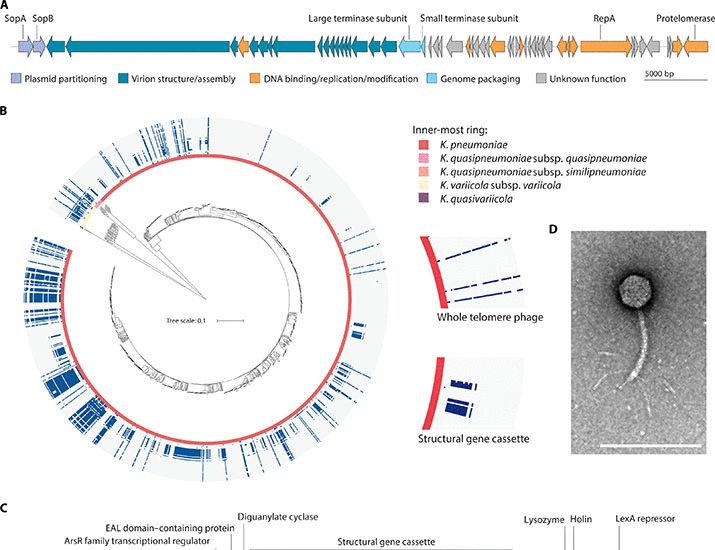
Telomere bacteriophages are widespread and equip their bacterial hosts with potent interbacterial weapons
Klebsiella host strains infected with telomere phages can grow to be the dominant lineage in mixed populations.
www.science.org
May 1, 2025 at 10:04 PM
"That telomere phages are so prevalent means that they are a selective force, one that we know little about. We now want to understand how the telomere-toxin is secreted and also understand how this ‘telocin’ wheedles its way into unsuspecting bacterial neighbors”
www.science.org/doi/10.1126/...
www.science.org/doi/10.1126/...
The paper is now live: academic.oup.com/mbe/article/...
Absolutely delighted to play a role in this fascinating story!
Absolutely delighted to play a role in this fascinating story!
April 17, 2025 at 9:57 AM
The paper is now live: academic.oup.com/mbe/article/...
Absolutely delighted to play a role in this fascinating story!
Absolutely delighted to play a role in this fascinating story!
Reposted by Tom McLean

The second great paper concerns the discovery in Eva Top's group that an enigmatic protein encoded by IncP-1beta plasmids modulates the IncP-1 circuitry in E. coli to make the plasmid a burden in this host: Elg et al recently accepted in Molecular Biology and Evolution doi.org/10.1093/molb...
pendingpublications
Pending Publication
doi.org
April 4, 2025 at 8:51 AM
The second great paper concerns the discovery in Eva Top's group that an enigmatic protein encoded by IncP-1beta plasmids modulates the IncP-1 circuitry in E. coli to make the plasmid a burden in this host: Elg et al recently accepted in Molecular Biology and Evolution doi.org/10.1093/molb...
Reposted by Tom McLean

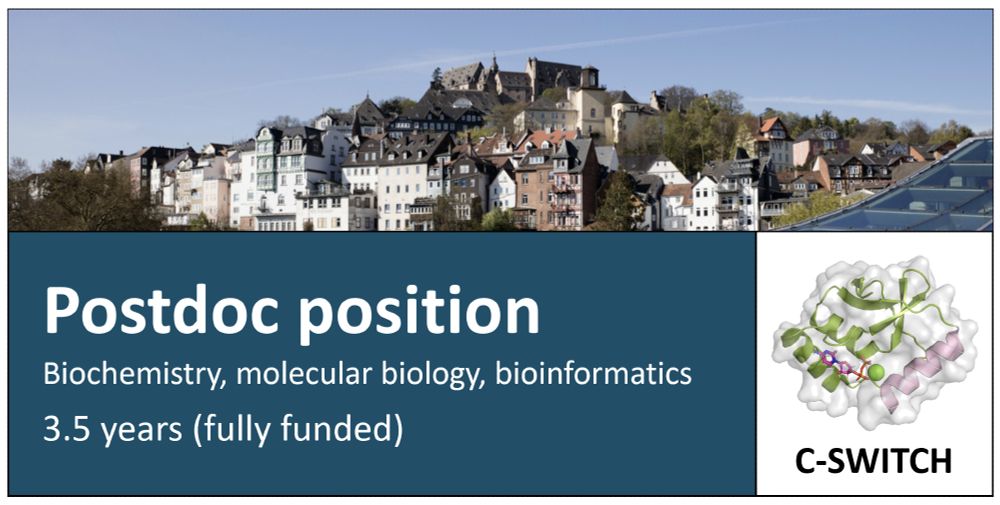
#Postdoc position - at the University of Marburg (Germany), funded within our ERC Advanced Grant "C-SWITCH"
Focus: CTP-dependent molecular switches as a new principle of cellular regulation in bacteria (including bacteriophages)
Apply by 04 May: stellenangebote.uni-marburg.de/jobposting/2...
Focus: CTP-dependent molecular switches as a new principle of cellular regulation in bacteria (including bacteriophages)
Apply by 04 May: stellenangebote.uni-marburg.de/jobposting/2...
April 2, 2025 at 3:39 PM
#Postdoc position - at the University of Marburg (Germany), funded within our ERC Advanced Grant "C-SWITCH"
Focus: CTP-dependent molecular switches as a new principle of cellular regulation in bacteria (including bacteriophages)
Apply by 04 May: stellenangebote.uni-marburg.de/jobposting/2...
Focus: CTP-dependent molecular switches as a new principle of cellular regulation in bacteria (including bacteriophages)
Apply by 04 May: stellenangebote.uni-marburg.de/jobposting/2...
Almost 8 years after starting this project finally happy to share the main research from my PhD! Couldn't have done it without the amazing help from @ainsley-beaton.bsky.social! We untangled a fascinating new redox sensor with the most extraordinary growth phenotype (I'm biased) in Streptomyces!

March 21, 2025 at 9:44 AM
Almost 8 years after starting this project finally happy to share the main research from my PhD! Couldn't have done it without the amazing help from @ainsley-beaton.bsky.social! We untangled a fascinating new redox sensor with the most extraordinary growth phenotype (I'm biased) in Streptomyces!
Reposted by Tom McLean
Further insight into how CutRS functions in Streptomyces and some thoughts on how its redox state detection via conserved dual cysteine residues in the extra cellular domain of a sensor kinase may be present in almost all bacteria
@tommclean.bsky.social
@matthutchings.bsky.social
@tommclean.bsky.social
@matthutchings.bsky.social

Extracellular redox sensors control the protein secretion stress response in Streptomyces https://www.biorxiv.org/content/10.1101/2025.03.20.644377v1
March 21, 2025 at 7:22 AM
Further insight into how CutRS functions in Streptomyces and some thoughts on how its redox state detection via conserved dual cysteine residues in the extra cellular domain of a sensor kinase may be present in almost all bacteria
@tommclean.bsky.social
@matthutchings.bsky.social
@tommclean.bsky.social
@matthutchings.bsky.social
Reposted by Tom McLean
Very happy to share this work led by @tommclean.bsky.social and @ainsley-beaton.bsky.social. The conserved Streptomyces sensor kinase CutS senses disulphide bond formation outside the cell. If it fails CutS activates CutR which switches on production of foldase HtrA3
www.biorxiv.org/content/10.1...
www.biorxiv.org/content/10.1...

Extracellular redox sensors control the protein secretion stress response in Streptomyces
Translocating unfolded polypeptides across membranes is essential in all domains of life and in bacteria requires the conserved Sec machinery and ATP. Bacterial Sec substrates fold outside the cell an...
www.biorxiv.org
March 21, 2025 at 8:19 AM
Very happy to share this work led by @tommclean.bsky.social and @ainsley-beaton.bsky.social. The conserved Streptomyces sensor kinase CutS senses disulphide bond formation outside the cell. If it fails CutS activates CutR which switches on production of foldase HtrA3
www.biorxiv.org/content/10.1...
www.biorxiv.org/content/10.1...
It's done. I've deactivated my twitter account, good riddance.
March 12, 2025 at 10:09 AM
It's done. I've deactivated my twitter account, good riddance.
Reposted by Tom McLean
Redox control of antibiotic biosynthesis in Streptomyces.
Remarkable work led by @katienoble241.bsky.social and Rebecca Devine demonstrates why antibiotic biosynthesis is often switched on in solid cultures and off in liquid.
www.biorxiv.org/content/10.1...
Remarkable work led by @katienoble241.bsky.social and Rebecca Devine demonstrates why antibiotic biosynthesis is often switched on in solid cultures and off in liquid.
www.biorxiv.org/content/10.1...
Redox control of antibiotic biosynthesis
Streptomyces bacteria make diverse specialised metabolites that form the basis of ~55% of clinically used antibiotics. Despite this, only 3% of their encoded specialised metabolites have been matched ...
www.biorxiv.org
March 10, 2025 at 8:39 PM
Redox control of antibiotic biosynthesis in Streptomyces.
Remarkable work led by @katienoble241.bsky.social and Rebecca Devine demonstrates why antibiotic biosynthesis is often switched on in solid cultures and off in liquid.
www.biorxiv.org/content/10.1...
Remarkable work led by @katienoble241.bsky.social and Rebecca Devine demonstrates why antibiotic biosynthesis is often switched on in solid cultures and off in liquid.
www.biorxiv.org/content/10.1...
Reposted by Tom McLean
Nice blog from the Lister Institute on our recent work on KorAB and long-range gene silencing on multi-drug resistance plasmid!!! @tommclean.bsky.social @johninnescentre.bsky.social
lister-institute.org.uk/biology-is-f...
lister-institute.org.uk/biology-is-f...
‘Biology is full of surprises’: How Tung Le’s team unlocked the secrets of RK2 plasmid proteins – Lister Institute
lister-institute.org.uk
February 24, 2025 at 11:55 AM
Nice blog from the Lister Institute on our recent work on KorAB and long-range gene silencing on multi-drug resistance plasmid!!! @tommclean.bsky.social @johninnescentre.bsky.social
lister-institute.org.uk/biology-is-f...
lister-institute.org.uk/biology-is-f...
Reposted by Tom McLean
Cool “Behind the paper” article on our recent KorB-KorA sliding clamp-locking clamp story. I remember Chris Thomas and Lewis Bingle (Birmingham) taught me about these proteins when I was an undergrad, and I kept remembering they said the mechanism was not clear!!!
www.nature.com/articles/s41...
www.nature.com/articles/s41...

Sliding clamp protein enables long-range gene silencing in a bacterial plasmid - Nature Microbiology
Long-distance gene regulation is uncommon in bacteria, and its molecular mechanisms are unclear. Using a combination of structural, biochemical and single-molecule techniques, researchers revealed tha...
www.nature.com
February 4, 2025 at 6:10 AM
Cool “Behind the paper” article on our recent KorB-KorA sliding clamp-locking clamp story. I remember Chris Thomas and Lewis Bingle (Birmingham) taught me about these proteins when I was an undergrad, and I kept remembering they said the mechanism was not clear!!!
www.nature.com/articles/s41...
www.nature.com/articles/s41...