





The Marine Biological Association
@thembauk.bsky.social
A leading UK marine biology research institute, promoting scientific excellence and representing the marine biology community since 1884.
🐚 https://www.mba.ac.uk/
🔗 linktr.ee/MarineBiologicalAssociation
🐚 https://www.mba.ac.uk/
🔗 linktr.ee/MarineBiologicalAssociation
Drop your best guess below - no Googling!
They're in no rush… but can you identify it before it reaches the bait?
#BRUV #FieldworkFriday #MarineMystery
They're in no rush… but can you identify it before it reaches the bait?
#BRUV #FieldworkFriday #MarineMystery
February 20, 2026 at 4:31 PM
Drop your best guess below - no Googling!
They're in no rush… but can you identify it before it reaches the bait?
#BRUV #FieldworkFriday #MarineMystery
They're in no rush… but can you identify it before it reaches the bait?
#BRUV #FieldworkFriday #MarineMystery
New Pistol Shrimp Species Discovered in Kochi Backwaters
In a breakthrough, researchers from the School of Industrial Fisheries, Cochin University of Science and Technology (Cusat) have identified a new species of pistol shrimp, commonly known as snapping shrimp, within the Kochi backwaters.
In a breakthrough, researchers from the School of Industrial Fisheries, Cochin University of Science and Technology (Cusat) have identified a new species of pistol shrimp, commonly known as snapping shrimp, within the Kochi backwaters.

February 19, 2026 at 4:05 PM
New Pistol Shrimp Species Discovered in Kochi Backwaters
In a breakthrough, researchers from the School of Industrial Fisheries, Cochin University of Science and Technology (Cusat) have identified a new species of pistol shrimp, commonly known as snapping shrimp, within the Kochi backwaters.
In a breakthrough, researchers from the School of Industrial Fisheries, Cochin University of Science and Technology (Cusat) have identified a new species of pistol shrimp, commonly known as snapping shrimp, within the Kochi backwaters.
Atlantic Puffins Washing Up Around the UK
@dassh-at-the-mba.bsky.social
If you find a puffin:
✍Log your sighting on iNaturalist - uk.inaturalist.org
🤳If the bird is alive, contact a local veterinary practice who will be able to advise you.
#iNaturalistUK #DASSH @inaturalist.bsky.social
@dassh-at-the-mba.bsky.social
If you find a puffin:
✍Log your sighting on iNaturalist - uk.inaturalist.org
🤳If the bird is alive, contact a local veterinary practice who will be able to advise you.
#iNaturalistUK #DASSH @inaturalist.bsky.social

February 18, 2026 at 12:36 PM
Atlantic Puffins Washing Up Around the UK
@dassh-at-the-mba.bsky.social
If you find a puffin:
✍Log your sighting on iNaturalist - uk.inaturalist.org
🤳If the bird is alive, contact a local veterinary practice who will be able to advise you.
#iNaturalistUK #DASSH @inaturalist.bsky.social
@dassh-at-the-mba.bsky.social
If you find a puffin:
✍Log your sighting on iNaturalist - uk.inaturalist.org
🤳If the bird is alive, contact a local veterinary practice who will be able to advise you.
#iNaturalistUK #DASSH @inaturalist.bsky.social
Reposted by The Marine Biological Association

We are organising the 2026 MBA postgraduate conference in Newcastle! You can already get your early ticket and submit your abstract :)
See you all on April!
@thembauk.bsky.social
See you all on April!
@thembauk.bsky.social


February 17, 2026 at 6:48 PM
We are organising the 2026 MBA postgraduate conference in Newcastle! You can already get your early ticket and submit your abstract :)
See you all on April!
@thembauk.bsky.social
See you all on April!
@thembauk.bsky.social
The National Centre for Marine Autonomy website showcases the pioneering projects, expanding partner community, and Plymouth’s position as a leading global centre for marine autonomy.
The NCMA will mark its international launch at Oceanology International 2026 in London.
www.marineautonomy.org.uk
The NCMA will mark its international launch at Oceanology International 2026 in London.
www.marineautonomy.org.uk

National Centre for Marine Autonomy | Explore Marine Autonomy Today
Discover UK's National Centre for Marine Autonomy, a hub for offshore testing, innovation, and research in marine technology, supporting defence, green tech, and maritime industries.
www.marineautonomy.org.uk
February 17, 2026 at 9:48 AM
The National Centre for Marine Autonomy website showcases the pioneering projects, expanding partner community, and Plymouth’s position as a leading global centre for marine autonomy.
The NCMA will mark its international launch at Oceanology International 2026 in London.
www.marineautonomy.org.uk
The NCMA will mark its international launch at Oceanology International 2026 in London.
www.marineautonomy.org.uk
Give the Ocean some Love this Valentine’s Day 💙
Here’s an easy, feel-good way to support our ocean, without it costing you a penny extra.
You can raise free donations for the Marine Biological Association every time you shop online with #easyfundraising.
Here’s an easy, feel-good way to support our ocean, without it costing you a penny extra.
You can raise free donations for the Marine Biological Association every time you shop online with #easyfundraising.

February 14, 2026 at 7:30 AM
Give the Ocean some Love this Valentine’s Day 💙
Here’s an easy, feel-good way to support our ocean, without it costing you a penny extra.
You can raise free donations for the Marine Biological Association every time you shop online with #easyfundraising.
Here’s an easy, feel-good way to support our ocean, without it costing you a penny extra.
You can raise free donations for the Marine Biological Association every time you shop online with #easyfundraising.
Biodiversity Beyond National Jurisdiction Agreement becomes UK Law after receiving Royal Assent.
“This is a story of collaboration of over 20 years between policy makers, lawmakers and the scientific community. Working together to safeguard marine biodiversity in the high seas."
“This is a story of collaboration of over 20 years between policy makers, lawmakers and the scientific community. Working together to safeguard marine biodiversity in the high seas."

February 13, 2026 at 1:57 PM
Biodiversity Beyond National Jurisdiction Agreement becomes UK Law after receiving Royal Assent.
“This is a story of collaboration of over 20 years between policy makers, lawmakers and the scientific community. Working together to safeguard marine biodiversity in the high seas."
“This is a story of collaboration of over 20 years between policy makers, lawmakers and the scientific community. Working together to safeguard marine biodiversity in the high seas."
Darwin sketched the first “Tree of Life” in 1837. 🌳Today, the Darwin Tree of Life Project is sequencing all UK species.
The MBA collects and prepares marine organisms for sequencing, helping us understand marine biodiversity, evolution and how species respond to environmental change.
The MBA collects and prepares marine organisms for sequencing, helping us understand marine biodiversity, evolution and how species respond to environmental change.
February 12, 2026 at 8:57 PM
Darwin sketched the first “Tree of Life” in 1837. 🌳Today, the Darwin Tree of Life Project is sequencing all UK species.
The MBA collects and prepares marine organisms for sequencing, helping us understand marine biodiversity, evolution and how species respond to environmental change.
The MBA collects and prepares marine organisms for sequencing, helping us understand marine biodiversity, evolution and how species respond to environmental change.
We’re proud to celebrate the pioneering women whose work has shaped science at the MBA and beyond.
Discover their legacy and impact 👉 https://www.mba.ac.uk/celebrating-the-legacy-of-pioneering-women-in-science-at-the-mba/
#InternationalDayOfWomenAndGirlsInScience
Discover their legacy and impact 👉 https://www.mba.ac.uk/celebrating-the-legacy-of-pioneering-women-in-science-at-the-mba/
#InternationalDayOfWomenAndGirlsInScience

February 11, 2026 at 2:34 PM
We’re proud to celebrate the pioneering women whose work has shaped science at the MBA and beyond.
Discover their legacy and impact 👉 https://www.mba.ac.uk/celebrating-the-legacy-of-pioneering-women-in-science-at-the-mba/
#InternationalDayOfWomenAndGirlsInScience
Discover their legacy and impact 👉 https://www.mba.ac.uk/celebrating-the-legacy-of-pioneering-women-in-science-at-the-mba/
#InternationalDayOfWomenAndGirlsInScience
@aliceahorton.bsky.social on the women who inspired her
Discover more about the Women in Science at the MBA - www.mba.ac.uk/celebrating-...
#WomenInScience #WomenInConservation #InternationalDayOfWomenAndGirlsInScience
Discover more about the Women in Science at the MBA - www.mba.ac.uk/celebrating-...
#WomenInScience #WomenInConservation #InternationalDayOfWomenAndGirlsInScience
February 11, 2026 at 12:51 PM
@aliceahorton.bsky.social on the women who inspired her
Discover more about the Women in Science at the MBA - www.mba.ac.uk/celebrating-...
#WomenInScience #WomenInConservation #InternationalDayOfWomenAndGirlsInScience
Discover more about the Women in Science at the MBA - www.mba.ac.uk/celebrating-...
#WomenInScience #WomenInConservation #InternationalDayOfWomenAndGirlsInScience
Opportunity for Early Career Marine Researchers...
The Brian Morton Exchange Fund provides support for a research exchange at the MBA, or partner research institutions in Hong Kong or The Azores.
👉https://mymba.mba.ac.uk/member-homepage/discounts-and-bursaries/brian-morton.html
The Brian Morton Exchange Fund provides support for a research exchange at the MBA, or partner research institutions in Hong Kong or The Azores.
👉https://mymba.mba.ac.uk/member-homepage/discounts-and-bursaries/brian-morton.html

February 10, 2026 at 7:03 PM
Opportunity for Early Career Marine Researchers...
The Brian Morton Exchange Fund provides support for a research exchange at the MBA, or partner research institutions in Hong Kong or The Azores.
👉https://mymba.mba.ac.uk/member-homepage/discounts-and-bursaries/brian-morton.html
The Brian Morton Exchange Fund provides support for a research exchange at the MBA, or partner research institutions in Hong Kong or The Azores.
👉https://mymba.mba.ac.uk/member-homepage/discounts-and-bursaries/brian-morton.html
Reposted by The Marine Biological Association

#OTD in 1868 Walter Garstang was born. During his time @thembauk.bsky.social Garstang focused on investigating North Sea fisheries. He was involved with the establishment of a fisheries laboratory at Lowestoft, which has since become @cefasgovuk.bsky.social
📸 MBA Archive ref PGA1.2
📸 MBA Archive ref PGA1.2

February 9, 2026 at 9:28 AM
#OTD in 1868 Walter Garstang was born. During his time @thembauk.bsky.social Garstang focused on investigating North Sea fisheries. He was involved with the establishment of a fisheries laboratory at Lowestoft, which has since become @cefasgovuk.bsky.social
📸 MBA Archive ref PGA1.2
📸 MBA Archive ref PGA1.2
Here’s some more of the fabulous sea hares (species Aplysia Depilans) found across the south west. Rather like the Common Octopus, 2025 was the first year it was sighted in large numbers.
These images were sent in by Olivia Langmead
These images were sent in by Olivia Langmead


February 5, 2026 at 5:04 PM
Here’s some more of the fabulous sea hares (species Aplysia Depilans) found across the south west. Rather like the Common Octopus, 2025 was the first year it was sighted in large numbers.
These images were sent in by Olivia Langmead
These images were sent in by Olivia Langmead
Zak Russell from @therockpoolproject.bsky.social talks about discovering of a depilatory sea hare (Aplysia depilans) usually found in the Mediterranean found at recent #bioblitz in Plymouth.
February 4, 2026 at 6:31 PM
Zak Russell from @therockpoolproject.bsky.social talks about discovering of a depilatory sea hare (Aplysia depilans) usually found in the Mediterranean found at recent #bioblitz in Plymouth.
Rare sea creature discovered on Plymouth shore! 🐌 a Mediterranean sea hare (Aplysia depilans), a species rarely seen in the UK, was spotted during The Rock Pool Project’s BioBlitz.
🔗 https://www.mba.ac.uk/young-rock-poolers-discover-rare-mediterranean-sea-hare-species-on-plymouth-shore/
🔗 https://www.mba.ac.uk/young-rock-poolers-discover-rare-mediterranean-sea-hare-species-on-plymouth-shore/


February 4, 2026 at 3:30 PM
Rare sea creature discovered on Plymouth shore! 🐌 a Mediterranean sea hare (Aplysia depilans), a species rarely seen in the UK, was spotted during The Rock Pool Project’s BioBlitz.
🔗 https://www.mba.ac.uk/young-rock-poolers-discover-rare-mediterranean-sea-hare-species-on-plymouth-shore/
🔗 https://www.mba.ac.uk/young-rock-poolers-discover-rare-mediterranean-sea-hare-species-on-plymouth-shore/
Welcoming five new Fellows...
We’re delighted to announce the appointment of five new MBA Fellows: Robert Clark, Denise Adaoyibo Okpala, @tomolamola.bsky.social Tom Pickerell, Professor Craig Young and Nick Riddiford.
👉 www.mba.ac.uk/marine-biolo...
We’re delighted to announce the appointment of five new MBA Fellows: Robert Clark, Denise Adaoyibo Okpala, @tomolamola.bsky.social Tom Pickerell, Professor Craig Young and Nick Riddiford.
👉 www.mba.ac.uk/marine-biolo...

February 3, 2026 at 4:04 PM
Welcoming five new Fellows...
We’re delighted to announce the appointment of five new MBA Fellows: Robert Clark, Denise Adaoyibo Okpala, @tomolamola.bsky.social Tom Pickerell, Professor Craig Young and Nick Riddiford.
👉 www.mba.ac.uk/marine-biolo...
We’re delighted to announce the appointment of five new MBA Fellows: Robert Clark, Denise Adaoyibo Okpala, @tomolamola.bsky.social Tom Pickerell, Professor Craig Young and Nick Riddiford.
👉 www.mba.ac.uk/marine-biolo...
Reposted by The Marine Biological Association
Excited to co-chair with @clareostle.bsky.social our #WCMB2026 session Plankton Biodiversity Observation for Ocean Health in Bruges (17–20 Nov 2026).
We invite abstracts on all approaches to monitoring marine plankton.
Deadline: 17 March 2026 (23:59 CET).
🌊🔬💙 @thembauk.bsky.social
We invite abstracts on all approaches to monitoring marine plankton.
Deadline: 17 March 2026 (23:59 CET).
🌊🔬💙 @thembauk.bsky.social

February 2, 2026 at 2:37 PM
Excited to co-chair with @clareostle.bsky.social our #WCMB2026 session Plankton Biodiversity Observation for Ocean Health in Bruges (17–20 Nov 2026).
We invite abstracts on all approaches to monitoring marine plankton.
Deadline: 17 March 2026 (23:59 CET).
🌊🔬💙 @thembauk.bsky.social
We invite abstracts on all approaches to monitoring marine plankton.
Deadline: 17 March 2026 (23:59 CET).
🌊🔬💙 @thembauk.bsky.social
Speaking of Mangrove Forests… what’s your favourite Mangrove Ascetic? 🌱
Ahmed Badwan, Lorenzo Mittiga, Anita Kainrath / Ocean Image Bank / Mangrove Photography Awards #WorldWetlandsDay #Mangroves
Ahmed Badwan, Lorenzo Mittiga, Anita Kainrath / Ocean Image Bank / Mangrove Photography Awards #WorldWetlandsDay #Mangroves


February 2, 2026 at 4:31 PM
Speaking of Mangrove Forests… what’s your favourite Mangrove Ascetic? 🌱
Ahmed Badwan, Lorenzo Mittiga, Anita Kainrath / Ocean Image Bank / Mangrove Photography Awards #WorldWetlandsDay #Mangroves
Ahmed Badwan, Lorenzo Mittiga, Anita Kainrath / Ocean Image Bank / Mangrove Photography Awards #WorldWetlandsDay #Mangroves
Mangrove forests unique position between land and sea means they trap materials imported by rivers and tides, capturing carbon from both upstream catchments and the ocean.
Read the full story in Issue 32 of The Marine Biologist www.mba.ac.uk/our-membership/our-magazine/
#WorldWetlandsDay
Read the full story in Issue 32 of The Marine Biologist www.mba.ac.uk/our-membership/our-magazine/
#WorldWetlandsDay

February 2, 2026 at 11:31 AM
Mangrove forests unique position between land and sea means they trap materials imported by rivers and tides, capturing carbon from both upstream catchments and the ocean.
Read the full story in Issue 32 of The Marine Biologist www.mba.ac.uk/our-membership/our-magazine/
#WorldWetlandsDay
Read the full story in Issue 32 of The Marine Biologist www.mba.ac.uk/our-membership/our-magazine/
#WorldWetlandsDay
Reposted by The Marine Biological Association

🪸Tricky Taxon Thursday: Patella pellucida 🪸
The striking blue-rayed limpet, with its vibrant azure streaks, measures just 2cm, and resides on kelp in fast-flowing waters, from the lower shore to depths of 25-27m. In autumn, they shift to the holdfast to survive winter storms.
🔍See 3782 records👇
The striking blue-rayed limpet, with its vibrant azure streaks, measures just 2cm, and resides on kelp in fast-flowing waters, from the lower shore to depths of 25-27m. In autumn, they shift to the holdfast to survive winter storms.
🔍See 3782 records👇

DASSH Mapper : Retrieve Data : Data : Home - DASSH
Use the map tools to create a bounding box to query with...
www.dassh.ac.uk
January 29, 2026 at 1:01 PM
🪸Tricky Taxon Thursday: Patella pellucida 🪸
The striking blue-rayed limpet, with its vibrant azure streaks, measures just 2cm, and resides on kelp in fast-flowing waters, from the lower shore to depths of 25-27m. In autumn, they shift to the holdfast to survive winter storms.
🔍See 3782 records👇
The striking blue-rayed limpet, with its vibrant azure streaks, measures just 2cm, and resides on kelp in fast-flowing waters, from the lower shore to depths of 25-27m. In autumn, they shift to the holdfast to survive winter storms.
🔍See 3782 records👇
A huge thank you to Olivia Langmead whose incredible photos featured in the recent Octopus Report. Thanks to all our partners who contributed to the report.
Read more → https://www.mba.ac.uk/octopus-bloom-off-southwest-uk-new-report-reveals-scale-causes-and-consequences/
Read more → https://www.mba.ac.uk/octopus-bloom-off-southwest-uk-new-report-reveals-scale-causes-and-consequences/


February 1, 2026 at 4:02 PM
A huge thank you to Olivia Langmead whose incredible photos featured in the recent Octopus Report. Thanks to all our partners who contributed to the report.
Read more → https://www.mba.ac.uk/octopus-bloom-off-southwest-uk-new-report-reveals-scale-causes-and-consequences/
Read more → https://www.mba.ac.uk/octopus-bloom-off-southwest-uk-new-report-reveals-scale-causes-and-consequences/
"A strange creature, with shadows pulsing across its indeterminate form, sat hunched on the seabed above eight tentacles and among sea fans and sponges."
mymba.mba.ac.uk/resource/a-r...
mymba.mba.ac.uk/resource/a-r...

January 30, 2026 at 3:27 PM
"A strange creature, with shadows pulsing across its indeterminate form, sat hunched on the seabed above eight tentacles and among sea fans and sponges."
mymba.mba.ac.uk/resource/a-r...
mymba.mba.ac.uk/resource/a-r...
Reposted by The Marine Biological Association

🐚Why do Red Lists matter? In today's blog, we discuss a new GB Red List Assessment on marine molluscs & echinoderms
Find out how we apply IUCN #RedList Categories & Criteria to evaluate regional extinction risk bit.ly/45CRted
@thembauk.bsky.social @naturescot.bsky.social #TogetherForNature
Find out how we apply IUCN #RedList Categories & Criteria to evaluate regional extinction risk bit.ly/45CRted
@thembauk.bsky.social @naturescot.bsky.social #TogetherForNature

January 29, 2026 at 3:42 PM
🐚Why do Red Lists matter? In today's blog, we discuss a new GB Red List Assessment on marine molluscs & echinoderms
Find out how we apply IUCN #RedList Categories & Criteria to evaluate regional extinction risk bit.ly/45CRted
@thembauk.bsky.social @naturescot.bsky.social #TogetherForNature
Find out how we apply IUCN #RedList Categories & Criteria to evaluate regional extinction risk bit.ly/45CRted
@thembauk.bsky.social @naturescot.bsky.social #TogetherForNature
January is always a tricky time of year for marine biologists here in the UK…
but we’d love to see your fieldwork in action! Share your photos with us this year!
#FieldWorkFriday
but we’d love to see your fieldwork in action! Share your photos with us this year!
#FieldWorkFriday
January 30, 2026 at 7:02 AM
January is always a tricky time of year for marine biologists here in the UK…
but we’d love to see your fieldwork in action! Share your photos with us this year!
#FieldWorkFriday
but we’d love to see your fieldwork in action! Share your photos with us this year!
#FieldWorkFriday
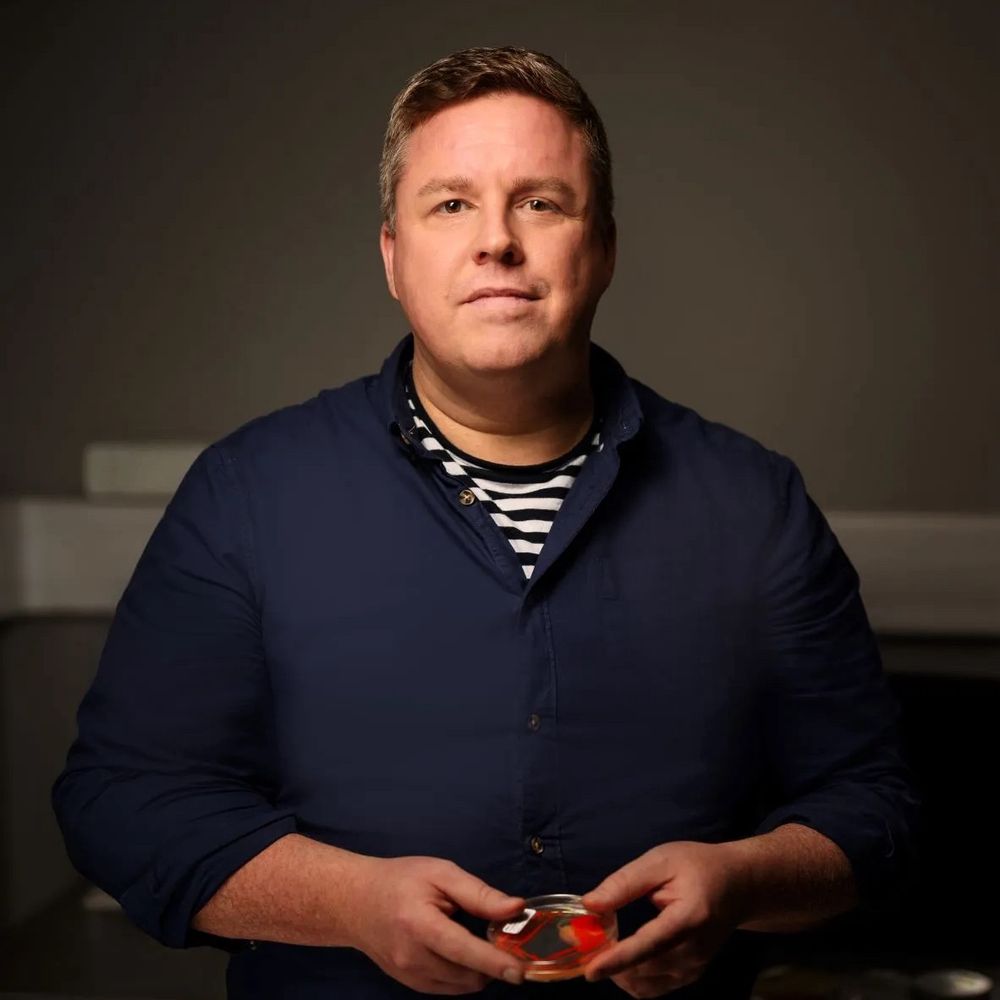
The science behind a sudden octopus surge.
Watch Bryce Stewart as he explains why octopus numbers exploded off the #UK #SouthWest coast in 2025 on BBC Spotlight last night.
Watch the full interview here 👉 youtube.com/watch?v=BtlsHszyex8
Watch Bryce Stewart as he explains why octopus numbers exploded off the #UK #SouthWest coast in 2025 on BBC Spotlight last night.
Watch the full interview here 👉 youtube.com/watch?v=BtlsHszyex8
January 29, 2026 at 2:04 PM
The science behind a sudden octopus surge.
Watch Bryce Stewart as he explains why octopus numbers exploded off the #UK #SouthWest coast in 2025 on BBC Spotlight last night.
Watch the full interview here 👉 youtube.com/watch?v=BtlsHszyex8
Watch Bryce Stewart as he explains why octopus numbers exploded off the #UK #SouthWest coast in 2025 on BBC Spotlight last night.
Watch the full interview here 👉 youtube.com/watch?v=BtlsHszyex8