


Centre for the Cellular Microenvironment
@theglasgowcemi.bsky.social
We are a Glasgow-based multidisciplinary team of bio- and cell engineers.
We focus on understanding the interactions between materials, proteins and cells to gain insight into engineering cell behaviour and translating technologies into better healthcare.
We focus on understanding the interactions between materials, proteins and cells to gain insight into engineering cell behaviour and translating technologies into better healthcare.
Reposted by Centre for the Cellular Microenvironment
Tread -1- EpiSci - I am very proud to share with you our new study that you can access on @biorxivpreprint.bsky.social (see link below)
"The Interaction with Nanotopographical Environment regulates nuclear mechanoresponse in mESCs via Histone Demethylase KDM3A.
www.biorxiv.org/content/10.6...
"The Interaction with Nanotopographical Environment regulates nuclear mechanoresponse in mESCs via Histone Demethylase KDM3A.
www.biorxiv.org/content/10.6...

February 14, 2026 at 10:00 AM
Tread -1- EpiSci - I am very proud to share with you our new study that you can access on @biorxivpreprint.bsky.social (see link below)
"The Interaction with Nanotopographical Environment regulates nuclear mechanoresponse in mESCs via Histone Demethylase KDM3A.
www.biorxiv.org/content/10.6...
"The Interaction with Nanotopographical Environment regulates nuclear mechanoresponse in mESCs via Histone Demethylase KDM3A.
www.biorxiv.org/content/10.6...
Great work, with involvement of CeMi member @carstenschulte4.bsky.social, providing new insights on what is happening during nuclear mechanotransduction in stem cells:
Tread -1- EpiSci - I am very proud to share with you our new study that you can access on @biorxivpreprint.bsky.social (see link below)
"The Interaction with Nanotopographical Environment regulates nuclear mechanoresponse in mESCs via Histone Demethylase KDM3A.
www.biorxiv.org/content/10.6...
"The Interaction with Nanotopographical Environment regulates nuclear mechanoresponse in mESCs via Histone Demethylase KDM3A.
www.biorxiv.org/content/10.6...
February 16, 2026 at 11:21 PM
Great work, with involvement of CeMi member @carstenschulte4.bsky.social, providing new insights on what is happening during nuclear mechanotransduction in stem cells:
Reposted by Centre for the Cellular Microenvironment
It finally happened. I'm beyond happy to see this work with @carmeloferrai.bsky.social is out now. This collaboration to study the link between mechanotransduction and epigenetic regulation started quite a while ago. It is kind of a miracle that we eventually got to this point against all odds.
Tread -1- EpiSci - I am very proud to share with you our new study that you can access on @biorxivpreprint.bsky.social (see link below)
"The Interaction with Nanotopographical Environment regulates nuclear mechanoresponse in mESCs via Histone Demethylase KDM3A.
www.biorxiv.org/content/10.6...
"The Interaction with Nanotopographical Environment regulates nuclear mechanoresponse in mESCs via Histone Demethylase KDM3A.
www.biorxiv.org/content/10.6...
February 14, 2026 at 1:56 PM
It finally happened. I'm beyond happy to see this work with @carmeloferrai.bsky.social is out now. This collaboration to study the link between mechanotransduction and epigenetic regulation started quite a while ago. It is kind of a miracle that we eventually got to this point against all odds.
Reposted by Centre for the Cellular Microenvironment

The bumpy road leads to the nucleus--cool new mechanobiology!
Tread -1- EpiSci - I am very proud to share with you our new study that you can access on @biorxivpreprint.bsky.social (see link below)
"The Interaction with Nanotopographical Environment regulates nuclear mechanoresponse in mESCs via Histone Demethylase KDM3A.
www.biorxiv.org/content/10.6...
"The Interaction with Nanotopographical Environment regulates nuclear mechanoresponse in mESCs via Histone Demethylase KDM3A.
www.biorxiv.org/content/10.6...
February 15, 2026 at 2:07 PM
The bumpy road leads to the nucleus--cool new mechanobiology!
Reposted by Centre for the Cellular Microenvironment
Interested in #Mechanobiology #BoneRegeneration and #GrowthFactor mimetics? Check out our paper in Small @wileyonlinelibrary.bsky.social by @finbariii.bsky.social. We show that viscosity unlocks the osteogenic activity of BMP-2 mimetic DWIVA @theglasgowcemi.bsky.social @uofgengineering.bsky.social 🧪

Leveraging Viscosity to Unlock the Osteogenic Potential of BMP‐2 Mimetic DWIVA
Dynamic interfaces based on supported lipid bilayers demonstrate that the osteogenic potential of the BMP-2 mimetic DWIVA can be harnessed by modulating substrate viscosity. This work highlights that....
onlinelibrary.wiley.com
January 27, 2026 at 3:15 PM
Interested in #Mechanobiology #BoneRegeneration and #GrowthFactor mimetics? Check out our paper in Small @wileyonlinelibrary.bsky.social by @finbariii.bsky.social. We show that viscosity unlocks the osteogenic activity of BMP-2 mimetic DWIVA @theglasgowcemi.bsky.social @uofgengineering.bsky.social 🧪
Reposted by Centre for the Cellular Microenvironment

🚀Huge congrats to @NadiaSoulioti.bsky.social on passing her PhD viva yesterday! I’m so proud of you! 🥳🎉
🧪Thanks to the exam panel: Andrew Hoy (UNSW Sydney, external), @MarcoCantini.bsky.social (internal), and Catherine Berry (convener) from @uofglasgow.bsky.social @theglasgowcemi.bsky.social
🧪Thanks to the exam panel: Andrew Hoy (UNSW Sydney, external), @MarcoCantini.bsky.social (internal), and Catherine Berry (convener) from @uofglasgow.bsky.social @theglasgowcemi.bsky.social


October 23, 2025 at 4:21 PM
🚀Huge congrats to @NadiaSoulioti.bsky.social on passing her PhD viva yesterday! I’m so proud of you! 🥳🎉
🧪Thanks to the exam panel: Andrew Hoy (UNSW Sydney, external), @MarcoCantini.bsky.social (internal), and Catherine Berry (convener) from @uofglasgow.bsky.social @theglasgowcemi.bsky.social
🧪Thanks to the exam panel: Andrew Hoy (UNSW Sydney, external), @MarcoCantini.bsky.social (internal), and Catherine Berry (convener) from @uofglasgow.bsky.social @theglasgowcemi.bsky.social
Reposted by Centre for the Cellular Microenvironment
Glasgow representation is strong @cellmech2025.bsky.social with @unistrathclyde.bsky.social & @uofglasgow.bsky.social @theglasgowcemi.bsky.social cell mechanobiologists united 😊!

October 1, 2025 at 1:56 PM
Glasgow representation is strong @cellmech2025.bsky.social with @unistrathclyde.bsky.social & @uofglasgow.bsky.social @theglasgowcemi.bsky.social cell mechanobiologists united 😊!
Reposted by Centre for the Cellular Microenvironment
The core team of the Tenovus Scotland-funded Small Pilot Grant project "Leveraging mechanobiology for the optimisation of in vitro muscle-related disease models" is on the case😊, with a strong 4th&5th year students-driven component! @unistrathclyde.bsky.social @theglasgowcemi.bsky.social

September 22, 2025 at 10:29 PM
The core team of the Tenovus Scotland-funded Small Pilot Grant project "Leveraging mechanobiology for the optimisation of in vitro muscle-related disease models" is on the case😊, with a strong 4th&5th year students-driven component! @unistrathclyde.bsky.social @theglasgowcemi.bsky.social
Reposted by Centre for the Cellular Microenvironment

Alexandre, from @theglasgowcemi.bsky.social, will share how our team is developing “symbiotic engineered living materials” — 3D constructs where genetically engineered helper cells detect metabolic cues from mesenchymal stem cells and respond by secreting lineage-specific growth factors.
September 15, 2025 at 4:05 PM
Alexandre, from @theglasgowcemi.bsky.social, will share how our team is developing “symbiotic engineered living materials” — 3D constructs where genetically engineered helper cells detect metabolic cues from mesenchymal stem cells and respond by secreting lineage-specific growth factors.
Reposted by Centre for the Cellular Microenvironment
We are very happy 😄 that our Rheinland-Pfalz & Scotland exchange project started, jointly awarded by @sulsa.bsky.social and JGU Scotland Hub, sponsored by the governments of 🏴 & Rheinland-Pfalz. 1/2
@unistrathclyde.bsky.social @theglasgowcemi.bsky.social @imbmainz.bsky.social @unimainz.bsky.social
@unistrathclyde.bsky.social @theglasgowcemi.bsky.social @imbmainz.bsky.social @unimainz.bsky.social

September 10, 2025 at 8:17 PM
We are very happy 😄 that our Rheinland-Pfalz & Scotland exchange project started, jointly awarded by @sulsa.bsky.social and JGU Scotland Hub, sponsored by the governments of 🏴 & Rheinland-Pfalz. 1/2
@unistrathclyde.bsky.social @theglasgowcemi.bsky.social @imbmainz.bsky.social @unimainz.bsky.social
@unistrathclyde.bsky.social @theglasgowcemi.bsky.social @imbmainz.bsky.social @unimainz.bsky.social
Reposted by Centre for the Cellular Microenvironment

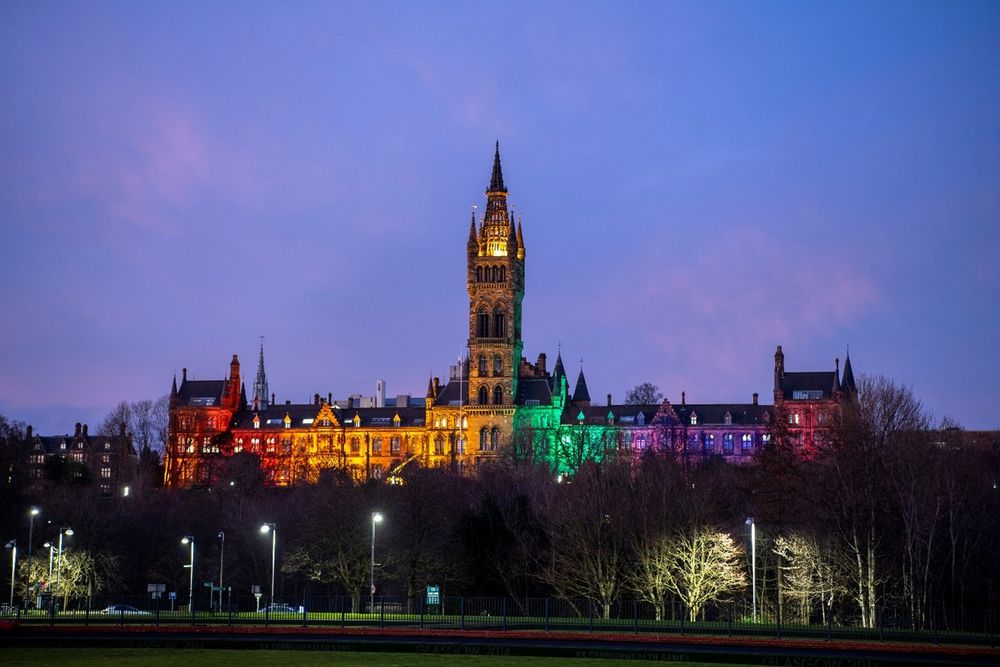
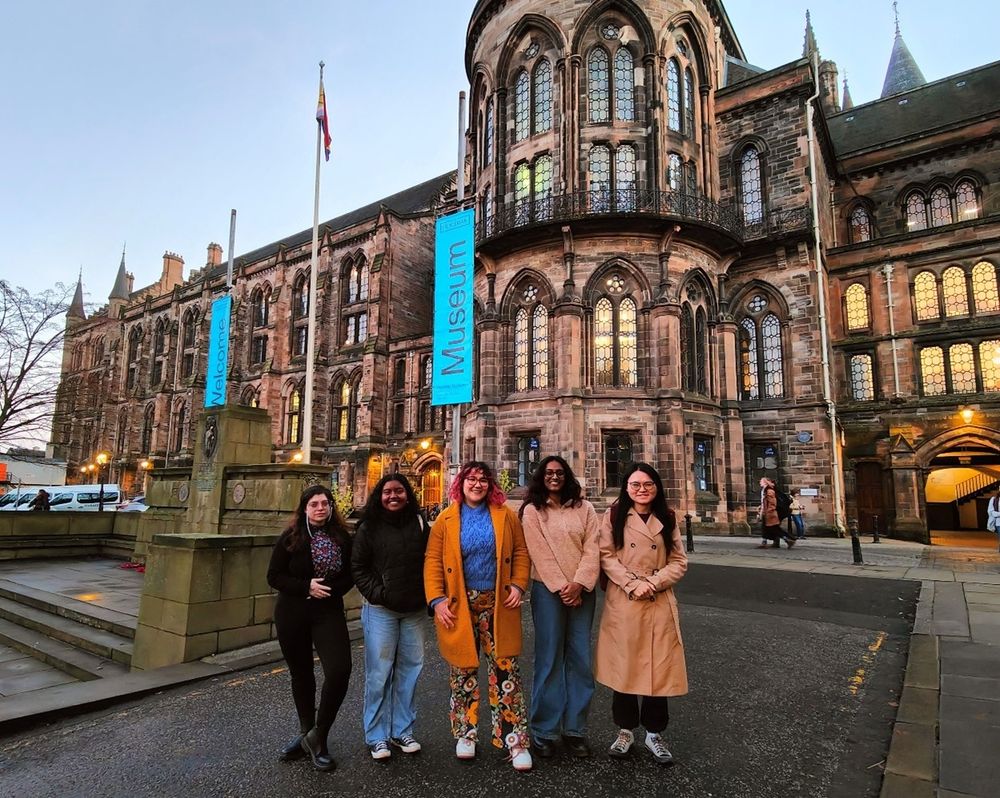
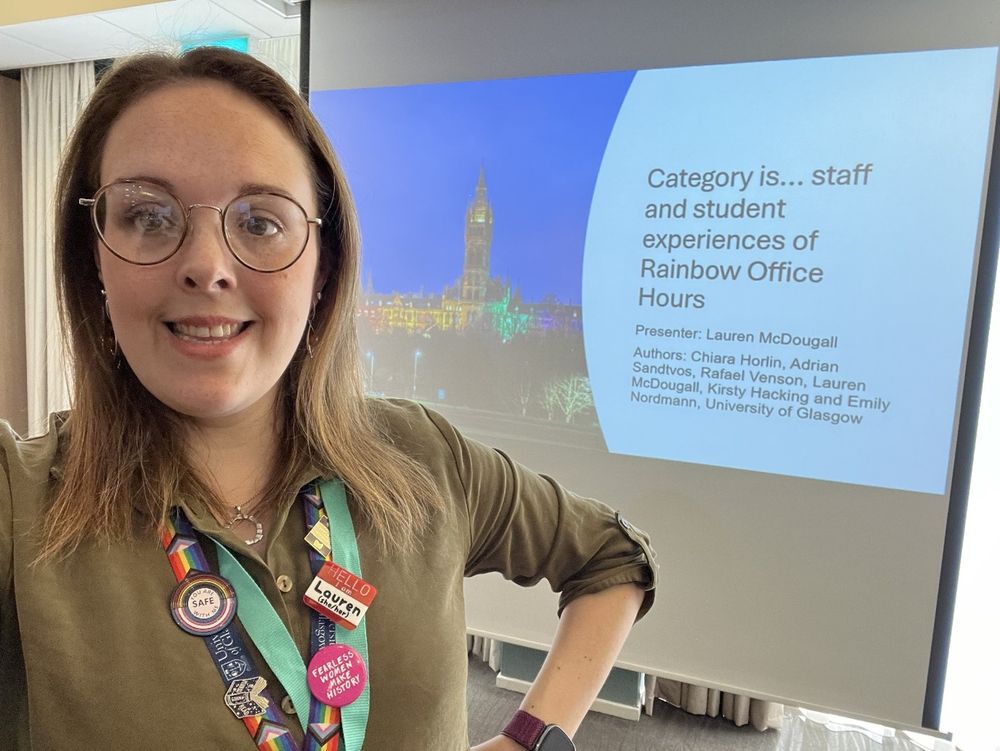
As we mark #PrideMonth, we take this moment to celebrate LGBTQ+ identities and also reflect on the ongoing work to make our universities places where every member can thrive.
Thank you to colleagues for co-authoring this powerful piece on Rainbow Office Hours ➡️ gla.ac/3Zio6uv
#OneTeamUofG 🏳️🌈 🏳️⚧️
Thank you to colleagues for co-authoring this powerful piece on Rainbow Office Hours ➡️ gla.ac/3Zio6uv
#OneTeamUofG 🏳️🌈 🏳️⚧️

June 6, 2025 at 11:32 AM
As we mark #PrideMonth, we take this moment to celebrate LGBTQ+ identities and also reflect on the ongoing work to make our universities places where every member can thrive.
Thank you to colleagues for co-authoring this powerful piece on Rainbow Office Hours ➡️ gla.ac/3Zio6uv
#OneTeamUofG 🏳️🌈 🏳️⚧️
Thank you to colleagues for co-authoring this powerful piece on Rainbow Office Hours ➡️ gla.ac/3Zio6uv
#OneTeamUofG 🏳️🌈 🏳️⚧️
Reposted by Centre for the Cellular Microenvironment
New review paper out! Proud to co-author with @optophysakhil.bsky.social and @gailmcconnell.bsky.social a deep dive into Fourier Ptychographic Microscopy (FPM), from physics to cutting-edge algorithms & medical imaging applications. onlinelibrary.wiley.com/doi/epdf/10....
Fourier ptychography microscopy for digital pathology
onlinelibrary.wiley.com
June 24, 2025 at 12:23 PM
New review paper out! Proud to co-author with @optophysakhil.bsky.social and @gailmcconnell.bsky.social a deep dive into Fourier Ptychographic Microscopy (FPM), from physics to cutting-edge algorithms & medical imaging applications. onlinelibrary.wiley.com/doi/epdf/10....
Reposted by Centre for the Cellular Microenvironment
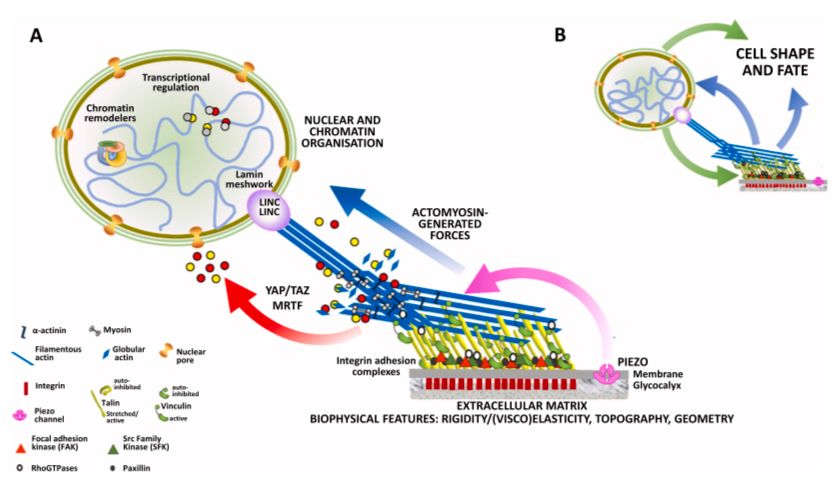
A little more than a year that @carmeloferrai.bsky.social and I published our review "Mechanotransduction in stem cells"🤯! I'm happy that it was received well 😃! Stay tuned, more to come in this direction in a not too far future😎.
EpiSci - Hi there! Our review “Mechanotransduction in stem cells” is finally published. With @carstenschulte4.bsky.social we provided a comprehensive picture, that aims to cover the whole mechanotransductive pathway from the cell microenvironment to the nucleus. 1/3 pubmed.ncbi.nlm.nih.gov/38729084/
June 27, 2025 at 8:37 PM
A little more than a year that @carmeloferrai.bsky.social and I published our review "Mechanotransduction in stem cells"🤯! I'm happy that it was received well 😃! Stay tuned, more to come in this direction in a not too far future😎.
Reposted by Centre for the Cellular Microenvironment
At the Center of the Cellular Microenvironment’s impact workshop. Really enjoying the space to think together about where cell engineering and mechanobiology are headed. @theglasgowcemi.bsky.social @unistrathclyde.bsky.social

May 29, 2025 at 10:35 AM
At the Center of the Cellular Microenvironment’s impact workshop. Really enjoying the space to think together about where cell engineering and mechanobiology are headed. @theglasgowcemi.bsky.social @unistrathclyde.bsky.social
A chat with Prof. Viola Vogel (Department of Health Sciences and Technology, ETH Zürich), whose pioneering work in mechanobiology has been key to show that proteins act as mechano-chemical switches which can be exploited in the treatment of various diseases.
podcasts.apple.com/gb/podcast/m...
podcasts.apple.com/gb/podcast/m...

Making progress in mechanobiology (with Prof Viola Vogel)
Podcast Episode · The CeMi Podcast · 20/03/2025 · 23m
podcasts.apple.com
May 16, 2025 at 10:58 AM
A chat with Prof. Viola Vogel (Department of Health Sciences and Technology, ETH Zürich), whose pioneering work in mechanobiology has been key to show that proteins act as mechano-chemical switches which can be exploited in the treatment of various diseases.
podcasts.apple.com/gb/podcast/m...
podcasts.apple.com/gb/podcast/m...
Happy to share our latest review 'Mechanical signatures and models of the bone marrow niche' in Nature Reviews Bioengineering. Led by Dora Rogkoti. @hannahdonnelly.bsky.social @manuelsalmeron.bsky.social
Read the full review here: rdcu.be/ejGx4
Read the full review here: rdcu.be/ejGx4

Mechanical signatures and models of the bone marrow niche
Nature Reviews Bioengineering - The bone marrow is the primary site for haematopoiesis but can also become the origin of haematological malignancies. This Review discusses the complex mechanical...
rdcu.be
May 16, 2025 at 10:53 AM
Happy to share our latest review 'Mechanical signatures and models of the bone marrow niche' in Nature Reviews Bioengineering. Led by Dora Rogkoti. @hannahdonnelly.bsky.social @manuelsalmeron.bsky.social
Read the full review here: rdcu.be/ejGx4
Read the full review here: rdcu.be/ejGx4
Congratulations to Anna Maria Kapetanaki who passed her PhD viva this week! 🎉 🥳 💓:


May 16, 2025 at 10:49 AM
Congratulations to Anna Maria Kapetanaki who passed her PhD viva this week! 🎉 🥳 💓:
Reposted by Centre for the Cellular Microenvironment
Thanks, I'm happy that you like it😊.
Indeed, another critical component is molecular clutch force loading:
bsky.app/profile/cars...
Indeed, another critical component is molecular clutch force loading:
bsky.app/profile/cars...
I delved even deeper into this a few years later, further highlighting the importance of talin-mediated molecular clutch force loading in this process:
👉 www.sciencedirect.com/science/arti...
👉 www.sciencedirect.com/science/arti...

May 6, 2025 at 3:24 PM
Thanks, I'm happy that you like it😊.
Indeed, another critical component is molecular clutch force loading:
bsky.app/profile/cars...
Indeed, another critical component is molecular clutch force loading:
bsky.app/profile/cars...
Reposted by Centre for the Cellular Microenvironment
...can involve also other cell adhesion receptors (e.g., GPI-anchored, such as uPAR, or maybe syndecans, DDRs?) 2/2:

May 6, 2025 at 3:50 PM
...can involve also other cell adhesion receptors (e.g., GPI-anchored, such as uPAR, or maybe syndecans, DDRs?) 2/2:
Reposted by Centre for the Cellular Microenvironment
Consistently, some years later (2019), Changede et al. (Sheetz group) showed the existence of integrin nanoclusters bridges build up by activated, but unliganded, integrins. The binding to the thin matrix fibres was mediated by integrins in this case, but it's intriguing to think that this 1/2
May 6, 2025 at 3:47 PM
Consistently, some years later (2019), Changede et al. (Sheetz group) showed the existence of integrin nanoclusters bridges build up by activated, but unliganded, integrins. The binding to the thin matrix fibres was mediated by integrins in this case, but it's intriguing to think that this 1/2
Reposted by Centre for the Cellular Microenvironment
I delved even deeper into this a few years later, further highlighting the importance of talin-mediated molecular clutch force loading in this process:
👉 www.sciencedirect.com/science/arti...
👉 www.sciencedirect.com/science/arti...
May 6, 2025 at 3:08 PM
I delved even deeper into this a few years later, further highlighting the importance of talin-mediated molecular clutch force loading in this process:
👉 www.sciencedirect.com/science/arti...
👉 www.sciencedirect.com/science/arti...
Reposted by Centre for the Cellular Microenvironment
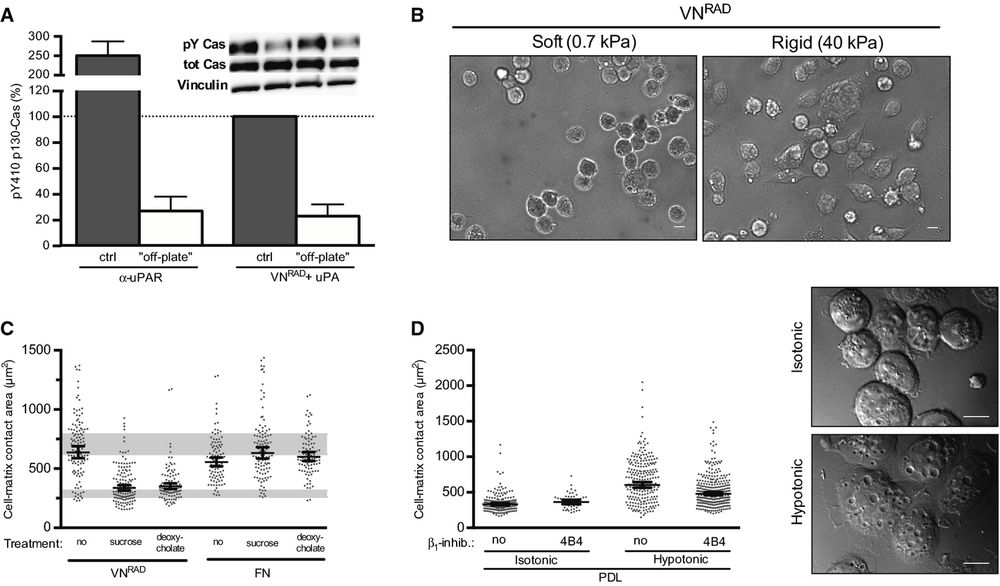
This ligand binding-independent integrin signalling was driven by membrane tension. Indeed, the induction of this non-canonical integrin signalling was not restricted to uPAR/vitronectin interaction.
This work introduced the cell membrane as a critical component of the molecular clutch.
This work introduced the cell membrane as a critical component of the molecular clutch.
May 6, 2025 at 2:56 PM
This ligand binding-independent integrin signalling was driven by membrane tension. Indeed, the induction of this non-canonical integrin signalling was not restricted to uPAR/vitronectin interaction.
This work introduced the cell membrane as a critical component of the molecular clutch.
This work introduced the cell membrane as a critical component of the molecular clutch.
Reposted by Centre for the Cellular Microenvironment
This study assessed the possibility of ligand-independent adhesion signalling by integrins, which was a quite controversial hypothesis at the time (maybe still is).
We found that e.g. uPAR-mediated adhesion to vitronectin can induce integrin signalling that does not require integrin ligand binding:
We found that e.g. uPAR-mediated adhesion to vitronectin can induce integrin signalling that does not require integrin ligand binding:

May 6, 2025 at 2:43 PM
This study assessed the possibility of ligand-independent adhesion signalling by integrins, which was a quite controversial hypothesis at the time (maybe still is).
We found that e.g. uPAR-mediated adhesion to vitronectin can induce integrin signalling that does not require integrin ligand binding:
We found that e.g. uPAR-mediated adhesion to vitronectin can induce integrin signalling that does not require integrin ligand binding:
Interesting 🧵on a classic mechanotransduction paper of one of our members introducing the concept of ligand binding-independent integrin signalling driven by membrane tension:
A paper that I published as a co-first author in 2014 (with G.M. Ferraris and V. Buttiglione, supervised by N. Sidenius, not on bluesky) reached 100 citations.
Science social media weren't that big yet back then, so I seize this occasion to make a 🧵 about it now:
👉 www.embopress.org/doi/full/10....
Science social media weren't that big yet back then, so I seize this occasion to make a 🧵 about it now:
👉 www.embopress.org/doi/full/10....

The interaction between uPAR and vitronectin triggers ligand‐independent adhesion signalling by integrins | The EMBO Journal
image image Cell adhesion mediated by uPAR and other adhesion receptors triggers non‐canonical integrin activation independent
of integrin–ligand interactions. The cross‐talk between adhesion recepto...
www.embopress.org
May 6, 2025 at 2:58 PM
Interesting 🧵on a classic mechanotransduction paper of one of our members introducing the concept of ligand binding-independent integrin signalling driven by membrane tension:
The abstract submission deadline of BioMedEng2025 @biomedgen25.bsky.social has been extended. You still have the chance to submit until the 19th of May:
👉 biomedeng.org/biomedeng25/
👉 biomedeng.org/biomedeng25/

May 6, 2025 at 2:12 PM
The abstract submission deadline of BioMedEng2025 @biomedgen25.bsky.social has been extended. You still have the chance to submit until the 19th of May:
👉 biomedeng.org/biomedeng25/
👉 biomedeng.org/biomedeng25/