


Steven Robbins
@stevenjrobbins.bsky.social
Do my science @ace_uq studying coral reef microbiomes. Data wrangler, meta-omics and long-read wonk, clean energy enthusiast, Saganist zealot, collector of weird zoology facts, other nonsense.
Pinned

The planktonic microbiome of the Great Barrier Reef
Large genome databases have markedly improved our understanding of marine microorganisms. Although these resources have focused on prokaryotes, genomes from many dominant marine lineages, such as Pela...
www.biorxiv.org
Very excited to present the Great Barrier Reef Microbial Genomes Database (GBR-MGD), a comprehensive DB of 1000s of high-quality prokaryote, virus, plasmid, and chromosome-level eukaryote MAGs using Nanopore long reads. Subthreads incoming. Please share widely. 🙂
www.biorxiv.org/content/10.1...
www.biorxiv.org/content/10.1...
Reposted by Steven Robbins
In reviewing grants and papers lately, as an exp., I have been using LLMs *after* my reviews to see how they stack up.
And let me tell you - they're (all) *completely* off the mark. That makes sense if you understand the fundamentals of LLMs, but I'm worried many don't.
But, please, don't do this.
And let me tell you - they're (all) *completely* off the mark. That makes sense if you understand the fundamentals of LLMs, but I'm worried many don't.
But, please, don't do this.
January 23, 2026 at 9:13 PM
In reviewing grants and papers lately, as an exp., I have been using LLMs *after* my reviews to see how they stack up.
And let me tell you - they're (all) *completely* off the mark. That makes sense if you understand the fundamentals of LLMs, but I'm worried many don't.
But, please, don't do this.
And let me tell you - they're (all) *completely* off the mark. That makes sense if you understand the fundamentals of LLMs, but I'm worried many don't.
But, please, don't do this.
Reposted by Steven Robbins

Excited to see this published! A big part of why SAR11 is so tricky to grow like "normal" microbes.


January 22, 2026 at 4:05 PM
Excited to see this published! A big part of why SAR11 is so tricky to grow like "normal" microbes.
Reposted by Steven Robbins

“The enormous diversity of fungal genomes...offers catalogs of enzymes, secondary metabolites & other parts lists for biotechnology, bioenergy & biomaterials."—Igor Grigoriev, Fungal & Algal Program Head.
🖥️🧬🍄🍄🟫
https://jgi.doe.gov/user-science/science-stories/mapping-earths-hidden-fungal-kingdom
🖥️🧬🍄🍄🟫
https://jgi.doe.gov/user-science/science-stories/mapping-earths-hidden-fungal-kingdom

Mapping the Earth’s Hidden Fungal Kingdom | Joint Genome Institute
Leveraging massive comparative genomics to decode millions of mystery genes and lay a future-ready foundation
jgi.doe.gov
January 21, 2026 at 5:14 PM
“The enormous diversity of fungal genomes...offers catalogs of enzymes, secondary metabolites & other parts lists for biotechnology, bioenergy & biomaterials."—Igor Grigoriev, Fungal & Algal Program Head.
🖥️🧬🍄🍄🟫
https://jgi.doe.gov/user-science/science-stories/mapping-earths-hidden-fungal-kingdom
🖥️🧬🍄🍄🟫
https://jgi.doe.gov/user-science/science-stories/mapping-earths-hidden-fungal-kingdom
This fits with pretty much everyone i’ve asked trying to implement AI for business purposes. I’m not an expert, but from what I’ve seen, LLMs seem great as coding assistants and ML for research purposes, but the AI slop LLMs create for everything else just requires more people’s time to correct.

January 17, 2026 at 5:19 PM
This fits with pretty much everyone i’ve asked trying to implement AI for business purposes. I’m not an expert, but from what I’ve seen, LLMs seem great as coding assistants and ML for research purposes, but the AI slop LLMs create for everything else just requires more people’s time to correct.
Reposted by Steven Robbins

Been doing a lot of @nanoporetech.com sequencing for soil and sediment lately and it appears that no matter how much DNA or how little we still get decent yields. So pretty robust performance. Yield clearly depends on pore count.


January 13, 2026 at 2:40 PM
Been doing a lot of @nanoporetech.com sequencing for soil and sediment lately and it appears that no matter how much DNA or how little we still get decent yields. So pretty robust performance. Yield clearly depends on pore count.
Reposted by Steven Robbins
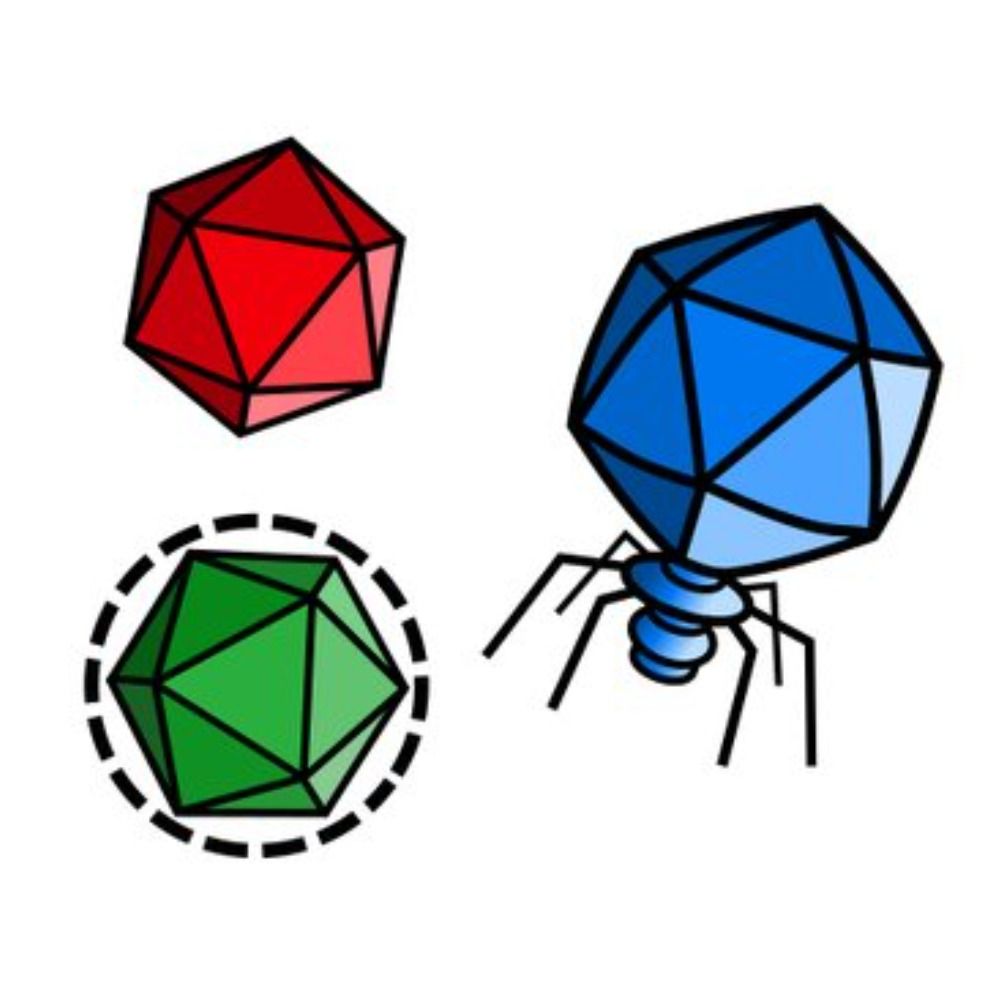
🚨vConTACT3 now in Nature Biotechnology:
- >95% agreement with ICTV for known viruses
- Classifies both prokaryotic and eukaryotic viruses
- Extends beyond genus → subfamily, family & order
- Systematically assigns taxonomy to tens of thousands of previously unclassified viruses
- >95% agreement with ICTV for known viruses
- Classifies both prokaryotic and eukaryotic viruses
- Extends beyond genus → subfamily, family & order
- Systematically assigns taxonomy to tens of thousands of previously unclassified viruses
January 12, 2026 at 4:34 PM
🚨vConTACT3 now in Nature Biotechnology:
- >95% agreement with ICTV for known viruses
- Classifies both prokaryotic and eukaryotic viruses
- Extends beyond genus → subfamily, family & order
- Systematically assigns taxonomy to tens of thousands of previously unclassified viruses
- >95% agreement with ICTV for known viruses
- Classifies both prokaryotic and eukaryotic viruses
- Extends beyond genus → subfamily, family & order
- Systematically assigns taxonomy to tens of thousands of previously unclassified viruses
Reposted by Steven Robbins

The microbial keystone concept is a very cool topic in microbiome ecology. This review summarises mechanisms, prediction methods and implications, with "keystoneness" being highly context/time dependent + new methods approaches suggested. Very nice read!
www.nature.com/articles/s41...
www.nature.com/articles/s41...

January 11, 2026 at 4:25 PM
The microbial keystone concept is a very cool topic in microbiome ecology. This review summarises mechanisms, prediction methods and implications, with "keystoneness" being highly context/time dependent + new methods approaches suggested. Very nice read!
www.nature.com/articles/s41...
www.nature.com/articles/s41...
Reposted by Steven Robbins
I'm usually skeptical about AI research tools. But Google's new tool for literature search is fantastic - because it does less, not more. New post:
substack.com/home/post/p-...
substack.com/home/post/p-...

Google's New AI Tool Can't Do Much. That's Exactly the Point
Finally, an AI research tool that doesn't hallucinate papers
substack.com
January 1, 2026 at 4:56 PM
I'm usually skeptical about AI research tools. But Google's new tool for literature search is fantastic - because it does less, not more. New post:
substack.com/home/post/p-...
substack.com/home/post/p-...
Reposted by Steven Robbins

Open up this picture fully.
Then look at the surface of Mars.
Then look up to the top right.
Spot Mars' moon Phobos high in the sky.
Then notice the bright spot beside Phobos.
That's Earth.
Then look at the surface of Mars.
Then look up to the top right.
Spot Mars' moon Phobos high in the sky.
Then notice the bright spot beside Phobos.
That's Earth.

December 30, 2025 at 9:30 PM
Open up this picture fully.
Then look at the surface of Mars.
Then look up to the top right.
Spot Mars' moon Phobos high in the sky.
Then notice the bright spot beside Phobos.
That's Earth.
Then look at the surface of Mars.
Then look up to the top right.
Spot Mars' moon Phobos high in the sky.
Then notice the bright spot beside Phobos.
That's Earth.
Reposted by Steven Robbins

This is a metaphor for the tech industry overall circa 2025

another robot highlight for 2025: man wearing humanoid mocap suit kicks himself in the balls
December 27, 2025 at 5:38 PM
This is a metaphor for the tech industry overall circa 2025
Reposted by Steven Robbins

Welcome to another member of the antiSMASH ecosystem of tools. When @marnixmedema.bsky.social and I were putting together antiSMASH version 1.0 15 years ago, I don't think our wildest dreams would have predicted where our little tool would go.
Merry X-SMASH!
My first first author paper is out on bioRxiv! 🖥
We present epsSMASH, a comprehensive and high-throughput tool for predicting exopolysaccharide (exoPS) biosynthetic gene clusters (BGCs) in bacterial genomes 🦠🧬🧫
1/8
My first first author paper is out on bioRxiv! 🖥
We present epsSMASH, a comprehensive and high-throughput tool for predicting exopolysaccharide (exoPS) biosynthetic gene clusters (BGCs) in bacterial genomes 🦠🧬🧫
1/8
December 26, 2025 at 3:38 PM
Welcome to another member of the antiSMASH ecosystem of tools. When @marnixmedema.bsky.social and I were putting together antiSMASH version 1.0 15 years ago, I don't think our wildest dreams would have predicted where our little tool would go.
Metagenomics colleagues!
Anybody know if a good piece of software to test whether Illumina contigs are circular?
@antobeck.bsky.social?
Anybody know if a good piece of software to test whether Illumina contigs are circular?
@antobeck.bsky.social?
December 26, 2025 at 7:47 PM
Metagenomics colleagues!
Anybody know if a good piece of software to test whether Illumina contigs are circular?
@antobeck.bsky.social?
Anybody know if a good piece of software to test whether Illumina contigs are circular?
@antobeck.bsky.social?
Reposted by Steven Robbins

Merry X-SMASH!
My first first author paper is out on bioRxiv! 🖥
We present epsSMASH, a comprehensive and high-throughput tool for predicting exopolysaccharide (exoPS) biosynthetic gene clusters (BGCs) in bacterial genomes 🦠🧬🧫
1/8
My first first author paper is out on bioRxiv! 🖥
We present epsSMASH, a comprehensive and high-throughput tool for predicting exopolysaccharide (exoPS) biosynthetic gene clusters (BGCs) in bacterial genomes 🦠🧬🧫
1/8

December 24, 2025 at 12:48 PM
Merry X-SMASH!
My first first author paper is out on bioRxiv! 🖥
We present epsSMASH, a comprehensive and high-throughput tool for predicting exopolysaccharide (exoPS) biosynthetic gene clusters (BGCs) in bacterial genomes 🦠🧬🧫
1/8
My first first author paper is out on bioRxiv! 🖥
We present epsSMASH, a comprehensive and high-throughput tool for predicting exopolysaccharide (exoPS) biosynthetic gene clusters (BGCs) in bacterial genomes 🦠🧬🧫
1/8
Reposted by Steven Robbins
All you want for christmas is.... transposon mutagenesis!
Our new work at @cultivarium.bsky.social screening lots of transposon vectors in lots of bacteria, from @charliegilbert.bsky.social and team.
Transposon and promoter modular parts available on Addgene (pooled library will be there soon too)
Our new work at @cultivarium.bsky.social screening lots of transposon vectors in lots of bacteria, from @charliegilbert.bsky.social and team.
Transposon and promoter modular parts available on Addgene (pooled library will be there soon too)

December 24, 2025 at 3:03 PM
All you want for christmas is.... transposon mutagenesis!
Our new work at @cultivarium.bsky.social screening lots of transposon vectors in lots of bacteria, from @charliegilbert.bsky.social and team.
Transposon and promoter modular parts available on Addgene (pooled library will be there soon too)
Our new work at @cultivarium.bsky.social screening lots of transposon vectors in lots of bacteria, from @charliegilbert.bsky.social and team.
Transposon and promoter modular parts available on Addgene (pooled library will be there soon too)
Reposted by Steven Robbins

WATCH: Here's the segment CBS News pulled from "60 Minutes" last night
December 22, 2025 at 10:28 PM
WATCH: Here's the segment CBS News pulled from "60 Minutes" last night
Reposted by Steven Robbins

Former NSA employee (16 years) with a pro tip for you. Released controlled document on the left, Epstein on the right. See the difference?
In real redactions, some words, headers, and bits will almost always still be visible, but especially classification headers. These documents are UNCLASSIFIED
In real redactions, some words, headers, and bits will almost always still be visible, but especially classification headers. These documents are UNCLASSIFIED

December 20, 2025 at 3:15 PM
Former NSA employee (16 years) with a pro tip for you. Released controlled document on the left, Epstein on the right. See the difference?
In real redactions, some words, headers, and bits will almost always still be visible, but especially classification headers. These documents are UNCLASSIFIED
In real redactions, some words, headers, and bits will almost always still be visible, but especially classification headers. These documents are UNCLASSIFIED
Team, what tool do you use to adapter clip PacBio data?
I’m used to using PoreChop for ONT, but not sure for PacBio.
I’m used to using PoreChop for ONT, but not sure for PacBio.
December 17, 2025 at 5:54 AM
Team, what tool do you use to adapter clip PacBio data?
I’m used to using PoreChop for ONT, but not sure for PacBio.
I’m used to using PoreChop for ONT, but not sure for PacBio.
Reposted by Steven Robbins

💾 Prokka 1.15.6 is released!
This is the last major release of Prokka. But don't be sad, because @oschwengers.bsky.social already has an excellent replacement called Bakta you can migrate to.
#bioinformatics #microbiology #genomics
github.com/tseemann/pro...
This is the last major release of Prokka. But don't be sad, because @oschwengers.bsky.social already has an excellent replacement called Bakta you can migrate to.
#bioinformatics #microbiology #genomics
github.com/tseemann/pro...
Release Heading into the sunset · tseemann/prokka
The future
This is probably the last release of Prokka. I won't be making any code changes except bug fixes. I will update the databases occasionally. I strongly recommend you use Bakta by @oschwen...
github.com
December 15, 2025 at 9:09 PM
💾 Prokka 1.15.6 is released!
This is the last major release of Prokka. But don't be sad, because @oschwengers.bsky.social already has an excellent replacement called Bakta you can migrate to.
#bioinformatics #microbiology #genomics
github.com/tseemann/pro...
This is the last major release of Prokka. But don't be sad, because @oschwengers.bsky.social already has an excellent replacement called Bakta you can migrate to.
#bioinformatics #microbiology #genomics
github.com/tseemann/pro...
Reposted by Steven Robbins

Respiratory endosymbionts, that allow their ciliate hosts to breathe nitrate instead of (or in addition to) oxygen are frequent members of the wastewater microbiome. 🦠 🖥️🧬
Great to see this work by @louison-nicolas.bsky.social published in ISME coummuncations!
doi.org/10.1093/isme...
Great to see this work by @louison-nicolas.bsky.social published in ISME coummuncations!
doi.org/10.1093/isme...
Validate User
doi.org
December 5, 2025 at 4:20 PM
Respiratory endosymbionts, that allow their ciliate hosts to breathe nitrate instead of (or in addition to) oxygen are frequent members of the wastewater microbiome. 🦠 🖥️🧬
Great to see this work by @louison-nicolas.bsky.social published in ISME coummuncations!
doi.org/10.1093/isme...
Great to see this work by @louison-nicolas.bsky.social published in ISME coummuncations!
doi.org/10.1093/isme...
Reposted by Steven Robbins

The scikit-bio paper in online in Nature Methods! Many thanks to our collaborators, community contributors and reviewers! We couldn’t have done it without you. www.nature.com/articles/s41... #Bioinformatics #OpenSource

Scikit-bio: a fundamental Python library for biological omic data analysis - Nature Methods
Nature Methods - Scikit-bio: a fundamental Python library for biological omic data analysis
www.nature.com
December 11, 2025 at 5:57 PM
The scikit-bio paper in online in Nature Methods! Many thanks to our collaborators, community contributors and reviewers! We couldn’t have done it without you. www.nature.com/articles/s41... #Bioinformatics #OpenSource
Reposted by Steven Robbins

The GTDB website now has an ANI calculator based on skani that supports uploading of user genomes. Try it at gtdb.ecogenomic.org/tools/skani.
Find more information about @jimshaw.bsky.social fantastic tool at www.nature.com/articles/s41....
Find more information about @jimshaw.bsky.social fantastic tool at www.nature.com/articles/s41....
GTDB - skani calculator
An interface to compute pairwise ANI of NCBI genomes using the GTDB taxonomy.
gtdb.ecogenomic.org
December 11, 2025 at 2:59 PM
The GTDB website now has an ANI calculator based on skani that supports uploading of user genomes. Try it at gtdb.ecogenomic.org/tools/skani.
Find more information about @jimshaw.bsky.social fantastic tool at www.nature.com/articles/s41....
Find more information about @jimshaw.bsky.social fantastic tool at www.nature.com/articles/s41....
Reposted by Steven Robbins
GTDB is now cross-referenced from ENA genome assembly pages. Check it out: www.ebi.ac.uk/ena/browser/....
Thank you to @ebi.embl.org for support with setting up these links!
Thank you to @ebi.embl.org for support with setting up these links!
ENA Browser
ENA Browser
www.ebi.ac.uk
December 11, 2025 at 3:04 PM
GTDB is now cross-referenced from ENA genome assembly pages. Check it out: www.ebi.ac.uk/ena/browser/....
Thank you to @ebi.embl.org for support with setting up these links!
Thank you to @ebi.embl.org for support with setting up these links!
Reposted by Steven Robbins
🧬🦠🚨 Another new paper alert, this time led by @maureenbug.bsky.social ! In collaboration with the Emerson lab and
@titus.idyll.org lab (@taylorreiter.bsky.social), both at UC Davis. Asking the question: what are we missing in short-read metagenome assembly, and why ?
doi.org/10.1093/narg...
@titus.idyll.org lab (@taylorreiter.bsky.social), both at UC Davis. Asking the question: what are we missing in short-read metagenome assembly, and why ?
doi.org/10.1093/narg...

Comparison of short-read and long-read metagenome assemblies in a natural soil community highlights systematic bias in recovery of high-diversity populations
Abstract. Comparisons of long-read and short-read (meta)genome assemblies typically show that short-read sequence assemblies are less error-prone, but stru
doi.org
December 9, 2025 at 3:25 AM
🧬🦠🚨 Another new paper alert, this time led by @maureenbug.bsky.social ! In collaboration with the Emerson lab and
@titus.idyll.org lab (@taylorreiter.bsky.social), both at UC Davis. Asking the question: what are we missing in short-read metagenome assembly, and why ?
doi.org/10.1093/narg...
@titus.idyll.org lab (@taylorreiter.bsky.social), both at UC Davis. Asking the question: what are we missing in short-read metagenome assembly, and why ?
doi.org/10.1093/narg...
Reposted by Steven Robbins
100%, both ONT and PacBio (although most of what we do is not marine / streamlined genome). We just published a specific study of soil metag short- vs long-read, and we see that, among other things, long-reads assemble regions too complex for short reads academic.oup.com/nargab/artic...
Comparison of short-read and long-read metagenome assemblies in a natural soil community highlights systematic bias in recovery of high-diversity populations
Abstract. Comparisons of long-read and short-read (meta)genome assemblies typically show that short-read sequence assemblies are less error-prone, but stru
academic.oup.com
December 8, 2025 at 4:25 PM
100%, both ONT and PacBio (although most of what we do is not marine / streamlined genome). We just published a specific study of soil metag short- vs long-read, and we see that, among other things, long-reads assemble regions too complex for short reads academic.oup.com/nargab/artic...
Reposted by Steven Robbins
What would a marine microbiome observing system meant to last decades look like? 🌊🦠
We explored this at the recent MMOFF Workshop, which brought together diverse partners to envision the future of marine microbiome observations.
merenlab.org/workshops/MM...
We explored this at the recent MMOFF Workshop, which brought together diverse partners to envision the future of marine microbiome observations.
merenlab.org/workshops/MM...

Marine Microbial Observatories for the Future: From Samples to Data to Legacy Using Integrated 'Omics Strategies
A workshop for the future
merenlab.org
December 8, 2025 at 3:39 PM
What would a marine microbiome observing system meant to last decades look like? 🌊🦠
We explored this at the recent MMOFF Workshop, which brought together diverse partners to envision the future of marine microbiome observations.
merenlab.org/workshops/MM...
We explored this at the recent MMOFF Workshop, which brought together diverse partners to envision the future of marine microbiome observations.
merenlab.org/workshops/MM...