



Christina Steidele
@steidele.bsky.social
Mother of two, wife, molecular biologist & bioinformatician, working @TUM, interested in Barley, Fusarium and networks
Reposted by Christina Steidele
@katjaberlin.bsky.social 😭 Danke, ich lasse mir Bettwäsche damit bedrucken.

January 9, 2026 at 9:44 PM
@katjaberlin.bsky.social 😭 Danke, ich lasse mir Bettwäsche damit bedrucken.
Reposted by Christina Steidele

paper is out now in Nature Plants, here is a link: Imputation integrates single-cell and spatial gene expression data to resolve transcriptional networks in barley shoot meristem development. Nat. Plants (2026). doi.org/10.1038/s414...

Imputation integrates single-cell and spatial gene expression data to resolve transcriptional networks in barley shoot meristem development - Nature Plants
Spatially resolved gene expression during barley development was done by integrating an scRNA-seq dataset from cells with unknown position with spatial transcriptomics. This dataset is publicly availa...
doi.org
January 8, 2026 at 12:49 AM
paper is out now in Nature Plants, here is a link: Imputation integrates single-cell and spatial gene expression data to resolve transcriptional networks in barley shoot meristem development. Nat. Plants (2026). doi.org/10.1038/s414...
Reposted by Christina Steidele

NLR-like immunity in bacteria
A new study from the Alex Gao lab. The scope of this work is incredible!!!
www.biorxiv.org/content/10.6...
A new study from the Alex Gao lab. The scope of this work is incredible!!!
www.biorxiv.org/content/10.6...

Diverse bacterial pattern recognition receptors sense the conserved phage proteome
Recognition of foreign molecules inside cells is critical for immunity in all domains of life. Proteins of the STAND NTPase superfamily, including eukaryotic nucleotide-binding oligomerization domain ...
www.biorxiv.org
January 5, 2026 at 1:59 PM
NLR-like immunity in bacteria
A new study from the Alex Gao lab. The scope of this work is incredible!!!
www.biorxiv.org/content/10.6...
A new study from the Alex Gao lab. The scope of this work is incredible!!!
www.biorxiv.org/content/10.6...
Reposted by Christina Steidele

Read the paper by Mamoona Khan, et al. 👇
nph.onlinelibrary.wiley.com/doi/10.1111/...
nph.onlinelibrary.wiley.com/doi/10.1111/...

January 6, 2026 at 11:00 AM
Read the paper by Mamoona Khan, et al. 👇
nph.onlinelibrary.wiley.com/doi/10.1111/...
nph.onlinelibrary.wiley.com/doi/10.1111/...
Reposted by Christina Steidele
A University of Bonn study shows how a maize pest hijacks the plant’s root-building function 🌽
www.uni-bonn.de/en/news/002-...
@unibonn.bsky.social @effectomics.bsky.social
#PlantScience
www.uni-bonn.de/en/news/002-...
@unibonn.bsky.social @effectomics.bsky.social
#PlantScience

How a Fungus Leads to Tissue Growths in Maize
When a maize plant is attacked by the fungus Ustilago maydis, tumor-like tissue growths occur at the site of infection. How the pathogen causes this response in its host has long been unknown. But a…
www.uni-bonn.de
January 6, 2026 at 11:00 AM
A University of Bonn study shows how a maize pest hijacks the plant’s root-building function 🌽
www.uni-bonn.de/en/news/002-...
@unibonn.bsky.social @effectomics.bsky.social
#PlantScience
www.uni-bonn.de/en/news/002-...
@unibonn.bsky.social @effectomics.bsky.social
#PlantScience
Reposted by Christina Steidele

CONGRATS to team @effectomics.bsky.social and @steidele.bsky.social . Transcriptional Response of Magnaporthe oryzae Towards Barley-Microbiome Derived Bacteria | Molecular Plant-Microbe Interactions® apsjournals.apsnet.org/doi/10.1094/...

Transcriptional Response of Magnaporthe oryzae Towards Barley-Microbiome Derived Bacteria | Molecular Plant-Microbe Interactions®
The composition of the plant microbiome is shaped not only by the host plant and abiotic environmental factors, but also by inter-microbial cooperation and competition. Plant pathogens, therefore must...
apsjournals.apsnet.org
December 20, 2025 at 2:19 PM
CONGRATS to team @effectomics.bsky.social and @steidele.bsky.social . Transcriptional Response of Magnaporthe oryzae Towards Barley-Microbiome Derived Bacteria | Molecular Plant-Microbe Interactions® apsjournals.apsnet.org/doi/10.1094/...
Reposted by Christina Steidele
Are you an experienced PhD student or postdoc in plant science looking to connect, present your work, and discuss career paths?
Join us at the 3rd Early Career Plant Researchers Network Meeting, Halle (Saale), 20–21 April 2026
Deadline: 23 January 2026
plant-ecr-networking.eu
Join us at the 3rd Early Career Plant Researchers Network Meeting, Halle (Saale), 20–21 April 2026
Deadline: 23 January 2026
plant-ecr-networking.eu

December 19, 2025 at 2:48 PM
Are you an experienced PhD student or postdoc in plant science looking to connect, present your work, and discuss career paths?
Join us at the 3rd Early Career Plant Researchers Network Meeting, Halle (Saale), 20–21 April 2026
Deadline: 23 January 2026
plant-ecr-networking.eu
Join us at the 3rd Early Career Plant Researchers Network Meeting, Halle (Saale), 20–21 April 2026
Deadline: 23 January 2026
plant-ecr-networking.eu
Reposted by Christina Steidele

Small Molecule Binding to EDS1/PAD4 in LRR-RP-Mediated Pattern-Triggered Immunity https://www.biorxiv.org/content/10.64898/2025.12.10.692544v1
December 13, 2025 at 3:01 AM
Small Molecule Binding to EDS1/PAD4 in LRR-RP-Mediated Pattern-Triggered Immunity https://www.biorxiv.org/content/10.64898/2025.12.10.692544v1
Reposted by Christina Steidele
New Preprint!
As part of a MSc thesis we went to Serbia (support @daadworldwide.bsky.social) to collect small-spored Alternaria from potato and tomato and compare their populations and virulence properties with those from Germany and Poland!
www.biorxiv.org/content/10.6...
As part of a MSc thesis we went to Serbia (support @daadworldwide.bsky.social) to collect small-spored Alternaria from potato and tomato and compare their populations and virulence properties with those from Germany and Poland!
www.biorxiv.org/content/10.6...

Distribution and Shared Pathogenicity of Small-Spored Alternaria on Solanaceous Crops in Europe
Small-spored Alternaria species such as A. alternata and A. arborescens are frequently isolated from diseased potato and tomato plants. However, their respective host ranges and pathogenic behaviours ...
www.biorxiv.org
December 12, 2025 at 6:37 AM
New Preprint!
As part of a MSc thesis we went to Serbia (support @daadworldwide.bsky.social) to collect small-spored Alternaria from potato and tomato and compare their populations and virulence properties with those from Germany and Poland!
www.biorxiv.org/content/10.6...
As part of a MSc thesis we went to Serbia (support @daadworldwide.bsky.social) to collect small-spored Alternaria from potato and tomato and compare their populations and virulence properties with those from Germany and Poland!
www.biorxiv.org/content/10.6...
Reposted by Christina Steidele
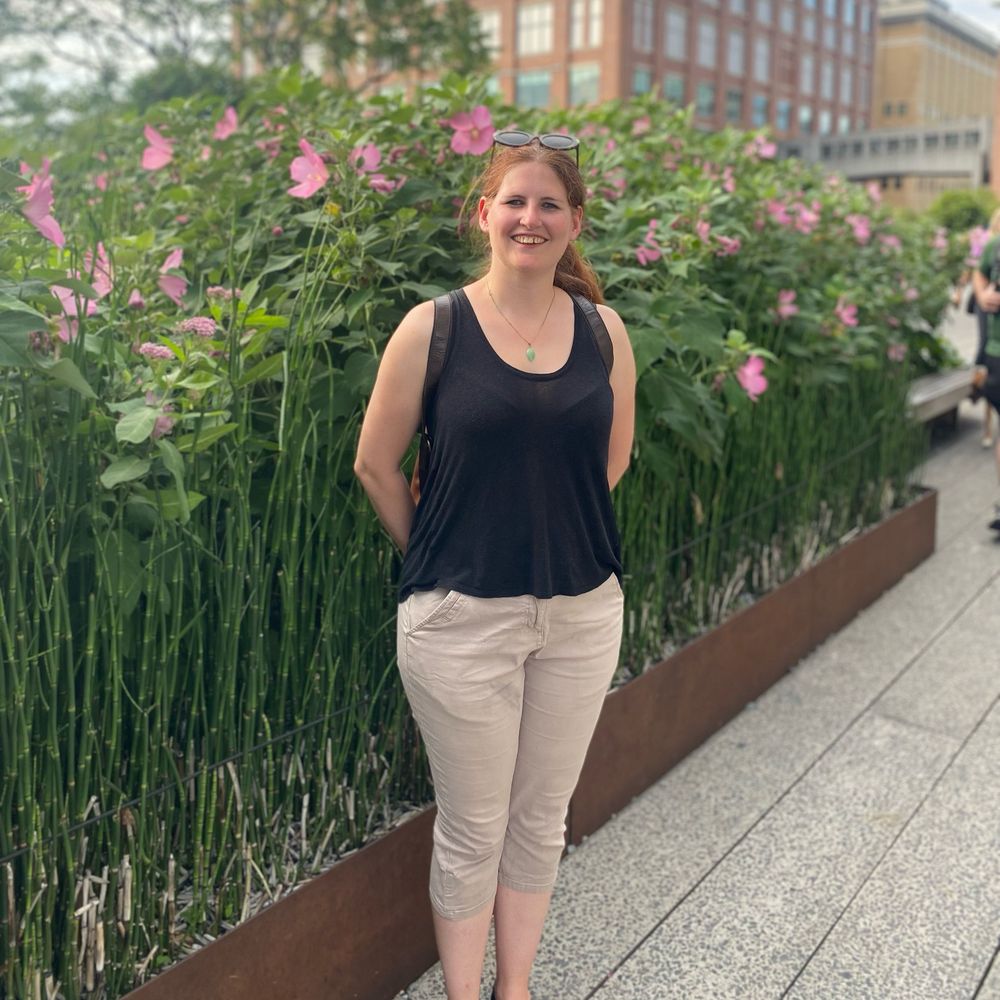
Congratulations @steidele.bsky.social 🥳 check out Tina’s new preprint for key transcription factors being involved in barley Fusarium head blight and/or drought responses.
Congratulations to @steidele.bsky.social who unscrambled complex transcriptional networks in barley double stress responses. Thanks to @itisalist.bsky.social and @daisybio.de for the support: doi: doi.org/10.64898/202...

Network Inference Reveals Distinct Transcriptional Regulation in Barley against Drought and Fusarium Head Blight
We analyzed transcriptional networks in barley under single and combined Fusarium head blight (FHB) and drought stress. We applied complementary Weighted Gene Correlation Network Analysis (WGCNA) to identify stress-associated gene co-expression modules and GENIE3 to infer gene regulatory networks (GRNs). Integration of these frameworks revealed strong overlaps between co-expression modules and GRN clusters, highlighting robust regulatory patterns. Key transcription factors (TFs) were identified based on their weighted node degrees, reflecting their connectivity within the network. Independent analysis of paired transcription factor binding sites in promoter regions further supported predicted regulatory interactions. Notably, WRKY TFs emerged as central regulators of FHB response, consistent with their known roles in defense and secondary metabolite biosynthesis, but did not appear in drought-associated contexts. For bHLH or NAC TFs, individual family members steered FHB or drought responses but not both. Our findings demonstrate the power of combining network inference and motif enrichment to identify candidate TFs controlling stress responses, providing a solid foundation for targeted functional validation. ### Competing Interest Statement The authors have declared no competing interest.
doi.org
December 11, 2025 at 6:24 AM
Congratulations @steidele.bsky.social 🥳 check out Tina’s new preprint for key transcription factors being involved in barley Fusarium head blight and/or drought responses.
My barley transcriptional network preprint is officially out!
Started as my Bachelor’s thesis — now it’s online:
doi.org/10.64898/202...
Huge thanks to @itisalist.bsky.social, @daisybio.de, @huckelhovenr.bsky.social , Felix Hoheneder & Johannes Kersting for all their help and support!
Started as my Bachelor’s thesis — now it’s online:
doi.org/10.64898/202...
Huge thanks to @itisalist.bsky.social, @daisybio.de, @huckelhovenr.bsky.social , Felix Hoheneder & Johannes Kersting for all their help and support!

Network Inference Reveals Distinct Transcriptional Regulation in Barley against Drought and Fusarium Head Blight
We analyzed transcriptional networks in barley under single and combined Fusarium head blight (FHB) and drought stress. We applied complementary Weighted Gene Correlation Network Analysis (WGCNA) to i...
doi.org
December 10, 2025 at 7:49 AM
My barley transcriptional network preprint is officially out!
Started as my Bachelor’s thesis — now it’s online:
doi.org/10.64898/202...
Huge thanks to @itisalist.bsky.social, @daisybio.de, @huckelhovenr.bsky.social , Felix Hoheneder & Johannes Kersting for all their help and support!
Started as my Bachelor’s thesis — now it’s online:
doi.org/10.64898/202...
Huge thanks to @itisalist.bsky.social, @daisybio.de, @huckelhovenr.bsky.social , Felix Hoheneder & Johannes Kersting for all their help and support!
Reposted by Christina Steidele
Congratulations to @steidele.bsky.social who unscrambled complex transcriptional networks in barley double stress responses. Thanks to @itisalist.bsky.social and @daisybio.de for the support: doi: doi.org/10.64898/202...
Network Inference Reveals Distinct Transcriptional Regulation in Barley against Drought and Fusarium Head Blight
We analyzed transcriptional networks in barley under single and combined Fusarium head blight (FHB) and drought stress. We applied complementary Weighted Gene Correlation Network Analysis (WGCNA) to identify stress-associated gene co-expression modules and GENIE3 to infer gene regulatory networks (GRNs). Integration of these frameworks revealed strong overlaps between co-expression modules and GRN clusters, highlighting robust regulatory patterns. Key transcription factors (TFs) were identified based on their weighted node degrees, reflecting their connectivity within the network. Independent analysis of paired transcription factor binding sites in promoter regions further supported predicted regulatory interactions. Notably, WRKY TFs emerged as central regulators of FHB response, consistent with their known roles in defense and secondary metabolite biosynthesis, but did not appear in drought-associated contexts. For bHLH or NAC TFs, individual family members steered FHB or drought responses but not both. Our findings demonstrate the power of combining network inference and motif enrichment to identify candidate TFs controlling stress responses, providing a solid foundation for targeted functional validation. ### Competing Interest Statement The authors have declared no competing interest.
doi.org
December 10, 2025 at 6:51 AM
Congratulations to @steidele.bsky.social who unscrambled complex transcriptional networks in barley double stress responses. Thanks to @itisalist.bsky.social and @daisybio.de for the support: doi: doi.org/10.64898/202...
Reposted by Christina Steidele
Here is an example of GFP-CARa localization at the extrahaustorial membrane that did not make it into the manuscript but still is nice.

December 9, 2025 at 10:21 AM
Here is an example of GFP-CARa localization at the extrahaustorial membrane that did not make it into the manuscript but still is nice.
Reposted by Christina Steidele
Barley C2-Domain Abscisic Acid-Related protein CARa supports susceptibility to Blumeria hordei and localizes to the extrahaustorial membrane https://www.biorxiv.org/content/10.64898/2025.12.04.692366v1
December 5, 2025 at 4:02 PM
Barley C2-Domain Abscisic Acid-Related protein CARa supports susceptibility to Blumeria hordei and localizes to the extrahaustorial membrane https://www.biorxiv.org/content/10.64898/2025.12.04.692366v1
Reposted by Christina Steidele
Two really cool PhD positions available with Christina Barragan on Plant Pathogen evolution!
Our dept. just moved to a brand new building with great facilities and we have an absolutely amazing team!
Our dept. just moved to a brand new building with great facilities and we have an absolutely amazing team!
My new Emmy Noether Group is recruiting!
🔬 Two PhD positions in plant pathogen evolution
🧬 Start: April 2026 (flexible)
📍 Dept. of Phytopathology & Plant Protection @rstam.bsky.social @uni-kiel.de
⏰ Apply by 15 Dec 2025
🔗 More info: www.uni-kiel.de/personal/de/...
Do get in touch or share 😊
🔬 Two PhD positions in plant pathogen evolution
🧬 Start: April 2026 (flexible)
📍 Dept. of Phytopathology & Plant Protection @rstam.bsky.social @uni-kiel.de
⏰ Apply by 15 Dec 2025
🔗 More info: www.uni-kiel.de/personal/de/...
Do get in touch or share 😊
Aktuelle Ausschreibungen
Aktuelle Ausschreibungen
www.uni-kiel.de
November 11, 2025 at 10:28 AM
Two really cool PhD positions available with Christina Barragan on Plant Pathogen evolution!
Our dept. just moved to a brand new building with great facilities and we have an absolutely amazing team!
Our dept. just moved to a brand new building with great facilities and we have an absolutely amazing team!
New preprint of the "BarFus"-group @tum.de from the Chair of Phytopathology @huckelhovenr.bsky.social
Transcriptome and hormone regulations shape drought stress-dependent Fusarium Head Blight susceptibility in different barley genotypes https://www.biorxiv.org/content/10.1101/2025.11.23.689882v1
November 26, 2025 at 8:10 PM
New preprint of the "BarFus"-group @tum.de from the Chair of Phytopathology @huckelhovenr.bsky.social
Reposted by Christina Steidele
Did you ever wonder how #Solanum plants evolved quantitative disease resistance/ #QDR?
I am really excited to share our recently published manuscript, where we tried to contribute to addressing this question!
🌱https://tinyurl.com/2vz23ck6
I am really excited to share our recently published manuscript, where we tried to contribute to addressing this question!
🌱https://tinyurl.com/2vz23ck6

Co-option of transcription factors drives evolution of quantitative disease resistance against a necrotrophic pathogen
Quantitative disease resistance in a wild tomato genotype evolved through species-specific regulatory network rewiring, with an ancient transcription facto
tinyurl.com
November 21, 2025 at 9:00 AM
Reposted by Christina Steidele

1/ Preprint alert:
🌾 The developing leaf of the wild grass Brachypodium distachyon at single-cell resolution
👉 doi.org/10.1101/2025...
A 70k-cell single-cell RNA-seq atlas of the developing grass leaf—from the shoot meristem to mature leaf tissues. @cerealcell.bsky.social @lbmountain.bsky.social
🌾 The developing leaf of the wild grass Brachypodium distachyon at single-cell resolution
👉 doi.org/10.1101/2025...
A 70k-cell single-cell RNA-seq atlas of the developing grass leaf—from the shoot meristem to mature leaf tissues. @cerealcell.bsky.social @lbmountain.bsky.social

November 5, 2025 at 12:32 PM
1/ Preprint alert:
🌾 The developing leaf of the wild grass Brachypodium distachyon at single-cell resolution
👉 doi.org/10.1101/2025...
A 70k-cell single-cell RNA-seq atlas of the developing grass leaf—from the shoot meristem to mature leaf tissues. @cerealcell.bsky.social @lbmountain.bsky.social
🌾 The developing leaf of the wild grass Brachypodium distachyon at single-cell resolution
👉 doi.org/10.1101/2025...
A 70k-cell single-cell RNA-seq atlas of the developing grass leaf—from the shoot meristem to mature leaf tissues. @cerealcell.bsky.social @lbmountain.bsky.social
Reposted by Christina Steidele

Arabidopsis thaliana was always an unlikely candidate for the limelight. But 25 years ago, the diminutive thale cress launched the botanical world into the molecular era.
✍️ Rachel Ehrenberg
knowmag.org/4hImL8e
✍️ Rachel Ehrenberg
knowmag.org/4hImL8e

How a humble weed became a superstar of biology
Arabidopsis thaliana was always an unlikely candidate for the limelight. But 25 years ago, the diminutive thale cress launched the botanical world into the molecular era.
knowmag.org
November 4, 2025 at 1:01 PM
Arabidopsis thaliana was always an unlikely candidate for the limelight. But 25 years ago, the diminutive thale cress launched the botanical world into the molecular era.
✍️ Rachel Ehrenberg
knowmag.org/4hImL8e
✍️ Rachel Ehrenberg
knowmag.org/4hImL8e
Reposted by Christina Steidele

My new Emmy Noether Group is recruiting!
🔬 Two PhD positions in plant pathogen evolution
🧬 Start: April 2026 (flexible)
📍 Dept. of Phytopathology & Plant Protection @rstam.bsky.social @uni-kiel.de
⏰ Apply by 15 Dec 2025
🔗 More info: www.uni-kiel.de/personal/de/...
Do get in touch or share 😊
🔬 Two PhD positions in plant pathogen evolution
🧬 Start: April 2026 (flexible)
📍 Dept. of Phytopathology & Plant Protection @rstam.bsky.social @uni-kiel.de
⏰ Apply by 15 Dec 2025
🔗 More info: www.uni-kiel.de/personal/de/...
Do get in touch or share 😊
Aktuelle Ausschreibungen
Aktuelle Ausschreibungen
www.uni-kiel.de
November 3, 2025 at 9:03 AM
My new Emmy Noether Group is recruiting!
🔬 Two PhD positions in plant pathogen evolution
🧬 Start: April 2026 (flexible)
📍 Dept. of Phytopathology & Plant Protection @rstam.bsky.social @uni-kiel.de
⏰ Apply by 15 Dec 2025
🔗 More info: www.uni-kiel.de/personal/de/...
Do get in touch or share 😊
🔬 Two PhD positions in plant pathogen evolution
🧬 Start: April 2026 (flexible)
📍 Dept. of Phytopathology & Plant Protection @rstam.bsky.social @uni-kiel.de
⏰ Apply by 15 Dec 2025
🔗 More info: www.uni-kiel.de/personal/de/...
Do get in touch or share 😊
Reposted by Christina Steidele
Spatiotemporal regulation of arbuscular mycorrhizal symbiosis at cellular resolution https://www.biorxiv.org/content/10.1101/2025.10.31.685811v1
November 3, 2025 at 3:02 AM
Spatiotemporal regulation of arbuscular mycorrhizal symbiosis at cellular resolution https://www.biorxiv.org/content/10.1101/2025.10.31.685811v1
Reposted by Christina Steidele
We are looking for a colleague to join us at RWTH Aachen University:
🌱 Full Professor in Stress Resilience of Plants (W3 tenured)
📌What are we looking for? Someone working with us strategically at the interface of plant biology/ physiology/ resilience
#academicjobs #facultyjobs #PlantJobs
1/4
🌱 Full Professor in Stress Resilience of Plants (W3 tenured)
📌What are we looking for? Someone working with us strategically at the interface of plant biology/ physiology/ resilience
#academicjobs #facultyjobs #PlantJobs
1/4

October 30, 2025 at 12:03 PM
We are looking for a colleague to join us at RWTH Aachen University:
🌱 Full Professor in Stress Resilience of Plants (W3 tenured)
📌What are we looking for? Someone working with us strategically at the interface of plant biology/ physiology/ resilience
#academicjobs #facultyjobs #PlantJobs
1/4
🌱 Full Professor in Stress Resilience of Plants (W3 tenured)
📌What are we looking for? Someone working with us strategically at the interface of plant biology/ physiology/ resilience
#academicjobs #facultyjobs #PlantJobs
1/4
Reposted by Christina Steidele

Researchers decoded the #pangenome of 33 oat lines, revealing their full #geneticdiversity to support breeding of more resilient, high-yield #crops in the face of #climatechange: go.tum.de/651300
📷iStock/ Evgeniy Andreev
📷iStock/ Evgeniy Andreev

Oat’s genetic diversity decoded
Researchers at TUM have decoded the genomes of 33 oat lines. This provides leverage for breeding more climate resilient plants.
go.tum.de
October 29, 2025 at 4:09 PM
Researchers decoded the #pangenome of 33 oat lines, revealing their full #geneticdiversity to support breeding of more resilient, high-yield #crops in the face of #climatechange: go.tum.de/651300
📷iStock/ Evgeniy Andreev
📷iStock/ Evgeniy Andreev
Reposted by Christina Steidele
Hi all @plantsciencedbg.bsky.social members and other 🌽community folks, #MBP2026 🌱 is no open for registration. Please 🏄♀️ to: www.pflanzen-molekularbiologie.de/en/conferenc...
Conference
Conference "Molecular Biology of Plants", annual meeting of the Section Plant Physiology and Molecular Biology in the DBG
www.pflanzen-molekularbiologie.de
October 28, 2025 at 10:19 AM
Hi all @plantsciencedbg.bsky.social members and other 🌽community folks, #MBP2026 🌱 is no open for registration. Please 🏄♀️ to: www.pflanzen-molekularbiologie.de/en/conferenc...
Reposted by Christina Steidele

Man hatte sich daran gewöhnt, dass der König seinen Untergebenen im Kindesalter die Beine brach und ihnen dann den Rest ihres Lebens Krücken verkaufte. "Es geht auch anders!" sagte der Fremde. "Dann braucht man keine Krücken!"
"Er will uns die Krücken wegnehmen!" schrie das Volk und verprügelte ihn.
"Er will uns die Krücken wegnehmen!" schrie das Volk und verprügelte ihn.
October 29, 2025 at 10:24 AM
Man hatte sich daran gewöhnt, dass der König seinen Untergebenen im Kindesalter die Beine brach und ihnen dann den Rest ihres Lebens Krücken verkaufte. "Es geht auch anders!" sagte der Fremde. "Dann braucht man keine Krücken!"
"Er will uns die Krücken wegnehmen!" schrie das Volk und verprügelte ihn.
"Er will uns die Krücken wegnehmen!" schrie das Volk und verprügelte ihn.