




Severin Einspanier
@sev1panier.bsky.social
Curious about plant pathology
Focused on quantitative disease resistance
Passioned about system-sciences
Agronomist @CAU
Focused on quantitative disease resistance
Passioned about system-sciences
Agronomist @CAU
Reposted by Severin Einspanier

This week in @science.org, a celebration of plant pangenomes. A pangenome analysis for massively polyploid sugarcane species, and one for Brassica rapa giving insight into subspeciation.
What's all the fuss about pangenomes? Pamela and Douglas Soltis explore this in an insightful Perspective(1/4)
What's all the fuss about pangenomes? Pamela and Douglas Soltis explore this in an insightful Perspective(1/4)
February 6, 2026 at 9:57 AM
This week in @science.org, a celebration of plant pangenomes. A pangenome analysis for massively polyploid sugarcane species, and one for Brassica rapa giving insight into subspeciation.
What's all the fuss about pangenomes? Pamela and Douglas Soltis explore this in an insightful Perspective(1/4)
What's all the fuss about pangenomes? Pamela and Douglas Soltis explore this in an insightful Perspective(1/4)
Reposted by Severin Einspanier

Gentechnik: Forscher züchten Zwiebel, die einen zum Lachen bringt www.der-postillon.com/2026/01/lach...

Gentechnik: Forscher züchten Zwiebel, die einen zum Lachen bringt
Braunschweig (dpo) - Darauf haben Hobbyköche und Gastronomen weltweit gewartet: Gentechnikern ist es gelungen, eine Zwiebel zu züchten, die einen zum
www.der-postillon.com
January 29, 2026 at 4:17 PM
Gentechnik: Forscher züchten Zwiebel, die einen zum Lachen bringt www.der-postillon.com/2026/01/lach...
Reposted by Severin Einspanier

Join us at the Evolutionary Biology Centre at Uppsala University. We’re searching for an Assistant Professor in Biology. www.uu.se/en/about-uu/...

January 28, 2026 at 8:28 PM
Join us at the Evolutionary Biology Centre at Uppsala University. We’re searching for an Assistant Professor in Biology. www.uu.se/en/about-uu/...
Reposted by Severin Einspanier

New preprint from our group:
Phenotypic differentiation between highland and coastal quinoa under cold stress conditions
We use both field trials and lab experiments under controlled conditions to show that the two major quinoa ecotypes differ in adaptive traits.
www.biorxiv.org/content/10.6...
Phenotypic differentiation between highland and coastal quinoa under cold stress conditions
We use both field trials and lab experiments under controlled conditions to show that the two major quinoa ecotypes differ in adaptive traits.
www.biorxiv.org/content/10.6...
www.biorxiv.org
January 26, 2026 at 8:21 AM
New preprint from our group:
Phenotypic differentiation between highland and coastal quinoa under cold stress conditions
We use both field trials and lab experiments under controlled conditions to show that the two major quinoa ecotypes differ in adaptive traits.
www.biorxiv.org/content/10.6...
Phenotypic differentiation between highland and coastal quinoa under cold stress conditions
We use both field trials and lab experiments under controlled conditions to show that the two major quinoa ecotypes differ in adaptive traits.
www.biorxiv.org/content/10.6...
Reposted by Severin Einspanier

A joke for the history buffs:
Germany’s satirical newspaper @der-postillon.com titles: “Vienna Academy of the Arts offers Trump admission as a student — They don’t want to get blamed again“
Germany’s satirical newspaper @der-postillon.com titles: “Vienna Academy of the Arts offers Trump admission as a student — They don’t want to get blamed again“

January 18, 2026 at 1:56 PM
A joke for the history buffs:
Germany’s satirical newspaper @der-postillon.com titles: “Vienna Academy of the Arts offers Trump admission as a student — They don’t want to get blamed again“
Germany’s satirical newspaper @der-postillon.com titles: “Vienna Academy of the Arts offers Trump admission as a student — They don’t want to get blamed again“
Reposted by Severin Einspanier

So, throw the trainees under the bus and keep the PIs unscathed?!? What if the PI created a toxic environment leading to this behaviour? What if the institute creates a toxic environment glorifying CNS papers??? Will you mention these at the retraction note?
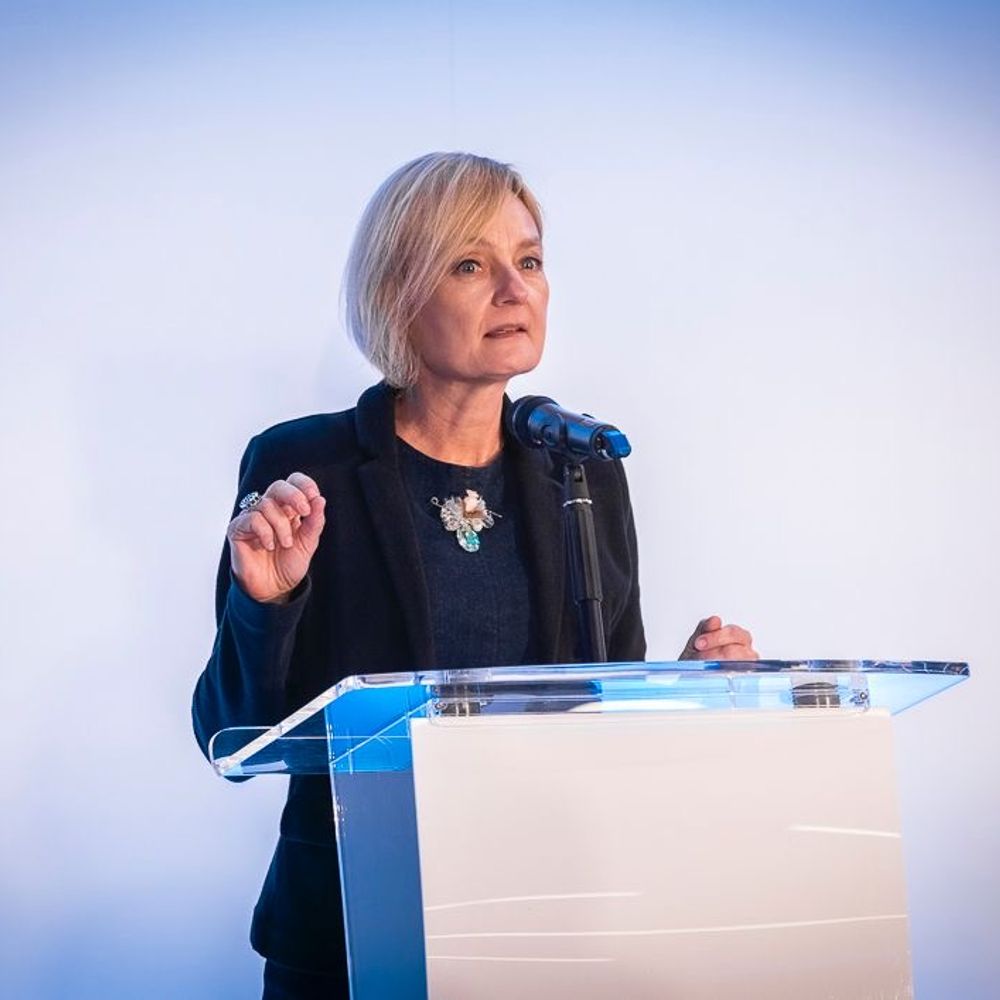
Credit in research goes hand in hand with responsibility. In this week’s editorial we argue that when things go wrong & a retraction is needed, if it is clear who among the authors is responsible they should be named in the retraction note. COPE agrees
🧪 #AcademicSky
www.nature.com/articles/d41...
🧪 #AcademicSky
www.nature.com/articles/d41...

January 15, 2026 at 7:25 AM
So, throw the trainees under the bus and keep the PIs unscathed?!? What if the PI created a toxic environment leading to this behaviour? What if the institute creates a toxic environment glorifying CNS papers??? Will you mention these at the retraction note?
Reposted by Severin Einspanier

We've got ISSUES. Literally.
We scraped >100k special issues & over 1 million articles to bring you a PISS-poor paper. We quantify just how many excess papers are published by guest editors abusing special issues to boost their CVs. How bad is it & what can we do?
arxiv.org/abs/2601.07563
A 🧵 1/n
We scraped >100k special issues & over 1 million articles to bring you a PISS-poor paper. We quantify just how many excess papers are published by guest editors abusing special issues to boost their CVs. How bad is it & what can we do?
arxiv.org/abs/2601.07563
A 🧵 1/n


January 13, 2026 at 8:27 AM
We've got ISSUES. Literally.
We scraped >100k special issues & over 1 million articles to bring you a PISS-poor paper. We quantify just how many excess papers are published by guest editors abusing special issues to boost their CVs. How bad is it & what can we do?
arxiv.org/abs/2601.07563
A 🧵 1/n
We scraped >100k special issues & over 1 million articles to bring you a PISS-poor paper. We quantify just how many excess papers are published by guest editors abusing special issues to boost their CVs. How bad is it & what can we do?
arxiv.org/abs/2601.07563
A 🧵 1/n
Reposted by Severin Einspanier

Join us! ETH Zürich and the Department of Environmental Systems Science (D-USYS) is seeking an Assistant Professor (Tenure Track) of Sustainable Plant Nutrition
@usyseth.bsky.social
ethz.ch/en/the-eth-z...
@usyseth.bsky.social
ethz.ch/en/the-eth-z...

January 4, 2026 at 7:38 PM
Join us! ETH Zürich and the Department of Environmental Systems Science (D-USYS) is seeking an Assistant Professor (Tenure Track) of Sustainable Plant Nutrition
@usyseth.bsky.social
ethz.ch/en/the-eth-z...
@usyseth.bsky.social
ethz.ch/en/the-eth-z...
Reposted by Severin Einspanier

Closing out my year with a journal editor shocker 🧵
Checking new manuscripts today I reviewed a paper attributing 2 papers to me I did not write. A daft thing for an author to do of course. But intrigued I web searched up one of the titles and that's when it got real weird...
Checking new manuscripts today I reviewed a paper attributing 2 papers to me I did not write. A daft thing for an author to do of course. But intrigued I web searched up one of the titles and that's when it got real weird...
December 19, 2025 at 5:20 PM
Closing out my year with a journal editor shocker 🧵
Checking new manuscripts today I reviewed a paper attributing 2 papers to me I did not write. A daft thing for an author to do of course. But intrigued I web searched up one of the titles and that's when it got real weird...
Checking new manuscripts today I reviewed a paper attributing 2 papers to me I did not write. A daft thing for an author to do of course. But intrigued I web searched up one of the titles and that's when it got real weird...
Reposted by Severin Einspanier

Can we tune a plant’s epigenetic toolkit to disrupt plant homeostasis in ways that enable phenotypic innovation?
🌱Check out our new Opinion Paper with @thanvisrikant.bsky.social discussing this topic in @cp-trendsplantsci.bsky.social!
www.sciencedirect.com/science/arti...
🌱Check out our new Opinion Paper with @thanvisrikant.bsky.social discussing this topic in @cp-trendsplantsci.bsky.social!
www.sciencedirect.com/science/arti...

December 12, 2025 at 11:49 AM
Can we tune a plant’s epigenetic toolkit to disrupt plant homeostasis in ways that enable phenotypic innovation?
🌱Check out our new Opinion Paper with @thanvisrikant.bsky.social discussing this topic in @cp-trendsplantsci.bsky.social!
www.sciencedirect.com/science/arti...
🌱Check out our new Opinion Paper with @thanvisrikant.bsky.social discussing this topic in @cp-trendsplantsci.bsky.social!
www.sciencedirect.com/science/arti...
Reposted by Severin Einspanier
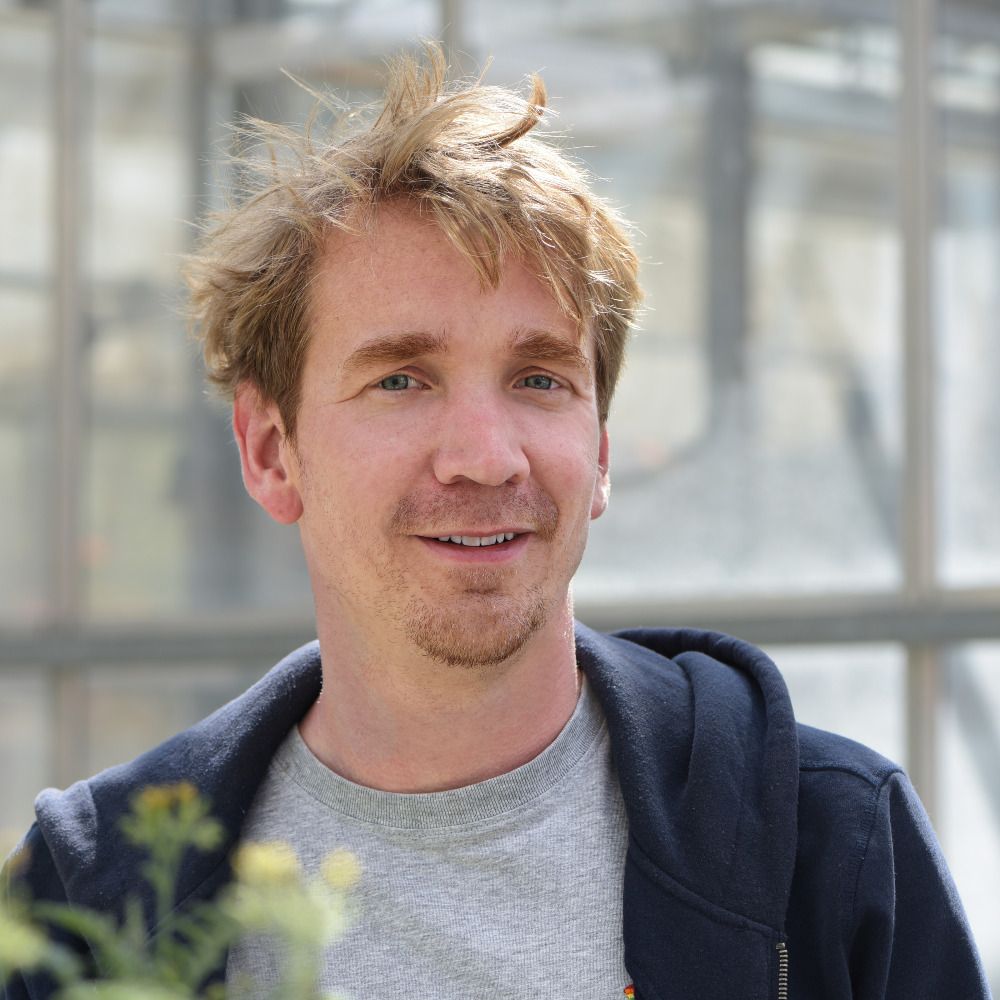
More great news!
Farooq Ahmad has received funding to establish a junior research group in my department @uni-kiel.de
He will focus on assisted tree migration to combat forest pathogens in a changing climate.
www.uni-kiel.de/en/details/n...
He will be looking for PhD students soon!
Farooq Ahmad has received funding to establish a junior research group in my department @uni-kiel.de
He will focus on assisted tree migration to combat forest pathogens in a changing climate.
www.uni-kiel.de/en/details/n...
He will be looking for PhD students soon!

BMFTR funds plant research on climate adaptation at Kiel University with 2.25 million Euros
Dr Farooq Ahmad from the Institute of Phytopathology receives extensive BMFTR funding to investigate forest adaptation strategies to climate change.
www.uni-kiel.de
December 10, 2025 at 12:17 PM
More great news!
Farooq Ahmad has received funding to establish a junior research group in my department @uni-kiel.de
He will focus on assisted tree migration to combat forest pathogens in a changing climate.
www.uni-kiel.de/en/details/n...
He will be looking for PhD students soon!
Farooq Ahmad has received funding to establish a junior research group in my department @uni-kiel.de
He will focus on assisted tree migration to combat forest pathogens in a changing climate.
www.uni-kiel.de/en/details/n...
He will be looking for PhD students soon!
Reposted by Severin Einspanier

👏 Congratulations, Dr. Farooq Ahmad! The postdoctoral researcher from the Institute of Phytopathology receives extensive #BMFTR funding to investigate forest adaptation strategies to climate change using the concept of assisted tree migration.
#KielLifeScience #KielPlantCenter #KiTE #BioKreativ
#KielLifeScience #KielPlantCenter #KiTE #BioKreativ

BMFTR funds plant research on climate adaptation at Kiel University with 2.25 million Euros
Dr Farooq Ahmad from the Institute of Phytopathology receives extensive BMFTR funding to investigate forest adaptation strategies to climate change.
www.uni-kiel.de
December 10, 2025 at 3:30 PM
👏 Congratulations, Dr. Farooq Ahmad! The postdoctoral researcher from the Institute of Phytopathology receives extensive #BMFTR funding to investigate forest adaptation strategies to climate change using the concept of assisted tree migration.
#KielLifeScience #KielPlantCenter #KiTE #BioKreativ
#KielLifeScience #KielPlantCenter #KiTE #BioKreativ
Reposted by Severin Einspanier

My barley transcriptional network preprint is officially out!
Started as my Bachelor’s thesis — now it’s online:
doi.org/10.64898/202...
Huge thanks to @itisalist.bsky.social, @daisybio.de, @huckelhovenr.bsky.social , Felix Hoheneder & Johannes Kersting for all their help and support!
Started as my Bachelor’s thesis — now it’s online:
doi.org/10.64898/202...
Huge thanks to @itisalist.bsky.social, @daisybio.de, @huckelhovenr.bsky.social , Felix Hoheneder & Johannes Kersting for all their help and support!

Network Inference Reveals Distinct Transcriptional Regulation in Barley against Drought and Fusarium Head Blight
We analyzed transcriptional networks in barley under single and combined Fusarium head blight (FHB) and drought stress. We applied complementary Weighted Gene Correlation Network Analysis (WGCNA) to i...
doi.org
December 10, 2025 at 7:49 AM
My barley transcriptional network preprint is officially out!
Started as my Bachelor’s thesis — now it’s online:
doi.org/10.64898/202...
Huge thanks to @itisalist.bsky.social, @daisybio.de, @huckelhovenr.bsky.social , Felix Hoheneder & Johannes Kersting for all their help and support!
Started as my Bachelor’s thesis — now it’s online:
doi.org/10.64898/202...
Huge thanks to @itisalist.bsky.social, @daisybio.de, @huckelhovenr.bsky.social , Felix Hoheneder & Johannes Kersting for all their help and support!
Reposted by Severin Einspanier

Congratulations to @steidele.bsky.social who unscrambled complex transcriptional networks in barley double stress responses. Thanks to @itisalist.bsky.social and @daisybio.de for the support: doi: doi.org/10.64898/202...

Network Inference Reveals Distinct Transcriptional Regulation in Barley against Drought and Fusarium Head Blight
We analyzed transcriptional networks in barley under single and combined Fusarium head blight (FHB) and drought stress. We applied complementary Weighted Gene Correlation Network Analysis (WGCNA) to identify stress-associated gene co-expression modules and GENIE3 to infer gene regulatory networks (GRNs). Integration of these frameworks revealed strong overlaps between co-expression modules and GRN clusters, highlighting robust regulatory patterns. Key transcription factors (TFs) were identified based on their weighted node degrees, reflecting their connectivity within the network. Independent analysis of paired transcription factor binding sites in promoter regions further supported predicted regulatory interactions. Notably, WRKY TFs emerged as central regulators of FHB response, consistent with their known roles in defense and secondary metabolite biosynthesis, but did not appear in drought-associated contexts. For bHLH or NAC TFs, individual family members steered FHB or drought responses but not both. Our findings demonstrate the power of combining network inference and motif enrichment to identify candidate TFs controlling stress responses, providing a solid foundation for targeted functional validation. ### Competing Interest Statement The authors have declared no competing interest.
doi.org
December 10, 2025 at 6:51 AM
Congratulations to @steidele.bsky.social who unscrambled complex transcriptional networks in barley double stress responses. Thanks to @itisalist.bsky.social and @daisybio.de for the support: doi: doi.org/10.64898/202...
Reposted by Severin Einspanier

They should do MyChart Wrapped
December 3, 2025 at 11:10 PM
Reposted by Severin Einspanier
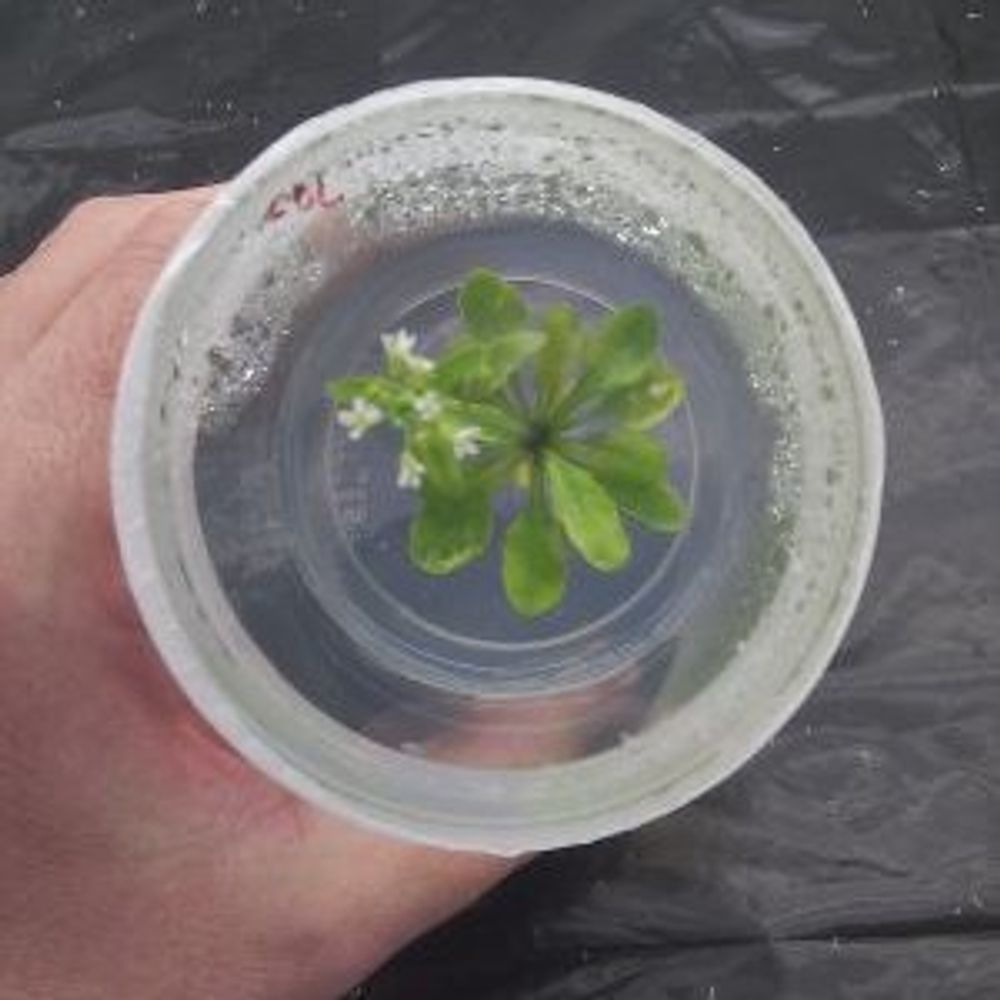
Historic day! 🌾
The #EU agrees on new rules for genomic techniques, paving the way for crops that better resist climate change and pests, deliver higher yields, and need fewer fertilisers & pesticides. A big step towards a more sustainable food system.
www.europarl.europa.eu/news/en/pres...
The #EU agrees on new rules for genomic techniques, paving the way for crops that better resist climate change and pests, deliver higher yields, and need fewer fertilisers & pesticides. A big step towards a more sustainable food system.
www.europarl.europa.eu/news/en/pres...
New genomic techniques: deal to support the green transition in farming | News | European Parliament
The new rules will make the EU food system more secure and sustainable, with climate- and pest-resistant plants that give higher yields and require fewer fertilisers and pesticides.
www.europarl.europa.eu
December 4, 2025 at 6:41 AM
Historic day! 🌾
The #EU agrees on new rules for genomic techniques, paving the way for crops that better resist climate change and pests, deliver higher yields, and need fewer fertilisers & pesticides. A big step towards a more sustainable food system.
www.europarl.europa.eu/news/en/pres...
The #EU agrees on new rules for genomic techniques, paving the way for crops that better resist climate change and pests, deliver higher yields, and need fewer fertilisers & pesticides. A big step towards a more sustainable food system.
www.europarl.europa.eu/news/en/pres...
Reposted by Severin Einspanier
Europa bekennt sich zur Wissenschaft! 💚
Natürlich sind noch nicht alle auf dem gleichen Stand. Deshalb stehen wir bei @oekoprog.bsky.social natürlich für alle Fragen bereit! 😌
#GiveGenesAChance
www.tagesschau.de/wirtschaft/v...
Natürlich sind noch nicht alle auf dem gleichen Stand. Deshalb stehen wir bei @oekoprog.bsky.social natürlich für alle Fragen bereit! 😌
#GiveGenesAChance
www.tagesschau.de/wirtschaft/v...

EU einigt sich auf Lockerungen für gentechnisch veränderte Lebensmittel
Für viele gentechnisch veränderte Lebensmittel soll es künftig keine Hinweispflicht mehr in Supermärkten geben. Darauf einigten sich Vertreter aus dem Europaparlament und dem Rat der EU-Länder.
www.tagesschau.de
December 4, 2025 at 5:37 AM
Europa bekennt sich zur Wissenschaft! 💚
Natürlich sind noch nicht alle auf dem gleichen Stand. Deshalb stehen wir bei @oekoprog.bsky.social natürlich für alle Fragen bereit! 😌
#GiveGenesAChance
www.tagesschau.de/wirtschaft/v...
Natürlich sind noch nicht alle auf dem gleichen Stand. Deshalb stehen wir bei @oekoprog.bsky.social natürlich für alle Fragen bereit! 😌
#GiveGenesAChance
www.tagesschau.de/wirtschaft/v...
Reposted by Severin Einspanier
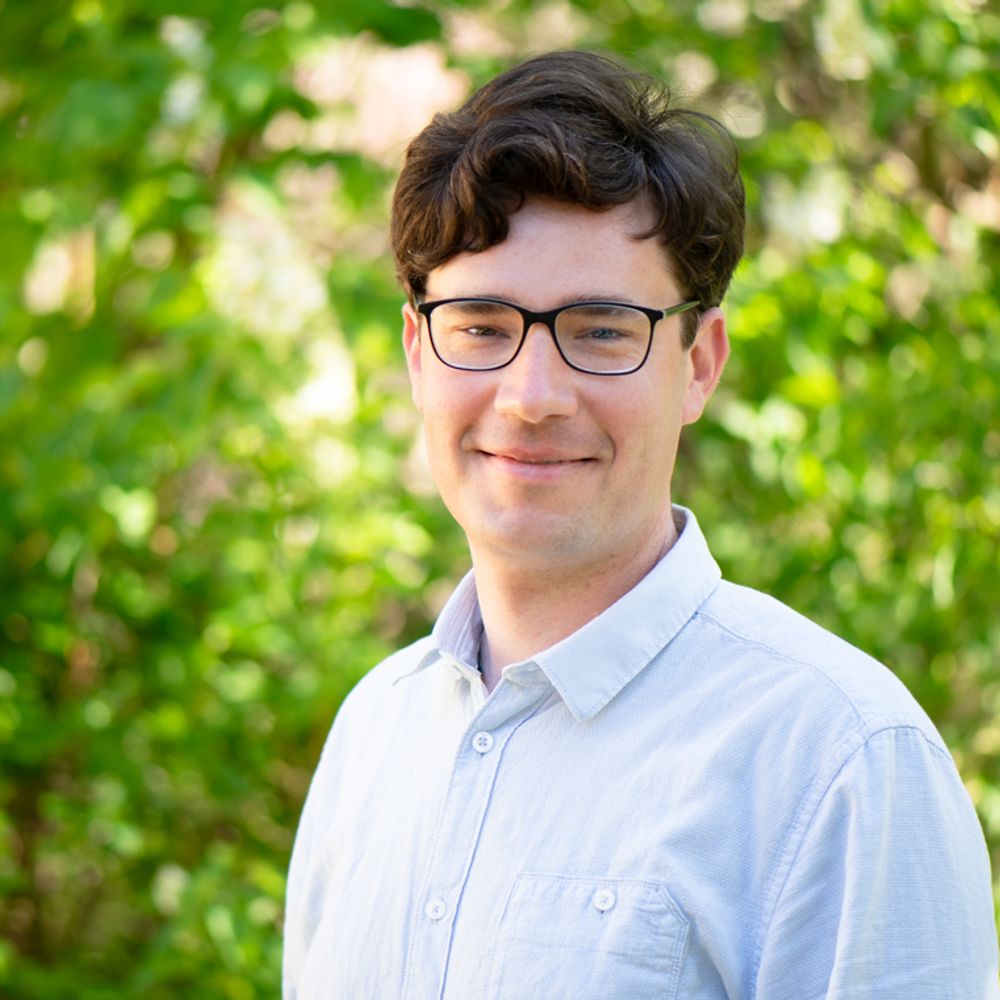
2025 AG @rstam.bsky.social lab retreat success!
Great science and company, seaside views, and a music quiz that revealed way too much about our teenage time... 😅🕺
Great science and company, seaside views, and a music quiz that revealed way too much about our teenage time... 😅🕺


December 2, 2025 at 9:26 PM
2025 AG @rstam.bsky.social lab retreat success!
Great science and company, seaside views, and a music quiz that revealed way too much about our teenage time... 😅🕺
Great science and company, seaside views, and a music quiz that revealed way too much about our teenage time... 😅🕺
Reposted by Severin Einspanier
Frost finally ended this year’s S. chilense field screening.
Many plants survived multiple waves of #Phytophthora… but not this week’s snow and cold.
Time to clean up and start planning for next season.
#plants #lablife #wildtomatoes #PlantScience #QDR
Many plants survived multiple waves of #Phytophthora… but not this week’s snow and cold.
Time to clean up and start planning for next season.
#plants #lablife #wildtomatoes #PlantScience #QDR


November 28, 2025 at 10:31 AM
Frost finally ended this year’s S. chilense field screening.
Many plants survived multiple waves of #Phytophthora… but not this week’s snow and cold.
Time to clean up and start planning for next season.
#plants #lablife #wildtomatoes #PlantScience #QDR
Many plants survived multiple waves of #Phytophthora… but not this week’s snow and cold.
Time to clean up and start planning for next season.
#plants #lablife #wildtomatoes #PlantScience #QDR
Reposted by Severin Einspanier

"Plant single cell RNAseq workshop: From current technologies to data analyses" Saclay Plant Sciences Summer School, June 28 - July 3, 2026 – Versailles (France)

"Plant single cell RNAseq workshop: From current technologies to data analyses" Saclay Plant Sciences Summer School, June 28 - July 3, 2026 – Versailles (France)
This Summer school is organized by the Saclay Plant Sciences (SPS) network, one of the largest European plant sciences communities.
scRNAseq approaches have revolutionized the way biologists approach their research subjects, by making it possible to dissect molecular mechanisms at the single-cell level. But although technological developments have recently made these approaches more accessible, their expensive use still requires significant technical training, including the good conception of experimental designs, the preparation of samples as well as their bioinformatics analyses. In addition, different protocols and various bioinformatics and statistical analyzes are available, and it can be difficult to choose the most relevant ones for the biological question at hand.
Over five days, the SPS Summer School 2026 will cover all the stages of a scRNAseq project in plants. Through a combination of lectures and practical work, the many specific features of plant models will be highlighted by experts from the Saclay Plant Sciences network (CNRS and INRAE), the ViB in Ghent and the Pasteur Institute.
After this international school, participants will:
– Have an overview of the different scRNAseq technologies and understand their pros and cons.
– Be able to design experiments depending on the biological question.
– Be trained on sample preparation techniques for single cell and single nuclei
– Understand the different steps of bioinformatics and statistical analysis
– Have a better biological interpretation of results
– Have facilitated exchanges with technology platforms, bioinformaticians, and biostatisticians in order to successfully complete their scRNAseq project
The summer school will bring together outstanding and enthusiastic young scientists (PhD students and post-docs) from all over the world in order to exchange knowledge and ideas. It is limited to a small group of participants (20 maximum) to privilege informal interactions and scientific discussions
Application deadline: March 12, 2026 (midnight)
Answers will be sent mid-April at the latest.
eng-saclay-plant-sciences.hub.inrae.fr
November 26, 2025 at 7:53 PM
"Plant single cell RNAseq workshop: From current technologies to data analyses" Saclay Plant Sciences Summer School, June 28 - July 3, 2026 – Versailles (France)
Reposted by Severin Einspanier
New preprint of the "BarFus"-group @tum.de from the Chair of Phytopathology @huckelhovenr.bsky.social

Transcriptome and hormone regulations shape drought stress-dependent Fusarium Head Blight susceptibility in different barley genotypes https://www.biorxiv.org/content/10.1101/2025.11.23.689882v1
November 26, 2025 at 8:10 PM
New preprint of the "BarFus"-group @tum.de from the Chair of Phytopathology @huckelhovenr.bsky.social
Reposted by Severin Einspanier
Did you ever wonder how #Solanum plants evolved quantitative disease resistance/ #QDR?
I am really excited to share our recently published manuscript, where we tried to contribute to addressing this question!
🌱https://tinyurl.com/2vz23ck6
I am really excited to share our recently published manuscript, where we tried to contribute to addressing this question!
🌱https://tinyurl.com/2vz23ck6

Co-option of transcription factors drives evolution of quantitative disease resistance against a necrotrophic pathogen
Quantitative disease resistance in a wild tomato genotype evolved through species-specific regulatory network rewiring, with an ancient transcription facto
tinyurl.com
November 21, 2025 at 9:00 AM
Reposted by Severin Einspanier
We deeply analyzed barley double stress responses and discovered this:
Transcriptome and hormone regulations shape drought stress-dependent Fusarium Head Blight susceptibility in different barley genotypes https://www.biorxiv.org/content/10.1101/2025.11.23.689882v1
November 26, 2025 at 4:49 AM
We deeply analyzed barley double stress responses and discovered this:
Reposted by Severin Einspanier
🛡️RESEARCH🛡️
The transcription factor BnaWRKY75 enhances resistance to Sclerotinia sclerotiorum in oilseed rape by directly activating BnaICS1, thereby enhancing salicylic acid biosynthesis & triggering salicylic acid-dependent defenses - Liu et al.
🔗 doi.org/10.1093/jxb/...
#PlantScience 🧪
The transcription factor BnaWRKY75 enhances resistance to Sclerotinia sclerotiorum in oilseed rape by directly activating BnaICS1, thereby enhancing salicylic acid biosynthesis & triggering salicylic acid-dependent defenses - Liu et al.
🔗 doi.org/10.1093/jxb/...
#PlantScience 🧪

November 25, 2025 at 4:26 PM
🛡️RESEARCH🛡️
The transcription factor BnaWRKY75 enhances resistance to Sclerotinia sclerotiorum in oilseed rape by directly activating BnaICS1, thereby enhancing salicylic acid biosynthesis & triggering salicylic acid-dependent defenses - Liu et al.
🔗 doi.org/10.1093/jxb/...
#PlantScience 🧪
The transcription factor BnaWRKY75 enhances resistance to Sclerotinia sclerotiorum in oilseed rape by directly activating BnaICS1, thereby enhancing salicylic acid biosynthesis & triggering salicylic acid-dependent defenses - Liu et al.
🔗 doi.org/10.1093/jxb/...
#PlantScience 🧪