


KunzLab@LMU
@kunzlab.bsky.social
Passionately researching to understand the transport processes and genes required for proper chloroplast function and photosynthesis.
Pinned

The chloroplast ionome shines light on the dynamics of organellar iron homeostasis
Loss of chloroplast iron (Fe) ferritin storage leads to Fe re-shuttling into the vacuole and reduced leaf tissue Fe content.
academic.oup.com
Plz read our study by @lmumuenchen.bsky.social PhD cand. Lorenz. He describes chloroplast ionomes for several 🌱species & shows how plastid iron can be massively increased. Terrific help by peers from @ruhr-uni-bochum.de, @mizzouid.bsky.social and @uni-saarland.de academic.oup.com/plcell/artic...
Reposted by KunzLab@LMU
Loss of Mitochondrial FMT Restores Chloroplast Proteostasis via Inter-organelle Compensation www.biorxiv.org/content/10.6...
www.biorxiv.org
February 17, 2026 at 8:17 PM
Loss of Mitochondrial FMT Restores Chloroplast Proteostasis via Inter-organelle Compensation www.biorxiv.org/content/10.6...
Reposted by KunzLab@LMU
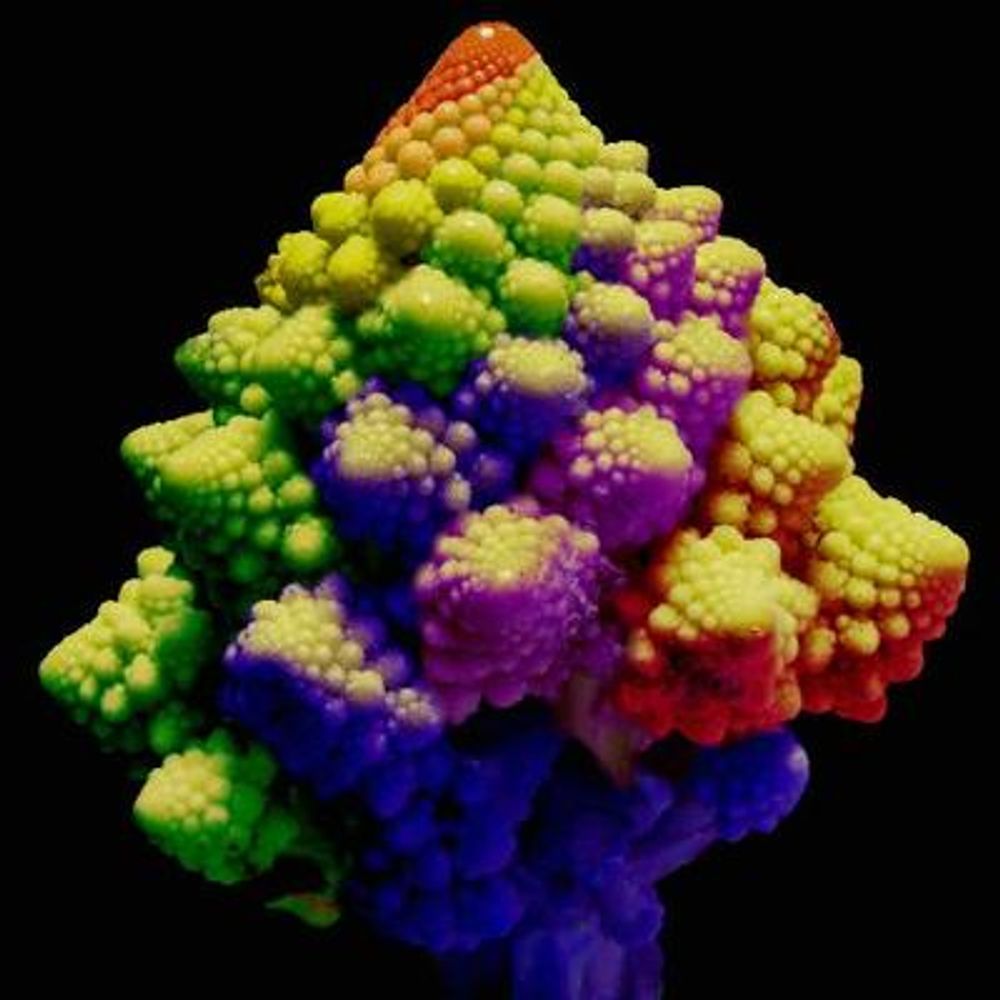
Mirad quien llegó hoy al laboratorio! Estoy más allá de contenta 💚 🌱 con el cloroplasto que me ha tejido @dinosalabs.es (hay mucha ciencia y magia de por medio)
Artistaza!!
Artistaza!!


February 17, 2026 at 4:40 PM
Mirad quien llegó hoy al laboratorio! Estoy más allá de contenta 💚 🌱 con el cloroplasto que me ha tejido @dinosalabs.es (hay mucha ciencia y magia de por medio)
Artistaza!!
Artistaza!!
Reposted by KunzLab@LMU
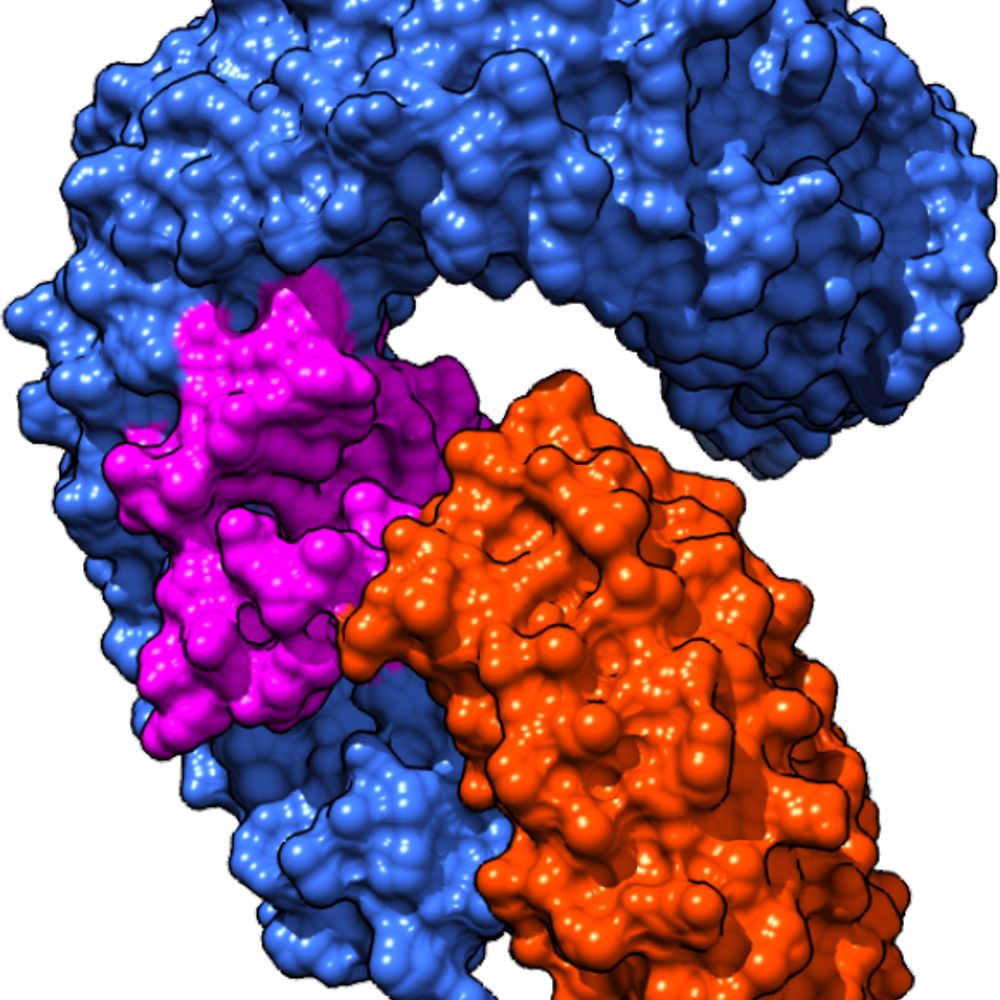
Very nice genetic dissection of the roles of BSK kinases in brassinosteroid signaling by Wenqiang Tang's lab. bsk-u (ko for BSK1 1, 2, 3, 4, 5, 6, 7, 8, 10, 11 & 12) really looks like a bri1 null mutant and can be rescued by over-expressing BSK3. nph.onlinelibrary.wiley.com/doi/epdf/10....

February 17, 2026 at 1:42 PM
Very nice genetic dissection of the roles of BSK kinases in brassinosteroid signaling by Wenqiang Tang's lab. bsk-u (ko for BSK1 1, 2, 3, 4, 5, 6, 7, 8, 10, 11 & 12) really looks like a bri1 null mutant and can be rescued by over-expressing BSK3. nph.onlinelibrary.wiley.com/doi/epdf/10....
Reposted by KunzLab@LMU
The Bart Lab at UC Berkeley is looking for a postdoc. Please share!

February 17, 2026 at 12:03 AM
The Bart Lab at UC Berkeley is looking for a postdoc. Please share!
Reposted by KunzLab@LMU

Dear PPRM community, we are pleased to invite you to the next PPRM meeting, 14-16 September 2026 in Freising, Germany.
Registration opening soon!
Registration opening soon!

February 16, 2026 at 11:24 AM
Dear PPRM community, we are pleased to invite you to the next PPRM meeting, 14-16 September 2026 in Freising, Germany.
Registration opening soon!
Registration opening soon!
Reposted by KunzLab@LMU
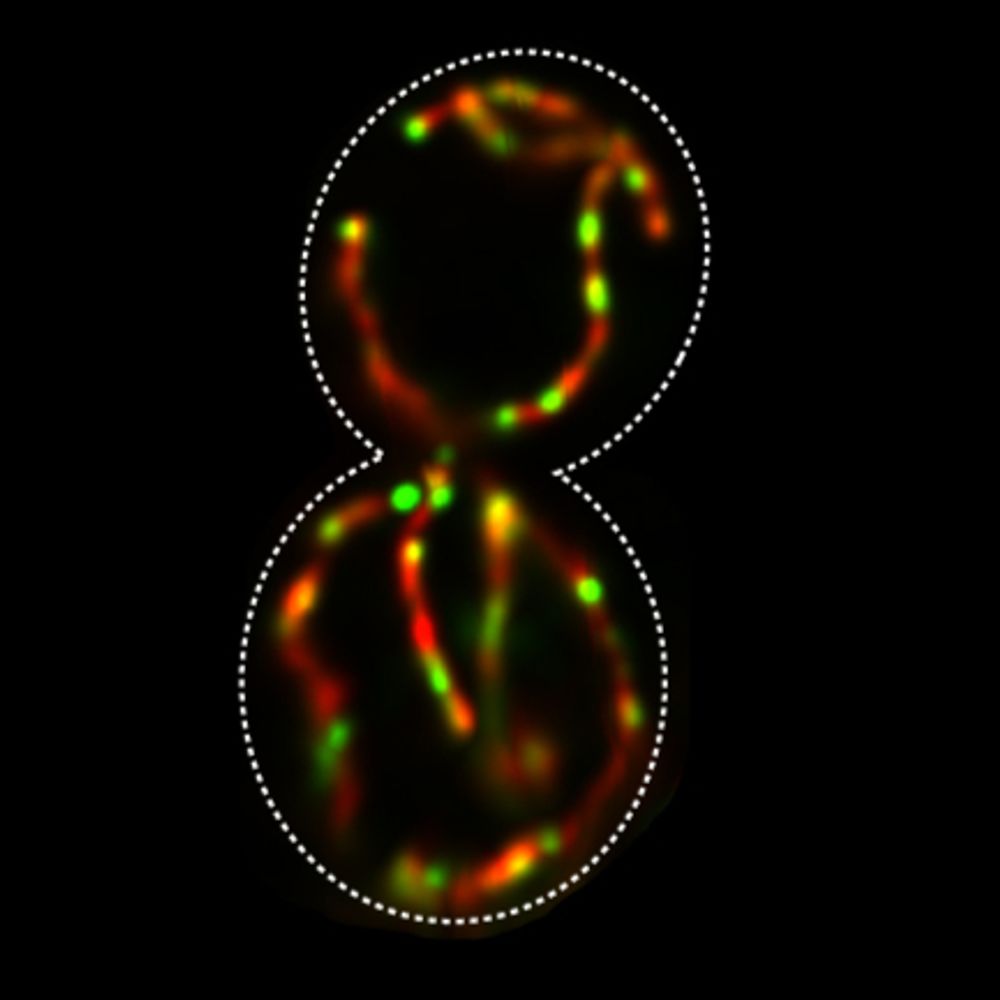
Daily #mtDNA intel: • mtDNA inheritance enables lineage tracing 🧬 • LONP1 variants linked to diverse phenotypes • HSP90α/DRP1 axis triggers sepsis brain injury 🔬 #mitochondria
📄 Full Dossier | 🎙️ Podcast
📄 Full Dossier | 🎙️ Podcast

February 14, 2026 at 11:33 AM
Daily #mtDNA intel: • mtDNA inheritance enables lineage tracing 🧬 • LONP1 variants linked to diverse phenotypes • HSP90α/DRP1 axis triggers sepsis brain injury 🔬 #mitochondria
📄 Full Dossier | 🎙️ Podcast
📄 Full Dossier | 🎙️ Podcast
Reposted by KunzLab@LMU

Out now my first “In Brief” for @theplantcell.bsky.social, highlighting amazing new work from Holzner and colleagues @kunzlab.bsky.social. A long-needed characterization of the chloroplast ionome in model plants, together with new genetic strategies to manipulate it, has finally seen the light! 🌱🔬
February 13, 2026 at 9:10 PM
Out now my first “In Brief” for @theplantcell.bsky.social, highlighting amazing new work from Holzner and colleagues @kunzlab.bsky.social. A long-needed characterization of the chloroplast ionome in model plants, together with new genetic strategies to manipulate it, has finally seen the light! 🌱🔬
Chloroplast ionome characterization provides new avenues to shape organellar iron homeostasis url: academic.oup.com/plcell/artic...

Chloroplast ionome characterization provides new avenues to shape organellar iron homeostasis
Matteo Pivato; Chloroplast ionome characterization provides new avenues to shape organellar iron homeostasis, The Plant Cell, , koag027, https://doi.org/10
academic.oup.com
February 13, 2026 at 6:22 AM
Chloroplast ionome characterization provides new avenues to shape organellar iron homeostasis url: academic.oup.com/plcell/artic...
Reposted by KunzLab@LMU
🌟𝐍𝐞𝐰 𝐄𝐝𝐢𝐭𝐨𝐫 𝐨𝐧 𝐁𝐨𝐚𝐫𝐝🌟
Meet 𝐃𝐫. 𝐊𝐞𝐯𝐢𝐧 𝐂𝐨𝐱 @kcox-bioguy.bsky.social
Asst. Prof. Biology @WashU
Asst. Member @danforthcenter.bsky.social
The Cox lab maps gene activity in plants to understand how genes are organized and regulated across tissues.
To know more👉 www.thecoxlab.org
Welcome to TPJ!!
Meet 𝐃𝐫. 𝐊𝐞𝐯𝐢𝐧 𝐂𝐨𝐱 @kcox-bioguy.bsky.social
Asst. Prof. Biology @WashU
Asst. Member @danforthcenter.bsky.social
The Cox lab maps gene activity in plants to understand how genes are organized and regulated across tissues.
To know more👉 www.thecoxlab.org
Welcome to TPJ!!

February 12, 2026 at 10:18 AM
🌟𝐍𝐞𝐰 𝐄𝐝𝐢𝐭𝐨𝐫 𝐨𝐧 𝐁𝐨𝐚𝐫𝐝🌟
Meet 𝐃𝐫. 𝐊𝐞𝐯𝐢𝐧 𝐂𝐨𝐱 @kcox-bioguy.bsky.social
Asst. Prof. Biology @WashU
Asst. Member @danforthcenter.bsky.social
The Cox lab maps gene activity in plants to understand how genes are organized and regulated across tissues.
To know more👉 www.thecoxlab.org
Welcome to TPJ!!
Meet 𝐃𝐫. 𝐊𝐞𝐯𝐢𝐧 𝐂𝐨𝐱 @kcox-bioguy.bsky.social
Asst. Prof. Biology @WashU
Asst. Member @danforthcenter.bsky.social
The Cox lab maps gene activity in plants to understand how genes are organized and regulated across tissues.
To know more👉 www.thecoxlab.org
Welcome to TPJ!!

Reposted by KunzLab@LMU

Plastids, photosynthetic organelles in plants and algae, originated from cyanobacterial endosymbiosis. Here, Shrestha et al. use metagenomics to expand plastid diversity and provide evidence for two independent origins of secondary red-algal plastids.
www.nature.com/articles/s41...
www.nature.com/articles/s41...
Global metagenomics reveals plastid diversity and unexplored algal lineages - Nature Communications
Plastids, photosynthetic organelles in plants and algae, originated from cyanobacterial endosymbiosis. Here, Shrestha et al. use metagenomics to expand plastid diversity and provide evidence for two i...
www.nature.com
February 10, 2026 at 5:10 PM
Plastids, photosynthetic organelles in plants and algae, originated from cyanobacterial endosymbiosis. Here, Shrestha et al. use metagenomics to expand plastid diversity and provide evidence for two independent origins of secondary red-algal plastids.
www.nature.com/articles/s41...
www.nature.com/articles/s41...
Reposted by KunzLab@LMU

Heute abend:

💡 Wie aus iGEM-Projekten echte Gründungsgeschichten werden!
🧬 “Turning iGEM Projects into Startups [EN]”
📅 Wednesday, February 11, 2026 | 6 PM (CET)
Anna Eisenmenger (TUM, Nucleate Germany) und Anthony Ao (iGEM Startups, Nucleate GVA) berichten, wie iGEM ihre Karriere verändert hat.
🧬 “Turning iGEM Projects into Startups [EN]”
📅 Wednesday, February 11, 2026 | 6 PM (CET)
Anna Eisenmenger (TUM, Nucleate Germany) und Anthony Ao (iGEM Startups, Nucleate GVA) berichten, wie iGEM ihre Karriere verändert hat.

February 11, 2026 at 2:55 PM
Heute abend:
Reposted by KunzLab@LMU
My lab at the JIC is recruiting 3 PDRA:
🔹 Bioinformatics / AI
🔹 Molecular Biology / Genetics
🔹 Proteomics
Programme funded by the Novo Nordisk Foundation.
📅 Closing date: 27 February
Apply via JIC website:
www.jic.ac.uk/vacancies/
Please share with outstanding candidates. 🙏
🔹 Bioinformatics / AI
🔹 Molecular Biology / Genetics
🔹 Proteomics
Programme funded by the Novo Nordisk Foundation.
📅 Closing date: 27 February
Apply via JIC website:
www.jic.ac.uk/vacancies/
Please share with outstanding candidates. 🙏

Postdoctoral Researcher (Charpentier Group) | John Innes Centre
An exciting opportunity has arisen for a Postdoctoral Researcher to join the Charpentier Group at the John Innes Centre, working on cutting-edge science in the field of plant calcium signalling.
www.jic.ac.uk
February 11, 2026 at 8:46 AM
My lab at the JIC is recruiting 3 PDRA:
🔹 Bioinformatics / AI
🔹 Molecular Biology / Genetics
🔹 Proteomics
Programme funded by the Novo Nordisk Foundation.
📅 Closing date: 27 February
Apply via JIC website:
www.jic.ac.uk/vacancies/
Please share with outstanding candidates. 🙏
🔹 Bioinformatics / AI
🔹 Molecular Biology / Genetics
🔹 Proteomics
Programme funded by the Novo Nordisk Foundation.
📅 Closing date: 27 February
Apply via JIC website:
www.jic.ac.uk/vacancies/
Please share with outstanding candidates. 🙏
Reposted by KunzLab@LMU
🧬⚡ Call for abstracts & participants | GRC 2026 ⚡🧬
Together with Vamsi Mootha, I’m chairing the 2026 Gordon Research Conference on Mitochondria & Chloroplasts (July 19 - 24, 2026). We’d love to see your application.
Thread 🧵👇
Together with Vamsi Mootha, I’m chairing the 2026 Gordon Research Conference on Mitochondria & Chloroplasts (July 19 - 24, 2026). We’d love to see your application.
Thread 🧵👇
February 10, 2026 at 1:52 PM
🧬⚡ Call for abstracts & participants | GRC 2026 ⚡🧬
Together with Vamsi Mootha, I’m chairing the 2026 Gordon Research Conference on Mitochondria & Chloroplasts (July 19 - 24, 2026). We’d love to see your application.
Thread 🧵👇
Together with Vamsi Mootha, I’m chairing the 2026 Gordon Research Conference on Mitochondria & Chloroplasts (July 19 - 24, 2026). We’d love to see your application.
Thread 🧵👇
Reposted by KunzLab@LMU

🥇The amazing Daniela Döben received the prize of the jGBM @gbmev.bsky.social for her Master thesis on the redox metabolism of plant-microbe interactions 🌱🦠🔬 #MPMI
@uni-muenster.de
Huge congratulations, Daniela! 🎉🎉🎉
Also big shout out to the mentoring of @jan-oleniemeier.bsky.social 🙏
@uni-muenster.de
Huge congratulations, Daniela! 🎉🎉🎉
Also big shout out to the mentoring of @jan-oleniemeier.bsky.social 🙏

February 10, 2026 at 1:28 PM
🥇The amazing Daniela Döben received the prize of the jGBM @gbmev.bsky.social for her Master thesis on the redox metabolism of plant-microbe interactions 🌱🦠🔬 #MPMI
@uni-muenster.de
Huge congratulations, Daniela! 🎉🎉🎉
Also big shout out to the mentoring of @jan-oleniemeier.bsky.social 🙏
@uni-muenster.de
Huge congratulations, Daniela! 🎉🎉🎉
Also big shout out to the mentoring of @jan-oleniemeier.bsky.social 🙏
Reposted by KunzLab@LMU
“A bird with a 10-gram brain is doing pretty much the same as a chimp with a 400-gram brain,” said Onur Güntürkün, who studies brain structures at Ruhr University Bochum in Germany. “How is it possible?”

Intelligence Evolved at Least Twice in Vertebrate Animals | Quanta Magazine
Complex neural circuits likely arose independently in birds and mammals, suggesting that vertebrates evolved intelligence multiple times.
www.quantamagazine.org
February 9, 2026 at 9:04 PM
“A bird with a 10-gram brain is doing pretty much the same as a chimp with a 400-gram brain,” said Onur Güntürkün, who studies brain structures at Ruhr University Bochum in Germany. “How is it possible?”
Reposted by KunzLab@LMU

Super excited to have this online at @jxbotany.bsky.social doi.org/10.1093/jxb/...
"Building a diverse and inclusive plant science community," a call-to-action. Thanks to @apaterlini.bsky.social
@mehta-lab.com @yoselin.bsky.social
@goormachtig.bsky.social & Agnes Uhereczky + funders!💚
"Building a diverse and inclusive plant science community," a call-to-action. Thanks to @apaterlini.bsky.social
@mehta-lab.com @yoselin.bsky.social
@goormachtig.bsky.social & Agnes Uhereczky + funders!💚

February 9, 2026 at 12:53 PM
Super excited to have this online at @jxbotany.bsky.social doi.org/10.1093/jxb/...
"Building a diverse and inclusive plant science community," a call-to-action. Thanks to @apaterlini.bsky.social
@mehta-lab.com @yoselin.bsky.social
@goormachtig.bsky.social & Agnes Uhereczky + funders!💚
"Building a diverse and inclusive plant science community," a call-to-action. Thanks to @apaterlini.bsky.social
@mehta-lab.com @yoselin.bsky.social
@goormachtig.bsky.social & Agnes Uhereczky + funders!💚
Reposted by KunzLab@LMU

@jochenwolflab.bsky.social
Where do potentially harmful mutations accumulate? We have an answer in birds. Congratulations Fidel for wonderful paper!
doi.org/10.1093/gene...
Where do potentially harmful mutations accumulate? We have an answer in birds. Congratulations Fidel for wonderful paper!
doi.org/10.1093/gene...

Determinants of mutation load in birds
Abstract. Many mutations have detrimental effects. The mutation load in a population depends on the efficacy of purifying selection in removing deleterious
doi.org
February 9, 2026 at 5:28 PM
@jochenwolflab.bsky.social
Where do potentially harmful mutations accumulate? We have an answer in birds. Congratulations Fidel for wonderful paper!
doi.org/10.1093/gene...
Where do potentially harmful mutations accumulate? We have an answer in birds. Congratulations Fidel for wonderful paper!
doi.org/10.1093/gene...
Reposted by KunzLab@LMU
Proud to be a coauthor on this paper from @kunzlab.bsky.social.
Congrats, Lorenz, I hope they put Ironman on your graduation cap!
Congrats, Lorenz, I hope they put Ironman on your graduation cap!
Plz read our study by @lmumuenchen.bsky.social PhD cand. Lorenz. He describes chloroplast ionomes for several 🌱species & shows how plastid iron can be massively increased. Terrific help by peers from @ruhr-uni-bochum.de, @mizzouid.bsky.social and @uni-saarland.de academic.oup.com/plcell/artic...
The chloroplast ionome shines light on the dynamics of organellar iron homeostasis
Loss of chloroplast iron (Fe) ferritin storage leads to Fe re-shuttling into the vacuole and reduced leaf tissue Fe content.
academic.oup.com
February 9, 2026 at 6:46 PM
Proud to be a coauthor on this paper from @kunzlab.bsky.social.
Congrats, Lorenz, I hope they put Ironman on your graduation cap!
Congrats, Lorenz, I hope they put Ironman on your graduation cap!
Reposted by KunzLab@LMU

Great collaboration with the Sanchez-Puerta lab and colleagues! @lfceriotti.bsky.social @organelledchaos.bsky.social @jumpinggenomes.bsky.social @chusteckisci.bsky.social @achristensenphd.bsky.social (and others not on bsky)
www.biorxiv.org/content/10.6...
www.biorxiv.org/content/10.6...

Reshaping Organellar Translation and tRNA Metabolism: The Consequences of Photosynthesis Loss and Massive Horizontal Gene Transfer
The transition to holoparasitism in plants precipitates the loss of photosynthesis, fundamentally altering the selective landscape acting on organellar genomes. These changes raise questions about the...
www.biorxiv.org
January 13, 2026 at 4:45 AM
Great collaboration with the Sanchez-Puerta lab and colleagues! @lfceriotti.bsky.social @organelledchaos.bsky.social @jumpinggenomes.bsky.social @chusteckisci.bsky.social @achristensenphd.bsky.social (and others not on bsky)
www.biorxiv.org/content/10.6...
www.biorxiv.org/content/10.6...
Reposted by KunzLab@LMU
Promote brilliant plant science #ECRs 🌱
@plantsciencedbg.bsky.social Awards 2026 are open. monetary prize, a certificate & a plenary talk at Botanik-Tagung.
Deadline: 26 Apr 2026.
Pro tip: 👉 Self-noms welcome for Horst Wiehe Award
Details: www.deutsche-botanische-gesellschaft.de/u/3awards
@plantsciencedbg.bsky.social Awards 2026 are open. monetary prize, a certificate & a plenary talk at Botanik-Tagung.
Deadline: 26 Apr 2026.
Pro tip: 👉 Self-noms welcome for Horst Wiehe Award
Details: www.deutsche-botanische-gesellschaft.de/u/3awards
Actualia (2026) - Notifications of the Society
Notifications from our Society (Deutsche Botanische Gesellschaft, DBG) for its members (2026)
www.deutsche-botanische-gesellschaft.de
February 9, 2026 at 12:53 PM
Promote brilliant plant science #ECRs 🌱
@plantsciencedbg.bsky.social Awards 2026 are open. monetary prize, a certificate & a plenary talk at Botanik-Tagung.
Deadline: 26 Apr 2026.
Pro tip: 👉 Self-noms welcome for Horst Wiehe Award
Details: www.deutsche-botanische-gesellschaft.de/u/3awards
@plantsciencedbg.bsky.social Awards 2026 are open. monetary prize, a certificate & a plenary talk at Botanik-Tagung.
Deadline: 26 Apr 2026.
Pro tip: 👉 Self-noms welcome for Horst Wiehe Award
Details: www.deutsche-botanische-gesellschaft.de/u/3awards
Reposted by KunzLab@LMU
Functional characterisation of bicarbonate transporters from the cyanobacterial SbtA2 family and subsequent expression in tobacco academic.oup.com/jxb/article/... @jxbotany.bsky.social
Functional characterisation of bicarbonate transporters from the cyanobacterial SbtA2 family and subsequent expression in tobacco
Abstract. Cyanobacteria rely on bicarbonate (HCO3-) as the primary inorganic carbon (Ci) source for photosynthesis in aquatic environments. To use this Ci
academic.oup.com
February 6, 2026 at 6:44 PM
Functional characterisation of bicarbonate transporters from the cyanobacterial SbtA2 family and subsequent expression in tobacco academic.oup.com/jxb/article/... @jxbotany.bsky.social
Reposted by KunzLab@LMU
Excellent tool! We’ve been testing it all week and it’s already been great for catching every paper. The format makes it much easier to engage with the full daily #mtDNA literature than a standard search! 🧬 Great job @osman-lab.bsky.social
🧬 Introducing the #mtDNA Lab Intel Pipeline!
Our system daily scans PubMed and bioRxiv to bring you: 📄 #Gemini generated Daily Dossiers (PDF) and 🎙️ #NotebookLM generated Podcasts with a focus on #mtDNA-QC and #mtDNA-copy-number
📂 Full Archive:
drive.google.com/drive/folder...
Our system daily scans PubMed and bioRxiv to bring you: 📄 #Gemini generated Daily Dossiers (PDF) and 🎙️ #NotebookLM generated Podcasts with a focus on #mtDNA-QC and #mtDNA-copy-number
📂 Full Archive:
drive.google.com/drive/folder...

February 7, 2026 at 11:23 AM
Excellent tool! We’ve been testing it all week and it’s already been great for catching every paper. The format makes it much easier to engage with the full daily #mtDNA literature than a standard search! 🧬 Great job @osman-lab.bsky.social
Reposted by KunzLab@LMU
🧬 Introducing the #mtDNA Lab Intel Pipeline!
Our system daily scans PubMed and bioRxiv to bring you: 📄 #Gemini generated Daily Dossiers (PDF) and 🎙️ #NotebookLM generated Podcasts with a focus on #mtDNA-QC and #mtDNA-copy-number
📂 Full Archive:
drive.google.com/drive/folder...
Our system daily scans PubMed and bioRxiv to bring you: 📄 #Gemini generated Daily Dossiers (PDF) and 🎙️ #NotebookLM generated Podcasts with a focus on #mtDNA-QC and #mtDNA-copy-number
📂 Full Archive:
drive.google.com/drive/folder...
February 7, 2026 at 9:33 AM
🧬 Introducing the #mtDNA Lab Intel Pipeline!
Our system daily scans PubMed and bioRxiv to bring you: 📄 #Gemini generated Daily Dossiers (PDF) and 🎙️ #NotebookLM generated Podcasts with a focus on #mtDNA-QC and #mtDNA-copy-number
📂 Full Archive:
drive.google.com/drive/folder...
Our system daily scans PubMed and bioRxiv to bring you: 📄 #Gemini generated Daily Dossiers (PDF) and 🎙️ #NotebookLM generated Podcasts with a focus on #mtDNA-QC and #mtDNA-copy-number
📂 Full Archive:
drive.google.com/drive/folder...
Reposted by KunzLab@LMU
And publish in society owned journals like @theplantcell.bsky.social @theplantjournal.bsky.social Plant Biotechnology Journal, @jxbotany.bsky.social @newphyt.bsky.social @plantspeopleplanet.bsky.social and many others!

Why do scientific societies matter now more than ever?
Scientists board explore how societies support researchers, foster global collaboration, & shape the future of science. A must-read for all career stages 👍
🔗 buff.ly/YW2XUN3
#plantscience #science
Scientists board explore how societies support researchers, foster global collaboration, & shape the future of science. A must-read for all career stages 👍
🔗 buff.ly/YW2XUN3
#plantscience #science

February 6, 2026 at 5:40 PM
And publish in society owned journals like @theplantcell.bsky.social @theplantjournal.bsky.social Plant Biotechnology Journal, @jxbotany.bsky.social @newphyt.bsky.social @plantspeopleplanet.bsky.social and many others!