




Shai Carmi
@shaicarmi.bsky.social
Associate professor at the Hebrew University of Jerusalem.
Statistical, population, and medical genetics; preimplantation genetic testing. Views my own.
http://scarmilab.org
Statistical, population, and medical genetics; preimplantation genetic testing. Views my own.
http://scarmilab.org
Pinned
Shai Carmi
@shaicarmi.bsky.social
· Nov 10
Slack
join.slack.com
Given several new followers here, I'm posting the link to our Slack group "genetic genealogy science".
We post and discuss manuscripts on phasing/imputation, IBD, recombination, demographic inference, ancient DNA, ancestry/admixture, etc.
All are welcome.
join.slack.com/t/geneticgen...
We post and discuss manuscripts on phasing/imputation, IBD, recombination, demographic inference, ancient DNA, ancestry/admixture, etc.
All are welcome.
join.slack.com/t/geneticgen...
Reposted by Shai Carmi
New preprint! with @a-solernunez.bsky.social
Rethinking a textbook example of human adaptation "AMY1 copy number evolution in light of demographic history"
Once population structure is accounted for, the classic starch–agriculture narrative becomes much less clear
www.biorxiv.org/content/10.6...
Rethinking a textbook example of human adaptation "AMY1 copy number evolution in light of demographic history"
Once population structure is accounted for, the classic starch–agriculture narrative becomes much less clear
www.biorxiv.org/content/10.6...
www.biorxiv.org
February 19, 2026 at 11:05 AM
New preprint! with @a-solernunez.bsky.social
Rethinking a textbook example of human adaptation "AMY1 copy number evolution in light of demographic history"
Once population structure is accounted for, the classic starch–agriculture narrative becomes much less clear
www.biorxiv.org/content/10.6...
Rethinking a textbook example of human adaptation "AMY1 copy number evolution in light of demographic history"
Once population structure is accounted for, the classic starch–agriculture narrative becomes much less clear
www.biorxiv.org/content/10.6...
Reposted by Shai Carmi

Rare disease piece in @theatlantic.com, how carriers of recessive conditions can have medical problems, making them more than 'carriers'. Gift link below.
www.theatlantic.com/health/2026/...
www.theatlantic.com/health/2026/...

Their Mutated Genes Were Supposed to Be Harmless
“Carriers” of certain genetic diseases, who have just one affected gene, can have symptoms too.
www.theatlantic.com
February 16, 2026 at 1:06 PM
Rare disease piece in @theatlantic.com, how carriers of recessive conditions can have medical problems, making them more than 'carriers'. Gift link below.
www.theatlantic.com/health/2026/...
www.theatlantic.com/health/2026/...
Very interesting perspective article by @caina89.bsky.social et al on genetic studies in psychiatry.
The authors argue that studies increasingly rely on "shallow" phenotyping (self-reported), leading to biases in estimation of genetic relationships between disorders.
www.nature.com/articles/s41...
The authors argue that studies increasingly rely on "shallow" phenotyping (self-reported), leading to biases in estimation of genetic relationships between disorders.
www.nature.com/articles/s41...

The predicament of heritable confounders - Nature Genetics
This Perspective argues that diagnoses derived from self-reports, electronic health records and self-administered questionnaires introduce heritable bias that confounds the interpretation of data from...
www.nature.com
February 15, 2026 at 11:49 AM
Very interesting perspective article by @caina89.bsky.social et al on genetic studies in psychiatry.
The authors argue that studies increasingly rely on "shallow" phenotyping (self-reported), leading to biases in estimation of genetic relationships between disorders.
www.nature.com/articles/s41...
The authors argue that studies increasingly rely on "shallow" phenotyping (self-reported), leading to biases in estimation of genetic relationships between disorders.
www.nature.com/articles/s41...
Reposted by Shai Carmi

Put your skates on & register for this #ESHRE webinar ⛸️
Polygenic embryo screening (#PES): practice is moving fast—ethics need to catch up.
Join this #ESHRE webinar on public views, patient experiences & clinical concerns worldwide.
🗓️ 10 February 2026 | 17:00 CET
🔗 www.eshre.eu/Education/We...
Polygenic embryo screening (#PES): practice is moving fast—ethics need to catch up.
Join this #ESHRE webinar on public views, patient experiences & clinical concerns worldwide.
🗓️ 10 February 2026 | 17:00 CET
🔗 www.eshre.eu/Education/We...

February 5, 2026 at 8:00 AM
Put your skates on & register for this #ESHRE webinar ⛸️
Polygenic embryo screening (#PES): practice is moving fast—ethics need to catch up.
Join this #ESHRE webinar on public views, patient experiences & clinical concerns worldwide.
🗓️ 10 February 2026 | 17:00 CET
🔗 www.eshre.eu/Education/We...
Polygenic embryo screening (#PES): practice is moving fast—ethics need to catch up.
Join this #ESHRE webinar on public views, patient experiences & clinical concerns worldwide.
🗓️ 10 February 2026 | 17:00 CET
🔗 www.eshre.eu/Education/We...
Reposted by Shai Carmi
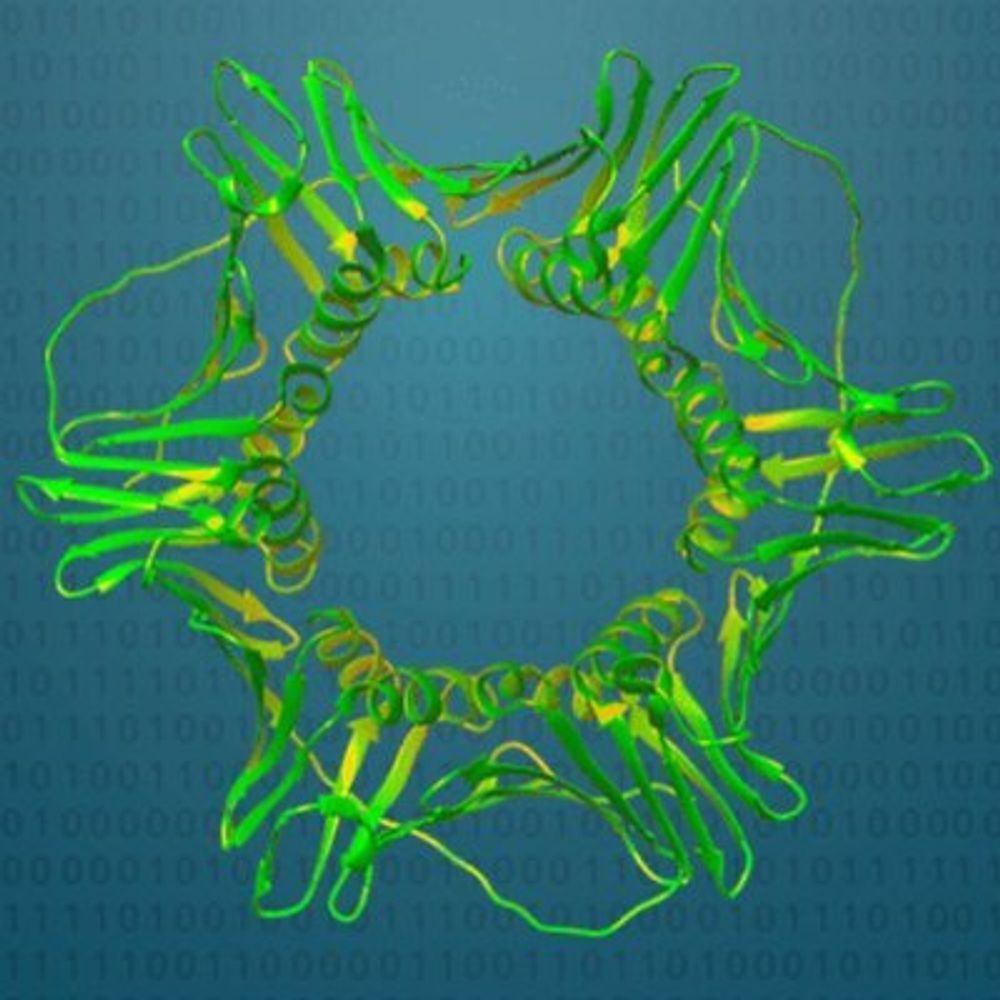
🧬 Now published in Bioinformatics Advances: "pygenstrat: A Python package for EIGENSTRAT data processing" by @dilekopter.bsky.social
Full article available: https://doi.org/10.1093/bioadv/vbag022
Full article available: https://doi.org/10.1093/bioadv/vbag022

February 3, 2026 at 11:05 AM
🧬 Now published in Bioinformatics Advances: "pygenstrat: A Python package for EIGENSTRAT data processing" by @dilekopter.bsky.social
Full article available: https://doi.org/10.1093/bioadv/vbag022
Full article available: https://doi.org/10.1093/bioadv/vbag022
It took scientists 11 years to compute 1-2/3=1/3


February 4, 2026 at 8:52 PM
It took scientists 11 years to compute 1-2/3=1/3
Reposted by Shai Carmi

(1/2) The preprint of our perspective on genetic estimates of relatedness in animal populations is out! Big Congratulations to Annika!
doi.org/10.32942/X28...
A systematic review of 2,861 articles shows that, even in 2025, 75% of such studies use microsatellites. And most use only a few!
#PopGen
doi.org/10.32942/X28...
A systematic review of 2,861 articles shows that, even in 2025, 75% of such studies use microsatellites. And most use only a few!
#PopGen

January 26, 2026 at 5:36 PM
(1/2) The preprint of our perspective on genetic estimates of relatedness in animal populations is out! Big Congratulations to Annika!
doi.org/10.32942/X28...
A systematic review of 2,861 articles shows that, even in 2025, 75% of such studies use microsatellites. And most use only a few!
#PopGen
doi.org/10.32942/X28...
A systematic review of 2,861 articles shows that, even in 2025, 75% of such studies use microsatellites. And most use only a few!
#PopGen
Reposted by Shai Carmi
Given several new followers here, I'm posting the link to our Slack group "genetic genealogy science".
We post and discuss manuscripts on phasing/imputation, IBD, recombination, demographic inference, ancient DNA, ancestry/admixture, etc.
All are welcome.
join.slack.com/t/geneticgen...
We post and discuss manuscripts on phasing/imputation, IBD, recombination, demographic inference, ancient DNA, ancestry/admixture, etc.
All are welcome.
join.slack.com/t/geneticgen...
Slack
join.slack.com
November 10, 2024 at 12:21 PM
Given several new followers here, I'm posting the link to our Slack group "genetic genealogy science".
We post and discuss manuscripts on phasing/imputation, IBD, recombination, demographic inference, ancient DNA, ancestry/admixture, etc.
All are welcome.
join.slack.com/t/geneticgen...
We post and discuss manuscripts on phasing/imputation, IBD, recombination, demographic inference, ancient DNA, ancestry/admixture, etc.
All are welcome.
join.slack.com/t/geneticgen...
Reposted by Shai Carmi

New Year, New Paper! #PolygenicEmbryoScreening
We examined the interaction of rare and common variation for breast cancer in the context of PES, with three key findings detailed in posts below...
We examined the interaction of rare and common variation for breast cancer in the context of PES, with three key findings detailed in posts below...

January 14, 2026 at 2:45 PM
New Year, New Paper! #PolygenicEmbryoScreening
We examined the interaction of rare and common variation for breast cancer in the context of PES, with three key findings detailed in posts below...
We examined the interaction of rare and common variation for breast cancer in the context of PES, with three key findings detailed in posts below...
Reposted by Shai Carmi

Tracing the evolutionary histories of ultra-rare variants using variational dating of large ancestral recombination graphs https://www.biorxiv.org/content/10.64898/2026.01.07.698223v1
January 12, 2026 at 10:32 PM
Tracing the evolutionary histories of ultra-rare variants using variational dating of large ancestral recombination graphs https://www.biorxiv.org/content/10.64898/2026.01.07.698223v1
Reposted by Shai Carmi

Previous work suggested that the role of genes in educational attainment was higher in contemporary Estonia than during the Soviet era. With a tenfold larger dataset, our new preprint finds limited evidence to support this.
www.biorxiv.org/content/10.6...
www.biorxiv.org/content/10.6...

Genetic influences of educational outcomes during and after the Soviet era: Revisiting evidence from Estonia
The origins of individual differences in socioeconomic outcomes, including educational attainment and occupational status, reflect a combination of genetic and environmental factors whose relative con...
www.biorxiv.org
January 12, 2026 at 9:45 AM
Previous work suggested that the role of genes in educational attainment was higher in contemporary Estonia than during the Soviet era. With a tenfold larger dataset, our new preprint finds limited evidence to support this.
www.biorxiv.org/content/10.6...
www.biorxiv.org/content/10.6...
Good (long) coverage here:
www.science.org/content/arti...
Sampling and sequencing of male-line descendants is underway.
www.science.org/content/arti...
Sampling and sequencing of male-line descendants is underway.
January 9, 2026 at 3:55 PM
Good (long) coverage here:
www.science.org/content/arti...
Sampling and sequencing of male-line descendants is underway.
www.science.org/content/arti...
Sampling and sequencing of male-line descendants is underway.
Reposted by Shai Carmi

Global patterns of natural selection inferred using ancient DNA https://www.biorxiv.org/content/10.64898/2026.01.07.697984v1
January 8, 2026 at 10:32 AM
Global patterns of natural selection inferred using ancient DNA https://www.biorxiv.org/content/10.64898/2026.01.07.697984v1
Nice short preprint proposing a new method to distinguish second degree relatives: half siblings vs niece/nephew avuncular pairs.
Both relationships have genomic kinship of 1/4, but they can be distinguished by multiple signals:
🧵
www.biorxiv.org/content/10.6...
Both relationships have genomic kinship of 1/4, but they can be distinguished by multiple signals:
🧵
www.biorxiv.org/content/10.6...


January 8, 2026 at 1:56 PM
Nice short preprint proposing a new method to distinguish second degree relatives: half siblings vs niece/nephew avuncular pairs.
Both relationships have genomic kinship of 1/4, but they can be distinguished by multiple signals:
🧵
www.biorxiv.org/content/10.6...
Both relationships have genomic kinship of 1/4, but they can be distinguished by multiple signals:
🧵
www.biorxiv.org/content/10.6...
Reposted by Shai Carmi

I’m very excited to share our new preprint with @arbelharpak.bsky.social! We meta-analyze male-female allele frequency divergences across studies (gnomAD, UKB, AoU) and ask what drives the observed differences. (1/12)
www.biorxiv.org/content/10.6...
www.biorxiv.org/content/10.6...

January 7, 2026 at 9:33 PM
I’m very excited to share our new preprint with @arbelharpak.bsky.social! We meta-analyze male-female allele frequency divergences across studies (gnomAD, UKB, AoU) and ask what drives the observed differences. (1/12)
www.biorxiv.org/content/10.6...
www.biorxiv.org/content/10.6...
Reposted by Shai Carmi
Remember the famous UKB migration paper? We found that internal migration also shapes population structure in Estonia. Key patterns replicate within families.
www.cell.com/iscience/ful...
www.cell.com/iscience/ful...

January 7, 2026 at 12:55 PM
Remember the famous UKB migration paper? We found that internal migration also shapes population structure in Estonia. Key patterns replicate within families.
www.cell.com/iscience/ful...
www.cell.com/iscience/ful...
An attempt to sequence DNA from artifacts that belonged to Leonardo da Vinci or his ancestors (including a drawing).
However, coverage was very sparse, allowing only very broad Y haplogroup inference (E1b1b).
www.biorxiv.org/content/10.6...
However, coverage was very sparse, allowing only very broad Y haplogroup inference (E1b1b).
www.biorxiv.org/content/10.6...

Biological signatures of history: Examination of composite biomes and Y chromosome analysis from da Vinci-associated cultural artifacts
Cultural heritage objects can accumulate DNA from materials, environments, and repeated human contact, but biomolecular profiling of such items is constrained by nondestructive sampling requirements, ...
www.biorxiv.org
January 7, 2026 at 8:57 AM
An attempt to sequence DNA from artifacts that belonged to Leonardo da Vinci or his ancestors (including a drawing).
However, coverage was very sparse, allowing only very broad Y haplogroup inference (E1b1b).
www.biorxiv.org/content/10.6...
However, coverage was very sparse, allowing only very broad Y haplogroup inference (E1b1b).
www.biorxiv.org/content/10.6...
A fascinating case report.
The DNA of a female murder victim was genotyped and it turns out that she has been a chimera: a mixture of 46XX/46XY cell lines.
The analysis (STR-based) found:
1. The maternal chromosome was identical between the two cell lines.
www.fsigenetics.com/article/S187...
1/6
The DNA of a female murder victim was genotyped and it turns out that she has been a chimera: a mixture of 46XX/46XY cell lines.
The analysis (STR-based) found:
1. The maternal chromosome was identical between the two cell lines.
www.fsigenetics.com/article/S187...
1/6

Forensic analysis of a parthenogenetic 46, XX/46, XY congenital chimera: A case report
In forensic identification, chimerism is an extremely rare phenomenon in which DNA
samples can easily be misidentified as mixtures from two individuals. If only a single
cell population from the chime...
www.fsigenetics.com
January 6, 2026 at 3:27 PM
A fascinating case report.
The DNA of a female murder victim was genotyped and it turns out that she has been a chimera: a mixture of 46XX/46XY cell lines.
The analysis (STR-based) found:
1. The maternal chromosome was identical between the two cell lines.
www.fsigenetics.com/article/S187...
1/6
The DNA of a female murder victim was genotyped and it turns out that she has been a chimera: a mixture of 46XX/46XY cell lines.
The analysis (STR-based) found:
1. The maternal chromosome was identical between the two cell lines.
www.fsigenetics.com/article/S187...
1/6
Good news
www.jpost.com/health-and-w...
Highlights:
- max 12 families per donor
- max age 38
- establishment of a national donor database
- full medical record required for donation
- extensive genetic testing
- DNA sample stored for future testing
- sperm banks altered in cases of genetic disease
www.jpost.com/health-and-w...
Highlights:
- max 12 families per donor
- max age 38
- establishment of a national donor database
- full medical record required for donation
- extensive genetic testing
- DNA sample stored for future testing
- sperm banks altered in cases of genetic disease

Israel Health Ministry tightens sperm donation rules | The Jerusalem Post
Health Ministry updates sperm bank rules as demand rises and fewer people donate, capping families per donor at 12, tightening genetic screening, and new import standards to improve safe donations.
www.jpost.com
December 23, 2025 at 11:05 AM
Good news
www.jpost.com/health-and-w...
Highlights:
- max 12 families per donor
- max age 38
- establishment of a national donor database
- full medical record required for donation
- extensive genetic testing
- DNA sample stored for future testing
- sperm banks altered in cases of genetic disease
www.jpost.com/health-and-w...
Highlights:
- max 12 families per donor
- max age 38
- establishment of a national donor database
- full medical record required for donation
- extensive genetic testing
- DNA sample stored for future testing
- sperm banks altered in cases of genetic disease
A recent preprint definitively settled the question of the Y chr of Jewish priests (Cohanim).
Around 45% of Cohanim from all Jewish diasporas share a Y chr. The common ancestor was a Middle Eastern man living ~3000 years ago, i.e., during the first temple period.
www.biorxiv.org/content/10.6...
Around 45% of Cohanim from all Jewish diasporas share a Y chr. The common ancestor was a Middle Eastern man living ~3000 years ago, i.e., during the first temple period.
www.biorxiv.org/content/10.6...
December 22, 2025 at 1:59 PM
A recent preprint definitively settled the question of the Y chr of Jewish priests (Cohanim).
Around 45% of Cohanim from all Jewish diasporas share a Y chr. The common ancestor was a Middle Eastern man living ~3000 years ago, i.e., during the first temple period.
www.biorxiv.org/content/10.6...
Around 45% of Cohanim from all Jewish diasporas share a Y chr. The common ancestor was a Middle Eastern man living ~3000 years ago, i.e., during the first temple period.
www.biorxiv.org/content/10.6...
Reposted by Shai Carmi

Happy to share my work with my advisor Zachary Szpiech! Why are associations between ROH & complex traits inconsistent across studies? We use realistic simulations to show how demographic history and genetic architecture interact to shape the phenotypic impact of ROH. www.biorxiv.org/content/10.6...

The Influence of Demographic History and Genetic Architecture on Complex Traits via Runs of Homozygosity
Runs of homozygosity (ROH) are contiguous genomic regions where all sites are homozygous, inherited from identical haplotypes due to shared ancestry. The number and length of ROH in individuals varies...
www.biorxiv.org
December 18, 2025 at 2:36 PM
Happy to share my work with my advisor Zachary Szpiech! Why are associations between ROH & complex traits inconsistent across studies? We use realistic simulations to show how demographic history and genetic architecture interact to shape the phenotypic impact of ROH. www.biorxiv.org/content/10.6...
Preprint by Gravel et al addressing an interesting question. Given carriers of a mutation and a population-scale pedigree, can we identify the most recent common ancestor of all carriers?
"20 carriers usually provide enough information to reliably identify a common ancestor 15 generations ago"
"20 carriers usually provide enough information to reliably identify a common ancestor 15 generations ago"


December 14, 2025 at 11:36 AM
Preprint by Gravel et al addressing an interesting question. Given carriers of a mutation and a population-scale pedigree, can we identify the most recent common ancestor of all carriers?
"20 carriers usually provide enough information to reliably identify a common ancestor 15 generations ago"
"20 carriers usually provide enough information to reliably identify a common ancestor 15 generations ago"
Reposted by Shai Carmi

Aligning gene trees with family trees https://www.biorxiv.org/content/10.64898/2025.12.11.693727v1
December 14, 2025 at 3:47 AM
Aligning gene trees with family trees https://www.biorxiv.org/content/10.64898/2025.12.11.693727v1
Fascinating work by Lipson, Skorecki et al, finally fully resolving the Y lineages of Jewish priests (Cohanim) using whole-Y sequencing.
Main finding: 45% of Jewish Cohanim (from all Jewish diasporas) have the same Y lineage, with origin ~3000 years ago, around the time of formation of Judaism.
Main finding: 45% of Jewish Cohanim (from all Jewish diasporas) have the same Y lineage, with origin ~3000 years ago, around the time of formation of Judaism.
Revisiting the lineages of the Cohanim using data from next-generation sequencing https://www.biorxiv.org/content/10.64898/2025.12.08.692646v1
December 11, 2025 at 8:18 AM
Fascinating work by Lipson, Skorecki et al, finally fully resolving the Y lineages of Jewish priests (Cohanim) using whole-Y sequencing.
Main finding: 45% of Jewish Cohanim (from all Jewish diasporas) have the same Y lineage, with origin ~3000 years ago, around the time of formation of Judaism.
Main finding: 45% of Jewish Cohanim (from all Jewish diasporas) have the same Y lineage, with origin ~3000 years ago, around the time of formation of Judaism.
Reposted by Shai Carmi
Revisiting the lineages of the Cohanim using data from next-generation sequencing https://www.biorxiv.org/content/10.64898/2025.12.08.692646v1
December 11, 2025 at 5:31 AM
Revisiting the lineages of the Cohanim using data from next-generation sequencing https://www.biorxiv.org/content/10.64898/2025.12.08.692646v1