


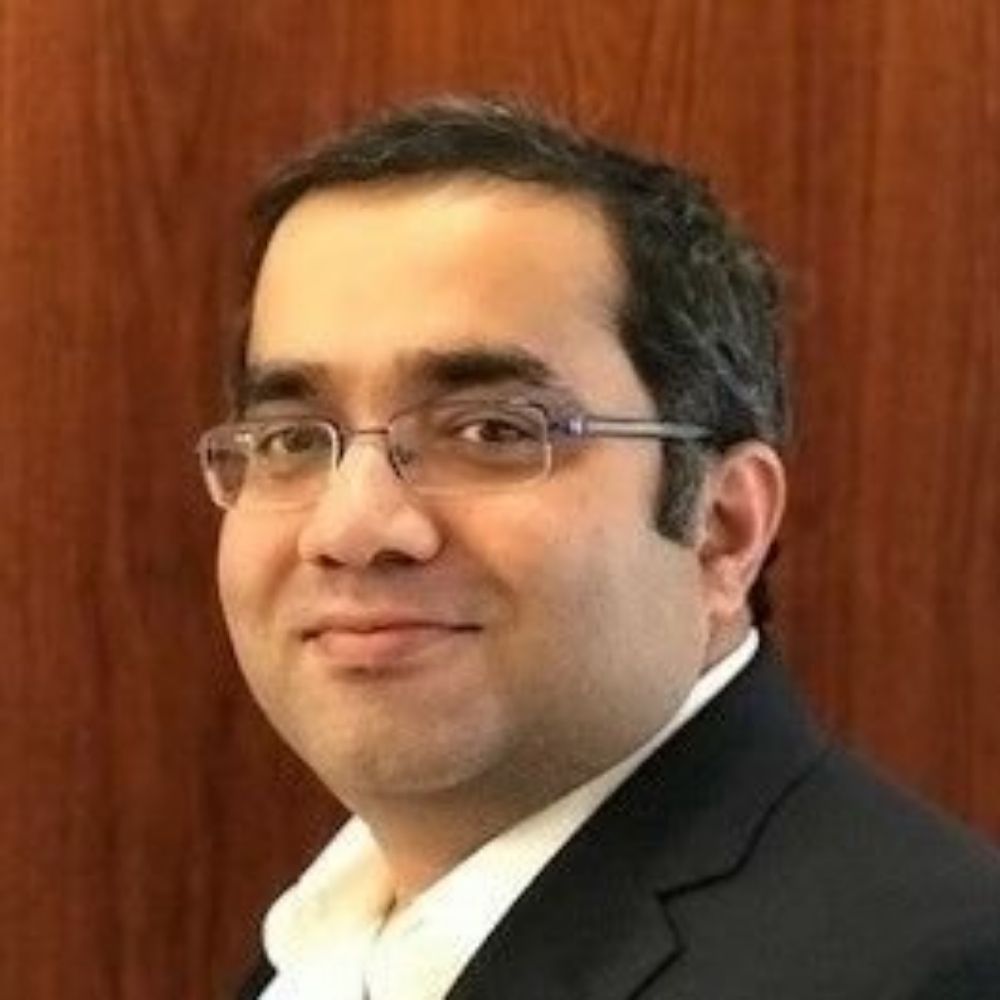
Rohit Singh
@rohitsingh8080.bsky.social
Computational biologist. Faculty @DukeU. Co-founder http://martini.ai. Prev @MIT_CSAIL. Did quant investing for a while, before returning to research.
https://singhlab.net
https://singhlab.net
Pinned

Tracing the Shared Foundations of Gene Expression and Chromatin Structure
The three-dimensional organization of chromatin into topologically associating domains (TADs) may impact gene regulation by bringing distant genes into contact. However, many questions about TADs' fun...
www.biorxiv.org
Bio foundation models are great design and engg tools. But can they help decode the fundamental principles of life?
We harnessed a single-cell FM for decoding the long-debated relationship between genome arch. and gene coregulation. 1/
Preprint here: www.biorxiv.org/content/10.1...
We harnessed a single-cell FM for decoding the long-debated relationship between genome arch. and gene coregulation. 1/
Preprint here: www.biorxiv.org/content/10.1...
Excited about this! I'll focus on analyzing immune repertoires w PLMs.
Biological systems are inherently multi-scale. With the representational power and speed of PLMs, we can now bridge the molecular and systems scales, to study what makes each of us distinctive, immunity-wise.
Biological systems are inherently multi-scale. With the representational power and speed of PLMs, we can now bridge the molecular and systems scales, to study what makes each of us distinctive, immunity-wise.

The next AIRR-C seminar is scheduled for June 26 at 1600 CET, 1000 ET, 700 PT with Rohit Sing @rohitsingh8080.bsky.social (antibody PLMs) and @joshuamcgrath.bsky.social (immunoglobulin codon mutability). Register here: antibodysociety.org/the-airr-com...
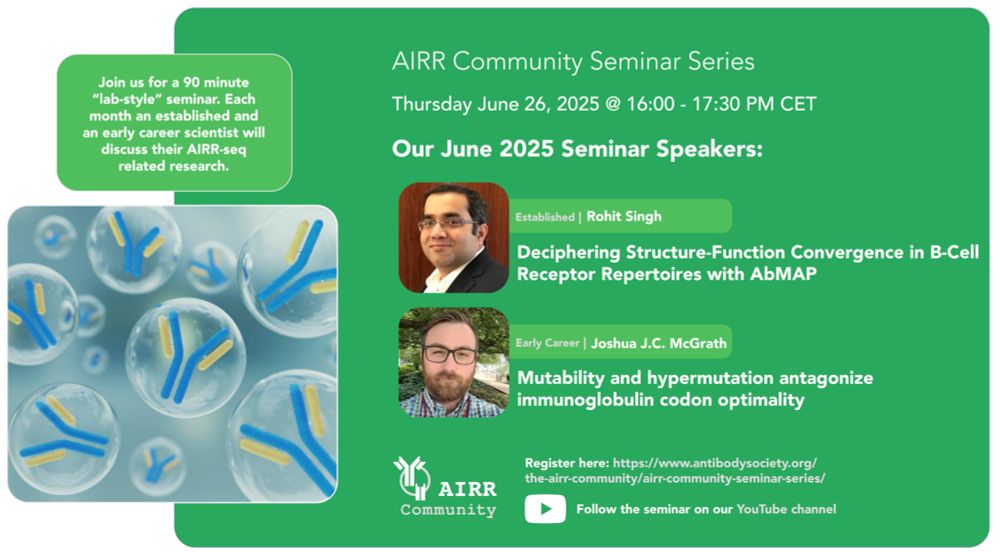
AIRR Community Seminar Series - The Antibody Society
Join the AIRR Community for a 90 minute “lab-style” virtual seminar. Each month an established and an early career scientist will discuss their AIRR-seq related research. Seminar time will be 16:00 – ...
www.antibodysociety.org
June 12, 2025 at 4:24 PM
Excited about this! I'll focus on analyzing immune repertoires w PLMs.
Biological systems are inherently multi-scale. With the representational power and speed of PLMs, we can now bridge the molecular and systems scales, to study what makes each of us distinctive, immunity-wise.
Biological systems are inherently multi-scale. With the representational power and speed of PLMs, we can now bridge the molecular and systems scales, to study what makes each of us distinctive, immunity-wise.
Reposted by Rohit Singh

Yes, we have lots of exciting collaborative projects at the interface of computation and biology. Deep expertise in many domains between our labs, so a wonderful and committed training environment!
May 9, 2025 at 2:59 PM
Yes, we have lots of exciting collaborative projects at the interface of computation and biology. Deep expertise in many domains between our labs, so a wonderful and committed training environment!
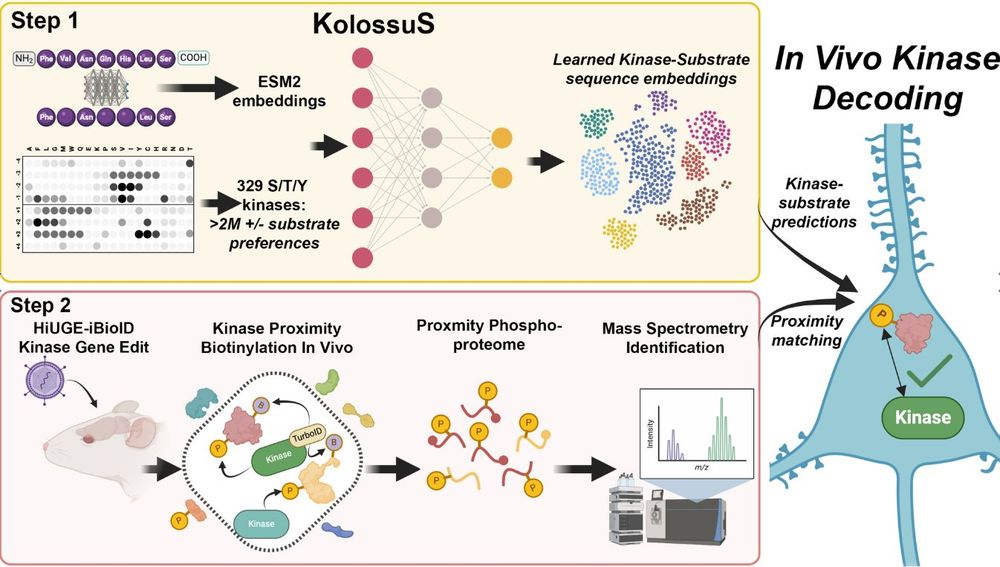
Introducing KolossuS to address a 50-year old problem: which kinases are active in your pathway of interest?
As computational biologists, our work mostly involves post-hoc analysis algorithms. KolossuS is the rare case where a ML model enables entirely new capabilities. 1/
As computational biologists, our work mostly involves post-hoc analysis algorithms. KolossuS is the rare case where a ML model enables entirely new capabilities. 1/
May 9, 2025 at 2:40 PM
Introducing KolossuS to address a 50-year old problem: which kinases are active in your pathway of interest?
As computational biologists, our work mostly involves post-hoc analysis algorithms. KolossuS is the rare case where a ML model enables entirely new capabilities. 1/
As computational biologists, our work mostly involves post-hoc analysis algorithms. KolossuS is the rare case where a ML model enables entirely new capabilities. 1/
Reposted by Rohit Singh
The BEST part: This would not have been possible without the close (and SO FUN!) collaboration of my lab with @rohitsingh8080.bsky.social and the lab of Masashi Yanagisawa.
April 28, 2025 at 10:00 PM
The BEST part: This would not have been possible without the close (and SO FUN!) collaboration of my lab with @rohitsingh8080.bsky.social and the lab of Masashi Yanagisawa.
Reposted by Rohit Singh
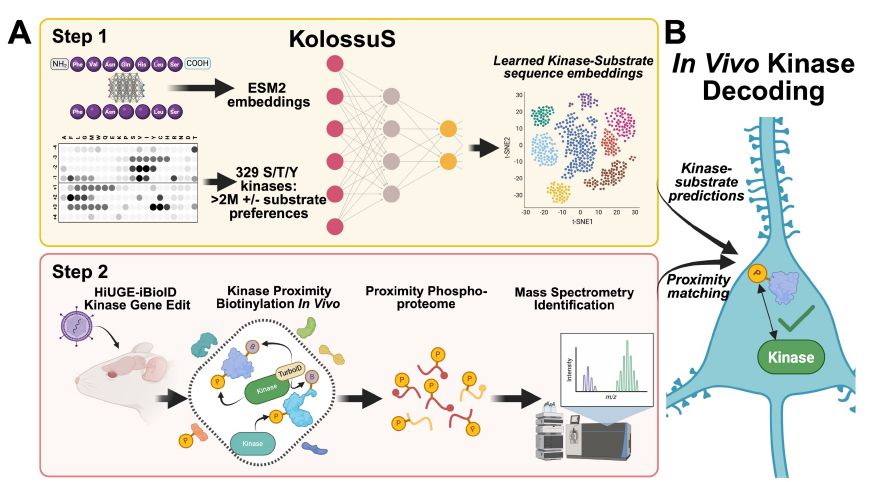
Over 50 yrs since the discovery of protein kinases, 80% of human kinases still have ≤20 known substrates, and many are “dark.” I'm EXCITED to announce our new work towards solving this- combining (1) deep learning with (2) proximity proteomics in vivo! ➡️
www.biorxiv.org/content/10.1...
www.biorxiv.org/content/10.1...
April 28, 2025 at 10:00 PM
Over 50 yrs since the discovery of protein kinases, 80% of human kinases still have ≤20 known substrates, and many are “dark.” I'm EXCITED to announce our new work towards solving this- combining (1) deep learning with (2) proximity proteomics in vivo! ➡️
www.biorxiv.org/content/10.1...
www.biorxiv.org/content/10.1...
Reposted by Rohit Singh

We had a great morning session, including a keynote on single cells and long reads @aliciao.bsky.social, and talks on spatial transcriptomics
@rohitsingh8080.bsky.social, DNA storage, and TAD inference
@rohitsingh8080.bsky.social, DNA storage, and TAD inference
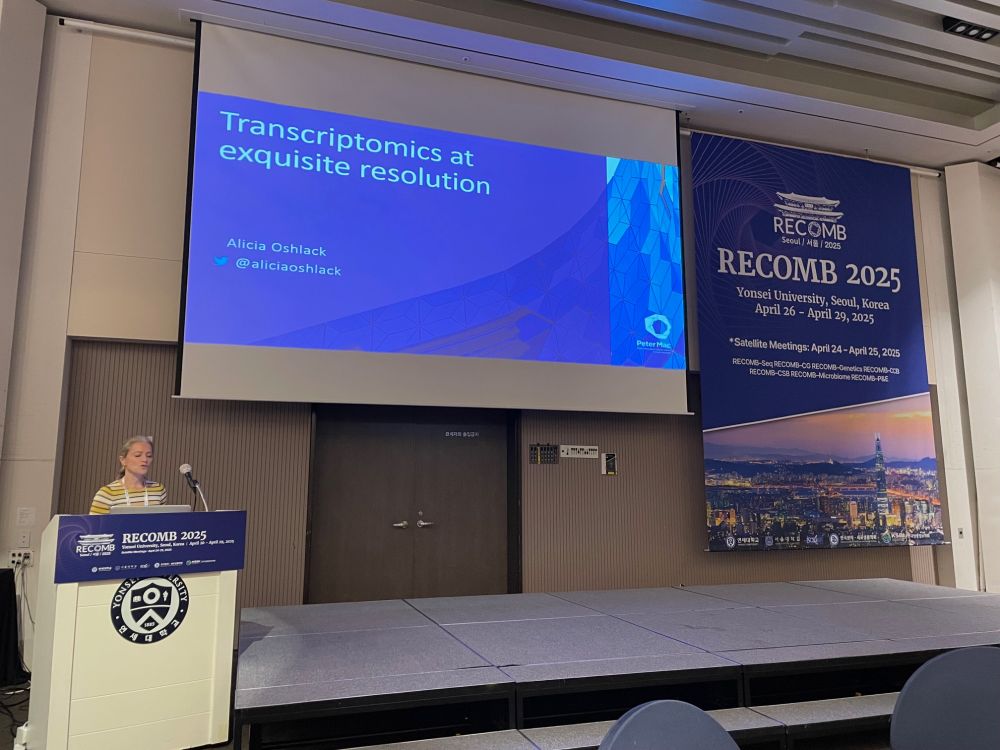
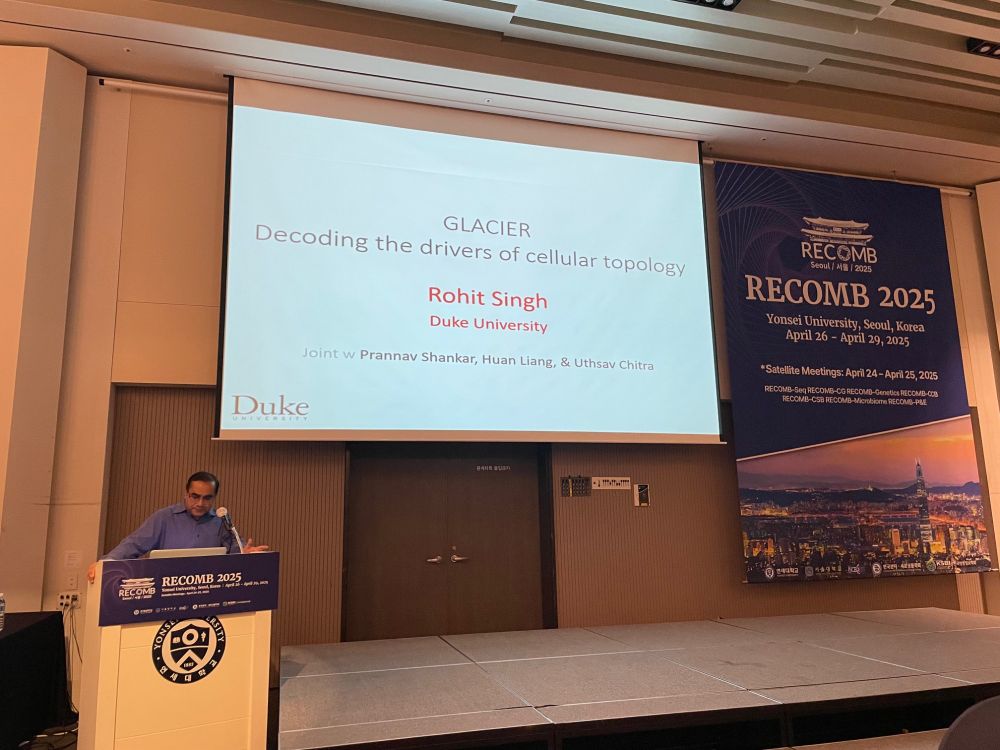
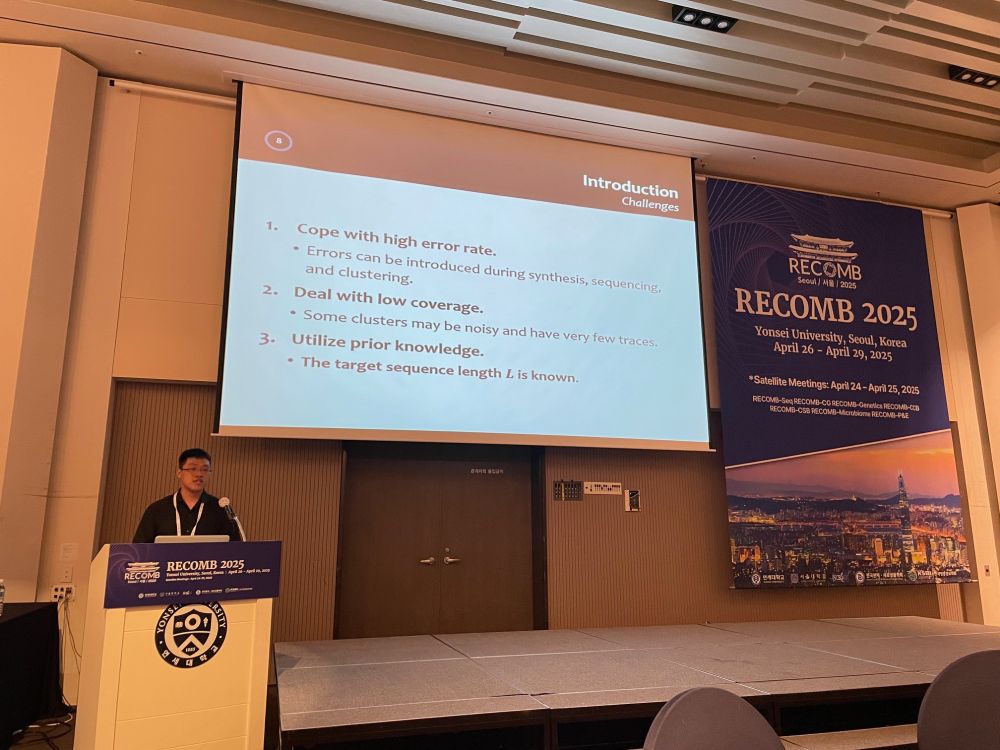
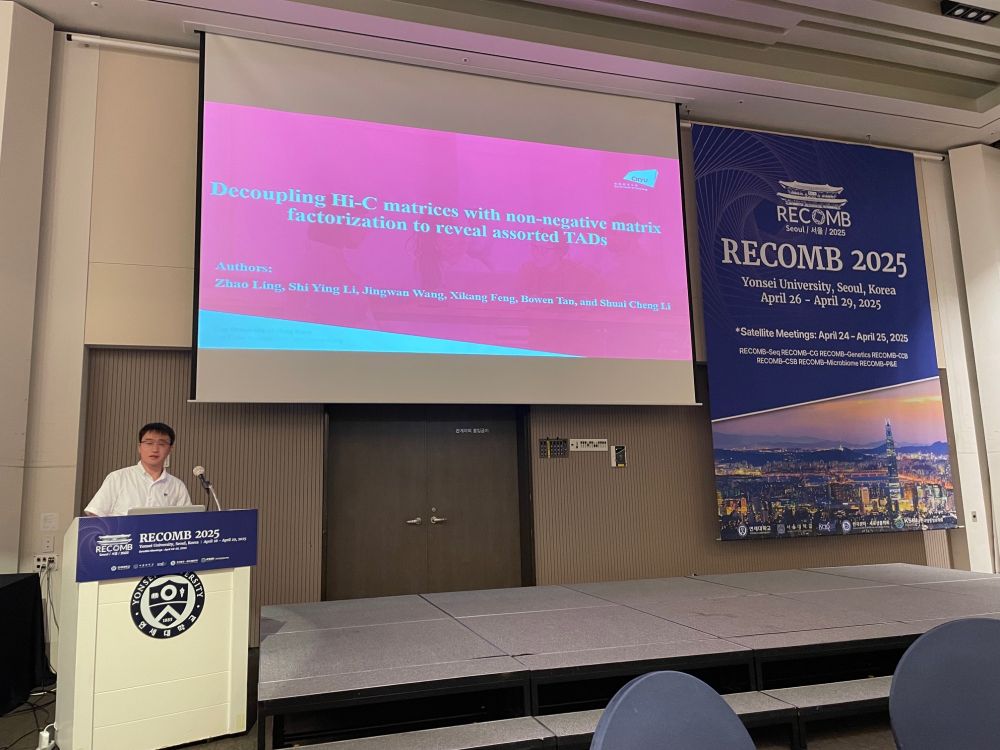
April 25, 2025 at 2:47 AM
We had a great morning session, including a keynote on single cells and long reads @aliciao.bsky.social, and talks on spatial transcriptomics
@rohitsingh8080.bsky.social, DNA storage, and TAD inference
@rohitsingh8080.bsky.social, DNA storage, and TAD inference
Reposted by Rohit Singh
Enjoyed reading this one. Very insightful with some clever and intricate analyses. Also very well written.
Bio foundation models are great design and engg tools. But can they help decode the fundamental principles of life?
We harnessed a single-cell FM for decoding the long-debated relationship between genome arch. and gene coregulation. 1/
Preprint here: www.biorxiv.org/content/10.1...
We harnessed a single-cell FM for decoding the long-debated relationship between genome arch. and gene coregulation. 1/
Preprint here: www.biorxiv.org/content/10.1...
Tracing the Shared Foundations of Gene Expression and Chromatin Structure
The three-dimensional organization of chromatin into topologically associating domains (TADs) may impact gene regulation by bringing distant genes into contact. However, many questions about TADs' fun...
www.biorxiv.org
April 6, 2025 at 2:16 AM
Enjoyed reading this one. Very insightful with some clever and intricate analyses. Also very well written.
Reposted by Rohit Singh
100% agree with this.
April 6, 2025 at 2:10 AM
100% agree with this.
Bio foundation models are great design and engg tools. But can they help decode the fundamental principles of life?
We harnessed a single-cell FM for decoding the long-debated relationship between genome arch. and gene coregulation. 1/
Preprint here: www.biorxiv.org/content/10.1...
We harnessed a single-cell FM for decoding the long-debated relationship between genome arch. and gene coregulation. 1/
Preprint here: www.biorxiv.org/content/10.1...
Tracing the Shared Foundations of Gene Expression and Chromatin Structure
The three-dimensional organization of chromatin into topologically associating domains (TADs) may impact gene regulation by bringing distant genes into contact. However, many questions about TADs' fun...
www.biorxiv.org
April 5, 2025 at 3:31 PM
Bio foundation models are great design and engg tools. But can they help decode the fundamental principles of life?
We harnessed a single-cell FM for decoding the long-debated relationship between genome arch. and gene coregulation. 1/
Preprint here: www.biorxiv.org/content/10.1...
We harnessed a single-cell FM for decoding the long-debated relationship between genome arch. and gene coregulation. 1/
Preprint here: www.biorxiv.org/content/10.1...
Our work on better ways of aggregating PLM embeddings is now out in Bioinformatics Advances.
🧬 Now in Bioinformatics Advances: "Aggregating residue-level protein language model embeddings with optimal transport"
Explore the full paper: https://doi.org/10.1093/bioadv/vbaf060
#ProteinRepresentation #MachineLearning #Bioinformatics
@rohitsingh8080.bsky.social
Explore the full paper: https://doi.org/10.1093/bioadv/vbaf060
#ProteinRepresentation #MachineLearning #Bioinformatics
@rohitsingh8080.bsky.social

April 1, 2025 at 11:16 AM
Our work on better ways of aggregating PLM embeddings is now out in Bioinformatics Advances.
Reposted by Rohit Singh
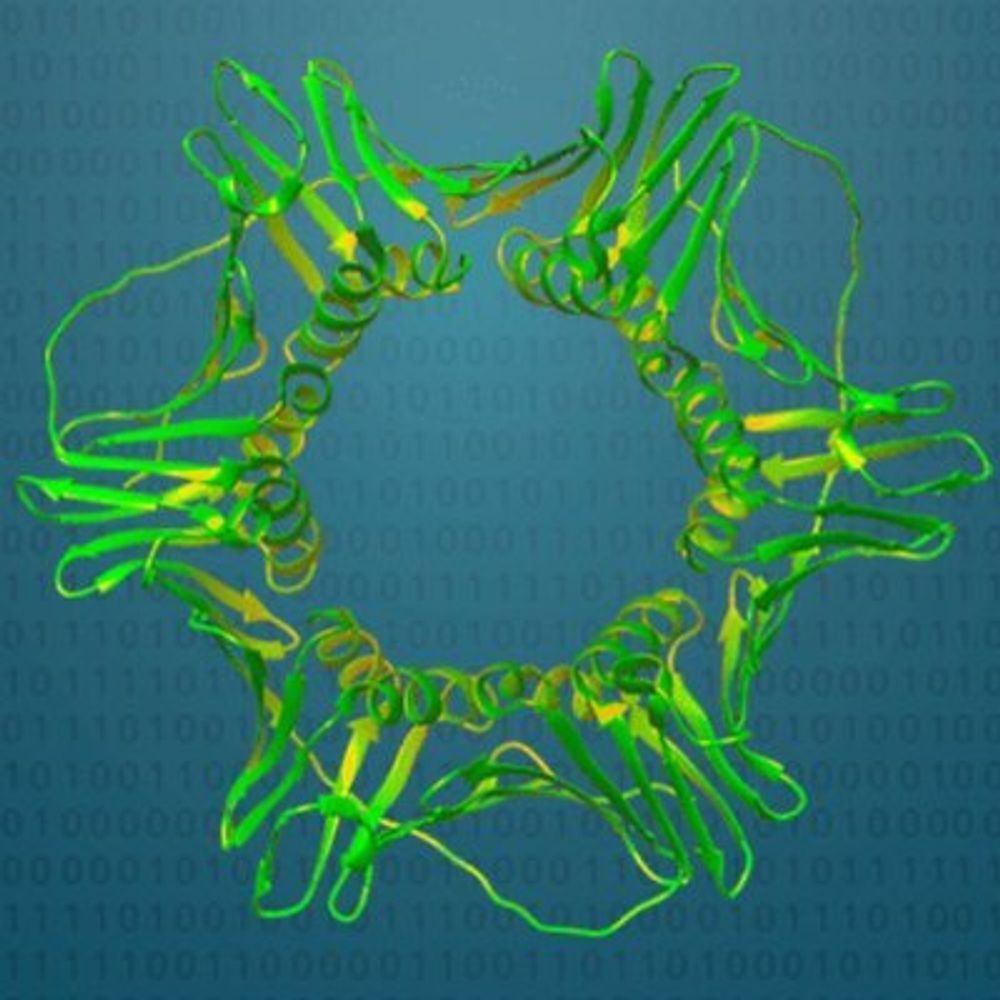
🧬 Now in Bioinformatics Advances: "Aggregating residue-level protein language model embeddings with optimal transport"
Explore the full paper: https://doi.org/10.1093/bioadv/vbaf060
#ProteinRepresentation #MachineLearning #Bioinformatics
@rohitsingh8080.bsky.social
Explore the full paper: https://doi.org/10.1093/bioadv/vbaf060
#ProteinRepresentation #MachineLearning #Bioinformatics
@rohitsingh8080.bsky.social
April 1, 2025 at 10:01 AM
🧬 Now in Bioinformatics Advances: "Aggregating residue-level protein language model embeddings with optimal transport"
Explore the full paper: https://doi.org/10.1093/bioadv/vbaf060
#ProteinRepresentation #MachineLearning #Bioinformatics
@rohitsingh8080.bsky.social
Explore the full paper: https://doi.org/10.1093/bioadv/vbaf060
#ProteinRepresentation #MachineLearning #Bioinformatics
@rohitsingh8080.bsky.social
Reposted by Rohit Singh
Well well, timely! 😉
www.cell.com/cell-systems...
www.cell.com/cell-systems...

Should biology put complexity first?
The dictum “Everything should be made as simple as possible, but no simpler” poses
a problem for biology. How simply can it be told without doing damage to its complex
nature? The answer might be foun...
www.cell.com
February 20, 2025 at 1:39 PM
Well well, timely! 😉
www.cell.com/cell-systems...
www.cell.com/cell-systems...
Looking fwd to presenting our works (Velorama, GrID-Net, plus more) on single-cell regulatory inference.
All of this work is based on our framework generalizing Granger causality to directed acyclic graphs.
If you're at ENAR 2025, come say hi! We're recruiting! #ENAR2025
All of this work is based on our framework generalizing Granger causality to directed acyclic graphs.
If you're at ENAR 2025, come say hi! We're recruiting! #ENAR2025
March 26, 2025 at 1:40 PM
Looking fwd to presenting our works (Velorama, GrID-Net, plus more) on single-cell regulatory inference.
All of this work is based on our framework generalizing Granger causality to directed acyclic graphs.
If you're at ENAR 2025, come say hi! We're recruiting! #ENAR2025
All of this work is based on our framework generalizing Granger causality to directed acyclic graphs.
If you're at ENAR 2025, come say hi! We're recruiting! #ENAR2025
We've updated the Raygun preprint with additional validations (more fluorescence assays, biotin ligase reengineering, EGF optimization etc.) Take a look!
Here's the preprint: www.biorxiv.org/content/10.1...
Here's the preprint: www.biorxiv.org/content/10.1...
Miniaturizing, Modifying, and Magnifying Nature's Proteins with Raygun
Proteins have evolved over billions of years through extensive and coordinated substitutions, insertions and deletions (indels). Computational protein design cannot yet fully mimic nature's ability to...
www.biorxiv.org
March 19, 2025 at 4:17 PM
We've updated the Raygun preprint with additional validations (more fluorescence assays, biotin ligase reengineering, EGF optimization etc.) Take a look!
Here's the preprint: www.biorxiv.org/content/10.1...
Here's the preprint: www.biorxiv.org/content/10.1...
Reposted by Rohit Singh

In job interviews and college admissions, we focus too much on what candidates have accomplished, and too little on what obstacles they've overcome.
The true measure of people's potential is not the height of the peak they've reached. It’s how far they've climbed to get there.
The true measure of people's potential is not the height of the peak they've reached. It’s how far they've climbed to get there.
January 27, 2025 at 5:50 PM
In job interviews and college admissions, we focus too much on what candidates have accomplished, and too little on what obstacles they've overcome.
The true measure of people's potential is not the height of the peak they've reached. It’s how far they've climbed to get there.
The true measure of people's potential is not the height of the peak they've reached. It’s how far they've climbed to get there.
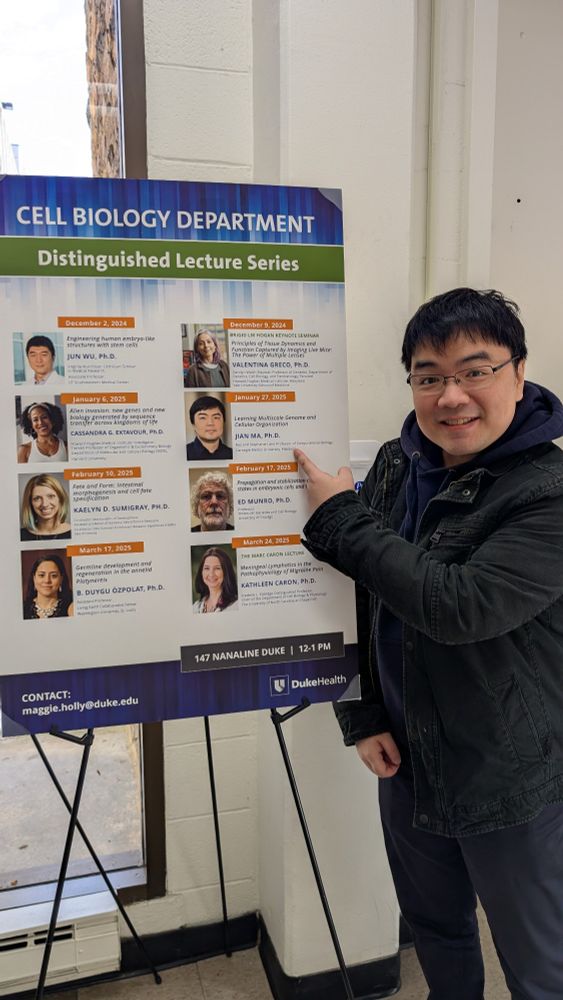
Delighted to be hosting @jianma.bsky.social as a Distinguished Speaker (Lecturer?) at Duke Cell Biology.
Great talk on a variety of foods, from Higashi and SpiceMix to Steamboat!
Also, some stuff on 3D genome.
Great talk on a variety of foods, from Higashi and SpiceMix to Steamboat!
Also, some stuff on 3D genome.
January 27, 2025 at 7:18 PM
Delighted to be hosting @jianma.bsky.social as a Distinguished Speaker (Lecturer?) at Duke Cell Biology.
Great talk on a variety of foods, from Higashi and SpiceMix to Steamboat!
Also, some stuff on 3D genome.
Great talk on a variety of foods, from Higashi and SpiceMix to Steamboat!
Also, some stuff on 3D genome.
Are you studying a pathway and wish you could perturb it? With catalogs like ZINC and Enamine, billions of small molecule perturbagens are just a click away, but what to order?
Enter CoNCISE, our finite scalar quantization-based approach to identifying small molecule binders. 1/
Enter CoNCISE, our finite scalar quantization-based approach to identifying small molecule binders. 1/

January 16, 2025 at 4:40 PM
Are you studying a pathway and wish you could perturb it? With catalogs like ZINC and Enamine, billions of small molecule perturbagens are just a click away, but what to order?
Enter CoNCISE, our finite scalar quantization-based approach to identifying small molecule binders. 1/
Enter CoNCISE, our finite scalar quantization-based approach to identifying small molecule binders. 1/
Reposted by Rohit Singh

Last month I became re-obsessed with deciphering human biology through the lens of "gene age", that is, when each human gene first appeared in the human genome.
This was my analysis of key hemoglobin-related genes.
This was my analysis of key hemoglobin-related genes.

January 4, 2025 at 4:23 PM
Last month I became re-obsessed with deciphering human biology through the lens of "gene age", that is, when each human gene first appeared in the human genome.
This was my analysis of key hemoglobin-related genes.
This was my analysis of key hemoglobin-related genes.
Reposted by Rohit Singh

A nice belated Christmas present--AbMAP is out now in @pnas.org! Great thread from Rohit below 🧵⬇️
AbMAP, our work on adapting PLMs for antibodies, is now out in @pnas.org
A veritable zoo of PLMs now exists, so why should you care? Well, AbMAP reflects an opinionated design philosophy about antibody representation. And based on your needs, it may be a great fit! 1/
www.pnas.org/doi/10.1073/...
A veritable zoo of PLMs now exists, so why should you care? Well, AbMAP reflects an opinionated design philosophy about antibody representation. And based on your needs, it may be a great fit! 1/
www.pnas.org/doi/10.1073/...
PNAS
Proceedings of the National Academy of Sciences (PNAS), a peer reviewed journal of the National Academy of Sciences (NAS) - an authoritative source of high-impact, original research that broadly spans...
www.pnas.org
January 2, 2025 at 3:22 PM
A nice belated Christmas present--AbMAP is out now in @pnas.org! Great thread from Rohit below 🧵⬇️
AbMAP, our work on adapting PLMs for antibodies, is now out in @pnas.org
A veritable zoo of PLMs now exists, so why should you care? Well, AbMAP reflects an opinionated design philosophy about antibody representation. And based on your needs, it may be a great fit! 1/
www.pnas.org/doi/10.1073/...
A veritable zoo of PLMs now exists, so why should you care? Well, AbMAP reflects an opinionated design philosophy about antibody representation. And based on your needs, it may be a great fit! 1/
www.pnas.org/doi/10.1073/...
PNAS
Proceedings of the National Academy of Sciences (PNAS), a peer reviewed journal of the National Academy of Sciences (NAS) - an authoritative source of high-impact, original research that broadly spans...
www.pnas.org
January 2, 2025 at 3:00 PM
AbMAP, our work on adapting PLMs for antibodies, is now out in @pnas.org
A veritable zoo of PLMs now exists, so why should you care? Well, AbMAP reflects an opinionated design philosophy about antibody representation. And based on your needs, it may be a great fit! 1/
www.pnas.org/doi/10.1073/...
A veritable zoo of PLMs now exists, so why should you care? Well, AbMAP reflects an opinionated design philosophy about antibody representation. And based on your needs, it may be a great fit! 1/
www.pnas.org/doi/10.1073/...
Reposted by Rohit Singh
Likewise, I’m extremely thankful to David Page and @scottsoderling.bsky.social at Duke, who have recognised that biology and information sciences are increasingly intertwined, with software programmable biology becoming a reality through ML informed by passionate and knowledgable (cell) biologists.
December 23, 2024 at 6:55 PM
Likewise, I’m extremely thankful to David Page and @scottsoderling.bsky.social at Duke, who have recognised that biology and information sciences are increasingly intertwined, with software programmable biology becoming a reality through ML informed by passionate and knowledgable (cell) biologists.
Reposted by Rohit Singh
I'm thrilled to join @pranam.bsky.social and @rohitsingh8080.bsky.social. Duke has a unique blend of translational scientists that can bring ideas from the wetlab, to software and ML, back into the wetlab, all in service of characterising, engineering and programming biology!
December 23, 2024 at 6:55 PM
I'm thrilled to join @pranam.bsky.social and @rohitsingh8080.bsky.social. Duke has a unique blend of translational scientists that can bring ideas from the wetlab, to software and ML, back into the wetlab, all in service of characterising, engineering and programming biology!
Super excited to welcome Christian Dallago @machine.learning.bio and Alex Tong @alextong.bsky.social as faculty at Duke and as my neighbors on 4th floor Sands! We're building a fantastic ML+Bio community here at Duke, with @pranam.bsky.social and Phil Romero and more.
Trainees, come join us!
Trainees, come join us!
Two major life updates:
- I'm moving to Senior Applied Research Scientist in Digital Biology at NVIDIA (Jan '25)
- I'm starting a new lab at Duke as Visiting Assistant Prof (early '25)
Both roles focus on tackling hard problems in biological machine learning through collaborative research.
Long 🧵
- I'm moving to Senior Applied Research Scientist in Digital Biology at NVIDIA (Jan '25)
- I'm starting a new lab at Duke as Visiting Assistant Prof (early '25)
Both roles focus on tackling hard problems in biological machine learning through collaborative research.
Long 🧵
December 23, 2024 at 7:13 PM
Super excited to welcome Christian Dallago @machine.learning.bio and Alex Tong @alextong.bsky.social as faculty at Duke and as my neighbors on 4th floor Sands! We're building a fantastic ML+Bio community here at Duke, with @pranam.bsky.social and Phil Romero and more.
Trainees, come join us!
Trainees, come join us!
Last month's "Voices" in @cp-cellsystems.bsky.social
explored the potential impact of computational protein design. Fantastic range of perspectives-- I was honored to contribute.
For all the tremendous translational excitement, I'd argue that the basic science potential may be even bigger.
explored the potential impact of computational protein design. Fantastic range of perspectives-- I was honored to contribute.
For all the tremendous translational excitement, I'd argue that the basic science potential may be even bigger.
December 18, 2024 at 9:54 PM
Last month's "Voices" in @cp-cellsystems.bsky.social
explored the potential impact of computational protein design. Fantastic range of perspectives-- I was honored to contribute.
For all the tremendous translational excitement, I'd argue that the basic science potential may be even bigger.
explored the potential impact of computational protein design. Fantastic range of perspectives-- I was honored to contribute.
For all the tremendous translational excitement, I'd argue that the basic science potential may be even bigger.