



Roberto Rozzi
@robertorozzi.bsky.social
Mammalian paleontologist @unihalle.bsky.social & @mfnberlin.bsky.social | islands 🏝, paleoecology ⏳, conservation paleobiology, bovids 🐐🐃🐂 | Also 🎶
Reposted by Roberto Rozzi
New paper is out 🔓!
We reconstructed the 145-myr diversity of sharks & rays using deep learning, unveiling hidden patterns:
- modern diversity levels by the Cretaceous 📈
- small decline in the K/Pg 🤏
- a peak in the Eocene 🌄
- a long-term decline towards the present �
www.cell.com/current-biol...
We reconstructed the 145-myr diversity of sharks & rays using deep learning, unveiling hidden patterns:
- modern diversity levels by the Cretaceous 📈
- small decline in the K/Pg 🤏
- a peak in the Eocene 🌄
- a long-term decline towards the present �
www.cell.com/current-biol...

January 22, 2026 at 4:18 PM
New paper is out 🔓!
We reconstructed the 145-myr diversity of sharks & rays using deep learning, unveiling hidden patterns:
- modern diversity levels by the Cretaceous 📈
- small decline in the K/Pg 🤏
- a peak in the Eocene 🌄
- a long-term decline towards the present �
www.cell.com/current-biol...
We reconstructed the 145-myr diversity of sharks & rays using deep learning, unveiling hidden patterns:
- modern diversity levels by the Cretaceous 📈
- small decline in the K/Pg 🤏
- a peak in the Eocene 🌄
- a long-term decline towards the present �
www.cell.com/current-biol...

Reposted by Roberto Rozzi
Check out this new digest paper published in @journal-evo.bsky.social presenting how Malagasy #lemurs cranial shape evolution is influenced by their body size.
🔗 doi.org/10.1093/evol...
🔗 doi.org/10.1093/evol...

Digest: Craniofacial morphology diversification in Malagasy primates and the role of size constraints in adaptive radiation
Abstract. How did size-related evolutionary constraints shape the diversification of craniofacial morphology during the adaptive radiation of Malagasy lemu
doi.org
January 14, 2026 at 6:55 PM
Check out this new digest paper published in @journal-evo.bsky.social presenting how Malagasy #lemurs cranial shape evolution is influenced by their body size.
🔗 doi.org/10.1093/evol...
🔗 doi.org/10.1093/evol...
Reposted by Roberto Rozzi

Thanks @tibsaarhus2026.bsky.social @biogeography.bsky.social & team for the fantastic conference #tibs2026 ‼️
Great science, friends & colleagues & food. Well done!
Also always great to see #sDiv @idiv-research.bsky.social alumni😍
Here 4 generations of synthesis postdocs (some are Profs now).
Great science, friends & colleagues & food. Well done!
Also always great to see #sDiv @idiv-research.bsky.social alumni😍
Here 4 generations of synthesis postdocs (some are Profs now).

January 10, 2026 at 8:41 AM
Thanks @tibsaarhus2026.bsky.social @biogeography.bsky.social & team for the fantastic conference #tibs2026 ‼️
Great science, friends & colleagues & food. Well done!
Also always great to see #sDiv @idiv-research.bsky.social alumni😍
Here 4 generations of synthesis postdocs (some are Profs now).
Great science, friends & colleagues & food. Well done!
Also always great to see #sDiv @idiv-research.bsky.social alumni😍
Here 4 generations of synthesis postdocs (some are Profs now).
Reposted by Roberto Rozzi
⏩️❓️‼️ If you have your biogeography research to be published, there is the perfect journal with an impact factor of 2.5 & being led & driven by a great society @biogeography.bsky.social🎉‼️⏪️
❤️FRONTIERS OF BIOGEOGRAPHY❤️
biogeography.pensoft.net
#tibs2026 #macroecology @tibsaarhus2026.bsky.social
❤️FRONTIERS OF BIOGEOGRAPHY❤️
biogeography.pensoft.net
#tibs2026 #macroecology @tibsaarhus2026.bsky.social
Frontiers of Biogeography
Launched to support biogeographic researchFrontiers of Biogeography (FoB) is the scientific journal of The International Biogeography Society (TIBS, biogeography.org), a not-for-profit orga...
biogeography.pensoft.net
January 9, 2026 at 3:52 PM
⏩️❓️‼️ If you have your biogeography research to be published, there is the perfect journal with an impact factor of 2.5 & being led & driven by a great society @biogeography.bsky.social🎉‼️⏪️
❤️FRONTIERS OF BIOGEOGRAPHY❤️
biogeography.pensoft.net
#tibs2026 #macroecology @tibsaarhus2026.bsky.social
❤️FRONTIERS OF BIOGEOGRAPHY❤️
biogeography.pensoft.net
#tibs2026 #macroecology @tibsaarhus2026.bsky.social
Reposted by Roberto Rozzi

The great @sandranogue.bsky.social at #TIBS2026 showing the power of #paleoecological data to show the patteres of human cultural complexity and #biogeographic dynamics in island ecosystems

January 9, 2026 at 8:58 AM
The great @sandranogue.bsky.social at #TIBS2026 showing the power of #paleoecological data to show the patteres of human cultural complexity and #biogeographic dynamics in island ecosystems
Reposted by Roberto Rozzi
It was great to meet so many other Early Career Researchers at our #TIBS2026 mixer last night - both catching up with old friends and meeting new ones.
To celebrate all the ECR Biogeographers, we have created a starter pack so you can follow all the exciting work being done:
go.bsky.app/KvnmdnK
To celebrate all the ECR Biogeographers, we have created a starter pack so you can follow all the exciting work being done:
go.bsky.app/KvnmdnK
January 8, 2026 at 1:02 PM
It was great to meet so many other Early Career Researchers at our #TIBS2026 mixer last night - both catching up with old friends and meeting new ones.
To celebrate all the ECR Biogeographers, we have created a starter pack so you can follow all the exciting work being done:
go.bsky.app/KvnmdnK
To celebrate all the ECR Biogeographers, we have created a starter pack so you can follow all the exciting work being done:
go.bsky.app/KvnmdnK
Reposted by Roberto Rozzi

New paper out! 🐦📊
We realease AVONICHE, a global dataset with detailed information on the proportional use of 32 foraging niches, combining dietary categories with the behaviours and substrates used to access resources.
Openly access the paper and data in GEB: doi.org/10.1111/geb....
We realease AVONICHE, a global dataset with detailed information on the proportional use of 32 foraging niches, combining dietary categories with the behaviours and substrates used to access resources.
Openly access the paper and data in GEB: doi.org/10.1111/geb....

January 8, 2026 at 11:09 AM
New paper out! 🐦📊
We realease AVONICHE, a global dataset with detailed information on the proportional use of 32 foraging niches, combining dietary categories with the behaviours and substrates used to access resources.
Openly access the paper and data in GEB: doi.org/10.1111/geb....
We realease AVONICHE, a global dataset with detailed information on the proportional use of 32 foraging niches, combining dietary categories with the behaviours and substrates used to access resources.
Openly access the paper and data in GEB: doi.org/10.1111/geb....
Reposted by Roberto Rozzi

An exhilarating first day at #TIBS2026 ❄️🌍
Alfred Russell Wallace Awards for Michael Donoghue & Mark Lomolino, the launch of our symposium on Quantitative Paleoecology, and outstanding talks throughout — all set in snowy Aarhus. Inspiring energy from the biogeography & macroecology community!
Alfred Russell Wallace Awards for Michael Donoghue & Mark Lomolino, the launch of our symposium on Quantitative Paleoecology, and outstanding talks throughout — all set in snowy Aarhus. Inspiring energy from the biogeography & macroecology community!

January 7, 2026 at 3:09 PM
An exhilarating first day at #TIBS2026 ❄️🌍
Alfred Russell Wallace Awards for Michael Donoghue & Mark Lomolino, the launch of our symposium on Quantitative Paleoecology, and outstanding talks throughout — all set in snowy Aarhus. Inspiring energy from the biogeography & macroecology community!
Alfred Russell Wallace Awards for Michael Donoghue & Mark Lomolino, the launch of our symposium on Quantitative Paleoecology, and outstanding talks throughout — all set in snowy Aarhus. Inspiring energy from the biogeography & macroecology community!
Reposted by Roberto Rozzi
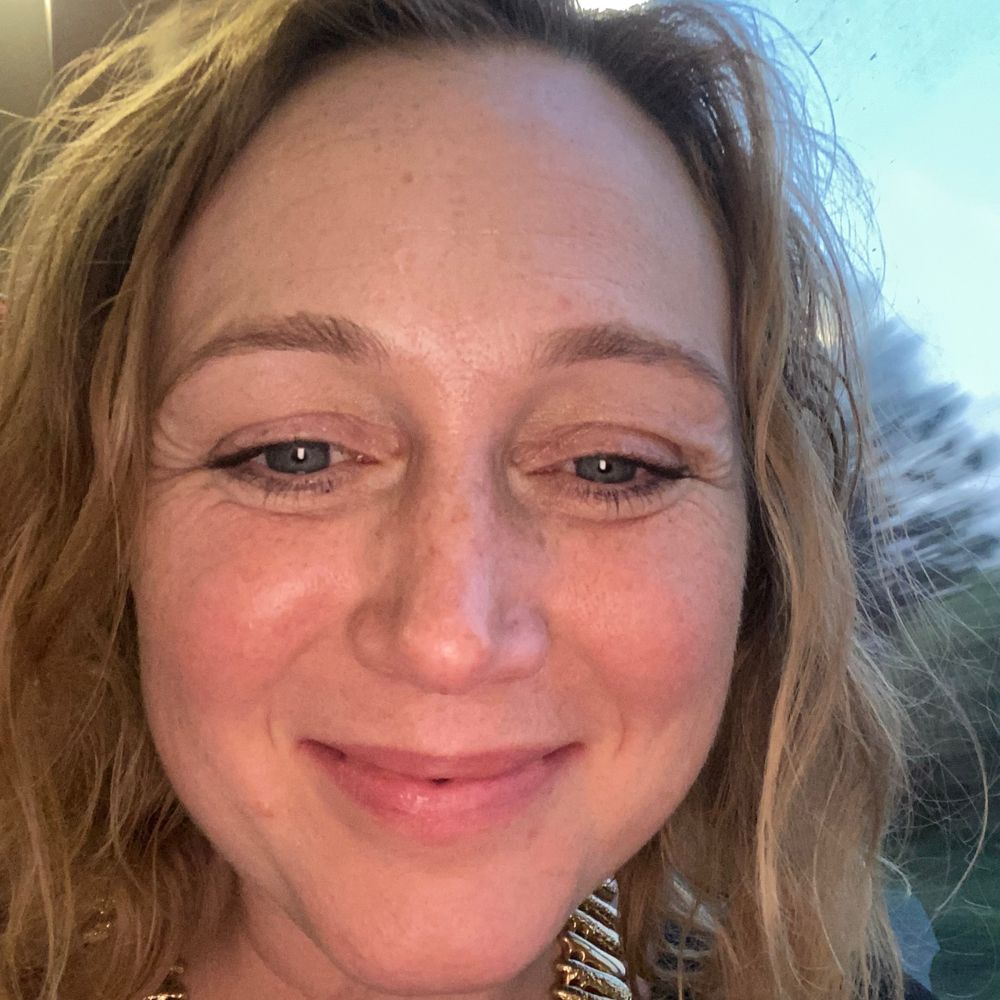
Join @profaliceroberts.bsky.social, me, and our team of experts Yasmin Kahn, Stuart Prior, Meg Russell & Naomi Sykes on BBC2 TOMORROW at 9pm, for Digging for Britain Series 13!

January 6, 2026 at 5:42 PM
Join @profaliceroberts.bsky.social, me, and our team of experts Yasmin Kahn, Stuart Prior, Meg Russell & Naomi Sykes on BBC2 TOMORROW at 9pm, for Digging for Britain Series 13!
Excited to be @tibsaarhus2026.bsky.social conference in Aarhus with @pierreorgebin.bsky.social. If you're interested in neuroanatomy 🧠, hippos 🦛, bovids 🐐 & island evolution 🏝, come to see our posters today (16:00-18:00) & tomorrow (16:10-18:10) in Room 3 #TIBS2026 (1/2)
January 7, 2026 at 11:08 AM
Excited to be @tibsaarhus2026.bsky.social conference in Aarhus with @pierreorgebin.bsky.social. If you're interested in neuroanatomy 🧠, hippos 🦛, bovids 🐐 & island evolution 🏝, come to see our posters today (16:00-18:00) & tomorrow (16:10-18:10) in Room 3 #TIBS2026 (1/2)
Reposted by Roberto Rozzi
We are excited to kick off #TIBS2026! Our early session with Alfred Russell Wallace Award winners Michael Donoghue and Mark V. Lomolino was truly inspiring, offering valuable lessons and insights that will energize the rest of the conference. #biogeography #macroecology #science


January 7, 2026 at 9:24 AM
We are excited to kick off #TIBS2026! Our early session with Alfred Russell Wallace Award winners Michael Donoghue and Mark V. Lomolino was truly inspiring, offering valuable lessons and insights that will energize the rest of the conference. #biogeography #macroecology #science
Reposted by Roberto Rozzi

A friendly competition between colleagues revealed an interesting story about hutias, giant barn owls and burrowing bees in a Caribbean cave.
Paleontologists find first bee nest fossils made inside fossilized bones
www.floridamuseum.ufl.edu/science/pale...
Illustration by Jorge Machuky
Paleontologists find first bee nest fossils made inside fossilized bones
www.floridamuseum.ufl.edu/science/pale...
Illustration by Jorge Machuky

December 18, 2025 at 6:26 PM
A friendly competition between colleagues revealed an interesting story about hutias, giant barn owls and burrowing bees in a Caribbean cave.
Paleontologists find first bee nest fossils made inside fossilized bones
www.floridamuseum.ufl.edu/science/pale...
Illustration by Jorge Machuky
Paleontologists find first bee nest fossils made inside fossilized bones
www.floridamuseum.ufl.edu/science/pale...
Illustration by Jorge Machuky
Reposted by Roberto Rozzi

📣 #Forschungsnews: Wie gut konnten Säbelzahnkatzen riechen? Oder frühe Wale? Das hat ein Forschungsteam mit Senckenberg-Wissenschaftler Gabriel S. Ferreira (he/his) durch anatomische Schädelanalysen und genetische Untersuchungen jetzt herausgefunden. smnstuttgart.bsky.social
👉 https://sgn.one/wrq
👉 https://sgn.one/wrq

December 9, 2025 at 2:02 PM
📣 #Forschungsnews: Wie gut konnten Säbelzahnkatzen riechen? Oder frühe Wale? Das hat ein Forschungsteam mit Senckenberg-Wissenschaftler Gabriel S. Ferreira (he/his) durch anatomische Schädelanalysen und genetische Untersuchungen jetzt herausgefunden. smnstuttgart.bsky.social
👉 https://sgn.one/wrq
👉 https://sgn.one/wrq
Reposted by Roberto Rozzi

Our new paper builds a set of models to recover real-time seasonality data from serial enamel isotope profiles. It's currently operationalized for Equus, so please use the models on your horse and zebra serial isotope data! The paper is open access and available here: doi.org/10.1016/j.ch...

December 8, 2025 at 4:58 PM
Our new paper builds a set of models to recover real-time seasonality data from serial enamel isotope profiles. It's currently operationalized for Equus, so please use the models on your horse and zebra serial isotope data! The paper is open access and available here: doi.org/10.1016/j.ch...
Reposted by Roberto Rozzi

big thankyou to my collaborators and colleagues for their parts in this work:
Eva Corssmit (www.evacorssmit.com)
Jorge Rojas-Jimenez (linkedin.com/in/jorge-rojas-jim%C3%A9nez-a7b079269/)
Martha MacMillan (linkedin.com/in/martha-macmillan-084661b8/)
and here's the paper: doi.org/10.1002/jmor.70051
Eva Corssmit (www.evacorssmit.com)
Jorge Rojas-Jimenez (linkedin.com/in/jorge-rojas-jim%C3%A9nez-a7b079269/)
Martha MacMillan (linkedin.com/in/martha-macmillan-084661b8/)
and here's the paper: doi.org/10.1002/jmor.70051

A Quantitative Analysis of the Manus Musculature in Tapirs (Perissodactyla: Tapiridae)
Tapirs (Perissodactyla: Tapiridae) show evidence in their forefoot bones that suggest clear differences in the way their load is distributed during locomotion. Here, we also found corresponding diffe...
doi.org
December 9, 2025 at 10:15 AM
big thankyou to my collaborators and colleagues for their parts in this work:
Eva Corssmit (www.evacorssmit.com)
Jorge Rojas-Jimenez (linkedin.com/in/jorge-rojas-jim%C3%A9nez-a7b079269/)
Martha MacMillan (linkedin.com/in/martha-macmillan-084661b8/)
and here's the paper: doi.org/10.1002/jmor.70051
Eva Corssmit (www.evacorssmit.com)
Jorge Rojas-Jimenez (linkedin.com/in/jorge-rojas-jim%C3%A9nez-a7b079269/)
Martha MacMillan (linkedin.com/in/martha-macmillan-084661b8/)
and here's the paper: doi.org/10.1002/jmor.70051
Reposted by Roberto Rozzi
Curatorial job with significant geological and palaeontological collections at Warwick Museums.
www.wmjobs.co.uk/job/250490/c...
www.wmjobs.co.uk/job/250490/c...

Curator of Natural Sciences - Warwick,Warwickshire job with Warwickshire County Council | 250490
About Heritage and Culture Warwickshire Heritage and Culture Warwickshire (HCW) provide a wide range of services that help local communities and ...
www.wmjobs.co.uk
December 3, 2025 at 2:01 PM
Curatorial job with significant geological and palaeontological collections at Warwick Museums.
www.wmjobs.co.uk/job/250490/c...
www.wmjobs.co.uk/job/250490/c...
Reposted by Roberto Rozzi

#paper How do organisms adapt to changing environments? Through plasticity, evolution, or a combination of both?
Find out in our new paper by Alger Jorritsma, where we show which strategies evolve under different environmental conditions. @journal-evo.bsky.social
academic.oup.com/evolut/advan...
Find out in our new paper by Alger Jorritsma, where we show which strategies evolve under different environmental conditions. @journal-evo.bsky.social
academic.oup.com/evolut/advan...

The evolution of plasticity and evolvability in a simple gene regulatory network
How do organisms adapt to changing environments? Do they respond plastically or evolve through genetic alterations? We present a large-scale simulation stu
academic.oup.com
December 2, 2025 at 12:18 PM
#paper How do organisms adapt to changing environments? Through plasticity, evolution, or a combination of both?
Find out in our new paper by Alger Jorritsma, where we show which strategies evolve under different environmental conditions. @journal-evo.bsky.social
academic.oup.com/evolut/advan...
Find out in our new paper by Alger Jorritsma, where we show which strategies evolve under different environmental conditions. @journal-evo.bsky.social
academic.oup.com/evolut/advan...
Reposted by Roberto Rozzi
About 30% of island-restricted reptiles are currently threatened with extinction (vs 12% of mainland reptile species). Yet, just 6.7% of the published research from 1960-2021 is devoted to island species @mongabay.com
@biology.ox.ac.uk @jesusoxford.bsky.social
news.mongabay.com/short-articl...
@biology.ox.ac.uk @jesusoxford.bsky.social
news.mongabay.com/short-articl...

Island-confined reptiles face high extinction risk, but low research interest
Reptile species found only on islands are significantly more vulnerable to extinction than their mainland counterparts, yet remain vastly overlooked by researchers, according to a recent study. “Repti...
news.mongabay.com
November 26, 2025 at 11:26 AM
About 30% of island-restricted reptiles are currently threatened with extinction (vs 12% of mainland reptile species). Yet, just 6.7% of the published research from 1960-2021 is devoted to island species @mongabay.com
@biology.ox.ac.uk @jesusoxford.bsky.social
news.mongabay.com/short-articl...
@biology.ox.ac.uk @jesusoxford.bsky.social
news.mongabay.com/short-articl...
Reposted by Roberto Rozzi
New post by me on #MITPressReader @mitpress.bsky.social
On the 100th anniversary of the #ScopesMonkeyTrial
the ways we depict #evolution can still give an erroneous progressive view (that evolution leads to humans or ‘increased complexity’).
thereader.mitpress.mit.edu/is-our-pictu...
On the 100th anniversary of the #ScopesMonkeyTrial
the ways we depict #evolution can still give an erroneous progressive view (that evolution leads to humans or ‘increased complexity’).
thereader.mitpress.mit.edu/is-our-pictu...

December 1, 2025 at 5:56 PM
New post by me on #MITPressReader @mitpress.bsky.social
On the 100th anniversary of the #ScopesMonkeyTrial
the ways we depict #evolution can still give an erroneous progressive view (that evolution leads to humans or ‘increased complexity’).
thereader.mitpress.mit.edu/is-our-pictu...
On the 100th anniversary of the #ScopesMonkeyTrial
the ways we depict #evolution can still give an erroneous progressive view (that evolution leads to humans or ‘increased complexity’).
thereader.mitpress.mit.edu/is-our-pictu...
Reposted by Roberto Rozzi
During the earliest stages of domestication, dogs in archaeological sites would be indistinguishable from wolves.
Unless you find them on a small island where no wolves would survive on their own, eating things wolves normally don’t eat.
Such as here:
www.pnas.org/doi/10.1073/...
Unless you find them on a small island where no wolves would survive on their own, eating things wolves normally don’t eat.
Such as here:
www.pnas.org/doi/10.1073/...

November 25, 2025 at 7:43 AM
During the earliest stages of domestication, dogs in archaeological sites would be indistinguishable from wolves.
Unless you find them on a small island where no wolves would survive on their own, eating things wolves normally don’t eat.
Such as here:
www.pnas.org/doi/10.1073/...
Unless you find them on a small island where no wolves would survive on their own, eating things wolves normally don’t eat.
Such as here:
www.pnas.org/doi/10.1073/...
Reposted by Roberto Rozzi

Howell et al. used WGS of wild-caught deer mice from two islands and one mainland location in British Columbia to investigate chromosomal inversions and non-equilibrium demographic history of this species.
🔗 doi.org/10.1093/molbev/msaf254
#evobio #molbio #peromyscus
🔗 doi.org/10.1093/molbev/msaf254
#evobio #molbio #peromyscus

The Genomic Imprint of Chromosomal Inversions and Demographic History in Island Populations of Deer Mice
Abstract. Populations that colonize islands experience novel selective pressures, fluctuations in size, and changes to their connectivity. Owing to their u
doi.org
November 21, 2025 at 12:19 PM
Howell et al. used WGS of wild-caught deer mice from two islands and one mainland location in British Columbia to investigate chromosomal inversions and non-equilibrium demographic history of this species.
🔗 doi.org/10.1093/molbev/msaf254
#evobio #molbio #peromyscus
🔗 doi.org/10.1093/molbev/msaf254
#evobio #molbio #peromyscus
Reposted by Roberto Rozzi
Our new paper in Ecology Letters, led by Jan Divíšek, shows that non-invasive alien plant species that successfully establish within local plant communities tend to resemble the resident native species. In contrast, invasive alien species usually differ from native plants.
doi.org/10.1111/ele....
doi.org/10.1111/ele....

November 10, 2025 at 7:26 PM
Our new paper in Ecology Letters, led by Jan Divíšek, shows that non-invasive alien plant species that successfully establish within local plant communities tend to resemble the resident native species. In contrast, invasive alien species usually differ from native plants.
doi.org/10.1111/ele....
doi.org/10.1111/ele....
Reposted by Roberto Rozzi

Impossible to ignore what’s happening to #Arctic temperatures in the month of November...
Data from @copernicusecmwf.bsky.social ERA5 reanalysis.
Data from @copernicusecmwf.bsky.social ERA5 reanalysis.

November 11, 2025 at 12:10 AM
Impossible to ignore what’s happening to #Arctic temperatures in the month of November...
Data from @copernicusecmwf.bsky.social ERA5 reanalysis.
Data from @copernicusecmwf.bsky.social ERA5 reanalysis.
Reposted by Roberto Rozzi

Glad to have this one out! As some of you might remember, I'd kicked around the idea for some time, but the inestimable @wrightam.bsky.social got it all pulled together properly. It's a first step - we still need to include likelihoods of stasis between first & … www.cambridge.org/core/journal...
Distinguishing punctuated and continuous-time models of character evolution for discrete characters and the implications for macroevolutionary theory | Paleobiology | Cambridge Core
Distinguishing punctuated and continuous-time models of character evolution for discrete characters and the implications for macroevolutionary theory
www.cambridge.org
November 8, 2025 at 6:07 AM
Glad to have this one out! As some of you might remember, I'd kicked around the idea for some time, but the inestimable @wrightam.bsky.social got it all pulled together properly. It's a first step - we still need to include likelihoods of stasis between first & … www.cambridge.org/core/journal...