


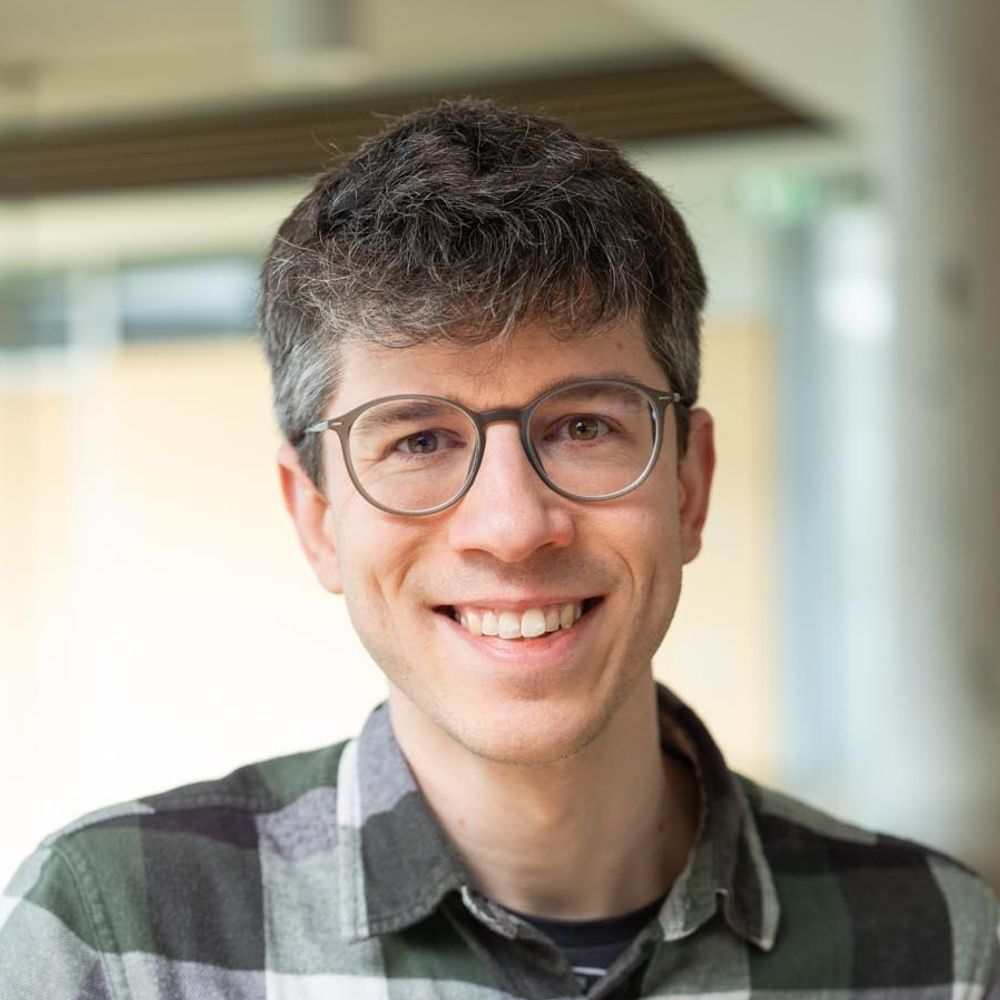
Ricard Alert Zenón
@ricardalert.bsky.social
ICREA Research Professor at Universitat de Barcelona. Research Group Leader at MPI-PKS and CSBD in Dresden. Theory of living matter. Collective phenomena in biology through the lens of active matter physics.
Reposted by Ricard Alert Zenón

📰 Notícies, agenda científica, descobriments i entrevistes.
ICREA't és el teu nou portal per seguir l'actualitat de les investigacions dels recercaires ICREA a Catalunya.
No et perdis res 👉 icreat.cat
ICREA't és el teu nou portal per seguir l'actualitat de les investigacions dels recercaires ICREA a Catalunya.
No et perdis res 👉 icreat.cat

February 11, 2026 at 10:05 AM
📰 Notícies, agenda científica, descobriments i entrevistes.
ICREA't és el teu nou portal per seguir l'actualitat de les investigacions dels recercaires ICREA a Catalunya.
No et perdis res 👉 icreat.cat
ICREA't és el teu nou portal per seguir l'actualitat de les investigacions dels recercaires ICREA a Catalunya.
No et perdis res 👉 icreat.cat
New preprint! We show how mesoscopic nonequilibrium fluctuations in active gels emerge from the breaking of detailed balance at the molecular scale. Warning: Long technical paper ahead! Enjoy! @mpipks.bsky.social @ub.edu @ubics.bsky.social @icreacommunity.bsky.social
arxiv.org/abs/2601.20483
arxiv.org/abs/2601.20483

January 30, 2026 at 6:08 PM
New preprint! We show how mesoscopic nonequilibrium fluctuations in active gels emerge from the breaking of detailed balance at the molecular scale. Warning: Long technical paper ahead! Enjoy! @mpipks.bsky.social @ub.edu @ubics.bsky.social @icreacommunity.bsky.social
arxiv.org/abs/2601.20483
arxiv.org/abs/2601.20483
Reposted by Ricard Alert Zenón
#NousICREAs2025 | 🧬 Ricard Alert @ricardalert.bsky.social (@ub.edu) investiga en física biològica.
Estudia com les lleis de la física governen la vida, per exemple, investigant com cèl·lules i bacteris es mouen en grups.
short.do/UBTLe-
Estudia com les lleis de la física governen la vida, per exemple, investigant com cèl·lules i bacteris es mouen en grups.
short.do/UBTLe-

December 17, 2025 at 8:38 AM
#NousICREAs2025 | 🧬 Ricard Alert @ricardalert.bsky.social (@ub.edu) investiga en física biològica.
Estudia com les lleis de la física governen la vida, per exemple, investigant com cèl·lules i bacteris es mouen en grups.
short.do/UBTLe-
Estudia com les lleis de la física governen la vida, per exemple, investigant com cèl·lules i bacteris es mouen en grups.
short.do/UBTLe-
Our paper on the transition to active turbulence is now out @natcomms.nature.com! With @the-chaotician.bsky.social. Are you curious how activity begets chaos? Check out the paper and the thread below. 👇
www.nature.com/articles/s41...
www.nature.com/articles/s41...
December 17, 2025 at 5:35 PM
Our paper on the transition to active turbulence is now out @natcomms.nature.com! With @the-chaotician.bsky.social. Are you curious how activity begets chaos? Check out the paper and the thread below. 👇
www.nature.com/articles/s41...
www.nature.com/articles/s41...
New preprint! Do you like ocean waves? We found similar waves on bacterial colonies! We found that this collective behavior, known as rippling, is nothing but surface waves on an active nematic. @princeton.edu @mpipks.bsky.social @ub.edu @icreacommunity.bsky.social
www.biorxiv.org/content/10.1...
www.biorxiv.org/content/10.1...
December 2, 2025 at 8:02 PM
New preprint! Do you like ocean waves? We found similar waves on bacterial colonies! We found that this collective behavior, known as rippling, is nothing but surface waves on an active nematic. @princeton.edu @mpipks.bsky.social @ub.edu @icreacommunity.bsky.social
www.biorxiv.org/content/10.1...
www.biorxiv.org/content/10.1...
Super excited to start as an ICREA Research Professor at the University of Barcelona! Really happy to join fantastic colleagues at @icreacommunity.bsky.social and @ub.edu.
www.icrea.cat/community/ic...
www.icrea.cat/community/ic...
ICREAs Fitxa - ICREA
Something went wrong
www.icrea.cat
December 2, 2025 at 6:53 PM
Super excited to start as an ICREA Research Professor at the University of Barcelona! Really happy to join fantastic colleagues at @icreacommunity.bsky.social and @ub.edu.
www.icrea.cat/community/ic...
www.icrea.cat/community/ic...
Reposted by Ricard Alert Zenón

🎧🎙Últim capítol de La utilitat del coneixement inútil!
Parlem amb la @gmarfanyn.bsky.social sobre CRISPR i obrim el debat que hem de tenir tots de la millor manera: amb el coneixement científic a la mà!
@soctastaolletes.bsky.social
youtu.be/DUzzjkkUBT4?...
Parlem amb la @gmarfanyn.bsky.social sobre CRISPR i obrim el debat que hem de tenir tots de la millor manera: amb el coneixement científic a la mà!
@soctastaolletes.bsky.social
youtu.be/DUzzjkkUBT4?...

T1C7 Els bacteris, l’edició genètica i el Nobel robat, amb Gemma Marfany i Nadal
YouTube video by La Dimoni de Maxwell
youtu.be
December 2, 2025 at 10:40 AM
🎧🎙Últim capítol de La utilitat del coneixement inútil!
Parlem amb la @gmarfanyn.bsky.social sobre CRISPR i obrim el debat que hem de tenir tots de la millor manera: amb el coneixement científic a la mà!
@soctastaolletes.bsky.social
youtu.be/DUzzjkkUBT4?...
Parlem amb la @gmarfanyn.bsky.social sobre CRISPR i obrim el debat que hem de tenir tots de la millor manera: amb el coneixement científic a la mà!
@soctastaolletes.bsky.social
youtu.be/DUzzjkkUBT4?...
Reposted by Ricard Alert Zenón
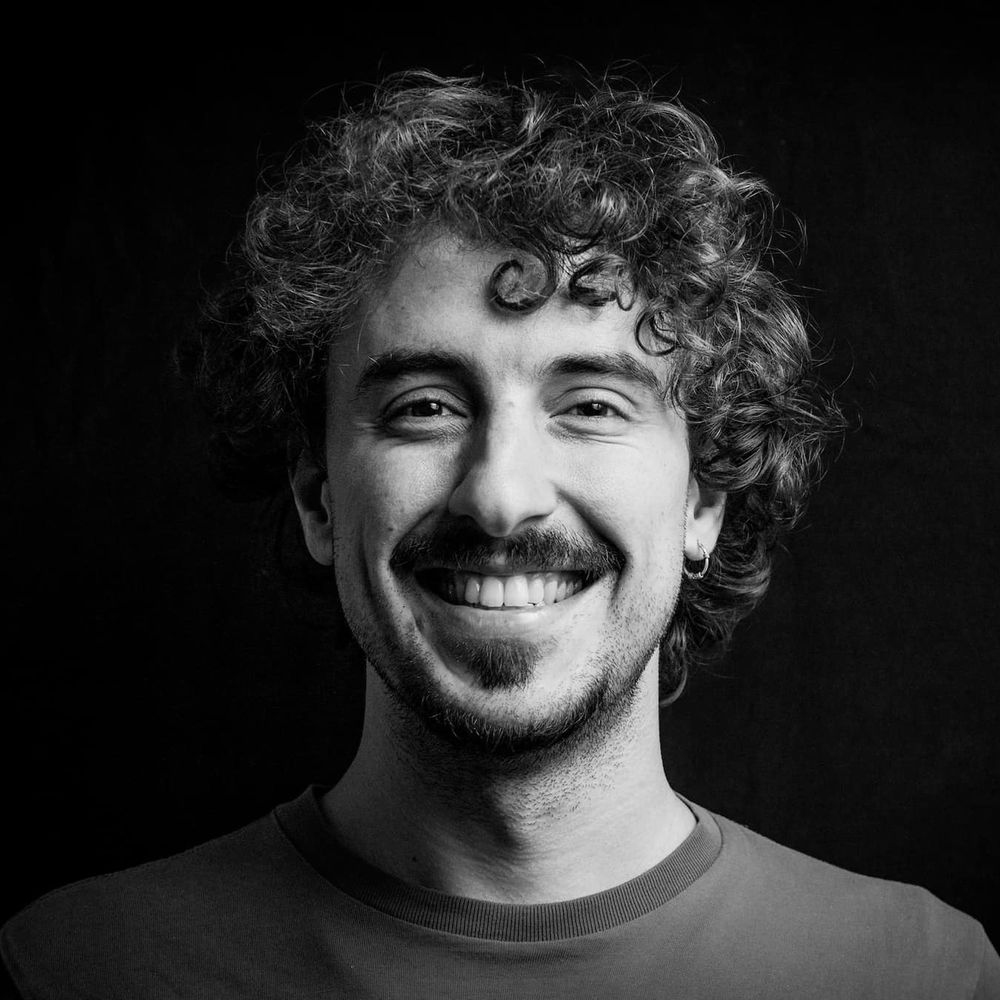
Active droplets are fundamental in cell biology and origin of life. With Jonathan Bauermann, @boekhovenlab.bsky.social, Frank Jülicher, and @m-pol.bsky.social, we show that a critical transition influences their size, morphology, ripening and division propensity
journals.aps.org/prx/abstract...
journals.aps.org/prx/abstract...

November 15, 2025 at 11:28 AM
Active droplets are fundamental in cell biology and origin of life. With Jonathan Bauermann, @boekhovenlab.bsky.social, Frank Jülicher, and @m-pol.bsky.social, we show that a critical transition influences their size, morphology, ripening and division propensity
journals.aps.org/prx/abstract...
journals.aps.org/prx/abstract...
Reposted by Ricard Alert Zenón
🕵️ A qui t’agradaria conèixer? Amb quantes persones hi arribaries?
El Ricard Solé @ricardsole.bsky.social, investigador ICREA a @upf.edu ens ho explica al nostre pòdcast!
youtube.com/shorts/buG_R...
El Ricard Solé @ricardsole.bsky.social, investigador ICREA a @upf.edu ens ho explica al nostre pòdcast!
youtube.com/shorts/buG_R...

6 graus de separació #ciènciaencatalà #podcast #divulgaciócientífica #ciència
YouTube video by La Dimoni de Maxwell
youtube.com
November 15, 2025 at 8:20 PM
🕵️ A qui t’agradaria conèixer? Amb quantes persones hi arribaries?
El Ricard Solé @ricardsole.bsky.social, investigador ICREA a @upf.edu ens ho explica al nostre pòdcast!
youtube.com/shorts/buG_R...
El Ricard Solé @ricardsole.bsky.social, investigador ICREA a @upf.edu ens ho explica al nostre pòdcast!
youtube.com/shorts/buG_R...
Reposted by Ricard Alert Zenón
Escolta en nou capítol de La utilitat del coneixement inútil!
Quàntica, ordinadors i espanta sogres!!! 🎉🥳
Quàntica, ordinadors i espanta sogres!!! 🎉🥳
Nou capítol! 🔴
Parlem de quàntica i superordinadors, la @marionamec.bsky.social em peta la neurona, l'Alba Cervera ens explica què fa al @bsc-cns.bsky.social i descobrim que els espanta-sogres poden ser molt pesats 🥳
Amb la suport de la @fcri.bsky.social 💜
open.spotify.com/episode/6wJL...
Parlem de quàntica i superordinadors, la @marionamec.bsky.social em peta la neurona, l'Alba Cervera ens explica què fa al @bsc-cns.bsky.social i descobrim que els espanta-sogres poden ser molt pesats 🥳
Amb la suport de la @fcri.bsky.social 💜
open.spotify.com/episode/6wJL...

T1C5 Quàntica, superordinadors i espanta-sogres, amb Alba Cervera i Lierta
Spotify video
open.spotify.com
October 28, 2025 at 6:59 AM
Escolta en nou capítol de La utilitat del coneixement inútil!
Quàntica, ordinadors i espanta sogres!!! 🎉🥳
Quàntica, ordinadors i espanta sogres!!! 🎉🥳
Reposted by Ricard Alert Zenón
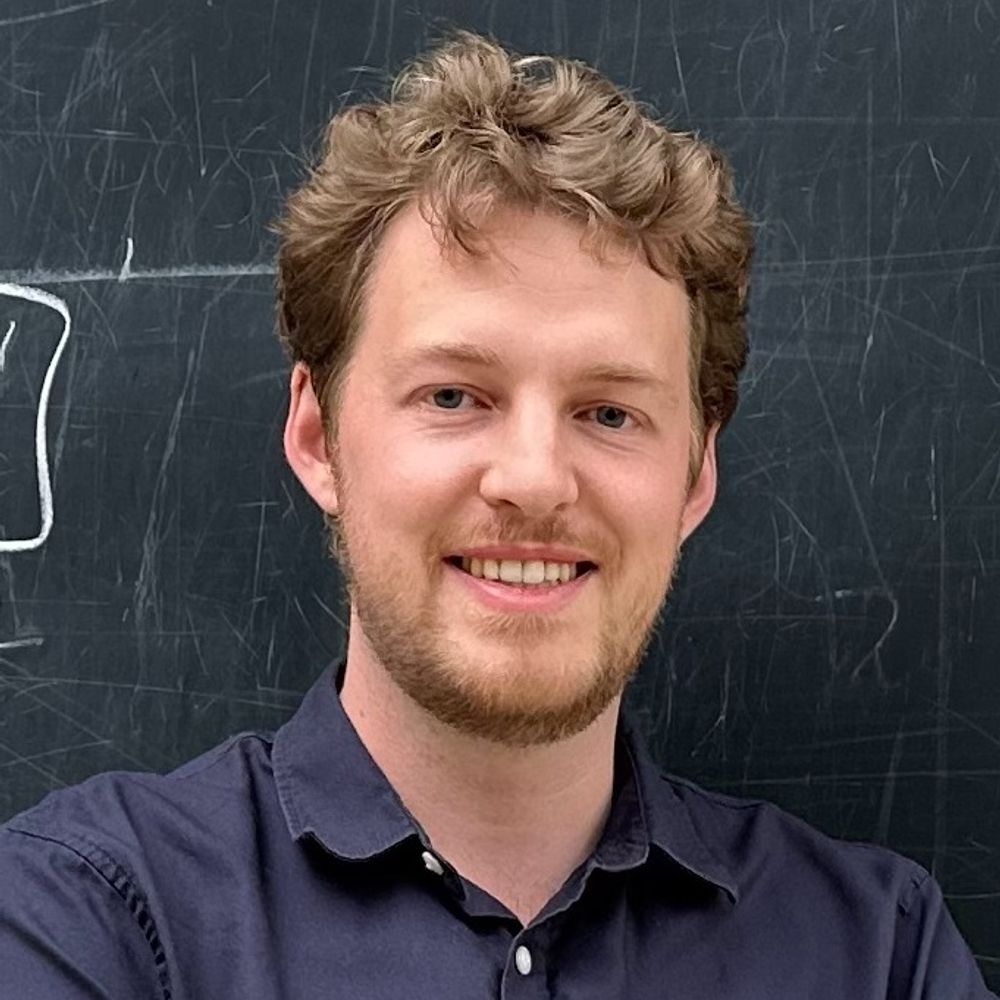
🤔 Can tissue patterning & tumor heterogeneity emerge in a self-organized way?
We show that self-organized mechanical stress & density gradients pattern tumors in vitro & in vivo, and this behavior is quantitatively predicted by a mechano-chemical active fluid model!
Check out Carlos' thread ⬇️
We show that self-organized mechanical stress & density gradients pattern tumors in vitro & in vivo, and this behavior is quantitatively predicted by a mechano-chemical active fluid model!
Check out Carlos' thread ⬇️
1/ 🎉Excited to share our new preprint @vignjeviclab.bsky.social @davidbrueckner.bsky.social :
"Self-organization of tumor heterogeneity and plasticity"
biorxiv.org/content/10.1...
Tumor heterogeneity and plasticity drive metastasis and relapse. How is tumor patterning coordinated?
A thread👇
"Self-organization of tumor heterogeneity and plasticity"
biorxiv.org/content/10.1...
Tumor heterogeneity and plasticity drive metastasis and relapse. How is tumor patterning coordinated?
A thread👇
October 16, 2025 at 10:40 PM
🤔 Can tissue patterning & tumor heterogeneity emerge in a self-organized way?
We show that self-organized mechanical stress & density gradients pattern tumors in vitro & in vivo, and this behavior is quantitatively predicted by a mechano-chemical active fluid model!
Check out Carlos' thread ⬇️
We show that self-organized mechanical stress & density gradients pattern tumors in vitro & in vivo, and this behavior is quantitatively predicted by a mechano-chemical active fluid model!
Check out Carlos' thread ⬇️
Reposted by Ricard Alert Zenón
1/ 🎉Excited to share our new preprint @vignjeviclab.bsky.social @davidbrueckner.bsky.social :
"Self-organization of tumor heterogeneity and plasticity"
biorxiv.org/content/10.1...
Tumor heterogeneity and plasticity drive metastasis and relapse. How is tumor patterning coordinated?
A thread👇
"Self-organization of tumor heterogeneity and plasticity"
biorxiv.org/content/10.1...
Tumor heterogeneity and plasticity drive metastasis and relapse. How is tumor patterning coordinated?
A thread👇
October 16, 2025 at 9:55 PM
1/ 🎉Excited to share our new preprint @vignjeviclab.bsky.social @davidbrueckner.bsky.social :
"Self-organization of tumor heterogeneity and plasticity"
biorxiv.org/content/10.1...
Tumor heterogeneity and plasticity drive metastasis and relapse. How is tumor patterning coordinated?
A thread👇
"Self-organization of tumor heterogeneity and plasticity"
biorxiv.org/content/10.1...
Tumor heterogeneity and plasticity drive metastasis and relapse. How is tumor patterning coordinated?
A thread👇
Reposted by Ricard Alert Zenón
🛰️ Sabies que fas servir la teoria de la relativitat cada cop que treus el GPS?
Mira el 4t capítol de La utilitat del coneixement inútil per veure com li peta el cap a la @soctastaolletes.bsky.social 🤯
Amb un ajut @fcri.bsky.social
open.spotify.com/episode/4lza...
Mira el 4t capítol de La utilitat del coneixement inútil per veure com li peta el cap a la @soctastaolletes.bsky.social 🤯
Amb un ajut @fcri.bsky.social
open.spotify.com/episode/4lza...
Spotify – Web Player
open.spotify.com
October 16, 2025 at 6:08 AM
🛰️ Sabies que fas servir la teoria de la relativitat cada cop que treus el GPS?
Mira el 4t capítol de La utilitat del coneixement inútil per veure com li peta el cap a la @soctastaolletes.bsky.social 🤯
Amb un ajut @fcri.bsky.social
open.spotify.com/episode/4lza...
Mira el 4t capítol de La utilitat del coneixement inútil per veure com li peta el cap a la @soctastaolletes.bsky.social 🤯
Amb un ajut @fcri.bsky.social
open.spotify.com/episode/4lza...
New job, new preprint! We found that embryo implantation can be understood as active wetting! Embryos from older mothers have trouble implanting because they are too contractile and viscous. Check out the wonderful thread (and movies!) by @katecavanaugh.bsky.social.
www.biorxiv.org/content/10.1...
www.biorxiv.org/content/10.1...
October 2, 2025 at 8:04 AM
New job, new preprint! We found that embryo implantation can be understood as active wetting! Embryos from older mothers have trouble implanting because they are too contractile and viscous. Check out the wonderful thread (and movies!) by @katecavanaugh.bsky.social.
www.biorxiv.org/content/10.1...
www.biorxiv.org/content/10.1...

Warm goodbye to Dresden's @mpipks.bsky.social, my scientific home for the past 4 years. It's been amazing to start my group here! Thanks to the Max Planck Society, group members and everyone at the institute! Looking forward to the new chapter in Barcelona @ub.edu

September 21, 2025 at 1:57 PM
Warm goodbye to Dresden's @mpipks.bsky.social, my scientific home for the past 4 years. It's been amazing to start my group here! Thanks to the Max Planck Society, group members and everyone at the institute! Looking forward to the new chapter in Barcelona @ub.edu
Reposted by Ricard Alert Zenón
IG Nobel Prize in #Physics 2025 to @mpipks.bsky.social researchers for elucidating the phase behaviour of cacio e pepe sauce. The work highlights how physics can also be applied to solve daily-life problems!
nature.com/articles/d41586-025-03045-0
nature.com/articles/d41586-025-03045-0

Tipsy bats and perfect pasta: Ig Nobels celebrate ‘improbable’ research
The annual awards are a celebration of weird but thought-provoking science.
nature.com
September 19, 2025 at 1:11 PM
IG Nobel Prize in #Physics 2025 to @mpipks.bsky.social researchers for elucidating the phase behaviour of cacio e pepe sauce. The work highlights how physics can also be applied to solve daily-life problems!
nature.com/articles/d41586-025-03045-0
nature.com/articles/d41586-025-03045-0
Truly happy to see that our Italian colleagues @mpipks.bsky.social won the IgNobel Prize for figuring out that the Cacio e Pepe sauce can easily phase separate and become clumpy! Very well deserved! Congrats to the team! 😀

Truly chuffed for our fearless food physicists @mpipks.bsky.social + collabs from AT @istaresearch.bsky.social, IT & ES who won this year’s Ig Nobel - the #NobelPrize of hearts❤️for cracking the science of perfect pasta !🍝Kudos to all for intrepidly consuming lots of cheese in the name of science!😋

The Secret to a Smooth Pasta Sauce Wins Ig Nobel Prize
Italian researchers studied how the ingredients of the traditional Roman dish cacio e pepe emulsify into a creamy sauce, winning the 2025 Physics Ig Nobel Prize.
www.the-scientist.com
September 19, 2025 at 2:42 PM
Truly happy to see that our Italian colleagues @mpipks.bsky.social won the IgNobel Prize for figuring out that the Cacio e Pepe sauce can easily phase separate and become clumpy! Very well deserved! Congrats to the team! 😀
Check our new preprint on active surface simulations of amoeboid migration! We show how this mode of migration can be mechanically guided by gradients in friction, viscosity, pressure, or confinement, and even by nearby cells. Work led by Hanna Gertack and Sebastian Aland.
arxiv.org/abs/2509.11801
arxiv.org/abs/2509.11801

September 19, 2025 at 9:37 AM
Check our new preprint on active surface simulations of amoeboid migration! We show how this mode of migration can be mechanically guided by gradients in friction, viscosity, pressure, or confinement, and even by nearby cells. Work led by Hanna Gertack and Sebastian Aland.
arxiv.org/abs/2509.11801
arxiv.org/abs/2509.11801
Reposted by Ricard Alert Zenón
🤔Què tenen en comú l’Ou com balla i un àtom?
🎙️El Lluís Torner, fundador de l’ICFO ens ho explica!
👉 Escolta el 2n capítol de La utilitat del coneixement inútil!
Amb el suport d’un Ajut FCRI 2025 @fcri.bsky.social
@soctastaolletes.bsky.social
youtube.com/shorts/Al5mY...
🎙️El Lluís Torner, fundador de l’ICFO ens ho explica!
👉 Escolta el 2n capítol de La utilitat del coneixement inútil!
Amb el suport d’un Ajut FCRI 2025 @fcri.bsky.social
@soctastaolletes.bsky.social
youtube.com/shorts/Al5mY...

L'àtom com balla!
YouTube video by La Dimoni de Maxwell
youtube.com
September 18, 2025 at 1:10 PM
🤔Què tenen en comú l’Ou com balla i un àtom?
🎙️El Lluís Torner, fundador de l’ICFO ens ho explica!
👉 Escolta el 2n capítol de La utilitat del coneixement inútil!
Amb el suport d’un Ajut FCRI 2025 @fcri.bsky.social
@soctastaolletes.bsky.social
youtube.com/shorts/Al5mY...
🎙️El Lluís Torner, fundador de l’ICFO ens ho explica!
👉 Escolta el 2n capítol de La utilitat del coneixement inútil!
Amb el suport d’un Ajut FCRI 2025 @fcri.bsky.social
@soctastaolletes.bsky.social
youtube.com/shorts/Al5mY...
Very honored to receive this prize from the Spanish Physical Society! Thanks a lot to all my collaborators, who make this possible!
Congratulations to @ricardalert.bsky.social on being awarded the "Young Investigator Prize in Theoretical Physics” by the Spanish Royal Academy of Physics and the BBVA Foundation! The award is in recognition of his contributions to biological physics.
www.fbbva.es/noticias/fal...
www.fbbva.es/noticias/fal...

Fallados los Premios de Física RSEF-Fundación BBVA 2025
Conoce a las personas galardonadas en los ámbitos de investigación, las enseñanzas secundaria y universitaria, la innovación, la tecnología y la divulgación
www.fbbva.es
September 17, 2025 at 4:21 PM
Very honored to receive this prize from the Spanish Physical Society! Thanks a lot to all my collaborators, who make this possible!
Reposted by Ricard Alert Zenón
Bacteria are surrounded by water! New work @natphys.nature.com by @ricardalert.bsky.social @mpipks.bsky.social & collaborators @ Princeton University shows that water capillary forces organise bacterial colonies into gas, nematic streams, and droplet states.
nature.com/articles/s41567-025-02965-y
nature.com/articles/s41567-025-02965-y

September 16, 2025 at 6:03 PM
Bacteria are surrounded by water! New work @natphys.nature.com by @ricardalert.bsky.social @mpipks.bsky.social & collaborators @ Princeton University shows that water capillary forces organise bacterial colonies into gas, nematic streams, and droplet states.
nature.com/articles/s41567-025-02965-y
nature.com/articles/s41567-025-02965-y
Our paper about active crystals is now out @softmatter.rsc.org! During the revisions, we added a section about triangular lattices, on which the turn-towards or turn-away interactions can be frustrated. Check it out, and see the post below!
pubs.rsc.org/en/content/a...
bsky.app/profile/rica...
pubs.rsc.org/en/content/a...
bsky.app/profile/rica...
August 27, 2025 at 2:36 PM
Our paper about active crystals is now out @softmatter.rsc.org! During the revisions, we added a section about triangular lattices, on which the turn-towards or turn-away interactions can be frustrated. Check it out, and see the post below!
pubs.rsc.org/en/content/a...
bsky.app/profile/rica...
pubs.rsc.org/en/content/a...
bsky.app/profile/rica...
Reposted by Ricard Alert Zenón
Has intentat ma fer un gelat casolà i no ha sortit tan cremós com esperaves? T'han quedat uns cristalls que et trinxen les dents? 🍦☀️
A la @soctastaolletes.bsky.social i a mi ens ha passat, però tenim la solució...
youtube.com/shorts/hAXjP...
A la @soctastaolletes.bsky.social i a mi ens ha passat, però tenim la solució...
youtube.com/shorts/hAXjP...

Gelat de vidre
YouTube video by La Dimoni de Maxwell
youtube.com
August 24, 2025 at 10:16 AM
Has intentat ma fer un gelat casolà i no ha sortit tan cremós com esperaves? T'han quedat uns cristalls que et trinxen les dents? 🍦☀️
A la @soctastaolletes.bsky.social i a mi ens ha passat, però tenim la solució...
youtube.com/shorts/hAXjP...
A la @soctastaolletes.bsky.social i a mi ens ha passat, però tenim la solució...
youtube.com/shorts/hAXjP...
Dreaming of a swimming pool? Bacteria are surrounded by water! Water capillary forces organize bacterial colonies into gas, nematic streams, or droplet states. New paper @natphys.nature.com led by Matt Black and Chenyi Fei, with Ned Wingreen and Josh Shaevitz!
www.nature.com/articles/s41...
www.nature.com/articles/s41...
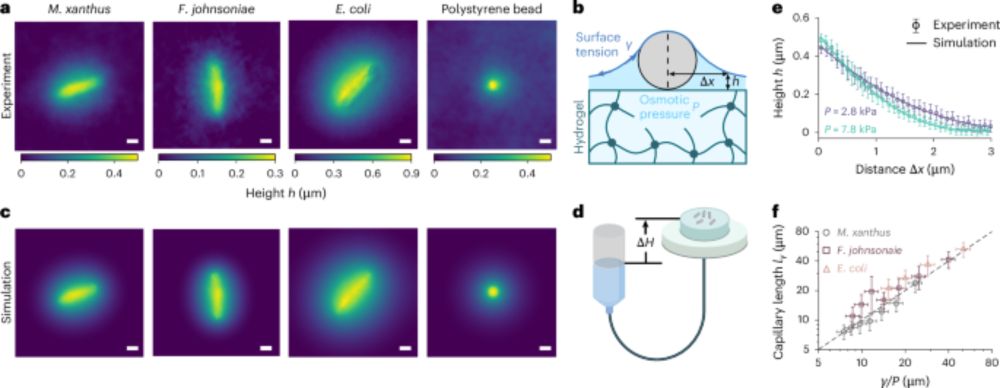
Capillary interactions drive the self-organization of bacterial colonies - Nature Physics
Bacteria tend to live in thin layers of water on surfaces. Now the capillary forces in these layers are shown to help organize the bacteria into dense packs.
www.nature.com
August 2, 2025 at 2:59 PM
Dreaming of a swimming pool? Bacteria are surrounded by water! Water capillary forces organize bacterial colonies into gas, nematic streams, or droplet states. New paper @natphys.nature.com led by Matt Black and Chenyi Fei, with Ned Wingreen and Josh Shaevitz!
www.nature.com/articles/s41...
www.nature.com/articles/s41...