



Suvrat Kher
@rapiduplift.bsky.social
Sedimentary geologist dreaming of a himalayan home. Subscribe to my geology newsletter - https://rapiduplift.substack.com/
Reposted by Suvrat Kher
Links to Geology-related Open GIS Data
open.substack.com/pub/ikegami/...
open.substack.com/pub/ikegami/...

January 14, 2026 at 9:03 AM
Links to Geology-related Open GIS Data
open.substack.com/pub/ikegami/...
open.substack.com/pub/ikegami/...
Reposted by Suvrat Kher
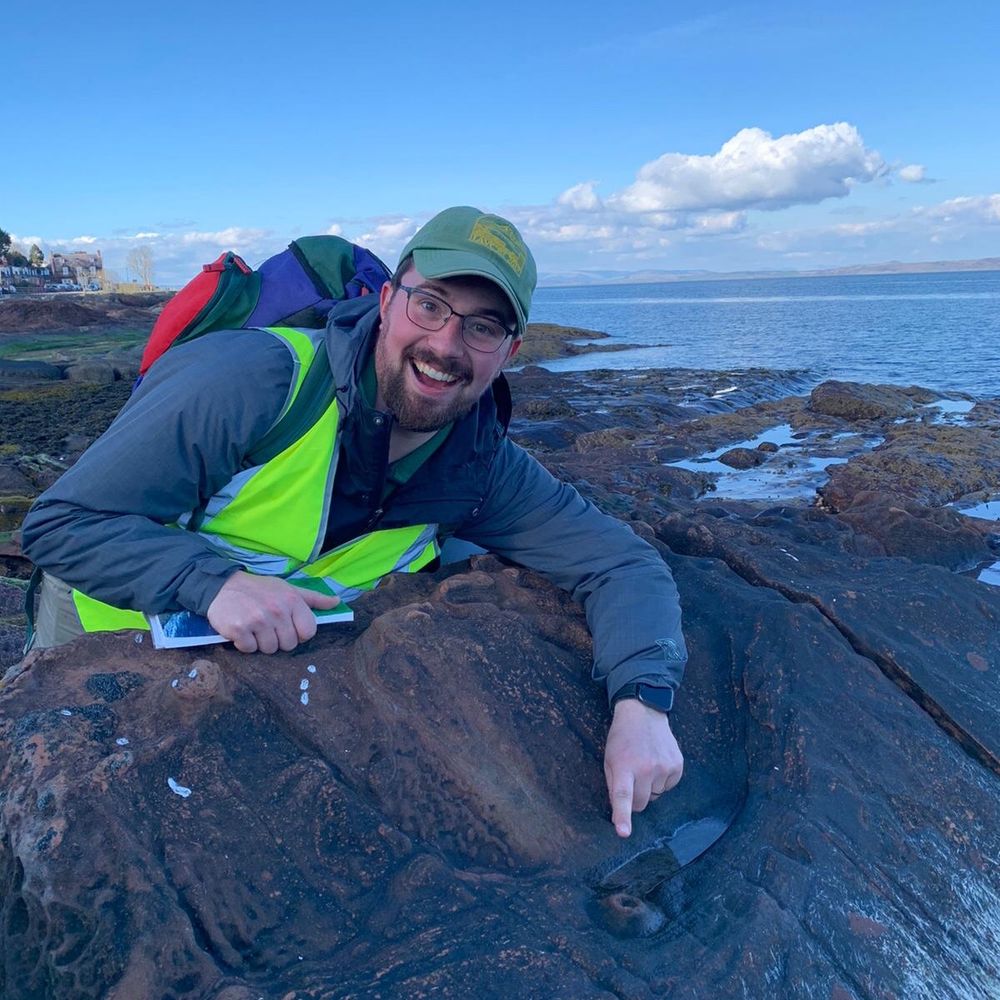
I appreciate this from @us.theconversation.com by Jonathan Paul.
However, I think it’s making a mistake I commonly hear geologists make with regards to current events.
I have a hunch that this mistake is one of the reasons geology programs are struggling 🧵🛠️🪨🧪
theconversation.com/greenland-is...
However, I think it’s making a mistake I commonly hear geologists make with regards to current events.
I have a hunch that this mistake is one of the reasons geology programs are struggling 🧵🛠️🪨🧪
theconversation.com/greenland-is...

Greenland is rich in natural resources – a geologist explains why
Greenland’s rare earth element deposits may be among the world’s largest by volume.
theconversation.com
January 10, 2026 at 6:31 PM
I appreciate this from @us.theconversation.com by Jonathan Paul.
However, I think it’s making a mistake I commonly hear geologists make with regards to current events.
I have a hunch that this mistake is one of the reasons geology programs are struggling 🧵🛠️🪨🧪
theconversation.com/greenland-is...
However, I think it’s making a mistake I commonly hear geologists make with regards to current events.
I have a hunch that this mistake is one of the reasons geology programs are struggling 🧵🛠️🪨🧪
theconversation.com/greenland-is...
Reposted by Suvrat Kher

Anirudh Kanisetti echoing the complaint of pretty much every South Indian who has had to study "Indian history" at a non-state board school.

January 2, 2026 at 8:49 AM
Anirudh Kanisetti echoing the complaint of pretty much every South Indian who has had to study "Indian history" at a non-state board school.
Reposted by Suvrat Kher
Fantastic new slab of eensy little sea urchin fossils from Oregon, courtesy of @smilodonichthys.bsky.social #FossilFriday ⚒️

November 7, 2025 at 1:30 PM
Fantastic new slab of eensy little sea urchin fossils from Oregon, courtesy of @smilodonichthys.bsky.social #FossilFriday ⚒️
Folding in Proterozoic South Delhi Fold Belt, Kumbhalgarh Fort, Rajasthan.
Check out the polyphase folding (red arrow).
Pic- Vivek Singh Grewal.
#FridayFold
Check out the polyphase folding (red arrow).
Pic- Vivek Singh Grewal.
#FridayFold

December 26, 2025 at 11:33 AM
Folding in Proterozoic South Delhi Fold Belt, Kumbhalgarh Fort, Rajasthan.
Check out the polyphase folding (red arrow).
Pic- Vivek Singh Grewal.
#FridayFold
Check out the polyphase folding (red arrow).
Pic- Vivek Singh Grewal.
#FridayFold
Archean Jagannathpur volcanics from Singbhum Craton, India.
SEM BSE image- Pyroxene fibres with plagioclase.
www.geosocindia.org/index.php/jg...
SEM BSE image- Pyroxene fibres with plagioclase.
www.geosocindia.org/index.php/jg...

December 20, 2025 at 11:36 AM
Archean Jagannathpur volcanics from Singbhum Craton, India.
SEM BSE image- Pyroxene fibres with plagioclase.
www.geosocindia.org/index.php/jg...
SEM BSE image- Pyroxene fibres with plagioclase.
www.geosocindia.org/index.php/jg...
Reposted by Suvrat Kher

This is the reality we face. It is not physically possible to limit warming to 1.5°C. The required levels of emission cuts are impossibly steep
drilled.media/news/cop30-g...
drilled.media/news/cop30-g...

December 18, 2025 at 5:01 PM
This is the reality we face. It is not physically possible to limit warming to 1.5°C. The required levels of emission cuts are impossibly steep
drilled.media/news/cop30-g...
drilled.media/news/cop30-g...
Reposted by Suvrat Kher
Thin Section Thursday!
A cross-polarized image of a chondrule from the Allende (CV3) meteorite. The thin blades are crystals formed from the melt at very high cooling rates. FOV ~ 0.7 mm. Contributed by Bill Menarik. Send images & caption to akoziol1 at udayton dot edu. #thinsectionthursday
A cross-polarized image of a chondrule from the Allende (CV3) meteorite. The thin blades are crystals formed from the melt at very high cooling rates. FOV ~ 0.7 mm. Contributed by Bill Menarik. Send images & caption to akoziol1 at udayton dot edu. #thinsectionthursday

December 18, 2025 at 1:13 PM
Thin Section Thursday!
A cross-polarized image of a chondrule from the Allende (CV3) meteorite. The thin blades are crystals formed from the melt at very high cooling rates. FOV ~ 0.7 mm. Contributed by Bill Menarik. Send images & caption to akoziol1 at udayton dot edu. #thinsectionthursday
A cross-polarized image of a chondrule from the Allende (CV3) meteorite. The thin blades are crystals formed from the melt at very high cooling rates. FOV ~ 0.7 mm. Contributed by Bill Menarik. Send images & caption to akoziol1 at udayton dot edu. #thinsectionthursday
Reposted by Suvrat Kher

My top 10 books for 2025

December 15, 2025 at 4:39 PM
My top 10 books for 2025
Reposted by Suvrat Kher

December 13, 2025 at 2:59 PM
Reposted by Suvrat Kher

Possible desiccation cracks (mudcracks) in rock found by the Mars Curiosity Rover this week.
flic.kr/p/2rLi9Lh
flic.kr/p/2rLoXm3
flic.kr/p/2rL7ntV
flic.kr/p/2rLi9Lh
flic.kr/p/2rLoXm3
flic.kr/p/2rL7ntV


December 12, 2025 at 9:32 PM
Possible desiccation cracks (mudcracks) in rock found by the Mars Curiosity Rover this week.
flic.kr/p/2rLi9Lh
flic.kr/p/2rLoXm3
flic.kr/p/2rL7ntV
flic.kr/p/2rLi9Lh
flic.kr/p/2rLoXm3
flic.kr/p/2rL7ntV
Documenting ancient firemaking.
A broader perspective from @johnhawks.net on the "earliest evidence of ignition" news reports of firemaking ~400k.
www.johnhawks.net/p/sparking-a...
A broader perspective from @johnhawks.net on the "earliest evidence of ignition" news reports of firemaking ~400k.
www.johnhawks.net/p/sparking-a...

Sparking ancient fires
New research helps to show the challenges of documenting ancient firemaking
www.johnhawks.net
December 12, 2025 at 4:03 AM
Documenting ancient firemaking.
A broader perspective from @johnhawks.net on the "earliest evidence of ignition" news reports of firemaking ~400k.
www.johnhawks.net/p/sparking-a...
A broader perspective from @johnhawks.net on the "earliest evidence of ignition" news reports of firemaking ~400k.
www.johnhawks.net/p/sparking-a...
Reposted by Suvrat Kher

Our updated 54" x 36" Geology of Plate Tectonics chart reflects recent advances in geological thought over the past 40 years. Grab one below!
English (folded): geosociety.co/3KO5SNe
Spanish (folded): geosociety.co/3ML4Guy
#PlateTectonics #Tectonics #Volcanism #Metamorphism #Seismicity #Geothermal
English (folded): geosociety.co/3KO5SNe
Spanish (folded): geosociety.co/3ML4Guy
#PlateTectonics #Tectonics #Volcanism #Metamorphism #Seismicity #Geothermal

December 11, 2025 at 12:00 AM
Our updated 54" x 36" Geology of Plate Tectonics chart reflects recent advances in geological thought over the past 40 years. Grab one below!
English (folded): geosociety.co/3KO5SNe
Spanish (folded): geosociety.co/3ML4Guy
#PlateTectonics #Tectonics #Volcanism #Metamorphism #Seismicity #Geothermal
English (folded): geosociety.co/3KO5SNe
Spanish (folded): geosociety.co/3ML4Guy
#PlateTectonics #Tectonics #Volcanism #Metamorphism #Seismicity #Geothermal
Thought provoking and well explained by Steven M Stanley.
"Why the punctuational model of evolution is valid".
www.cambridge.org/core/journal...
"Why the punctuational model of evolution is valid".
www.cambridge.org/core/journal...
Why the punctuational model of evolution is valid | Paleobiology | Cambridge Core
Why the punctuational model of evolution is valid
www.cambridge.org
December 8, 2025 at 10:45 AM
Thought provoking and well explained by Steven M Stanley.
"Why the punctuational model of evolution is valid".
www.cambridge.org/core/journal...
"Why the punctuational model of evolution is valid".
www.cambridge.org/core/journal...
Reposted by Suvrat Kher

@bsky.app #FossilFriday Arborea arborea, one of many impressive enigmatic Ediacaran fossils from the Flinders Ranges on display at the South Australian Museum in Adelaide.

December 5, 2025 at 10:24 AM
@bsky.app #FossilFriday Arborea arborea, one of many impressive enigmatic Ediacaran fossils from the Flinders Ranges on display at the South Australian Museum in Adelaide.
Reposted by Suvrat Kher
Cool paper documenting ecological insights about Indian tropical savannas in traditional literature between the 13th and 20th century. Grassland-scrubland biomes are often misconceived as deforested and/ or degraded wastelands. So, important paper.
besjournals.onlinelibrary.wiley.com/doi/10.1002/...
besjournals.onlinelibrary.wiley.com/doi/10.1002/...

Utilizing traditional literature to triangulate the ecological history of a tropical savanna
Read the free Plain Language Summary for this article on the Journal blog.
besjournals.onlinelibrary.wiley.com
December 5, 2025 at 3:54 AM
Cool paper documenting ecological insights about Indian tropical savannas in traditional literature between the 13th and 20th century. Grassland-scrubland biomes are often misconceived as deforested and/ or degraded wastelands. So, important paper.
besjournals.onlinelibrary.wiley.com/doi/10.1002/...
besjournals.onlinelibrary.wiley.com/doi/10.1002/...
Manufacture of synthetic Ernestite thr' high temp sintering of sand & laterite raw material.
Wonderful mineralogy and geochem study of origin of cylindrical drill bits used during the Bronze Age Harappan Civilization.
www.nature.com/articles/s40...
@johnhawks.net
Wonderful mineralogy and geochem study of origin of cylindrical drill bits used during the Bronze Age Harappan Civilization.
www.nature.com/articles/s40...
@johnhawks.net

Origin of the Harappan Ernestites: Geochemical Insights into Provenance and Fabrication - npj Heritage Science
npj Heritage Science - Origin of the Harappan Ernestites: Geochemical Insights into Provenance and Fabrication
www.nature.com
December 3, 2025 at 11:22 AM
Manufacture of synthetic Ernestite thr' high temp sintering of sand & laterite raw material.
Wonderful mineralogy and geochem study of origin of cylindrical drill bits used during the Bronze Age Harappan Civilization.
www.nature.com/articles/s40...
@johnhawks.net
Wonderful mineralogy and geochem study of origin of cylindrical drill bits used during the Bronze Age Harappan Civilization.
www.nature.com/articles/s40...
@johnhawks.net
Delhi Radioactive!

December 2, 2025 at 3:07 PM
Delhi Radioactive!
A nanometer thin coating of amorphous silica may be protecting phosphatized embryo-like microfossils from diagenetic changes in Ediacaran Doushanto Formation.
pubs.geoscienceworld.org/gsa/geology/...
pubs.geoscienceworld.org/gsa/geology/...
The role of amorphous silica coating on apatite nanocrystals in the exceptional preservation of phosphatized embryo-like microfossils from the Ediacaran Doushantuo Formation | Geology | GeoScienceWorl...
pubs.geoscienceworld.org
December 2, 2025 at 10:59 AM
A nanometer thin coating of amorphous silica may be protecting phosphatized embryo-like microfossils from diagenetic changes in Ediacaran Doushanto Formation.
pubs.geoscienceworld.org/gsa/geology/...
pubs.geoscienceworld.org/gsa/geology/...
Reposted by Suvrat Kher

that's a fun thought experiment ... just last week we were discussing the 'life' span and fate of sedimentary basins in my class, this plot from a study a couple decades ago emphasizes the uniqueness of intracratonic basins in terms of longevity pubs.geoscienceworld.org/gsa/geology/...

December 1, 2025 at 3:11 PM
that's a fun thought experiment ... just last week we were discussing the 'life' span and fate of sedimentary basins in my class, this plot from a study a couple decades ago emphasizes the uniqueness of intracratonic basins in terms of longevity pubs.geoscienceworld.org/gsa/geology/...
Reposted by Suvrat Kher
This paper raises the possibility that lichens had evolved by the late Ordovician, contemporary with earliest vascular plants 🧪⚒️
www.science.org/doi/10.1126/...
www.science.org/doi/10.1126/...

The rise of lichens during the colonization of terrestrial environments
Evidence reveals Spongiophyton as one of the earliest and most widespread lichens in Earth’s history.
www.science.org
November 25, 2025 at 1:22 PM
This paper raises the possibility that lichens had evolved by the late Ordovician, contemporary with earliest vascular plants 🧪⚒️
www.science.org/doi/10.1126/...
www.science.org/doi/10.1126/...
Submarine carbonate cemented talus as carbon sinks.
"Estimates.. suggests that uptake of CO2 by breccia offsets 20% of the CO2 outflux associated with volcanism during formation of the crust itself with major implications for carbon budgets".
communities.springernature.com/posts/how-we...
"Estimates.. suggests that uptake of CO2 by breccia offsets 20% of the CO2 outflux associated with volcanism during formation of the crust itself with major implications for carbon budgets".
communities.springernature.com/posts/how-we...

How we discovered a giant geological sponge for carbon in rocks deep below the seafloor
While drilling deep into the seafloor we recovered a thick sequence of carbonate-cemented rubble (breccia). The carbon content and estimated volume of the breccia suggests that slow-spread oceanic cru...
communities.springernature.com
November 25, 2025 at 10:50 AM
Submarine carbonate cemented talus as carbon sinks.
"Estimates.. suggests that uptake of CO2 by breccia offsets 20% of the CO2 outflux associated with volcanism during formation of the crust itself with major implications for carbon budgets".
communities.springernature.com/posts/how-we...
"Estimates.. suggests that uptake of CO2 by breccia offsets 20% of the CO2 outflux associated with volcanism during formation of the crust itself with major implications for carbon budgets".
communities.springernature.com/posts/how-we...
Reposted by Suvrat Kher
In Idaho's Clarkia fossil beds, ~15-million-yr-old leaves are sandwiched between rock. When exposed, the leaves momentarily retain their original colors—red, copper, sometimes even a chlorophyllic hue—before oxidizing and fading.
A sedimentary scrapbook. Reverse polaroids from Earth's deep past.
A sedimentary scrapbook. Reverse polaroids from Earth's deep past.


November 19, 2025 at 5:44 PM
In Idaho's Clarkia fossil beds, ~15-million-yr-old leaves are sandwiched between rock. When exposed, the leaves momentarily retain their original colors—red, copper, sometimes even a chlorophyllic hue—before oxidizing and fading.
A sedimentary scrapbook. Reverse polaroids from Earth's deep past.
A sedimentary scrapbook. Reverse polaroids from Earth's deep past.
Lateral moraines, older and more recent, of the Pindari Glacier.
The older moraines, further from the glacier (~3 km), have eroded into gentler rounded linear ridges. The recent moraines retain a sharp edged relief.
Kumaon Himalaya. November 2025.
The older moraines, further from the glacier (~3 km), have eroded into gentler rounded linear ridges. The recent moraines retain a sharp edged relief.
Kumaon Himalaya. November 2025.


November 19, 2025 at 10:50 AM
Lateral moraines, older and more recent, of the Pindari Glacier.
The older moraines, further from the glacier (~3 km), have eroded into gentler rounded linear ridges. The recent moraines retain a sharp edged relief.
Kumaon Himalaya. November 2025.
The older moraines, further from the glacier (~3 km), have eroded into gentler rounded linear ridges. The recent moraines retain a sharp edged relief.
Kumaon Himalaya. November 2025.
Reposted by Suvrat Kher
The Himalaya and Tibetan Plateau are only the most *recent* of the big mountain systems to have formed in south-central Asia.
Well before India began to collide with Asia, the Gangdese Volcanic Arc had reached Andes-like proportions, standing ~3.5 km tall.
Well before India began to collide with Asia, the Gangdese Volcanic Arc had reached Andes-like proportions, standing ~3.5 km tall.

High-elevation Tibetan Plateau before India–Eurasia collision recorded by triple oxygen isotopes - Nature Geoscience
The triple oxygen isotope composition of quartz veins indicates that the southern Tibetan Plateau was already around 3.5 km high by 60 million years ago, showing that substantial surface uplift starte...
www.nature.com
November 14, 2025 at 7:47 PM
The Himalaya and Tibetan Plateau are only the most *recent* of the big mountain systems to have formed in south-central Asia.
Well before India began to collide with Asia, the Gangdese Volcanic Arc had reached Andes-like proportions, standing ~3.5 km tall.
Well before India began to collide with Asia, the Gangdese Volcanic Arc had reached Andes-like proportions, standing ~3.5 km tall.