


Sergio González Mora
@phylumbryozoa.bsky.social
Paleobiologist interested in fossil bryozoans. He/Him - I study the living beings of the past to understand the problems of the present.
Nuestro querido Charles R. Darwin en la Facultad de Ciencias, UNAM.

February 14, 2026 at 4:53 PM
Nuestro querido Charles R. Darwin en la Facultad de Ciencias, UNAM.
Reposted by Sergio González Mora

MORE from the MANY new starfish species of New Caledonia! There seemed to be a surprisingly large number of "cookie" or pentagonal shaped forms! #echinoday #goniasteridae MORE detail in the responses below! These were new species out of the 28 I described! www.mapress.com/mt/article/v...

February 11, 2026 at 4:30 PM
MORE from the MANY new starfish species of New Caledonia! There seemed to be a surprisingly large number of "cookie" or pentagonal shaped forms! #echinoday #goniasteridae MORE detail in the responses below! These were new species out of the 28 I described! www.mapress.com/mt/article/v...
Phylogenomics of extant Crinoidea (Echinodermata) reveals extensive morphological homoplasies and a Permian origin | Royal Society Open Science royalsocietypublishing.org/rsos/article...

Phylogenomics of extant Crinoidea (Echinodermata) reveals extensive morphological homoplasies and a Permian origin
Abstract. Crinoids have Ordovician origins and are unique among living echinoderms in their attachment to the substrate. Most diversity is within Comatulid
royalsocietypublishing.org
February 11, 2026 at 1:36 PM
Phylogenomics of extant Crinoidea (Echinodermata) reveals extensive morphological homoplasies and a Permian origin | Royal Society Open Science royalsocietypublishing.org/rsos/article...
Reposted by Sergio González Mora
When I started my PhD ~10 years ago, only 2/5 echinoderm groups (the star-shaped sea stars and brittle stars) had genome-scale phylogenetic datasets. I am proud to say that the quest to complete the clade is now over
doi.org/10.1098/rsos...
doi.org/10.1098/rsos...

Phylogenomics of extant Crinoidea (Echinodermata) reveals extensive morphological homoplasies and a Permian origin
Abstract. Crinoids have Ordovician origins and are unique among living echinoderms in their attachment to the substrate. Most diversity is within Comatulid
doi.org
February 11, 2026 at 10:58 AM
When I started my PhD ~10 years ago, only 2/5 echinoderm groups (the star-shaped sea stars and brittle stars) had genome-scale phylogenetic datasets. I am proud to say that the quest to complete the clade is now over
doi.org/10.1098/rsos...
doi.org/10.1098/rsos...
Reposted by Sergio González Mora

Please save the dates and register for the online workshops on the quantitative and hierarchical methods in biogeosciences:
docs.google.com/forms/d/e/1F...
🧪 ⚒️ #Paleobio #EvoBio #Macroecology
docs.google.com/forms/d/e/1F...
🧪 ⚒️ #Paleobio #EvoBio #Macroecology

February 10, 2026 at 12:23 PM
Please save the dates and register for the online workshops on the quantitative and hierarchical methods in biogeosciences:
docs.google.com/forms/d/e/1F...
🧪 ⚒️ #Paleobio #EvoBio #Macroecology
docs.google.com/forms/d/e/1F...
🧪 ⚒️ #Paleobio #EvoBio #Macroecology
The billion-dollar case for sustaining palaeontology’s digital databases | nature ecology & evolution www.nature.com/articles/s41...

The billion-dollar case for sustaining palaeontology’s digital databases - Nature Ecology & Evolution
The authors survey community palaeontological databases, documenting their contributions to science as well as their vulnerabilities, and provide recommendations for the future of open science databas...
www.nature.com
February 10, 2026 at 7:16 PM
The billion-dollar case for sustaining palaeontology’s digital databases | nature ecology & evolution www.nature.com/articles/s41...
Carboniferous recumbirostran elucidates the origins of terrestrial herbivory | nature ecology & evolution www.nature.com/articles/s41...

Carboniferous recumbirostran elucidates the origins of terrestrial herbivory - Nature Ecology & Evolution
A new species of pantylid microsaur from the Late Carboniferous of Cape Breton Island, Nova Scotia, has teeth with dental occlusion consistent with herbivory, indicating an early transition to this co...
www.nature.com
February 10, 2026 at 7:13 PM
Carboniferous recumbirostran elucidates the origins of terrestrial herbivory | nature ecology & evolution www.nature.com/articles/s41...
Reposted by Sergio González Mora
A Bretskyan hierarchy perspective on the role of geology and rivers in the diversification of freshwater fishes by James Albert and co.
onlinelibrary.wiley.com/doi/full/10....
🧪 ⚒️ #Paleobio #Geology #EvoBio #Macroecology
onlinelibrary.wiley.com/doi/full/10....
🧪 ⚒️ #Paleobio #Geology #EvoBio #Macroecology

![A synthesis of relationships between geological time [logscale; million years ago (Ma)] and mitochondrial DNA sequencedivergence among freshwater lineages](https://cdn.bsky.app/img/feed_thumbnail/plain/did:plc:qb6x3o2dt7vkteqeqrqpjtxc/bafkreifnephjz42sazyxa3ceafzmscxduwij6524cqa54ezvgod6oo7hbi@jpeg)
February 8, 2026 at 11:09 PM
A Bretskyan hierarchy perspective on the role of geology and rivers in the diversification of freshwater fishes by James Albert and co.
onlinelibrary.wiley.com/doi/full/10....
🧪 ⚒️ #Paleobio #Geology #EvoBio #Macroecology
onlinelibrary.wiley.com/doi/full/10....
🧪 ⚒️ #Paleobio #Geology #EvoBio #Macroecology
Reposted by Sergio González Mora
The biggest privilege afforded to men in positions of power is that of being dumb.
There are people willing to accept the excuse that a world-class researcher neglected to do a 10-minute Google search on a sponsor, in the 2010s, as part of the process for accepting research funding.
There are people willing to accept the excuse that a world-class researcher neglected to do a 10-minute Google search on a sponsor, in the 2010s, as part of the process for accepting research funding.
February 6, 2026 at 9:34 AM
The biggest privilege afforded to men in positions of power is that of being dumb.
There are people willing to accept the excuse that a world-class researcher neglected to do a 10-minute Google search on a sponsor, in the 2010s, as part of the process for accepting research funding.
There are people willing to accept the excuse that a world-class researcher neglected to do a 10-minute Google search on a sponsor, in the 2010s, as part of the process for accepting research funding.
Reposted by Sergio González Mora

#FossilFriday Polished floor tile in the British Museum consisting of Carboniferous crinoidal limestone. The larger of the crinoid fragments are sections of stem segments (columnals) from the these so-called ‘sea-lilies’.

February 6, 2026 at 9:06 AM
#FossilFriday Polished floor tile in the British Museum consisting of Carboniferous crinoidal limestone. The larger of the crinoid fragments are sections of stem segments (columnals) from the these so-called ‘sea-lilies’.
Cellular-level preservation of cutaneous spikes in an Early Cretaceous iguanodontian dinosaur | nature ecology & evolution
www.nature.com/articles/s41...
www.nature.com/articles/s41...

Cellular-level preservation of cutaneous spikes in an Early Cretaceous iguanodontian dinosaur - Nature Ecology & Evolution
A juvenile iguanodontian from the Lower Cretaceous of China preserves both spikes and scales in its skin that are different from integumentary structures in either non-avian dinosaurs or extant squama...
www.nature.com
February 6, 2026 at 8:29 PM
Cellular-level preservation of cutaneous spikes in an Early Cretaceous iguanodontian dinosaur | nature ecology & evolution
www.nature.com/articles/s41...
www.nature.com/articles/s41...
Seminario de Estudios Paleontológicos 2026

February 4, 2026 at 7:46 PM
Seminario de Estudios Paleontológicos 2026
Microscopy of Macrofossils: Techniques from Geology | Fossil Studies www.mdpi.com/2813-6284/4/...
www.mdpi.com
February 4, 2026 at 2:22 AM
Microscopy of Macrofossils: Techniques from Geology | Fossil Studies www.mdpi.com/2813-6284/4/...
Reposted by Sergio González Mora
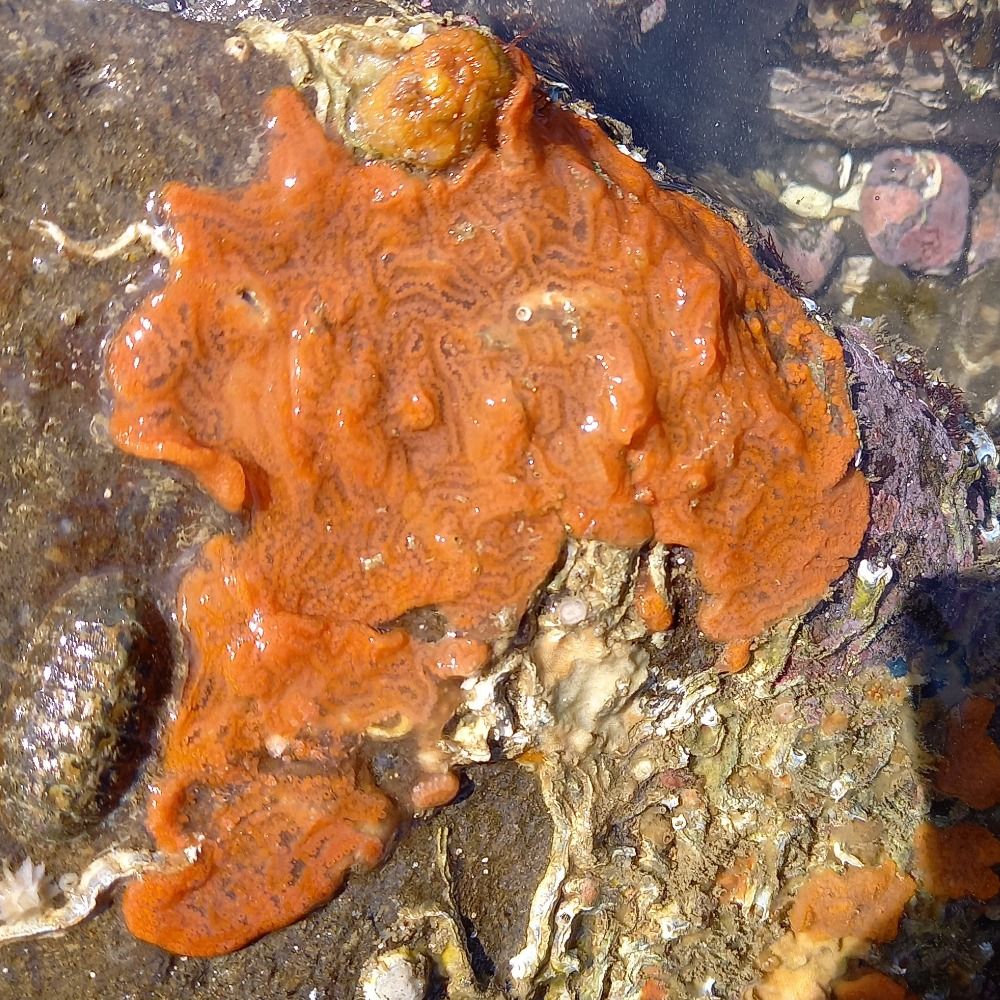
Grebelnyi et al. (2026-02, Paleontological Journal)
The Taxonomic Characters of Coral Polyps and the Position of the Recently Described Ordovician Coral Lindaphylon Rozhnov, 2024 (Cnidaria: Anthozoa: Lindaphylonaceae: Lindaphylonidae)
doi.org/10.1134/S003...
The Taxonomic Characters of Coral Polyps and the Position of the Recently Described Ordovician Coral Lindaphylon Rozhnov, 2024 (Cnidaria: Anthozoa: Lindaphylonaceae: Lindaphylonidae)
doi.org/10.1134/S003...

The Taxonomic Characters of Coral Polyps and the Position of the Recently Described Ordovician Coral Lindaphylon Rozhnov, 2024 (Cnidaria: Anthozoa: Lindaphylonaceae: Lindaphylonidae) - Paleontological...
Abstract Taxonomic characters used for classification of coral polyps are reviewed and summarized. When distinguishing large taxonomic groups within Anthozoa, the following characters were proposed at...
doi.org
February 3, 2026 at 4:51 AM
Grebelnyi et al. (2026-02, Paleontological Journal)
The Taxonomic Characters of Coral Polyps and the Position of the Recently Described Ordovician Coral Lindaphylon Rozhnov, 2024 (Cnidaria: Anthozoa: Lindaphylonaceae: Lindaphylonidae)
doi.org/10.1134/S003...
The Taxonomic Characters of Coral Polyps and the Position of the Recently Described Ordovician Coral Lindaphylon Rozhnov, 2024 (Cnidaria: Anthozoa: Lindaphylonaceae: Lindaphylonidae)
doi.org/10.1134/S003...
Reposted by Sergio González Mora
Madison et al. (2026-02, Paleontological Journal)
「系統学的観点からみた腕足動物の軸構成とボディプランの問題」
The Problem of Axial Organization and Body Plan of Brachiopods in Phylogeny
doi.org/10.1134/S003...
出版されました!
Now published!
「系統学的観点からみた腕足動物の軸構成とボディプランの問題」
The Problem of Axial Organization and Body Plan of Brachiopods in Phylogeny
doi.org/10.1134/S003...
出版されました!
Now published!

The Problem of Axial Organization and Body Plan of Brachiopods in Phylogeny - Paleontological Journal
Abstract Brachiopods are a phylum of bilaterally symmetrical animals whose direct ancestors are unknown in the fossil record. As a result, the origin of their body plan can only be reconstructed based...
doi.org
February 3, 2026 at 5:03 AM
Madison et al. (2026-02, Paleontological Journal)
「系統学的観点からみた腕足動物の軸構成とボディプランの問題」
The Problem of Axial Organization and Body Plan of Brachiopods in Phylogeny
doi.org/10.1134/S003...
出版されました!
Now published!
「系統学的観点からみた腕足動物の軸構成とボディプランの問題」
The Problem of Axial Organization and Body Plan of Brachiopods in Phylogeny
doi.org/10.1134/S003...
出版されました!
Now published!
Vesicular microfossils on middle Cambrian shells: insights into early substrate colonization in North Greenland (Laurentia) | Palaeontology onlinelibrary.wiley.com/doi/10.1111/...

Vesicular microfossils on middle Cambrian shells: insights into early substrate colonization in North Greenland (Laurentia)
Biomineralization around the Ediacaran–Cambrian boundary enabled new ecological strategies, including encrustation, boring and cavity-dwelling, across various lineages. Here we describe problematic v...
onlinelibrary.wiley.com
February 3, 2026 at 6:32 PM
Vesicular microfossils on middle Cambrian shells: insights into early substrate colonization in North Greenland (Laurentia) | Palaeontology onlinelibrary.wiley.com/doi/10.1111/...
Stability and precision in chronostratigraphic definition: The Global Stratotype Section and Point (GSSP) is the solution [Palaeogeography, Palaeoclimatology, Palaeoecology, volume 685, 113515]: Reply (Cementing the Golden Spike) | Palaeo 3 www.sciencedirect.com/science/arti...

Stability and precision in chronostratigraphic definition: The Global Stratotype Section and Point (GSSP) is the solution [Palaeogeography, Palaeoclimatology, Palaeoecology, volume 685, 113515]: Reply...
A comment on our original paper (Davydov and Lucas, 2026) provided two examples (Devonian/Carboniferous and Permian/Triassic boundaries) to support th…
www.sciencedirect.com
February 3, 2026 at 6:26 PM
Stability and precision in chronostratigraphic definition: The Global Stratotype Section and Point (GSSP) is the solution [Palaeogeography, Palaeoclimatology, Palaeoecology, volume 685, 113515]: Reply (Cementing the Golden Spike) | Palaeo 3 www.sciencedirect.com/science/arti...
Early Permian terrestrial apex predator regurgitalite indicates opportunistic feeding behaviour | Scientific Reports www.nature.com/articles/s41...

Early Permian terrestrial apex predator regurgitalite indicates opportunistic feeding behaviour - Scientific Reports
Scientific Reports - Early Permian terrestrial apex predator regurgitalite indicates opportunistic feeding behaviour
www.nature.com
February 3, 2026 at 6:24 PM
Early Permian terrestrial apex predator regurgitalite indicates opportunistic feeding behaviour | Scientific Reports www.nature.com/articles/s41...
Reposted by Sergio González Mora
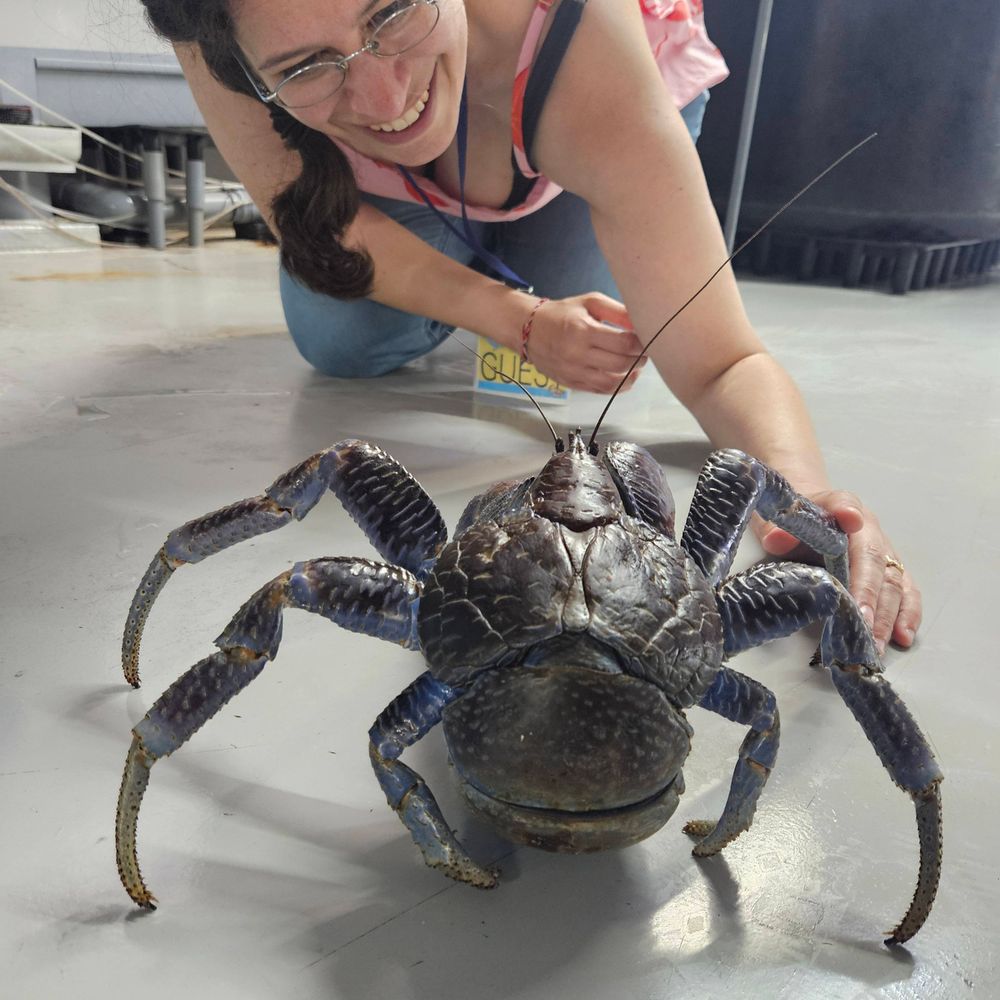
Do you ever wonder about trilobite appendages?
Literally everything ever known has now been reviewed by Sarah Losso @thomashegna.bsky.social @invertebratepal.bsky.social 🧪⚒️🦑
osf.io/preprints/pa...
Literally everything ever known has now been reviewed by Sarah Losso @thomashegna.bsky.social @invertebratepal.bsky.social 🧪⚒️🦑
osf.io/preprints/pa...

February 2, 2026 at 4:15 PM
Do you ever wonder about trilobite appendages?
Literally everything ever known has now been reviewed by Sarah Losso @thomashegna.bsky.social @invertebratepal.bsky.social 🧪⚒️🦑
osf.io/preprints/pa...
Literally everything ever known has now been reviewed by Sarah Losso @thomashegna.bsky.social @invertebratepal.bsky.social 🧪⚒️🦑
osf.io/preprints/pa...
Reposted by Sergio González Mora

Excited to present the flounder effect - how our biases in sampling and worker effort impact our view of organisms.
A long term collaboration with @fossilsndcoffee.bsky.social, @bigfacecats.bsky.social, Jon Hendricks, and Curtis Congreve!
#FossilFriday ⚒️🧪
www.nature.com/articles/s44...
A long term collaboration with @fossilsndcoffee.bsky.social, @bigfacecats.bsky.social, Jon Hendricks, and Curtis Congreve!
#FossilFriday ⚒️🧪
www.nature.com/articles/s44...

The flounder effect: disparities in taxonomic and ecological study intensity across extant and fossil marine organisms hamper conservation - npj Biodiversity
npj Biodiversity - The flounder effect: disparities in taxonomic and ecological study intensity across extant and fossil marine organisms hamper conservation
www.nature.com
February 1, 2026 at 2:28 PM
Excited to present the flounder effect - how our biases in sampling and worker effort impact our view of organisms.
A long term collaboration with @fossilsndcoffee.bsky.social, @bigfacecats.bsky.social, Jon Hendricks, and Curtis Congreve!
#FossilFriday ⚒️🧪
www.nature.com/articles/s44...
A long term collaboration with @fossilsndcoffee.bsky.social, @bigfacecats.bsky.social, Jon Hendricks, and Curtis Congreve!
#FossilFriday ⚒️🧪
www.nature.com/articles/s44...
Reposted by Sergio González Mora
#FossilFriday Eocene bryozoan Biselenaria offa first described by J.W. Gregory (1864–1932). Gregory was a geologist and explorer who published on the African Rift Valley and came close to being the leader of the tragic Terra Nova expedition to Antarctic in which Robert Falcon Scott and others died.


January 30, 2026 at 8:11 AM
#FossilFriday Eocene bryozoan Biselenaria offa first described by J.W. Gregory (1864–1932). Gregory was a geologist and explorer who published on the African Rift Valley and came close to being the leader of the tragic Terra Nova expedition to Antarctic in which Robert Falcon Scott and others died.
Reposted by Sergio González Mora
I'm glad to share our new study on the nature of distributions of gaps in empirical geochronologies of geological section as a function of time scale. Measurements of proxies are highly uneven if measured through time.
1/5
www.nature.com/articles/s43...
🧪 #Geology ⚒️ #Paleobio #EvoBio
1/5
www.nature.com/articles/s43...
🧪 #Geology ⚒️ #Paleobio #EvoBio

January 29, 2026 at 10:02 PM
I'm glad to share our new study on the nature of distributions of gaps in empirical geochronologies of geological section as a function of time scale. Measurements of proxies are highly uneven if measured through time.
1/5
www.nature.com/articles/s43...
🧪 #Geology ⚒️ #Paleobio #EvoBio
1/5
www.nature.com/articles/s43...
🧪 #Geology ⚒️ #Paleobio #EvoBio
Reposted by Sergio González Mora
Recently described "cookie" star Plinthaster australis from the #coralseafrontiers expedition! Originally known only from New Caledonia!


January 29, 2026 at 10:25 AM
Recently described "cookie" star Plinthaster australis from the #coralseafrontiers expedition! Originally known only from New Caledonia!
Reposted by Sergio González Mora

The first book for children to mention #MaryAnning was probably Maria Hack's 1832 Geological Sketches, during Mary's lifetime. She's popular today: in the last 10 years alone there have been over 40 books about her for young readers and she's featured in over 40 other children's books in that time.


January 28, 2026 at 12:47 PM
The first book for children to mention #MaryAnning was probably Maria Hack's 1832 Geological Sketches, during Mary's lifetime. She's popular today: in the last 10 years alone there have been over 40 books about her for young readers and she's featured in over 40 other children's books in that time.
Reposted by Sergio González Mora
Big 🙏 to Tricia Kelley of UNCW for her review of my & @nilese.bsky.social 's @columbiaup.bsky.social 📕 book "Macroevolutionaries" in @ncse.bsky.social reports: ncse.ngo/review-macro... #macroevolution #paleontology #palaeontology #punctuatedequilibria #stephenjaygould

[Review] Macroevolutionaries: Reflections on Natural History, Paleontology, and Stephen Jay Gould | National Center for Science Education
ncse.ngo
January 29, 2026 at 7:06 PM
Big 🙏 to Tricia Kelley of UNCW for her review of my & @nilese.bsky.social 's @columbiaup.bsky.social 📕 book "Macroevolutionaries" in @ncse.bsky.social reports: ncse.ngo/review-macro... #macroevolution #paleontology #palaeontology #punctuatedequilibria #stephenjaygould