


Hannah Moots
@mootspoints.bsky.social
Archaeology and Ancient DNA 🧬
Mobility in the Iron Age and Roman Mediterranean 🏺
Human-Environment Interactions 🌱
Researcher @cpgsthlm.bsky.social
https://mootspoints.blogspot.com/
Mobility in the Iron Age and Roman Mediterranean 🏺
Human-Environment Interactions 🌱
Researcher @cpgsthlm.bsky.social
https://mootspoints.blogspot.com/
Pinned
Hannah Moots
@mootspoints.bsky.social
· Nov 18
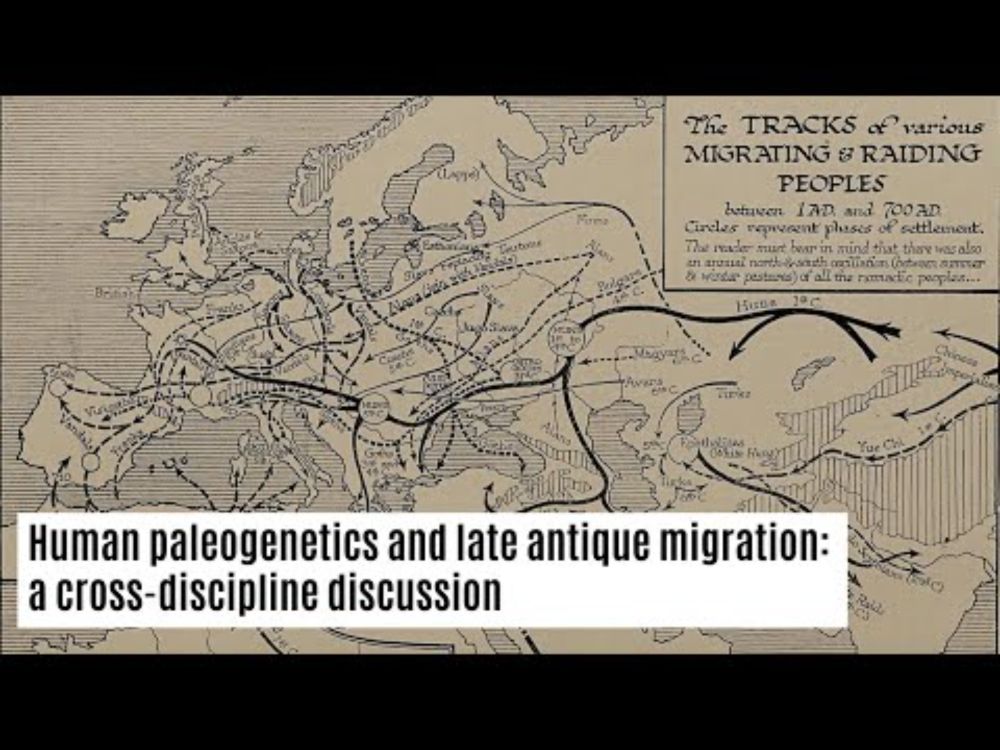
Human paleogenetics and late antique migration: a cross-discipline discussion
YouTube video by Medievalists
youtu.be
Excited to share that our cross-disciplinary conversation on ancient DNA and mobility is now published in Studies in Late Antiquity doi.org/10.1525/sla.... - and also out as an episode of the Byzantium & Friends podcast youtu.be/PdNeL6ika-k?... 🏺🧬
Reposted by Hannah Moots

Aerial lidar, which can map large areas even beneath dense vegetation, is often celebrated as a revolutionary archaeological tool.
But a new article in American Antiquity argues remote-sensing technologies like lidar can also function as tools of extractivism and colonialism. 🧵1/6
But a new article in American Antiquity argues remote-sensing technologies like lidar can also function as tools of extractivism and colonialism. 🧵1/6
February 18, 2026 at 2:46 PM
Aerial lidar, which can map large areas even beneath dense vegetation, is often celebrated as a revolutionary archaeological tool.
But a new article in American Antiquity argues remote-sensing technologies like lidar can also function as tools of extractivism and colonialism. 🧵1/6
But a new article in American Antiquity argues remote-sensing technologies like lidar can also function as tools of extractivism and colonialism. 🧵1/6
Reposted by Hannah Moots
Fascinating “whole town” approach to medieval Cambridge with amazing isotopes by @alicekensa.bsky.social! Charting diet & social status from the 10th-16th century! 🧪⚛️🏰 #MedievalSky

My first proper first-author paper has been published in Antiquity! The article is fully open access, so it’s free for anyone to read and share. The research came out of my PhD and uses a “whole-town” isotopic analysis approach to explore diet in Medieval Cambridge🏺 1/4
tinyurl.com/mu8a38zb
tinyurl.com/mu8a38zb

Detecting social differences in diet in medieval towns: isotopic evidence from Cambridge, England, c. AD 940–1538 | Antiquity | Cambridge Core
Detecting social differences in diet in medieval towns: isotopic evidence from Cambridge, England, c. AD 940–1538
www.cambridge.org
February 18, 2026 at 2:50 PM
Fascinating “whole town” approach to medieval Cambridge with amazing isotopes by @alicekensa.bsky.social! Charting diet & social status from the 10th-16th century! 🧪⚛️🏰 #MedievalSky
Reposted by Hannah Moots

Civil rights icon and two-time presidential candidate Jesse Jackson has died. His work and activism "contributed to making this country more democratic, more inclusive, more fair," says Howard University professor Clarence Lusane.
https://www.democracynow.org/2026/2/17/remembering_jesse_jackson
https://www.democracynow.org/2026/2/17/remembering_jesse_jackson
February 17, 2026 at 6:52 PM
Civil rights icon and two-time presidential candidate Jesse Jackson has died. His work and activism "contributed to making this country more democratic, more inclusive, more fair," says Howard University professor Clarence Lusane.
https://www.democracynow.org/2026/2/17/remembering_jesse_jackson
https://www.democracynow.org/2026/2/17/remembering_jesse_jackson
Reposted by Hannah Moots

Civil rights leader Jesse Jackson has passed away at the age of 84. My thoughts are with his family.
I wanted to share this clip from his appearance on Sesame Street in 1971. His important words ring just as true today as they did back then.
I wanted to share this clip from his appearance on Sesame Street in 1971. His important words ring just as true today as they did back then.
February 17, 2026 at 5:46 PM
Civil rights leader Jesse Jackson has passed away at the age of 84. My thoughts are with his family.
I wanted to share this clip from his appearance on Sesame Street in 1971. His important words ring just as true today as they did back then.
I wanted to share this clip from his appearance on Sesame Street in 1971. His important words ring just as true today as they did back then.
Reposted by Hannah Moots

Are you interested in human DNA from ancient sediments? Do you want to do a PhD in Vienna? We have two open positions in our group! You can learn more and apply here (scroll down to the very bottom, ours are the last two listings): careers.univie.ac.at/en/praedoc/s...
Vienna Doctoral School of Ecology and Evolution
The Vienna Doctoral School of Ecology and Evolution is dedicated to educating students to advance our understanding of the ecology and evolution of extant and ancestral organisms, populations, and communities. In Ecology, the focus is on uncovering the mechanistic and evolutionary drivers of patterns and processes across biological scales, from gene regulation to ecosystem structure and function, including the role of communities in biogeochemical cycles and their adaptive responses to environmental change. In Evolution, we investigate the processes shaping changes in organization and dynamics of organisms, populations, and species at molecular, developmental, morphological, and physiological levels.
careers.univie.ac.at
February 13, 2026 at 9:46 AM
Are you interested in human DNA from ancient sediments? Do you want to do a PhD in Vienna? We have two open positions in our group! You can learn more and apply here (scroll down to the very bottom, ours are the last two listings): careers.univie.ac.at/en/praedoc/s...
Reposted by Hannah Moots

I am seeking a postdoc to join my group at UCLA -- ideally the candidate would have some experience in either population genetics or microbes/microbiome (computational background needed). We have a range of projects and are happy to tailer to your interests. Please dm/email me if interested.
February 12, 2026 at 7:18 PM
I am seeking a postdoc to join my group at UCLA -- ideally the candidate would have some experience in either population genetics or microbes/microbiome (computational background needed). We have a range of projects and are happy to tailer to your interests. Please dm/email me if interested.
Reposted by Hannah Moots
🧬SedaDNA Postdoc position💥 2 years Starts 2026, apply by 1st March.
Join Aleks Pluskowski at Reading & me at NHM. jobs.reading.ac.uk/Job/JobDetai...
Join Aleks Pluskowski at Reading & me at NHM. jobs.reading.ac.uk/Job/JobDetai...
Post-Doctoral Research Fellow in Ancient Environmental DNA:Whiteknights Reading UK
We are seeking a highly motivated Post-Doctoral Research Fellow to join our research team at Reading, focusing on sedimentary DNA (sedaDNA / environmental DNA) from soils and sediments from the project’s case study regions in Spain and North Africa. You will contribute to the reconstruction of past landscapes and human-environment interactions through the analysis of sedimentary DNA. This includes analysing samples from terraces, irrigated fields and archaeological sites, and using eDNA metagenomics and metabarcoding approaches for multi-species detection, with the aim of characterising changing plant and animal species diversity and richness over time. The position will involve fieldwork, laboratory work, data analysis, and collaboration with an interdisciplinary team of archaeologists, palaeoecologists and historians.
jobs.reading.ac.uk
February 11, 2026 at 6:07 PM
🧬SedaDNA Postdoc position💥 2 years Starts 2026, apply by 1st March.
Join Aleks Pluskowski at Reading & me at NHM. jobs.reading.ac.uk/Job/JobDetai...
Join Aleks Pluskowski at Reading & me at NHM. jobs.reading.ac.uk/Job/JobDetai...
Reposted by Hannah Moots

We're excited to be recruiting an NSF funded postdoc to work in the Villanea lab at CU Boulder. We're specifically interested in candidates who want to work at the intersection of population genetics, ancient DNA, and computer modeling. Please RT
jobs.colorado.edu/jobs/JobDeta...
jobs.colorado.edu/jobs/JobDeta...
PostDoctoral Associate
jobs.colorado.edu
February 9, 2026 at 3:12 PM
We're excited to be recruiting an NSF funded postdoc to work in the Villanea lab at CU Boulder. We're specifically interested in candidates who want to work at the intersection of population genetics, ancient DNA, and computer modeling. Please RT
jobs.colorado.edu/jobs/JobDeta...
jobs.colorado.edu/jobs/JobDeta...
Reposted by Hannah Moots
Step into the world of the Etruscans on Society Sunday! Join the AIA Societies Committee for a virtual talk and live Q&A with Dr. Jessica Tilley on how Etruscans moved from “mystery” to the center of modern archaeology.
📅 Feb 22, 2026 I 1pm ET
Register: buff.ly/PU2qOFs
📅 Feb 22, 2026 I 1pm ET
Register: buff.ly/PU2qOFs


February 9, 2026 at 6:03 PM
Step into the world of the Etruscans on Society Sunday! Join the AIA Societies Committee for a virtual talk and live Q&A with Dr. Jessica Tilley on how Etruscans moved from “mystery” to the center of modern archaeology.
📅 Feb 22, 2026 I 1pm ET
Register: buff.ly/PU2qOFs
📅 Feb 22, 2026 I 1pm ET
Register: buff.ly/PU2qOFs
Reposted by Hannah Moots

This paper is a great for teaching phylogenetic trees.
"Ancient DNA reveals elephant birds and kiwi are sister taxa and clarifies ratite bird evolution"
Clearly written. It discusses hypotheses of relatedness among species via continental drift vs genetic data. 🧪
www.science.org/doi/10.1126/...
"Ancient DNA reveals elephant birds and kiwi are sister taxa and clarifies ratite bird evolution"
Clearly written. It discusses hypotheses of relatedness among species via continental drift vs genetic data. 🧪
www.science.org/doi/10.1126/...

January 31, 2026 at 11:16 PM
This paper is a great for teaching phylogenetic trees.
"Ancient DNA reveals elephant birds and kiwi are sister taxa and clarifies ratite bird evolution"
Clearly written. It discusses hypotheses of relatedness among species via continental drift vs genetic data. 🧪
www.science.org/doi/10.1126/...
"Ancient DNA reveals elephant birds and kiwi are sister taxa and clarifies ratite bird evolution"
Clearly written. It discusses hypotheses of relatedness among species via continental drift vs genetic data. 🧪
www.science.org/doi/10.1126/...
Reposted by Hannah Moots
New preprint on bioRxiv: an evaluation of epigenetic age-at-death inference in ancient human DNA, highlighting current limitations and future directions.

Promises and limitations of current ancient human epigenetic clocks https://www.biorxiv.org/content/10.64898/2026.02.04.703756v1
February 6, 2026 at 3:00 PM
New preprint on bioRxiv: an evaluation of epigenetic age-at-death inference in ancient human DNA, highlighting current limitations and future directions.
Reposted by Hannah Moots

Excited and proud 😊 to share the final chapter of @hjorvik.bsky.social 's PhD thesis:
Seven Millennia of Human Exploitation drove genomic Changes in Iberian Sheep
Comments welcome! 🧬🧪🏺🐑
www.biorxiv.org/content/10.6...
🧵(1/8)
Seven Millennia of Human Exploitation drove genomic Changes in Iberian Sheep
Comments welcome! 🧬🧪🏺🐑
www.biorxiv.org/content/10.6...
🧵(1/8)
www.biorxiv.org
February 6, 2026 at 8:56 AM
Excited and proud 😊 to share the final chapter of @hjorvik.bsky.social 's PhD thesis:
Seven Millennia of Human Exploitation drove genomic Changes in Iberian Sheep
Comments welcome! 🧬🧪🏺🐑
www.biorxiv.org/content/10.6...
🧵(1/8)
Seven Millennia of Human Exploitation drove genomic Changes in Iberian Sheep
Comments welcome! 🧬🧪🏺🐑
www.biorxiv.org/content/10.6...
🧵(1/8)
Reposted by Hannah Moots
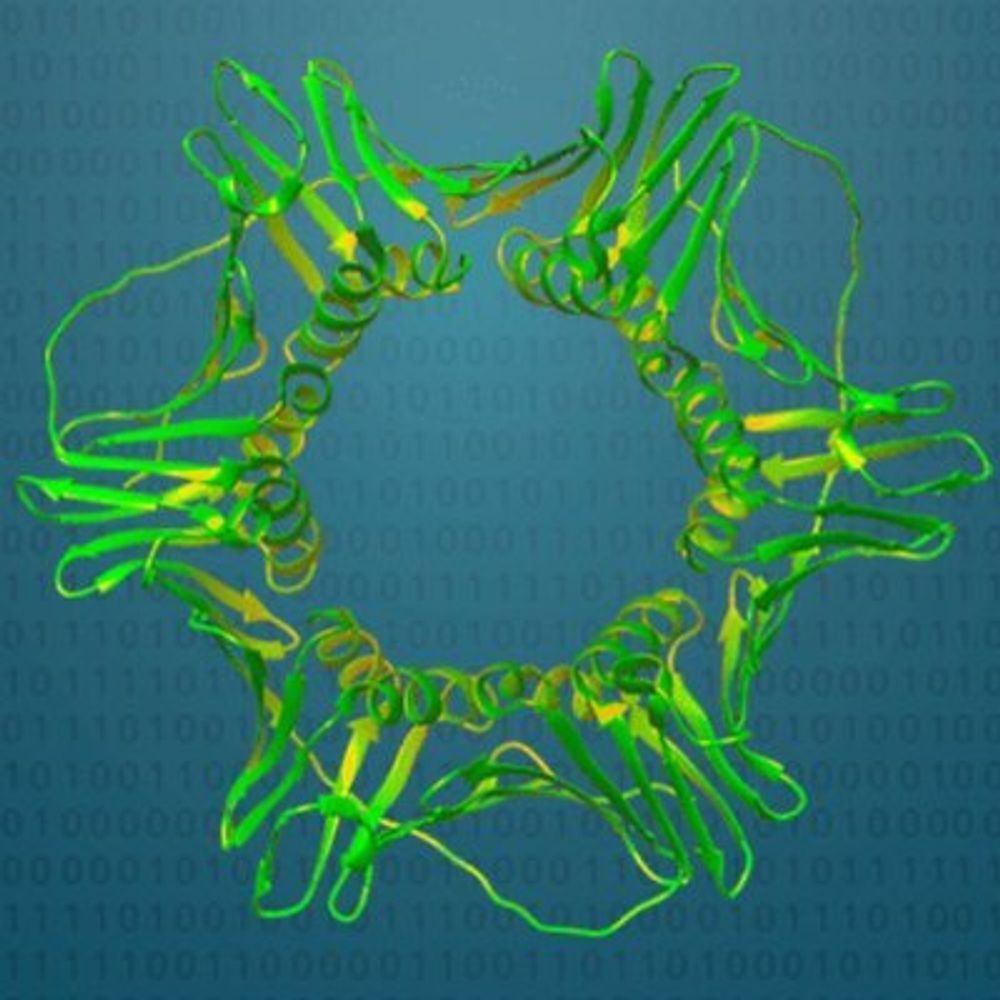
🧬 Now published in Bioinformatics Advances: "pygenstrat: A Python package for EIGENSTRAT data processing" by @dilekopter.bsky.social
Full article available: https://doi.org/10.1093/bioadv/vbag022
Full article available: https://doi.org/10.1093/bioadv/vbag022

February 3, 2026 at 11:05 AM
🧬 Now published in Bioinformatics Advances: "pygenstrat: A Python package for EIGENSTRAT data processing" by @dilekopter.bsky.social
Full article available: https://doi.org/10.1093/bioadv/vbag022
Full article available: https://doi.org/10.1093/bioadv/vbag022
Reposted by Hannah Moots
Job alert! 3 year post doc in my research group at University College London working on Roman Leather via biomolecular archaeology. #ZooMS #stableisotopes
www.jobs.ac.uk/job/DQJ187/r...
www.jobs.ac.uk/job/DQJ187/r...

Research Fellow in Biomolecular Archaeology at UCL
Searching for an academic job? Explore this Research Fellow in Biomolecular Archaeology opening on jobs.ac.uk! Click to view more details and browse other academic jobs.
www.jobs.ac.uk
February 4, 2026 at 8:56 AM
Job alert! 3 year post doc in my research group at University College London working on Roman Leather via biomolecular archaeology. #ZooMS #stableisotopes
www.jobs.ac.uk/job/DQJ187/r...
www.jobs.ac.uk/job/DQJ187/r...
Reposted by Hannah Moots
Today on Ancient Office Hours, Dr. Lindsey Mazurek, an Associate Professor of Classics at Indiana University Bloomington, discusses her interests in Roman provincial archaeology, ancient migration, and the implications of migration on social and political dynamics in ancient civilizations.

February 4, 2026 at 5:13 PM
Today on Ancient Office Hours, Dr. Lindsey Mazurek, an Associate Professor of Classics at Indiana University Bloomington, discusses her interests in Roman provincial archaeology, ancient migration, and the implications of migration on social and political dynamics in ancient civilizations.
Reposted by Hannah Moots

Our new study is out!
We analysed DNA preserved in buried river sediments and Neolithic sites (Serbia), uncovering past landscapes and traces of sturgeon populations. Read more about our findings and the challenges in such complex and dynamic contexts: doi.org/10.1038/s415... @mikkelwp.bsky.social
We analysed DNA preserved in buried river sediments and Neolithic sites (Serbia), uncovering past landscapes and traces of sturgeon populations. Read more about our findings and the challenges in such complex and dynamic contexts: doi.org/10.1038/s415... @mikkelwp.bsky.social

Ancient DNA reconstruction of late holocene ecosystems within the Carpathian basin from paleo-meanders and archaeological deposits - Scientific Reports
The diverse ecology in the Carpathian Basin supported a variety of subsistence strategies throughout the Holocene, ranging from animal husbandry to the management of woodlands, grasslands, and wetland...
doi.org
February 4, 2026 at 9:41 AM
Our new study is out!
We analysed DNA preserved in buried river sediments and Neolithic sites (Serbia), uncovering past landscapes and traces of sturgeon populations. Read more about our findings and the challenges in such complex and dynamic contexts: doi.org/10.1038/s415... @mikkelwp.bsky.social
We analysed DNA preserved in buried river sediments and Neolithic sites (Serbia), uncovering past landscapes and traces of sturgeon populations. Read more about our findings and the challenges in such complex and dynamic contexts: doi.org/10.1038/s415... @mikkelwp.bsky.social
Reposted by Hannah Moots
Interested in using aDNA time-series datasets to estimate selection?
Our study "Assessing Ancient DNA Sampling Strategies for Natural Selection Inference in Humans Using Allele Frequency Time Series Data" is now out in GBE! doi.org/10.1093/gbe/... @genomebiolevol.bsky.social @cegamorim.bsky.social
Our study "Assessing Ancient DNA Sampling Strategies for Natural Selection Inference in Humans Using Allele Frequency Time Series Data" is now out in GBE! doi.org/10.1093/gbe/... @genomebiolevol.bsky.social @cegamorim.bsky.social

Assessing Ancient DNA Sampling Strategies for Natural Selection Inference in Humans Using Allele Frequency Time Series Data
Abstract. The increased availability of genomic data from ancient humans allows estimating the strength of natural selection at a given locus using time se
doi.org
February 3, 2026 at 9:17 AM
Interested in using aDNA time-series datasets to estimate selection?
Our study "Assessing Ancient DNA Sampling Strategies for Natural Selection Inference in Humans Using Allele Frequency Time Series Data" is now out in GBE! doi.org/10.1093/gbe/... @genomebiolevol.bsky.social @cegamorim.bsky.social
Our study "Assessing Ancient DNA Sampling Strategies for Natural Selection Inference in Humans Using Allele Frequency Time Series Data" is now out in GBE! doi.org/10.1093/gbe/... @genomebiolevol.bsky.social @cegamorim.bsky.social
Reposted by Hannah Moots

for, um, almost no reason at all, here is Margaret Talbot's 2018 article on how we got the myth of whiteness in classical statuary, with references to @sarahebond.bsky.social: www.newyorker.com/magazine/201...

The Myth of Whiteness in Classical Sculpture
For centuries, Westerners have been engaged in an act of collective blindness.
www.newyorker.com
February 2, 2026 at 7:05 PM
for, um, almost no reason at all, here is Margaret Talbot's 2018 article on how we got the myth of whiteness in classical statuary, with references to @sarahebond.bsky.social: www.newyorker.com/magazine/201...
Stained glass window at the National Museums of Kenya in Nairobi, where I was lucky enough to attend a conference a few weeks ago #mosaismonday

February 2, 2026 at 1:53 PM
Stained glass window at the National Museums of Kenya in Nairobi, where I was lucky enough to attend a conference a few weeks ago #mosaismonday
Reposted by Hannah Moots

Hundreds of people spelled out the distress signal "SOS" on Bde Maka Ska in Minneapolis on Friday, Jan. 30.
📷️ Provided by Jeff Schad
📷️ Provided by Jeff Schad


January 31, 2026 at 6:10 PM
Hundreds of people spelled out the distress signal "SOS" on Bde Maka Ska in Minneapolis on Friday, Jan. 30.
📷️ Provided by Jeff Schad
📷️ Provided by Jeff Schad
Reposted by Hannah Moots

📣 Work with us! 📣
The McDonald Institute invites applications for the eighth Renfrew Fellowship in archaeology. Named in honour of the Institute's founding Director, Professor Colin Renfrew.
📅 Closing date: 27 February 2026
👉 More info here: www.cam.ac.uk/jobs/renfrew...
The McDonald Institute invites applications for the eighth Renfrew Fellowship in archaeology. Named in honour of the Institute's founding Director, Professor Colin Renfrew.
📅 Closing date: 27 February 2026
👉 More info here: www.cam.ac.uk/jobs/renfrew...
Renfrew Fellow (Fixed Term)
Fixed-term: The funds for this post are available for 3 years in the first instance. The McDonald Institute invites applications for the eighth Renfrew Fellowship in archaeology. Named in honour of
www.cam.ac.uk
January 29, 2026 at 1:26 PM
📣 Work with us! 📣
The McDonald Institute invites applications for the eighth Renfrew Fellowship in archaeology. Named in honour of the Institute's founding Director, Professor Colin Renfrew.
📅 Closing date: 27 February 2026
👉 More info here: www.cam.ac.uk/jobs/renfrew...
The McDonald Institute invites applications for the eighth Renfrew Fellowship in archaeology. Named in honour of the Institute's founding Director, Professor Colin Renfrew.
📅 Closing date: 27 February 2026
👉 More info here: www.cam.ac.uk/jobs/renfrew...
Reposted by Hannah Moots
We are looking for an enthusiast and motivated postdoc to join the Paleogenomics and Evolutionary Biology group at @liigh-unam.bsky.social, to lead a project working with human pre-hispanic samples. Interested candidates send a CV and letter of intent to fsanchez@liigh.unam.mx. Please #RT
January 27, 2026 at 10:55 PM
We are looking for an enthusiast and motivated postdoc to join the Paleogenomics and Evolutionary Biology group at @liigh-unam.bsky.social, to lead a project working with human pre-hispanic samples. Interested candidates send a CV and letter of intent to fsanchez@liigh.unam.mx. Please #RT


Reposted by Hannah Moots

Researchers in #ScienceAdvances have found the earliest known elephant bone tool in Europe, dating back to 480,000 years ago. https://scim.ag/49Q4brc

The earliest elephant-bone tool from Europe: An unexpected raw material for precision knapping of Acheulean handaxes
Europe’s earliest elephant-bone tool sheds light on 500,000-year-old human innovation and cognitive abilities.
scim.ag
January 23, 2026 at 7:22 PM
Researchers in #ScienceAdvances have found the earliest known elephant bone tool in Europe, dating back to 480,000 years ago. https://scim.ag/49Q4brc
Reposted by Hannah Moots

Check out the latest #digitalreview in @saa-aap.bsky.social of @cambup-archaeology.cambridge.org that considers how archaeologists can best engage online, especially with short-form video: doi.org/10.1017/aap....
The Public, the Attention Economy, and Archaeological Social Media | Advances in Archaeological Practice | Cambridge Core
The Public, the Attention Economy, and Archaeological Social Media
doi.org
January 21, 2026 at 12:22 AM
Check out the latest #digitalreview in @saa-aap.bsky.social of @cambup-archaeology.cambridge.org that considers how archaeologists can best engage online, especially with short-form video: doi.org/10.1017/aap....