


Simon Michaeli
@michaelilab.bsky.social
Plant and cell biologist. Interested in 🔬 organelles, membrane trafficking, autophagy, 🌿🍂 senescence, 🍑 ripening, learning, teaching and much more 🪐
https://www.michaelilab.com/
https://www.michaelilab.com/
Pinned
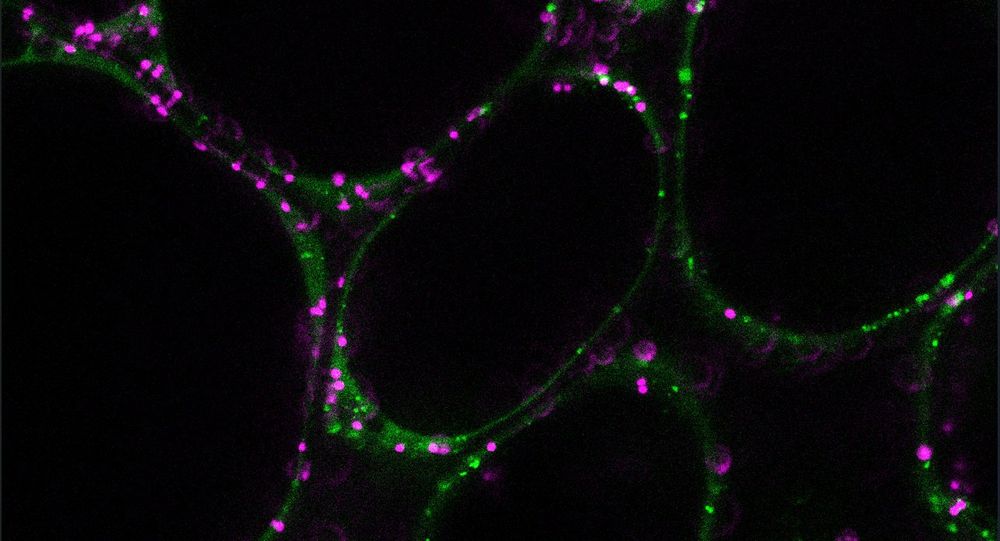
📢 It's online (and open access) @newphyt.bsky.social
🍅
nph.onlinelibrary.wiley.com/doi/full/10....
"Autophagy restricts tomato fruit ripening via a general role in ethylene repression"
& why timing is everything...
Let's dig into it 👇
#plantscience
#autophagy
@volcaniinstitute.bsky.social
🍅
nph.onlinelibrary.wiley.com/doi/full/10....
"Autophagy restricts tomato fruit ripening via a general role in ethylene repression"
& why timing is everything...
Let's dig into it 👇
#plantscience
#autophagy
@volcaniinstitute.bsky.social
Reposted by Simon Michaeli

Long in the making, but happy to present the Chlamydomonas chlororibosome!
Cryo-ET🔬reveals a large new domain on the small subunit, built from multiple extensions in conserved ribosomal proteins.
bioRxiv 📖: shorturl.at/q44tG
This suggests greater chlororibosome diversity than expected!
1/n 🧵
Cryo-ET🔬reveals a large new domain on the small subunit, built from multiple extensions in conserved ribosomal proteins.
bioRxiv 📖: shorturl.at/q44tG
This suggests greater chlororibosome diversity than expected!
1/n 🧵
February 10, 2026 at 8:35 AM
Long in the making, but happy to present the Chlamydomonas chlororibosome!
Cryo-ET🔬reveals a large new domain on the small subunit, built from multiple extensions in conserved ribosomal proteins.
bioRxiv 📖: shorturl.at/q44tG
This suggests greater chlororibosome diversity than expected!
1/n 🧵
Cryo-ET🔬reveals a large new domain on the small subunit, built from multiple extensions in conserved ribosomal proteins.
bioRxiv 📖: shorturl.at/q44tG
This suggests greater chlororibosome diversity than expected!
1/n 🧵
Reposted by Simon Michaeli
#transgenerational transmission of a core #microbiome that protects against downy mildew from soil to #phyllosphere
Fantastic and important study by @jellespooren.bsky.social @rlberendsen.bsky.social
@cornepieterse.bsky.social
academic.oup.com/ismej/advanc...
#plantscience
Fantastic and important study by @jellespooren.bsky.social @rlberendsen.bsky.social
@cornepieterse.bsky.social
academic.oup.com/ismej/advanc...
#plantscience

February 14, 2026 at 5:32 PM
#transgenerational transmission of a core #microbiome that protects against downy mildew from soil to #phyllosphere
Fantastic and important study by @jellespooren.bsky.social @rlberendsen.bsky.social
@cornepieterse.bsky.social
academic.oup.com/ismej/advanc...
#plantscience
Fantastic and important study by @jellespooren.bsky.social @rlberendsen.bsky.social
@cornepieterse.bsky.social
academic.oup.com/ismej/advanc...
#plantscience
Reposted by Simon Michaeli

New review from P Genschik’s team in
@jxbotany.bsky.social 🧬 A fresh look at the huge diversity and functions of plant F-box proteins.
👉 Open questions & new perspectives for 🌱 biology.
▶️https://academic.oup.com/jxb/advance-article-abstract/doi/10.1093/jxb/erag074/8475508?redirectedFrom=fulltext
@jxbotany.bsky.social 🧬 A fresh look at the huge diversity and functions of plant F-box proteins.
👉 Open questions & new perspectives for 🌱 biology.
▶️https://academic.oup.com/jxb/advance-article-abstract/doi/10.1093/jxb/erag074/8475508?redirectedFrom=fulltext

February 14, 2026 at 6:16 PM
New review from P Genschik’s team in
@jxbotany.bsky.social 🧬 A fresh look at the huge diversity and functions of plant F-box proteins.
👉 Open questions & new perspectives for 🌱 biology.
▶️https://academic.oup.com/jxb/advance-article-abstract/doi/10.1093/jxb/erag074/8475508?redirectedFrom=fulltext
@jxbotany.bsky.social 🧬 A fresh look at the huge diversity and functions of plant F-box proteins.
👉 Open questions & new perspectives for 🌱 biology.
▶️https://academic.oup.com/jxb/advance-article-abstract/doi/10.1093/jxb/erag074/8475508?redirectedFrom=fulltext
Reposted by Simon Michaeli

"The most uncomfortable part for me is that I no longer think that scientific research will resolve the crises that we face."
"I keep doing research not because I think it will save us, but because it would be a form of surrender to stop seeking understanding."
"I keep doing research not because I think it will save us, but because it would be a form of surrender to stop seeking understanding."

Why do I continue to conduct research when it seems to me that it is likely to decline in the coming decades and therefore will not enable us to resolve the major crisis of the Anthropocene?
rdcu.be/e15sq
rdcu.be/e15sq

February 14, 2026 at 12:18 AM
"The most uncomfortable part for me is that I no longer think that scientific research will resolve the crises that we face."
"I keep doing research not because I think it will save us, but because it would be a form of surrender to stop seeking understanding."
"I keep doing research not because I think it will save us, but because it would be a form of surrender to stop seeking understanding."
Reposted by Simon Michaeli
Beautiful #preprint on a novel regulator of plant #autophagy from the @cnaumann123.bsky.social lab. How do plants regulate #autophagosome size??? ER-PM contact sites and Can1 seem to be key! www.biorxiv.org/content/10.6...
www.biorxiv.org
February 14, 2026 at 10:23 AM
Beautiful #preprint on a novel regulator of plant #autophagy from the @cnaumann123.bsky.social lab. How do plants regulate #autophagosome size??? ER-PM contact sites and Can1 seem to be key! www.biorxiv.org/content/10.6...
Our own Dorothy Matiki presented her research (on autophagy in 🍅 ripening) impressively and earned her M.Sc. title! 🎉🍾
Soon Dorothy will meet the @weizmanninstitute.bsky.social Doctoral studies committee to (hopefully) approve her joining the lab of Prof. Michal Sharon.
All the best Dorothy!
Soon Dorothy will meet the @weizmanninstitute.bsky.social Doctoral studies committee to (hopefully) approve her joining the lab of Prof. Michal Sharon.
All the best Dorothy!

February 14, 2026 at 10:14 AM
Our own Dorothy Matiki presented her research (on autophagy in 🍅 ripening) impressively and earned her M.Sc. title! 🎉🍾
Soon Dorothy will meet the @weizmanninstitute.bsky.social Doctoral studies committee to (hopefully) approve her joining the lab of Prof. Michal Sharon.
All the best Dorothy!
Soon Dorothy will meet the @weizmanninstitute.bsky.social Doctoral studies committee to (hopefully) approve her joining the lab of Prof. Michal Sharon.
All the best Dorothy!
Reposted by Simon Michaeli
In @science.org this week, thermospermine affects ribosome methylation, which in turn regulates translation of xylem development proteins www.science.org/doi/10.1126/...
#plantscience
#plantscience

Recruitment of bifunctional regulator thermospermine to methylated ribosomes directs xylem fate
Polyamines are often associated with ribosomes and are thought to stabilize their integrity. In Arabidopsis, the polyamine thermospermine (tSpm) affects xylem cell fate. tSpm induces translation of SU...
www.science.org
February 13, 2026 at 9:43 AM
In @science.org this week, thermospermine affects ribosome methylation, which in turn regulates translation of xylem development proteins www.science.org/doi/10.1126/...
#plantscience
#plantscience
Reposted by Simon Michaeli

Apusomonad rhodopsins: A new family of ultraviolet to blue light–absorbing rhodopsin channels www.pnas.org/doi/full/10....

Apusomonad rhodopsins: A new family of ultraviolet to blue light–absorbing rhodopsin channels | PNAS
Apusomonads are sediment-dwelling bacterivorous protists that are sister to all Opisthokonta.
They have been found to show a negative phototactic r...
www.pnas.org
February 11, 2026 at 9:33 AM
Apusomonad rhodopsins: A new family of ultraviolet to blue light–absorbing rhodopsin channels www.pnas.org/doi/full/10....


Reposted by Simon Michaeli
New year, new preprint! 🎊
We are excited to share our recent work on #E3 ligase regulation in #metabolism!
www.biorxiv.org/content/10.6...
#ubiquitin #targetedproteindegradation #chemicalbiology
1/6
We are excited to share our recent work on #E3 ligase regulation in #metabolism!
www.biorxiv.org/content/10.6...
#ubiquitin #targetedproteindegradation #chemicalbiology
1/6
A CK2-FBXW11 kinase-E3 ubiquitin ligase cascade is a metabolic sensor regulating Tryptophan 2,3-dioxygenase stability
Small molecules toggling the ubiquitin-proteasome system (UPS) are powerful regulators of protein degradation. Yet, mechanistic knowledge of how endogenous ligands gate UPS decisions remains rudimentary. Here, we define control of UPS access to Tryptophan-2,3-dioxygenase (TDO2), which converts the essential amino acid tryptophan (Trp) to N-formylkynurenine. When Trp concentrations are limiting, TDO2 is degraded to avert tryptophanemia. Using CRISPRi screening and biochemistry, we identify a CK2-FBXW11 kinase-E3 ligase cascade that generates and recognizes tandem TDO2 phosphodegrons when not protected by Trp. Trp binding to an exosite safeguards TDO2 from phosphorylation-dependent ubiquitylation. Effects of Trp analogs on CK2-FBXW11-dependent ubiquitylation indicated that the indole, amino, and carboxylate groups are necessary for substrate shielding. Cryo-EM reveals how these moieties order a region proximal to the phosphodegrons; without Trp, this segment is flexible, enabling phosphorylation-coupled ubiquitylation. Overall, our data uncovered an endogenous small molecule allosterically stabilizing its own metabolizing enzyme through protection from a phosphorylation-ubiquitylation cascade. ### Competing Interest Statement B.A.S. is a member of the scientific advisory boards of Proxygen and Lyterian. The other authors declare no competing interests. Max Planck Society, https://ror.org/01hhn8329 European Union, ERC AdvG, UPSmeetMet, 101098161 to BAS Boehringer Ingelheim Fonds, https://ror.org/00dkye506
www.biorxiv.org
January 13, 2026 at 1:49 PM
New year, new preprint! 🎊
We are excited to share our recent work on #E3 ligase regulation in #metabolism!
www.biorxiv.org/content/10.6...
#ubiquitin #targetedproteindegradation #chemicalbiology
1/6
We are excited to share our recent work on #E3 ligase regulation in #metabolism!
www.biorxiv.org/content/10.6...
#ubiquitin #targetedproteindegradation #chemicalbiology
1/6
Reposted by Simon Michaeli
Dear @dfg.de So, I will spend months writing a grant and you will let people judge it with AI tools that are trained on predatory journals like Frontiers, MDPI or alike that are practically not peer-reviewed??? Is this how you will select cutting edge science??? #idiocracy

a black background with the word idiocracy written in white letters .
ALT: a black background with the word idiocracy written in white letters .
media.tenor.com
January 8, 2026 at 3:30 PM
Dear @dfg.de So, I will spend months writing a grant and you will let people judge it with AI tools that are trained on predatory journals like Frontiers, MDPI or alike that are practically not peer-reviewed??? Is this how you will select cutting edge science??? #idiocracy
Reposted by Simon Michaeli
🌸 Flowering Newsletter Review 🌸
López-Gómez et al. review the role of protein–protein interactions in flower and fruit development and discuss the latest techniques to study them.
🔗 doi.org/10.1093/jxb/...
#PlantScience 🧪 @defolter-lab.bsky.social
López-Gómez et al. review the role of protein–protein interactions in flower and fruit development and discuss the latest techniques to study them.
🔗 doi.org/10.1093/jxb/...
#PlantScience 🧪 @defolter-lab.bsky.social

December 9, 2025 at 1:23 PM
🌸 Flowering Newsletter Review 🌸
López-Gómez et al. review the role of protein–protein interactions in flower and fruit development and discuss the latest techniques to study them.
🔗 doi.org/10.1093/jxb/...
#PlantScience 🧪 @defolter-lab.bsky.social
López-Gómez et al. review the role of protein–protein interactions in flower and fruit development and discuss the latest techniques to study them.
🔗 doi.org/10.1093/jxb/...
#PlantScience 🧪 @defolter-lab.bsky.social
Reposted by Simon Michaeli

Why are so many plant viruses phloem-restricted? New work from Xueping Zhou’s lab reveals how this tissue tropism is determined in a geminivirus — and why phloem confinement can turn out to be an evolutionary advantage! www.nature.com/articles/s41... 🌱🦠🚷🅿️🛫🌱
Defence-mediated phloem restriction of a plant virus facilitates insect transmission - Nature Communications
How plant viruses are restricted to the phloem are long-standing questions in plant virology. The paper shows PENETRATION3 activity and callose deposition confine plant viruses to the phloem, which fa...
www.nature.com
December 26, 2025 at 11:39 AM
Why are so many plant viruses phloem-restricted? New work from Xueping Zhou’s lab reveals how this tissue tropism is determined in a geminivirus — and why phloem confinement can turn out to be an evolutionary advantage! www.nature.com/articles/s41... 🌱🦠🚷🅿️🛫🌱
Reposted by Simon Michaeli

Our work now on @jxbotany.bsky.social. Make sure you add some Cas13a fluorescent virus detection to your Christmas lights ✨️
Researchers developed a #CRISPR-based method that's user-friendly, extraction-free, 15 min protocol for on-site #virus #detection using a portable fluorescence viewer and a mobile #phone camera directly from RNA of several crop species, including #tomato, #cucumber, and #rapeseed. 👉 bit.ly/4p6Jo8t

December 24, 2025 at 5:58 PM
Our work now on @jxbotany.bsky.social. Make sure you add some Cas13a fluorescent virus detection to your Christmas lights ✨️
Reposted by Simon Michaeli
Excited to share our latest work to close out 2025: Dynamic ASK1 proximity networks uncover SCF-dependent and noncanonical roles in ABA and drought adaptation🌱 With @justinwwalley.bsky.social , we map how ASK1/SKP1 dynamically rewires protein networks during stress www.biorxiv.org/content/10.6...

Dynamic ASK1 proximity networks uncover SCF-dependent and noncanonical roles in ABA and drought adaptation
Plants rely on rapid proteome remodeling to withstand fluctuating environmental conditions, yet how the ubiquitin system dynamically coordinates these multilayered responses remains unclear. Here we d...
www.biorxiv.org
December 25, 2025 at 8:49 PM
Excited to share our latest work to close out 2025: Dynamic ASK1 proximity networks uncover SCF-dependent and noncanonical roles in ABA and drought adaptation🌱 With @justinwwalley.bsky.social , we map how ASK1/SKP1 dynamically rewires protein networks during stress www.biorxiv.org/content/10.6...
Reposted by Simon Michaeli

Researchers developed a #CRISPR-based method that's user-friendly, extraction-free, 15 min protocol for on-site #virus #detection using a portable fluorescence viewer and a mobile #phone camera directly from RNA of several crop species, including #tomato, #cucumber, and #rapeseed. 👉 bit.ly/4p6Jo8t
December 24, 2025 at 5:47 PM
Researchers developed a #CRISPR-based method that's user-friendly, extraction-free, 15 min protocol for on-site #virus #detection using a portable fluorescence viewer and a mobile #phone camera directly from RNA of several crop species, including #tomato, #cucumber, and #rapeseed. 👉 bit.ly/4p6Jo8t
Reposted by Simon Michaeli
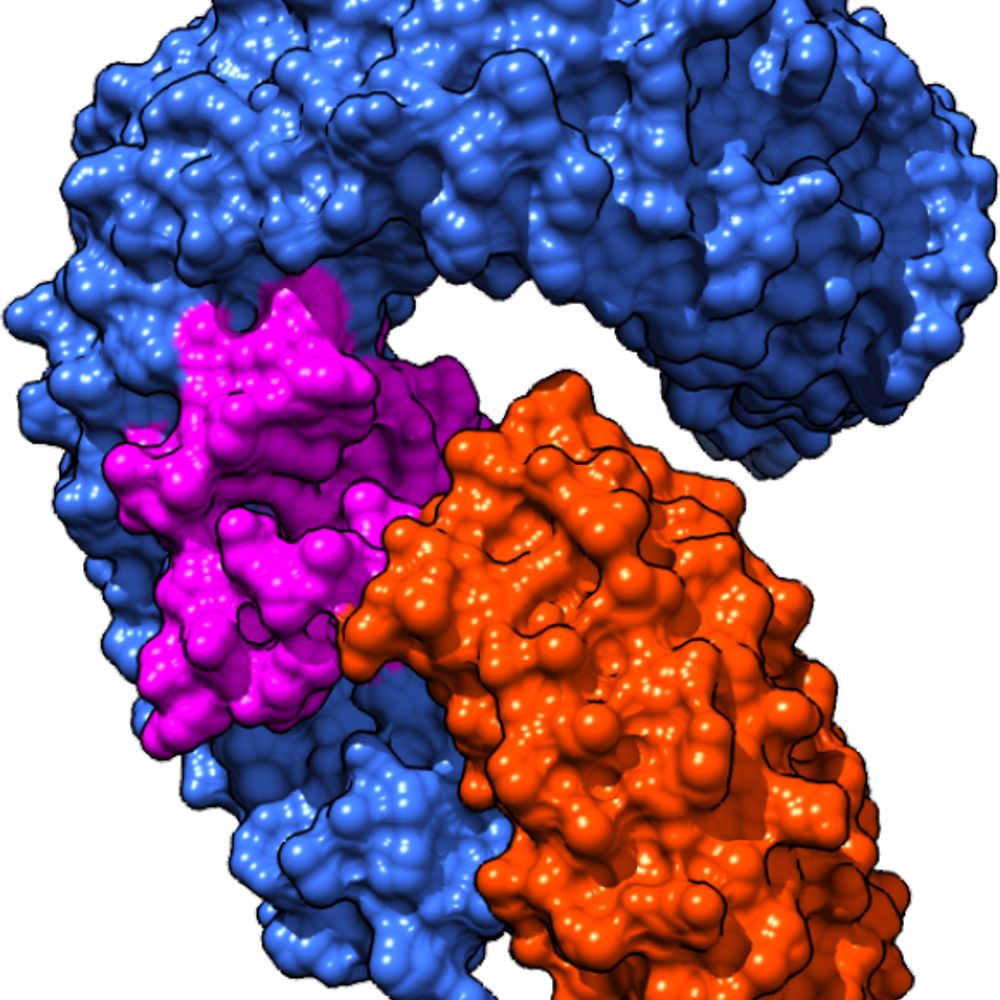
A 1.25 A!!! cryo EM structure of rubisco.
Atomic resolution structure of spinach rubisco reveals protons and dynamics www.biorxiv.org/content/10.64898/2025.12.22.696010v1 #cryoem
December 24, 2025 at 11:15 AM
A 1.25 A!!! cryo EM structure of rubisco.
Reposted by Simon Michaeli
Christmas 🎄 and Hanukkah 🕎 celebration in Hala's (Dr. Khamesa-Israelov) place with all group members. What a treat 🥂🍻🍰


December 18, 2025 at 1:41 PM
Christmas 🎄 and Hanukkah 🕎 celebration in Hala's (Dr. Khamesa-Israelov) place with all group members. What a treat 🥂🍻🍰
Reposted by Simon Michaeli

Excited to share our work about autophagy and raffinose. So proud of Sahar Magen for doing a great job and grateful for all the people who helped bring this work to light.
link.springer.com/article/10.1...
link.springer.com/article/10.1...

Raffinose induces autophagy to promote the growth of Arabidopsis Thaliana - BMC Plant Biology
Background Plant growth depends on the integration of environmental signals and nutrient availability. Under stress conditions, growth is often attenuated to prioritise defense, creating a trade-off b...
link.springer.com
December 18, 2025 at 4:32 PM
Excited to share our work about autophagy and raffinose. So proud of Sahar Magen for doing a great job and grateful for all the people who helped bring this work to light.
link.springer.com/article/10.1...
link.springer.com/article/10.1...
Christmas 🎄 and Hanukkah 🕎 celebration in Hala's (Dr. Khamesa-Israelov) place with all group members. What a treat 🥂🍻🍰
December 18, 2025 at 1:41 PM
Christmas 🎄 and Hanukkah 🕎 celebration in Hala's (Dr. Khamesa-Israelov) place with all group members. What a treat 🥂🍻🍰
Reposted by Simon Michaeli

Organelles do NOT have a single uniform pH.
And if you think they must, because “protons diffuse fast,” this paper is for you.
A thread on why that assumption is wrong; and what we found instead. 🧵 1/n
And if you think they must, because “protons diffuse fast,” this paper is for you.
A thread on why that assumption is wrong; and what we found instead. 🧵 1/n

Organelles harbour pH gradients https://www.biorxiv.org/content/10.64898/2025.12.12.694065v1
December 17, 2025 at 12:46 AM
Organelles do NOT have a single uniform pH.
And if you think they must, because “protons diffuse fast,” this paper is for you.
A thread on why that assumption is wrong; and what we found instead. 🧵 1/n
And if you think they must, because “protons diffuse fast,” this paper is for you.
A thread on why that assumption is wrong; and what we found instead. 🧵 1/n
Reposted by Simon Michaeli

The Clavel Group is recruiting a new postdoc for two possible projects dealing with plant-virus interactions and selective autophagy! More (wordy) details below ⬇️🌱🦠

December 16, 2025 at 5:15 PM
The Clavel Group is recruiting a new postdoc for two possible projects dealing with plant-virus interactions and selective autophagy! More (wordy) details below ⬇️🌱🦠
Reposted by Simon Michaeli
When the localization of a protein you thought you know well still manages to surprise you... 😯🤔☘️
#fluorescenceFriday by postdoctoral fellow Dr. Hala Khamesa-Israelov @volcaniinstitute.bsky.social
#fluorescenceFriday by postdoctoral fellow Dr. Hala Khamesa-Israelov @volcaniinstitute.bsky.social

December 12, 2025 at 10:19 AM
When the localization of a protein you thought you know well still manages to surprise you... 😯🤔☘️
#fluorescenceFriday by postdoctoral fellow Dr. Hala Khamesa-Israelov @volcaniinstitute.bsky.social
#fluorescenceFriday by postdoctoral fellow Dr. Hala Khamesa-Israelov @volcaniinstitute.bsky.social
Reposted by Simon Michaeli

Blue light decreases ER Ca²⁺ in stomatal guard cells, with refilling in the dark. Our new @newphyt.bsky.social study shows how ER Ca²⁺ shapes cytosolic Ca²⁺ dynamics
doi.org/10.1111/nph....
doi.org/10.1111/nph....
December 13, 2025 at 7:27 AM
Blue light decreases ER Ca²⁺ in stomatal guard cells, with refilling in the dark. Our new @newphyt.bsky.social study shows how ER Ca²⁺ shapes cytosolic Ca²⁺ dynamics
doi.org/10.1111/nph....
doi.org/10.1111/nph....
