



Chloé Lahondère
@lahonderelab.bsky.social
Associate Professor at Virginia Tech - disease vector insects eco-physio, thermal bio and neuroetho lab -#DEI - she/elle - #MomInScience
Reposted by Chloé Lahondère

Throughout the year, our community has been sharing stories with us about how The Company of Biologists has supported you over time. Your stories were heartfelt, and we feel grateful and humbled that we have been able to be part of your journeys. bit.ly/4q7C0Ki

January 29, 2026 at 3:28 PM
Throughout the year, our community has been sharing stories with us about how The Company of Biologists has supported you over time. Your stories were heartfelt, and we feel grateful and humbled that we have been able to be part of your journeys. bit.ly/4q7C0Ki
Reposted by Chloé Lahondère
Check out this new preprint from the lab: www.biorxiv.org/content/10.6...
Lan Lou, @juliendevilliers.bsky.social, @karthikeyanc.bsky.social, @lahonderelab.bsky.social, the Tu Lab, and @joshuabenoit.bsky.social show that mosquito olfactory rhythms are synced with daily rhythms in how we smell.
Lan Lou, @juliendevilliers.bsky.social, @karthikeyanc.bsky.social, @lahonderelab.bsky.social, the Tu Lab, and @joshuabenoit.bsky.social show that mosquito olfactory rhythms are synced with daily rhythms in how we smell.
Temporal synchrony between human odor rhythms and mosquito olfactory preference shapes host attraction
For anthropophilic mosquitoes such as Aedes aegypti, aligning host-seeking with human availability enhances foraging efficiency and reproductive success. Although time of day modulates mosquito activity and olfactory sensitivity, it remains unknown whether human hosts display rhythmic changes in odor cues and whether mosquitoes adjust their sensory responses accordingly. Here, we combine chemical, behavioral, genetic, and transcriptomic approaches to reveal that both mosquitoes and their human hosts in this interaction are temporally synchronized. Gas chromatography-mass spectrometry showed systematic daily shifts in human body odor composition between morning and evening. Correspondingly, mosquitoes prefer host odors that match their own active phase, a time-specific preference abolished in timeless mutants and under constant darkness. Silencing the timeless gene further induced an aversion for the host scent under light-dark conditions. Transcriptomic analysis of mosquito heads and antennae uncovered rhythmic expression of sensory and neuromodulatory genes, driven by both circadian and light-dark cycles and which peaks during mosquitoes' active periods, with rhythmic co-expression networks collapsing in timeless knockouts. Together, these results show that mosquito attraction to humans is temporally tuned by the interplay of host odor rhythms and mosquito sensory rhythms, revealing a previously unrecognized form of interspecific temporal synchronization in vector-host interactions. ### Competing Interest Statement The authors have declared no competing interest. National Institutes of Health, R01AI155785, R21AI166633, R01AI148551 National Institute of Food and Agriculture, VA-160212
www.biorxiv.org
January 22, 2026 at 12:21 PM
Check out this new preprint from the lab: www.biorxiv.org/content/10.6...
Lan Lou, @juliendevilliers.bsky.social, @karthikeyanc.bsky.social, @lahonderelab.bsky.social, the Tu Lab, and @joshuabenoit.bsky.social show that mosquito olfactory rhythms are synced with daily rhythms in how we smell.
Lan Lou, @juliendevilliers.bsky.social, @karthikeyanc.bsky.social, @lahonderelab.bsky.social, the Tu Lab, and @joshuabenoit.bsky.social show that mosquito olfactory rhythms are synced with daily rhythms in how we smell.
Reposted by Chloé Lahondère

We are excited to invite abstract submissions for talks and posters for the 2026 Ecology and Evolution of Infectious Diseases meeting at Virginia Tech (June 2-4). Abstract submissions should be made by February 3, 2026 for consideration, using the google form here: cpe.vt.edu/eeid2026/abs...

December 15, 2025 at 8:56 PM
We are excited to invite abstract submissions for talks and posters for the 2026 Ecology and Evolution of Infectious Diseases meeting at Virginia Tech (June 2-4). Abstract submissions should be made by February 3, 2026 for consideration, using the google form here: cpe.vt.edu/eeid2026/abs...
Reposted by Chloé Lahondère
Check out this new paper put out by my collaborators and me! Led by Jose Maria Garcia-Carrasco and Javi Illan from WSU Entomology, we created models using tick, host, and environmental data to predict the distribution of different ticks and tick-borne diseases in North America. 🗺️🦌🦠🕷️
Check it out! 👇🏼
Check it out! 👇🏼


November 20, 2025 at 12:09 AM
Check out this new paper put out by my collaborators and me! Led by Jose Maria Garcia-Carrasco and Javi Illan from WSU Entomology, we created models using tick, host, and environmental data to predict the distribution of different ticks and tick-borne diseases in North America. 🗺️🦌🦠🕷️
Check it out! 👇🏼
Check it out! 👇🏼
Check out our newest paper on mosquito sugar feeding! 🦟🌸
This study was led M. VanderGiessen, F. Upshur & M. Cartadena-Guzman. A great collaboration with L. Escobar & @thevinaugerlab.bsky.social!
@globalchangebio.bsky.social @vtbiochemistry.bsky.social
academic.oup.com/jme/article-...
This study was led M. VanderGiessen, F. Upshur & M. Cartadena-Guzman. A great collaboration with L. Escobar & @thevinaugerlab.bsky.social!
@globalchangebio.bsky.social @vtbiochemistry.bsky.social
academic.oup.com/jme/article-...

Effect of landscape heterogeneity on mosquito abundance and sugar feeding behavior
Abstract. Mosquito-borne diseases pose a dire threat to humanity, claiming over 700,000 lives annually. At the local scale, the interplay between several e
academic.oup.com
November 6, 2025 at 9:38 PM
Check out our newest paper on mosquito sugar feeding! 🦟🌸
This study was led M. VanderGiessen, F. Upshur & M. Cartadena-Guzman. A great collaboration with L. Escobar & @thevinaugerlab.bsky.social!
@globalchangebio.bsky.social @vtbiochemistry.bsky.social
academic.oup.com/jme/article-...
This study was led M. VanderGiessen, F. Upshur & M. Cartadena-Guzman. A great collaboration with L. Escobar & @thevinaugerlab.bsky.social!
@globalchangebio.bsky.social @vtbiochemistry.bsky.social
academic.oup.com/jme/article-...
Reposted by Chloé Lahondère

Reposted by Chloé Lahondère
How does life evolve to adapt to modern cities?
Out now in Science, my PhD work with @lindymcbr.bsky.social uncovers the ancient origin of the “London Underground mosquito” – one of the most iconic examples of urban adaptation.
🧵(1/n)
@science.org
www.science.org/doi/10.1126/science.ady4515
Out now in Science, my PhD work with @lindymcbr.bsky.social uncovers the ancient origin of the “London Underground mosquito” – one of the most iconic examples of urban adaptation.
🧵(1/n)
@science.org
www.science.org/doi/10.1126/science.ady4515

Ancient origin of an urban underground mosquito
Understanding how life is adapting to urban environments represents an important challenge in evolutionary biology. In this work, we investigate a widely cited example of urban adaptation, Culex pipie...
www.science.org
October 25, 2025 at 4:46 AM
How does life evolve to adapt to modern cities?
Out now in Science, my PhD work with @lindymcbr.bsky.social uncovers the ancient origin of the “London Underground mosquito” – one of the most iconic examples of urban adaptation.
🧵(1/n)
@science.org
www.science.org/doi/10.1126/science.ady4515
Out now in Science, my PhD work with @lindymcbr.bsky.social uncovers the ancient origin of the “London Underground mosquito” – one of the most iconic examples of urban adaptation.
🧵(1/n)
@science.org
www.science.org/doi/10.1126/science.ady4515
Reposted by Chloé Lahondère

I am back with great news. A project by a former undergrad, Liz Wynne, is now out in publication. In it she discovered a mosquito in the genus Culex that lays eggs from the air (like a Toxorhynchites) and exhibits skip oviposition (spreading eggs around). An amazing discovery! 🦟🍾
rdcu.be/eBkFM
rdcu.be/eBkFM

Discovery and description of a novel mode of oviposition in the mosquito genus Culex
Scientific Reports - Discovery and description of a novel mode of oviposition in the mosquito genus Culex
rdcu.be
August 19, 2025 at 2:54 PM
I am back with great news. A project by a former undergrad, Liz Wynne, is now out in publication. In it she discovered a mosquito in the genus Culex that lays eggs from the air (like a Toxorhynchites) and exhibits skip oviposition (spreading eggs around). An amazing discovery! 🦟🍾
rdcu.be/eBkFM
rdcu.be/eBkFM
Reposted by Chloé Lahondère
🦟🦠 Check out our latest article in @natcomms.nature.com on the genetic basis of #dengue virus susceptibility in #mosquitoes! Collaborative work brillantly led by @merklinglab.bsky.social and @elodiecouderc.bsky.social @pasteur.fr and primarily supported by @agencerecherche.bsky.social rdcu.be/eBbg7

Dengue virus susceptibility in Aedes aegypti linked to natural cytochrome P450 promoter variants
Nature Communications - Genetic factors affecting Aedes aegypti susceptibility to dengue virus infection aren’t well studied. Here the authors show that a cytochrome P450 gene, typically...
rdcu.be
August 18, 2025 at 10:08 AM
🦟🦠 Check out our latest article in @natcomms.nature.com on the genetic basis of #dengue virus susceptibility in #mosquitoes! Collaborative work brillantly led by @merklinglab.bsky.social and @elodiecouderc.bsky.social @pasteur.fr and primarily supported by @agencerecherche.bsky.social rdcu.be/eBbg7
Reposted by Chloé Lahondère

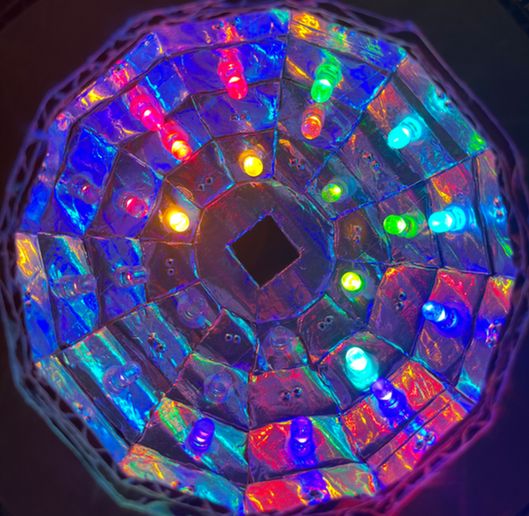
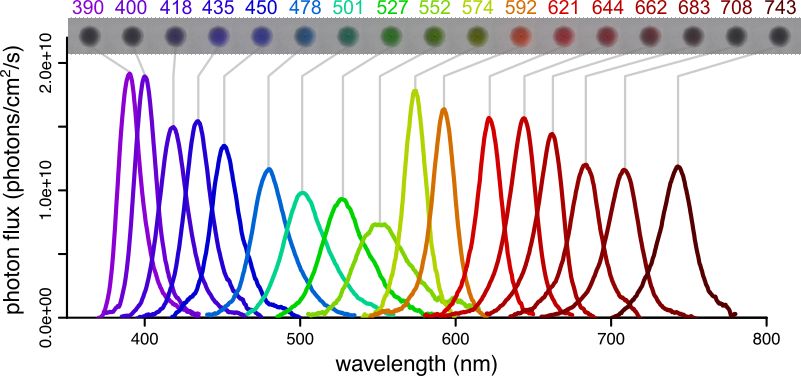
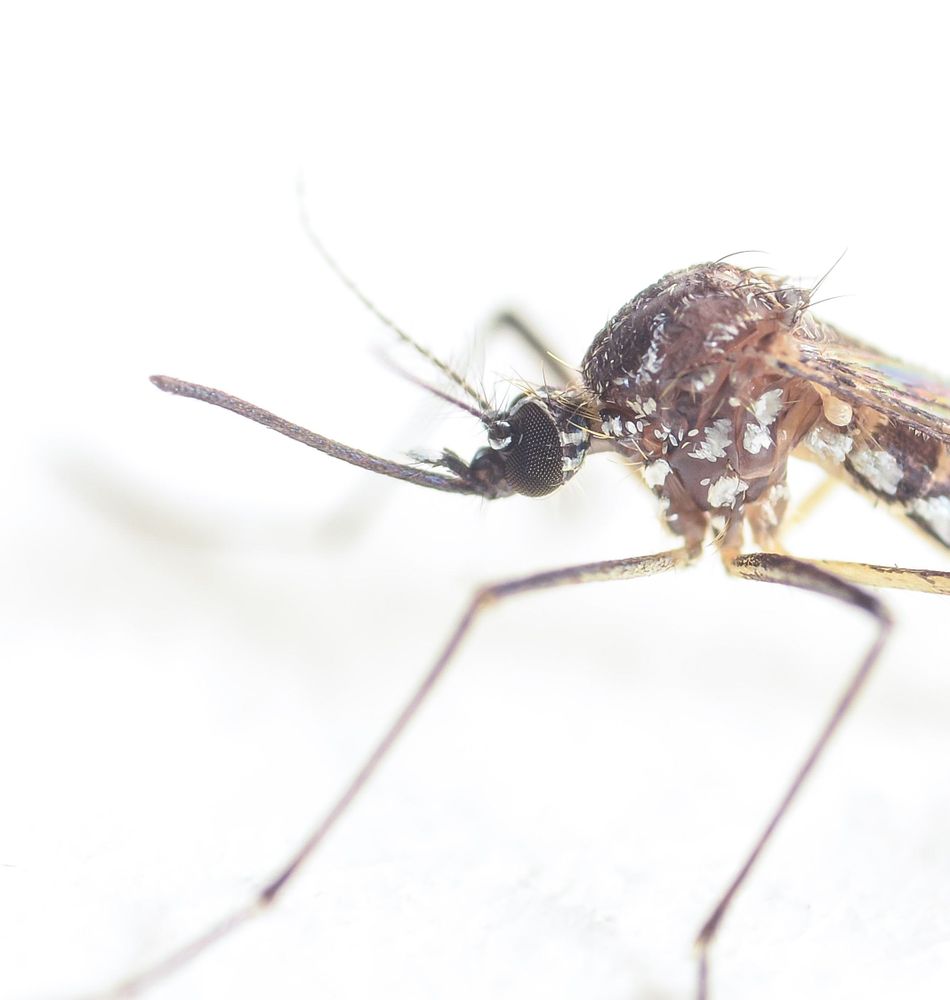
Our new paper is now out in @jexpbiol.bsky.social!!! We had all sorts of fun generating LED stimuli for mosquitos to investigate their visual preferences in the presence of different odors. The paper is open access and available here: journals.biologists.com/jeb/article/...
July 10, 2025 at 9:10 PM
Our new paper is now out in @jexpbiol.bsky.social!!! We had all sorts of fun generating LED stimuli for mosquitos to investigate their visual preferences in the presence of different odors. The paper is open access and available here: journals.biologists.com/jeb/article/...
Reposted by Chloé Lahondère
New preprint from @darbly.bsky.social @briandepasquale.bsky.social and my labs! If you love (or hate) mosquitoes, have a look:
doi.org/10.1101/2025...
We used TEM to describe the circuitry used for CO2 detection by mosquitoes. As usual with mosquitoes, nothing is as expected! 🌬️🦟
doi.org/10.1101/2025...
We used TEM to describe the circuitry used for CO2 detection by mosquitoes. As usual with mosquitoes, nothing is as expected! 🌬️🦟

Recurrent connectivity supports carbon dioxide sensitivity in Aedes aegypti mosquitoes
The mosquito Aedes aegypti′s human host-seeking behavior depends on the integration of multiple sensory cues. One of these cues, carbon dioxide (CO2), gates odorant and heat pathways and activates hos...
doi.org
July 31, 2025 at 12:28 PM
New preprint from @darbly.bsky.social @briandepasquale.bsky.social and my labs! If you love (or hate) mosquitoes, have a look:
doi.org/10.1101/2025...
We used TEM to describe the circuitry used for CO2 detection by mosquitoes. As usual with mosquitoes, nothing is as expected! 🌬️🦟
doi.org/10.1101/2025...
We used TEM to describe the circuitry used for CO2 detection by mosquitoes. As usual with mosquitoes, nothing is as expected! 🌬️🦟
Reposted by Chloé Lahondère
New NIH policy announced today:
NIH will only accept six new, renewal, resubmission, or revision applications from an individual Principal Investigator/Program Director or Multiple Principal Investigator for all council rounds in a calendar year.
grants.nih.gov/grants/guide...
NIH will only accept six new, renewal, resubmission, or revision applications from an individual Principal Investigator/Program Director or Multiple Principal Investigator for all council rounds in a calendar year.
grants.nih.gov/grants/guide...
NOT-OD-25-132: Supporting Fairness and Originality in NIH Research Applications
NIH Funding Opportunities and Notices in the NIH Guide for Grants and Contracts: Supporting Fairness and Originality in NIH Research Applications NOT-OD-25-132. NIH
grants.nih.gov
July 17, 2025 at 5:12 PM
New NIH policy announced today:
NIH will only accept six new, renewal, resubmission, or revision applications from an individual Principal Investigator/Program Director or Multiple Principal Investigator for all council rounds in a calendar year.
grants.nih.gov/grants/guide...
NIH will only accept six new, renewal, resubmission, or revision applications from an individual Principal Investigator/Program Director or Multiple Principal Investigator for all council rounds in a calendar year.
grants.nih.gov/grants/guide...
Reposted by Chloé Lahondère

🪳"Field evidence of #Trypanosoma cruzi infection, diverse host use and invasion of human dwellings by the #Chagas disease vector in #Florida, #USA" by Norman L Beatty et al. in #PlosNTDs
dx.plos.org/10.1371/jour...
dx.plos.org/10.1371/jour...

July 10, 2025 at 9:55 PM
🪳"Field evidence of #Trypanosoma cruzi infection, diverse host use and invasion of human dwellings by the #Chagas disease vector in #Florida, #USA" by Norman L Beatty et al. in #PlosNTDs
dx.plos.org/10.1371/jour...
dx.plos.org/10.1371/jour...
Reposted by Chloé Lahondère

Excited to share our latest collaborative work with @entomososwin.bsky.social @brackneylab.bsky.social looking at the role of mosquito immune cells in virus infection. It turns out that these cells help disseminate virus infection, increasing the potential for virus transmission rdcu.be/euiZt
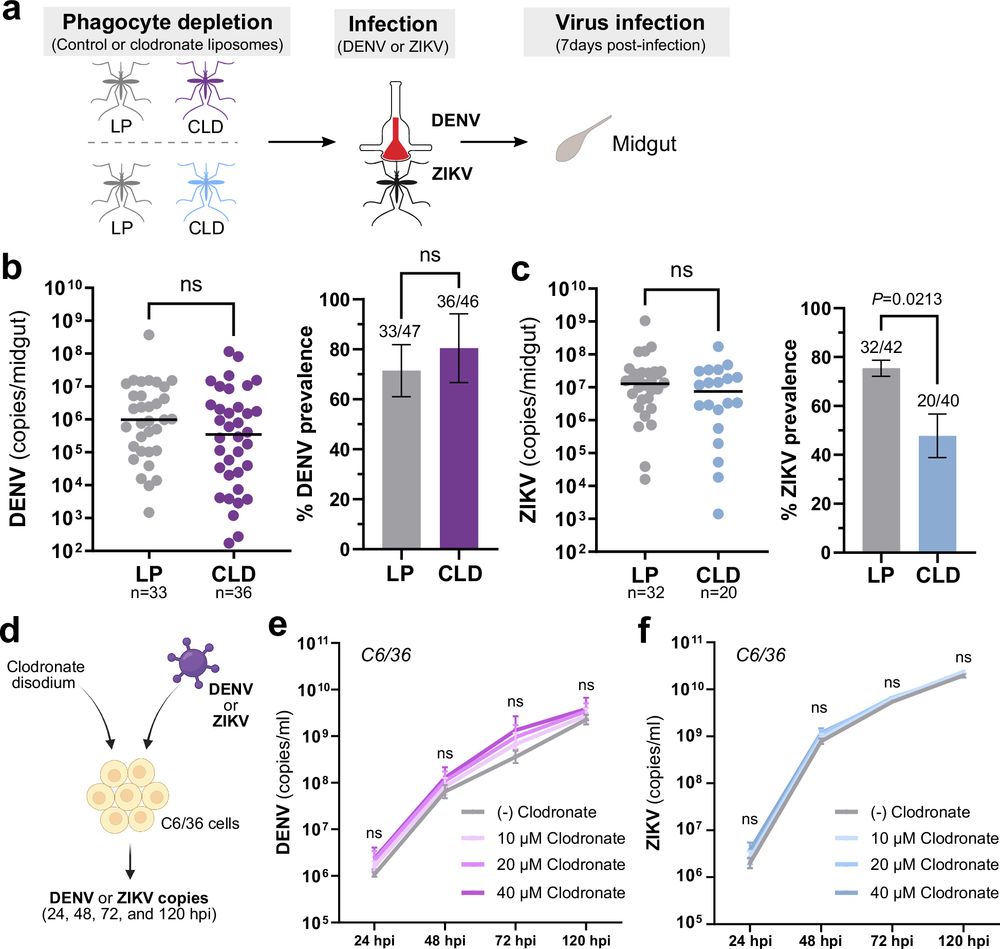
Mosquito immune cells enhance dengue and Zika virus infection in Aedes aegypti
Nature Communications - Infection of mosquito immune cells by dengue and Zika virus enhances the spread of virus infection to mosquito tissues, such as the salivary glands, to promote virus...
rdcu.be
July 3, 2025 at 12:33 PM
Excited to share our latest collaborative work with @entomososwin.bsky.social @brackneylab.bsky.social looking at the role of mosquito immune cells in virus infection. It turns out that these cells help disseminate virus infection, increasing the potential for virus transmission rdcu.be/euiZt
Reposted by Chloé Lahondère
🚨New preprint from the lab! Work led by our talented former postdoc @karthikeyanc.bsky.social where we show that incomplete larval control can make things worse by producing bigger and meaner adult mosquitoes that are more efficient vectors of Zika. See thread below www.biorxiv.org/content/10.1...
June 24, 2025 at 9:55 AM
🚨New preprint from the lab! Work led by our talented former postdoc @karthikeyanc.bsky.social where we show that incomplete larval control can make things worse by producing bigger and meaner adult mosquitoes that are more efficient vectors of Zika. See thread below www.biorxiv.org/content/10.1...
Reposted by Chloé Lahondère

New work from Abdul Wahaab in my lab! With @zureishon.bsky.social and Hieu Tran Nguyen Minh, in collaboration with @joshuabenoit.bsky.social!
Effect of prolonged dehydration stress on the vector competence of Aedes aegypti for Mayaro virus
www.biorxiv.org/content/10.1...
Effect of prolonged dehydration stress on the vector competence of Aedes aegypti for Mayaro virus
www.biorxiv.org/content/10.1...
www.biorxiv.org
June 17, 2025 at 11:15 AM
New work from Abdul Wahaab in my lab! With @zureishon.bsky.social and Hieu Tran Nguyen Minh, in collaboration with @joshuabenoit.bsky.social!
Effect of prolonged dehydration stress on the vector competence of Aedes aegypti for Mayaro virus
www.biorxiv.org/content/10.1...
Effect of prolonged dehydration stress on the vector competence of Aedes aegypti for Mayaro virus
www.biorxiv.org/content/10.1...
Reposted by Chloé Lahondère

📢 PhD Opportunity – Join Us at INTERTRYP (CIRAD)! 🌍🧪
🔬 Mathematical modeling of vector-borne diseases
📆 Apply before: July 15, 2025
📍 More info & apply: umr-intertryp.cirad.fr/en/news/2025...
🔬 Mathematical modeling of vector-borne diseases
📆 Apply before: July 15, 2025
📍 More info & apply: umr-intertryp.cirad.fr/en/news/2025...
PhD Contract Offer at INTERTRYP (Cirad) on the mathematical modeling of vector-borne diseases / 2025 - Intertryp Joint Research Unit
As a PhD student in mathematical modeling and epidemiology, you will contribute to an international, interdisciplinary project investigating how climate and environmental changes affect vector-borne d...
umr-intertryp.cirad.fr
June 17, 2025 at 1:26 PM
📢 PhD Opportunity – Join Us at INTERTRYP (CIRAD)! 🌍🧪
🔬 Mathematical modeling of vector-borne diseases
📆 Apply before: July 15, 2025
📍 More info & apply: umr-intertryp.cirad.fr/en/news/2025...
🔬 Mathematical modeling of vector-borne diseases
📆 Apply before: July 15, 2025
📍 More info & apply: umr-intertryp.cirad.fr/en/news/2025...
Reposted by Chloé Lahondère
New paper out by my talented former student Limarie (now Dr. Reyes-Torres) on how nutrient vary and may influence Aedes aegypti across urban-rural gradients in Puerto Rico. 🧪🦟🇵🇷
academic.oup.com/jme/advance-...
academic.oup.com/jme/advance-...
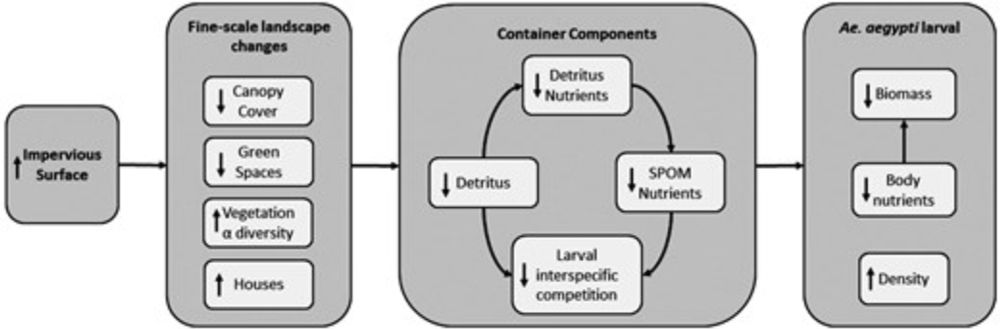
Environmental heterogeneity across an urban gradient influences detritus and nutrients within artificial containers and their associated vector Aedes sp. larvae in San Juan, Puerto Rico
Abstract. Detrital inputs from the surrounding terrestrial environment provide essential nutrients that sustain mosquito populations in aquatic containers.
academic.oup.com
May 13, 2025 at 2:50 PM
New paper out by my talented former student Limarie (now Dr. Reyes-Torres) on how nutrient vary and may influence Aedes aegypti across urban-rural gradients in Puerto Rico. 🧪🦟🇵🇷
academic.oup.com/jme/advance-...
academic.oup.com/jme/advance-...
Reposted by Chloé Lahondère

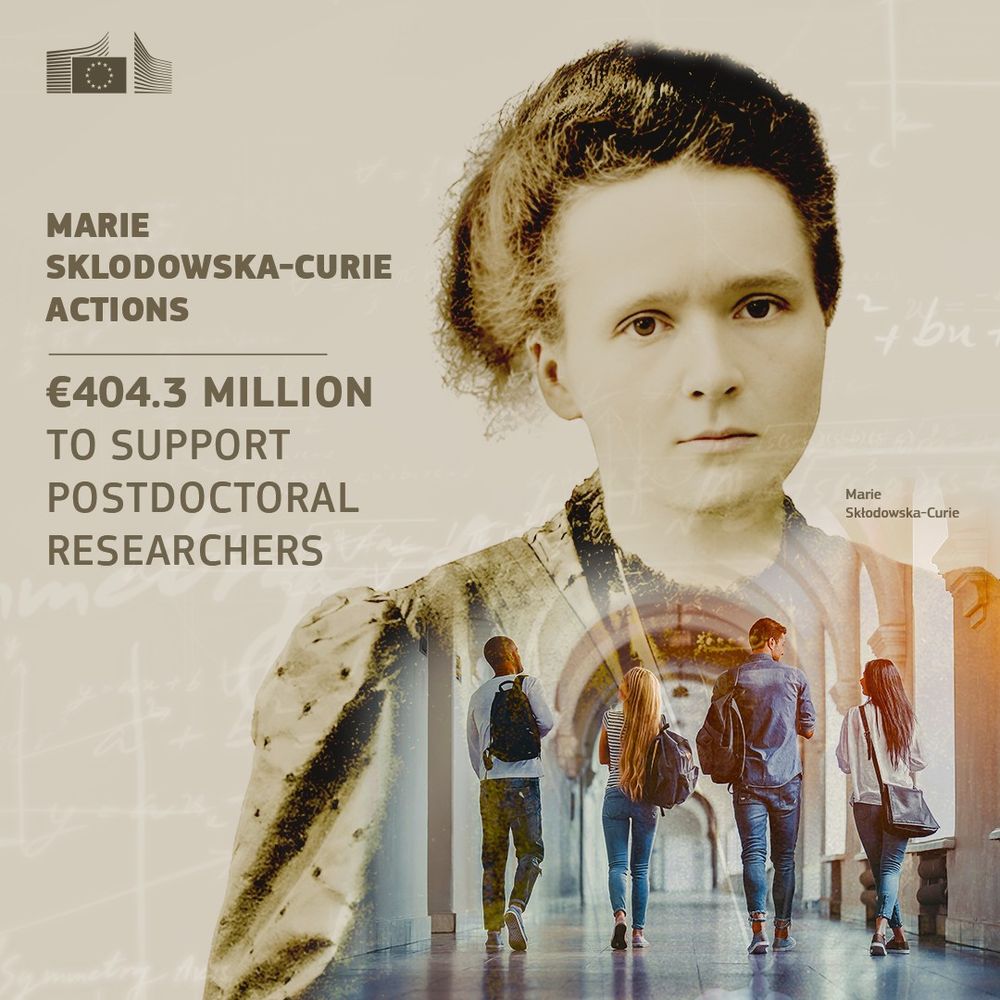
Choose Science. Choose Europe.
A new Marie Skłodowska-Curie Actions Postdoctoral Fellowships 2025 call is now open.
With a budget of €404.3 million, it will support around 1,650 researchers from Europe and beyond.
Apply by 10 September → europa.eu/!fBTMgF
A new Marie Skłodowska-Curie Actions Postdoctoral Fellowships 2025 call is now open.
With a budget of €404.3 million, it will support around 1,650 researchers from Europe and beyond.
Apply by 10 September → europa.eu/!fBTMgF
May 8, 2025 at 10:12 AM
Choose Science. Choose Europe.
A new Marie Skłodowska-Curie Actions Postdoctoral Fellowships 2025 call is now open.
With a budget of €404.3 million, it will support around 1,650 researchers from Europe and beyond.
Apply by 10 September → europa.eu/!fBTMgF
A new Marie Skłodowska-Curie Actions Postdoctoral Fellowships 2025 call is now open.
With a budget of €404.3 million, it will support around 1,650 researchers from Europe and beyond.
Apply by 10 September → europa.eu/!fBTMgF
Reposted by Chloé Lahondère
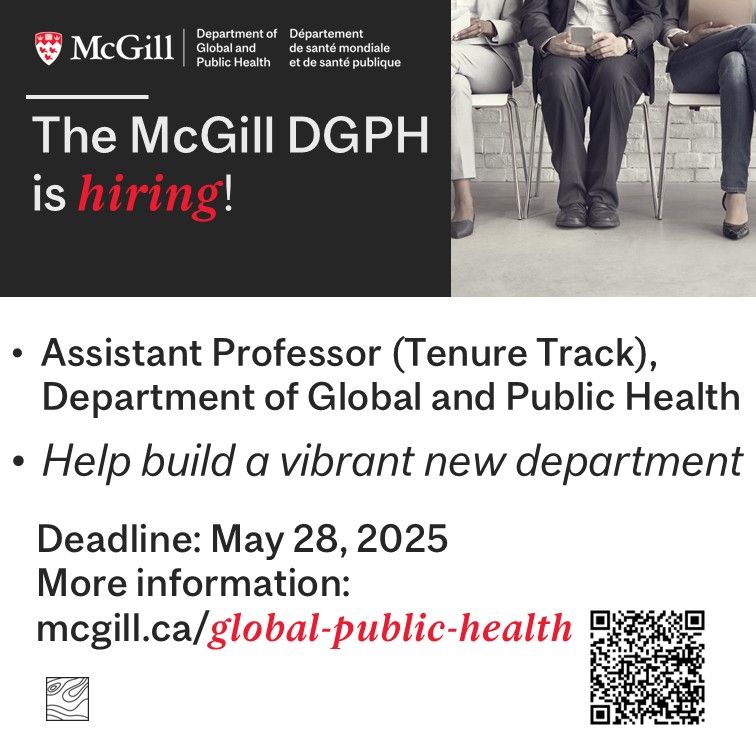
As Chair of the Department of Global and Public Health @healthsciences.mcgill.ca, I am pleased to share two open junior faculty positions!
mcgill.wd3.myworkdayjobs.com/en-US/mcgill...
mcgill.wd3.myworkdayjobs.com/en-US/mcgill...
mcgill.wd3.myworkdayjobs.com/en-US/mcgill...
mcgill.wd3.myworkdayjobs.com/en-US/mcgill...
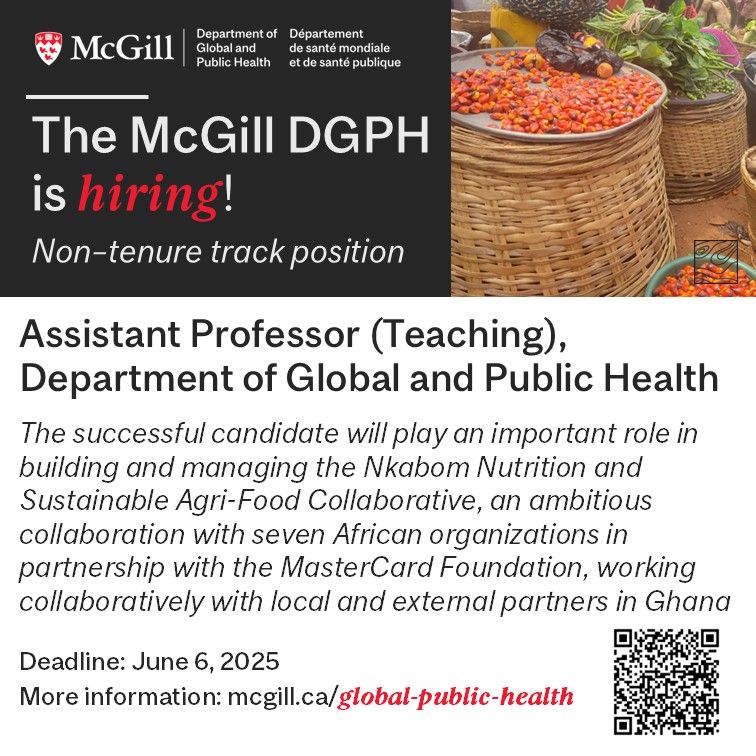
May 8, 2025 at 1:22 AM
As Chair of the Department of Global and Public Health @healthsciences.mcgill.ca, I am pleased to share two open junior faculty positions!
mcgill.wd3.myworkdayjobs.com/en-US/mcgill...
mcgill.wd3.myworkdayjobs.com/en-US/mcgill...
mcgill.wd3.myworkdayjobs.com/en-US/mcgill...
mcgill.wd3.myworkdayjobs.com/en-US/mcgill...
Reposted by Chloé Lahondère

Exclusive: National Science Foundation staff were told today that the agency’s 37 divisions—across all eight directorates—are being abolished and the number of programs within those divisions will be drastically reduced.
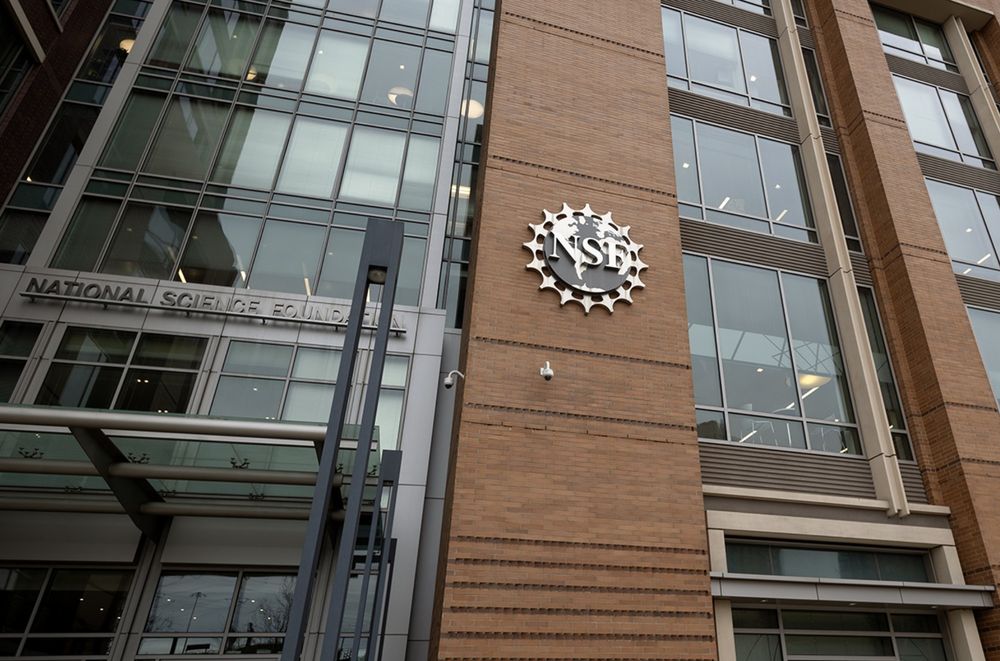
Exclusive: NSF faces radical shake-up as officials abolish its 37 divisions
Changes seen as a response to presidential directives on what research to fund
scim.ag
May 8, 2025 at 11:35 PM
Exclusive: National Science Foundation staff were told today that the agency’s 37 divisions—across all eight directorates—are being abolished and the number of programs within those divisions will be drastically reduced.
Reposted by Chloé Lahondère

🌍🎨 Calling all artists! Submit your work to Ripples of Change, an immersive exhibit celebrating how communities are addressing global environmental challenges. Submissions due by May 23. All mediums welcome!
More Info: docs.google.com/forms/d/e/1F...
#GCCatVT #SteppinOutBlacksburg
More Info: docs.google.com/forms/d/e/1F...
#GCCatVT #SteppinOutBlacksburg
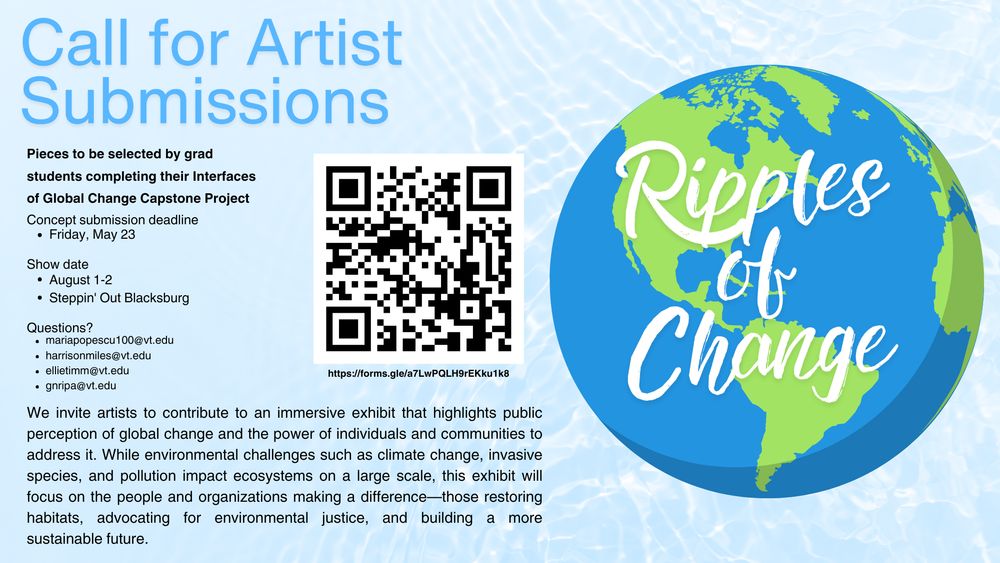
May 1, 2025 at 2:06 PM
🌍🎨 Calling all artists! Submit your work to Ripples of Change, an immersive exhibit celebrating how communities are addressing global environmental challenges. Submissions due by May 23. All mediums welcome!
More Info: docs.google.com/forms/d/e/1F...
#GCCatVT #SteppinOutBlacksburg
More Info: docs.google.com/forms/d/e/1F...
#GCCatVT #SteppinOutBlacksburg
Reposted by Chloé Lahondère
New review article out. Fun collaboration with colleagues of the Vector-borne and Parasitic Disease Research collective at #K-State. 🦟
www.liebertpub.com/doi/10.1089/...
www.liebertpub.com/doi/10.1089/...

Understanding the Burden of Agriculturally Significant Vector-Borne and Parasitic Diseases in Kansas | Vector-Borne and Zoonotic Diseases
Background: The state of Kansas (KS) has been called the “agricultural heartland” of the United States. Vector-borne and parasitic diseases (VBPD) have a major impact on the production of livestock, such as cattle, swine, goats and sheep, as well as crops, such as wheat, corn, and sorghum. The purpose of this review is to educate agricultural professionals in the state of KS about VBPD of current or potential concern and to inform the public about the challenges faced by the agricultural community. Methods: This review describes and discusses the endemic VBPD that currently impact agricultural production in KS and foreign VBPD of concern. In addition, we outline the major arthropod vectors of VBPD in KS, including ticks, mites, and various insects. In the context of this review, parasites are strictly limited to arthropod ectoparasites that negatively impact livestock production. Modern agricultural data for the state of KS were mostly sourced from the USDA National Agricultural Statistics Service, and current KS VBPD data were mostly sourced from the KS State Veterinary Diagnostic Laboratory. Conclusion: These VBPD have a large economic impact on the state and country, and we have concluded there is a need for updated estimates regarding the economic burden of VBPD in KS and throughout the United States to make better animal and crop health investment decisions.
www.liebertpub.com
May 1, 2025 at 8:46 PM
New review article out. Fun collaboration with colleagues of the Vector-borne and Parasitic Disease Research collective at #K-State. 🦟
www.liebertpub.com/doi/10.1089/...
www.liebertpub.com/doi/10.1089/...
Reposted by Chloé Lahondère
EoI: Climate/landuse change and disease risk workshop 🦟😷🌳🕷️🦠
Explore how land-use policy impacts human, animal & plant health 🗓️ 23 May 2025, UKCEH Wallingford. Travel covered
➡️ Apply: forms.office.com/r/wFrnzFBPVC
Deadline 2 May. ECRs welcome!
Poster 1drv.ms/b/s!Asq7tlTR...
Explore how land-use policy impacts human, animal & plant health 🗓️ 23 May 2025, UKCEH Wallingford. Travel covered
➡️ Apply: forms.office.com/r/wFrnzFBPVC
Deadline 2 May. ECRs welcome!
Poster 1drv.ms/b/s!Asq7tlTR...

April 25, 2025 at 7:34 AM
EoI: Climate/landuse change and disease risk workshop 🦟😷🌳🕷️🦠
Explore how land-use policy impacts human, animal & plant health 🗓️ 23 May 2025, UKCEH Wallingford. Travel covered
➡️ Apply: forms.office.com/r/wFrnzFBPVC
Deadline 2 May. ECRs welcome!
Poster 1drv.ms/b/s!Asq7tlTR...
Explore how land-use policy impacts human, animal & plant health 🗓️ 23 May 2025, UKCEH Wallingford. Travel covered
➡️ Apply: forms.office.com/r/wFrnzFBPVC
Deadline 2 May. ECRs welcome!
Poster 1drv.ms/b/s!Asq7tlTR...
Reposted by Chloé Lahondère
Interested in blood feeding, viviparity, disease vectors and climate change? Have a read of our recent review in Current Opinions in Insect Science on #tsetse as a unique system to explore how these factors interact, & what we can learn from field & lab studies. www.sciencedirect.com/science/arti...

April 29, 2025 at 1:41 PM
Interested in blood feeding, viviparity, disease vectors and climate change? Have a read of our recent review in Current Opinions in Insect Science on #tsetse as a unique system to explore how these factors interact, & what we can learn from field & lab studies. www.sciencedirect.com/science/arti...