



Juan Murillo Vargas
@jimurillo98.bsky.social
PhD student at MIT. Philosophy of language, philosophy of cog sci, philosophy of mind. Lower-case chomskyan, upper-case Nerd.
Reposted by Juan Murillo Vargas


Reposted by Juan Murillo Vargas

when the issue on the table is demonic


January 25, 2026 at 3:58 AM
when the issue on the table is demonic
Reposted by Juan Murillo Vargas

It's that time of the year again.

January 24, 2026 at 3:21 PM
It's that time of the year again.
Reposted by Juan Murillo Vargas
Aaaand we're back!!
Two Postdocs in Philosophy of Mind (one ot two years), Centre for Philosophical Psychology, University of Antwerp
- to work with me!
Deadline: March 20, 2026
More info on PhilJobs
Two Postdocs in Philosophy of Mind (one ot two years), Centre for Philosophical Psychology, University of Antwerp
- to work with me!
Deadline: March 20, 2026
More info on PhilJobs

January 22, 2026 at 4:42 PM
Aaaand we're back!!
Two Postdocs in Philosophy of Mind (one ot two years), Centre for Philosophical Psychology, University of Antwerp
- to work with me!
Deadline: March 20, 2026
More info on PhilJobs
Two Postdocs in Philosophy of Mind (one ot two years), Centre for Philosophical Psychology, University of Antwerp
- to work with me!
Deadline: March 20, 2026
More info on PhilJobs
Reposted by Juan Murillo Vargas

I'm excited to share that my first paper "Guessing and its Limits" is forthcoming in Philosophy and Phenomenological Research!
Thread below. TLDR: I present a novel puzzle for a recent "question-sensitive" theory of guessing/belief in multi-question scenarios.
philpapers.org/rec/FANGAI-2
Thread below. TLDR: I present a novel puzzle for a recent "question-sensitive" theory of guessing/belief in multi-question scenarios.
philpapers.org/rec/FANGAI-2

Helena Fang, Guessing and its Limits - PhilPapers
Guessing is the thesis that, roughly put, you may believe something iff it is among the most probable answers to a salient question. The thesis is motivated by observed features of ...
philpapers.org
January 17, 2026 at 2:42 PM
I'm excited to share that my first paper "Guessing and its Limits" is forthcoming in Philosophy and Phenomenological Research!
Thread below. TLDR: I present a novel puzzle for a recent "question-sensitive" theory of guessing/belief in multi-question scenarios.
philpapers.org/rec/FANGAI-2
Thread below. TLDR: I present a novel puzzle for a recent "question-sensitive" theory of guessing/belief in multi-question scenarios.
philpapers.org/rec/FANGAI-2
Reposted by Juan Murillo Vargas
New paper coming out in Philosophy and Phenomenological Research: "Consciousness doesn't do that". I explain why I believe that animal sentience research is in large part built on sand. In my opinion, we should be skeptical of many of the claims made in this field. philpapers.org/rec/MICCDD

Matthias Michel, Consciousness doesn't do that - PhilPapers
The question of which mental functions require consciousness has recently come to the forefront because of its relevance for investigating animal consciousness. Finding out that an animal can perform ...
philpapers.org
January 14, 2026 at 6:05 PM
New paper coming out in Philosophy and Phenomenological Research: "Consciousness doesn't do that". I explain why I believe that animal sentience research is in large part built on sand. In my opinion, we should be skeptical of many of the claims made in this field. philpapers.org/rec/MICCDD
Reposted by Juan Murillo Vargas
MIT News article about our new paper providing a roadmap for using transcranial focused ultrasound for consciousness research: news.mit.edu/2026/new-too... (Original article here: pubmed.ncbi.nlm.nih.gov/41270981/)

This new tool could tell us how consciousness works
Transcranial focused ultrasound, a noninvasive brain imaging tool, may help researchers gain knowledge about human consciousness.
news.mit.edu
January 12, 2026 at 5:54 PM
MIT News article about our new paper providing a roadmap for using transcranial focused ultrasound for consciousness research: news.mit.edu/2026/new-too... (Original article here: pubmed.ncbi.nlm.nih.gov/41270981/)
Reposted by Juan Murillo Vargas
The 52nd annual meeting of the SPP will be at JHU, June 17-20
📣 Submit your work by January 16! 📣
📣 Submit your work by January 16! 📣

January 9, 2026 at 2:09 PM
The 52nd annual meeting of the SPP will be at JHU, June 17-20
📣 Submit your work by January 16! 📣
📣 Submit your work by January 16! 📣
Reposted by Juan Murillo Vargas

Elmar Unnsteinsson (@eunnsteins.bsky.social) and I have a new paper forthcoming in Noûs.
"Genre and Conversation"
We show how to generalize the classic pragmatic theories to conversational genres that aren't factual, cooperative, committal information exchanges.
philpapers.org/rec/ELMGAC-2
"Genre and Conversation"
We show how to generalize the classic pragmatic theories to conversational genres that aren't factual, cooperative, committal information exchanges.
philpapers.org/rec/ELMGAC-2

Unnsteinsson Elmar & Harris Daniel W., Genre and Conversation - PhilPapers
Conversations can belong to different types, or genres. We consider four dimensions of variation as case studies: Some conversations are about sharing information, others about making decisions; some ...
philpapers.org
January 7, 2026 at 8:01 PM
Elmar Unnsteinsson (@eunnsteins.bsky.social) and I have a new paper forthcoming in Noûs.
"Genre and Conversation"
We show how to generalize the classic pragmatic theories to conversational genres that aren't factual, cooperative, committal information exchanges.
philpapers.org/rec/ELMGAC-2
"Genre and Conversation"
We show how to generalize the classic pragmatic theories to conversational genres that aren't factual, cooperative, committal information exchanges.
philpapers.org/rec/ELMGAC-2
Reposted by Juan Murillo Vargas

I am thrilled to announce that this framework is out!
Who is responsible for inequality?
@tanialombrozo.bsky.social and I show that answers depend on whether people are judging causes or obligations, and the past vs the future.
doi.org/10.1177/1745...
Who is responsible for inequality?
@tanialombrozo.bsky.social and I show that answers depend on whether people are judging causes or obligations, and the past vs the future.
doi.org/10.1177/1745...


January 6, 2026 at 7:57 PM
I am thrilled to announce that this framework is out!
Who is responsible for inequality?
@tanialombrozo.bsky.social and I show that answers depend on whether people are judging causes or obligations, and the past vs the future.
doi.org/10.1177/1745...
Who is responsible for inequality?
@tanialombrozo.bsky.social and I show that answers depend on whether people are judging causes or obligations, and the past vs the future.
doi.org/10.1177/1745...
Reposted by Juan Murillo Vargas

🧵New preprint: Adults often agree with their ingroup even when evidence says otherwise. Why?
To find out, we studied kids, who show the same tendency but *before* political identities take hold. With developmental data, we can see the basic psychological ingredients.
doi.org/10.31234/osf...
1/11
To find out, we studied kids, who show the same tendency but *before* political identities take hold. With developmental data, we can see the basic psychological ingredients.
doi.org/10.31234/osf...
1/11
OSF
doi.org
January 6, 2026 at 3:03 PM
🧵New preprint: Adults often agree with their ingroup even when evidence says otherwise. Why?
To find out, we studied kids, who show the same tendency but *before* political identities take hold. With developmental data, we can see the basic psychological ingredients.
doi.org/10.31234/osf...
1/11
To find out, we studied kids, who show the same tendency but *before* political identities take hold. With developmental data, we can see the basic psychological ingredients.
doi.org/10.31234/osf...
1/11
Reposted by Juan Murillo Vargas

a project I really like, now officially out!
"Shape Guides Visual Pretense"
by Qian and me
paper link: direct.mit.edu/opmi/article...
I'll walk through a quick version here
To get a sense of it, first consider:
Would it make more sense to pretend that this block is a car, or a strawberry?
"Shape Guides Visual Pretense"
by Qian and me
paper link: direct.mit.edu/opmi/article...
I'll walk through a quick version here
To get a sense of it, first consider:
Would it make more sense to pretend that this block is a car, or a strawberry?

January 6, 2026 at 2:34 PM
a project I really like, now officially out!
"Shape Guides Visual Pretense"
by Qian and me
paper link: direct.mit.edu/opmi/article...
I'll walk through a quick version here
To get a sense of it, first consider:
Would it make more sense to pretend that this block is a car, or a strawberry?
"Shape Guides Visual Pretense"
by Qian and me
paper link: direct.mit.edu/opmi/article...
I'll walk through a quick version here
To get a sense of it, first consider:
Would it make more sense to pretend that this block is a car, or a strawberry?
Reposted by Juan Murillo Vargas

Announcing the first Workshop on Formal Languages and Neural Networks (FLaNN)!
We invite the submission of abstracts for posters that discuss the formal expressivity, computational properties, and learning behavior of neural network models, including large language models (LLMs).
We invite the submission of abstracts for posters that discuss the formal expressivity, computational properties, and learning behavior of neural network models, including large language models (LLMs).

December 19, 2025 at 2:59 AM
Announcing the first Workshop on Formal Languages and Neural Networks (FLaNN)!
We invite the submission of abstracts for posters that discuss the formal expressivity, computational properties, and learning behavior of neural network models, including large language models (LLMs).
We invite the submission of abstracts for posters that discuss the formal expressivity, computational properties, and learning behavior of neural network models, including large language models (LLMs).
Reposted by Juan Murillo Vargas
A fascinating new paper by Amanda Royka and colleagues explores why monkeys fail false belief tasks.
A natural explanation would be that monkeys wrongly assume that other agents share their own knowledge.
Royka et al. find that this is NOT the case...
www.sciencedirect.com/science/arti...
A natural explanation would be that monkeys wrongly assume that other agents share their own knowledge.
Royka et al. find that this is NOT the case...
www.sciencedirect.com/science/arti...

Exploring the evolutionary roots of theory of mind: Primate errors on false belief tasks reveal representational limits
Human adults flexibly reason about others' unobservable mental states, a capacity known as Theory of Mind (ToM). Unfortunately, the roots of this capa…
www.sciencedirect.com
January 2, 2026 at 5:21 PM
A fascinating new paper by Amanda Royka and colleagues explores why monkeys fail false belief tasks.
A natural explanation would be that monkeys wrongly assume that other agents share their own knowledge.
Royka et al. find that this is NOT the case...
www.sciencedirect.com/science/arti...
A natural explanation would be that monkeys wrongly assume that other agents share their own knowledge.
Royka et al. find that this is NOT the case...
www.sciencedirect.com/science/arti...
Reposted by Juan Murillo Vargas
Beautiful experimental philosophy paper on what people ordinarily mean when they say that a statement is “true”
Turns out it’s not always about corresponding correctly to the facts. Sometimes it’s more closely related to a moral ideal of “truthfulness”
philarchive.org/archive/ZYGTJN
Turns out it’s not always about corresponding correctly to the facts. Sometimes it’s more closely related to a moral ideal of “truthfulness”
philarchive.org/archive/ZYGTJN

January 1, 2026 at 6:31 PM
Beautiful experimental philosophy paper on what people ordinarily mean when they say that a statement is “true”
Turns out it’s not always about corresponding correctly to the facts. Sometimes it’s more closely related to a moral ideal of “truthfulness”
philarchive.org/archive/ZYGTJN
Turns out it’s not always about corresponding correctly to the facts. Sometimes it’s more closely related to a moral ideal of “truthfulness”
philarchive.org/archive/ZYGTJN
Reposted by Juan Murillo Vargas

We wrote a thing -- showing you don't need LLMs to model language production dynamics like the tendency for speakers to reduce predictable words. All you have to do is better model how speech rate varies depending on where a word is and how long the utterance is. arxiv.org/abs/2512.23659

Less is more: Probabilistic reduction is best explained by small-scale predictability measures
The primary research questions of this paper center on defining the amount of context that is necessary and/or appropriate when investigating the relationship between language model probabilities and ...
arxiv.org
December 30, 2025 at 1:48 PM
We wrote a thing -- showing you don't need LLMs to model language production dynamics like the tendency for speakers to reduce predictable words. All you have to do is better model how speech rate varies depending on where a word is and how long the utterance is. arxiv.org/abs/2512.23659
Reposted by Juan Murillo Vargas
A while ago, I posted a set of notes about the Bayesian approach to inquiry and how it can help us think about questions raised in the recent literature on zetetic epistemology. I’ve now corralled that material into something like a first draft of a book. I hope it might be of interest to others.

Richard Pettigrew, The value of information and the epistemology of inquiry - PhilArchive
In the analytic tradition, epistemology has typically begun at the point at which we have our evidence; it has then asked which beliefs or credences are justified or warranted by that ...
philarchive.org
December 30, 2025 at 11:22 AM
A while ago, I posted a set of notes about the Bayesian approach to inquiry and how it can help us think about questions raised in the recent literature on zetetic epistemology. I’ve now corralled that material into something like a first draft of a book. I hope it might be of interest to others.
Reposted by Juan Murillo Vargas
Invited speaker lineup is out for SPP 2026! More information on the meeting here: www.socphilpsych.org/meetings.html
Submissions accepted until Jan 16! Come hang in Baltimore; conference is at Johns Hopkins from June 17-20, 2026!
@socphilpsych.bsky.social
@joshrottman.bsky.social
#SPP2026
Submissions accepted until Jan 16! Come hang in Baltimore; conference is at Johns Hopkins from June 17-20, 2026!
@socphilpsych.bsky.social
@joshrottman.bsky.social
#SPP2026

December 27, 2025 at 3:10 PM
Invited speaker lineup is out for SPP 2026! More information on the meeting here: www.socphilpsych.org/meetings.html
Submissions accepted until Jan 16! Come hang in Baltimore; conference is at Johns Hopkins from June 17-20, 2026!
@socphilpsych.bsky.social
@joshrottman.bsky.social
#SPP2026
Submissions accepted until Jan 16! Come hang in Baltimore; conference is at Johns Hopkins from June 17-20, 2026!
@socphilpsych.bsky.social
@joshrottman.bsky.social
#SPP2026
Reposted by Juan Murillo Vargas


Reposted by Juan Murillo Vargas

Merry Christmas to you all, from birds of Costa Rica!


December 25, 2025 at 2:19 AM
Merry Christmas to you all, from birds of Costa Rica!
Reposted by Juan Murillo Vargas
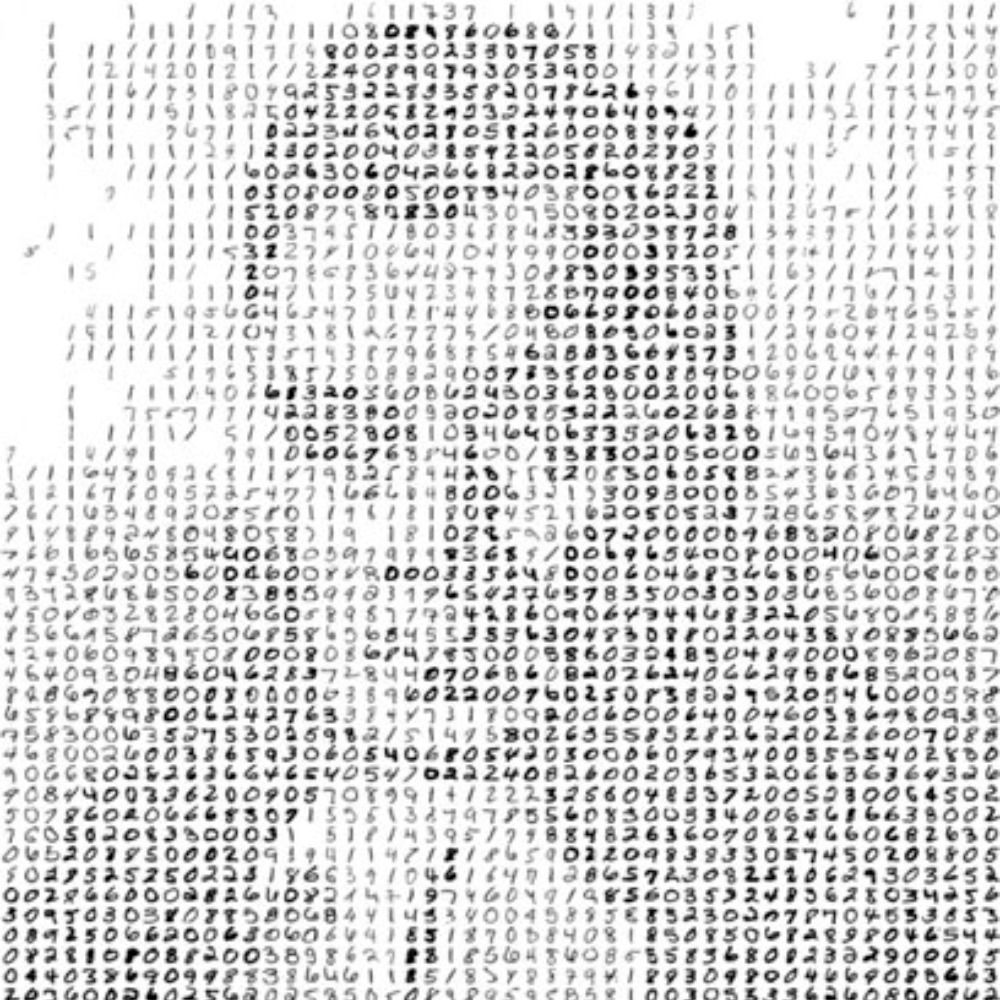
Excited to announce a new book telling the story of mathematical approaches to studying the mind, from the origins of cognitive science to modern AI! The Laws of Thought will be published in February and is available for pre-order now.

December 18, 2025 at 3:59 PM
Excited to announce a new book telling the story of mathematical approaches to studying the mind, from the origins of cognitive science to modern AI! The Laws of Thought will be published in February and is available for pre-order now.
Reposted by Juan Murillo Vargas
Unconscious size representation involved in summary statistics judgments of average size: www.sciencedirect.com/science/arti....

Subcortical encoding of summary statistics in humans
Statistical encoding compresses redundant information from multiple items into a single summary metric (e.g., mean). Such statistical representation h…
www.sciencedirect.com
December 23, 2025 at 1:51 PM
Unconscious size representation involved in summary statistics judgments of average size: www.sciencedirect.com/science/arti....
Reposted by Juan Murillo Vargas
Maybe there are two distinct kinds of belief: they either represent facts (It's rainy) or express identity (My son is the best). We find instead that many beliefs simultaneously represent facts and express identity (but few beliefs do neither).

December 22, 2025 at 2:13 AM
Maybe there are two distinct kinds of belief: they either represent facts (It's rainy) or express identity (My son is the best). We find instead that many beliefs simultaneously represent facts and express identity (but few beliefs do neither).
Reposted by Juan Murillo Vargas

Does anyone know of recent literature on the use of "else" between conditionals, as in sentences like "The package will arrive on Friday if you order it today, or else on Saturday if you order it tomorrow."?
December 17, 2025 at 7:17 PM
Does anyone know of recent literature on the use of "else" between conditionals, as in sentences like "The package will arrive on Friday if you order it today, or else on Saturday if you order it tomorrow."?
I know of some work vaguely in this direction (e.g., studies on how non-human primates don't learn language) but wanted to ask: does anyone know studies/literature on whether non-human animals ask questions?
(My understanding is they don't but want to read the lit before I form a strong view.)
(My understanding is they don't but want to read the lit before I form a strong view.)
December 17, 2025 at 2:00 PM
I know of some work vaguely in this direction (e.g., studies on how non-human primates don't learn language) but wanted to ask: does anyone know studies/literature on whether non-human animals ask questions?
(My understanding is they don't but want to read the lit before I form a strong view.)
(My understanding is they don't but want to read the lit before I form a strong view.)