


Hugo Araújo
@hugoaffa.bsky.social
Pós-doutorando no PPGH-UFJF (PIPD/CAPES)
Historiador e Capitão de Mar e Guerra no projeto "Encontros Piratas".
Piracy in the Portuguese Atlantic.
https://heuristau.net/heurist/encontrospiratas/web/
#quartapirata #piratehistory
Historiador e Capitão de Mar e Guerra no projeto "Encontros Piratas".
Piracy in the Portuguese Atlantic.
https://heuristau.net/heurist/encontrospiratas/web/
#quartapirata #piratehistory
Pinned
Hugo Araújo
@hugoaffa.bsky.social
· Feb 25
Encontros Piratas: base de dados online sobre a predação marítima no Atlântico Sul (séculos XVI - XIX)
Enter a concise description of the Heurist database / website here, which will be used eg. in lists of websites and in search engine discovery.
Remember to indicate the institution and/or project, t...
heuristref.net
Our database on marine predation is now available. Check it out at:
heuristref.net/heurist/enco...
#PirateHistory #MaritimeHistory
heuristref.net/heurist/enco...
#PirateHistory #MaritimeHistory
Reposted by Hugo Araújo

Boydell are doing a sale on paperbacks, so you can get *Alehouses and Good Fellowship in Early Modern England* for about £16, with the code LOVE40.
If you like history, and pubs, and discounted paperbacks, it could be your thing...
boydellandbrewer.com/book/alehous...
If you like history, and pubs, and discounted paperbacks, it could be your thing...
boydellandbrewer.com/book/alehous...
Alehouses and Good Fellowship in Early Modern England
Representing a history of drinking "from below", this book explores the role of the alehouse in seventeenth-century English society.
boydellandbrewer.com
February 11, 2026 at 4:01 PM

Cover reveal for Richard Frohock's fab new 🏴☠️ book!
Piracy Mythmaking in the Eighteenth Century
Criminality, Human Nature, & Civil Government from @routledgehistory.bsky.social will be published 21/5/26!
www.routledge.com/Piracy-Mythm...
Piracy Mythmaking in the Eighteenth Century
Criminality, Human Nature, & Civil Government from @routledgehistory.bsky.social will be published 21/5/26!
www.routledge.com/Piracy-Mythm...

February 10, 2026 at 5:49 PM
Reposted by Hugo Araújo

Small Grant Scheme is now OPEN ✨
Offering #grants up to £10,000 GBP for organisations that want to increase public access and engagement with maritime history and/or their collections.
How to apply 👉🔗 www.lrfoundation.org.uk/news/small-g...
Offering #grants up to £10,000 GBP for organisations that want to increase public access and engagement with maritime history and/or their collections.
How to apply 👉🔗 www.lrfoundation.org.uk/news/small-g...

February 2, 2026 at 10:36 AM
Small Grant Scheme is now OPEN ✨
Offering #grants up to £10,000 GBP for organisations that want to increase public access and engagement with maritime history and/or their collections.
How to apply 👉🔗 www.lrfoundation.org.uk/news/small-g...
Offering #grants up to £10,000 GBP for organisations that want to increase public access and engagement with maritime history and/or their collections.
How to apply 👉🔗 www.lrfoundation.org.uk/news/small-g...
Reposted by Hugo Araújo
🚨🐟 CFP - COLONIAL HINTER-SEAS: A Conference on Subaquatic Resources and Waterside Lives from the Early Modern to the Contemporary, 10-11 August 2026, virtual, Zoom & 19-21 August 2026, in-person, University of Strathclyde, Glasgow, Scotland.
Details: www.colonialfisheries.com/colonial-hin... 🐟🚨
Details: www.colonialfisheries.com/colonial-hin... 🐟🚨
Colonial Hinter-Seas Conference 2026 | Colonial Fisheries
www.colonialfisheries.com
January 30, 2026 at 8:27 AM
🚨🐟 CFP - COLONIAL HINTER-SEAS: A Conference on Subaquatic Resources and Waterside Lives from the Early Modern to the Contemporary, 10-11 August 2026, virtual, Zoom & 19-21 August 2026, in-person, University of Strathclyde, Glasgow, Scotland.
Details: www.colonialfisheries.com/colonial-hin... 🐟🚨
Details: www.colonialfisheries.com/colonial-hin... 🐟🚨
Reposted by Hugo Araújo
Your semi-regular reminder that the British Library's Research Repository has stacks of open datasets from collections, and research by Library staff e.g. bl.iro.bl.uk/catalog?f[hu... #OpenAccess #OpenGLAM
bl.iro.bl.uk
January 28, 2026 at 9:38 AM
Your semi-regular reminder that the British Library's Research Repository has stacks of open datasets from collections, and research by Library staff e.g. bl.iro.bl.uk/catalog?f[hu... #OpenAccess #OpenGLAM
Reposted by Hugo Araújo
Pirate Imperialism is now officially published. Probably of interest to anyone who wants to understand, well, everything that is going on today. #bskyhistorians #skyhistorians
Here:
yalebooks.co.uk/book/9780300...
Here:
yalebooks.co.uk/book/9780300...

Pirate Imperialism - Yale University Press London
This first truly global history of the suppression of piracy links maritime raiding to empire building in the nineteenth century In the middle decades...
yalebooks.co.uk
January 14, 2026 at 8:53 AM
Pirate Imperialism is now officially published. Probably of interest to anyone who wants to understand, well, everything that is going on today. #bskyhistorians #skyhistorians
Here:
yalebooks.co.uk/book/9780300...
Here:
yalebooks.co.uk/book/9780300...
Reposted by Hugo Araújo
Hey Everyone! Two Things!
Reminder: Accepting submissions until Jan 31st! Still lots of time!
Correction: Nobody noticed the email was wrong on the CFP!🥴 I apologize deeply for the error, and if your email went awry, please resubmit to
swaanproject[at]gmail.com
or
j.connellstryker[at]gmail.com
Reminder: Accepting submissions until Jan 31st! Still lots of time!
Correction: Nobody noticed the email was wrong on the CFP!🥴 I apologize deeply for the error, and if your email went awry, please resubmit to
swaanproject[at]gmail.com
or
j.connellstryker[at]gmail.com
Announcing a workshop on women and the sea, taking place in St. John's, Newfoundland, April 29th-May 1st, 2026!
www.swaan.org
Supported by a Lloyd's Heritage Foundation grant, the SWAAN project focuses on women in ocean industries in history and today. The workshop is the first of 2 gatherings...
www.swaan.org
Supported by a Lloyd's Heritage Foundation grant, the SWAAN project focuses on women in ocean industries in history and today. The workshop is the first of 2 gatherings...

SWAAN | Seafaring Women Ashore and Abroad Network
Women have always been at sea. Here at SWAAN, we look to the past to push for a future where women have opportunities to work in maritime industries on land and at sea with our partners. We will build...
www.swaan.org
January 6, 2026 at 2:21 PM
Hey Everyone! Two Things!
Reminder: Accepting submissions until Jan 31st! Still lots of time!
Correction: Nobody noticed the email was wrong on the CFP!🥴 I apologize deeply for the error, and if your email went awry, please resubmit to
swaanproject[at]gmail.com
or
j.connellstryker[at]gmail.com
Reminder: Accepting submissions until Jan 31st! Still lots of time!
Correction: Nobody noticed the email was wrong on the CFP!🥴 I apologize deeply for the error, and if your email went awry, please resubmit to
swaanproject[at]gmail.com
or
j.connellstryker[at]gmail.com
#PirateHistory. Thrilled to share that a chapter from my research, on the relationships between Brazil's coastal communities and pirates, was published in December. The whole book is a fascinating read! doi.org/10.4000/15eca
«Continuam a infestar o mar»
Esse texto discute a relação entre os agentes comuns e as políticas de defesa contra a predação marítima. Reflito sobre a agência desses grupos subalternos (pescadores e comunidades costeiras) nas rel...
doi.org
January 5, 2026 at 11:05 PM
#PirateHistory. Thrilled to share that a chapter from my research, on the relationships between Brazil's coastal communities and pirates, was published in December. The whole book is a fascinating read! doi.org/10.4000/15eca

Reposted by Hugo Araújo

Chore se vc chorou


December 25, 2025 at 2:25 AM
Chore se vc chorou
#PirateHistory
Que ano para o projeto. Conquistamos bolsas, mais financiamento e aumentamos a equipe. Vem muito mais por ai ano que vem.
Que ano para o projeto. Conquistamos bolsas, mais financiamento e aumentamos a equipe. Vem muito mais por ai ano que vem.
December 10, 2025 at 8:15 PM
#PirateHistory
Que ano para o projeto. Conquistamos bolsas, mais financiamento e aumentamos a equipe. Vem muito mais por ai ano que vem.
Que ano para o projeto. Conquistamos bolsas, mais financiamento e aumentamos a equipe. Vem muito mais por ai ano que vem.
Reposted by Hugo Araújo
Next week @lhaasis.bsky.social and @neleppp.bsky.social are welcoming Jean Soulat for the Prize Papers Talks Special Edition with the German Maritime Museum in Bremerhaven!
Sign up here to learn more about a pirates‘ lair:
www.eventbrite.com/e/ships-seaf...
#earlymodern #maritimehistory
Sign up here to learn more about a pirates‘ lair:
www.eventbrite.com/e/ships-seaf...
#earlymodern #maritimehistory

November 26, 2025 at 11:18 AM
Next week @lhaasis.bsky.social and @neleppp.bsky.social are welcoming Jean Soulat for the Prize Papers Talks Special Edition with the German Maritime Museum in Bremerhaven!
Sign up here to learn more about a pirates‘ lair:
www.eventbrite.com/e/ships-seaf...
#earlymodern #maritimehistory
Sign up here to learn more about a pirates‘ lair:
www.eventbrite.com/e/ships-seaf...
#earlymodern #maritimehistory

Reposted by Hugo Araújo
Last week, our project director, Prof. Dr Dagmar @dagmarfreist.bsky.social and Dr Marc Vermeulen (National Archives, UK) presented one of the most intriguing objects in our material collection at the Annual Reception of the @akademienunion.bsky.social
#earlymodern #maritimehistory
#earlymodern #maritimehistory


November 18, 2025 at 9:57 AM
Last week, our project director, Prof. Dr Dagmar @dagmarfreist.bsky.social and Dr Marc Vermeulen (National Archives, UK) presented one of the most intriguing objects in our material collection at the Annual Reception of the @akademienunion.bsky.social
#earlymodern #maritimehistory
#earlymodern #maritimehistory
Reposted by Hugo Araújo
José Joaquín Maximiliano de Villa y Urrutia was a passenger on the Fort de Nantes. Born in León, Mexico, he was sixteen or seventeen years old when he went on board.
#earlymodern #MaritimeHistory #skystorians
#earlymodern #MaritimeHistory #skystorians

November 4, 2025 at 7:00 AM
José Joaquín Maximiliano de Villa y Urrutia was a passenger on the Fort de Nantes. Born in León, Mexico, he was sixteen or seventeen years old when he went on board.
#earlymodern #MaritimeHistory #skystorians
#earlymodern #MaritimeHistory #skystorians
Reposted by Hugo Araújo
We are thrilled to announce this year's rendition of the Prize Papers Talks Special Edition - an online lecture series organised by the German Maritime Museum and the Prize Papers Project! The first talk will be on November 10th, with Jane Ohlmeyer, Tom Truxes, and John Shovlin on the Amity Papers!


November 3, 2025 at 12:29 PM
We are thrilled to announce this year's rendition of the Prize Papers Talks Special Edition - an online lecture series organised by the German Maritime Museum and the Prize Papers Project! The first talk will be on November 10th, with Jane Ohlmeyer, Tom Truxes, and John Shovlin on the Amity Papers!
Reposted by Hugo Araújo

They weren’t pirates—but they sailed like them.
In Ep. 357, Eric Jay Dolin explores how privateers helped the U.S. win independence by attacking British ships on the high seas.
🎧 benfranklinsworld.com/357
#MaritimeHistory #VastEarlyAmerica #History #AmericanRevolution #Revolution250
In Ep. 357, Eric Jay Dolin explores how privateers helped the U.S. win independence by attacking British ships on the high seas.
🎧 benfranklinsworld.com/357
#MaritimeHistory #VastEarlyAmerica #History #AmericanRevolution #Revolution250

Episode 357: Eric Jay Dolin, Privateering in the American Revolution
Episode on privateering in the American Revolution.
benfranklinsworld.com
October 30, 2025 at 2:52 PM
They weren’t pirates—but they sailed like them.
In Ep. 357, Eric Jay Dolin explores how privateers helped the U.S. win independence by attacking British ships on the high seas.
🎧 benfranklinsworld.com/357
#MaritimeHistory #VastEarlyAmerica #History #AmericanRevolution #Revolution250
In Ep. 357, Eric Jay Dolin explores how privateers helped the U.S. win independence by attacking British ships on the high seas.
🎧 benfranklinsworld.com/357
#MaritimeHistory #VastEarlyAmerica #History #AmericanRevolution #Revolution250
Reposted by Hugo Araújo

🧵Netscape Navigator brought the web to millions. 🌐 It was the first browser to achieve mass-market adoption & introduced bookmarks, cookies, & JavaScript.
See its website on the #WaybackMachine. 1 in a Trillion pages saved ➡️ web.archive.org/web/19961101...
#Wayback1T
See its website on the #WaybackMachine. 1 in a Trillion pages saved ➡️ web.archive.org/web/19961101...
#Wayback1T

October 9, 2025 at 3:04 PM
🧵Netscape Navigator brought the web to millions. 🌐 It was the first browser to achieve mass-market adoption & introduced bookmarks, cookies, & JavaScript.
See its website on the #WaybackMachine. 1 in a Trillion pages saved ➡️ web.archive.org/web/19961101...
#Wayback1T
See its website on the #WaybackMachine. 1 in a Trillion pages saved ➡️ web.archive.org/web/19961101...
#Wayback1T
Reposted by Hugo Araújo

Quaest: Lula venceria de todos os candidatos em 2º turno

Genial/Quaest: Lula sustenta vantagem e venceria todos os candidatos em 2º turno
Diferença numérica de petista para Tarcísio, que era de 8 pontos percentuais, agora chega a 12
www1.folha.uol.com.br
October 9, 2025 at 10:05 AM
Quaest: Lula venceria de todos os candidatos em 2º turno
#PirateHistory
Chegamos a 720 registros. São 73 novas entradas e várias outras revisadas e ampliadas. Confira no blog do projeto.
heuristref.net/heurist/enco...
Chegamos a 720 registros. São 73 novas entradas e várias outras revisadas e ampliadas. Confira no blog do projeto.
heuristref.net/heurist/enco...


October 8, 2025 at 3:49 PM
#PirateHistory
Chegamos a 720 registros. São 73 novas entradas e várias outras revisadas e ampliadas. Confira no blog do projeto.
heuristref.net/heurist/enco...
Chegamos a 720 registros. São 73 novas entradas e várias outras revisadas e ampliadas. Confira no blog do projeto.
heuristref.net/heurist/enco...
Reposted by Hugo Araújo
From today, we will release the documents related to the Fort de Nantes, a French ship chartered by Francisco Sánchez de Madrid, a merchant from Cádiz, to travel to Veracruz and Havana. It was captured by two ships of the British Navy on January 5 1747, on its journey back and taken to Plymouth.

October 7, 2025 at 8:03 PM
From today, we will release the documents related to the Fort de Nantes, a French ship chartered by Francisco Sánchez de Madrid, a merchant from Cádiz, to travel to Veracruz and Havana. It was captured by two ships of the British Navy on January 5 1747, on its journey back and taken to Plymouth.
Reposted by Hugo Araújo
Reposted by Hugo Araújo
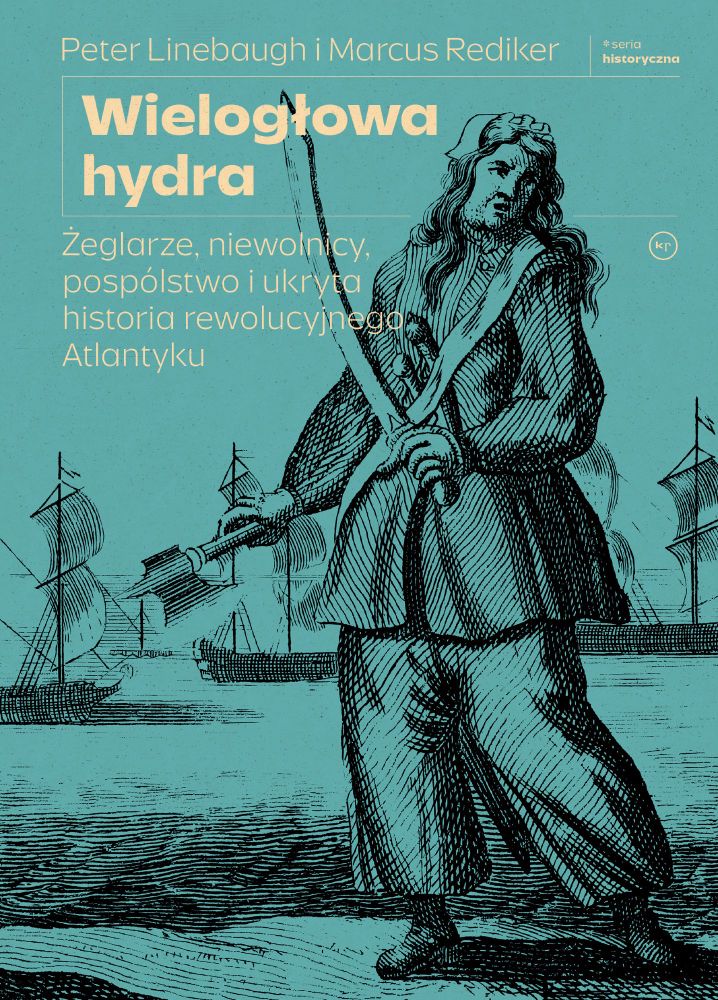
Excited to announce, two new translations of *The Many-Headed Hydra* appear this month: in Catalán, translated by Marta Cazorla Rodríguez, Manifest Books, Barcelona, and in Polish, translated by Andrzej Wojtasik, by Praktyka Teoretyczna, Warsaw. Thanks to all who gave new life to a 25-year old book!

October 6, 2025 at 12:54 PM
Excited to announce, two new translations of *The Many-Headed Hydra* appear this month: in Catalán, translated by Marta Cazorla Rodríguez, Manifest Books, Barcelona, and in Polish, translated by Andrzej Wojtasik, by Praktyka Teoretyczna, Warsaw. Thanks to all who gave new life to a 25-year old book!
Reposted by Hugo Araújo

Con mucha alegría comparto mi artículo en Hispanic American Historical Review: “Isabel and Orocomay: Indigenous Sovereignty and the Politics of Territorial Control in the Sixteenth-Century Caribbean” Lo dedico a la memoria de mi querido Profesor Rodrigo Navarrete Sánchez. 🔗 doi.org/10.1215/0018...

Isabel and Orocomay: Indigenous Sovereignty and the Politics of Territorial Control in the Sixteenth-Century Caribbean
Abstract. This article uses the histories of two Indigenous cacicas, Isabel and Orocomay, to analyze the assertion of Indigenous sovereignty and territorial control on the islands and mainland coast o...
doi.org
October 2, 2025 at 2:40 PM
Con mucha alegría comparto mi artículo en Hispanic American Historical Review: “Isabel and Orocomay: Indigenous Sovereignty and the Politics of Territorial Control in the Sixteenth-Century Caribbean” Lo dedico a la memoria de mi querido Profesor Rodrigo Navarrete Sánchez. 🔗 doi.org/10.1215/0018...