



Emily Mitchell
@egmitchell.bsky.social
Palaeo and Marine Ecologist, Palaeontologist. Asst. Prof @camzoology.bsky.social & @zoologymuseum.bsky.social at @cam.ac.uk PI @deeptimeecology.bsky.social She/Her
This #FossilFriday I am delighted to share a postdoctoral position that we @deeptimeecology.bsky.social @camzoology.bsky.social are advertising on early animal evolution in the #Ediacaran.
www.cam.ac.uk/jobs/postdoc...
www.cam.ac.uk/jobs/postdoc...

February 6, 2026 at 11:32 AM
This #FossilFriday I am delighted to share a postdoctoral position that we @deeptimeecology.bsky.social @camzoology.bsky.social are advertising on early animal evolution in the #Ediacaran.
www.cam.ac.uk/jobs/postdoc...
www.cam.ac.uk/jobs/postdoc...
Reposted by Emily Mitchell

LAST DAY for the Sea Star #CoralSeaFrontiers workshop-Over 211 specimens, about 60 different species, maybe 20% of those? were undescribed! (but I did just publish a new paper on New Caledonia!) my thanks to @oceancensus.bsky.social @drtimohara.bsky.social for supporting this visit and ID workshop!

January 30, 2026 at 10:50 AM
LAST DAY for the Sea Star #CoralSeaFrontiers workshop-Over 211 specimens, about 60 different species, maybe 20% of those? were undescribed! (but I did just publish a new paper on New Caledonia!) my thanks to @oceancensus.bsky.social @drtimohara.bsky.social for supporting this visit and ID workshop!
Reposted by Emily Mitchell

#NovaScotia scientists dive deep into the province’s coastal biodiversity
Members of the Canadian Parks and Wilderness Society’s Nova Scotia chapter (CPAWS-NS) are freediving to understand life beneath the waves.
www.ctvnews.ca/atlantic/nov...
Members of the Canadian Parks and Wilderness Society’s Nova Scotia chapter (CPAWS-NS) are freediving to understand life beneath the waves.
www.ctvnews.ca/atlantic/nov...

Nova Scotia scientists dive deep into the province’s coastal biodiversity
Members of the Canadian Parks and Wilderness Society’s Nova Scotia chapter (CPAWS-NS) are freediving to understand life beneath the waves.
www.ctvnews.ca
January 29, 2026 at 4:28 PM
#NovaScotia scientists dive deep into the province’s coastal biodiversity
Members of the Canadian Parks and Wilderness Society’s Nova Scotia chapter (CPAWS-NS) are freediving to understand life beneath the waves.
www.ctvnews.ca/atlantic/nov...
Members of the Canadian Parks and Wilderness Society’s Nova Scotia chapter (CPAWS-NS) are freediving to understand life beneath the waves.
www.ctvnews.ca/atlantic/nov...
Reposted by Emily Mitchell

![3-panel comic. (1) [Three small arthropods on ocean floor.] ARTHROPOD 1: Now that we’re multicellular, what are your plans? I’m gonna evolve little legs and swim around with them! ARTHROPOD 2: I’m gonna evolve sharp pincers and use them to crunch stuff! ARTHROPOD 3: I’m gonna evolve glands to make string from my butt and use it to construct elaborate geometric nets hundreds of times my size to catch other animals. (2) [Silence] (3) ARTHROPOD 1: *Dude.* ARTHROPOD 2: Can you *please* just be normal about this? ARTHROPOD 3: *What??!*](https://cdn.bsky.app/img/feed_thumbnail/plain/did:plc:cz73r7iyiqn26upot4jtjdhk/bafkreia3p425asp237hjolbn5lly6g6hzm2eoygqjpkd5dii6zrwqnp7qi@jpeg)
January 28, 2026 at 7:57 PM
Reposted by Emily Mitchell

A new-found Cambrian soft-bodied biota immediately after the Sinsk Event, the first mass-extinction crisis of the Phanerozoic - paper in @nature.com www.nature.com/articles/s41...

A Cambrian soft-bodied biota after the first Phanerozoic mass extinction - Nature
The Huayuan biota exhibits extraordinary biodiversity, illuminating the impact of the Phanerozoic mass extinction around 513 million years ago and offering critical insights into the transformation of...
www.nature.com
January 28, 2026 at 6:42 PM
A new-found Cambrian soft-bodied biota immediately after the Sinsk Event, the first mass-extinction crisis of the Phanerozoic - paper in @nature.com www.nature.com/articles/s41...
Reposted by Emily Mitchell

Stunning Fossil Site Reveals Life Rebounding After Extinction Event
@cambrojoe.bsky.social
@egmitchell.bsky.social
#evolutionsoup #evolution #science #fossils
👇🏿👇🏽
is.gd/osu4qw
@cambrojoe.bsky.social
@egmitchell.bsky.social
#evolutionsoup #evolution #science #fossils
👇🏿👇🏽
is.gd/osu4qw

January 28, 2026 at 5:53 PM
Stunning Fossil Site Reveals Life Rebounding After Extinction Event
@cambrojoe.bsky.social
@egmitchell.bsky.social
#evolutionsoup #evolution #science #fossils
👇🏿👇🏽
is.gd/osu4qw
@cambrojoe.bsky.social
@egmitchell.bsky.social
#evolutionsoup #evolution #science #fossils
👇🏿👇🏽
is.gd/osu4qw
Reposted by Emily Mitchell
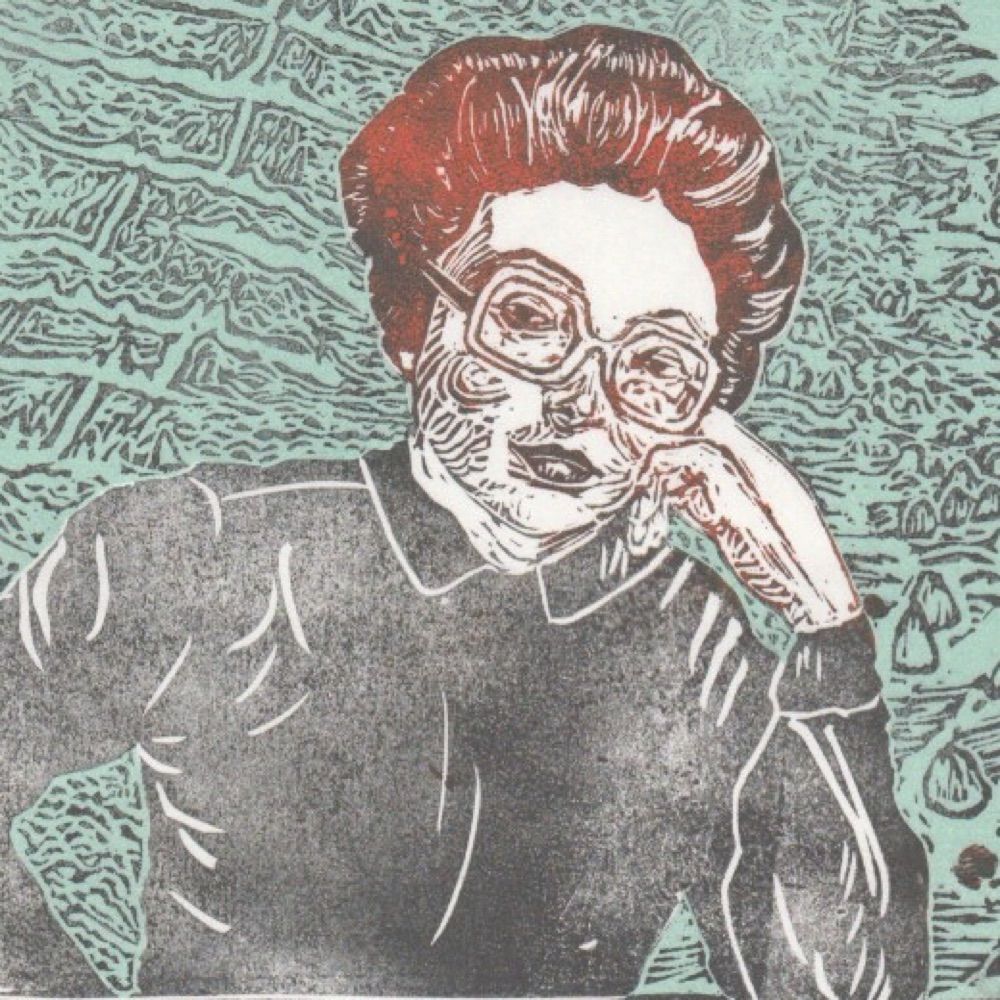
Tardigrades in Space Wikipedia page.
I thought tardigrades were well known but I once sold #sciart at a microbiology conference & was surprised that there were folks there who had not heard of the mighty tardigrades, so I am happy to introduce you if new to you
en.wikipedia.org/wiki/Tardigr...
I thought tardigrades were well known but I once sold #sciart at a microbiology conference & was surprised that there were folks there who had not heard of the mighty tardigrades, so I am happy to introduce you if new to you
en.wikipedia.org/wiki/Tardigr...

January 27, 2026 at 12:56 PM
Tardigrades in Space Wikipedia page.
I thought tardigrades were well known but I once sold #sciart at a microbiology conference & was surprised that there were folks there who had not heard of the mighty tardigrades, so I am happy to introduce you if new to you
en.wikipedia.org/wiki/Tardigr...
I thought tardigrades were well known but I once sold #sciart at a microbiology conference & was surprised that there were folks there who had not heard of the mighty tardigrades, so I am happy to introduce you if new to you
en.wikipedia.org/wiki/Tardigr...
Reposted by Emily Mitchell
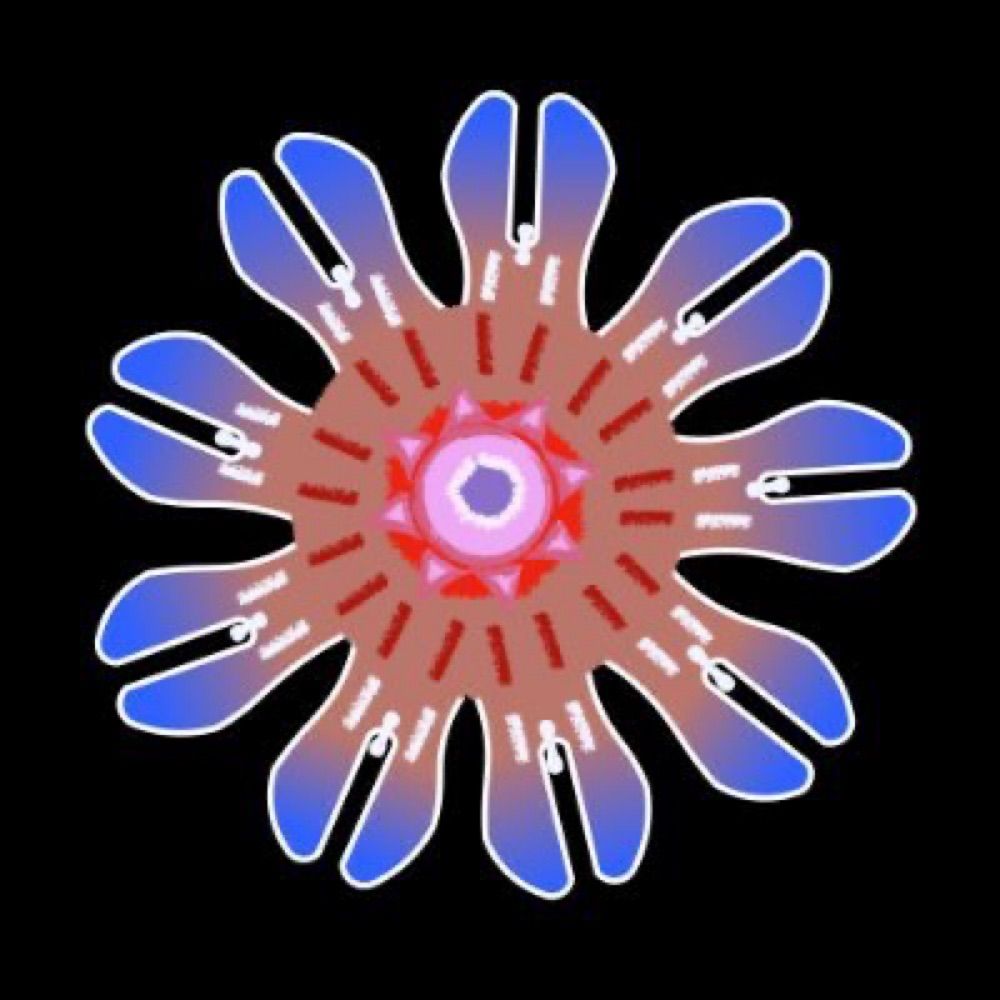
Timeline cleans with snowflake-sized baby lagoon jellyfish.
.
🎥 jelliesfarm www.instagram.com/jelliesfarm?...
.
🎥 jelliesfarm www.instagram.com/jelliesfarm?...
January 25, 2026 at 10:08 PM
Timeline cleans with snowflake-sized baby lagoon jellyfish.
.
🎥 jelliesfarm www.instagram.com/jelliesfarm?...
.
🎥 jelliesfarm www.instagram.com/jelliesfarm?...
Reposted by Emily Mitchell
Big shoutout to all the CTDs working hard this CTD Appreciation Day `🎉🥳`
CTD whatnow?
📷 Deploying a CTD, a sampling device which collects data on conductivity (salinity), temperature and depth in pancake ice, Antarctica back in 2001. Credit CSIRO (CC BY 3.0)
CTD whatnow?
📷 Deploying a CTD, a sampling device which collects data on conductivity (salinity), temperature and depth in pancake ice, Antarctica back in 2001. Credit CSIRO (CC BY 3.0)

January 22, 2026 at 10:56 AM
Big shoutout to all the CTDs working hard this CTD Appreciation Day `🎉🥳`
CTD whatnow?
📷 Deploying a CTD, a sampling device which collects data on conductivity (salinity), temperature and depth in pancake ice, Antarctica back in 2001. Credit CSIRO (CC BY 3.0)
CTD whatnow?
📷 Deploying a CTD, a sampling device which collects data on conductivity (salinity), temperature and depth in pancake ice, Antarctica back in 2001. Credit CSIRO (CC BY 3.0)
Reposted by Emily Mitchell
*laugh* a FASCINATING observation of this sea cucumber, Paracaudina from Australia doing.. something. Blowing bubbles? A great big "WHAT?" #echinoday www.inaturalist.org/observations...

Paracaudina bacillis
Paracaudina bacillis from Blairgowrie Yacht Squadron/Point Nepean Rd, Blairgowrie VIC 3942, Australia on January 20, 2026 at 09:03 AM by Jak Grimm. Wonder what the pearl bubble is?
www.inaturalist.org
January 22, 2026 at 10:22 AM
*laugh* a FASCINATING observation of this sea cucumber, Paracaudina from Australia doing.. something. Blowing bubbles? A great big "WHAT?" #echinoday www.inaturalist.org/observations...
Reposted by Emily Mitchell
Our paper on the mysterious Devonian organism Prototaxites has now finally been published! See the paper here (www.science.org/doi/10.1126/...) and our explainer thread below!
Prototaxites reconstruction by Matt Humpage
Prototaxites reconstruction by Matt Humpage

January 21, 2026 at 7:25 PM
Our paper on the mysterious Devonian organism Prototaxites has now finally been published! See the paper here (www.science.org/doi/10.1126/...) and our explainer thread below!
Prototaxites reconstruction by Matt Humpage
Prototaxites reconstruction by Matt Humpage
Reposted by Emily Mitchell
This is brilliant.

January 21, 2026 at 9:30 PM
This is brilliant.
Reposted by Emily Mitchell
Greenland sharks grow less than 1cm per year, reach sexual maturity at 150 years old and are the slowest sharks in the world.
These deep-sea creatures live to at least 250 years, making them the longest-lived vertebrates on Earth.
#DeepSeaWonders
These deep-sea creatures live to at least 250 years, making them the longest-lived vertebrates on Earth.
#DeepSeaWonders


January 20, 2026 at 10:22 AM
Greenland sharks grow less than 1cm per year, reach sexual maturity at 150 years old and are the slowest sharks in the world.
These deep-sea creatures live to at least 250 years, making them the longest-lived vertebrates on Earth.
#DeepSeaWonders
These deep-sea creatures live to at least 250 years, making them the longest-lived vertebrates on Earth.
#DeepSeaWonders
Reposted by Emily Mitchell

The sleep patterns of jellyfish and sea anemones share similarities with those of humans, according to research published in Nature Communications. The findings support the hypothesis that sleep evolved across a range of species to protect against DNA damage. 🧪

DNA damage modulates sleep drive in basal cnidarians with divergent chronotypes - Nature Communications
Here, the authors use the diurnal upside-down jellyfish and the crepuscular starlet sea anemone as simple nerve net models to examine the potential evolutionary origins of sleep. They describe and define sleep patterns in these species, finding that sleep deprivation increases neuronal DNA damage and that sleep facilitates genome stability.
go.nature.com
January 19, 2026 at 2:30 AM
The sleep patterns of jellyfish and sea anemones share similarities with those of humans, according to research published in Nature Communications. The findings support the hypothesis that sleep evolved across a range of species to protect against DNA damage. 🧪
Reposted by Emily Mitchell


Reposted by Emily Mitchell

If you’re interested in extinction risk, please check out our new paper in @science.org led by my former PhD student Cooper: www.science.org/doi/full/10....

January 16, 2026 at 9:39 AM
If you’re interested in extinction risk, please check out our new paper in @science.org led by my former PhD student Cooper: www.science.org/doi/full/10....
Reposted by Emily Mitchell
How did these strange, ancient organisms turn into such remarkable fossils?
@cambrojoe.bsky.social
@egmitchell.bsky.social
#evolutionsoup #evolution #cambrian #science #fossils
👇🏿👇🏽
is.gd/AwnRgy
@cambrojoe.bsky.social
@egmitchell.bsky.social
#evolutionsoup #evolution #cambrian #science #fossils
👇🏿👇🏽
is.gd/AwnRgy

January 9, 2026 at 5:24 PM
How did these strange, ancient organisms turn into such remarkable fossils?
@cambrojoe.bsky.social
@egmitchell.bsky.social
#evolutionsoup #evolution #cambrian #science #fossils
👇🏿👇🏽
is.gd/AwnRgy
@cambrojoe.bsky.social
@egmitchell.bsky.social
#evolutionsoup #evolution #cambrian #science #fossils
👇🏿👇🏽
is.gd/AwnRgy
Reposted by Emily Mitchell
Exciting news! I was interviewed by @currentbiology.bsky.social for their Q & A section, where I talk about the future of palaeontology, dangers of AI in education, social media and science communication. Featuring, my doodles!
cell.com/current-biology/fulltext/S0960-9822(25)01552-0
cell.com/current-biology/fulltext/S0960-9822(25)01552-0


January 5, 2026 at 3:49 PM
Exciting news! I was interviewed by @currentbiology.bsky.social for their Q & A section, where I talk about the future of palaeontology, dangers of AI in education, social media and science communication. Featuring, my doodles!
cell.com/current-biology/fulltext/S0960-9822(25)01552-0
cell.com/current-biology/fulltext/S0960-9822(25)01552-0
Reposted by Emily Mitchell
Really excited to have the new issue of Paleobiology @paleosoc.bsky.social out celebrating the 50th anniversary of #punctuatedequilibria #macroevolution #paleobiology #palaeontology #paleontology @nilese.bsky.social www.cambridge.org/core/journal...
Latest issue | Paleobiology | Cambridge Core
Paleobiology
www.cambridge.org
January 2, 2026 at 6:31 PM
Really excited to have the new issue of Paleobiology @paleosoc.bsky.social out celebrating the 50th anniversary of #punctuatedequilibria #macroevolution #paleobiology #palaeontology #paleontology @nilese.bsky.social www.cambridge.org/core/journal...
Reposted by Emily Mitchell
Happy New Year! Please pre-register (non-binding) for the 1-3 June #Oslo Larwood #bryozoa meeting! It will help us better estimate conference needs, meaning lower conference fees! There will be ecology, evolution, taxonomy and an in-person Dennis!!! www.bryozoology.org/kopie-von-20... pls repost!
Larwood 19th Symposium | International Bryozoology
www.bryozoology.org
January 2, 2026 at 10:48 AM
Happy New Year! Please pre-register (non-binding) for the 1-3 June #Oslo Larwood #bryozoa meeting! It will help us better estimate conference needs, meaning lower conference fees! There will be ecology, evolution, taxonomy and an in-person Dennis!!! www.bryozoology.org/kopie-von-20... pls repost!
Reposted by Emily Mitchell
OH WOW! A whole web page DEVOTED to SPONGE SPICULE Imagery ! #porifera #spongeThursday www.spicules.org

January 1, 2026 at 9:36 PM
OH WOW! A whole web page DEVOTED to SPONGE SPICULE Imagery ! #porifera #spongeThursday www.spicules.org
Reposted by Emily Mitchell
I’m thrilled to share that PRI reached its fundraising goal and we will survive! Thanks to all who made this happen! I am so grateful!❤️
www.priweb.org/blog-post/pr...
www.priweb.org/blog-post/pr...

PRI's Wonderful Life — Paleontological Research Institution
By Dr. Warren Allmon , Director of the Paleontological Research Institution December 30, 2025 The holidays are a time for “Christmas movies” in my house, and one that is always on our list is&nbs...
www.priweb.org
January 1, 2026 at 6:48 PM
I’m thrilled to share that PRI reached its fundraising goal and we will survive! Thanks to all who made this happen! I am so grateful!❤️
www.priweb.org/blog-post/pr...
www.priweb.org/blog-post/pr...
Reposted by Emily Mitchell

A fascinating historical new year's celebration involving Crystal Palace Dinosaurs.
@cpdinosaurs.bsky.social
www.bbc.com/news/article...
@cpdinosaurs.bsky.social
www.bbc.com/news/article...

When 21 men saw in the new year by dining in a dinosaur
Guests braved the cold of December 1853 to have dinner inside a concrete mould of a dinosaur in a warehouse.
www.bbc.com
December 31, 2025 at 8:14 PM
A fascinating historical new year's celebration involving Crystal Palace Dinosaurs.
@cpdinosaurs.bsky.social
www.bbc.com/news/article...
@cpdinosaurs.bsky.social
www.bbc.com/news/article...
Reposted by Emily Mitchell
FULL SCREEN! Isn’t this the most beautiful creature you’ve ever seen? My first ever truly pelagic amphipod, from the genus Themisto. Look at that eye!!
#marineplankton 🦑
#marineplankton 🦑
December 29, 2025 at 8:16 PM
FULL SCREEN! Isn’t this the most beautiful creature you’ve ever seen? My first ever truly pelagic amphipod, from the genus Themisto. Look at that eye!!
#marineplankton 🦑
#marineplankton 🦑