



Emerson Harkin
@efharkin.bsky.social
Computational neuroscience post doc interested in serotonin | Dayan lab @mpicybernetics.bsky.social | 🇨🇦 in 🇩🇪
Pinned
Emerson Harkin
@efharkin.bsky.social
· Mar 27
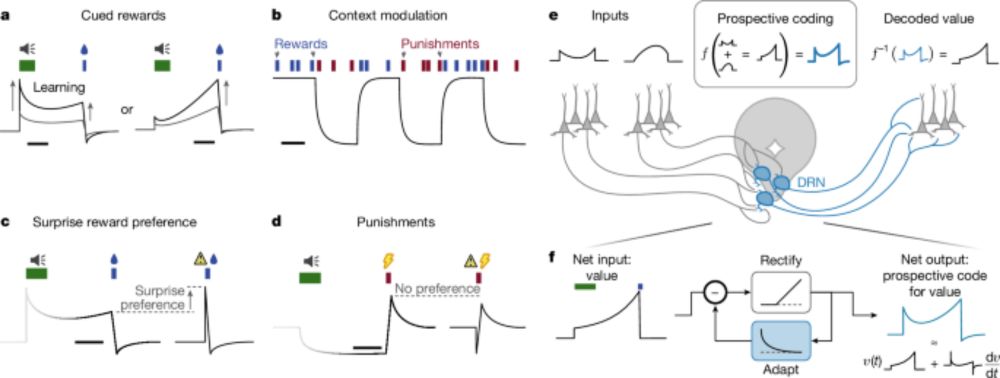
A prospective code for value in the serotonin system - Nature
Merging ideas from reinforcement learning theory with recent insights into the filtering properties of the dorsal raphe nucleus, a unifying perspective is found explaining why serotonin neurons are ac...
doi.org
I'm excited to share that the last chapter of my PhD thesis is now published in Nature! 🍾
What drives serotonin neurons? We think it's the expectation of future reward and --- critically --- how fast this expectation is increasing. 📈
doi.org/10.1038/s415...
1/6
What drives serotonin neurons? We think it's the expectation of future reward and --- critically --- how fast this expectation is increasing. 📈
doi.org/10.1038/s415...
1/6
Reposted by Emerson Harkin

I am excited to share my PhD work on head-direction cells recorded in the wild, now published in @science.org, where we recorded neurons in bats flying outdoors on an island.
doi.org/10.1126/sci...
With @ray-neuro.bsky.social, Shir Maimon, Liora Las, Nachum Ulanovsky and many others
doi.org/10.1126/sci...
With @ray-neuro.bsky.social, Shir Maimon, Liora Las, Nachum Ulanovsky and many others

October 16, 2025 at 6:04 PM
I am excited to share my PhD work on head-direction cells recorded in the wild, now published in @science.org, where we recorded neurons in bats flying outdoors on an island.
doi.org/10.1126/sci...
With @ray-neuro.bsky.social, Shir Maimon, Liora Las, Nachum Ulanovsky and many others
doi.org/10.1126/sci...
With @ray-neuro.bsky.social, Shir Maimon, Liora Las, Nachum Ulanovsky and many others
Reposted by Emerson Harkin
New in @pnas.org: doi.org/10.1073/pnas...
We study how humans explore a 61-state environment with a stochastic region that mimics a “noisy-TV.”
Results: Participants keep exploring the stochastic part even when it’s unhelpful, and novelty-seeking best explains this behavior.
#cogsci #neuroskyence
We study how humans explore a 61-state environment with a stochastic region that mimics a “noisy-TV.”
Results: Participants keep exploring the stochastic part even when it’s unhelpful, and novelty-seeking best explains this behavior.
#cogsci #neuroskyence


September 28, 2025 at 11:07 AM
New in @pnas.org: doi.org/10.1073/pnas...
We study how humans explore a 61-state environment with a stochastic region that mimics a “noisy-TV.”
Results: Participants keep exploring the stochastic part even when it’s unhelpful, and novelty-seeking best explains this behavior.
#cogsci #neuroskyence
We study how humans explore a 61-state environment with a stochastic region that mimics a “noisy-TV.”
Results: Participants keep exploring the stochastic part even when it’s unhelpful, and novelty-seeking best explains this behavior.
#cogsci #neuroskyence
Reposted by Emerson Harkin

This is one of the most outstanding examples of circuit understanding I've seen in a long time. The unification of theory and experiment is beautiful.
When Malcolm presented this in my lab, the audience was cheering at the end, and one person shouted (non-ironically) "You did it!"
When Malcolm presented this in my lab, the audience was cheering at the end, and one person shouted (non-ironically) "You did it!"

🚨Our preprint is online!🚨
www.biorxiv.org/content/10.1...
How do #dopamine neurons perform the key calculations in reinforcement #learning?
Read on to find out more! 🧵
www.biorxiv.org/content/10.1...
How do #dopamine neurons perform the key calculations in reinforcement #learning?
Read on to find out more! 🧵
September 19, 2025 at 1:37 PM
This is one of the most outstanding examples of circuit understanding I've seen in a long time. The unification of theory and experiment is beautiful.
When Malcolm presented this in my lab, the audience was cheering at the end, and one person shouted (non-ironically) "You did it!"
When Malcolm presented this in my lab, the audience was cheering at the end, and one person shouted (non-ironically) "You did it!"
Reposted by Emerson Harkin

The Sosa Lab website is now live!
www.sosaneurolab.com
We will be seeking a postdoctoral researcher to join the growing team! If you are a rodent neuroscientist and interested in doing systems neuro work in the mountains 🏔️, please check out the "Join" page.
www.sosaneurolab.com
We will be seeking a postdoctoral researcher to join the growing team! If you are a rodent neuroscientist and interested in doing systems neuro work in the mountains 🏔️, please check out the "Join" page.

Sosa Lab
www.sosaneurolab.com
September 22, 2025 at 9:23 PM
The Sosa Lab website is now live!
www.sosaneurolab.com
We will be seeking a postdoctoral researcher to join the growing team! If you are a rodent neuroscientist and interested in doing systems neuro work in the mountains 🏔️, please check out the "Join" page.
www.sosaneurolab.com
We will be seeking a postdoctoral researcher to join the growing team! If you are a rodent neuroscientist and interested in doing systems neuro work in the mountains 🏔️, please check out the "Join" page.

Reposted by Emerson Harkin
So happy to see this work out! 🥳
Huge thanks to our two amazing reviewers who pushed us to make the paper much stronger. A truly joyful collaboration with @lucasgruaz.bsky.social, @sobeckerneuro.bsky.social, and Johanni Brea! 🥰
Tweeprint on an earlier version: bsky.app/profile/modi... 🧠🧪👩🔬
Huge thanks to our two amazing reviewers who pushed us to make the paper much stronger. A truly joyful collaboration with @lucasgruaz.bsky.social, @sobeckerneuro.bsky.social, and Johanni Brea! 🥰
Tweeprint on an earlier version: bsky.app/profile/modi... 🧠🧪👩🔬

August 25, 2025 at 4:18 PM
So happy to see this work out! 🥳
Huge thanks to our two amazing reviewers who pushed us to make the paper much stronger. A truly joyful collaboration with @lucasgruaz.bsky.social, @sobeckerneuro.bsky.social, and Johanni Brea! 🥰
Tweeprint on an earlier version: bsky.app/profile/modi... 🧠🧪👩🔬
Huge thanks to our two amazing reviewers who pushed us to make the paper much stronger. A truly joyful collaboration with @lucasgruaz.bsky.social, @sobeckerneuro.bsky.social, and Johanni Brea! 🥰
Tweeprint on an earlier version: bsky.app/profile/modi... 🧠🧪👩🔬
Reposted by Emerson Harkin

Looking forward to attending #CCN2025 for the first time and presenting the first steps of my postdoc project! If you’re interested in how learning the temporal structure of the environment affects foraging decisions and how we’re testing this in a naturalistic experiment come by poster B90, Wed.
August 9, 2025 at 9:02 AM
Looking forward to attending #CCN2025 for the first time and presenting the first steps of my postdoc project! If you’re interested in how learning the temporal structure of the environment affects foraging decisions and how we’re testing this in a naturalistic experiment come by poster B90, Wed.
Reposted by Emerson Harkin

🚨Pre-print alert🚨
We stimulated serotonin with optogenetics while doing large-scale Neuropixel recordings across the mouse brain. We found strong widespread modulation of neural activity, but no effect on the choices of the mouse 🐭
How is this possible? Strap in! (1/9) 👇🧵
doi.org/10.1101/2025...
We stimulated serotonin with optogenetics while doing large-scale Neuropixel recordings across the mouse brain. We found strong widespread modulation of neural activity, but no effect on the choices of the mouse 🐭
How is this possible? Strap in! (1/9) 👇🧵
doi.org/10.1101/2025...

Serotonin drives choice-independent reconfiguration of distributed neural activity
Serotonin (5-HT) is a central neuromodulator which is implicated in, amongst other functions, cognitive flexibility. 5-HT is released from the dorsal raphe nucleus (DRN) throughout nearly the entire f...
doi.org
August 5, 2025 at 12:32 PM
🚨Pre-print alert🚨
We stimulated serotonin with optogenetics while doing large-scale Neuropixel recordings across the mouse brain. We found strong widespread modulation of neural activity, but no effect on the choices of the mouse 🐭
How is this possible? Strap in! (1/9) 👇🧵
doi.org/10.1101/2025...
We stimulated serotonin with optogenetics while doing large-scale Neuropixel recordings across the mouse brain. We found strong widespread modulation of neural activity, but no effect on the choices of the mouse 🐭
How is this possible? Strap in! (1/9) 👇🧵
doi.org/10.1101/2025...
Reposted by Emerson Harkin
Finally published:
“Top-down and bottom-up neuroscience: overcoming the clash of research cultures”
www.nature.com/articles/s41...
Looking for ways to better understand different neuroscientific perspectives and enable productive collaborations
“Top-down and bottom-up neuroscience: overcoming the clash of research cultures”
www.nature.com/articles/s41...
Looking for ways to better understand different neuroscientific perspectives and enable productive collaborations
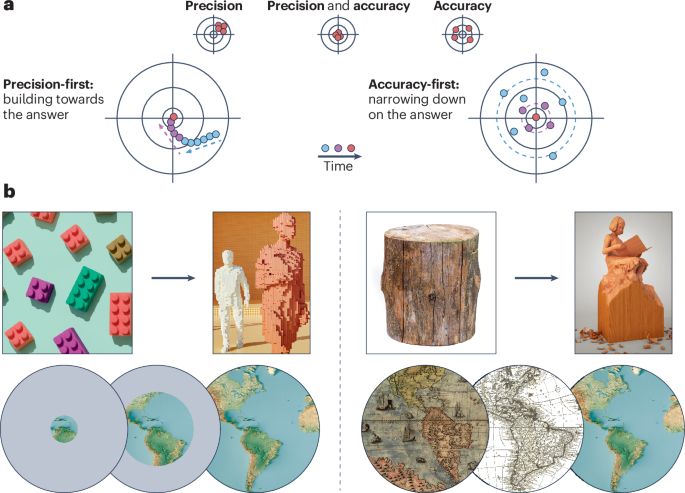
Top-down and bottom-up neuroscience: overcoming the clash of research cultures - Nature Reviews Neuroscience
As scientists, we want solid answers, but we also want to answer questions that matter. Yet, the brain’s complexity forces trade-offs between these desiderata, bringing about two distinct research app...
www.nature.com
July 22, 2025 at 11:02 AM
Finally published:
“Top-down and bottom-up neuroscience: overcoming the clash of research cultures”
www.nature.com/articles/s41...
Looking for ways to better understand different neuroscientific perspectives and enable productive collaborations
“Top-down and bottom-up neuroscience: overcoming the clash of research cultures”
www.nature.com/articles/s41...
Looking for ways to better understand different neuroscientific perspectives and enable productive collaborations
I've been watching the debate over "representations" in neuroscience 🍿 and I wanted to suggest a thought experiment:
Suppose a driver sees a 🛑 and this causes vision neurons to spike in a characteristic way, but the driver blows through the intersection. Is the stop sign *represented* in the brain?
Suppose a driver sees a 🛑 and this causes vision neurons to spike in a characteristic way, but the driver blows through the intersection. Is the stop sign *represented* in the brain?
June 6, 2025 at 9:47 AM
I've been watching the debate over "representations" in neuroscience 🍿 and I wanted to suggest a thought experiment:
Suppose a driver sees a 🛑 and this causes vision neurons to spike in a characteristic way, but the driver blows through the intersection. Is the stop sign *represented* in the brain?
Suppose a driver sees a 🛑 and this causes vision neurons to spike in a characteristic way, but the driver blows through the intersection. Is the stop sign *represented* in the brain?
⏰ Check out this inspiring pair of articles from @paulmasset.bsky.social and Margarida Sousa! Some dopamine neurons care about rewards far in the future more than others, allowing the brain to learn the timing of future rewards.
Congrats to the authors! 🍾
🔓 links: rdcu.be/epxkE rdcu.be/epxkG
Congrats to the authors! 🍾
🔓 links: rdcu.be/epxkE rdcu.be/epxkG

A multidimensional distributional map of future reward in dopamine neurons
Nature - An algorithm called time–magnitude reinforcement learning (TMRL) extends distributional reinforcement learning to take account of reward time and magnitude, and behavioural and...
rdcu.be
June 5, 2025 at 9:42 AM
⏰ Check out this inspiring pair of articles from @paulmasset.bsky.social and Margarida Sousa! Some dopamine neurons care about rewards far in the future more than others, allowing the brain to learn the timing of future rewards.
Congrats to the authors! 🍾
🔓 links: rdcu.be/epxkE rdcu.be/epxkG
Congrats to the authors! 🍾
🔓 links: rdcu.be/epxkE rdcu.be/epxkG
Reposted by Emerson Harkin
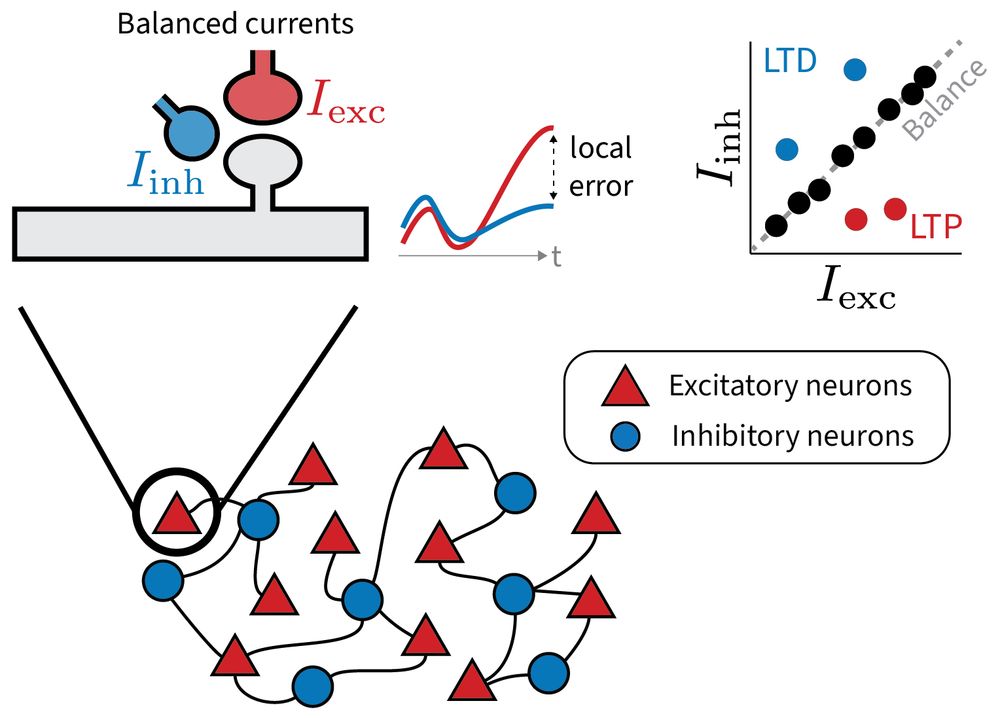
1/6 Why does the brain maintain such precise excitatory-inhibitory balance?
Our new preprint explores a provocative idea: Small, targeted deviations from this balance may serve a purpose: to encode local error signals for learning.
www.biorxiv.org/content/10.1...
led by @jrbch.bsky.social
Our new preprint explores a provocative idea: Small, targeted deviations from this balance may serve a purpose: to encode local error signals for learning.
www.biorxiv.org/content/10.1...
led by @jrbch.bsky.social
May 27, 2025 at 7:49 AM
1/6 Why does the brain maintain such precise excitatory-inhibitory balance?
Our new preprint explores a provocative idea: Small, targeted deviations from this balance may serve a purpose: to encode local error signals for learning.
www.biorxiv.org/content/10.1...
led by @jrbch.bsky.social
Our new preprint explores a provocative idea: Small, targeted deviations from this balance may serve a purpose: to encode local error signals for learning.
www.biorxiv.org/content/10.1...
led by @jrbch.bsky.social
Reposted by Emerson Harkin

Ugh… there’s also what I call messianic AI, the fantasy that AI will “solve” science. Treating science like a vending machine for solitons/profit & scientists as human cogs replaceable by machinery. But Science is a living culture of critical discussion, mentorship, shared community values &methods.
May 9, 2025 at 6:11 PM
Ugh… there’s also what I call messianic AI, the fantasy that AI will “solve” science. Treating science like a vending machine for solitons/profit & scientists as human cogs replaceable by machinery. But Science is a living culture of critical discussion, mentorship, shared community values &methods.
Reposted by Emerson Harkin
Pandemic project ready to share! Short movies (many of which are emotional) you can use as stimuli:
rdcu.be/ekNMo
Stimuli, data, and code:
osf.io/hk32g/?view_...
#psynomBRM
rdcu.be/ekNMo
Stimuli, data, and code:
osf.io/hk32g/?view_...
#psynomBRM
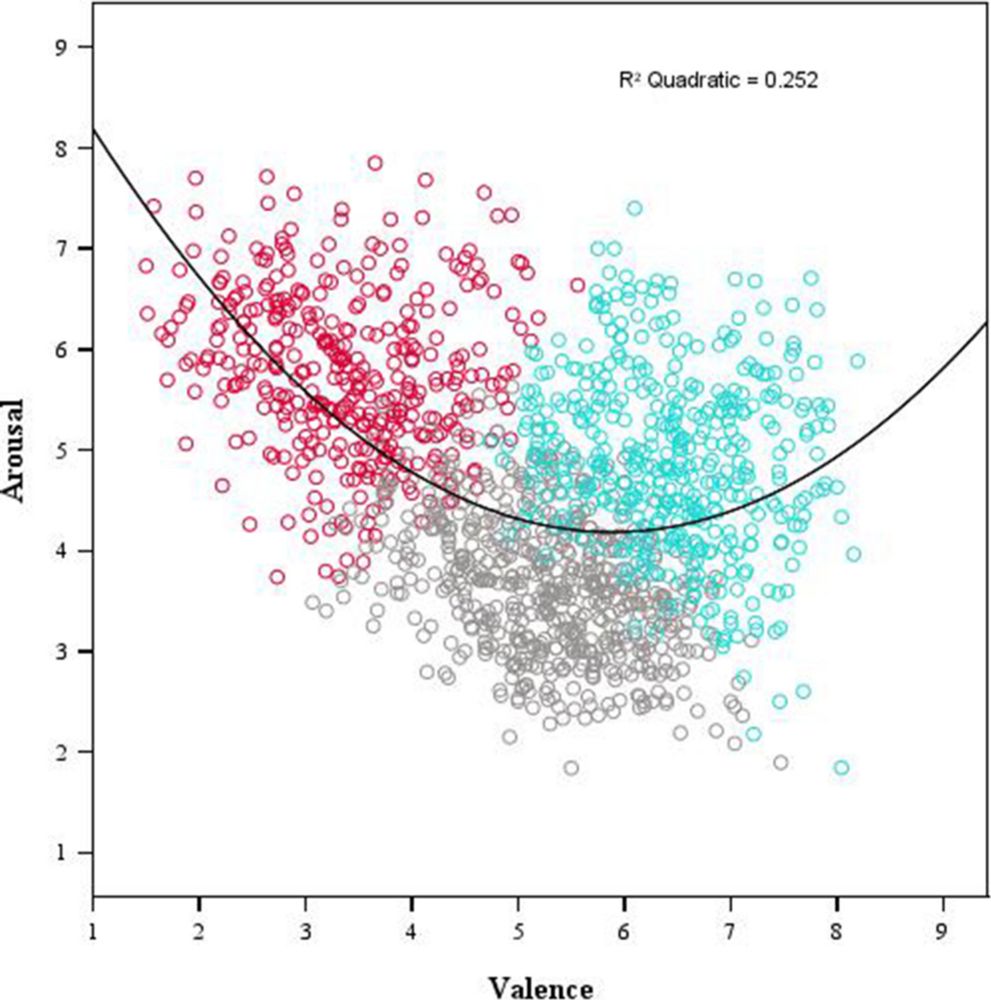
The Second Database of Emotional Videos from Ottawa (DEVO-2): Over 1300 brief video clips rated on valence, arousal, impact, and familiarity - Behavior Research Methods
We introduce an updated set of video clips for research on emotion and its relations with perception, cognition, and behavior. These 1380 brief video clips each portray realistic episodes. They were s...
link.springer.com
May 6, 2025 at 5:57 PM
Pandemic project ready to share! Short movies (many of which are emotional) you can use as stimuli:
rdcu.be/ekNMo
Stimuli, data, and code:
osf.io/hk32g/?view_...
#psynomBRM
rdcu.be/ekNMo
Stimuli, data, and code:
osf.io/hk32g/?view_...
#psynomBRM
Sometimes negative results are also beautiful.

May 2, 2025 at 2:33 PM
Sometimes negative results are also beautiful.
TIL that at certain journals the date your paper is published online might be very different from the date it appears in print.
Unrelated, is there anyone whose work was published in the March 27 print edition of Nature who'd like several copies to share with supportive family members?
Unrelated, is there anyone whose work was published in the March 27 print edition of Nature who'd like several copies to share with supportive family members?
April 28, 2025 at 9:00 PM
TIL that at certain journals the date your paper is published online might be very different from the date it appears in print.
Unrelated, is there anyone whose work was published in the March 27 print edition of Nature who'd like several copies to share with supportive family members?
Unrelated, is there anyone whose work was published in the March 27 print edition of Nature who'd like several copies to share with supportive family members?
Reposted by Emerson Harkin

Most simulators for time-series data (e.g., numerical solvers for differential equations) are Markovian-- this can be exploited for efficient simulation-based inference on time-series data! Talk to Manuel and Shoji at #ICLR2025, or read the paper ⬇️!

Excited to present our work on compositional SBI for time series at #ICLR2025 tomorrow!
If you're interested in simulation-based inference for time series, come chat with Manuel Gloeckler or Shoji Toyota
at Poster #420, Saturday 10:00–12:00 in Hall 3.
📰: arxiv.org/abs/2411.02728
If you're interested in simulation-based inference for time series, come chat with Manuel Gloeckler or Shoji Toyota
at Poster #420, Saturday 10:00–12:00 in Hall 3.
📰: arxiv.org/abs/2411.02728

Compositional simulation-based inference for time series
Amortized simulation-based inference (SBI) methods train neural networks on simulated data to perform Bayesian inference. While this strategy avoids the need for tractable likelihoods, it often requir...
arxiv.org
April 25, 2025 at 8:23 PM
Most simulators for time-series data (e.g., numerical solvers for differential equations) are Markovian-- this can be exploited for efficient simulation-based inference on time-series data! Talk to Manuel and Shoji at #ICLR2025, or read the paper ⬇️!
Reposted by Emerson Harkin

Attention climate scholars seeking to leave the US: Next year the University of Ottawa will be seeking int'l candidates for a Canada Excellence Research Chair in "Climate and Societal Solutions" (broadly defined) They'll seek established scholars with global reach in this area (see below)...
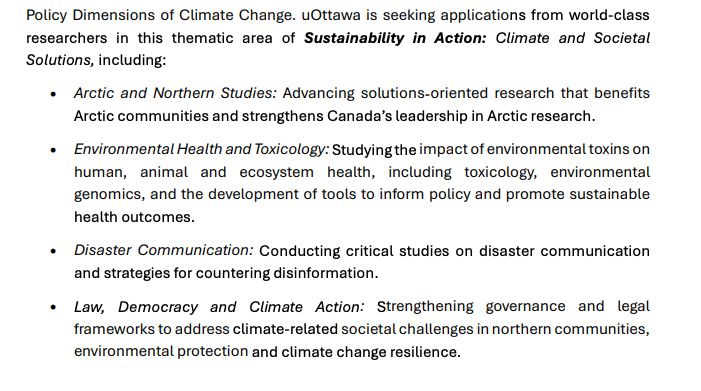
April 23, 2025 at 3:06 PM
Attention climate scholars seeking to leave the US: Next year the University of Ottawa will be seeking int'l candidates for a Canada Excellence Research Chair in "Climate and Societal Solutions" (broadly defined) They'll seek established scholars with global reach in this area (see below)...
Reposted by Emerson Harkin

Many people (myself included), note the lack of top-down feedback in deep NN models of the brain.
Mashbayar has come to the rescue! She built a code-base for making models with top-down feedback. Check out her paper at @elife.bsky.social showing the impact of FB on audio-visual integration.
🧠📈 🧪
Mashbayar has come to the rescue! She built a code-base for making models with top-down feedback. Check out her paper at @elife.bsky.social showing the impact of FB on audio-visual integration.
🧠📈 🧪

Top-down feedback is ubiquitous in the brain and computationally distinct, but rarely modeled in deep neural networks. What happens when a DNN has biologically-inspired top-down feedback? 🧠📈
Our new paper explores this: elifesciences.org/reviewed-pre...
Our new paper explores this: elifesciences.org/reviewed-pre...
Top-down feedback matters: Functional impact of brainlike connectivity motifs on audiovisual integration
elifesciences.org
April 15, 2025 at 8:59 PM
Many people (myself included), note the lack of top-down feedback in deep NN models of the brain.
Mashbayar has come to the rescue! She built a code-base for making models with top-down feedback. Check out her paper at @elife.bsky.social showing the impact of FB on audio-visual integration.
🧠📈 🧪
Mashbayar has come to the rescue! She built a code-base for making models with top-down feedback. Check out her paper at @elife.bsky.social showing the impact of FB on audio-visual integration.
🧠📈 🧪
When a scientific idea is ambiguous, is it good to err on the side of agreeing with it?
Sometimes I read discussions like "Our data are broadly consistent with X and Y," where X and Y are plausibly contradictory but vague enough that there's wiggle room.
Sometimes I read discussions like "Our data are broadly consistent with X and Y," where X and Y are plausibly contradictory but vague enough that there's wiggle room.
April 15, 2025 at 6:15 PM
When a scientific idea is ambiguous, is it good to err on the side of agreeing with it?
Sometimes I read discussions like "Our data are broadly consistent with X and Y," where X and Y are plausibly contradictory but vague enough that there's wiggle room.
Sometimes I read discussions like "Our data are broadly consistent with X and Y," where X and Y are plausibly contradictory but vague enough that there's wiggle room.
Reposted by Emerson Harkin
Our latest study identifies a specific cell type and receptor essential for psilocybin’s long-lasting neural and behavioral effects 🍄🔬🧠🧪
Led by Ling-Xiao Shao and @ItsClaraLiao
Funded by @NIH @NIMHgov
📄 Read in @nature.com - www.nature.com/articles/s41...
1/12
Led by Ling-Xiao Shao and @ItsClaraLiao
Funded by @NIH @NIMHgov
📄 Read in @nature.com - www.nature.com/articles/s41...
1/12
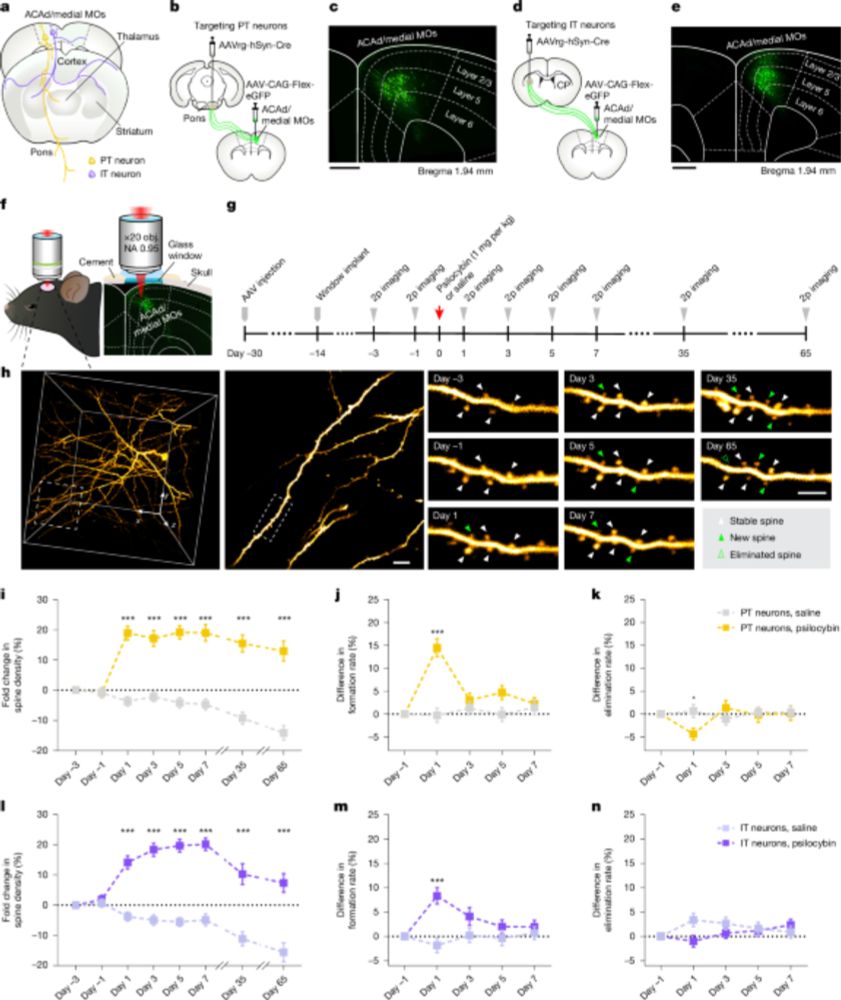
Psilocybin’s lasting action requires pyramidal cell types and 5-HT2A receptors - Nature
A pyramidal cell type and the 5-HT2A receptor in the medial frontal cortex have essential roles in psilocybin’s long-term drug action.
www.nature.com
April 2, 2025 at 4:09 PM
Our latest study identifies a specific cell type and receptor essential for psilocybin’s long-lasting neural and behavioral effects 🍄🔬🧠🧪
Led by Ling-Xiao Shao and @ItsClaraLiao
Funded by @NIH @NIMHgov
📄 Read in @nature.com - www.nature.com/articles/s41...
1/12
Led by Ling-Xiao Shao and @ItsClaraLiao
Funded by @NIH @NIMHgov
📄 Read in @nature.com - www.nature.com/articles/s41...
1/12
Reposted by Emerson Harkin
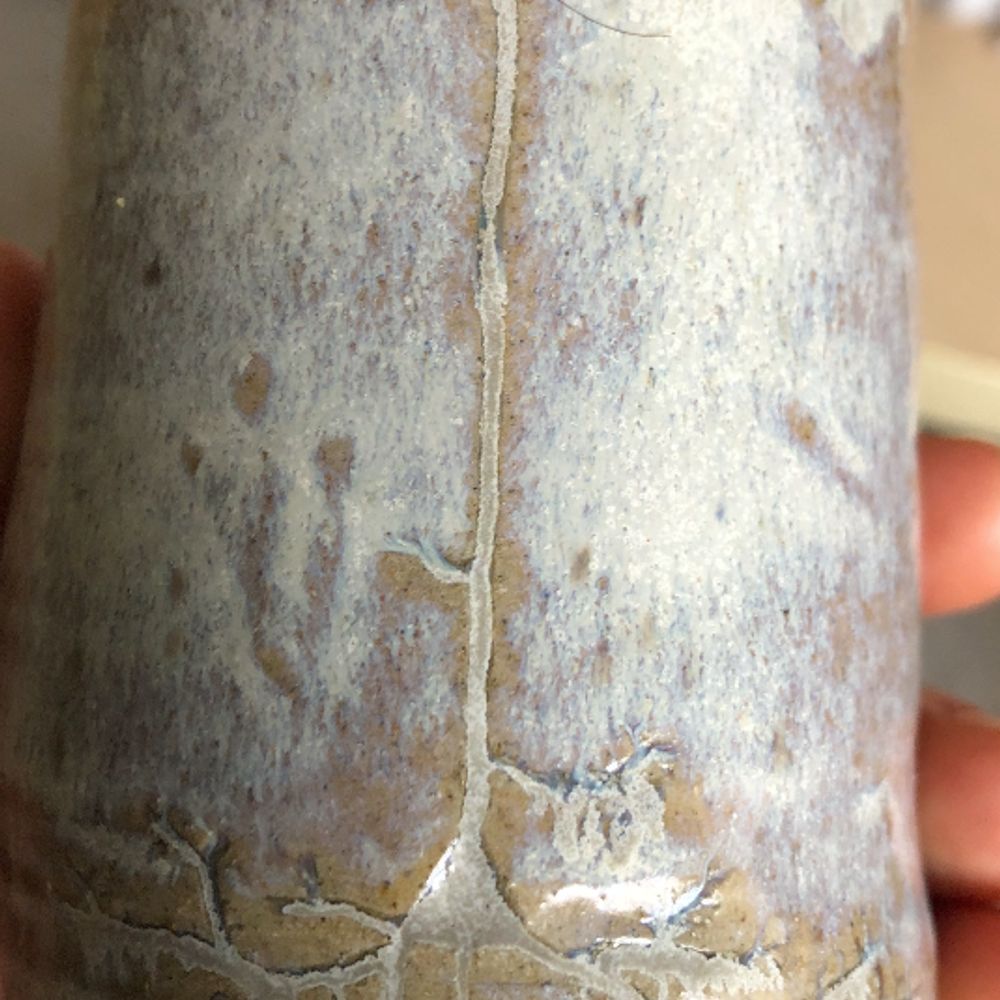
I'm always impressed when I read an article about work I was involved in that summarizes better than what I feel capable of :
www.brainpost.co/weekly-brain...
www.brainpost.co/weekly-brain...

Cracking the Serotonin Code: How Your Brain Predicts Future Rewards — BrainPost | Easy-to-read summaries of the latest neuroscience publications
Post by Rachel Sharp The takeaway Serotonin neurons signal a prospective code for value – a prediction of near-future rewards that explains why these neurons respond to both rewards and punish...
www.brainpost.co
April 2, 2025 at 8:48 AM
I'm always impressed when I read an article about work I was involved in that summarizes better than what I feel capable of :
www.brainpost.co/weekly-brain...
www.brainpost.co/weekly-brain...
Reposted by Emerson Harkin

1/7: Super excited to share our new paper! This one should be of interest to neuroscientists and deep learning theory folks. This paper was a collaboration with Alexandre Payeur, @averyryoo.bsky.social, Thomas Jiralerspong, @mattperich.bsky.social, Luca Mazzucato, @glajoie.bsky.social
March 25, 2025 at 3:59 PM
1/7: Super excited to share our new paper! This one should be of interest to neuroscientists and deep learning theory folks. This paper was a collaboration with Alexandre Payeur, @averyryoo.bsky.social, Thomas Jiralerspong, @mattperich.bsky.social, Luca Mazzucato, @glajoie.bsky.social
Reposted by Emerson Harkin

Favourite quote from #cosyne2025 so far, from @tpvogels.bsky.social’s talk earlier today: “science is like trying to find a black cat in a dark room, and it’s not a cat”
March 28, 2025 at 8:37 PM
Favourite quote from #cosyne2025 so far, from @tpvogels.bsky.social’s talk earlier today: “science is like trying to find a black cat in a dark room, and it’s not a cat”
At #COSYNE2025? Come say hi at poster 116 tonight (Thursday)!
I'm excited to share that the last chapter of my PhD thesis is now published in Nature! 🍾
What drives serotonin neurons? We think it's the expectation of future reward and --- critically --- how fast this expectation is increasing. 📈
doi.org/10.1038/s415...
1/6
What drives serotonin neurons? We think it's the expectation of future reward and --- critically --- how fast this expectation is increasing. 📈
doi.org/10.1038/s415...
1/6
A prospective code for value in the serotonin system - Nature
Merging ideas from reinforcement learning theory with recent insights into the filtering properties of the dorsal raphe nucleus, a unifying perspective is found explaining why serotonin neurons are ac...
doi.org
March 27, 2025 at 9:06 PM
At #COSYNE2025? Come say hi at poster 116 tonight (Thursday)!