




Ecotoxicology lab RC One Health Ruhr
@ecotox.bsky.social
Ecotoxicology lab at Research Centre One Health Ruhr and University Duisburg-Essen
Reposted by Ecotoxicology lab RC One Health Ruhr

The Molecular Toxicology Group at the Helmholtz Centre of Environmental Research (UFZ) is looking for a creative and ambitious PhD candidate to use novel approaches to remove persistent PFAS from living organisms.🧬🐟🧪📈
Read more 👉 rptu.de/s/xphztf
Application closing: 16.01.2026
Read more 👉 rptu.de/s/xphztf
Application closing: 16.01.2026

January 10, 2026 at 12:38 PM
The Molecular Toxicology Group at the Helmholtz Centre of Environmental Research (UFZ) is looking for a creative and ambitious PhD candidate to use novel approaches to remove persistent PFAS from living organisms.🧬🐟🧪📈
Read more 👉 rptu.de/s/xphztf
Application closing: 16.01.2026
Read more 👉 rptu.de/s/xphztf
Application closing: 16.01.2026
How to evaluate the relative risks of pesticides and identify lower risk alternatives? This question in light of the EU COM Omnibus suggestions to lower environmental protection. Within the #EU PARC project we developed a benchmark concept and discuss its implications doi.org/10.1016/j.en...

January 6, 2026 at 10:12 PM
How to evaluate the relative risks of pesticides and identify lower risk alternatives? This question in light of the EU COM Omnibus suggestions to lower environmental protection. Within the #EU PARC project we developed a benchmark concept and discuss its implications doi.org/10.1016/j.en...
Reposted by Ecotoxicology lab RC One Health Ruhr

#Exposome research comes of age: After 20 years, the field of #exposomics is poised to reveal the complex, interacting drivers of #disease. A PNAS News Feature: https://ow.ly/9QOg50XPn5J
#exposure #pesticides #pollution #wildfires #biobank #genomics #PublicHealth
#exposure #pesticides #pollution #wildfires #biobank #genomics #PublicHealth

December 28, 2025 at 6:35 PM
#Exposome research comes of age: After 20 years, the field of #exposomics is poised to reveal the complex, interacting drivers of #disease. A PNAS News Feature: https://ow.ly/9QOg50XPn5J
#exposure #pesticides #pollution #wildfires #biobank #genomics #PublicHealth
#exposure #pesticides #pollution #wildfires #biobank #genomics #PublicHealth
Reposted by Ecotoxicology lab RC One Health Ruhr

An analysis of U.S. water quality data reveals that most toxic chemicals remain poorly characterized or undetected in routine monitoring.
The findings in Science suggest that the true scale of chemical risk to biodiversity and ecosystems may be significantly underestimated. https://scim.ag/4alqHdl
The findings in Science suggest that the true scale of chemical risk to biodiversity and ecosystems may be significantly underestimated. https://scim.ag/4alqHdl

Limitations of chemical monitoring hinder aquatic risk evaluations on the macroscale
Macroscale evaluations of chemical monitoring data require the integration of chemical, spatial, and temporal dimensions. Here, we linked 64 million US surface water monitoring records (1900 chemicals...
scim.ag
December 28, 2025 at 6:43 PM
An analysis of U.S. water quality data reveals that most toxic chemicals remain poorly characterized or undetected in routine monitoring.
The findings in Science suggest that the true scale of chemical risk to biodiversity and ecosystems may be significantly underestimated. https://scim.ag/4alqHdl
The findings in Science suggest that the true scale of chemical risk to biodiversity and ecosystems may be significantly underestimated. https://scim.ag/4alqHdl
Our new paper shows that even over decades protected areas have offered little improvements of freshwater biodiversity. We suggest avenues for improvement. Fantastic study lead by P. Haase and J. Sinclair. #OA rdcu.be/eU5jm
presse.senckenberg.de/en/pressemel...
presse.senckenberg.de/en/pressemel...
Rivers: too little protection in the protected area | Presse • Senckenberg Naturforschung
presse.senckenberg.de
December 17, 2025 at 11:40 AM
Our new paper shows that even over decades protected areas have offered little improvements of freshwater biodiversity. We suggest avenues for improvement. Fantastic study lead by P. Haase and J. Sinclair. #OA rdcu.be/eU5jm
presse.senckenberg.de/en/pressemel...
presse.senckenberg.de/en/pressemel...
Reposted by Ecotoxicology lab RC One Health Ruhr

Our December issue is now live: www.nature.com/natecolevol/...
Featuring research on 🧪
🦏 rhinocerotid dispersal in the mid-Cenozoic
🐟 biodiversity responses to freshwater stressors
🦋 evolution of butterfly eyespots
Cover shows a Korean seahorse, from Meyer et al. www.nature.com/articles/s41...
Featuring research on 🧪
🦏 rhinocerotid dispersal in the mid-Cenozoic
🐟 biodiversity responses to freshwater stressors
🦋 evolution of butterfly eyespots
Cover shows a Korean seahorse, from Meyer et al. www.nature.com/articles/s41...

December 9, 2025 at 11:01 AM
Our December issue is now live: www.nature.com/natecolevol/...
Featuring research on 🧪
🦏 rhinocerotid dispersal in the mid-Cenozoic
🐟 biodiversity responses to freshwater stressors
🦋 evolution of butterfly eyespots
Cover shows a Korean seahorse, from Meyer et al. www.nature.com/articles/s41...
Featuring research on 🧪
🦏 rhinocerotid dispersal in the mid-Cenozoic
🐟 biodiversity responses to freshwater stressors
🦋 evolution of butterfly eyespots
Cover shows a Korean seahorse, from Meyer et al. www.nature.com/articles/s41...
New paper out on how stressor numbers influence biodiversity - ecosystem function relationships in freshwater ecosystems. We considered four measures of ecosystem function and found that the positive BEF relationship becomes stronger as the number of stressors increases. OA @ doi.org/10.1111/gcb....

Effects of Biodiversity Loss on Freshwater Ecosystem Functions Increase With the Number of Stressors
The paper reports results of a meta-analysis addressing the effect of multiple stressors on the relationship between biodiversity and four measures of ecosystem function in freshwater ecosystems. We ...
doi.org
November 26, 2025 at 11:29 AM
New paper out on how stressor numbers influence biodiversity - ecosystem function relationships in freshwater ecosystems. We considered four measures of ecosystem function and found that the positive BEF relationship becomes stronger as the number of stressors increases. OA @ doi.org/10.1111/gcb....
New study on the spatial dimension of multiple stressors. Gemma Burgazzi (iDiv) did a great job in running this mesocosm experiment. Effects of single stressors cascaded along the network, with stronger downstream effects. Thanks to all contributors! @leeselab.bsky.social doi.org/10.1002/ecog...

November 24, 2025 at 6:56 AM
New study on the spatial dimension of multiple stressors. Gemma Burgazzi (iDiv) did a great job in running this mesocosm experiment. Effects of single stressors cascaded along the network, with stronger downstream effects. Thanks to all contributors! @leeselab.bsky.social doi.org/10.1002/ecog...
Reposted by Ecotoxicology lab RC One Health Ruhr
This global meta-analysis of freshwater stressor–response relationships reveals that the biodiversity loss of five riverine organism groups reflects elevated salinity, oxygen depletion and fine sediment accumulation 🧪 www.nature.com/articles/s41...

Meta-analysis-derived estimates of stressor–response associations for riverine organism groups - Nature Ecology & Evolution
This global meta-analysis of freshwater stressor–response relationships reveals that the biodiversity loss of five riverine organism groups reflects elevated salinity, oxygen depletion and fine sedime...
www.nature.com
November 14, 2025 at 9:49 AM
This global meta-analysis of freshwater stressor–response relationships reveals that the biodiversity loss of five riverine organism groups reflects elevated salinity, oxygen depletion and fine sediment accumulation 🧪 www.nature.com/articles/s41...
Reposted by Ecotoxicology lab RC One Health Ruhr

Data source and code are of course freely available. And hopefully a useful source for future predictive models in aquatic stress ecology.
November 11, 2025 at 4:16 PM
Data source and code are of course freely available. And hopefully a useful source for future predictive models in aquatic stress ecology.
Reposted by Ecotoxicology lab RC One Health Ruhr
And we can now also align species richness to combinations of stressors (Fig 4):

November 11, 2025 at 4:16 PM
And we can now also align species richness to combinations of stressors (Fig 4):
Reposted by Ecotoxicology lab RC One Health Ruhr
We observed consistent relation with salinity, oxygen depletion, and fine sediment accumulation, while the relation with nutrient enrichment and warming varied among groups. The results allow us, amongst others, to predict how species richness changes with increasing stressors intensity (Fig. 3):

November 11, 2025 at 4:16 PM
We observed consistent relation with salinity, oxygen depletion, and fine sediment accumulation, while the relation with nutrient enrichment and warming varied among groups. The results allow us, amongst others, to predict how species richness changes with increasing stressors intensity (Fig. 3):
Reposted by Ecotoxicology lab RC One Health Ruhr
The figure (1a) shows the probability distribution on how species number of the different organism groups are associated with increasing stress intensity. Invertebrates are generally most sensitive and species number is negatively associated to six of the stressors.
November 11, 2025 at 4:16 PM
The figure (1a) shows the probability distribution on how species number of the different organism groups are associated with increasing stress intensity. Invertebrates are generally most sensitive and species number is negatively associated to six of the stressors.
Reposted by Ecotoxicology lab RC One Health Ruhr
We extracted data on 1,332 stressor–response relationships from literature and ran Generalised Linear Mixed Models for each dataset individually. With the resulting estimates (e.g. regression coefficients) we performed a Bayesian meta-analysis.
In short, these are the results:
In short, these are the results:

November 11, 2025 at 4:16 PM
We extracted data on 1,332 stressor–response relationships from literature and ran Generalised Linear Mixed Models for each dataset individually. With the resulting estimates (e.g. regression coefficients) we performed a Bayesian meta-analysis.
In short, these are the results:
In short, these are the results:
Reposted by Ecotoxicology lab RC One Health Ruhr
Led by Wim Kaijser, we published a global analysis on how five different organism groups respond to seven stressor categories. New paper in Nature Ecology & Evolution. www.nature.com/articles/s41....

Meta-analysis-derived estimates of stressor–response associations for riverine organism groups - Nature Ecology & Evolution
This global meta-analysis of freshwater stressor–response relationships reveals that the biodiversity loss of five riverine organism groups reflects elevated salinity, oxygen depletion and fine sedime...
www.nature.com
November 11, 2025 at 4:16 PM
Led by Wim Kaijser, we published a global analysis on how five different organism groups respond to seven stressor categories. New paper in Nature Ecology & Evolution. www.nature.com/articles/s41....
Reposted by Ecotoxicology lab RC One Health Ruhr

Wenn das #Wasser wärmer wird, gerät das Leben aus dem Gleichgewicht. Forscher:innen der #UDE haben mit #ThermoFresh die weltweit größte, frei zugängliche Datensammlung zur Hitzetoleranz von #Süßwasserarten veröffentlicht.
📸: UDE/Sebastian Prati
👉 https://www.uni-due.de/2025-10-07-thermofresh
📸: UDE/Sebastian Prati
👉 https://www.uni-due.de/2025-10-07-thermofresh

October 10, 2025 at 7:36 AM
Wenn das #Wasser wärmer wird, gerät das Leben aus dem Gleichgewicht. Forscher:innen der #UDE haben mit #ThermoFresh die weltweit größte, frei zugängliche Datensammlung zur Hitzetoleranz von #Süßwasserarten veröffentlicht.
📸: UDE/Sebastian Prati
👉 https://www.uni-due.de/2025-10-07-thermofresh
📸: UDE/Sebastian Prati
👉 https://www.uni-due.de/2025-10-07-thermofresh
Reposted by Ecotoxicology lab RC One Health Ruhr

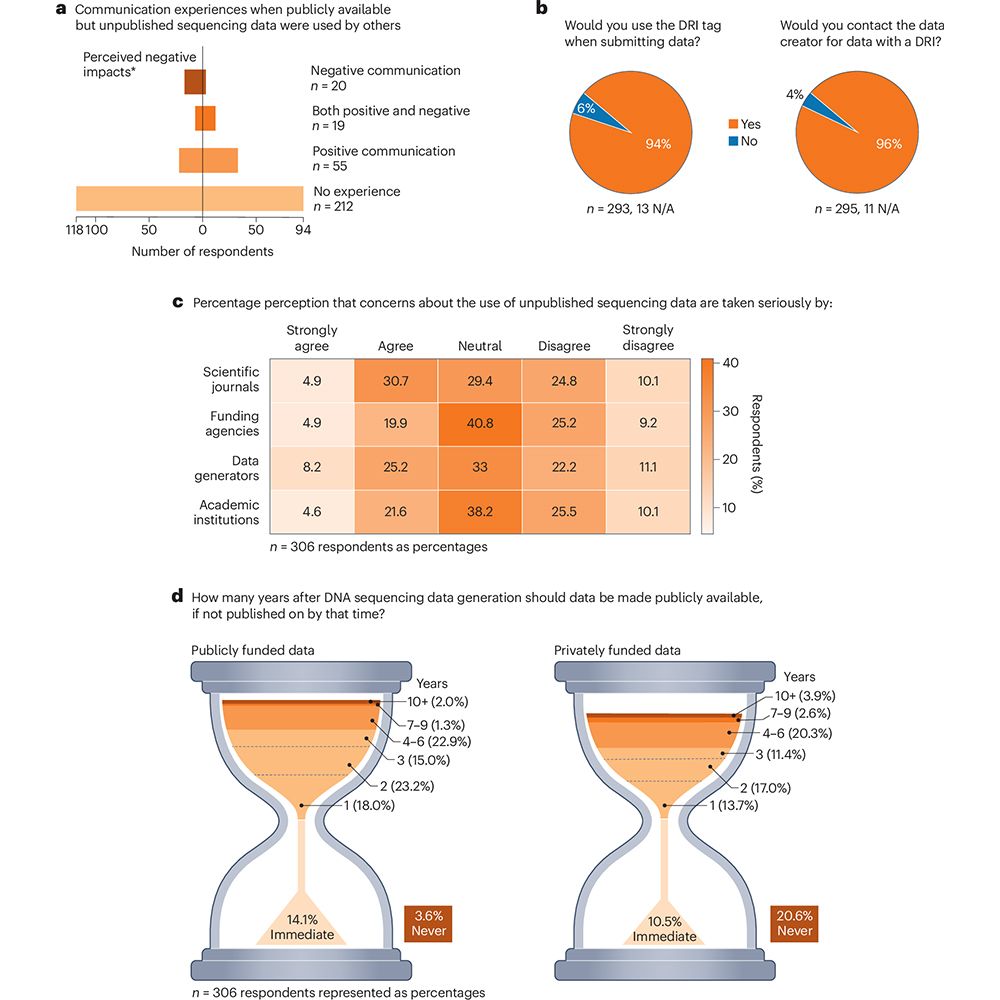
In a Consensus Statement in Nature Microbiology, a consortium of #microbiome scientists discusses current sequencing data sharing policies and proposes the use of a Data Reuse Information tag to promote equitable and collaborative data sharing. go.nature.com/4o1Gl1f 🧪
September 30, 2025 at 1:15 PM
In a Consensus Statement in Nature Microbiology, a consortium of #microbiome scientists discusses current sequencing data sharing policies and proposes the use of a Data Reuse Information tag to promote equitable and collaborative data sharing. go.nature.com/4o1Gl1f 🧪
Reposted by Ecotoxicology lab RC One Health Ruhr
Changing water temperatures and human-driven introductions of fish have altered the composition of fish populations in streams and rivers across the USA over the past three decades, a study in Nature suggests. go.nature.com/47ZCcWH 🧪

September 30, 2025 at 1:28 AM
Changing water temperatures and human-driven introductions of fish have altered the composition of fish populations in streams and rivers across the USA over the past three decades, a study in Nature suggests. go.nature.com/47ZCcWH 🧪
Reposted by Ecotoxicology lab RC One Health Ruhr

Nature research paper: Diverging fish biodiversity trends in cold and warm rivers and streams
go.nature.com/42JFObR
go.nature.com/42JFObR

Diverging fish biodiversity trends in cold and warm rivers and streams - Nature
In the past three decades, fish abundance, richness and uniqueness have diverged across cold and warm streams, and the effects on native fish communities of stream warming and increases in introduced fishes have magnified each other.
go.nature.com
September 25, 2025 at 4:59 PM
Nature research paper: Diverging fish biodiversity trends in cold and warm rivers and streams
go.nature.com/42JFObR
go.nature.com/42JFObR
Reposted by Ecotoxicology lab RC One Health Ruhr
Changing water temperatures and human-driven introductions of fish have altered the composition of fish populations in streams and rivers across the USA over the past three decades, a study in Nature suggests. go.nature.com/47ZCcWH 🧪
September 24, 2025 at 10:30 PM
Changing water temperatures and human-driven introductions of fish have altered the composition of fish populations in streams and rivers across the USA over the past three decades, a study in Nature suggests. go.nature.com/47ZCcWH 🧪
Exciting collaboration with colleagues from the US and Frederik de Laender - lead by S. Rumschlag and Mike Mahon - on how climate change has lead to alterations in US fish diversity over the last decades. Paper just out: www.nature.com/articles/s41...

Diverging fish biodiversity trends in cold and warm rivers and streams - Nature
In the past three decades, fish abundance, richness and uniqueness have diverged across cold and warm streams, and the effects on native fish communities of stream warming and increases in introduced fishes have magnified each other.
www.nature.com
September 24, 2025 at 4:20 PM
Exciting collaboration with colleagues from the US and Frederik de Laender - lead by S. Rumschlag and Mike Mahon - on how climate change has lead to alterations in US fish diversity over the last decades. Paper just out: www.nature.com/articles/s41...
Congratulations to Marie Brassuer for winning the poster prize at the DGL 2025 in Frankfurt! Great to have such a designer in our group 😀

September 11, 2025 at 3:21 PM
Congratulations to Marie Brassuer for winning the poster prize at the DGL 2025 in Frankfurt! Great to have such a designer in our group 😀
New database on thermal tolerance on freshwater invertebrates and fish - major effort by Helena Bayat and many collaborators. Freely available here: www.nature.com/articles/s41...

September 2, 2025 at 12:08 PM
New database on thermal tolerance on freshwater invertebrates and fish - major effort by Helena Bayat and many collaborators. Freely available here: www.nature.com/articles/s41...
Fantastic meeting on ecosystem functions at the @rptu.bsky.social #PLPF9 organised by Mirco Bundschuhs lab.
Fantastic keynotes, exciting discussions, nice presentations.
Fantastic keynotes, exciting discussions, nice presentations.

August 29, 2025 at 12:36 PM
Fantastic meeting on ecosystem functions at the @rptu.bsky.social #PLPF9 organised by Mirco Bundschuhs lab.
Fantastic keynotes, exciting discussions, nice presentations.
Fantastic keynotes, exciting discussions, nice presentations.
Was great to attend a Summer Academy of the Studienstiftung des Deutschen Volkes. Really creative and clever students - enjoyed the seminar with the students and felt honored to give an evening talk in such a nice location on trends in insect populations. #Neubeuern #Studienstiftung #Insectdecline

August 12, 2025 at 9:11 PM
Was great to attend a Summer Academy of the Studienstiftung des Deutschen Volkes. Really creative and clever students - enjoyed the seminar with the students and felt honored to give an evening talk in such a nice location on trends in insect populations. #Neubeuern #Studienstiftung #Insectdecline