



Chris Mungall
@cmungall.bsky.social
Berkeley Lab, Environmental Genomics and Systems Biology division. #GeneOntology #MonarchInitiative #AllianceGenome #NationalMicrobimeDataCollaborative #OBOFoundry.
Pinned
Chris Mungall
@cmungall.bsky.social
· Jun 27
This a really exciting leap forward for genomic sequence to activity gene regulation models. It is a genuine improvement over pretty much all SOTA models spanning a wide range of regulatory, transcriptional and post-transcriptional processes. 1/

Excited to launch our AlphaGenome API goo.gle/3ZPUeFX along with the preprint goo.gle/45AkUyc describing and evaluating our latest DNA sequence model powering the API. Looking forward to seeing how scientists use it! @googledeepmind
Wow, AlphaGenome is a huge deal, 1mb context windows, and prediction of a variety of features, with cell and tissue specificity! Read @anshulkundaje.bsky.social's excellent thread for the details. I want to additionally highlight one additional thing for my structured data nerd friends...
Over the last few months I've been helping organize various tutorials and workshops on agentic AI, aimed mostly at biocurators, ontology developers, and PIs of knowledge bases / data resources. Some of this might be generally useful to folks who don't identify as a 'technical' or an 'AI' person.🧵
February 12, 2026 at 3:59 PM
Over the last few months I've been helping organize various tutorials and workshops on agentic AI, aimed mostly at biocurators, ontology developers, and PIs of knowledge bases / data resources. Some of this might be generally useful to folks who don't identify as a 'technical' or an 'AI' person.🧵
Last year we made a CLI wrapper for different deep research APIs. As a baseline implementation we do a simple Claude Code in a loop. It works rather well!
Well, I discovered there is a name for this pattern: Ralph. We made a Ralph Wiggum deep researcher. monarch-initiative.github.io/deep-researc...
Well, I discovered there is a name for this pattern: Ralph. We made a Ralph Wiggum deep researcher. monarch-initiative.github.io/deep-researc...

January 12, 2026 at 2:41 AM
Last year we made a CLI wrapper for different deep research APIs. As a baseline implementation we do a simple Claude Code in a loop. It works rather well!
Well, I discovered there is a name for this pattern: Ralph. We made a Ralph Wiggum deep researcher. monarch-initiative.github.io/deep-researc...
Well, I discovered there is a name for this pattern: Ralph. We made a Ralph Wiggum deep researcher. monarch-initiative.github.io/deep-researc...
Reposted by Chris Mungall
📣 New preprint from us at phagefoundry.org 📣
A solid machine learning framework & to predict strain-level phage-host interactions across diverse bacterial genera from genome sequences alone. Avery Noonan from the Arkin Lab led this massive effort
www.biorxiv.org/content/10.1...
A solid machine learning framework & to predict strain-level phage-host interactions across diverse bacterial genera from genome sequences alone. Avery Noonan from the Arkin Lab led this massive effort
www.biorxiv.org/content/10.1...
Phage Foundry
phagefoundry.org
November 16, 2025 at 5:58 PM
📣 New preprint from us at phagefoundry.org 📣
A solid machine learning framework & to predict strain-level phage-host interactions across diverse bacterial genera from genome sequences alone. Avery Noonan from the Arkin Lab led this massive effort
www.biorxiv.org/content/10.1...
A solid machine learning framework & to predict strain-level phage-host interactions across diverse bacterial genera from genome sequences alone. Avery Noonan from the Arkin Lab led this massive effort
www.biorxiv.org/content/10.1...
We developed and evaluated a method to learn python chemical structure classifiers using LLMs. These can give classifications+explanations at runtime. With @jannahastings.bsky.social @justaddcoffee.bsky.social Noel O'Boyle, Daniel Korn, Adnan Malik jcheminf.biomedcentral.com/articles/10....

Chemical classification program synthesis using generative artificial intelligence - Journal of Cheminformatics
Accurately classifying chemical structures is essential for cheminformatics and bioinformatics, including tasks such as identifying bioactive compounds of interest, screening molecules for toxicity to humans, finding non-organic compounds with desirable material properties, or organizing large chemical libraries for drug discovery or environmental monitoring. However, manual classification is labor-intensive and difficult to scale to large chemical databases. Existing automated approaches either rely on manually constructed classification rules, or are deep learning methods that lack explainability. This work presents an approach that uses generative artificial intelligence to automatically write chemical classifier programs for classes in the Chemical Entities of Biological Interest (ChEBI) database. These programs can be used for efficient deterministic run-time classification of SMILES structures, with natural language explanations. The programs themselves constitute an explainable computable ontological model of chemical class nomenclature, which we call the ChEBI Chemical Class Program Ontology (C3PO). We validated our approach against the ChEBI database, and compared our results against deep learning models and a naive SMARTS pattern based classifier. C3PO outperforms the naive classifier, but does not reach the performance of state of the art deep learning methods. However, C3PO has a number of strengths that complement deep learning methods, including explainability and reduced data dependence. C3PO can be used alongside deep learning classifiers to provide an explanation of the classification, where both methods agree. The programs can be used as part of the ontology development process, and iteratively refined by expert human curators.
jcheminf.biomedcentral.com
October 3, 2025 at 2:57 PM
We developed and evaluated a method to learn python chemical structure classifiers using LLMs. These can give classifications+explanations at runtime. With @jannahastings.bsky.social @justaddcoffee.bsky.social Noel O'Boyle, Daniel Korn, Adnan Malik jcheminf.biomedcentral.com/articles/10....
Reposted by Chris Mungall
Hiding in plain sight - how close are we to mapping ALL 🧬enhancers🧬 in the genome?
Our new paper by Mannion et al. takes a systematic look at "hidden enhancers" and why they remain so hard to find. With @mosterwalder.bsky.social, @jlopezrios.bsky.social & many more
www.nature.com/articles/s41...
Our new paper by Mannion et al. takes a systematic look at "hidden enhancers" and why they remain so hard to find. With @mosterwalder.bsky.social, @jlopezrios.bsky.social & many more
www.nature.com/articles/s41...

August 8, 2025 at 6:10 PM
Hiding in plain sight - how close are we to mapping ALL 🧬enhancers🧬 in the genome?
Our new paper by Mannion et al. takes a systematic look at "hidden enhancers" and why they remain so hard to find. With @mosterwalder.bsky.social, @jlopezrios.bsky.social & many more
www.nature.com/articles/s41...
Our new paper by Mannion et al. takes a systematic look at "hidden enhancers" and why they remain so hard to find. With @mosterwalder.bsky.social, @jlopezrios.bsky.social & many more
www.nature.com/articles/s41...
Very exciting to see the research from @cziscience.bsky.social on the rBio distilling a black box foundation model (in this case a "virtual cell" perturbation model) into a smaller reasoner LLM. And it uses ontologies as part of RL! chanzuckerberg.com/blog/rbio-re...

rBio: Reasoning Model Trained on Virtual Cell Simulations
Scientists can ask complex biological questions in plain language and get predictions about gene interactions.
chanzuckerberg.com
August 25, 2025 at 12:41 AM
Very exciting to see the research from @cziscience.bsky.social on the rBio distilling a black box foundation model (in this case a "virtual cell" perturbation model) into a smaller reasoner LLM. And it uses ontologies as part of RL! chanzuckerberg.com/blog/rbio-re...
Reposted by Chris Mungall

The Alliance webinar for August is this Thursday (Aug 21, noon EDT), on Ontologies and the Alliance, presented by Chris Mungall. You can preregister for the zoom link here forms.gle/GzMnmwK23SzP...; please preregister by midnight EDT Wednesday Aug 20.
August 18, 2025 at 4:51 PM
The Alliance webinar for August is this Thursday (Aug 21, noon EDT), on Ontologies and the Alliance, presented by Chris Mungall. You can preregister for the zoom link here forms.gle/GzMnmwK23SzP...; please preregister by midnight EDT Wednesday Aug 20.
This is terrible news, not just for fly research, Drosophila is a key model organism that helps us understand shared biological pathways and the systems that underpin many human diseases 💔💔💔

FlyBase, a Drosophila database, will lose a third of its team in early October because the Harvard grant that covered the employees’ salaries was canceled. Scientists warn that losing FlyBase could devastate fly research.
By @claudia-lopez.bsky.social
www.thetransmitter.org/community/ha...
By @claudia-lopez.bsky.social
www.thetransmitter.org/community/ha...
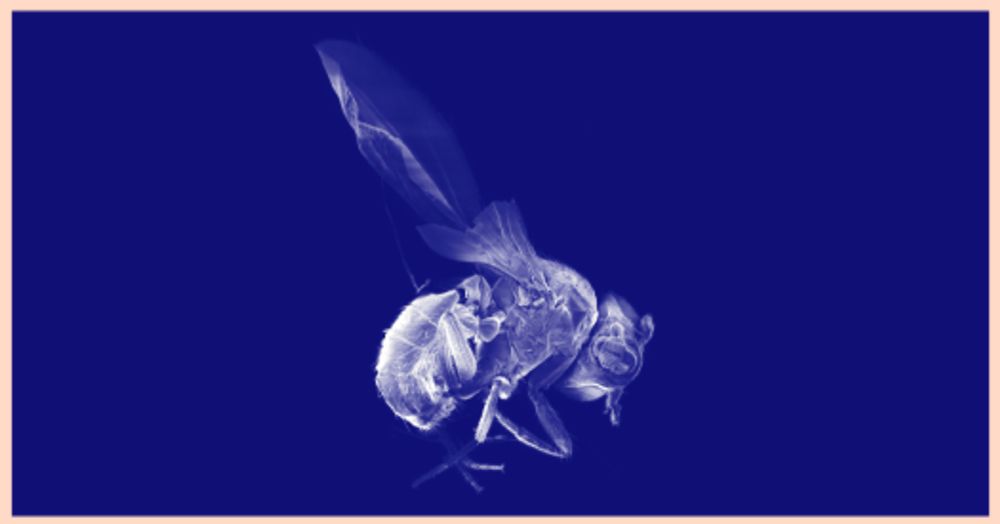
Harvard University lays off fly database team
The layoffs jeopardize this resource, which has served more than 4,000 labs for about three decades.
www.thetransmitter.org
August 15, 2025 at 3:37 PM
This is terrible news, not just for fly research, Drosophila is a key model organism that helps us understand shared biological pathways and the systems that underpin many human diseases 💔💔💔
Reposted by Chris Mungall
FlyBase needs your help! We ask that European labs continue to contribute to Cambridge, UK FlyBase, whereas US and other non-European labs can contribute to US FlyBase. For more information and how to donate: wiki.flybase.org/wiki/FlyBase...
FlyBase:Contribute to FlyBase - FlyBase Wiki
wiki.flybase.org
August 15, 2025 at 12:45 PM
FlyBase needs your help! We ask that European labs continue to contribute to Cambridge, UK FlyBase, whereas US and other non-European labs can contribute to US FlyBase. For more information and how to donate: wiki.flybase.org/wiki/FlyBase...
Reposted by Chris Mungall

@cmungall.bsky.social tackles complex #knowledgeManagement challenges in the life sciences with well-honed collaborative methods and AI-augmented computational tooling, streamlining #ontology creation and #knowledgeGraph building.
knowledgegraphinsights.com/chris-mungall/
knowledgegraphinsights.com/chris-mungall/
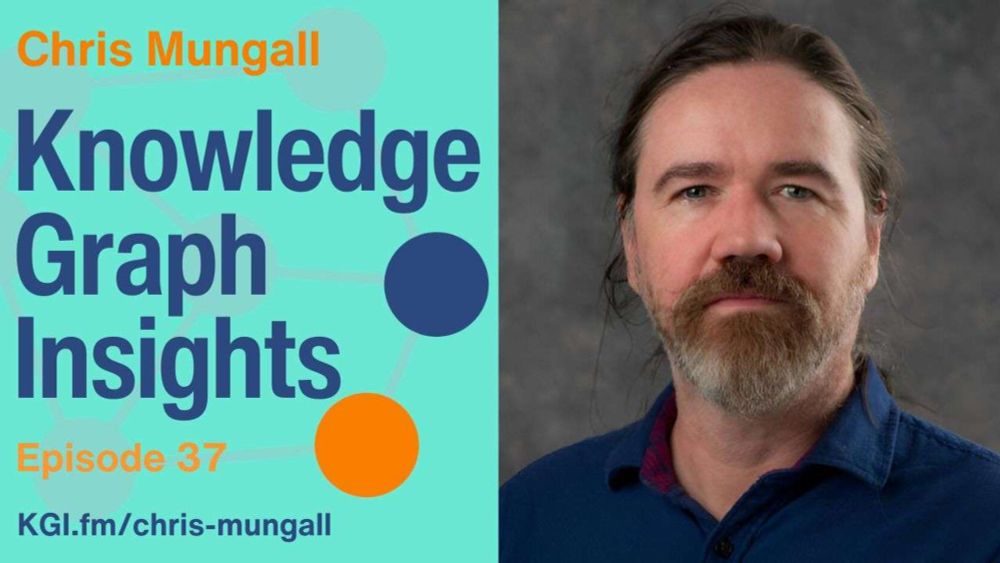
Chris Mungall: collaborative knowledge graphs in the life sciences
Chris Mungall is an expert on building knowledge graphs for the life sciences with a wide variety of scientific collaborators.
knowledgegraphinsights.com
August 5, 2025 at 12:57 PM
@cmungall.bsky.social tackles complex #knowledgeManagement challenges in the life sciences with well-honed collaborative methods and AI-augmented computational tooling, streamlining #ontology creation and #knowledgeGraph building.
knowledgegraphinsights.com/chris-mungall/
knowledgegraphinsights.com/chris-mungall/
Reposted by Chris Mungall

Exceptional Contributions to Biocuration - Lifetime Achievement Award winner: Ruth Lovering
Ruth has contributed extensively to the curation of key resources such as HGNC, Gene Ontology (GO), and IMEx, and has been instrumental in developing curation standards. Ruth is a past chair of the ISB EC.
Ruth has contributed extensively to the curation of key resources such as HGNC, Gene Ontology (GO), and IMEx, and has been instrumental in developing curation standards. Ruth is a past chair of the ISB EC.

July 30, 2025 at 4:04 PM
Exceptional Contributions to Biocuration - Lifetime Achievement Award winner: Ruth Lovering
Ruth has contributed extensively to the curation of key resources such as HGNC, Gene Ontology (GO), and IMEx, and has been instrumental in developing curation standards. Ruth is a past chair of the ISB EC.
Ruth has contributed extensively to the curation of key resources such as HGNC, Gene Ontology (GO), and IMEx, and has been instrumental in developing curation standards. Ruth is a past chair of the ISB EC.
Reposted by Chris Mungall
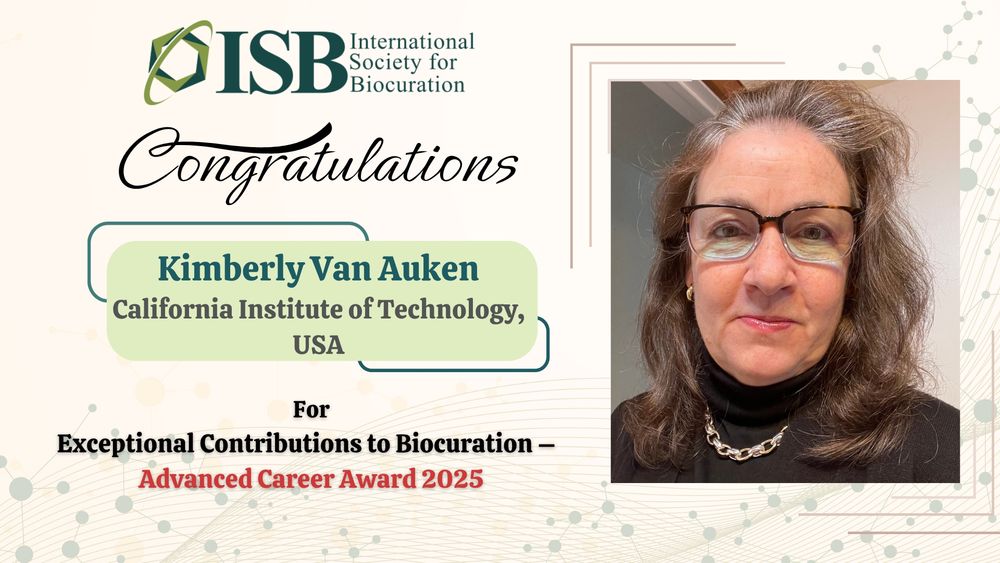
Exceptional Contributions to Biocuration - Advanced Career Award winner: Kimberly Van Auken
Kimberly's career reflects expertise, sustained innovation, & dedicated service to community. She's contributed to many projects, including WormBase, the Gene Ontology, & the Alliance of Genome Resources.
Kimberly's career reflects expertise, sustained innovation, & dedicated service to community. She's contributed to many projects, including WormBase, the Gene Ontology, & the Alliance of Genome Resources.
July 30, 2025 at 4:04 PM
Exceptional Contributions to Biocuration - Advanced Career Award winner: Kimberly Van Auken
Kimberly's career reflects expertise, sustained innovation, & dedicated service to community. She's contributed to many projects, including WormBase, the Gene Ontology, & the Alliance of Genome Resources.
Kimberly's career reflects expertise, sustained innovation, & dedicated service to community. She's contributed to many projects, including WormBase, the Gene Ontology, & the Alliance of Genome Resources.
Reposted by Chris Mungall
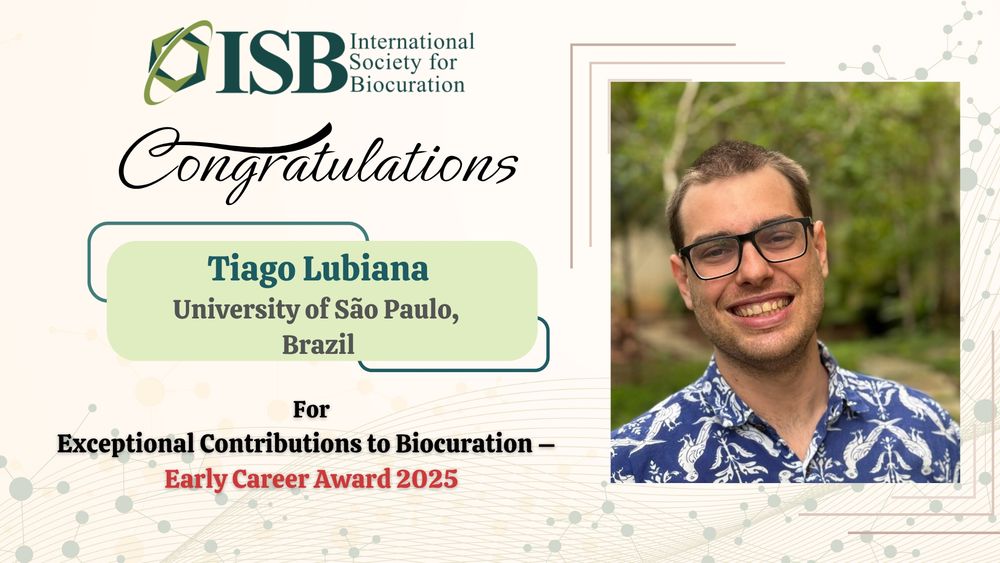
Exceptional Contributions to Biocuration - Early Career Award winner: Tiago Lubiano.
Tiago's a passionate and motivated scientist interested in linked open data, ontologies, the semantic web, and their application in modeling cells and cell types. He is active in many curation projects & with ISB.
Tiago's a passionate and motivated scientist interested in linked open data, ontologies, the semantic web, and their application in modeling cells and cell types. He is active in many curation projects & with ISB.
July 30, 2025 at 4:04 PM
Exceptional Contributions to Biocuration - Early Career Award winner: Tiago Lubiano.
Tiago's a passionate and motivated scientist interested in linked open data, ontologies, the semantic web, and their application in modeling cells and cell types. He is active in many curation projects & with ISB.
Tiago's a passionate and motivated scientist interested in linked open data, ontologies, the semantic web, and their application in modeling cells and cell types. He is active in many curation projects & with ISB.
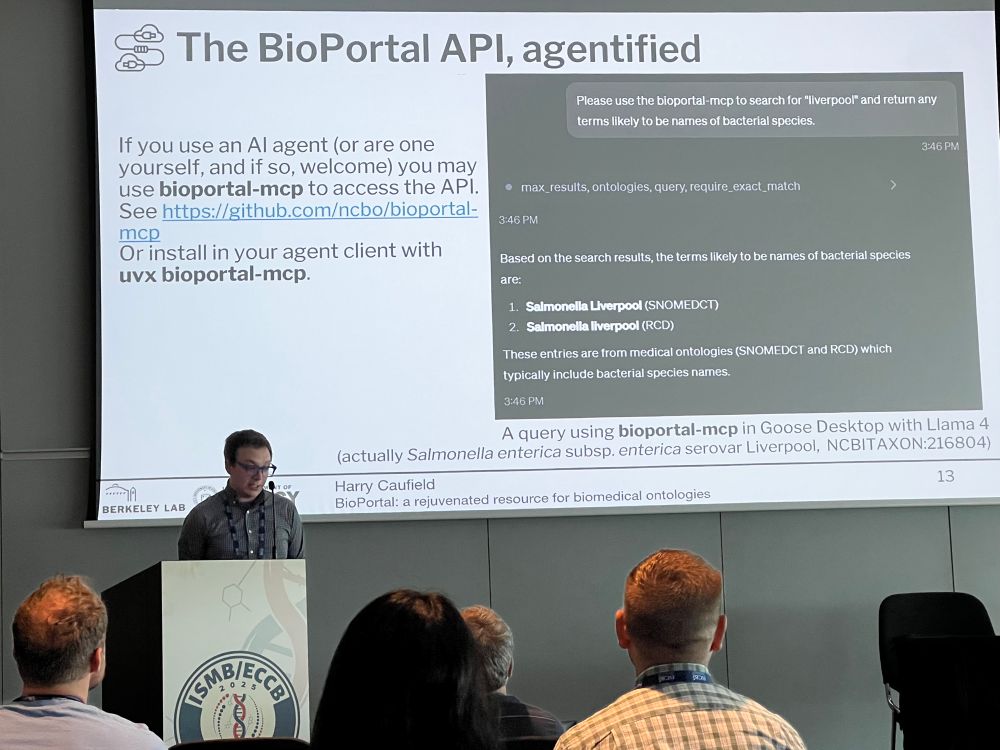
July 22, 2025 at 1:31 PM
Reposted by Chris Mungall

Nice Chris is raising the topic of AI-assisted coding. There are huge advantages of Agentic AI applications here, but there are also risks (watch this space for more on this topic) #ISMBECCB2025 #BOSC2025

July 22, 2025 at 10:49 AM
Nice Chris is raising the topic of AI-assisted coding. There are huge advantages of Agentic AI applications here, but there are also risks (watch this space for more on this topic) #ISMBECCB2025 #BOSC2025
Reposted by Chris Mungall

Just as Chris launched into the topic of knowledge censorship, the AI transcription and the slides stopped working. Coincidence?? 🤔 #BOSC2025
July 22, 2025 at 11:27 AM
Just as Chris launched into the topic of knowledge censorship, the AI transcription and the slides stopped working. Coincidence?? 🤔 #BOSC2025
Reposted by Chris Mungall

July 22, 2025 at 11:34 AM
Looking forward to seeing many of you this week at ISMB, and talking to you about our work on agentic AI and knowledge bases! Doubly honored to be selected for this joint session, the open-bio community has been a huge influence on how I approach ontologies and knowledge base development.
On Day 2, kicking off the joint BOSC/BOKR session, Chris Mungall (@cmungall.bsky.social) will discuss "Open Knowledge Bases in the Age of Generative AI". @bokr.bsky.social
More info: www.open-bio.org/events/bosc-...
(2/2)
More info: www.open-bio.org/events/bosc-...
(2/2)

BOSC 2025 Keynotes
Chris Mungall (Lawrence Berkeley National Laboratory) Open Knowledge Bases in the Age of Generative AI (Keynote talk for joint BOSC/BOKR session) ABSTRACT: The scientific and clinical community relies...
www.open-bio.org
July 20, 2025 at 2:19 PM
Looking forward to seeing many of you this week at ISMB, and talking to you about our work on agentic AI and knowledge bases! Doubly honored to be selected for this joint session, the open-bio community has been a huge influence on how I approach ontologies and knowledge base development.
Wow, AlphaGenome is a huge deal, 1mb context windows, and prediction of a variety of features, with cell and tissue specificity! Read @anshulkundaje.bsky.social's excellent thread for the details. I want to additionally highlight one additional thing for my structured data nerd friends...
This a really exciting leap forward for genomic sequence to activity gene regulation models. It is a genuine improvement over pretty much all SOTA models spanning a wide range of regulatory, transcriptional and post-transcriptional processes. 1/
Excited to launch our AlphaGenome API goo.gle/3ZPUeFX along with the preprint goo.gle/45AkUyc describing and evaluating our latest DNA sequence model powering the API. Looking forward to seeing how scientists use it! @googledeepmind
June 27, 2025 at 6:04 PM
Wow, AlphaGenome is a huge deal, 1mb context windows, and prediction of a variety of features, with cell and tissue specificity! Read @anshulkundaje.bsky.social's excellent thread for the details. I want to additionally highlight one additional thing for my structured data nerd friends...
Reposted by Chris Mungall
I know there's no bottom, but this is really fucking chilling.

This is disgusting.
If this is how they treat Alex Padilla, a United States Senator, how do you think they’ll treat you?
If this is how they treat Alex Padilla, a United States Senator, how do you think they’ll treat you?

June 12, 2025 at 7:01 PM
I know there's no bottom, but this is really fucking chilling.
Reposted by Chris Mungall
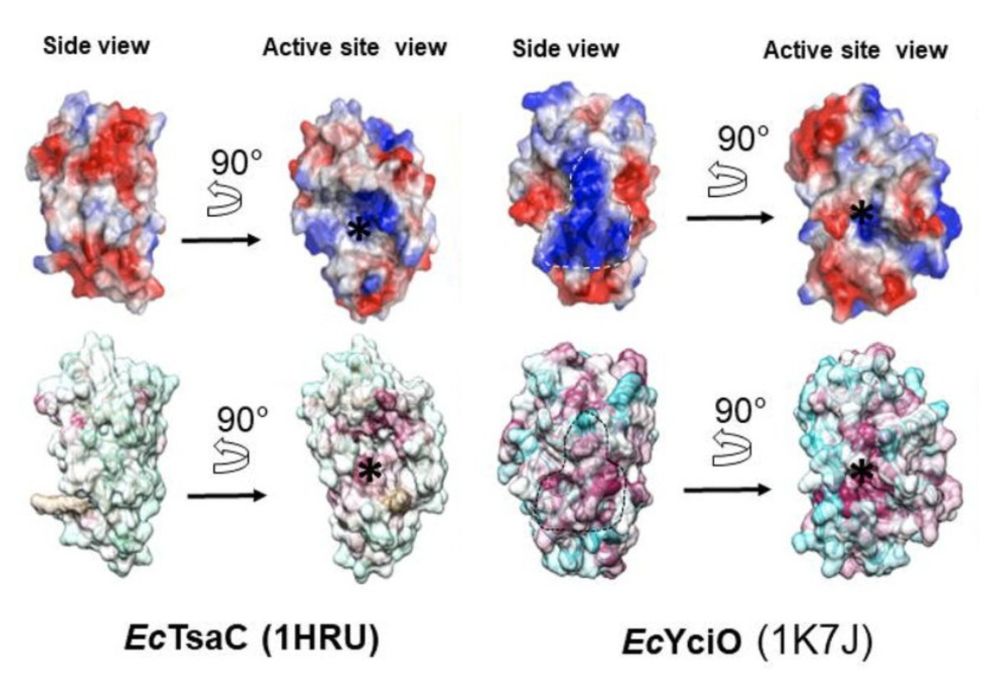
Interesting AI read. 15-23% of uncultivated microbes may engage in symbiotic relationships.
www.biorxiv.org/content/10.1...
www.biorxiv.org/content/10.1...

A genomic catalog of Earth’s bacterial and archaeal symbionts
Microbial symbiosis drives the functional and phylogenomic diversification of life on Earth, yet remains underexplored due to culturing challenges. This study employed machine learning (ML) to predict...
www.biorxiv.org
June 6, 2025 at 3:44 PM
Interesting AI read. 15-23% of uncultivated microbes may engage in symbiotic relationships.
www.biorxiv.org/content/10.1...
www.biorxiv.org/content/10.1...
This is a must-read piece by @math-rachel.bsky.social about AI evaluation, and how the system of reward and apportioning credit in AI research is broken rachel.fast.ai/posts/2025-0.... TL;DR -- we need deep fact checkers!
Rachel Thomas, PhD - Deep learning gets the glory, deep fact checking gets ignored
an AI researcher going back to school for immunology
rachel.fast.ai
June 6, 2025 at 4:49 AM
This is a must-read piece by @math-rachel.bsky.social about AI evaluation, and how the system of reward and apportioning credit in AI research is broken rachel.fast.ai/posts/2025-0.... TL;DR -- we need deep fact checkers!
Reposted by Chris Mungall
Flybase lost all of the NIH support overnight - it is a disaster for the community. Please consider donating. I just did! www.philanthropy.cam.ac.uk/give-to-camb...
Drosophila Genetic Database
The Drosophila Genetic Database, FlyBase, is on the brink of collapse due to the sudden termination of the FlyBase NIH grant, which includes salaries for 5 literature curators based at the University ...
www.philanthropy.cam.ac.uk
June 3, 2025 at 6:23 PM
Flybase lost all of the NIH support overnight - it is a disaster for the community. Please consider donating. I just did! www.philanthropy.cam.ac.uk/give-to-camb...
Reposted by Chris Mungall

This guy, @albertburneko.bsky.social, is a genius. Please read his brilliant article on Elon Musk's deranged and morally repugnant Mars colonisation schtick. defector.com/neither-elon...
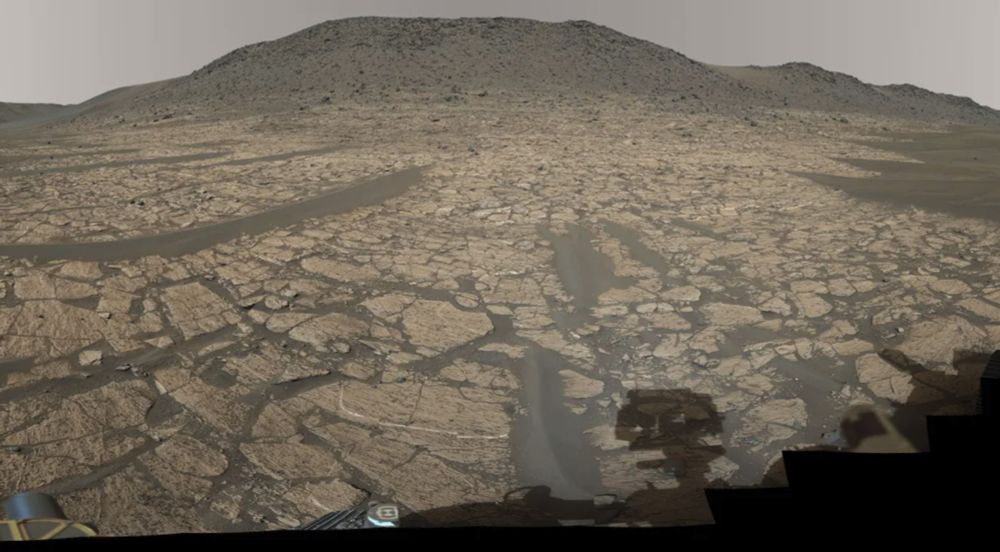
Neither Elon Musk Nor Anybody Else Will Ever Colonize Mars | Defector
Mars does not have a magnetosphere. Any discussion of humans ever settling the red planet can stop right there, but of course it never does. Do you have a low-cost plan for, uh, creating a gigantic ac...
defector.com
March 7, 2025 at 9:05 AM
This guy, @albertburneko.bsky.social, is a genius. Please read his brilliant article on Elon Musk's deranged and morally repugnant Mars colonisation schtick. defector.com/neither-elon...
Reposted by Chris Mungall

The Network State ideology hinges on something called "jurisdictional arbitrage."
That's when you evade the rules of one place or territory by outsourcing your needs or dirty deeds to another territory.
El Salvador has become a Network State for Concentration Camps. Expect more moves like this.
That's when you evade the rules of one place or territory by outsourcing your needs or dirty deeds to another territory.
El Salvador has become a Network State for Concentration Camps. Expect more moves like this.
Mr. Abrego Garcia was illegally abducted by the Trump Admin and, by their own admission, wrongly deported to El Salvador. He shouldn’t have to spend another second away from his family.
I'm flying to El Salvador tomorrow morning to check on his condition and discuss his return.
I'm flying to El Salvador tomorrow morning to check on his condition and discuss his return.
April 16, 2025 at 2:08 AM
The Network State ideology hinges on something called "jurisdictional arbitrage."
That's when you evade the rules of one place or territory by outsourcing your needs or dirty deeds to another territory.
El Salvador has become a Network State for Concentration Camps. Expect more moves like this.
That's when you evade the rules of one place or territory by outsourcing your needs or dirty deeds to another territory.
El Salvador has become a Network State for Concentration Camps. Expect more moves like this.