


Colin D. Wren
@cdwren.bsky.social
Assoc. Prof. of Archaeology at UCCS in Colorado, mind usually other places. Agent-based models and quantitative methods usually for the Palaeolithic.
Reposted by Colin D. Wren
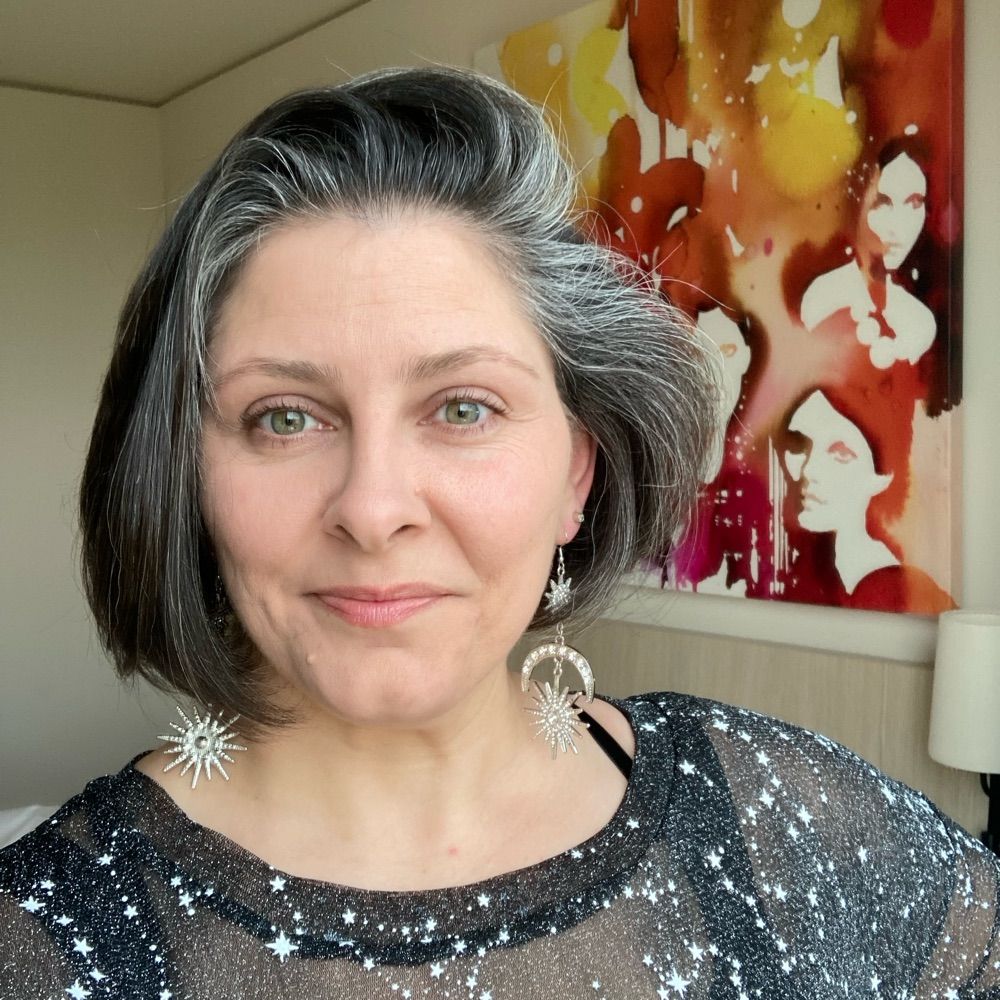
And here’s my other human origins countdown to close out the year! 🏺🧪

10 things we learned about Neanderthals in 2025
Findings about our extinct relatives, the Neanderthals, continue to surprise us, especially those from 2025.
www.livescience.com
December 30, 2025 at 9:31 PM
And here’s my other human origins countdown to close out the year! 🏺🧪
Reposted by Colin D. Wren

Within a cave used by bird nest traders, archaeologists uncover a single tooth from an ancient group: the first evidence from an extinct hominin on the world’s third largest island. What group lived there in the millennia before modern people arrived?
www.johnhawks.net/p/a-possible...
www.johnhawks.net/p/a-possible...

A possible archaic human from Borneo
The find of a single tooth from Gua Danang may be the first evidence of the archaic inhabitants of the island.
www.johnhawks.net
December 28, 2025 at 9:27 PM
Within a cave used by bird nest traders, archaeologists uncover a single tooth from an ancient group: the first evidence from an extinct hominin on the world’s third largest island. What group lived there in the millennia before modern people arrived?
www.johnhawks.net/p/a-possible...
www.johnhawks.net/p/a-possible...
Reposted by Colin D. Wren

Reposted by Colin D. Wren
New Perspective from myself, Sarah Heilbronner and @myoo.bsky.social . “Rethinking the centrality of brain areas in understanding functional organization” in Nature Neuroscience. 🧵
rdcu.be/eVZ1A
rdcu.be/eVZ1A

Rethinking the centrality of brain areas in understanding functional organization
Nature Neuroscience - Parcellation of the cortex into functionally modular brain areas is foundational to neuroscience. Here, Hayden, Heilbronner and Yoo question the central status of brain areas...
rdcu.be
December 23, 2025 at 1:02 PM
New Perspective from myself, Sarah Heilbronner and @myoo.bsky.social . “Rethinking the centrality of brain areas in understanding functional organization” in Nature Neuroscience. 🧵
rdcu.be/eVZ1A
rdcu.be/eVZ1A

A student's paper just described the interaction between Homo sapiens and Neandertals as "a situationship rather than a relationship" and I'm still laughing ten minutes later 💀🏺
December 21, 2025 at 1:12 AM
A student's paper just described the interaction between Homo sapiens and Neandertals as "a situationship rather than a relationship" and I'm still laughing ten minutes later 💀🏺
Reposted by Colin D. Wren

the analogy I use with friends and family all the time is the jump from collegiate to professional sports. as soon as I explain it that way, it clicks in their brains what the academic job market is like.
THERE ARE NO JOBS IN ACADEMIA! NO JOBS! DOZENS OF HYPER QUALIFIED APPLICANTS PER JOB!
December 19, 2025 at 3:52 PM
the analogy I use with friends and family all the time is the jump from collegiate to professional sports. as soon as I explain it that way, it clicks in their brains what the academic job market is like.
Reposted by Colin D. Wren

🧪🦣 🏺 Super thread on complexity & pitfalls in using genetics to - crudely put - explain why H. sapiens are here but #Neanderthals aren't.
For me, it underlines as usual that while the DNA revolution has been amazing, the #archaeology - what humans actually did - remains central to understanding.
For me, it underlines as usual that while the DNA revolution has been amazing, the #archaeology - what humans actually did - remains central to understanding.

A substantial proportion of people with archaic TKTL1 had college/university degrees, arguing against big impacts on cognition. The results show that the sometimes dramatic effects seen in lab-based experiments on evolutionary variants may not be a guide to real-world impacts in living humans. 11/n
December 19, 2025 at 12:57 PM
🧪🦣 🏺 Super thread on complexity & pitfalls in using genetics to - crudely put - explain why H. sapiens are here but #Neanderthals aren't.
For me, it underlines as usual that while the DNA revolution has been amazing, the #archaeology - what humans actually did - remains central to understanding.
For me, it underlines as usual that while the DNA revolution has been amazing, the #archaeology - what humans actually did - remains central to understanding.
Reposted by Colin D. Wren
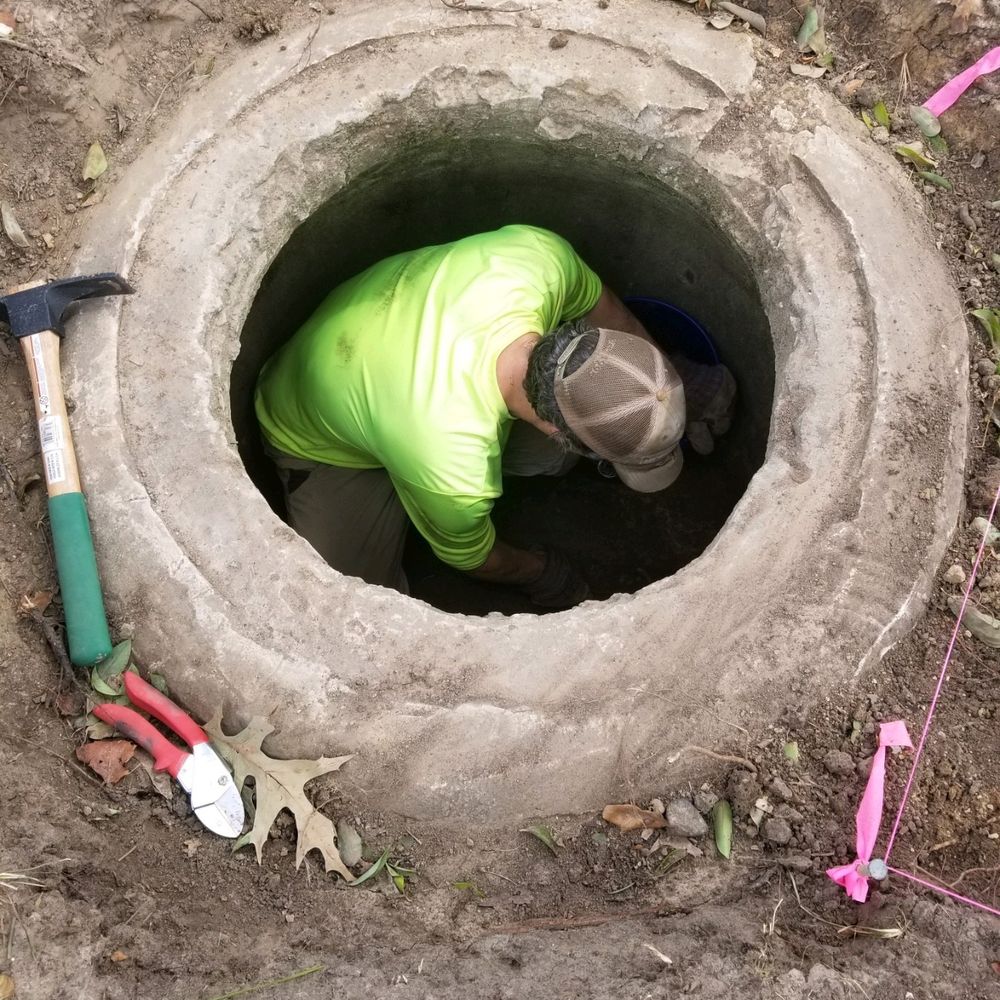
Archaeologists, it's mystery object time! It's an iron rod with a spoon-like end. The other end is missing. Context could be anytime between 19th and 20th century Texas. 🏺


December 12, 2025 at 5:17 PM
Archaeologists, it's mystery object time! It's an iron rod with a spoon-like end. The other end is missing. Context could be anytime between 19th and 20th century Texas. 🏺
Reposted by Colin D. Wren

🇨🇦🇨🇦 Just announced: a massive new program from the Canadian govt, separate from the well-known CRCs and CERCs, to recruit foreign scientific talent
Canada was already a destination for scientists but whoa. Real impressive for a new govt to back political talking points with serious investment
Canada was already a destination for scientists but whoa. Real impressive for a new govt to back political talking points with serious investment

$1.7 billion to attract international researchers to Canada
Details of the major federal initiative to draw new talent to the country's universities were announced today at UdeM.
nouvelles.umontreal.ca
December 10, 2025 at 1:16 PM
🇨🇦🇨🇦 Just announced: a massive new program from the Canadian govt, separate from the well-known CRCs and CERCs, to recruit foreign scientific talent
Canada was already a destination for scientists but whoa. Real impressive for a new govt to back political talking points with serious investment
Canada was already a destination for scientists but whoa. Real impressive for a new govt to back political talking points with serious investment
Great story in local CBC New Brunswick news about an archival artefact collection and the collaboration between U New Brunswick and Wolastoqey First Nation 🏺https://www.cbc.ca/news/canada/new-brunswick/bailey-collection-unb-artifacts-wolastoqey-collaboration-9.6991802

How a UNB artifact collection has sparked archeological collaboration and innovation | CBC News
The Bailey Collection sat untouched for decades on the University of New Brunswick campus. Now researchers and the Wolastoqey Nation are working together to document the artifacts and chart new ways f...
www.cbc.ca
December 5, 2025 at 4:50 PM
Great story in local CBC New Brunswick news about an archival artefact collection and the collaboration between U New Brunswick and Wolastoqey First Nation 🏺https://www.cbc.ca/news/canada/new-brunswick/bailey-collection-unb-artifacts-wolastoqey-collaboration-9.6991802
Reposted by Colin D. Wren
In ancient Mesopotamia, astronomers needed to know the moon’s position, even on a cloudy night.
So they made records and calculations of the moon’s positions and velocity measured in degrees. This record from Uruk or Babylon from the Seleucid period covers 248 days.
📸 by Dr K. Wagensonner
So they made records and calculations of the moon’s positions and velocity measured in degrees. This record from Uruk or Babylon from the Seleucid period covers 248 days.
📸 by Dr K. Wagensonner


December 2, 2025 at 10:20 AM
In ancient Mesopotamia, astronomers needed to know the moon’s position, even on a cloudy night.
So they made records and calculations of the moon’s positions and velocity measured in degrees. This record from Uruk or Babylon from the Seleucid period covers 248 days.
📸 by Dr K. Wagensonner
So they made records and calculations of the moon’s positions and velocity measured in degrees. This record from Uruk or Babylon from the Seleucid period covers 248 days.
📸 by Dr K. Wagensonner
Reposted by Colin D. Wren
All roads lead to cats....
"Roman military helped bring cats to Europe"
A big week for cat #archaeologynews 🏺🐈
www.popsci.com/environment/...
and connectsci.au/news/news-pa...
"Roman military helped bring cats to Europe"
A big week for cat #archaeologynews 🏺🐈
www.popsci.com/environment/...
and connectsci.au/news/news-pa...

Roman military helped bring cats to Europe
Military roads helped the felines domesticate about 2,000 years ago.
www.popsci.com
December 2, 2025 at 1:39 AM
All roads lead to cats....
"Roman military helped bring cats to Europe"
A big week for cat #archaeologynews 🏺🐈
www.popsci.com/environment/...
and connectsci.au/news/news-pa...
"Roman military helped bring cats to Europe"
A big week for cat #archaeologynews 🏺🐈
www.popsci.com/environment/...
and connectsci.au/news/news-pa...
Reposted by Colin D. Wren
🏺 Archaeology = materiality, connection, deep-time relevance to present & future

New landmark research out today: We've just launched Trowel and Error, the most in-depth look in 25 years at how audiences want to engage with archaeology. The findings are clear: people want human, accessible, story-led archaeology.
Read the report here 👉 www.archaeologyuk.org/our-work/tro...
Read the report here 👉 www.archaeologyuk.org/our-work/tro...


November 28, 2025 at 2:52 PM
🏺 Archaeology = materiality, connection, deep-time relevance to present & future
Reposted by Colin D. Wren

8000 years ago in the remote, boreal landscape of the Siberian taiga, hunter-gatherers built the earliest fortified sites. The development of territoriality and social conflict was not necessarily tied to agriculture.
🔗 from 2023 🆓 doi.org/10.15184/aqy...
🏺 #Archaeology
📷 N. Golovanov
🔗 from 2023 🆓 doi.org/10.15184/aqy...
🏺 #Archaeology
📷 N. Golovanov

November 28, 2025 at 3:02 PM
8000 years ago in the remote, boreal landscape of the Siberian taiga, hunter-gatherers built the earliest fortified sites. The development of territoriality and social conflict was not necessarily tied to agriculture.
🔗 from 2023 🆓 doi.org/10.15184/aqy...
🏺 #Archaeology
📷 N. Golovanov
🔗 from 2023 🆓 doi.org/10.15184/aqy...
🏺 #Archaeology
📷 N. Golovanov
Reposted by Colin D. Wren
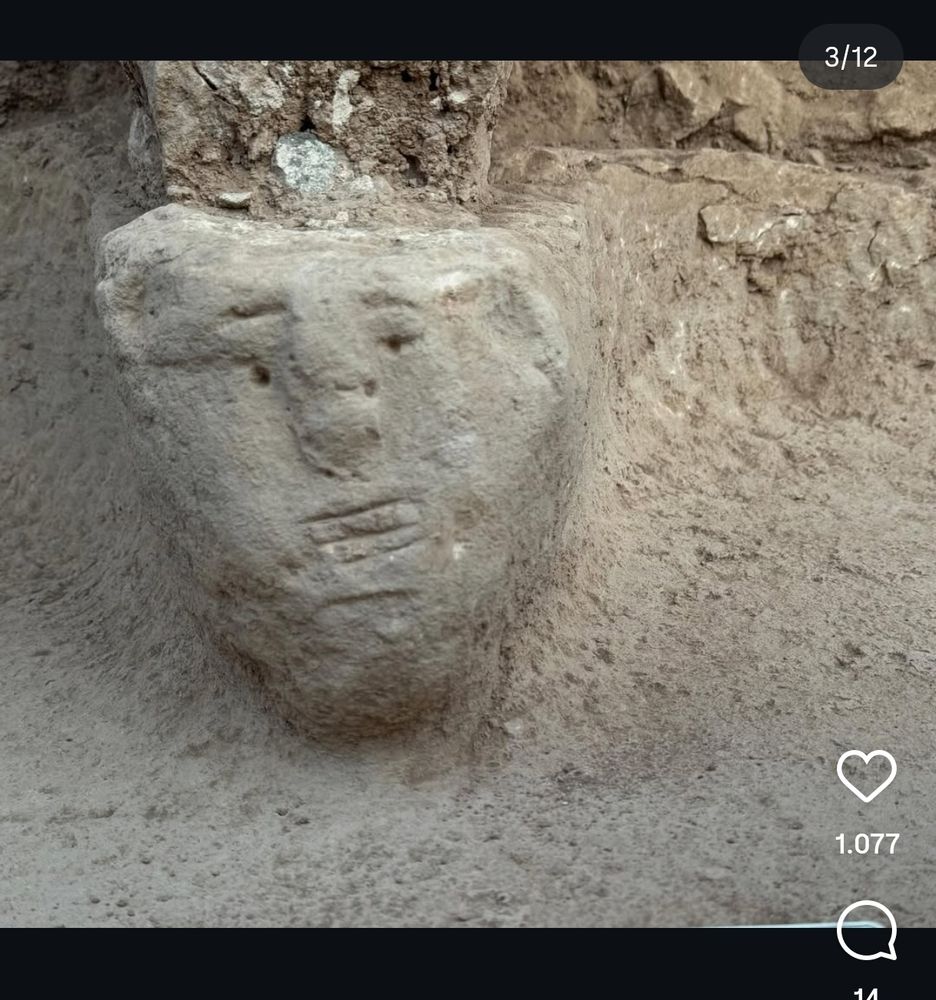
Meanwhile in Sayburç, one of the PPN Taş Tepeler sites of Turkey: A human head carved on the base of one of the T shaped pillars has been found.🏺😲



November 28, 2025 at 6:46 PM
Meanwhile in Sayburç, one of the PPN Taş Tepeler sites of Turkey: A human head carved on the base of one of the T shaped pillars has been found.🏺😲
Reposted by Colin D. Wren
Did Neandertals choose their prey when practicing cannibalism?🍖
Check out our new study, just published in Scientific Reports - @natureportfolio.nature.com!
We provide the strongest evidence to date for a highly selective cannibalism at the end of Neandertal lineage, 41-45.000 years ago.
1/7
Check out our new study, just published in Scientific Reports - @natureportfolio.nature.com!
We provide the strongest evidence to date for a highly selective cannibalism at the end of Neandertal lineage, 41-45.000 years ago.
1/7

Highly selective cannibalism in the Late Pleistocene of Northern Europe reveals Neandertals were targeted prey - Scientific Reports
Scientific Reports - Highly selective cannibalism in the Late Pleistocene of Northern Europe reveals Neandertals were targeted prey
doi.org
November 20, 2025 at 1:48 PM
Did Neandertals choose their prey when practicing cannibalism?🍖
Check out our new study, just published in Scientific Reports - @natureportfolio.nature.com!
We provide the strongest evidence to date for a highly selective cannibalism at the end of Neandertal lineage, 41-45.000 years ago.
1/7
Check out our new study, just published in Scientific Reports - @natureportfolio.nature.com!
We provide the strongest evidence to date for a highly selective cannibalism at the end of Neandertal lineage, 41-45.000 years ago.
1/7
Reposted by Colin D. Wren
It's that special time of year we've all been waiting for, happy #GISDay everyone! 🗺️
Here's a mini #AntiquityThread on some of the fantastic #archaeology research published in Antiquity this year that applied this now-indispensable tool 1/6 🧵
🏺
Here's a mini #AntiquityThread on some of the fantastic #archaeology research published in Antiquity this year that applied this now-indispensable tool 1/6 🧵
🏺

November 19, 2025 at 5:35 PM
It's that special time of year we've all been waiting for, happy #GISDay everyone! 🗺️
Here's a mini #AntiquityThread on some of the fantastic #archaeology research published in Antiquity this year that applied this now-indispensable tool 1/6 🧵
🏺
Here's a mini #AntiquityThread on some of the fantastic #archaeology research published in Antiquity this year that applied this now-indispensable tool 1/6 🧵
🏺
Reposted by Colin D. Wren
Were Neanderthals Artists? Ochre Fragments Reveal Signs of Creative Expression. A new study suggests Neanderthals may have used crayon-like tools in symbolic mark-making.
news.artnet.com/art-world/ne...
🏺
news.artnet.com/art-world/ne...
🏺

Were Neanderthals Artists? Ochre Fragments Reveal Signs of Creative Expression
Researchers found crayon-like objects in Crimea and Ukraine that suggest Neanderthals may have engaged in symbolic expression.
news.artnet.com
November 19, 2025 at 3:15 PM
Were Neanderthals Artists? Ochre Fragments Reveal Signs of Creative Expression. A new study suggests Neanderthals may have used crayon-like tools in symbolic mark-making.
news.artnet.com/art-world/ne...
🏺
news.artnet.com/art-world/ne...
🏺
Reposted by Colin D. Wren
Essaouira’s Bizmoune Cave Yields New Clues to Early Humans. Moroccan archaeologists have opened a new research season at Bizmoune Cave near Essaouira. Fresh finds illuminate Stone Age life and deepen the site’s global importance.
www.moroccoworldnews.com/2025/11/2677...
🏺
www.moroccoworldnews.com/2025/11/2677...
🏺
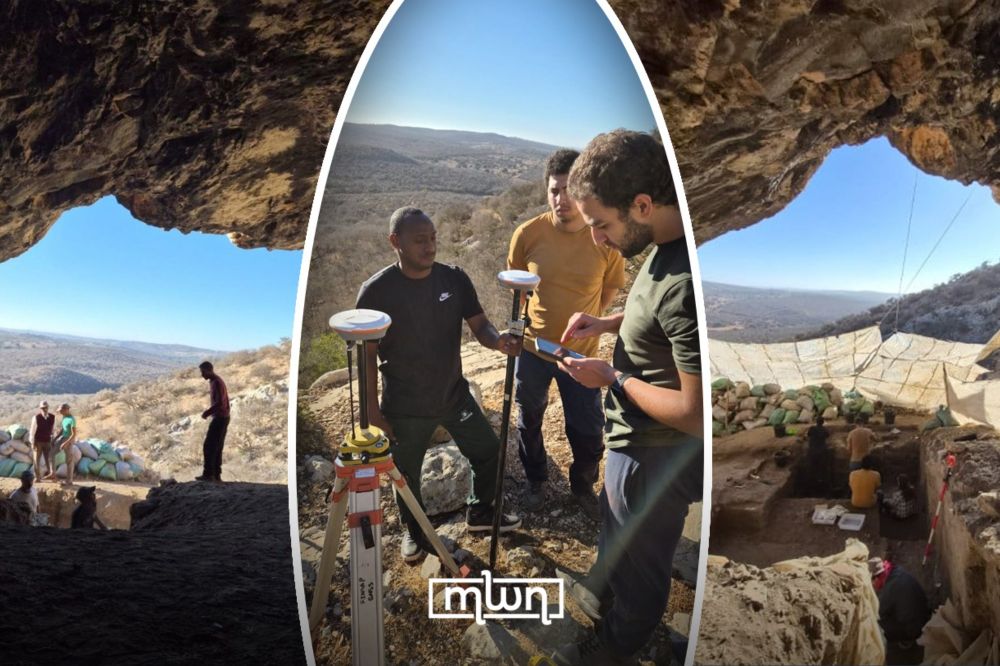
Essaouira’s Bizmoune Cave Yields New Clues to Early Humans
Morocco’s National Institute of Archaeology and Heritage has launched a month-long field season at Bizmoune Cave to refine the story of early humans in North Africa.
www.moroccoworldnews.com
November 19, 2025 at 3:16 PM
Essaouira’s Bizmoune Cave Yields New Clues to Early Humans. Moroccan archaeologists have opened a new research season at Bizmoune Cave near Essaouira. Fresh finds illuminate Stone Age life and deepen the site’s global importance.
www.moroccoworldnews.com/2025/11/2677...
🏺
www.moroccoworldnews.com/2025/11/2677...
🏺
Reposted by Colin D. Wren
Despite their potential to teach us about precontact societies, the study of underwater prehistoric landscapes is still in its infancy in the Americas. Check out our review of 'Submerged prehistory in the Americas' in the latest #NewBookChronicle 🆓 doi.org/10.15184/aqy...
🏺 #Archaeology
🏺 #Archaeology

November 17, 2025 at 5:15 PM
Despite their potential to teach us about precontact societies, the study of underwater prehistoric landscapes is still in its infancy in the Americas. Check out our review of 'Submerged prehistory in the Americas' in the latest #NewBookChronicle 🆓 doi.org/10.15184/aqy...
🏺 #Archaeology
🏺 #Archaeology
Reposted by Colin D. Wren
The American sweet potato was introduced to Polynesia from South America, likely by seafarers crossing the Pacific. It can withstand harsher conditions than taro or uwhi (yam), so its introduction helped early migrants settle cooler southern Polynesia.
🆓 doi.org/10.15184/aqy...
🏺 #Archaeology
🆓 doi.org/10.15184/aqy...
🏺 #Archaeology

November 17, 2025 at 9:15 PM
The American sweet potato was introduced to Polynesia from South America, likely by seafarers crossing the Pacific. It can withstand harsher conditions than taro or uwhi (yam), so its introduction helped early migrants settle cooler southern Polynesia.
🆓 doi.org/10.15184/aqy...
🏺 #Archaeology
🆓 doi.org/10.15184/aqy...
🏺 #Archaeology
Reposted by Colin D. Wren

Yup... here it is, as found, in the PAS database - it's been straightened out for sale (something archaeological conservators wouldn't do - it was likely intentionally crushed in antiquity. Also, are we 100% sure this is right shape??)
1/4
#Archaeology #Detecting 🏺
finds.org.uk/database/art...
1/4
#Archaeology #Detecting 🏺
finds.org.uk/database/art...
November 17, 2025 at 10:23 PM
Yup... here it is, as found, in the PAS database - it's been straightened out for sale (something archaeological conservators wouldn't do - it was likely intentionally crushed in antiquity. Also, are we 100% sure this is right shape??)
1/4
#Archaeology #Detecting 🏺
finds.org.uk/database/art...
1/4
#Archaeology #Detecting 🏺
finds.org.uk/database/art...
Reposted by Colin D. Wren
Interested studying human evolution at @ucl.ac.uk with a dedicated MSc in palaeolithic archaeology, palaeoanthropology, Ice Age fauna, isotopes, aDNA, ancient environments & more?
Get in touch for a chat or even a tour of the department with me.
@uclarchaeology.bsky.social #PaPa
🏺🦣🧪
Get in touch for a chat or even a tour of the department with me.
@uclarchaeology.bsky.social #PaPa
🏺🦣🧪

November 17, 2025 at 10:52 AM
Interested studying human evolution at @ucl.ac.uk with a dedicated MSc in palaeolithic archaeology, palaeoanthropology, Ice Age fauna, isotopes, aDNA, ancient environments & more?
Get in touch for a chat or even a tour of the department with me.
@uclarchaeology.bsky.social #PaPa
🏺🦣🧪
Get in touch for a chat or even a tour of the department with me.
@uclarchaeology.bsky.social #PaPa
🏺🦣🧪
Reposted by Colin D. Wren
Woodhenge was discovered in Dec 1925. Delighted to see my article about this in @CurrentArchaeo’s December issue - fittingly for the 100th anniversary of this state monument. 🏺https://the-past.com/feature/100-years-of-woodhenge-tracing-an-archaeological-icon-from-discovery-to-new-dating-evidence/

November 17, 2025 at 11:11 AM
Woodhenge was discovered in Dec 1925. Delighted to see my article about this in @CurrentArchaeo’s December issue - fittingly for the 100th anniversary of this state monument. 🏺https://the-past.com/feature/100-years-of-woodhenge-tracing-an-archaeological-icon-from-discovery-to-new-dating-evidence/