


John Burns
@burnsajohn.bsky.social
I like to think about how cells work, especially among #protists. Driven by curiosity and a love to share detailed research and odd observations. Senior Research Scientist, Bigelow Laboratory for Ocean Sciences. He/him. https://www.protistsystems.org/
Reposted by John Burns
STUNNING! This Halosphaera alga is so pretty! From today’s plankton sample.
#marineplankton 🦑
#marineplankton 🦑

January 21, 2026 at 9:25 PM
STUNNING! This Halosphaera alga is so pretty! From today’s plankton sample.
#marineplankton 🦑
#marineplankton 🦑
Reposted by John Burns
Closely related microbes tend to live in similar communities across Earth’s environments.
We call this pattern community conservatism - extending established ecological patterns to the microbial world.
🧬🌍 #MicrobialEcology #Evolution
Read the full article here: doi.org/10.1038/s415...
We call this pattern community conservatism - extending established ecological patterns to the microbial world.
🧬🌍 #MicrobialEcology #Evolution
Read the full article here: doi.org/10.1038/s415...

January 16, 2026 at 10:17 AM
Closely related microbes tend to live in similar communities across Earth’s environments.
We call this pattern community conservatism - extending established ecological patterns to the microbial world.
🧬🌍 #MicrobialEcology #Evolution
Read the full article here: doi.org/10.1038/s415...
We call this pattern community conservatism - extending established ecological patterns to the microbial world.
🧬🌍 #MicrobialEcology #Evolution
Read the full article here: doi.org/10.1038/s415...
Is this a CT scan through an animal brain? Or optical sections of a very interesting alga?
With big thanks to @dudinlab.bsky.social for helpful tips and encouragement. Now to use these methods to answer some long-standing biological questions! #protistsonsky #Cymbomonas
With big thanks to @dudinlab.bsky.social for helpful tips and encouragement. Now to use these methods to answer some long-standing biological questions! #protistsonsky #Cymbomonas
January 19, 2026 at 7:45 PM
Is this a CT scan through an animal brain? Or optical sections of a very interesting alga?
With big thanks to @dudinlab.bsky.social for helpful tips and encouragement. Now to use these methods to answer some long-standing biological questions! #protistsonsky #Cymbomonas
With big thanks to @dudinlab.bsky.social for helpful tips and encouragement. Now to use these methods to answer some long-standing biological questions! #protistsonsky #Cymbomonas
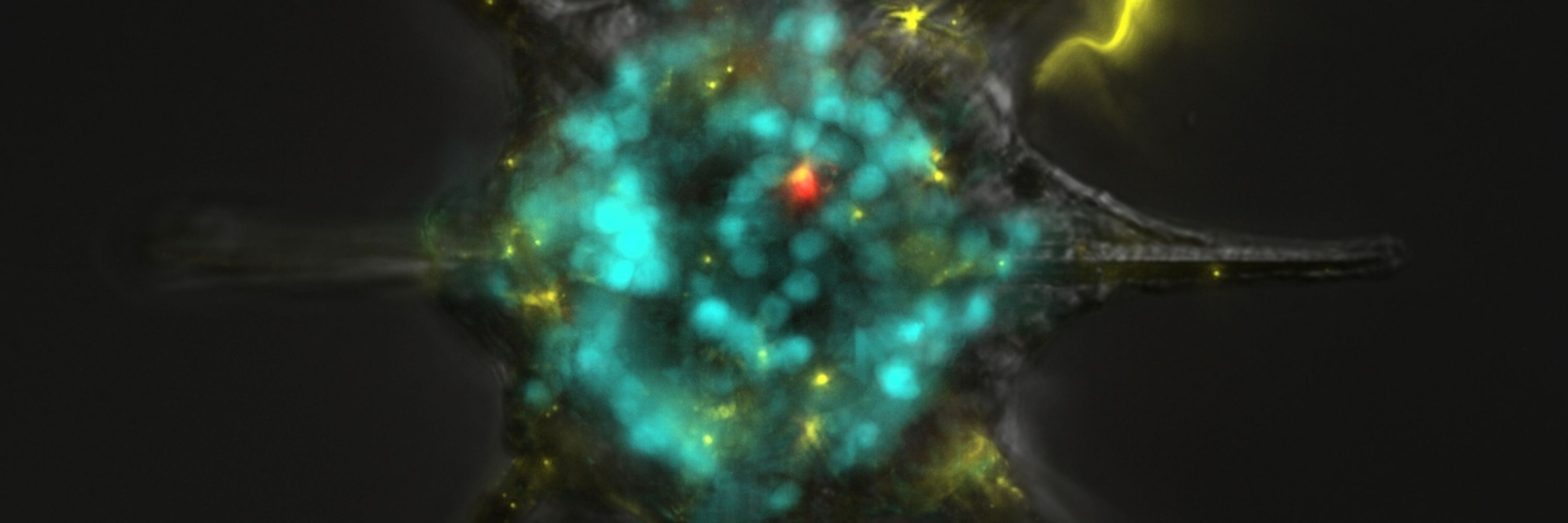
Is it an image of a new far-away galaxy? Or a slice through a single algal cell? #protistsonsky

January 19, 2026 at 7:04 PM
Is it an image of a new far-away galaxy? Or a slice through a single algal cell? #protistsonsky
Reposted by John Burns
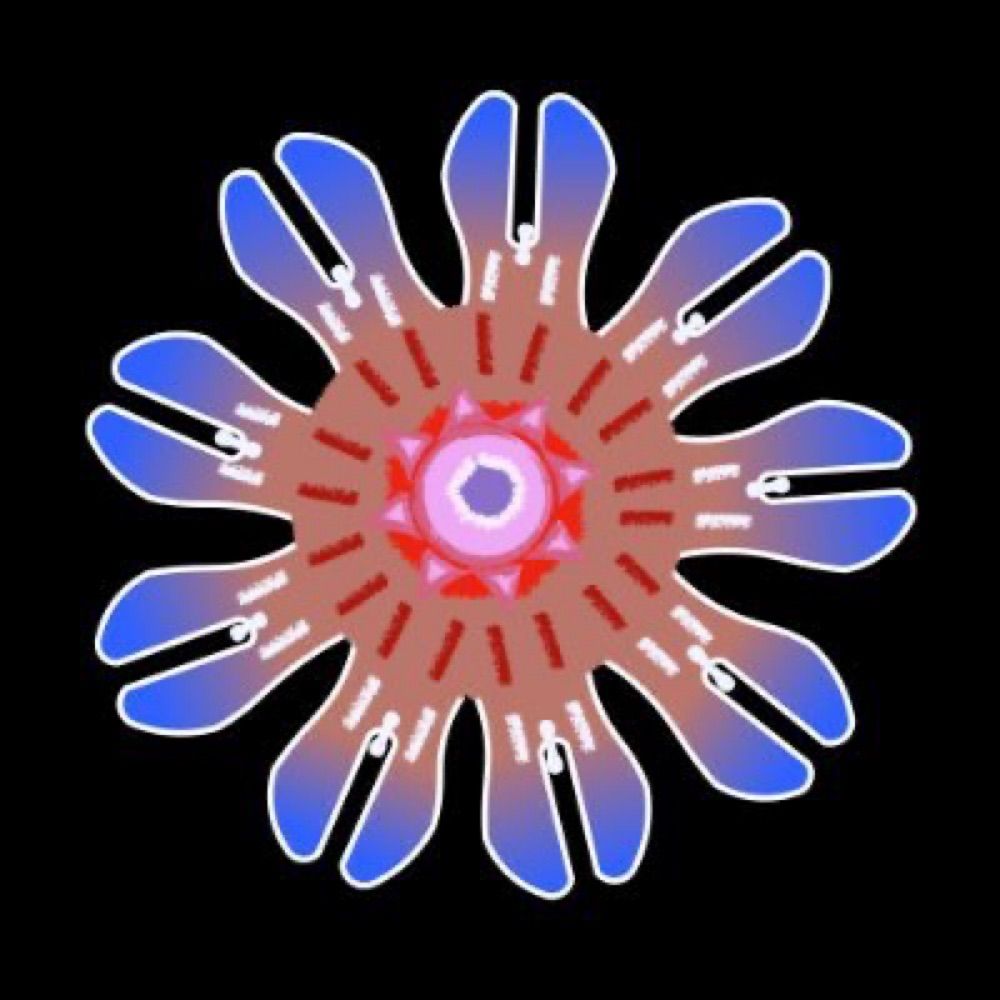
Blue buttons jellies float at the oceans surface, like little animal flowers, living between sea and sky. There are millions of them out there right now, and most will live their whole lives without even being seen by a human.
Despite the hard things, the world is still wondrous.
Despite the hard things, the world is still wondrous.
January 15, 2026 at 10:58 PM
Blue buttons jellies float at the oceans surface, like little animal flowers, living between sea and sky. There are millions of them out there right now, and most will live their whole lives without even being seen by a human.
Despite the hard things, the world is still wondrous.
Despite the hard things, the world is still wondrous.
Reposted by John Burns
New postdoc funding opportunity in Sweden! If you're interested in applying for this 'Data-Driven Life Sciences' fellowship, please get in touch, we'd be happy to host and help with the application (and talk options beyond the 2-year position). www.scilifelab.se/data-driven/...

DDLS Research School Postdoc call 2026
Call for Academic and Industrial Postdoctoral Fellowships in Data-Driven Life Science 2026 Generic Description of the DDLS Postdoc Program The SciLifeLab and Wallenberg National Program for Data-Drive...
www.scilifelab.se
January 13, 2026 at 1:32 PM
New postdoc funding opportunity in Sweden! If you're interested in applying for this 'Data-Driven Life Sciences' fellowship, please get in touch, we'd be happy to host and help with the application (and talk options beyond the 2-year position). www.scilifelab.se/data-driven/...
Reposted by John Burns
Our research scientist Núria Ros-Rocher won the 1st prize @zeiss-microscopy.bsky.social microscopy contest with this beautiful choano colony www.zeiss.fr/microscopie/... 🥳
C. flexa might not yet be a genetic model, but it is now at least a calendar model, which counts for something. I think.
C. flexa might not yet be a genetic model, but it is now at least a calendar model, which counts for something. I think.


January 12, 2026 at 7:28 PM
Our research scientist Núria Ros-Rocher won the 1st prize @zeiss-microscopy.bsky.social microscopy contest with this beautiful choano colony www.zeiss.fr/microscopie/... 🥳
C. flexa might not yet be a genetic model, but it is now at least a calendar model, which counts for something. I think.
C. flexa might not yet be a genetic model, but it is now at least a calendar model, which counts for something. I think.
Reposted by John Burns
Pleurosigma angulatum - it makes quite a statement doesn’t it!?
#marineplankton 🦑
#marineplankton 🦑
January 12, 2026 at 9:11 PM
Pleurosigma angulatum - it makes quite a statement doesn’t it!?
#marineplankton 🦑
#marineplankton 🦑
Reposted by John Burns
A well done overview of #ParsimonyGate -(which happened 10 years ago) - see www.youtube.com/watch?v=HeuV... -- in French but with multiple options for subtitles including English

Le Scandale Scientifique du ParsimonyGate
YouTube video by Évoluscope
www.youtube.com
January 12, 2026 at 9:19 PM
A well done overview of #ParsimonyGate -(which happened 10 years ago) - see www.youtube.com/watch?v=HeuV... -- in French but with multiple options for subtitles including English
Reposted by John Burns
Defending PhD student, looking over their thesis: “If I knew then what I know now, I could’ve done all of this in like 9 months.”
A thread about my favorite pioneering cave explorers and why I don’t think AI will ever “solve” biology.
A thread about my favorite pioneering cave explorers and why I don’t think AI will ever “solve” biology.

January 11, 2026 at 9:27 PM
Defending PhD student, looking over their thesis: “If I knew then what I know now, I could’ve done all of this in like 9 months.”
A thread about my favorite pioneering cave explorers and why I don’t think AI will ever “solve” biology.
A thread about my favorite pioneering cave explorers and why I don’t think AI will ever “solve” biology.
Reposted by John Burns
What I love about them is how they would talk about their experiences - the sublimity of discovery, and the trials and tribulations of exploration.

January 11, 2026 at 9:27 PM
What I love about them is how they would talk about their experiences - the sublimity of discovery, and the trials and tribulations of exploration.
Reposted by John Burns
The world feels rough right now
So please enjoy this shrimp, filmed off Cozumel, Mexico. It may be a larval reef shrimp, but we don’t know what species or how long it lives or what it eats. The world is still full of wonder and beauty and mystery.
🎥 @pedrovalenciam scuba diver on Insta
So please enjoy this shrimp, filmed off Cozumel, Mexico. It may be a larval reef shrimp, but we don’t know what species or how long it lives or what it eats. The world is still full of wonder and beauty and mystery.
🎥 @pedrovalenciam scuba diver on Insta
January 8, 2026 at 8:20 PM
The world feels rough right now
So please enjoy this shrimp, filmed off Cozumel, Mexico. It may be a larval reef shrimp, but we don’t know what species or how long it lives or what it eats. The world is still full of wonder and beauty and mystery.
🎥 @pedrovalenciam scuba diver on Insta
So please enjoy this shrimp, filmed off Cozumel, Mexico. It may be a larval reef shrimp, but we don’t know what species or how long it lives or what it eats. The world is still full of wonder and beauty and mystery.
🎥 @pedrovalenciam scuba diver on Insta
Reposted by John Burns
There were a few of these bryozoan coronate larvae in my plankton sample this week. Keep watching for the larva in slow motion!
#marineplankton 🦑
#marineplankton 🦑
January 9, 2026 at 8:55 PM
There were a few of these bryozoan coronate larvae in my plankton sample this week. Keep watching for the larva in slow motion!
#marineplankton 🦑
#marineplankton 🦑
Reposted by John Burns
Our eLetter github.com/caseywdunn/s... responding to a recent Science paper was just posted. The paper found more genes with consistent support for sponge-sister than ctenophore-sister. We found several technical issues that, when corrected, reverse the conclusions and recover ctenophore-sister.

January 9, 2026 at 11:44 AM
Our eLetter github.com/caseywdunn/s... responding to a recent Science paper was just posted. The paper found more genes with consistent support for sponge-sister than ctenophore-sister. We found several technical issues that, when corrected, reverse the conclusions and recover ctenophore-sister.
Reposted by John Burns
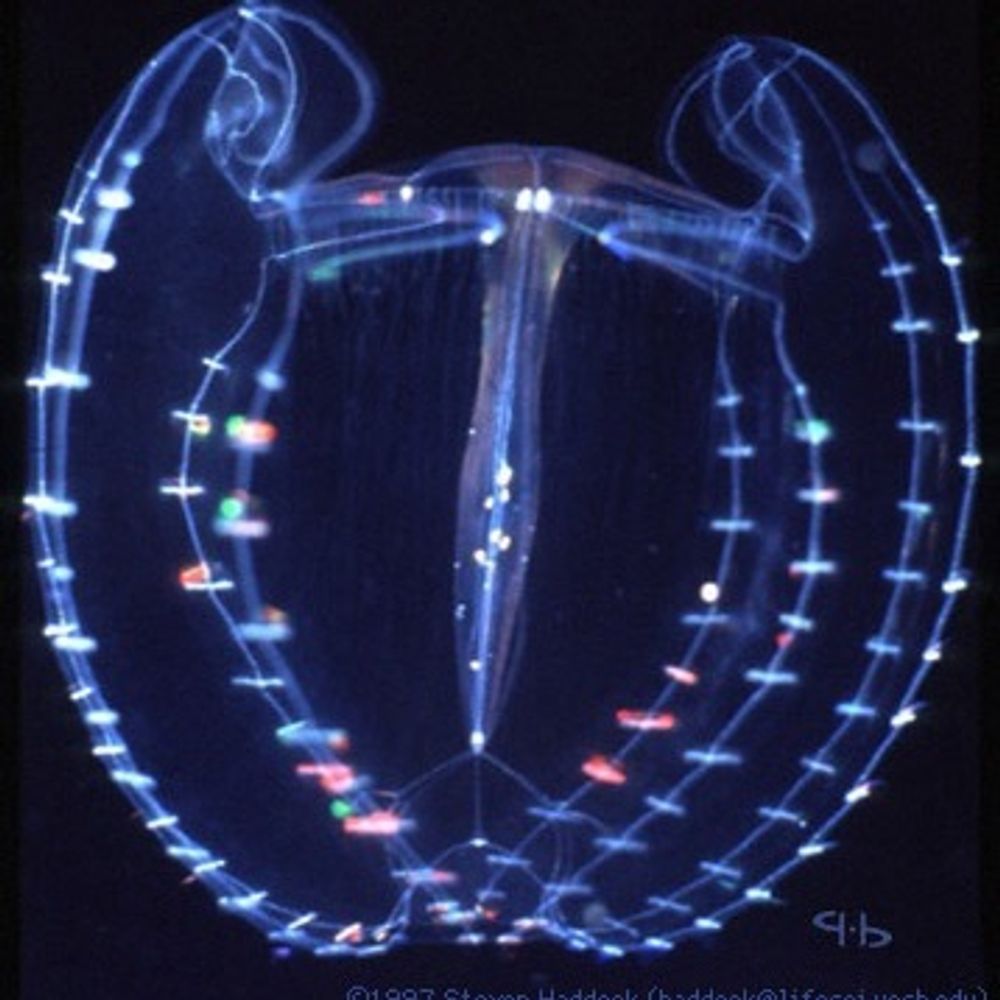
Related to high pressure, @ibudin.bsky.social and Jacob Winnikoff led a study which showed that a particular lipid headgroup (PPE) is more abundant in membranes of deep #ctenophores. 🧪🦑
What was amazing was when they put PPE into bacterial membranes, the bacteria became more pressure tolerant!
What was amazing was when they put PPE into bacterial membranes, the bacteria became more pressure tolerant!
January 9, 2026 at 6:19 PM
Related to high pressure, @ibudin.bsky.social and Jacob Winnikoff led a study which showed that a particular lipid headgroup (PPE) is more abundant in membranes of deep #ctenophores. 🧪🦑
What was amazing was when they put PPE into bacterial membranes, the bacteria became more pressure tolerant!
What was amazing was when they put PPE into bacterial membranes, the bacteria became more pressure tolerant!
Reposted by John Burns
This is the cover proposal I made for our recent paper!
It’s Pyramimonas diskoicola — a very beautiful green flagellate and one of those cells that makes you stop and stare for a while.
I tried to capture its shape, symmetry, and general vibe :)
#FluorescenceFriday
#BioArt #SciArt
#Illustration
It’s Pyramimonas diskoicola — a very beautiful green flagellate and one of those cells that makes you stop and stare for a while.
I tried to capture its shape, symmetry, and general vibe :)
#FluorescenceFriday
#BioArt #SciArt
#Illustration

January 9, 2026 at 8:20 AM
This is the cover proposal I made for our recent paper!
It’s Pyramimonas diskoicola — a very beautiful green flagellate and one of those cells that makes you stop and stare for a while.
I tried to capture its shape, symmetry, and general vibe :)
#FluorescenceFriday
#BioArt #SciArt
#Illustration
It’s Pyramimonas diskoicola — a very beautiful green flagellate and one of those cells that makes you stop and stare for a while.
I tried to capture its shape, symmetry, and general vibe :)
#FluorescenceFriday
#BioArt #SciArt
#Illustration
Reposted by John Burns
Jellyfish sleep, which is already bizarre given they have no brains. DNA damage accumulates in their neurons when jellyfish are awake, and it gets repaired when they sleep. This might be something fundamental, evolutionarily, to the role of sleep. 🧪🌊
Link: nature.com/articles/s41...
Link: nature.com/articles/s41...

January 8, 2026 at 6:54 AM
Jellyfish sleep, which is already bizarre given they have no brains. DNA damage accumulates in their neurons when jellyfish are awake, and it gets repaired when they sleep. This might be something fundamental, evolutionarily, to the role of sleep. 🧪🌊
Link: nature.com/articles/s41...
Link: nature.com/articles/s41...
Reposted by John Burns
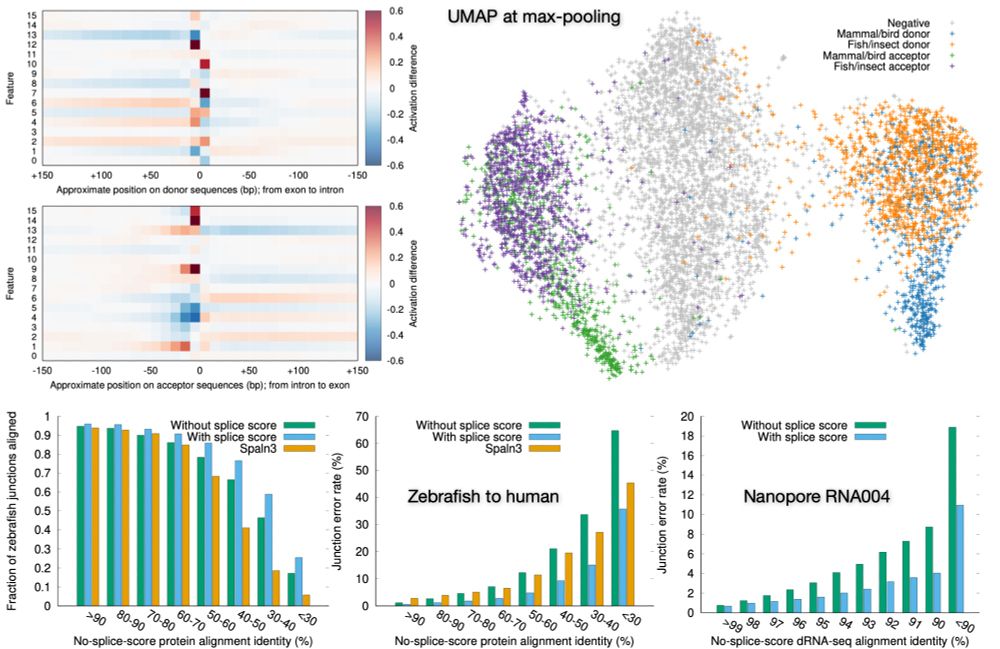
Now published in Algorithms for Molecular Biology: link.springer.com/article/10.1.... Key message: a tiny CNN model with 7k parameters can capture main splice signals across vertebrates+insect and halves the minimap2 & miniprot junction error rate. I always use this new feature now.
Preprint on "Improving spliced alignment by modeling splice sites with deep learning". It describes minisplice for modeling splice signals. Minimap2 and miniprot now optionally use the predicted scores to improve spliced alignment.
arxiv.org/abs/2506.12986
arxiv.org/abs/2506.12986
January 6, 2026 at 11:02 PM
Now published in Algorithms for Molecular Biology: link.springer.com/article/10.1.... Key message: a tiny CNN model with 7k parameters can capture main splice signals across vertebrates+insect and halves the minimap2 & miniprot junction error rate. I always use this new feature now.
Reposted by John Burns

Shelled #amoeba crawls like an octopus, shifting tactics on the go phys.org/news/2026-01...
Statistical and mechanical analysis of multi-pseudopodial locomotion in a testate amoeba, #Arcella sp. www.jstage.jst.go.jp/article/pjab...
#Protists #Microbes #Amoebae
Statistical and mechanical analysis of multi-pseudopodial locomotion in a testate amoeba, #Arcella sp. www.jstage.jst.go.jp/article/pjab...
#Protists #Microbes #Amoebae

January 7, 2026 at 7:26 AM
Shelled #amoeba crawls like an octopus, shifting tactics on the go phys.org/news/2026-01...
Statistical and mechanical analysis of multi-pseudopodial locomotion in a testate amoeba, #Arcella sp. www.jstage.jst.go.jp/article/pjab...
#Protists #Microbes #Amoebae
Statistical and mechanical analysis of multi-pseudopodial locomotion in a testate amoeba, #Arcella sp. www.jstage.jst.go.jp/article/pjab...
#Protists #Microbes #Amoebae
Reposted by John Burns
Why should scientists write op-eds? It's tempting to say the facts ought to speak for themselves. But the facts are largely whispering among themselves in the scientific literature. They need us to give them a voice. How? Advice in my latest @natchem.nature.com Thesis rdcu.be/eJlGL #chemsky 1/3

Opinionated science
Nature Chemistry - When the facts can’t speak for themselves, scientists can give them a voice, argues Michelle Francl.
rdcu.be
October 6, 2025 at 2:26 PM
Why should scientists write op-eds? It's tempting to say the facts ought to speak for themselves. But the facts are largely whispering among themselves in the scientific literature. They need us to give them a voice. How? Advice in my latest @natchem.nature.com Thesis rdcu.be/eJlGL #chemsky 1/3
Reposted by John Burns
In this piece, we combined a traditional watercolour-style view of the outer shell of each species, inspired by Heckel’s beautiful illustrations of the natural world, with a sci-fi-style inner structure.
January 4, 2026 at 11:35 AM
In this piece, we combined a traditional watercolour-style view of the outer shell of each species, inspired by Heckel’s beautiful illustrations of the natural world, with a sci-fi-style inner structure.
Reposted by John Burns

@echinoblog.bsky.social that's a beautiful sea star! Also crab and urchin. @schmidtocean.bsky.social dive 892. #argentiniandeepseeps #CONICET #MarineLife


January 4, 2026 at 5:14 AM
@echinoblog.bsky.social that's a beautiful sea star! Also crab and urchin. @schmidtocean.bsky.social dive 892. #argentiniandeepseeps #CONICET #MarineLife
Reposted by John Burns
Marine functional #connectivity matters—from genes to energy flows. This synthesis clarifies concepts, unifies fragmented approaches, and proposes a global framework to better link science, #SpatialPlanning, and #policy in a changing ocean. doi.org/10.1002/brv....
#MarineEcology 🌐🌍🧪🌊
#MarineEcology 🌐🌍🧪🌊

January 3, 2026 at 6:00 PM
Marine functional #connectivity matters—from genes to energy flows. This synthesis clarifies concepts, unifies fragmented approaches, and proposes a global framework to better link science, #SpatialPlanning, and #policy in a changing ocean. doi.org/10.1002/brv....
#MarineEcology 🌐🌍🧪🌊
#MarineEcology 🌐🌍🧪🌊
Reposted by John Burns
Benthic siphonophore. I would love if that was the size of the ROV. @schmidtocean.bsky.social dive 890. #argentiniandeepseeps #CONICET #MarineLife
January 3, 2026 at 2:01 AM
Benthic siphonophore. I would love if that was the size of the ROV. @schmidtocean.bsky.social dive 890. #argentiniandeepseeps #CONICET #MarineLife
Reposted by John Burns

ROV pilots filmed this giant phantom jelly, or Stygiomedusa gigantea, at 253 meters during an ROV descent to explore the Colorado-Rawson submarine canyon wall. #ArgentinianDeepSeeps
January 2, 2026 at 12:07 AM
ROV pilots filmed this giant phantom jelly, or Stygiomedusa gigantea, at 253 meters during an ROV descent to explore the Colorado-Rawson submarine canyon wall. #ArgentinianDeepSeeps