


Benito Wainwright
@benitoexplains.bsky.social
Research fellow at the University of St Andrews 🏳️🌈 • Evolutionary and sensory ecology in 🦋+ 🦗 • He/him • I also make YouTube videos. Link here: https://youtube.com/@benitosexplenations?si=zpMANThrSJv_efM0
Pinned

Very happy to see our opinion article out in @cp-trendsecolevo.bsky.social today. 🥳 We ask whether sexual signals can influence the evolutionary trajectory of naturally selected adaptations, such as protective colouration, for better or for worse 🧐 1/n
doi.org/10.1016/j.tr...
doi.org/10.1016/j.tr...
Reposted by Benito Wainwright

New from Jessie Foley!
#Heliconius have elongated lives and excellent memory, but do they have excellent memory across their elongated lives? Find out now!*
Featuring learning and memory assays in 330 butterflies, and an absolute pig of an experiment to do.
*the title is a spoiler 🧪
#Heliconius have elongated lives and excellent memory, but do they have excellent memory across their elongated lives? Find out now!*
Featuring learning and memory assays in 330 butterflies, and an absolute pig of an experiment to do.
*the title is a spoiler 🧪

Cognitive robustness in a new insect model of extended longevity https://www.biorxiv.org/content/10.64898/2026.01.25.701637v1
January 28, 2026 at 7:33 AM
New from Jessie Foley!
#Heliconius have elongated lives and excellent memory, but do they have excellent memory across their elongated lives? Find out now!*
Featuring learning and memory assays in 330 butterflies, and an absolute pig of an experiment to do.
*the title is a spoiler 🧪
#Heliconius have elongated lives and excellent memory, but do they have excellent memory across their elongated lives? Find out now!*
Featuring learning and memory assays in 330 butterflies, and an absolute pig of an experiment to do.
*the title is a spoiler 🧪
Reposted by Benito Wainwright

New paper out: “allopatric” Drosophila species aren’t so allopatric after all. We show that most currently allopatric species pairs probably overlapped in the past and exchanged genes at levels similar to sympatric pairs. @evolletters.bsky.social
doi.org/10.1093/evle... [1/6]
doi.org/10.1093/evle... [1/6]

Genomic analyses in Drosophila do not support the classic allopatric model of speciation
Abstract. The allopatric model of speciation has dominated our understanding of speciation biology and biogeography since the Modern Synthesis. It is uncon
doi.org
January 15, 2026 at 11:58 AM
New paper out: “allopatric” Drosophila species aren’t so allopatric after all. We show that most currently allopatric species pairs probably overlapped in the past and exchanged genes at levels similar to sympatric pairs. @evolletters.bsky.social
doi.org/10.1093/evle... [1/6]
doi.org/10.1093/evle... [1/6]
Reposted by Benito Wainwright

🚨NEW PAPER🚨 Need to #camouflage on the move? Easy - simply seek out something that's coloured like you and move along with it! 🐠 Read the latest #trumpetfish instalment here: tinyurl.com/4tb5h5hk
@royalsociety.org
#shadowing #predator #experiment #marine #movement
@royalsociety.org
#shadowing #predator #experiment #marine #movement

December 22, 2025 at 10:47 AM
🚨NEW PAPER🚨 Need to #camouflage on the move? Easy - simply seek out something that's coloured like you and move along with it! 🐠 Read the latest #trumpetfish instalment here: tinyurl.com/4tb5h5hk
@royalsociety.org
#shadowing #predator #experiment #marine #movement
@royalsociety.org
#shadowing #predator #experiment #marine #movement
Bravo Rochelle on this huge and amazing piece of work! 👏👏👏

Multiple anthropogenic stressors can negatively impact species but can a single stressor also have multiple, concurrent impacts? Here we show that light pollution creates several simultaneous impacts to the nocturnal movement ecology of a moth and a spider: tinyurl.com/5eku5bff (1/5)

December 18, 2025 at 2:30 PM
Bravo Rochelle on this huge and amazing piece of work! 👏👏👏
Reposted by Benito Wainwright

How to be a convincing leaf! Learning about the spectrum of leafiness with @benitoexplains.bsky.social 🍃 🐛 🍃 🐛 #ASABWinter2025

December 15, 2025 at 12:13 PM
How to be a convincing leaf! Learning about the spectrum of leafiness with @benitoexplains.bsky.social 🍃 🐛 🍃 🐛 #ASABWinter2025
Reposted by Benito Wainwright
blown away by this, given the names of previous winners - recent and not so recent - hugely grateful to @zslofficial.bsky.social, and all the many students, postgrads, postdocs and collaborators who have helped make the last 14 years so fun and exciting
Will go back to avoiding cameras now… 🫣
Will go back to avoiding cameras now… 🫣

The ZSL Scientific Medal is also awarded to Professor Stephen Montgomery, @bristolbiosci.bsky.social whose research has provided insights into the relationships between ecological niche specialisation, brain structure, and cognitive function 🏅 @ebablab.bsky.social

December 10, 2025 at 6:30 PM
blown away by this, given the names of previous winners - recent and not so recent - hugely grateful to @zslofficial.bsky.social, and all the many students, postgrads, postdocs and collaborators who have helped make the last 14 years so fun and exciting
Will go back to avoiding cameras now… 🫣
Will go back to avoiding cameras now… 🫣
Reposted by Benito Wainwright

🚨Two funded PhDs on the evolutionary ecology of antipredator colouration 🦋 with myself and Iliana Medina.
One in Swansea tinyurl.com/4thtbph6 deadline Jan 12th @crocus-dla.bsky.social
The other in Melbourne - deadline Jan 1st
Please share among potential students!
One in Swansea tinyurl.com/4thtbph6 deadline Jan 12th @crocus-dla.bsky.social
The other in Melbourne - deadline Jan 1st
Please share among potential students!


December 1, 2025 at 2:40 PM
🚨Two funded PhDs on the evolutionary ecology of antipredator colouration 🦋 with myself and Iliana Medina.
One in Swansea tinyurl.com/4thtbph6 deadline Jan 12th @crocus-dla.bsky.social
The other in Melbourne - deadline Jan 1st
Please share among potential students!
One in Swansea tinyurl.com/4thtbph6 deadline Jan 12th @crocus-dla.bsky.social
The other in Melbourne - deadline Jan 1st
Please share among potential students!
Reposted by Benito Wainwright

Online now: Evolutionary influences of sexual signalling on protective colouration
Evolutionary influences of sexual signalling on protective colouration
Sexual signals can reduce survival, constraining their evolutionary elaboration. However, it is unclear whether these signals, once evolved, similarly impact the evolution of naturally selected adaptations. We argue that this dynamic could be important for protective colouration, an extensively studied suite of adaptations that can also be under sexual selection. Sexual signals sometimes coevolve positively with conspicuous warning colouration, promoting synergistic, dual-function associations. However, when coupled through shared structures or behaviours, sexual traits might constrain the evolution of concealment strategies, resulting in suboptimal camouflage. We suggest hypotheses, approaches, and study systems to distinguish these opposing causal roles of sexual selection in shaping naturally selected adaptations such as protective colouration.
dlvr.it
November 28, 2025 at 8:59 PM
Online now: Evolutionary influences of sexual signalling on protective colouration
Very happy to see our opinion article out in @cp-trendsecolevo.bsky.social today. 🥳 We ask whether sexual signals can influence the evolutionary trajectory of naturally selected adaptations, such as protective colouration, for better or for worse 🧐 1/n
doi.org/10.1016/j.tr...
doi.org/10.1016/j.tr...
November 29, 2025 at 2:07 PM
Very happy to see our opinion article out in @cp-trendsecolevo.bsky.social today. 🥳 We ask whether sexual signals can influence the evolutionary trajectory of naturally selected adaptations, such as protective colouration, for better or for worse 🧐 1/n
doi.org/10.1016/j.tr...
doi.org/10.1016/j.tr...
Reposted by Benito Wainwright
🚨RA/PhD position available in evolutionary neurobiology 🚨
Working on a deep dive into circuit changes during mushroom body expansion in Heliconius butterflies @camzoology.bsky.social
- employment benefits
- 4 years funding
- 1000% fun
Deadline: 14/1/2026
Details:
www.cam.ac.uk/jobs/researc...
Working on a deep dive into circuit changes during mushroom body expansion in Heliconius butterflies @camzoology.bsky.social
- employment benefits
- 4 years funding
- 1000% fun
Deadline: 14/1/2026
Details:
www.cam.ac.uk/jobs/researc...

November 21, 2025 at 2:31 PM
🚨RA/PhD position available in evolutionary neurobiology 🚨
Working on a deep dive into circuit changes during mushroom body expansion in Heliconius butterflies @camzoology.bsky.social
- employment benefits
- 4 years funding
- 1000% fun
Deadline: 14/1/2026
Details:
www.cam.ac.uk/jobs/researc...
Working on a deep dive into circuit changes during mushroom body expansion in Heliconius butterflies @camzoology.bsky.social
- employment benefits
- 4 years funding
- 1000% fun
Deadline: 14/1/2026
Details:
www.cam.ac.uk/jobs/researc...
What a joy to work with a bunch of my closest pals from my PhD on this review!

Do you work (/want to work) with caterpillars? Or sensory systems? Or BOTH?! Well good golly do we have the paper for you! We explain the senses that caterpillars have, what they use them for, and how anthropogenic sensory pollution might be messing it all up 🐛 doi.org/10.1007/s003...

The sensory ecology of caterpillars - Journal of Comparative Physiology A
Caterpillars (larval Lepidoptera) are one of the most ecologically and evolutionarily significant taxa on Earth. As both feeders and food, they shape the dynamics of enumerate ecosystems on land. Key ...
doi.org
November 11, 2025 at 1:13 PM
What a joy to work with a bunch of my closest pals from my PhD on this review!
Reposted by Benito Wainwright

#Evolution of complex adaptations can involve changes in multiple traits that lack standalone function. @benitoexplains.bsky.social &co show that leaf masquerade in #katydids evolved via concurrent modification in wing colour & shape, driven by evolutionary synergy @plosbiology.org 🧪 plos.io/4oUE741

November 4, 2025 at 8:55 AM
#Evolution of complex adaptations can involve changes in multiple traits that lack standalone function. @benitoexplains.bsky.social &co show that leaf masquerade in #katydids evolved via concurrent modification in wing colour & shape, driven by evolutionary synergy @plosbiology.org 🧪 plos.io/4oUE741
Leaf? 🍃 Or katydid? 🦗
Our new
@plosbiology.org paper sheds light on how these incredible mimics evolved their disguises, and what this reveals about how complex adaptations arise. We find that coordinated evolution between traits might be the answer… plos.io/4oUE741 1/n
Our new
@plosbiology.org paper sheds light on how these incredible mimics evolved their disguises, and what this reveals about how complex adaptations arise. We find that coordinated evolution between traits might be the answer… plos.io/4oUE741 1/n

Functional and evolutionary synergy of trait components can explain the existence of leaf masquerade in katydids
The evolution of complex adaptations often involves synergistic changes in multiple traits that lack standalone function. This study shows that leaf masquerade in katydids evolved through concurrent m...
plos.io
November 4, 2025 at 2:02 PM
Leaf? 🍃 Or katydid? 🦗
Our new
@plosbiology.org paper sheds light on how these incredible mimics evolved their disguises, and what this reveals about how complex adaptations arise. We find that coordinated evolution between traits might be the answer… plos.io/4oUE741 1/n
Our new
@plosbiology.org paper sheds light on how these incredible mimics evolved their disguises, and what this reveals about how complex adaptations arise. We find that coordinated evolution between traits might be the answer… plos.io/4oUE741 1/n
Reposted by Benito Wainwright
@pinpilinpauxa-aaa.bsky.social on her @wellcometrust.bsky.social photography competition entry! 👏🏻
www.instagram.com/reel/DO-j2rM...
@bristolbiosci.bsky.social 🧪 #Heliconiini #evobio #neuroscience
www.instagram.com/reel/DO-j2rM...
@bristolbiosci.bsky.social 🧪 #Heliconiini #evobio #neuroscience
Login • Instagram
Welcome back to Instagram. Sign in to check out what your friends, family & interests have been capturing & sharing around the world.
www.instagram.com
September 27, 2025 at 8:59 AM
@pinpilinpauxa-aaa.bsky.social on her @wellcometrust.bsky.social photography competition entry! 👏🏻
www.instagram.com/reel/DO-j2rM...
@bristolbiosci.bsky.social 🧪 #Heliconiini #evobio #neuroscience
www.instagram.com/reel/DO-j2rM...
@bristolbiosci.bsky.social 🧪 #Heliconiini #evobio #neuroscience
This has got to be the #colsci paper to end all #colsci papers! Huge congratulations to @wlallen.bsky.social and Iliana Medina for this monumental effort. 🤯 Chefs kiss 🤌🏽
📢🦋 Our paper ‘Global selection on insect antipredator coloration’ is out and featured on the cover of @science.org
We ran a huge experiment to find out how ecological context favours camouflage and warning colouration as antipredator strategies. 1/6
www.science.org/doi/10.1126/...
We ran a huge experiment to find out how ecological context favours camouflage and warning colouration as antipredator strategies. 1/6
www.science.org/doi/10.1126/...

September 26, 2025 at 1:21 PM
This has got to be the #colsci paper to end all #colsci papers! Huge congratulations to @wlallen.bsky.social and Iliana Medina for this monumental effort. 🤯 Chefs kiss 🤌🏽
Reposted by Benito Wainwright
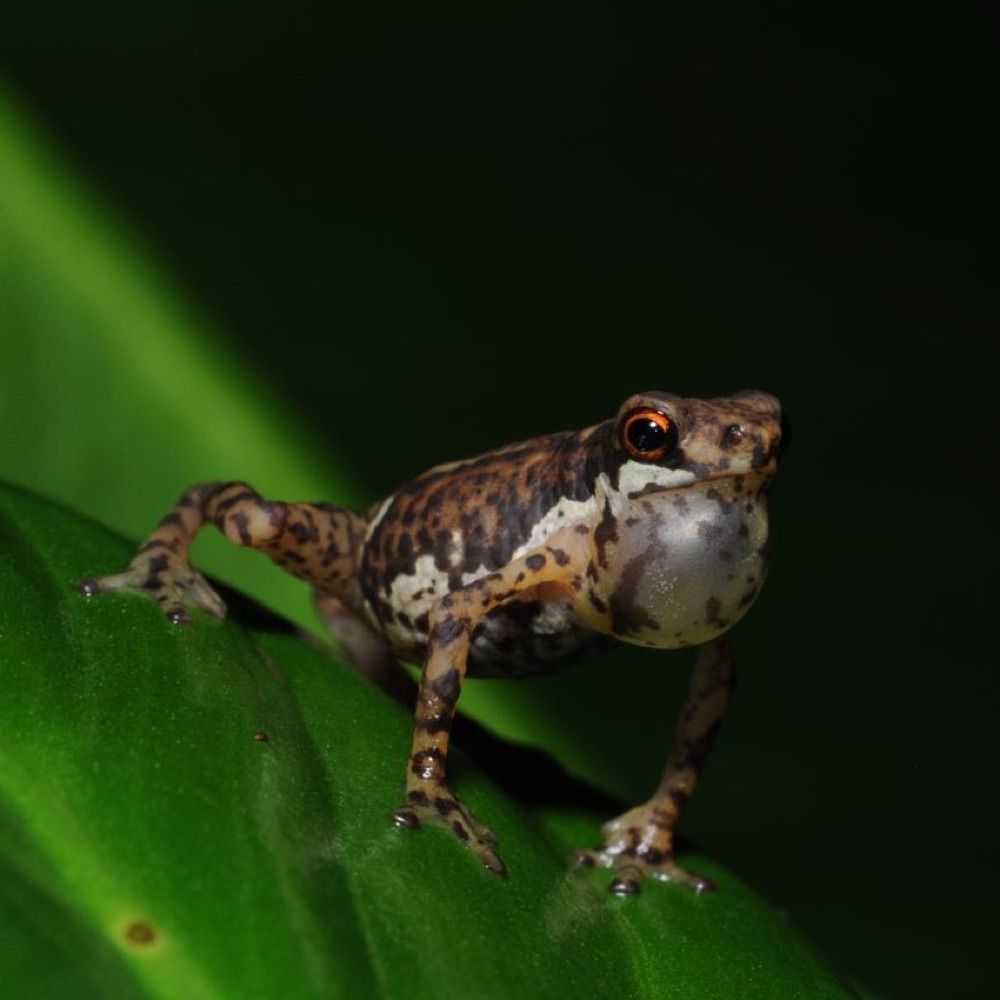
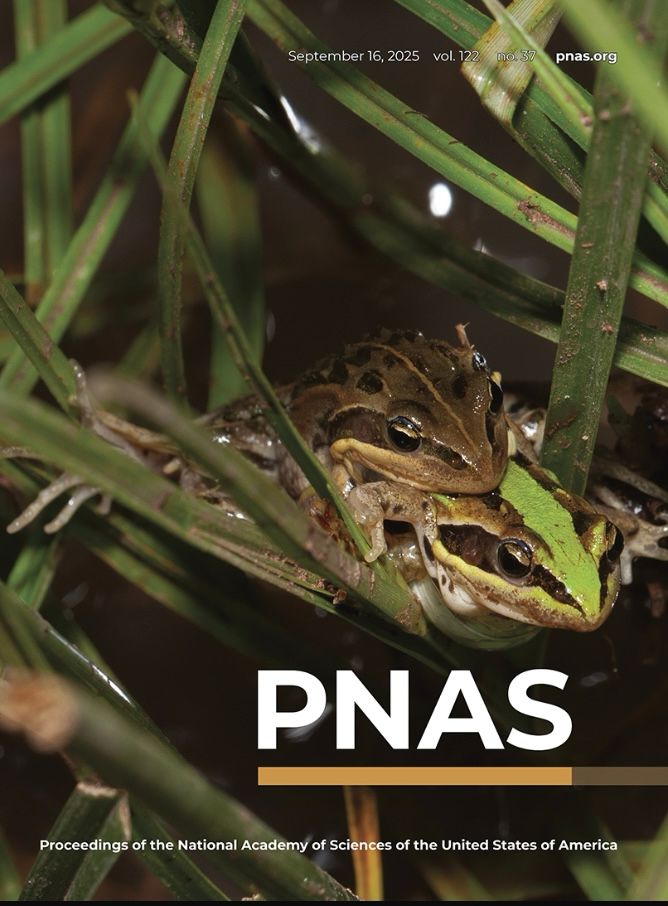
Happy to share that our paper on the #evolution and #genomics of the most common #color polymorphism in #frogs is now out in @pnas.org! My favorite frogs even made the cover of this week’s issue! 🎉🐸🎉
Read the paper here: www.pnas.org/doi/10.1073/...
Read the paper here: www.pnas.org/doi/10.1073/...
September 17, 2025 at 10:42 AM
Happy to share that our paper on the #evolution and #genomics of the most common #color polymorphism in #frogs is now out in @pnas.org! My favorite frogs even made the cover of this week’s issue! 🎉🐸🎉
Read the paper here: www.pnas.org/doi/10.1073/...
Read the paper here: www.pnas.org/doi/10.1073/...
Reposted by Benito Wainwright
Very proud of this extremely collaborative piece: academic.oup.com/mbe/article/...
Here, we show that divergence in visual systems - in response to differences in the light environment - leads to rapid divergence in sexually selected colour traits. Work brilliantly led by Madeleine Carruthers. 🐟👀🎨
Here, we show that divergence in visual systems - in response to differences in the light environment - leads to rapid divergence in sexually selected colour traits. Work brilliantly led by Madeleine Carruthers. 🐟👀🎨

Rapid Divergence of Visual Systems and Signaling Traits to Contrasting Light Regimes During Early Speciation of African Crater Lake Cichlid Fish
Abstract. Sensory adaptation is widely hypothesized to drive ecological speciation, yet empirical evidence from natural populations undergoing early stage
academic.oup.com
September 16, 2025 at 4:23 PM
Very proud of this extremely collaborative piece: academic.oup.com/mbe/article/...
Here, we show that divergence in visual systems - in response to differences in the light environment - leads to rapid divergence in sexually selected colour traits. Work brilliantly led by Madeleine Carruthers. 🐟👀🎨
Here, we show that divergence in visual systems - in response to differences in the light environment - leads to rapid divergence in sexually selected colour traits. Work brilliantly led by Madeleine Carruthers. 🐟👀🎨
Reposted by Benito Wainwright

A common type of ant in Europe breaks a fundamental rule in biology: its queens can produce male offspring that are a whole different species
go.nature.com/4mOb5T9
go.nature.com/4mOb5T9

‘Almost unimaginable’: these ants are different species but share a mother
Ant queens of one species clone ants of another to create hybrid workers that do their bidding.
go.nature.com
September 3, 2025 at 3:34 PM
A common type of ant in Europe breaks a fundamental rule in biology: its queens can produce male offspring that are a whole different species
go.nature.com/4mOb5T9
go.nature.com/4mOb5T9
Go Jessie, lots of cool stuff in here 👨🦳👵 (NB. these emojis symbolise the concept of ageing, not Jessie herself)
The first of Jessie Foley’s work on the #evolution of #ageing in #Heliconius for your reading pleasure.
Come for the 348 day old butterfly, stay for the evolved slower rate of ageing, species*diet effects, and weightlifting for elderly butterflies 💪🏻👵🏻
🧪
Come for the 348 day old butterfly, stay for the evolved slower rate of ageing, species*diet effects, and weightlifting for elderly butterflies 💪🏻👵🏻
🧪

Evolution of increased longevity and slowed ageing in a genus of tropical butterfly https://www.biorxiv.org/content/10.1101/2025.08.29.673072v1
September 4, 2025 at 9:26 AM
Go Jessie, lots of cool stuff in here 👨🦳👵 (NB. these emojis symbolise the concept of ageing, not Jessie herself)
Reposted by Benito Wainwright
Why does the idea that race is biological persist despite biology so clearly refuting it? Check out a blog @kevinlala.bsky.social and I wrote about our new article titled 'Impediments to countering racist pseudoscience' (coauthored w/ @gillianrbrown1.bsky.social and Marc Feldman) for some thoughts:

Race Isn’t Biological — So Why Do So Many Still Think It Is? « Life Sciences# « Cambridge Core Blog
Even though findings from genetics and other sciences unequivocally refute biological conceptions of race, this erroneous viewpoint remains widespread among the general public. Why can’t scientists co...
www.cambridge.org
September 2, 2025 at 12:22 PM
Why does the idea that race is biological persist despite biology so clearly refuting it? Check out a blog @kevinlala.bsky.social and I wrote about our new article titled 'Impediments to countering racist pseudoscience' (coauthored w/ @gillianrbrown1.bsky.social and Marc Feldman) for some thoughts:
Thanks to those who came and chatted all things katydid camouflage at my poster on Monday! For those watching on catch-up, come and find me at the poster session on Thursday 😀🦗🍃 #ESEB2025

August 20, 2025 at 7:54 AM
Thanks to those who came and chatted all things katydid camouflage at my poster on Monday! For those watching on catch-up, come and find me at the poster session on Thursday 😀🦗🍃 #ESEB2025
Reposted by Benito Wainwright
Amaia Alcade Anton talk on expanded mushroom bodies in Heliconius butterflies @tibbe-evolneuro.bsky.social #ESEB2025 SYMPOSIUM 17.2

August 18, 2025 at 2:26 PM
Amaia Alcade Anton talk on expanded mushroom bodies in Heliconius butterflies @tibbe-evolneuro.bsky.social #ESEB2025 SYMPOSIUM 17.2
Reposted by Benito Wainwright
Elizabeth Hodge on Heliconius enhanced visual memory + expanded mushroom bodies @tibbe-evolneuro.bsky.social #ESEB2025 session 17

August 18, 2025 at 9:27 AM
Elizabeth Hodge on Heliconius enhanced visual memory + expanded mushroom bodies @tibbe-evolneuro.bsky.social #ESEB2025 session 17
Reposted by Benito Wainwright

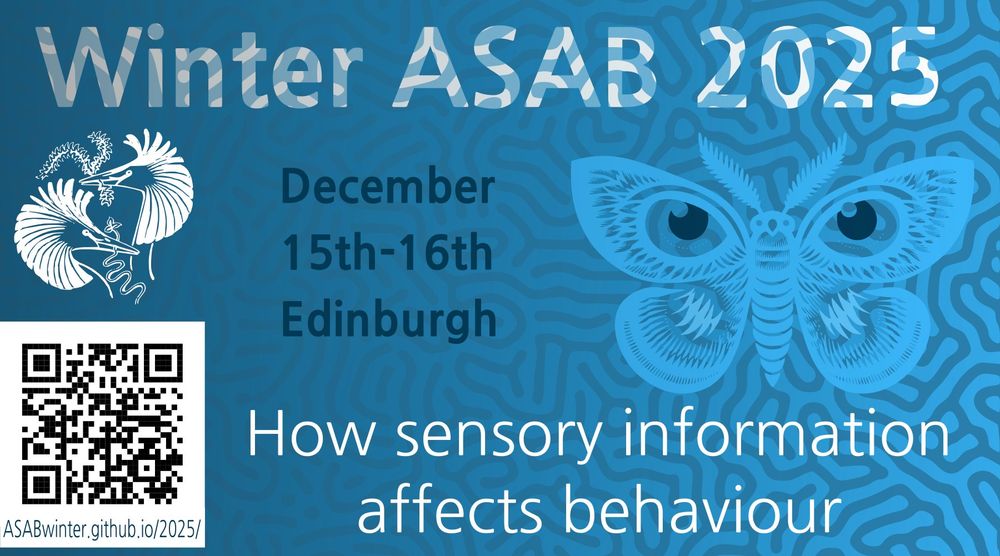
Winter ASAB @asab.org on *Sensory Ecology* register and submit your abstracts now (abstract deadline just a month away)!
I'm organising the conference this year with @lauraakelley.bsky.social and Innes Cuthill
Register & get more info here: asabwinter.github.io/2025/
I'm organising the conference this year with @lauraakelley.bsky.social and Innes Cuthill
Register & get more info here: asabwinter.github.io/2025/
July 29, 2025 at 3:24 PM
Winter ASAB @asab.org on *Sensory Ecology* register and submit your abstracts now (abstract deadline just a month away)!
I'm organising the conference this year with @lauraakelley.bsky.social and Innes Cuthill
Register & get more info here: asabwinter.github.io/2025/
I'm organising the conference this year with @lauraakelley.bsky.social and Innes Cuthill
Register & get more info here: asabwinter.github.io/2025/
Reposted by Benito Wainwright

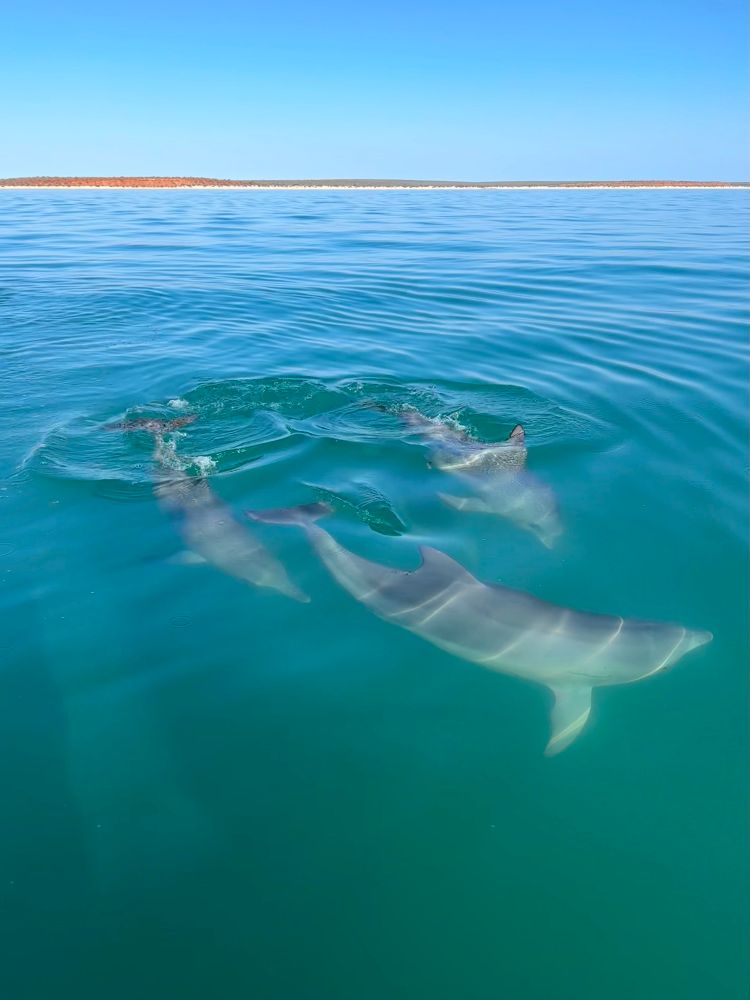
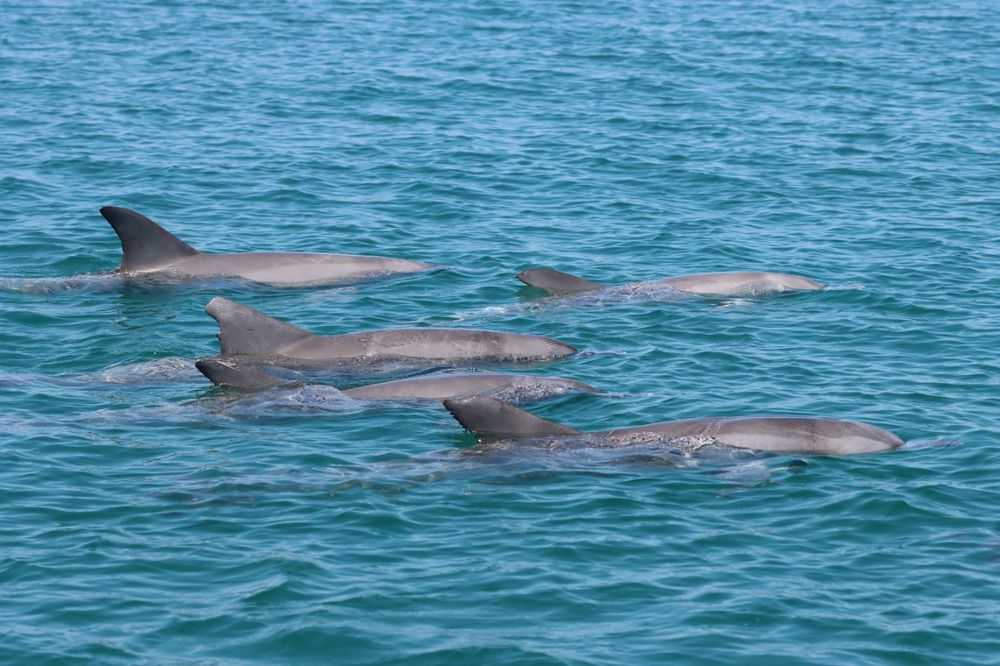
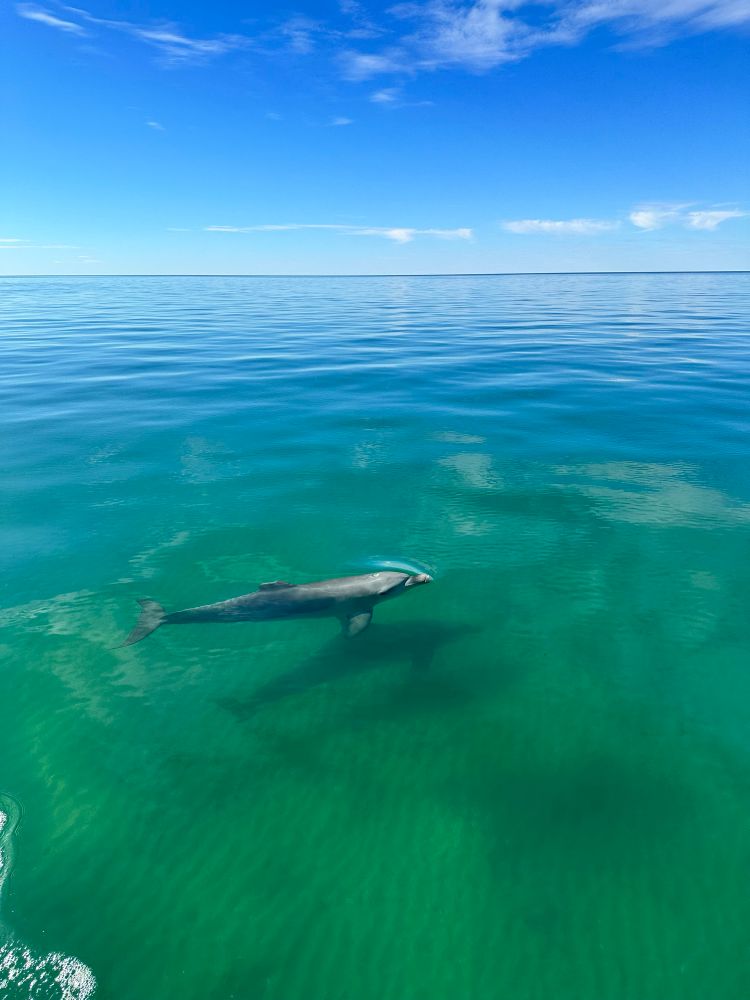
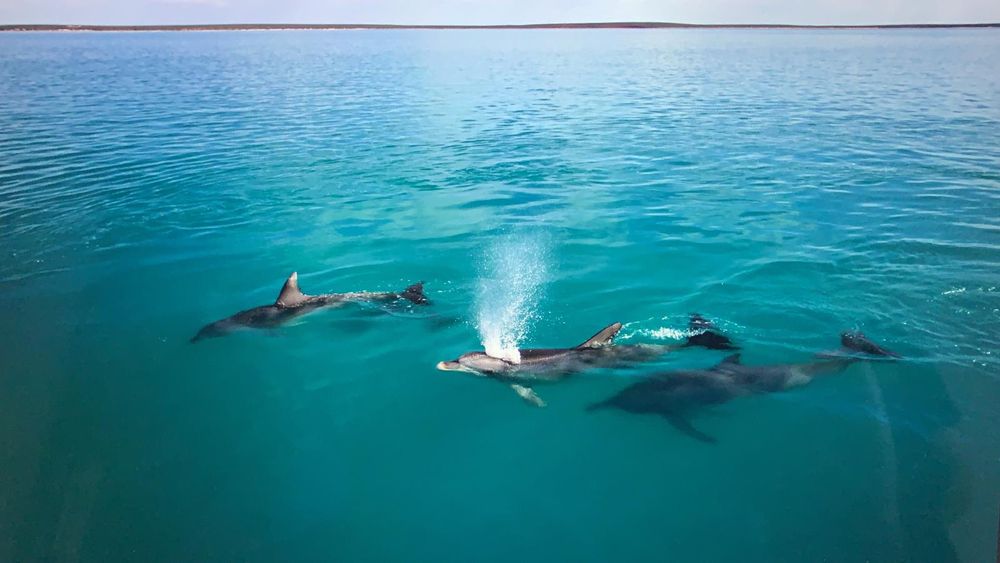
Excited to share that we have just been awarded a NERC Pushing the Frontiers grant to work on between-group cooperation in the Shark Bay dolphins. We will soon advertise a 3 year post-doc to join the team - drop me an email if you might be interested! Pls share widely 🙏🏻
July 31, 2025 at 6:13 AM
Excited to share that we have just been awarded a NERC Pushing the Frontiers grant to work on between-group cooperation in the Shark Bay dolphins. We will soon advertise a 3 year post-doc to join the team - drop me an email if you might be interested! Pls share widely 🙏🏻