



Benjamin Coltman
@bcoltman.bsky.social
Digging into the complexity of soil microbial communities
microbial ecology | synbio | microbiome
Postdoc @univie.ac.at @cemess.bsky.social @dome-vienna.bsky.social @microbesplanet.bsky.social
microbial ecology | synbio | microbiome
Postdoc @univie.ac.at @cemess.bsky.social @dome-vienna.bsky.social @microbesplanet.bsky.social
Reposted by Benjamin Coltman

We just released a @biorxivpreprint.bsky.social describing the *microntology*, a lightweight controlled vocabulary that we have been using for a while to tag metagenomes with contextual data.
Study by @fullam.bsky.social @vishnuprasoodanan.bsky.social et al:
1/
www.biorxiv.org/content/10.6...
Study by @fullam.bsky.social @vishnuprasoodanan.bsky.social et al:
1/
www.biorxiv.org/content/10.6...

microntology: a lightweight, data-driven controlled vocabulary to describe Earth's microbial habitats
Summary. We introduce microntology v1.0, a pragmatic controlled vocabulary of 148 terms to describe microbial habitats and lifestyles, and provide manually curated microntology annotations for >300k m...
www.biorxiv.org
January 13, 2026 at 4:33 PM
We just released a @biorxivpreprint.bsky.social describing the *microntology*, a lightweight controlled vocabulary that we have been using for a while to tag metagenomes with contextual data.
Study by @fullam.bsky.social @vishnuprasoodanan.bsky.social et al:
1/
www.biorxiv.org/content/10.6...
Study by @fullam.bsky.social @vishnuprasoodanan.bsky.social et al:
1/
www.biorxiv.org/content/10.6...
Reposted by Benjamin Coltman

Merry X-SMASH!
My first first author paper is out on bioRxiv! 🖥
We present epsSMASH, a comprehensive and high-throughput tool for predicting exopolysaccharide (exoPS) biosynthetic gene clusters (BGCs) in bacterial genomes 🦠🧬🧫
1/8
My first first author paper is out on bioRxiv! 🖥
We present epsSMASH, a comprehensive and high-throughput tool for predicting exopolysaccharide (exoPS) biosynthetic gene clusters (BGCs) in bacterial genomes 🦠🧬🧫
1/8

December 24, 2025 at 12:48 PM
Merry X-SMASH!
My first first author paper is out on bioRxiv! 🖥
We present epsSMASH, a comprehensive and high-throughput tool for predicting exopolysaccharide (exoPS) biosynthetic gene clusters (BGCs) in bacterial genomes 🦠🧬🧫
1/8
My first first author paper is out on bioRxiv! 🖥
We present epsSMASH, a comprehensive and high-throughput tool for predicting exopolysaccharide (exoPS) biosynthetic gene clusters (BGCs) in bacterial genomes 🦠🧬🧫
1/8
Reposted by Benjamin Coltman

New @fwf-at.bsky.social CoE Microplanet study introduces GlobDB globdb.org, a comprehensive database integrating 14 genomic catalogues providing consistent taxonomy for microbial species.
academic.oup.com/bioinformati...
academic.oup.com/bioinformati...

December 10, 2025 at 12:43 PM
New @fwf-at.bsky.social CoE Microplanet study introduces GlobDB globdb.org, a comprehensive database integrating 14 genomic catalogues providing consistent taxonomy for microbial species.
academic.oup.com/bioinformati...
academic.oup.com/bioinformati...
Reposted by Benjamin Coltman

Pretty cool! Engineered periplasmic binding proteins+fluorophore sensors (for sugars+AAs) are used to report real-time extracellular metabolite dynamics in E. coli + many others species after 24h in plate readers, showing hierarchical substrate use.
journals.asm.org/doi/full/10....
journals.asm.org/doi/full/10....

Real-time simultaneous monitoring of multiple analytes in bacterial cultures | Applied and Environmental Microbiology
Real-time monitoring of metabolites in bacterial cultures is crucial for advancing our understanding of microbial physiology, metabolic fluxes, and dynamic responses to environmental changes. This capability enables researchers to capture transient metabolic states that are often missed in endpoint measurements. The use of engineered periplasmic binding proteins as biosensors for this real-time metabolite monitoring represents a groundbreaking approach. By leveraging the natural specificity and high affinity of PBPs for small molecules, these biosensors can be engineered to detect a wide range of metabolites with exceptional sensitivity and temporal resolution. The integration of PBP-based biosensors into microbial research not only enhances our ability to study real-time metabolism but also provides a versatile tool for optimizing industrial bioprocesses and exploring bacterial infections and complex microbial ecosystems
journals.asm.org
December 8, 2025 at 3:37 PM
Pretty cool! Engineered periplasmic binding proteins+fluorophore sensors (for sugars+AAs) are used to report real-time extracellular metabolite dynamics in E. coli + many others species after 24h in plate readers, showing hierarchical substrate use.
journals.asm.org/doi/full/10....
journals.asm.org/doi/full/10....
Reposted by Benjamin Coltman

Microflora Danica: What can you learn from collecting and sequencing 10,000+ samples from a single country? Check out our new paper in @nature.com to find out. Incredible work led by Caitlin Singleton, Thomas B. N. Jensen, and Mads Albertsen from @aau.dk. 🦠🧫🧬
www.nature.com/articles/s41...
www.nature.com/articles/s41...

The Microflora Danica atlas of Danish environmental microbiomes - Nature
Microflora Danica—an atlas of Danish environmental microbiomes—reveals that although human-disturbed habitats have high alpha diversity, species reoccur, revealing hidden homogeneity.
www.nature.com
December 3, 2025 at 8:50 PM
Microflora Danica: What can you learn from collecting and sequencing 10,000+ samples from a single country? Check out our new paper in @nature.com to find out. Incredible work led by Caitlin Singleton, Thomas B. N. Jensen, and Mads Albertsen from @aau.dk. 🦠🧫🧬
www.nature.com/articles/s41...
www.nature.com/articles/s41...
Reposted by Benjamin Coltman

Most microbial diversity is uncultured. metaTraits bridges the gap by combining culture-based trait data (@bacdive.bsky.social, @bvbrc.bsky.social, JGI/GOLD/IMG) with predictions for MAGs and genomes (SPIRE, proGenomes). All trait summaries come with provenance and links to their original data. 4/8
December 2, 2025 at 5:52 PM
Most microbial diversity is uncultured. metaTraits bridges the gap by combining culture-based trait data (@bacdive.bsky.social, @bvbrc.bsky.social, JGI/GOLD/IMG) with predictions for MAGs and genomes (SPIRE, proGenomes). All trait summaries come with provenance and links to their original data. 4/8
Reposted by Benjamin Coltman

Induced endosymbiosis between a fungus and bacterium reveals a shift from antagonism to commensalism
@natcomms.nature.com by Thomas Gassler et al from Julia Vorholt
www.nature.com/articles/s41...
Ralstonia pickettii in the fungus Rhizopus microsporus
#Endofungal
@natcomms.nature.com by Thomas Gassler et al from Julia Vorholt
www.nature.com/articles/s41...
Ralstonia pickettii in the fungus Rhizopus microsporus
#Endofungal

Induced endosymbiosis between a fungus and bacterium reveals a shift from antagonism to commensalism - Nature Communications
Gassler et al. implant a free-living bacterium into fungal cells to study early steps in the establishment of an endosymbiosis. They observe vertical transmission of the bacteria despite initial host ...
www.nature.com
November 28, 2025 at 5:33 PM
Induced endosymbiosis between a fungus and bacterium reveals a shift from antagonism to commensalism
@natcomms.nature.com by Thomas Gassler et al from Julia Vorholt
www.nature.com/articles/s41...
Ralstonia pickettii in the fungus Rhizopus microsporus
#Endofungal
@natcomms.nature.com by Thomas Gassler et al from Julia Vorholt
www.nature.com/articles/s41...
Ralstonia pickettii in the fungus Rhizopus microsporus
#Endofungal
Reposted by Benjamin Coltman

This nice summary by @michiwagner4.bsky.social makes it easy to fit my post in a few characters.
Amplicon sequencing is still an affordable and quick way to get good insights into who lives in your samples. Our new primers make sure your vision is 20/20.
Try em, and contact me if you have questions!
Amplicon sequencing is still an affordable and quick way to get good insights into who lives in your samples. Our new primers make sure your vision is 20/20.
Try em, and contact me if you have questions!

📢 New preprint on bioRxiv!
We introduce V4-EXT, a revised 16S rRNA V4 primer set that dramatically improves detection of Patescibacteria and other undersampled lineages
✅ 938 samples
✅ More novel ASVs
Primer choice matters 👀
www.biorxiv.org/content/10.1...
@ppjevac.bsky.social #HuifengHu
We introduce V4-EXT, a revised 16S rRNA V4 primer set that dramatically improves detection of Patescibacteria and other undersampled lineages
✅ 938 samples
✅ More novel ASVs
Primer choice matters 👀
www.biorxiv.org/content/10.1...
@ppjevac.bsky.social #HuifengHu


November 28, 2025 at 6:38 PM
This nice summary by @michiwagner4.bsky.social makes it easy to fit my post in a few characters.
Amplicon sequencing is still an affordable and quick way to get good insights into who lives in your samples. Our new primers make sure your vision is 20/20.
Try em, and contact me if you have questions!
Amplicon sequencing is still an affordable and quick way to get good insights into who lives in your samples. Our new primers make sure your vision is 20/20.
Try em, and contact me if you have questions!
Reposted by Benjamin Coltman

#OpenCloning is a an Open Source alternative to SnapGene/Benchling that supports automation and integration with other software
✅ Free
🔓 Open Source
🧬 More cloning methods than SnapGene
🤖 Can be automated with python
👨🔬 Built by a researcher — for researchers!
👉 Check it out at opencloning.org
✅ Free
🔓 Open Source
🧬 More cloning methods than SnapGene
🤖 Can be automated with python
👨🔬 Built by a researcher — for researchers!
👉 Check it out at opencloning.org

November 24, 2025 at 4:57 PM
#OpenCloning is a an Open Source alternative to SnapGene/Benchling that supports automation and integration with other software
✅ Free
🔓 Open Source
🧬 More cloning methods than SnapGene
🤖 Can be automated with python
👨🔬 Built by a researcher — for researchers!
👉 Check it out at opencloning.org
✅ Free
🔓 Open Source
🧬 More cloning methods than SnapGene
🤖 Can be automated with python
👨🔬 Built by a researcher — for researchers!
👉 Check it out at opencloning.org
Reposted by Benjamin Coltman
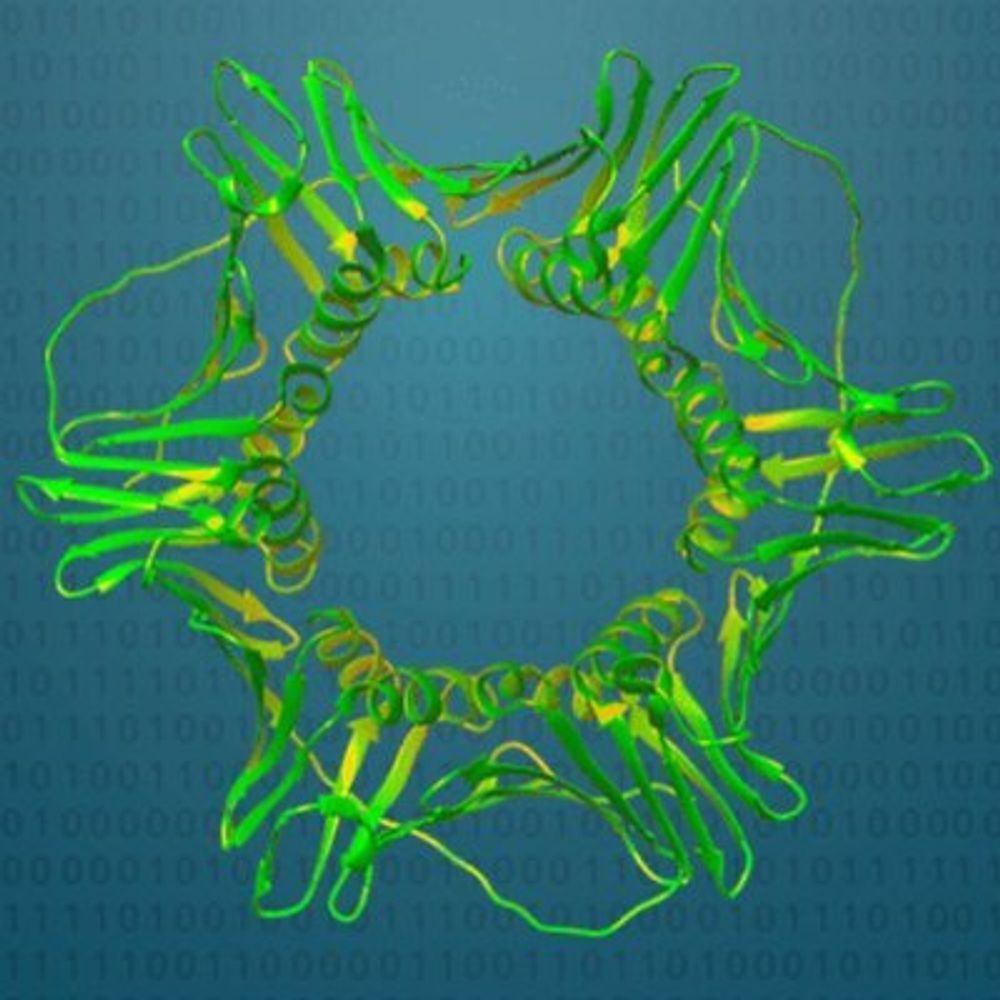
🧫 Just out in Bioinformatics Advances: “GlobDB: A comprehensive species-dereplicated microbial genome resource.”
Explore the full study: https://doi.org/10.1093/bioadv/vbaf280
Explore the full study: https://doi.org/10.1093/bioadv/vbaf280

November 26, 2025 at 10:01 AM
🧫 Just out in Bioinformatics Advances: “GlobDB: A comprehensive species-dereplicated microbial genome resource.”
Explore the full study: https://doi.org/10.1093/bioadv/vbaf280
Explore the full study: https://doi.org/10.1093/bioadv/vbaf280
Reposted by Benjamin Coltman
Newest preprint from our lab: a new family of promising synthetic CO2 fixation cycles that may outcompete the Calvin cycle and that Vittorio Rainaldi realized to a great extent in E. coli! Up to 11 heterologous enzymes in a cascade supporting CO2 fixation & growth! www.biorxiv.org/content/10.1...

Modular in vivo engineering of the reductive methylaspartate cycles for synthetic CO2 fixation
Biological carbon fixation is currently limited to seven naturally occurring pathways. Synthetic carbon fixation pathways have the potential to surpass aerobic natural pathways in efficiency, but none...
www.biorxiv.org
November 25, 2025 at 5:54 PM
Newest preprint from our lab: a new family of promising synthetic CO2 fixation cycles that may outcompete the Calvin cycle and that Vittorio Rainaldi realized to a great extent in E. coli! Up to 11 heterologous enzymes in a cascade supporting CO2 fixation & growth! www.biorxiv.org/content/10.1...
Reposted by Benjamin Coltman

Our paper describing the GlobDB is now published in @bioinfoadv.bsky.social
doi.org/10.1093/bioa...
The GlobDB is the largest species dereplicated genome database currently available, containing 306,260 species representatives.
More information on globdb.org 1/5
🖥️🧬🦠
doi.org/10.1093/bioa...
The GlobDB is the largest species dereplicated genome database currently available, containing 306,260 species representatives.
More information on globdb.org 1/5
🖥️🧬🦠

GlobDB: a comprehensive species-dereplicated microbial genome resource
AbstractMotivation. Over the past years, substantial numbers of microbial species’ genomes have been deposited outside of conventional INSDC databases.Resu
doi.org
November 21, 2025 at 4:21 PM
Our paper describing the GlobDB is now published in @bioinfoadv.bsky.social
doi.org/10.1093/bioa...
The GlobDB is the largest species dereplicated genome database currently available, containing 306,260 species representatives.
More information on globdb.org 1/5
🖥️🧬🦠
doi.org/10.1093/bioa...
The GlobDB is the largest species dereplicated genome database currently available, containing 306,260 species representatives.
More information on globdb.org 1/5
🖥️🧬🦠
GlobDB is a great resource and is frequently of use in my research!
Developed and maintained by @daanspeth.bsky.social, I was glad to contribute in a small way. Have a look at Daan’s thread to find out more and let us know how you use it! >>
Developed and maintained by @daanspeth.bsky.social, I was glad to contribute in a small way. Have a look at Daan’s thread to find out more and let us know how you use it! >>
Our paper describing the GlobDB is now published in @bioinfoadv.bsky.social
doi.org/10.1093/bioa...
The GlobDB is the largest species dereplicated genome database currently available, containing 306,260 species representatives.
More information on globdb.org 1/5
🖥️🧬🦠
doi.org/10.1093/bioa...
The GlobDB is the largest species dereplicated genome database currently available, containing 306,260 species representatives.
More information on globdb.org 1/5
🖥️🧬🦠
GlobDB: a comprehensive species-dereplicated microbial genome resource
AbstractMotivation. Over the past years, substantial numbers of microbial species’ genomes have been deposited outside of conventional INSDC databases.Resu
doi.org
November 21, 2025 at 4:35 PM
GlobDB is a great resource and is frequently of use in my research!
Developed and maintained by @daanspeth.bsky.social, I was glad to contribute in a small way. Have a look at Daan’s thread to find out more and let us know how you use it! >>
Developed and maintained by @daanspeth.bsky.social, I was glad to contribute in a small way. Have a look at Daan’s thread to find out more and let us know how you use it! >>
Reposted by Benjamin Coltman

🚨New preprint out!
We present a foundational genomic resource of human gut microbiome viruses. It delivers high-quality, deeply curated data spanning taxonomy, predicted hosts, structures, and functions, providing a reference for gut virome research. (1/8)
www.biorxiv.org/content/10.1...
We present a foundational genomic resource of human gut microbiome viruses. It delivers high-quality, deeply curated data spanning taxonomy, predicted hosts, structures, and functions, providing a reference for gut virome research. (1/8)
www.biorxiv.org/content/10.1...

November 6, 2025 at 5:26 PM
🚨New preprint out!
We present a foundational genomic resource of human gut microbiome viruses. It delivers high-quality, deeply curated data spanning taxonomy, predicted hosts, structures, and functions, providing a reference for gut virome research. (1/8)
www.biorxiv.org/content/10.1...
We present a foundational genomic resource of human gut microbiome viruses. It delivers high-quality, deeply curated data spanning taxonomy, predicted hosts, structures, and functions, providing a reference for gut virome research. (1/8)
www.biorxiv.org/content/10.1...
Reposted by Benjamin Coltman

Last chance to turn it off.
On Monday, November 3rd, Microsoft will start using your LinkedIn data for AI training. And remember, you're opted in by default.
To toggle it off 👉 Account - Settings & Privacy > Data privacy > Data for Generative AI Improvement.
On Monday, November 3rd, Microsoft will start using your LinkedIn data for AI training. And remember, you're opted in by default.
To toggle it off 👉 Account - Settings & Privacy > Data privacy > Data for Generative AI Improvement.

October 31, 2025 at 1:37 PM
Last chance to turn it off.
On Monday, November 3rd, Microsoft will start using your LinkedIn data for AI training. And remember, you're opted in by default.
To toggle it off 👉 Account - Settings & Privacy > Data privacy > Data for Generative AI Improvement.
On Monday, November 3rd, Microsoft will start using your LinkedIn data for AI training. And remember, you're opted in by default.
To toggle it off 👉 Account - Settings & Privacy > Data privacy > Data for Generative AI Improvement.
Reposted by Benjamin Coltman

This week as part of the @pilzfestspiele.at - our group showed mycorrhizal fungal colonized roots, our culture collection, posters of results, and we had a massive turnout! People are becoming increasingly interested in fungi @cemess.bsky.social @ter-cemess.bsky.social
www.fungalecologylab.com
www.fungalecologylab.com

October 10, 2025 at 5:04 PM
This week as part of the @pilzfestspiele.at - our group showed mycorrhizal fungal colonized roots, our culture collection, posters of results, and we had a massive turnout! People are becoming increasingly interested in fungi @cemess.bsky.social @ter-cemess.bsky.social
www.fungalecologylab.com
www.fungalecologylab.com
Looks interesting @nmjgeerlings.bsky.social
1/
Tomorrow’s large scale cross-modality models will further unlock biology, but they need standardized inputs. With @sophia-maedler.bsky.social & @nik-as.bsky.social, we built #scPortrait, @scverse.bsky.social package to turn microscopy images into single-cell image datasets for multimodal modeling
Tomorrow’s large scale cross-modality models will further unlock biology, but they need standardized inputs. With @sophia-maedler.bsky.social & @nik-as.bsky.social, we built #scPortrait, @scverse.bsky.social package to turn microscopy images into single-cell image datasets for multimodal modeling

September 28, 2025 at 3:17 PM
Looks interesting @nmjgeerlings.bsky.social
Reposted by Benjamin Coltman

Paracetamol remains an important option to treat pain or fever in pregnant women.
Following rigorous assessment of the available scientific data, we find no evidence that taking paracetamol during pregnancy causes autism in children.
Read more 👉 www.ema.europa.eu/en/news/use-...
Following rigorous assessment of the available scientific data, we find no evidence that taking paracetamol during pregnancy causes autism in children.
Read more 👉 www.ema.europa.eu/en/news/use-...

Use of paracetamol during pregnancy unchanged in the EU | European Medicines Agency (EMA)
Paracetamol medicines can be used in pregnancy, in accordance with official recommendations
www.ema.europa.eu
September 23, 2025 at 10:28 AM
Paracetamol remains an important option to treat pain or fever in pregnant women.
Following rigorous assessment of the available scientific data, we find no evidence that taking paracetamol during pregnancy causes autism in children.
Read more 👉 www.ema.europa.eu/en/news/use-...
Following rigorous assessment of the available scientific data, we find no evidence that taking paracetamol during pregnancy causes autism in children.
Read more 👉 www.ema.europa.eu/en/news/use-...
It’s great to be at #mbkceesme2025 so far, hearing about all things microbial! It’s always rewarding to present one’s work and hear the community’s feedback. Thanks for the support @isme-microbes.bsky.social


September 23, 2025 at 3:08 PM
It’s great to be at #mbkceesme2025 so far, hearing about all things microbial! It’s always rewarding to present one’s work and hear the community’s feedback. Thanks for the support @isme-microbes.bsky.social
Reposted by Benjamin Coltman
Interested in the design of defined microbial communities for fundamental research and applications? Hope this work & tool will help you 👇 As always @tcahitch.bsky.social has been a driving factor ⭐⭐⭐! github.com/ClavelLab/Mi...; academic.oup.com/ismej/advanc...
Validate User
academic.oup.com
September 18, 2025 at 12:11 PM
Interested in the design of defined microbial communities for fundamental research and applications? Hope this work & tool will help you 👇 As always @tcahitch.bsky.social has been a driving factor ⭐⭐⭐! github.com/ClavelLab/Mi...; academic.oup.com/ismej/advanc...
Reposted by Benjamin Coltman
Branched-chain amino acid assimilation promotes mixotrophy of ammonia-oxidizing archaeal sponge symbionts www.biorxiv.org/content/10.1... #jcampubs
September 10, 2025 at 4:21 PM
Branched-chain amino acid assimilation promotes mixotrophy of ammonia-oxidizing archaeal sponge symbionts www.biorxiv.org/content/10.1... #jcampubs
Reposted by Benjamin Coltman

Holy cow - hyperspectral detection of bacteria at long distance.... "The bacteria were detectable outdoors under ambient light from up to 90 m in a single 4,000-m2 hyperspectral image taken using fixed and unmanned aerial vehicle-mounted cameras." 🤯
www.nature.com/articles/s41...
www.nature.com/articles/s41...

Hyperspectral reporters for long-distance and wide-area detection of gene expression in living bacteria - Nature Biotechnology
Hyperspectral reporter genes allow imaging of ground bacteria from aerial vehicles
www.nature.com
September 11, 2025 at 4:21 PM
Holy cow - hyperspectral detection of bacteria at long distance.... "The bacteria were detectable outdoors under ambient light from up to 90 m in a single 4,000-m2 hyperspectral image taken using fixed and unmanned aerial vehicle-mounted cameras." 🤯
www.nature.com/articles/s41...
www.nature.com/articles/s41...
Jan Erisman closed the 28th European Nitrogen Cycle Meeting with a raw reminder: the nitrogen cycle is out of sync!
Still, the meeting was full of inspiring research on all things N and some promising paths to reduce our impact!
Big questions remain… #ENC28
univie.eventsair.com/enc2025/
Still, the meeting was full of inspiring research on all things N and some promising paths to reduce our impact!
Big questions remain… #ENC28
univie.eventsair.com/enc2025/

September 11, 2025 at 4:00 PM
Jan Erisman closed the 28th European Nitrogen Cycle Meeting with a raw reminder: the nitrogen cycle is out of sync!
Still, the meeting was full of inspiring research on all things N and some promising paths to reduce our impact!
Big questions remain… #ENC28
univie.eventsair.com/enc2025/
Still, the meeting was full of inspiring research on all things N and some promising paths to reduce our impact!
Big questions remain… #ENC28
univie.eventsair.com/enc2025/
Reposted by Benjamin Coltman
“I don’t want asylum seekers to live on my street” is genuinely a wild thing to say as a notionally progressive politician

Oh nothing, just the actual Prime Minister telling people they’re entirely correct to drive asylum seekers out of their communities

September 1, 2025 at 1:56 PM
“I don’t want asylum seekers to live on my street” is genuinely a wild thing to say as a notionally progressive politician
Reposted by Benjamin Coltman

The microbial composition of metagenomes is identified in seconds by profiling against large databases go.nature.com/3BBVqDC
rdcu.be/eCbj4
rdcu.be/eCbj4
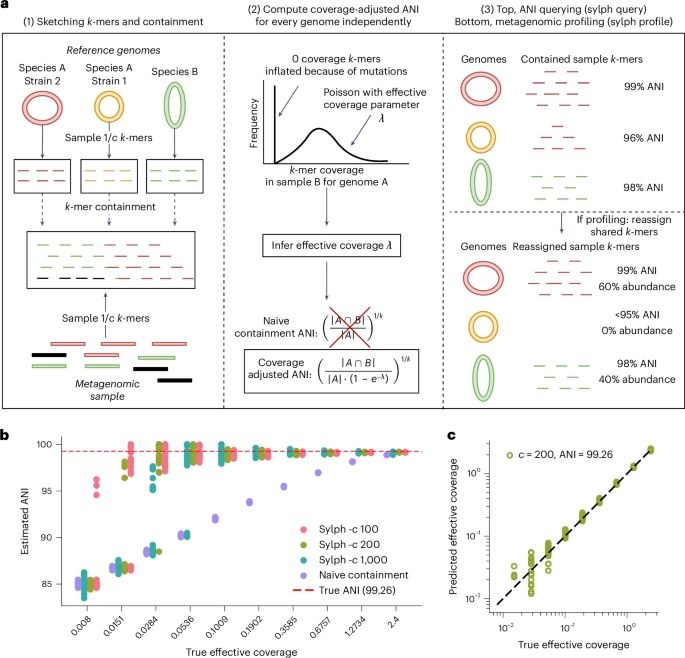
Rapid species-level metagenome profiling and containment estimation with sylph - Nature Biotechnology
The microbial composition of metagenomes is identified in seconds by profiling against large databases.
go.nature.com
August 27, 2025 at 1:14 AM
The microbial composition of metagenomes is identified in seconds by profiling against large databases go.nature.com/3BBVqDC
rdcu.be/eCbj4
rdcu.be/eCbj4