



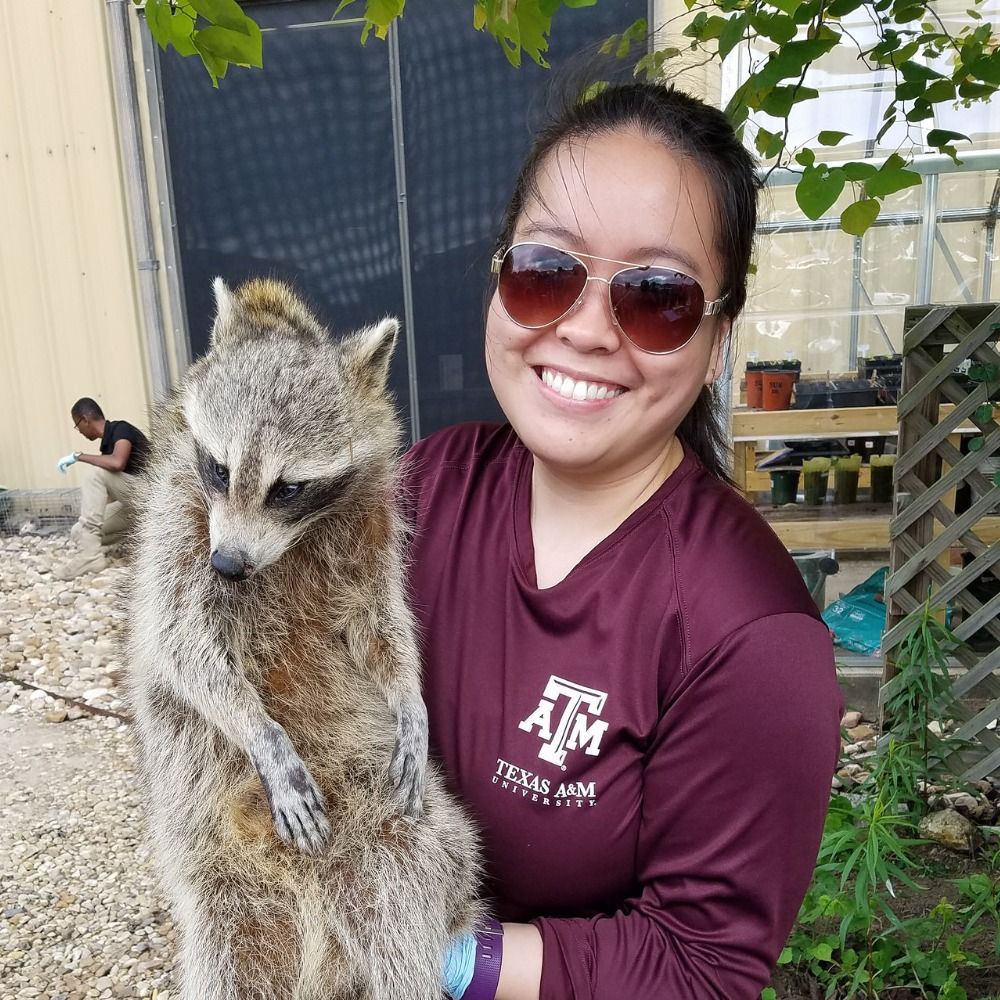
Karen C. Poh
@areyoukeddingme.bsky.social
Entomologist || Ticks of Livestock and Wildlife 🐮🦌🕷🗺📈 || Zoonotic Diseases || One Health || Disease Ecology || Views are my own || https://karencpoh.weebly.com/
Pinned

Wildlife One Health Special Collection
Vector-borne diseases are increasing in incidence, expanding geographically, and emerging at a faster pace than ever before. The prevailing hypothesis is that t
academic.oup.com
I'm so excited to introduce a new Special Collection from the Journal of Medical Entomology (and juuuust in time for #EntSoc25! 😎), the ✨Wildlife One Health Special Collection✨, put together by @machtingerlab.bsky.social, Risa Pesapane, Danielle Tufts, & me! 🎉
🔗 academic.oup.com/jme/pages/wi...
🔗 academic.oup.com/jme/pages/wi...
NEW JOB POSTING in Dept of Vet Micro & Path in CVM at @pullman.wsu.edu!!! 🤗 The dept is looking for TT faculty in vector-borne diseases! 🪰🦟🕷️🦠🐮🦌
There’s also opportunities to work with me & the USDA ARS Animal Disease Research Unit! 😏🫶
Apply by March 3!
wsu.wd5.myworkdayjobs.com/en-US/WSU_Jo...
There’s also opportunities to work with me & the USDA ARS Animal Disease Research Unit! 😏🫶
Apply by March 3!
wsu.wd5.myworkdayjobs.com/en-US/WSU_Jo...

Assistant/Associate Professor - Vector-borne Disease (VMP)
Online applications must be received before 11:59pm on: March 3, 2026 If a date is not listed above, review the Applicant Instructions below for more details. Available Title(s): 270-NN_FACULTY - Assi...
wsu.wd5.myworkdayjobs.com
February 3, 2026 at 5:04 PM
NEW JOB POSTING in Dept of Vet Micro & Path in CVM at @pullman.wsu.edu!!! 🤗 The dept is looking for TT faculty in vector-borne diseases! 🪰🦟🕷️🦠🐮🦌
There’s also opportunities to work with me & the USDA ARS Animal Disease Research Unit! 😏🫶
Apply by March 3!
wsu.wd5.myworkdayjobs.com/en-US/WSU_Jo...
There’s also opportunities to work with me & the USDA ARS Animal Disease Research Unit! 😏🫶
Apply by March 3!
wsu.wd5.myworkdayjobs.com/en-US/WSU_Jo...
Reposted by Karen C. Poh

New pre-print is live of our review synthesizing the many factors that influence accurately putting names on eDNA metabarcoding sequences doi.org/10.3897/arph...
Great team led by Prof. Allison Watts with many MBON and NOAA colleagues
Great team led by Prof. Allison Watts with many MBON and NOAA colleagues

Guidance and best practices for species identification using eDNA metabarcoding - When do you call a cod a cod?
With the rapid uptake of environmental DNA (eDNA) metabarcoding for a wide range of conservation and management uses, there is a growing need for guidance and best practices for species identification...
doi.org
January 31, 2026 at 8:58 PM
New pre-print is live of our review synthesizing the many factors that influence accurately putting names on eDNA metabarcoding sequences doi.org/10.3897/arph...
Great team led by Prof. Allison Watts with many MBON and NOAA colleagues
Great team led by Prof. Allison Watts with many MBON and NOAA colleagues
Reposted by Karen C. Poh
Cool approach to use expert-elicited tree attractiveness scores. Would be could to match them with field-derived data in the future.

⚡New paper! ⚡from my student @ellenknight.bsky.social on how to integrate new land cover classes into ecological models so we can predict the #biodiversity impacts. We illustrate this for UK agroforestry & pollinators 🐝🌳: tinyurl.com/3yp26eu5
@ukceh.bsky.social @uor-research.bsky.social @nhm.org
@ukceh.bsky.social @uor-research.bsky.social @nhm.org

Integrating new land cover classes into ecological models to predict their biodiversity impacts
As the need for sustainable agroecosystems gains recognition, new land cover classes are increasingly emerging in temperate landscapes. Process-based …
tinyurl.com
January 21, 2026 at 5:05 PM
Cool approach to use expert-elicited tree attractiveness scores. Would be could to match them with field-derived data in the future.
Reposted by Karen C. Poh

Disentangling complex disease ecology networks: Using structural equation modelling to quantify the direct and indirect effects of #deer on #Lyme borreliosis hazard Ticks&TBD
Disentangling complex disease ecology networks: Using structural equation modelling to quantify the direct and indirect effects of #deer on #Lyme borreliosis hazard
Publication date: January 2026
Source: #ticks and #tick-borne Diseases, Volume 17, Issue 1
Author(s): Sara L. Gandy, Fernanda Sánchez-Rodríguez, William McLellan, Fanny Olsthoorn, Marianne C. James, Paul C.D. Johnson, Roman Biek, Hein Sprong, Manoj Fonville, Caroline Millins, Ken J. Forbes, Alan S. Bowman, Jaboury Ghazoul, Lucy Gilbert
dlvr.it
January 11, 2026 at 10:10 PM
Reposted by Karen C. Poh
Trait based assessment of the invasion potential of disease vector mosquitoes bioRxivpreprint
Trait based assessment of the invasion potential of disease vector mosquitoes
Mosquito-borne diseases pose a growing global health threat, largely driven by the human-mediated spread of vector species beyond their native regions. Although only a few mosquito species historically established populations outside their native ranges, many have expanded rapidly in recent decades. Once established, these invaders are notoriously difficult to control, emphasizing the need for proactive identification before human-mediated spread occurs. Here, we present a framework to anticipate invasion potential for 184 mosquito species of medical importance based on their ecological, life-history, and macroecological traits. We first compiled a comprehensive dataset of 26 traits characterizing each species. We then used random forest models to relate these traits with the probability of species being introduced in new regions (before and after 1950, marking the onset of widespread trade globalization), and of establishment following introduction. Models achieved moderate to good predictive performance (AUC = 0.78-0.85) and revealed that species native to Asia and Australia, adapted to human-made breeding sites, and tolerant of climatic extremes are consistently more likely to be introduced and to establish in non-native regions. Among species with no known invasion history, we identified 24 with higher potential to become future spreaders, of which 17 also exhibit high establishment probabilities (high-risk species). These results show that invasion potential can be inferred, to some extent, from intrinsic species traits and provide a quantitative basis for proactive surveillance, enabling prioritization of species most likely to become introduced in the future.
dlvr.it
January 6, 2026 at 2:43 AM
Trait based assessment of the invasion potential of disease vector mosquitoes bioRxivpreprint
Reposted by Karen C. Poh

Fleas Navidad.

December 19, 2025 at 2:12 PM
Fleas Navidad.
Reposted by Karen C. Poh
Entering the vector ecology workforce or kicking off your first lab? Don’t miss “Beyond the Degree: Thriving in Your Career” to get practical advice from experts on starting your career with confidence! 🌟
🗓️Monday, February 2, 2026
⏰2:30 ET/11:30 AM PT
💻Register: shorturl.at/6gxlw
🗓️Monday, February 2, 2026
⏰2:30 ET/11:30 AM PT
💻Register: shorturl.at/6gxlw

December 19, 2025 at 6:13 PM
Entering the vector ecology workforce or kicking off your first lab? Don’t miss “Beyond the Degree: Thriving in Your Career” to get practical advice from experts on starting your career with confidence! 🌟
🗓️Monday, February 2, 2026
⏰2:30 ET/11:30 AM PT
💻Register: shorturl.at/6gxlw
🗓️Monday, February 2, 2026
⏰2:30 ET/11:30 AM PT
💻Register: shorturl.at/6gxlw
Reposted by Karen C. Poh

Since 1875, the Connecticut Agricultural Experiment Station has earned a reputation as a leader in variety of fields that intersect with insect science, and today it is a go-to source on tick- and mosquito-borne disease research. Learn more about the example CAES sets for publicly funded research.

Nation's First State Agricultural Experiment Station Marks 150th Anniversary
Since 1875, the Connecticut Agricultural Experiment Station has earned a reputation as a leader in tick- and mosquito-borne disease research, among many other fields.
entomologytoday.org
December 19, 2025 at 6:18 PM
Since 1875, the Connecticut Agricultural Experiment Station has earned a reputation as a leader in variety of fields that intersect with insect science, and today it is a go-to source on tick- and mosquito-borne disease research. Learn more about the example CAES sets for publicly funded research.
Reposted by Karen C. Poh
Vertical transmission of mosquito microbiota and its effects on offspring development bioRxivpreprint
Vertical transmission of mosquito microbiota and its effects on offspring development
Background The mosquito gut microbiota plays a crucial role in determining its capacity to transmit harmful viruses and parasites. Accordingly, manipulating mosquito gut microbiota is a promising avenue toward reducing mosquito-borne human pathogen transmission. A successful microbial control campaign will require a thorough understanding of how bacteria are transmitted through mosquito populations. Through two parallel but complementary studies using the yellow fever mosquito Aedes aegypti as a focal host species, we surveyed vertical transmission of bacteria from individual mothers to cohorts of offspring maintained in a closed system. Results Laboratory- and field-derived mothers deposited bacteria that support offspring development, and the relative abundance of commonly transmitted taxa correlated with offspring fitness. Maternally transmitted bacteria were detected in both larval and adult offspring, and the relative abundances of specific taxa differed between life stages. Microbiota composition in adult offspring closely resembled microbiota composition in mothers, despite dramatic shifts in the relative abundance of specific microbial community members during the larval stage. Variability in microbiota composition in offspring was also greater than variability across the population of egg-laying mothers. Eggs that underwent a period of desiccation before hatching produced larval communities dominated by endospore-forming bacteria that were rare in maternal samples. Conclusions Overall, our results demonstrate the vertical transmission of mosquito-associated microbiota across generations, including bacterial taxa that could potentially be leveraged for mosquito and mosquito-borne disease control.
dlvr.it
December 17, 2025 at 3:27 AM
Vertical transmission of mosquito microbiota and its effects on offspring development bioRxivpreprint
Reposted by Karen C. Poh
This semester I taught Spatial Data Science with #rstats Students analyzed areal, geostatistical & point pattern data, creating fantastic projects on disease mapping 🗺️ air pollution 🏭 crime 🚨 & species modeling 🐾
Book freely available:
👉 paulamoraga.com/book-spatial/
Book freely available:
👉 paulamoraga.com/book-spatial/

December 9, 2025 at 1:31 PM
This semester I taught Spatial Data Science with #rstats Students analyzed areal, geostatistical & point pattern data, creating fantastic projects on disease mapping 🗺️ air pollution 🏭 crime 🚨 & species modeling 🐾
Book freely available:
👉 paulamoraga.com/book-spatial/
Book freely available:
👉 paulamoraga.com/book-spatial/
Reposted by Karen C. Poh
An eel donated to a natural history museum in 1873 had two ticks embedded in its skin, making it the first known instance of ticks parasitizing a fish. But it was only first documented this year, when a tick specialist identified the ticks and reported the case in the Journal of Medical Entomology.

Ticks on an Eel: Museum Specimen is a First of its Kind
Two ticks found on an 1873 electric eel specimen mark the first recorded case of ticks parasitizing a fish—but only documented just this year.
entomologytoday.org
December 3, 2025 at 4:42 PM
An eel donated to a natural history museum in 1873 had two ticks embedded in its skin, making it the first known instance of ticks parasitizing a fish. But it was only first documented this year, when a tick specialist identified the ticks and reported the case in the Journal of Medical Entomology.
Reposted by Karen C. Poh

#OpenCloning is a an Open Source alternative to SnapGene/Benchling that supports automation and integration with other software
✅ Free
🔓 Open Source
🧬 More cloning methods than SnapGene
🤖 Can be automated with python
👨🔬 Built by a researcher — for researchers!
👉 Check it out at opencloning.org
✅ Free
🔓 Open Source
🧬 More cloning methods than SnapGene
🤖 Can be automated with python
👨🔬 Built by a researcher — for researchers!
👉 Check it out at opencloning.org

November 24, 2025 at 4:57 PM
#OpenCloning is a an Open Source alternative to SnapGene/Benchling that supports automation and integration with other software
✅ Free
🔓 Open Source
🧬 More cloning methods than SnapGene
🤖 Can be automated with python
👨🔬 Built by a researcher — for researchers!
👉 Check it out at opencloning.org
✅ Free
🔓 Open Source
🧬 More cloning methods than SnapGene
🤖 Can be automated with python
👨🔬 Built by a researcher — for researchers!
👉 Check it out at opencloning.org
Reposted by Karen C. Poh

Excited to announce a new preprint out now. Myself and Laurie Balstad led a group of predominantly early career theoreticians (along with Marissa Baskett and Mikaela Provost) to compile a set of guiding principles for data-model integration in theoretical ecology.

10 simple rules for data-model integration in theoretical ecology
Theoretical ecologists have long leveraged empirical data in various forms to advance ecology. Recently increased volumes and access to ecological data present an expanding set of opportunities for th...
arxiv.org
November 21, 2025 at 2:21 AM
Excited to announce a new preprint out now. Myself and Laurie Balstad led a group of predominantly early career theoreticians (along with Marissa Baskett and Mikaela Provost) to compile a set of guiding principles for data-model integration in theoretical ecology.
DYK that if you play the video in reverse, that is also an accurate representation of my 2025. I’m not sure what in the sci fi time travel is going on, but I think I’m ready for 2026. Or maybe I’m not. TBD. 😵💫🥴
November 21, 2025 at 1:09 AM
DYK that if you play the video in reverse, that is also an accurate representation of my 2025. I’m not sure what in the sci fi time travel is going on, but I think I’m ready for 2026. Or maybe I’m not. TBD. 😵💫🥴
If this isn’t an accurate representation of my 2025, idk what is 🥲💀
November 21, 2025 at 12:58 AM
If this isn’t an accurate representation of my 2025, idk what is 🥲💀
Check out this new paper put out by my collaborators and me! Led by Jose Maria Garcia-Carrasco and Javi Illan from WSU Entomology, we created models using tick, host, and environmental data to predict the distribution of different ticks and tick-borne diseases in North America. 🗺️🦌🦠🕷️
Check it out! 👇🏼
Check it out! 👇🏼

November 20, 2025 at 12:09 AM
Check out this new paper put out by my collaborators and me! Led by Jose Maria Garcia-Carrasco and Javi Illan from WSU Entomology, we created models using tick, host, and environmental data to predict the distribution of different ticks and tick-borne diseases in North America. 🗺️🦌🦠🕷️
Check it out! 👇🏼
Check it out! 👇🏼
Reposted by Karen C. Poh
Targeted surveillance of #tick-borne pathogens in adult #Ixodes scapularis (Acari: Ixodidae) populations across the Upper Midwest JMedEnt
Targeted surveillance of #tick-borne pathogens in adult #Ixodes scapularis (Acari: Ixodidae) populations across the Upper Midwest
Abstract#tick-borne diseases cause a high morbidity in the USA with #Ixodes scapularis as the main vector, responsible for the majority of #tick-borne diseases in the USA. Understanding disease dynamics requires not just human disease surveillance but also surveillance of the #ticks themselves. This study collected 355 I. scapularis adults from 16 sites across Minnesota, Wisconsin and Iowa by drag cloths during 2017–2019. #ticks were tested using 16S sequencing and targeted PCR to identify human relevant #tick-borne disease agents. We detected 168 Borrelia burgdorferi positive, 2 Borrelia mayonii positive, 33 Anaplasma phagocytophilum Human Active positive, 1 Anaplasma phagocytophilum Variant-1 positive, 14 Ehrlichia muris positive and 5 Borrelia miyamotoi positive #ticks. These results add surveillance data on adult I. scapularis adults in the Upper Midwest.
dlvr.it
November 18, 2025 at 12:51 AM
Reposted by Karen C. Poh
Hi EntSoc Early Career Professionals (ECP)! The ECP committee is looking for volunteers to write a column for American Entomologist ( the ESA journal) on any topic relating to ECPs. If interested, please DM me for more information. @entsocamerica.bsky.social

kermit the frog is typing on a typewriter .
ALT: kermit the frog is typing on a typewriter .
media.tenor.com
November 14, 2025 at 2:19 AM
Hi EntSoc Early Career Professionals (ECP)! The ECP committee is looking for volunteers to write a column for American Entomologist ( the ESA journal) on any topic relating to ECPs. If interested, please DM me for more information. @entsocamerica.bsky.social
Reposted by Karen C. Poh
Description of all stages of a new tick species from California, Haemaphysalis vespertina (Acari: Ixodidae), with redescription of H. leporispalustris Packard, 1869 adults and phylogenetic relationships among related U.S. taxa Zootaxa

Description of all stages of a new tick species from California, Haemaphysalis vespertina (Acari: Ixodidae), with redescription of H. leporispalustris Packard, 1869 adults and phylogenetic relationships among related U.S. taxa
All active stages of Haemaphysalis vespertina sp. nov. (Acari: Ixodidae), a tick previously identified as H. leporispalustris Packard, 1869, are described from specimens collected on the vegetation and from leporids in California and Oregon. The adults of H. leporispalustris Packard, 1969 are redescribed based on type material. Adults of the two species can be distinguished by their overall size, the dorsal shape of palpal segment II, the number and shape of dorsal and ventral setae on palpal segment II, the number of spurs on coxae II, the length of setae on scutum, legs and coxae, and the pattern of scutal punctations. Phylogenetic analyses support H. vespertina as a distinct taxonomic lineage. Additional unresolved lineages within H. leporispalustris s.l. were identified, suggesting a need for further taxonomic study of leporid-associated Haemaphysalis ticks in North America.
dlvr.it
November 11, 2025 at 6:18 AM
Description of all stages of a new tick species from California, Haemaphysalis vespertina (Acari: Ixodidae), with redescription of H. leporispalustris Packard, 1869 adults and phylogenetic relationships among related U.S. taxa Zootaxa
Reposted by Karen C. Poh
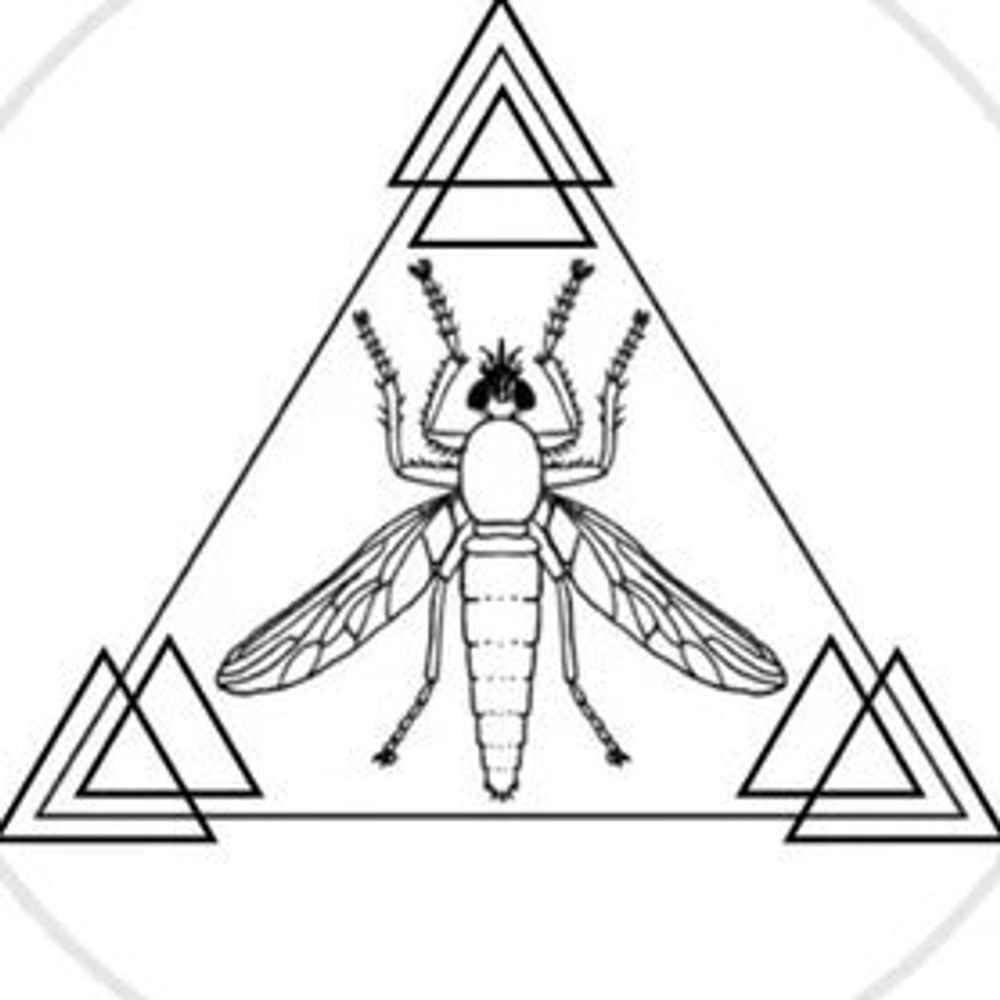
Here is some of the insect flash on offer from @ladylucktattoopdx in Portland, OR by @summerhatfieldart! If you’re going to ESA 2025 book an appointment now to get some ink! See more at tinyurl.com/bugluck
@entsocamerica.bsky.social #insect #insecttattoo #entsoc2025 #esa #portland #teamdiptera
@entsocamerica.bsky.social #insect #insecttattoo #entsoc2025 #esa #portland #teamdiptera

November 6, 2025 at 7:17 PM
Here is some of the insect flash on offer from @ladylucktattoopdx in Portland, OR by @summerhatfieldart! If you’re going to ESA 2025 book an appointment now to get some ink! See more at tinyurl.com/bugluck
@entsocamerica.bsky.social #insect #insecttattoo #entsoc2025 #esa #portland #teamdiptera
@entsocamerica.bsky.social #insect #insecttattoo #entsoc2025 #esa #portland #teamdiptera
Reposted by Karen C. Poh
Seasonal and diel environment effects on host-seeking behaviour in the European tick vector, Ixodes ricinus bioRxivpreprint
Seasonal and diel environment effects on host-seeking behaviour in the European tick vector, Ixodes ricinus
Patterns of arthropod vector abundance and activity are key determinants of biting risk, and thus the risk of vector-borne pathogen transmission. Ticks are important vectors of animal and human pathogens worldwide. Their host-seeking activity (questing) directly influences the risk of exposure to ticks and their pathogens, but the drivers of this behaviour are poorly understood. Here, the concurrent seasonal and diel variation in Ixodes ricinus questing behaviour was investigated, for the first time, by blanket dragging every four hours over a 24-hour sampling cycle each month, from January to December 2022. A predominantly nocturnal questing activity pattern was observed, moderated by seasonal moisture availability, being most evident in months with high saturation deficit. Generalised Linear Mixed Modelling predicted that the density of questing nymphs was positively associated with darkness, and negatively associated with saturation deficit, which interacted with soil temperature. The observed seasonal questing patterns are largely consistent with published data; however this is the first study to highlight the importance of nocturnal feeding at periods of high saturation deficit. These commonly overlooked daily rhythms and environmental moderators of tick behaviour have important implications for assessing the relative risk of exposure to ticks and their pathogens for different hosts, and for estimating abundance in scientific research and surveillance.
dlvr.it
November 7, 2025 at 11:39 PM
Seasonal and diel environment effects on host-seeking behaviour in the European tick vector, Ixodes ricinus bioRxivpreprint
Reposted by Karen C. Poh
A CRISPR/LbCas12a system for Borrelia burgdorferi sensu stricto detection in blacklegged #ticks JMedEnt
A CRISPR/LbCas12a system for Borrelia burgdorferi sensu stricto detection in blacklegged #ticks
AbstractCRISPR/Cas systems have the potential to revolutionize DNA detection of vector-borne pathogens with highly specific and user-friendly assays. One such system, named DNA Endonuclease Targeted CRISPR Trans Reporter (DETECTR), uses a guide RNA (gRNA) and Cas enzyme to bind to and cut DNA targets. Following cutting, Cas12a exhibits non-specific collateral cleavage of single-stranded DNA (ssDNA). A ssDNA reporter in the reaction allows the trans-cleavage activity to be harnessed as an amplified output signal upon recognition of the target by the Cas12a/gRNA complex. We developed a DETECTR assay to detect Borrelia burgdorferi sensu stricto, the primary Lyme disease pathogen in the United States, in blacklegged #ticks (#Ixodes scapularis) collected from forests in southern Vermont. We compared DETECTR to gel electrophoresis of PCR-amplified products and used quantitative real-time PCR (qPCR) of a different B. burgdorferi primer set for independent confirmation. We found that 123/125 of the samples had identical results for DETECTR and gel electrophoresis. Both assays identified the same 33 B. burgdorferi-positive samples and the same 90 B. burgdorferi-negative samples. On a subset of eight samples, we tested DETECTR using lateral flow test strips and obtained identical results to those obtained with the fluorescence-based DETECTR. The sensitivity of DETECTR was lower than qPCR, which detected nine additional B. burgdorferi-positive samples. When qPCR is not available, the DETECTR assay offers a robust alternative to gel electrophoresis that is more user-friendly and requires less time. Due to the highly specific nature of the assay, DETECTR provides additional confidence that a B. burgdorferi target is present.
dlvr.it
November 7, 2025 at 6:47 AM
A CRISPR/LbCas12a system for Borrelia burgdorferi sensu stricto detection in blacklegged #ticks JMedEnt
Reposted by Karen C. Poh

Do you teach #rstats? Do your students complain about how lame and old-fashioned dplyr is? Don't worry: I have the solution for you: github.com/hadley/genzp....
genzplyr is dplyr, but bussin fr fr no cap.
genzplyr is dplyr, but bussin fr fr no cap.

GitHub - hadley/genzplyr: dplyr but make it bussin fr fr no cap
dplyr but make it bussin fr fr no cap. Contribute to hadley/genzplyr development by creating an account on GitHub.
github.com
November 6, 2025 at 11:25 PM
Do you teach #rstats? Do your students complain about how lame and old-fashioned dplyr is? Don't worry: I have the solution for you: github.com/hadley/genzp....
genzplyr is dplyr, but bussin fr fr no cap.
genzplyr is dplyr, but bussin fr fr no cap.
Reposted by Karen C. Poh

Check out our newest paper on mosquito sugar feeding! 🦟🌸
This study was led M. VanderGiessen, F. Upshur & M. Cartadena-Guzman. A great collaboration with L. Escobar & @thevinaugerlab.bsky.social!
@globalchangebio.bsky.social @vtbiochemistry.bsky.social
academic.oup.com/jme/article-...
This study was led M. VanderGiessen, F. Upshur & M. Cartadena-Guzman. A great collaboration with L. Escobar & @thevinaugerlab.bsky.social!
@globalchangebio.bsky.social @vtbiochemistry.bsky.social
academic.oup.com/jme/article-...

Effect of landscape heterogeneity on mosquito abundance and sugar feeding behavior
Abstract. Mosquito-borne diseases pose a dire threat to humanity, claiming over 700,000 lives annually. At the local scale, the interplay between several e
academic.oup.com
November 6, 2025 at 9:38 PM
Check out our newest paper on mosquito sugar feeding! 🦟🌸
This study was led M. VanderGiessen, F. Upshur & M. Cartadena-Guzman. A great collaboration with L. Escobar & @thevinaugerlab.bsky.social!
@globalchangebio.bsky.social @vtbiochemistry.bsky.social
academic.oup.com/jme/article-...
This study was led M. VanderGiessen, F. Upshur & M. Cartadena-Guzman. A great collaboration with L. Escobar & @thevinaugerlab.bsky.social!
@globalchangebio.bsky.social @vtbiochemistry.bsky.social
academic.oup.com/jme/article-...
Thanks @timlysyk.bsky.social ! Couldn’t have done it without your support! 🥹
November 6, 2025 at 11:05 PM
Thanks @timlysyk.bsky.social ! Couldn’t have done it without your support! 🥹