


Awesome opportunity to figure out the role of cytoplasmic bridges in choanos (or mESCs, if you're into those things somehow)
My lab is hiring a postdoc (ERC funded)! If you're interested, get in touch!
December 18, 2025 at 12:54 PM
Awesome opportunity to figure out the role of cytoplasmic bridges in choanos (or mESCs, if you're into those things somehow)
They are cool and have a complex cell biology which involves cells being sociable, as well as key molecular hallmarks of animals. They remain unicellular for sure; our common ancestor evolved these molecules to exploit the niche the choanos likely occupy now, by chance this allowed multicellularity.
November 30, 2025 at 8:24 PM
They are cool and have a complex cell biology which involves cells being sociable, as well as key molecular hallmarks of animals. They remain unicellular for sure; our common ancestor evolved these molecules to exploit the niche the choanos likely occupy now, by chance this allowed multicellularity.

Thx Thibaut... Choanos up there soon ;)
October 31, 2025 at 6:17 PM
Thx Thibaut... Choanos up there soon ;)
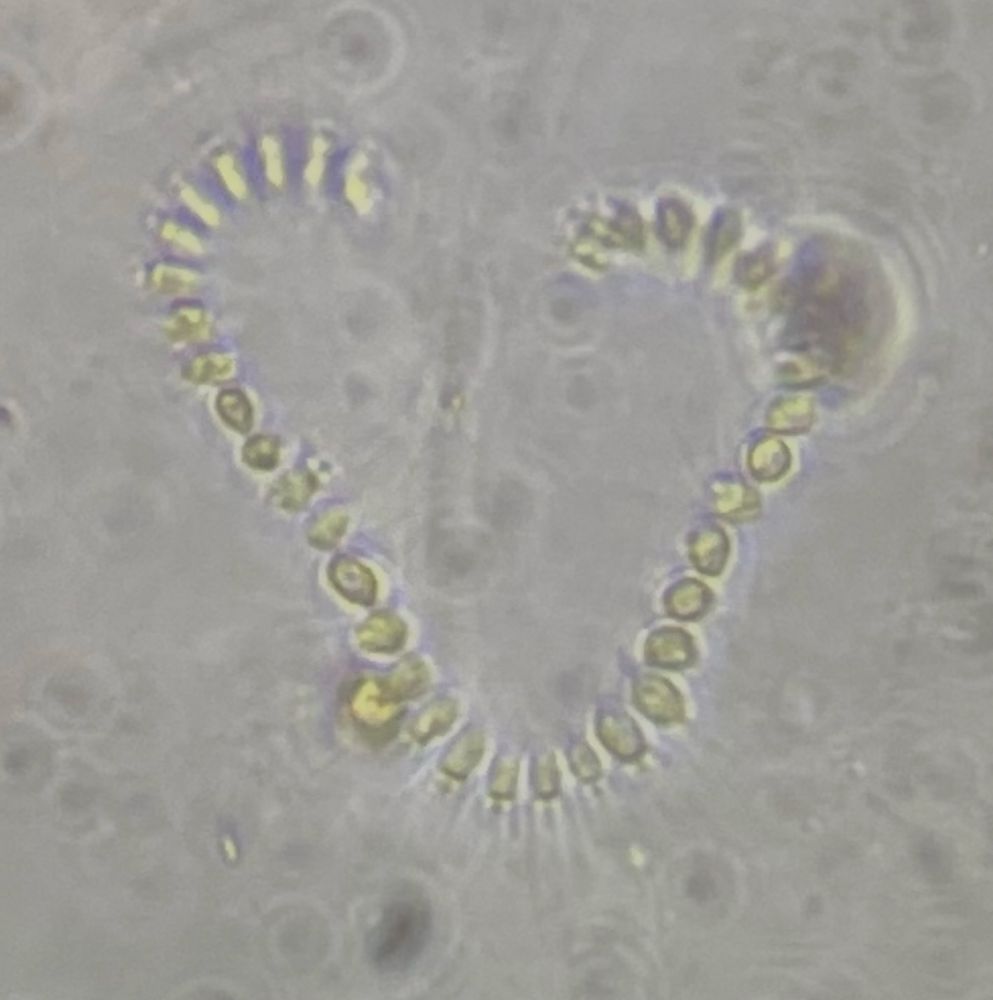
Are my choanos really speaking to me ???? 😍😍😍
#protistsonsky
#protistsonsky
October 27, 2025 at 3:38 PM
Are my choanos really speaking to me ???? 😍😍😍
#protistsonsky
#protistsonsky
I know of this paper (some would say I wrote it 😉) - but we don't know if the mechanism is the same in these new choanos, although that would be cool
October 18, 2025 at 9:06 AM
I know of this paper (some would say I wrote it 😉) - but we don't know if the mechanism is the same in these new choanos, although that would be cool
Many years ago, choano legend Barry Leadbeater told me that chain colonies of certain choanos could be flexible and dynamically change curvature (like C. flexa sheets) - but I had never really seen it until these beautiful Cassis samples from @jujumathieu.bsky.social. As usual, Barry was right!
Back from fly lab retreat with some little friends :) hope i manage to make them grow in @thibautbrunet.bsky.social’s lab


October 17, 2025 at 2:50 PM
Many years ago, choano legend Barry Leadbeater told me that chain colonies of certain choanos could be flexible and dynamically change curvature (like C. flexa sheets) - but I had never really seen it until these beautiful Cassis samples from @jujumathieu.bsky.social. As usual, Barry was right!
To me (but I'm biased), this is intriguingly similar to the self-terminating, ECM-driven multicellular development of S. rosetta. This suggests either ancestral use, or independent co-option, of similar signaling and cellular modules for multicellular development in choanos and animals.
October 5, 2025 at 10:35 AM
To me (but I'm biased), this is intriguingly similar to the self-terminating, ECM-driven multicellular development of S. rosetta. This suggests either ancestral use, or independent co-option, of similar signaling and cellular modules for multicellular development in choanos and animals.
Surprisingly, disrupting warts kinases in S. rosetta caused a very animal-like phenotype: giant rosettes colonies!
This suggests the molecular pathways that control multicellular development in animals and choanos might be more conserved than we expected...
This suggests the molecular pathways that control multicellular development in animals and choanos might be more conserved than we expected...
October 5, 2025 at 10:35 AM
Surprisingly, disrupting warts kinases in S. rosetta caused a very animal-like phenotype: giant rosettes colonies!
This suggests the molecular pathways that control multicellular development in animals and choanos might be more conserved than we expected...
This suggests the molecular pathways that control multicellular development in animals and choanos might be more conserved than we expected...
... but no one knew what they did. One key limitation was technical: gene knock-out techniques in S. rosetta were slow, expensive, and had variable efficiency.
This changed when Chantal established selection-based gene knockout. We decided to use the technique to probe what Hippo does in choanos.
This changed when Chantal established selection-based gene knockout. We decided to use the technique to probe what Hippo does in choanos.
October 5, 2025 at 10:35 AM
... but no one knew what they did. One key limitation was technical: gene knock-out techniques in S. rosetta were slow, expensive, and had variable efficiency.
This changed when Chantal established selection-based gene knockout. We decided to use the technique to probe what Hippo does in choanos.
This changed when Chantal established selection-based gene knockout. We decided to use the technique to probe what Hippo does in choanos.
In animals, YAP stimulates tissue growth by enhancing proliferation. This is highly conserved: if you over-activate YAP (by removing the kinases that keep it in check) in a fly eye, you get a giant eye; in a mouse liver, you get a giant liver.
The genes were known to be conserved in choanos...
The genes were known to be conserved in choanos...

October 5, 2025 at 10:35 AM
In animals, YAP stimulates tissue growth by enhancing proliferation. This is highly conserved: if you over-activate YAP (by removing the kinases that keep it in check) in a fly eye, you get a giant eye; in a mouse liver, you get a giant liver.
The genes were known to be conserved in choanos...
The genes were known to be conserved in choanos...

Thrilled to see choanoflagellates can glide! I think this provide further support to the stunning complexity of the unicellular ancestor of animals, as we have been proposing. Congrats @thibautbrunet.bsky.social ! very nice work. #AnimalOrigins #choanos #multicellularity #protistsOnSky
New short paper from our lab @currentbiology.bsky.social, in which we discover of a new mode of cell motility for choanoflagellates: flagellar gliding. www.cell.com/current-biol... - A 🧵

Flagellar gliding in choanoflagellates
Freire-Delgado and Brunet discover a new mode of cell motility in choanoflagellates,
the closest relatives of animals. Under mild confinement, choanoflagellate move over
surfaces without cell deformat...
www.cell.com
September 12, 2025 at 10:52 AM
Thrilled to see choanoflagellates can glide! I think this provide further support to the stunning complexity of the unicellular ancestor of animals, as we have been proposing. Congrats @thibautbrunet.bsky.social ! very nice work. #AnimalOrigins #choanos #multicellularity #protistsOnSky
Go for the choanos, leave with a duck !
Congrats @thibautbrunet.bsky.social & @maitefreired.bsky.social
Congrats @thibautbrunet.bsky.social & @maitefreired.bsky.social
New short paper from our lab @currentbiology.bsky.social, in which we discover of a new mode of cell motility for choanoflagellates: flagellar gliding. www.cell.com/current-biol... - A 🧵
Flagellar gliding in choanoflagellates
Freire-Delgado and Brunet discover a new mode of cell motility in choanoflagellates,
the closest relatives of animals. Under mild confinement, choanoflagellate move over
surfaces without cell deformat...
www.cell.com
September 9, 2025 at 8:23 PM
Go for the choanos, leave with a duck !
Congrats @thibautbrunet.bsky.social & @maitefreired.bsky.social
Congrats @thibautbrunet.bsky.social & @maitefreired.bsky.social
... and might be especially key in confined microenvironments such as the soil, where protists are often trapped in thin liquid layers in pores between grains. (Choanos are commonly found in soil, but their ecology and motility in this environment are pretty much unknown; pic: tinyurl.com/9vh488bk)

September 9, 2025 at 6:12 PM
... and might be especially key in confined microenvironments such as the soil, where protists are often trapped in thin liquid layers in pores between grains. (Choanos are commonly found in soil, but their ecology and motility in this environment are pretty much unknown; pic: tinyurl.com/9vh488bk)
Do choanos defy the laws of physics? Not quite. Multiple pieces of evidence suggest the motor force for gliding resides in the flagellum (like in Chlamydomonas): (1) flagellar ablation prevents gliding (2) inhibition of the molecular motors of intraflagellar transport abolish it too.

September 9, 2025 at 6:12 PM
Do choanos defy the laws of physics? Not quite. Multiple pieces of evidence suggest the motor force for gliding resides in the flagellum (like in Chlamydomonas): (1) flagellar ablation prevents gliding (2) inhibition of the molecular motors of intraflagellar transport abolish it too.
In this new study, @maitefreired.bsky.social has shown that moderate confinement activates *yet another* mode of motility: choanos straighten their flagellum, and start moving over the substrate at pretty high speed (~1 µm/sec) without any visible cell deformation. They glide!
September 9, 2025 at 6:12 PM
In this new study, @maitefreired.bsky.social has shown that moderate confinement activates *yet another* mode of motility: choanos straighten their flagellum, and start moving over the substrate at pretty high speed (~1 µm/sec) without any visible cell deformation. They glide!
What about choanos? They are best-known as flagellar swimmers. In 2021, we showed they are additionally capable of amoeboid motility, crawling via cell protrusions under strong geometric confinement. (elifesciences.org/articles/61037)

September 9, 2025 at 6:12 PM
What about choanos? They are best-known as flagellar swimmers. In 2021, we showed they are additionally capable of amoeboid motility, crawling via cell protrusions under strong geometric confinement. (elifesciences.org/articles/61037)
Faial is amazing! Also found many beautifull choanos there 😉
August 29, 2025 at 3:32 PM
Faial is amazing! Also found many beautifull choanos there 😉
Im not choano mate... no no no.
The legend says, and quite confirmed accross the field, all choanos die in my hands...
I get them prefixed from @thibautbrunet.bsky.social
The legend says, and quite confirmed accross the field, all choanos die in my hands...
I get them prefixed from @thibautbrunet.bsky.social
August 26, 2025 at 1:11 PM
Im not choano mate... no no no.
The legend says, and quite confirmed accross the field, all choanos die in my hands...
I get them prefixed from @thibautbrunet.bsky.social
The legend says, and quite confirmed accross the field, all choanos die in my hands...
I get them prefixed from @thibautbrunet.bsky.social

You people and your choanos
August 26, 2025 at 9:14 AM
You people and your choanos
Still not stopping by on the way ?
Also there maybe choanos in the blue lake this time of the year.
Also there maybe choanos in the blue lake this time of the year.
August 26, 2025 at 9:13 AM
Still not stopping by on the way ?
Also there maybe choanos in the blue lake this time of the year.
Also there maybe choanos in the blue lake this time of the year.
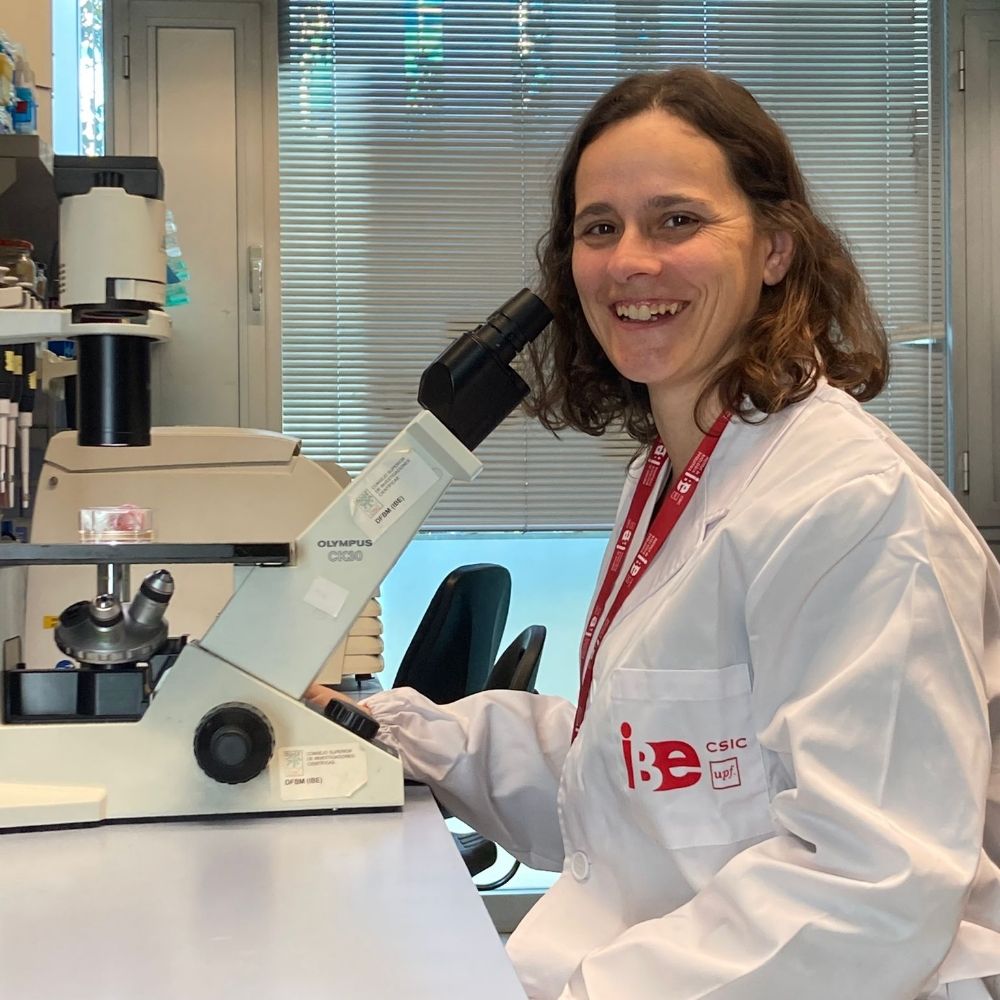
Great talk by Margarita from the @beaplab.bsky.social on choanos and friends diversity. With the great @merimonas.bsky.social @multicellgenome.bsky.social #ChoanoCon25

May 21, 2025 at 2:27 PM
Great talk by Margarita from the @beaplab.bsky.social on choanos and friends diversity. With the great @merimonas.bsky.social @multicellgenome.bsky.social #ChoanoCon25
May the force be with you. At Eva Pillai's talk: how ERM2 affects choanos movement. #choanoflagellates #ChoanoCon25 @evapillai.bsky.social

May 20, 2025 at 10:11 AM
May the force be with you. At Eva Pillai's talk: how ERM2 affects choanos movement. #choanoflagellates #ChoanoCon25 @evapillai.bsky.social
Nice and interesting talk by @pawelburkhardt.bsky.social at the #ChoanoCon25. Choanos are cool! @thibautbrunet.bsky.social

May 20, 2025 at 9:18 AM
Nice and interesting talk by @pawelburkhardt.bsky.social at the #ChoanoCon25. Choanos are cool! @thibautbrunet.bsky.social
Gift of the week end 😍 lovely choanos from Bretagne
#protistonsky
#protistonsky

May 18, 2025 at 9:55 AM
Gift of the week end 😍 lovely choanos from Bretagne
#protistonsky
#protistonsky
Totally agree! A conference with Núria is definitely the superior version. 😉 We know firsthand her talks are 🔥and her latest #Choanos work is a must-see! Can't wait to welcome her back.
#Multicellularity #EMBOMulticellularity2025
#Multicellularity #EMBOMulticellularity2025
Cool upcoming conference on multicellularity, featuring our own Núria who will present our recent work on choano life cycles in the wild 🌊🌴🧪 www.biorxiv.org/content/10.1...
The website for our EMBO workshop is live now. Don't miss this opportunity to join us in a meeting that aims gathering all experts working on multicellularity. We will welcome you in the nice Barcelona in October! @multicellgenome.bsky.social @prbb.org @embo.org meetings.embo.org/event/25-mul...
April 25, 2025 at 8:04 AM
Totally agree! A conference with Núria is definitely the superior version. 😉 We know firsthand her talks are 🔥and her latest #Choanos work is a must-see! Can't wait to welcome her back.
#Multicellularity #EMBOMulticellularity2025
#Multicellularity #EMBOMulticellularity2025