



The complete chloroplast genome of Phyllanthus acidus (L.) Skeels (Phyllanthaceae) https://pubmed.ncbi.nlm.nih.gov/41378226/
December 13, 2025 at 2:30 PM
The complete chloroplast genome of Phyllanthus acidus (L.) Skeels (Phyllanthaceae) https://pubmed.ncbi.nlm.nih.gov/41378226/

Chamberbitter (Phyllanthus urinaria), introduced. Waikahekaheiki, Puna, Hawaiʻi.

December 12, 2025 at 7:47 AM
Chamberbitter (Phyllanthus urinaria), introduced. Waikahekaheiki, Puna, Hawaiʻi.
The complete chloroplast genome of Phyllanthus acidus (L.) Skeels (Phyllanthaceae) https://pubmed.ncbi.nlm.nih.gov/41378226/
December 12, 2025 at 7:11 AM
The complete chloroplast genome of Phyllanthus acidus (L.) Skeels (Phyllanthaceae) https://pubmed.ncbi.nlm.nih.gov/41378226/
drhoz.tumblr.com/post/8006313... #3340 - Phyllanthus calycinus - False Boronia AKA Snowdrop Spurge.
A small shrub in the family Phyllanthaceae, growing to 1.2 m, usually in sandy soils.
A small shrub in the family Phyllanthaceae, growing to 1.2 m, usually in sandy soils.

#3340 - Phyllanthus calycinus - False Boronia
AKA Snowdrop Spurge.
A small shrub in the family Phyllanthaceae, growing to 1.2 m, usually in sandy soils. Found in Western Australia and South Australia. I don't know why anybody would mistake it for...
drhoz.tumblr.com
November 28, 2025 at 9:50 AM
drhoz.tumblr.com/post/8006313... #3340 - Phyllanthus calycinus - False Boronia AKA Snowdrop Spurge.
A small shrub in the family Phyllanthaceae, growing to 1.2 m, usually in sandy soils.
A small shrub in the family Phyllanthaceae, growing to 1.2 m, usually in sandy soils.

Impact of dietary Phyllanthus emblica on growth, immunity, antioxidant capacity, and Fusarium oxysporum resistance in red tilapia
https://www.vitaminrush.com/273084/impact-of-dietary-phyllanthus-emblica-on-growth-immunity-antioxidant-capacity-and-fusarium-oxysporum-resistance-in-red-tilapia/
…
https://www.vitaminrush.com/273084/impact-of-dietary-phyllanthus-emblica-on-growth-immunity-antioxidant-capacity-and-fusarium-oxysporum-resistance-in-red-tilapia/
…

Impact of dietary Phyllanthus emblica on growth, immunity, antioxidant capacity, and Fusarium oxysporum resistance in red tilapia
Eissa, E. S. H. et al. ElBanna, N. I. Protective effects of chlorella vulgaris as a feed additive on growth performance, immunity, histopathology, and disease resistance against vibrio parahaemolyticus in the Pacific white shrimp. Aquac Int. 32 (3), 2821–2840 (2024). Article CAS Google Scholar Subasinghe, R. & Norman, R. In Aquatic Food Security 5–13 (CABI GB, 2024). Mukhtar, S. et al. Promoting sustainable aquaculture: exploring antibiotic alternatives to fight against pathogens. Int. Aquat. Res. 17 (2025). Case, N. T. et al. Fungal impacts on earth’s ecosystems. Nature 638, 49–57 (2025). Article ADS CAS PubMed PubMed Central Google Scholar Abdelnour, S. A. et al. Environmental epigenetics: exploring phenotypic
www.vitaminrush.com
November 28, 2025 at 1:40 AM
Impact of dietary Phyllanthus emblica on growth, immunity, antioxidant capacity, and Fusarium oxysporum resistance in red tilapia
https://www.vitaminrush.com/273084/impact-of-dietary-phyllanthus-emblica-on-growth-immunity-antioxidant-capacity-and-fusarium-oxysporum-resistance-in-red-tilapia/
…
https://www.vitaminrush.com/273084/impact-of-dietary-phyllanthus-emblica-on-growth-immunity-antioxidant-capacity-and-fusarium-oxysporum-resistance-in-red-tilapia/
…

Phyllanthus emblica produces edible fruits. They are greenish, about the size of ping-pong balls & have firm, crisp flesh around a single large seed. Dried fruits are available in large Asian groceries in my area. 📷: Vijay Anand Ismavel CCBYNC2. #Phyllanthaceae #TropicalBotany #Botany 🌾🧪🌱

November 15, 2025 at 11:09 AM
Phyllanthus emblica produces edible fruits. They are greenish, about the size of ping-pong balls & have firm, crisp flesh around a single large seed. Dried fruits are available in large Asian groceries in my area. 📷: Vijay Anand Ismavel CCBYNC2. #Phyllanthaceae #TropicalBotany #Botany 🌾🧪🌱
More #Phyllanthaceae strangeness! Many species of Phyllanthus are hyperaccumulators of nickel (meaning they store Ni in their tissues at concentrations very much greater than those of the surrounding soils).
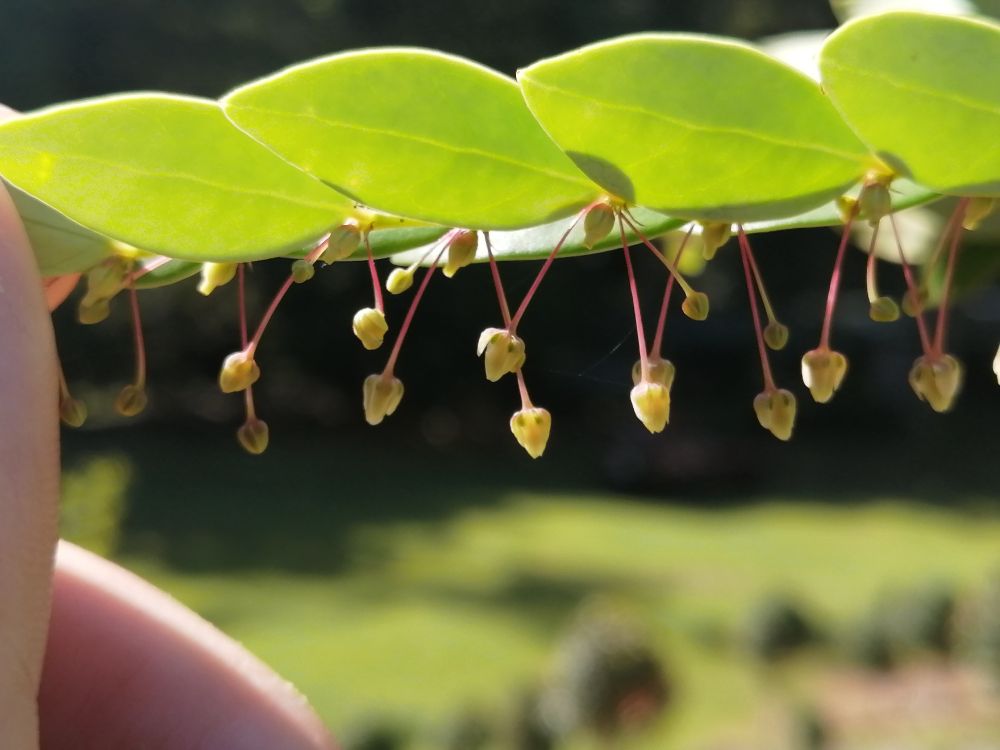
In that case, let me share with you my own photos of two Phyllanthus from Borneo that are nickel hyperaccumulators: a branch of Phyllanthus balgooyi (with a detail of its fruits), and a flowering branch of Phyllanthus rufuschaneyi with male flowers (pedunculate) and female flowers (sessile).

November 14, 2025 at 2:14 PM
More #Phyllanthaceae strangeness! Many species of Phyllanthus are hyperaccumulators of nickel (meaning they store Ni in their tissues at concentrations very much greater than those of the surrounding soils).

In that case, let me share with you my own photos of two Phyllanthus from Borneo that are nickel hyperaccumulators: a branch of Phyllanthus balgooyi (with a detail of its fruits), and a flowering branch of Phyllanthus rufuschaneyi with male flowers (pedunculate) and female flowers (sessile).
November 14, 2025 at 12:39 PM
In that case, let me share with you my own photos of two Phyllanthus from Borneo that are nickel hyperaccumulators: a branch of Phyllanthus balgooyi (with a detail of its fruits), and a flowering branch of Phyllanthus rufuschaneyi with male flowers (pedunculate) and female flowers (sessile).
Phyllanthus unifoliatus doesn’t have the Phyllanthus branching. The name suggests that this species, unlike others, is unifoliolate, but of course, all Phyllanthus have simple, not compound, leaves. This one is from New Caledonia. #Phyllanthaceae #TropicalBotany #Botany 🌾🧪🌱

November 14, 2025 at 11:22 AM
Phyllanthus unifoliatus doesn’t have the Phyllanthus branching. The name suggests that this species, unlike others, is unifoliolate, but of course, all Phyllanthus have simple, not compound, leaves. This one is from New Caledonia. #Phyllanthaceae #TropicalBotany #Botany 🌾🧪🌱
Comparative plastomes and phylogenetic relationships of Breynia, Glochidion, Phyllanthus, Sauropus, and Synostemon from plastomes and ITS https://pubmed.ncbi.nlm.nih.gov/41222779/
November 14, 2025 at 9:25 AM
Comparative plastomes and phylogenetic relationships of Breynia, Glochidion, Phyllanthus, Sauropus, and Synostemon from plastomes and ITS https://pubmed.ncbi.nlm.nih.gov/41222779/
Comparative plastomes and phylogenetic relationships of Breynia, Glochidion, Phyllanthus, Sauropus, and Synostemon from plastomes and ITS https://pubmed.ncbi.nlm.nih.gov/41222779/
November 14, 2025 at 3:27 AM
Comparative plastomes and phylogenetic relationships of Breynia, Glochidion, Phyllanthus, Sauropus, and Synostemon from plastomes and ITS https://pubmed.ncbi.nlm.nih.gov/41222779/
What!? A floating Phyllanthus!? 😯
November 13, 2025 at 12:01 PM
What!? A floating Phyllanthus!? 😯
Here’s Phyllanthus fluitans, a floating aquatic species from southern Mexico and northern South America. I expected this to be a pantropical aquatic weed, but I see it’s escaped only in Florida (of course 😒). 📷: Eric Hunt CCBYNCND2 #Phyllanthaceae #TropicalBotany #Botany 🌾🧪🌱

November 13, 2025 at 11:18 AM
Here’s Phyllanthus fluitans, a floating aquatic species from southern Mexico and northern South America. I expected this to be a pantropical aquatic weed, but I see it’s escaped only in Florida (of course 😒). 📷: Eric Hunt CCBYNCND2 #Phyllanthaceae #TropicalBotany #Botany 🌾🧪🌱
Comparative plastomes and phylogenetic relationships of Breynia, Glochidion, Phyllanthus, Sauropus, and Synostemon from plastomes and ITS https://pubmed.ncbi.nlm.nih.gov/41222779/
November 13, 2025 at 10:54 AM
Comparative plastomes and phylogenetic relationships of Breynia, Glochidion, Phyllanthus, Sauropus, and Synostemon from plastomes and ITS https://pubmed.ncbi.nlm.nih.gov/41222779/
Comparative plastomes and phylogenetic relationships of Breynia, Glochidion, Phyllanthus, Sauropus, and Synostemon from plastomes and ITS https://pubmed.ncbi.nlm.nih.gov/41222779/
November 13, 2025 at 2:13 AM
Comparative plastomes and phylogenetic relationships of Breynia, Glochidion, Phyllanthus, Sauropus, and Synostemon from plastomes and ITS https://pubmed.ncbi.nlm.nih.gov/41222779/
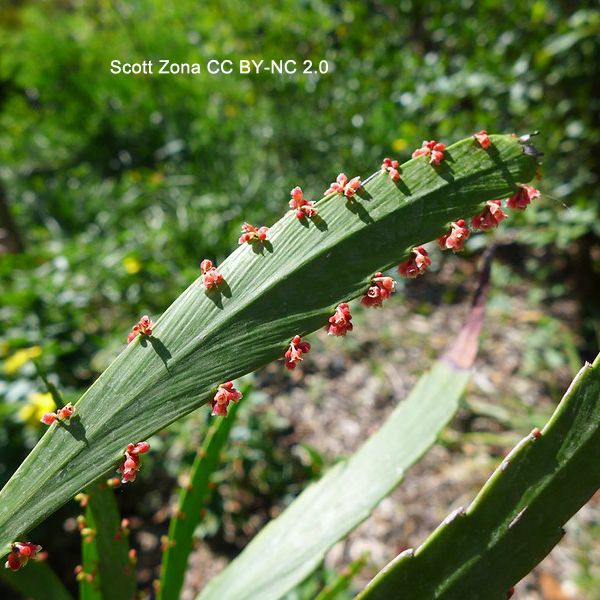
Phyllanthoid branching evolved only once but has been lost several times. Some species have kept the branching but ditched the leaves. Phyllanthus angustifolius of the Antilles has cladodes (flattened, photosynthetic branches). #Phyllanthaceae #TropicalBotany #Botany 🌾🧪🌱
November 12, 2025 at 4:53 PM
Phyllanthoid branching evolved only once but has been lost several times. Some species have kept the branching but ditched the leaves. Phyllanthus angustifolius of the Antilles has cladodes (flattened, photosynthetic branches). #Phyllanthaceae #TropicalBotany #Botany 🌾🧪🌱
I considered it because I'm going to post a photo of a Phyllanthus I saw in New Caledonia, but the species I saw is not a Ni hyperaccumulator. But it's another cool aspect of this family!😁
November 12, 2025 at 1:06 PM
I considered it because I'm going to post a photo of a Phyllanthus I saw in New Caledonia, but the species I saw is not a Ni hyperaccumulator. But it's another cool aspect of this family!😁
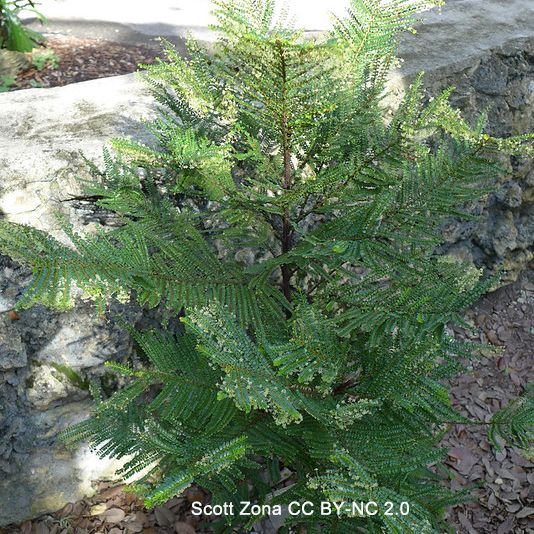
If you weren’t paying attention, you might mistake Phyllanthus myriophyllus, of Haiti, for a plant with bipinnate compound leaves, something like a young Delonix regia (Fabaceae). Remember, those are branches, not compound leaves. #Phyllanthaceae #TropicalBotany #Botany 🌾🧪🌱
November 12, 2025 at 12:30 PM
If you weren’t paying attention, you might mistake Phyllanthus myriophyllus, of Haiti, for a plant with bipinnate compound leaves, something like a young Delonix regia (Fabaceae). Remember, those are branches, not compound leaves. #Phyllanthaceae #TropicalBotany #Botany 🌾🧪🌱
I think other plants have orthotropic/plagiotropic branches, but it gets called phyllanthoid branching only in Phyllanthus. Other examples that I can think of are conifers: Taxodium, Araucaria & Wollemia have branches that act like compound leaves. Anisophyllea disticha is an Angiosperm example.
November 11, 2025 at 9:47 PM
I think other plants have orthotropic/plagiotropic branches, but it gets called phyllanthoid branching only in Phyllanthus. Other examples that I can think of are conifers: Taxodium, Araucaria & Wollemia have branches that act like compound leaves. Anisophyllea disticha is an Angiosperm example.
Phyllanthoid branching looks so much like pinnately compound leaves that even botanists can’t help but notice. Case in point: This is Phyllanthus juglandifolius. As the name suggests, the branches look like the leaves of walnut (Juglans spp.). #Phyllanthaceae #TropicalBotany #Botany 🌾🧪🌱

November 11, 2025 at 4:58 PM
Phyllanthoid branching looks so much like pinnately compound leaves that even botanists can’t help but notice. Case in point: This is Phyllanthus juglandifolius. As the name suggests, the branches look like the leaves of walnut (Juglans spp.). #Phyllanthaceae #TropicalBotany #Botany 🌾🧪🌱
Not all Phyllanthus have phyllanthoid branching.🤷♂️
November 11, 2025 at 4:57 PM
Not all Phyllanthus have phyllanthoid branching.🤷♂️

Huh, I have a Phyllanthus (P. acidus) in my living room - never noticed anything unusual about its branching, and certainly not distichous leaves. I should look closer! :)
November 11, 2025 at 12:46 PM
Huh, I have a Phyllanthus (P. acidus) in my living room - never noticed anything unusual about its branching, and certainly not distichous leaves. I should look closer! :)
Phyllanthus has what is called “phyllanthoid branching”: Orthotropic (erect) shoots with spirally arranged leaves & plagiotropic (horizontal) branches with distichous leaves. Guam’s P. saffordii shows the dimorphism. 📷: Lauren Gutierrez CCBYND2. #Phyllanthaceae #TropicalBotany #Botany 🌾🧪🌱

November 11, 2025 at 12:30 PM
Phyllanthus has what is called “phyllanthoid branching”: Orthotropic (erect) shoots with spirally arranged leaves & plagiotropic (horizontal) branches with distichous leaves. Guam’s P. saffordii shows the dimorphism. 📷: Lauren Gutierrez CCBYND2. #Phyllanthaceae #TropicalBotany #Botany 🌾🧪🌱

lol, how to discover your local non-tropical Phyllanthus is no longer Phyllanthus.... but is now Lysiandra calycina (Labill.) R.W.Bouman False Boronia Phytotaxa 540(1):19 (2022)!!
November 10, 2025 at 11:38 PM
lol, how to discover your local non-tropical Phyllanthus is no longer Phyllanthus.... but is now Lysiandra calycina (Labill.) R.W.Bouman False Boronia Phytotaxa 540(1):19 (2022)!!
I spend too much time pulling this annual weed from my garden in autumn: It’s Phyllanthus urinaria. At 1st glance, it looks like a single stem with pinnately compound leaves. Look again. The axillary flowers & fruits prove these “leaves” are branches. #Phyllanthaceae #TropicalBotany #Botany 🌾🧪🌱

November 10, 2025 at 4:50 PM
I spend too much time pulling this annual weed from my garden in autumn: It’s Phyllanthus urinaria. At 1st glance, it looks like a single stem with pinnately compound leaves. Look again. The axillary flowers & fruits prove these “leaves” are branches. #Phyllanthaceae #TropicalBotany #Botany 🌾🧪🌱